
Why Your Data Science Career Changes the Moment You Think Like an Economist

Advertisements

In the modern data-driven landscape, the true challenge facing data scientists is no longer how to store, process, or model information—technology already achieves that at scale. The real challenge is understanding the human forces behind the data. Data itself, no matter how large or beautifully structured, is silent until someone interprets the incentives, decisions, and constraints that shape it. This is exactly where the economist’s mindset becomes indispensable. Economists spend their careers studying why people behave the way they do, how choices are shaped under scarcity, how incentives influence actions, and how systems evolve over time. When a data scientist adopts this mode of thinking, analysis becomes more than prediction; it becomes insight. And insight is what drives strategic, meaningful decisions in the real world.

Data science often revolves around identifying patterns—detecting churn, forecasting demand, predicting risk. But patterns alone cannot explain the deeper question: Why do people behave this way in the first place? Economists approach behavior through the lens of preferences, constraints, motivations, and expectations. They understand that every individual acts under a unique combination of incentives and limitations. When a data scientist incorporates this style of thinking, the data stops looking like static snapshots and begins to resemble a living story about human behavior. Instead of treating anomalies as numerical errors, the data scientist begins to explore the psychological and economic factors that might produce such deviations. This transforms the analysis into something more sophisticated, more realistic, and far more useful.

One of the most critical contributions of economics to data science is the relentless pursuit of causality. While machine learning models can uncover powerful correlations, economists dig deeper to identify what actually drives outcomes. This mindset protects data scientists from misinterpreting relationships that appear significant in the data but hold little meaning in reality. When economic reasoning guides an analysis, the data scientist becomes more critical, more skeptical, and more aware of potential confounders. Instead of taking patterns at face value, they explore the mechanisms that produce those patterns. This often leads to solutions that are more stable, more strategic, and more aligned with how people and systems truly operate.

Economists think in trade-offs because every meaningful decision—whether made by a company or a customer—involves sacrificing one benefit to gain another. Data scientists who internalize this idea approach their work with greater strategic clarity. They stop chasing “perfect” accuracy and start understanding the cost of every improvement. A model that is slightly more accurate but significantly more expensive or harder to maintain may not be worth it. A prediction that requires invasive data collection may reduce user trust. A product change that improves engagement may create hidden frictions elsewhere. This trade-off mentality introduces a level of maturity that purely technical thinking often overlooks. It aligns the data scientist’s work with real-world decision-making, where constraints are ever-present and resources are never infinite.

Advertisements

Economics teaches that individuals, markets, and institutions are interconnected systems, not isolated units. Data scientists who adopt this worldview begin analyzing problems within broader contexts. They recognize how a change in one part of a system creates ripple effects in others. This systems-level thinking is invaluable when working on marketplace platforms, recommendation systems, pricing engines, supply chain forecasting, and any domain where multiple agents interact dynamically. Instead of building static models that assume the world remains unchanged, the economist-minded data scientist anticipates how people and systems will adapt. This ability to foresee second-order effects dramatically strengthens the relevance and longevity of analytical solutions.

Machine learning often imposes mathematical convenience on problems that are fundamentally human. Economic reasoning helps restore balance by grounding models in real behavioral principles: people maximize utility, respond to incentives, suffer from biases, act under uncertainty, and adapt to changing environments. By incorporating economic concepts—utility theory, behavioral economics, information asymmetry, game theory—data scientists build models that behave more reliably in real markets and real decisions. The result is not only more accurate predictions but also more interpretable and defensible models. They better capture how customers evaluate options, how employees react to policy changes, and how users respond to pricing or recommendations. In short, models become more realistic because they reflect the complexity of human nature rather than the simplicity of mathematical assumptions.

Economists excel at distilling complex realities into clear, actionable insights. Their communication style emphasizes the “why” behind behaviors, the “because” behind decisions, and the “what if” behind each strategic scenario. When data scientists adopt this communication style, their influence multiplies. Instead of presenting outputs and metrics, they articulate stories about behavior, incentives, and strategic outcomes. Leaders respond not to predictions alone, but to interpretations that reveal risks, opportunities, and trade-offs. The data scientist who communicates with economic clarity becomes a strategist, not just a technician—someone whose insights shape policy, guide product development, and influence high-level decisions.

Economics is built on the reality that uncertainty can never be eliminated, only understood and managed. Markets shift, people change, shocks occur, and expectations evolve. When data scientists adopt an economic approach to uncertainty, they stop fearing it and start analyzing it. They use concepts like expected utility, rational expectations, marginal decision-making, and risk tolerance to frame uncertainty in a structured, understandable way. This leads to more resilient models, more thoughtful forecasts, and a healthier relationship between confidence and doubt. The result is analytical work that does not pretend to be perfect but is intentionally designed to hold up under the unpredictability of real-world environments.

To think like an economist is to elevate data science into a discipline that understands the invisible forces driving human decisions. It adds depth, clarity, and realism to the technical power of models and algorithms. When data scientists learn to interpret incentives, anticipate trade-offs, appreciate systemic interactions, and communicate uncertainty with confidence, they move far beyond the limits of traditional analytics. They become advisors, strategists, and decision-shapers. In a world overflowing with data but starved for meaning, the data scientist who embraces economic thinking becomes uniquely equipped to make sense of complexity. They do more than predict the future—they understand the pressures that create it.

Advertisements

لماذا تتغير مسيرتك المهنية في علم البيانات بمجرد أن تفكر كخبير اقتصادي؟

Advertisements

في ظلّ البيئة الحديثة القائمة على البيانات لم يعد التحدي الحقيقي الذي يواجه علماء البيانات يكمن في كيفية تخزين المعلومات أو معالجتها أو نمذجتها – فالتكنولوجيا تُحقّق ذلك بالفعل على نطاق واسع، بل يكمن التحدي الحقيقي في فهم القوى البشرية الكامنة وراء البيانات، فالبيانات نفسها مهما ضخّمت أو بُنيت بشكل جميل تبقى صامتة حتى يُفسّر أحدٌ الحوافز والقرارات والقيود التي تُشكّلها، وهنا تحديداً تُصبح عقلية الاقتصادي لا غنى عنها

يقضي الاقتصاديون حياتهم المهنية في دراسة أسباب تصرفات الناس على هذا النحو وكيف تتشكّل الخيارات في ظلّ الندرة وكيف تُؤثّر الحوافز على الأفعال وكيف تتطور الأنظمة مع مرور الوقت، فعندما يتبنّى عالم البيانات هذا الأسلوب في التفكير يصبح التحليل أكثر من مجرّد تنبؤ بل يصبح بصيرة، والبصيرة هي ما يُحرّك القرارات الاستراتيجية والهادفة في العالم الحقيقي

غالباً ما يتمحور علم البيانات حول تحديد الأنماط كالكشف عن فقدان العملاء والتنبؤ بالطلب والتنبؤ بالمخاطر، لكن الأنماط وحدها لا تُفسّر السؤال الأعمق: لماذا يتصرف الناس بهذه الطريقة في المقام الأول؟ يتناول الاقتصاديون السلوك من منظور التفضيلات والقيود والدوافع والتوقعات، فهم يدركون أن كل فرد يتصرف في ظل مزيج فريد من الحوافز والقيود، فعندما يدمج عالم البيانات هذا الأسلوب في التفكير تتوقف البيانات عن كونها لقطات ثابتة وتبدأ في أن تكون بمثابة قصة حية عن السلوك البشري، وبدلاً من التعامل مع الشذوذ كأخطاء عددية يبدأ عالم البيانات في استكشاف العوامل النفسية والاقتصادية التي قد تُسبب مثل هذه الانحرافات، وهذا بدوره يُحوّل التحليل إلى شيء أكثر تعقيداً وواقعية وفائدة

من أهم مساهمات الاقتصاد في علم البيانات السعي الدؤوب وراء السببية، فبينما يمكن لنماذج التعلم الآلي الكشف عن ارتباطات قوية يتعمق الاقتصاديون في البحث لتحديد العوامل المؤثرة فعلياً في النتائج، وعليه تحمي هذه العقلية علماء البيانات من سوء تفسير العلاقات التي تبدو مهمة في البيانات ولكنها لا تحمل معنى حقيقياً، فعندما يُوجّه المنطق الاقتصادي التحليل يصبح عالم البيانات أكثر انتقاداً وتشككاً ووعياً بالعوامل المُربكة المحتملة، وبدلاً من أخذ الأنماط على ظاهرها يستكشفون الآليات التي تُنتجها، إذ غالباً ما يؤدي هذا إلى حلول أكثر استقراراً واستراتيجيةً وتوافقاً مع كيفية عمل الأفراد والأنظمة

يفكر الاقتصاديون في المقايضات لأن كل قرار ذي معنى – سواء اتخذته شركة أو عميل – ينطوي على التضحية بفائدة من أجل الحصول على أخرى، فعلماء البيانات الذين يستوعبون هذه الفكرة يتعاملون مع عملهم بوضوح استراتيجي أكبر، ويتوقفون عن السعي وراء الدقة “المثالية” ويبدأون بفهم تكلفة كل تحسين، وقد لا يكون النموذج الأكثر دقة بقليل ولكنه أكثر تكلفة أو صعوبة في الصيانة ذا قيمة، وقد يُقلل التنبؤ الذي يتطلب جمع بيانات مُتطفلة من ثقة المستخدم

قد يُؤدي تغيير المنتج الذي يُحسّن التفاعل إلى احتكاكات خفية في مجالات أخرى تُدخل عقلية المقايضات هذه مستوى من النضج غالباً ما يغفله التفكير التقني البحت، إنها تُوائِم عمل عالم البيانات مع صنع القرار في العالم الواقعي حيث تكون القيود حاضرة دائماً والموارد لا حدود لها

يُعلّمنا علم الاقتصاد أن الأفراد والأسواق والمؤسسات أنظمة مترابطة وليست وحدات معزولة، إذ يبدأ علماء البيانات الذين يتبنون هذه النظرة العالمية بتحليل المشكلات ضمن سياقات أوسع، فهم يدركون كيف يُحدث تغيير في أحد أجزاء النظام تأثيرات متتالية في أجزاء أخرى

يُعدّ هذا التفكير على مستوى النظم بالغ الأهمية عند العمل على منصات السوق وأنظمة التوصية ومحركات التسعير وتنبؤات سلاسل التوريد وأي مجال تتفاعل فيه جهات متعددة بشكل ديناميكي، فبدلاً من بناء نماذج ثابتة تفترض ثبات العالم يتوقع عالم البيانات ذو العقلية الاقتصادية كيفية تكيف الأفراد والأنظمة، وعليه تُعزز هذه القدرة على توقع التأثيرات الثانوية بشكل كبير أهمية الحلول التحليلية وديمومة عملها

Advertisements

غالباً ما يُطبّق التعلم الآلي أساليب رياضية مُيسّرة على المشكلات البشرية في جوهرها، إذ يُساعد التفكير الاقتصادي على استعادة التوازن من خلال ترسيخ النماذج في مبادئ سلوكية واقعية: يُحقق الأفراد أقصى استفادة ويستجيبون للحوافز ويُعانون من التحيزات ويتصرفون في ظل عدم اليقين ويتكيفون مع البيئات المتغيرة

من خلال دمج المفاهيم الاقتصادية – نظرية المنفعة والاقتصاد السلوكي وعدم تماثل المعلومات ونظرية الألعاب – يبني علماء البيانات نماذج تعمل بكفاءة أكبر في الأسواق الحقيقية والقرارات الفعلية، والنتيجة ليست تنبؤات أكثر دقة فحسب بل نماذج أكثر قابلية للتفسير والدفاع، فهي تلتقط بشكل أفضل كيفية تقييم العملاء للخيارات وكيفية تفاعل الموظفين مع تغييرات السياسات وكيفية استجابة المستخدمين للتسعير أو التوصيات، باختصار تصبح النماذج أكثر واقعية لأنها تعكس تعقيد الطبيعة البشرية بدلاً من بساطة الافتراضات الرياضية

يتميز الاقتصاديون في تلخيص الحقائق المعقدة إلى رؤى واضحة وقابلة للتنفيذ، إذ يركز أسلوب تواصلهم على “السبب” وراء السلوكيات و”السبب” وراء القرارات و”ماذا لو” وراء كل سيناريو استراتيجي، فعندما يعتمد علماء البيانات هذا الأسلوب في التواصل يتضاعف تأثيرهم، وبدلاً من عرض النتائج والمقاييس فإنهم يعبّرون ​​عن قصص حول السلوك والحوافز والنتائج الاستراتيجية

لا يستجيب القادة للتنبؤات فحسب بل للتفسيرات التي تكشف عن المخاطر والفرص والتنازلات، إذ أن عالِم البيانات الذي يتواصل بوضوح اقتصادي يصبح استراتيجياً وليس مجرد فني – شخصاً تُشكل رؤيته السياسات وتُوجه تطوير المنتجات وتؤثر على القرارات رفيعة المستوى

يُبنى علم الاقتصاد على حقيقة أن عدم اليقين لا يمكن القضاء عليه، بل يمكن فهمه وإدارته فقط، إذ تتغير الأسواق ويتغير الناس وتحدث الصدمات وتتطور التوقعات، فعندما يتبنى علماء البيانات نهجاً اقتصادياً للتعامل مع عدم اليقين فإنهم يتوقفون عن الخوف منه ويبدأون بتحليله، فيستخدمون مفاهيم مثل المنفعة المتوقعة والتوقعات العقلانية واتخاذ القرارات الهامشية وتحمل المخاطر لتأطير عدم اليقين بطريقة منظمة ومفهومة

يؤدي هذا إلى نماذج أكثر مرونة وتوقعات أكثر تعمقاً وعلاقة أصح بين الثقة والشك، والنتيجة هي عمل تحليلي لا يتظاهر بالكمال ولكنه مصمم عمداً للصمود في وجه عدم القدرة على التنبؤ ببيئات العالم الحقيقي

إن التفكير كخبير اقتصادي يعني الارتقاء بعلم البيانات إلى تخصص يفهم القوى الخفية التي تُحرك القرارات البشرية، إذ يُضيف هذا عمقاً ووضوحاً وواقعيةً إلى القوة التقنية للنماذج والخوارزميات، وعندما يتعلم علماء البيانات تفسير الحوافز وتوقع المفاضلات وتقدير التفاعلات النظامية والتواصل مع حالات عدم اليقين بثقة فإنهم يتجاوزون حدود التحليلات التقليدية بكثير، فيصبحون مستشارين واستراتيجيين وصانعي قرارات

في عالمٍ يفيض بالبيانات ولكنه يفتقر إلى المعنى يُصبح عالم البيانات الذي يتبنى التفكير الاقتصادي مؤهلاً بشكل فريد لفهم التعقيد، إنهم لا يكتفون بالتنبؤ بالمستقبل بل يفهمون الضغوط التي تُولّده

Advertisements

A personal journey into deep automated feature engineering

Advertisements

A powerful shift is taking place inside the world of data science. The transformation is not driven only by larger datasets or stronger algorithms but by a fundamental change in the process that shapes every machine learning model: feature engineering. With the arrival of automated feature engineering powered by artificial intelligence, data teams now craft deep, meaningful features at speeds previously unimaginable. Performance increases, workflows accelerate, and the discovery of hidden patterns becomes vastly more accessible.

Feature engineering has always been the heart of machine learning. The quality of the features determines how deeply a model can understand the patterns inside the data. For years, analysts relied on domain knowledge, logical reasoning, and experimentation to build transformations manually. While effective, manual feature engineering is slow and limited by human intuition. As data grows more complex, the need for a scalable, intelligent solution becomes undeniable.

Artificial intelligence automates the creation, transformation, and selection of features using techniques such as deep feature synthesis, automated encodings, interaction discovery, and optimization algorithms capable of exploring massive feature spaces. Instead of days of manual work, AI generates hundreds or thousands of sophisticated features in minutes. This automation provides creativity beyond human possibility and uncovers deeper relationships hidden in the data.

My journey with automated deep feature generation began when I was working on a dataset filled with layered relationships that manual engineering simply could not capture efficiently. I found myself repeating the same transformations and exploring combinations that consumed endless hours. That experience pushed me to experiment with automated tools, especially Featuretools and early AutoML platforms. Watching an engine build layered, multi-level deep features in minutes—many of which were more powerful than what I had manually produced—changed everything. From that moment, automation became an essential part of every project I handled, turning the machine into a creative partner that explores the full depth of the data.

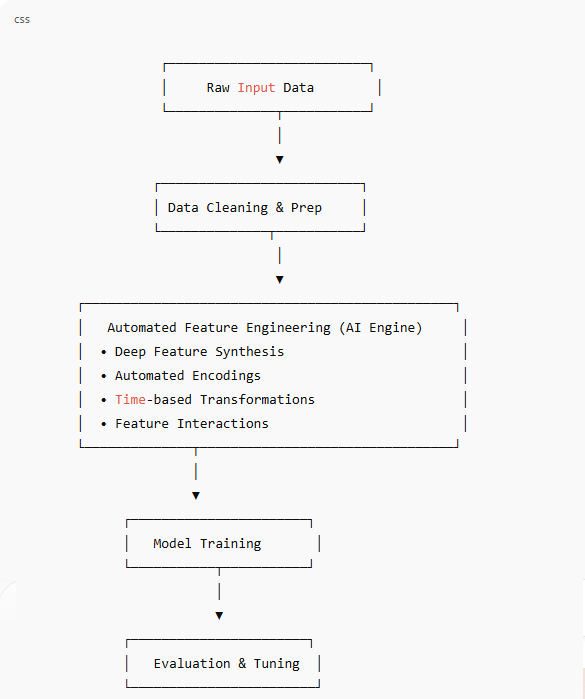
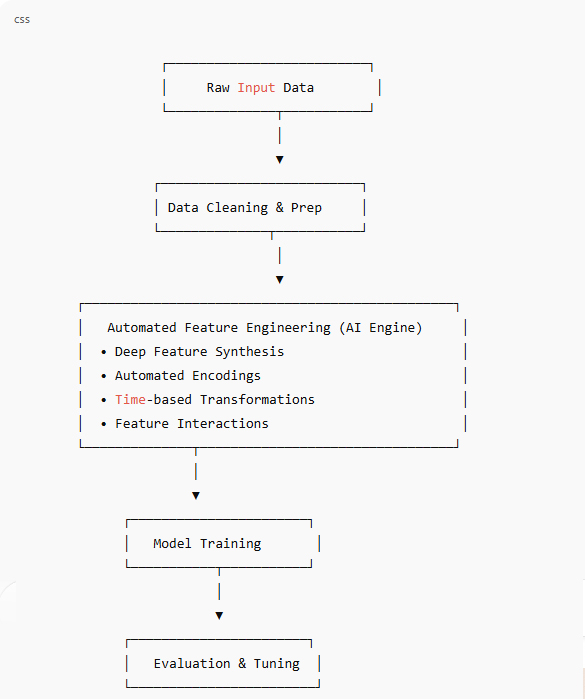
Diagram: How Automated Feature Engineering Fits Into the Workflow

This diagram gives readers a clear mental model of where automation sits in the pipeline.

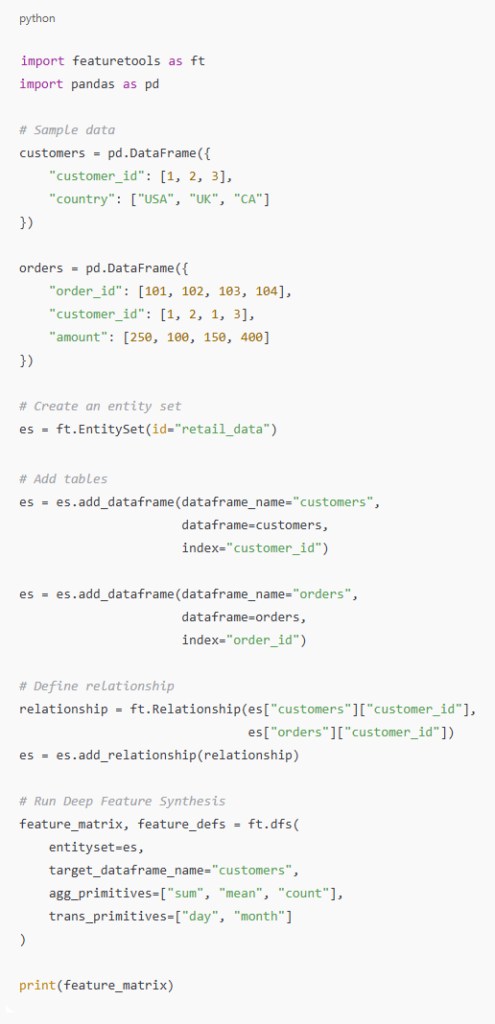
Code Example: Deep Feature Synthesis in Python

Below is a simple but clear example that demonstrates how automated feature engineering works using the Featuretools library.

This snippet creates automatic aggregated features such as:

  • total purchase amount
  • average order value
  • number of orders
  • time based transformations

All generated in seconds.

Advertisements

Automated feature engineering accelerates development time, expands analytical creativity, and enhances the quality of machine learning models. It lifts the burden of repetitive transformations, improves interpretability, and empowers smaller teams to achieve expert-level results. The model accuracy improvements can be dramatic because the system explores combinations far beyond human capacity.

Consider a retail company preparing a churn prediction model. Manual engineering reveals basic insights such as purchase frequency, product preferences, and loyalty activity. Automated feature engineering uncovers deeper dimensions like seasonal patterns, rolling window behaviors, discount sensitivity, and previously unseen interactions between product groups. These discoveries reshape the model entirely and significantly boost predictive power.

Within modern pipelines, automated feature engineering sits between data preparation and model training. It reduces iteration loops, simplifies experimentation, and stabilizes performance. When integrated with cloud based AutoML systems, the process becomes almost fully end-to-end, allowing teams to move directly from raw data to validated predictions with minimal friction.

Future systems will understand human input more naturally, interpret business context, and generate features aligned with specific industry logic rather than generic transformations. AI will evolve into an intelligent assistant that learns from project preferences and produces domain-aware feature engineering strategies. This shift will further elevate the speed and quality of predictive analytics.

Automated feature engineering marks a major milestone in the evolution of machine learning. It empowers teams to discover patterns hidden deep within their data, boosts the performance of predictive models, and removes the limits of traditional manual processes. By embracing automation, data professionals free themselves to focus on strategic insights, creative exploration, and impactful decision making.

Advertisements

رحلة شخصية في هندسة الميزات المؤتمتة المُعمّقة

Advertisements

يشهد عالم علوم البيانات تحولاً جذرياً، إذ لا يقتصر هذا التحول على مجموعات بيانات أكبر أو خوارزميات أقوى، بل يشمل أيضاً تغييراً جذرياً في العملية التي تُشكل كل نموذج تعلّم آلي: هندسة الميزات

مع ظهور هندسة الميزات المؤتمتة المدعومة بالذكاء الاصطناعي تُنشئ فرق البيانات الآن ميزات عميقة وذات معنى بسرعات لم تكن مُتوقعة من قبل بحيث يزداد الأداء وتتسارع وتيرة العمل ويصبح اكتشاف الأنماط الخفية أسهل بكثير

لطالما كانت هندسة الميزات جوهر تعلّم الآلة، إذ تُحدد جودة الميزات مدى قدرة النموذج على فهم الأنماط داخل البيانات، ولسنوات اعتمد المحللون على المعرفة الميدانية والتفكير المنطقي والتجريب لبناء التحويلات يدوياً، فعلى الرغم من فعالية هندسة الميزات اليدوية إلا أنها بطيئة ومحدودة بالحدس البشري، ومع تزايد تعقيد البيانات تصبح الحاجة إلى حل ذكي وقابل للتطوير أمراً لا يمكن إنكاره

يُؤتمت الذكاء الاصطناعي إنشاء الميزات وتحويلها واختيارها باستخدام تقنيات مثل التوليف العميق للميزات والترميز الآلي واكتشاف التفاعلات وخوارزميات التحسين القادرة على استكشاف مساحات ميزات هائلة، فبدلاً من قضاء أيام في العمل اليدوي يُنتج الذكاء الاصطناعي مئات أو آلاف الميزات المتطورة في دقائق، بحيث تُوفر هذه الأتمتة إبداعاً يفوق القدرات البشرية وتكشف عن علاقات أعمق مخفية في البيانات

بدأت رحلتي مع توليد الميزات العميقة تلقائياً عندما كنتُ أعمل على مجموعة بيانات مليئة بالعلاقات الطبقية التي لم تتمكن الهندسة اليدوية من التقاطها بكفاءة، فوجدتُ نفسي أُكرر نفس التحويلات وأستكشف تركيبات استغرقت ساعات طويلة، وهذه التجربة دفعتني إلى تجربة الأدوات الآلية

المبكرة AutoML ومنصات Featuretools وخاصةً

إن مشاهدة محرك يبني ميزات عميقة متعددة الطبقات ومتعددة المستويات في دقائق – كان العديد منها أقوى مما أنتجته يدوياً – غيّر كل شيء، ومنذ تلك اللحظة أصبحت الأتمتة جزءاً أساسياً من كل مشروع أتعامل معه مما حوّل الآلة إلى شريك إبداعي يستكشف عمق البيانات بالكامل

رسم تخطيطي: كيف تتكامل هندسة الميزات المؤتمتة مع سير العمل

يقدم هذا الرسم البياني للقراء نموذجاً ذهنياً واضحاً لمكان وجود الأتمتة في خط الأنابيب

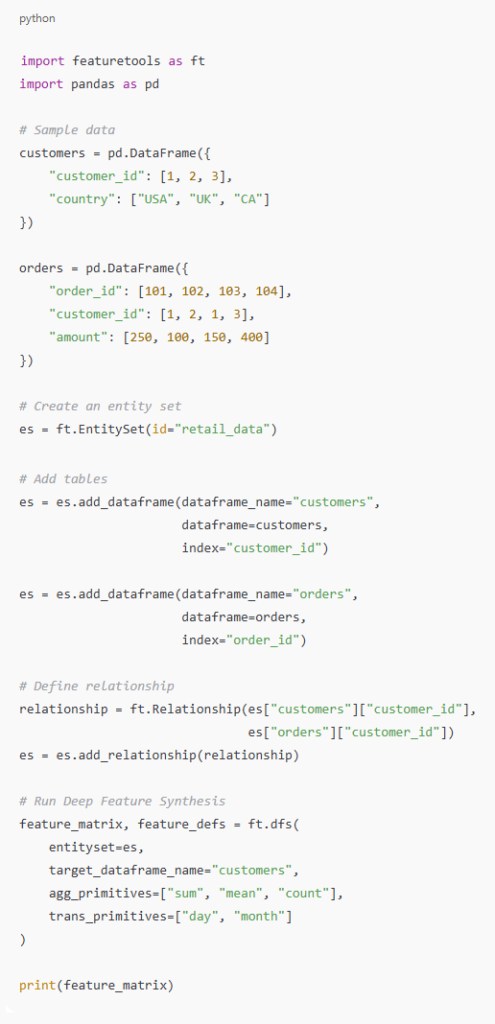
مثال على الكود : توليف الميزات العميقة في بايثون

فيما يلي مثال بسيط وواضح يوضح كيفية عمل هندسة الميزات المؤتمتة

Featuretools باستخدام مكتبة

: يُنشئ هذا المقتطف ميزات مُجمّعة تلقائياً، مثل

 إجمالي مبلغ الشراء *

 متوسط ​​قيمة الطلب *

 عدد الطلبات *

 تحويلات زمنية *

تُولّد جميعها في ثوانٍ

Advertisements

تُسرّع هندسة الميزات المؤتمتة وقت التطوير وتُوسّع نطاق الإبداع التحليلي وتُحسّن جودة نماذج التعلم الآلي، فهي تُخفّف من عبء التحويلات المتكررة وتُحسّن قابلية التفسير وتُمكّن الفرق الصغيرة من تحقيق نتائج بمستوى الخبراء، بحيث يُمكن أن تكون تحسينات دقة النموذج هائلة لأن النظام يستكشف تركيبات تتجاوز بكثير القدرات البشرية

لنفترض أن شركة تجزئة تُعدّ نموذجاً للتنبؤ بانخفاض عدد العملاء، وهنا تكشف الهندسة اليدوية عن رؤى أساسية مثل تكرار الشراء وتفضيلات المنتجات ونشاط الولاء، بينما تكشف هندسة الميزات الآلية عن أبعاد أعمق مثل الأنماط الموسمية وسلوكيات فترات التخفيض وحساسية الخصم والتفاعلات غير المُلاحظة سابقاً بين مجموعات المنتجات  وعليه تُعيد هذه الاكتشافات تشكيل النموذج بالكامل وتُعزز بشكل كبير القدرة التنبؤية

في أنظمة العمل الحديثة تقع هندسة الميزات المؤتمتة بين إعداد البيانات وتدريب النماذج، فهي تُقلل من حلقات التكرار وتُبسط عملية التجريب وتُعزز استقرار الأداء

السحابية AutoML وعند دمجها مع أنظمة

تُصبح العملية متكاملة تقريباً مما يسمح للفرق بالانتقال مباشرةً من البيانات الخام إلى التنبؤات المُتحقق منها بأقل قدر من الاحتكاك

ستفهم الأنظمة المستقبلية المدخلات البشرية بشكل أكثر طبيعية وتُفسر سياق العمل وتُنشئ ميزات تتوافق مع منطق قطاع مُحدد بدلاً من التحولات العامة، وبناءً عليه سيتطور الذكاء الاصطناعي إلى مساعد ذكي يتعلم من تفضيلات المشروع ويُنتج استراتيجيات هندسة ميزات مُراعية للمجال، وسيُعزز هذا التحول سرعة وجودة التحليلات التنبؤية

تُمثل هندسة الميزات المؤتمتة علامة فارقة في تطور التعلم الآلي، فهي تُمكّن الفرق من اكتشاف الأنماط المُخبأة في أعماق بياناتها وتُعزز أداء النماذج التنبؤية وتُزيل قيود العمليات اليدوية التقليدية، فمن خلال تبني الأتمتة يتمكن متخصصو البيانات من التركيز على الرؤى الاستراتيجية والاستكشاف الإبداعي واتخاذ القرارات المؤثرة

Advertisements

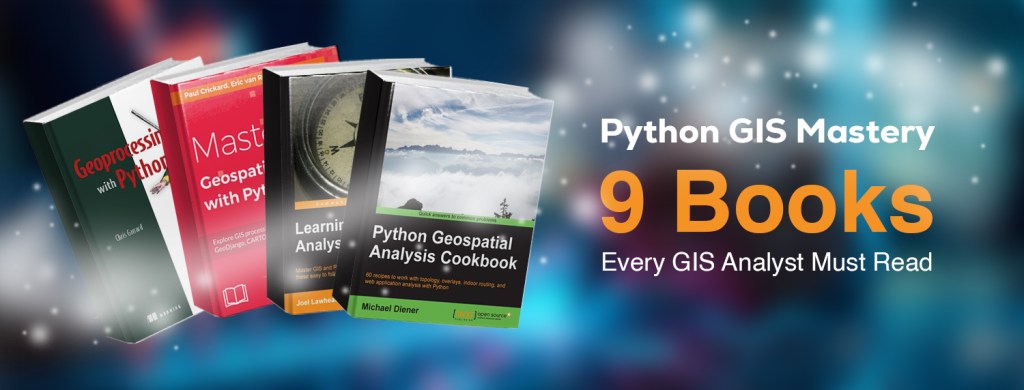
Python GIS Mastery – nine Books Every GIS Analyst Must Read

Advertisements

Geospatial data is no longer limited to maps and traditional GIS systems. Today, Python provides a bridge connecting GIS expertise with the power of data science. Professionals who understand spatial data and can manipulate it programmatically are in high demand. The path from GIS to data science requires not just learning new Python libraries, but also understanding spatial thinking, analytics, and automation.

This article presents nine essential books that will strengthen your Python geospatial skills and guide you in becoming a full-fledged GIS data scientist. Each book is carefully selected to cover theory, practical exercises, automation, and advanced spatial analysis, giving you a clear roadmap to excel in GIS with Python.

This book is perfect for practitioners looking for a hands-on approach. It offers a variety of practical recipes that cover data formats, shapefiles, raster data, coordinate reference systems, and common spatial operations. Each chapter focuses on solving real-world GIS problems while teaching Python techniques. You will learn how to read, process, and analyze spatial datasets, automate repetitive tasks, and visualize results using popular libraries like Geopandas and Matplotlib. The step-by-step approach allows GIS analysts transitioning from desktop software to gain confidence in coding efficiently while seeing immediate results. This makes it an ideal starting point for anyone wanting to build a strong foundation in Python geospatial analysis.

This book is a comprehensive guide for beginners and intermediate GIS professionals. It starts by explaining the basic principles of Geographic Information Systems, including projections, coordinate systems, and spatial data types. Then, it introduces Python programming for spatial analysis. You will explore automation of GIS tasks using libraries like Geopandas, Rasterio, Shapely, and Fiona. The book provides exercises to manipulate vector and raster datasets, perform spatial joins, and create maps programmatically. The clear connection between GIS theory and Python implementation helps build a solid understanding for anyone aiming to automate GIS workflows and prepare for data science applications in spatial contexts.

This advanced book is for those who already understand the basics of Python GIS. It delves into network analysis, spatial databases, and the development of web-based geospatial applications using Flask and Leaflet. You will learn to integrate Python scripts with PostGIS databases, perform advanced spatial queries, and develop interactive spatial dashboards. The book emphasizes combining Python programming skills with GIS knowledge to tackle complex problems in transportation, urban planning, and environmental modeling. It encourages readers to think like spatial data scientists, moving from simple map creation to data-driven decision making using Python as the main tool.

Focused on automation, this book shows how to streamline GIS workflows both inside traditional desktop GIS environments and in open-source Python ecosystems. It explains ARCPY, OGR, Shapely, and Fiona in depth, teaching readers to automate repetitive tasks like geocoding, spatial joins, and map production. You will gain practical skills for cleaning and transforming large spatial datasets, preparing them for analysis or visualization. It is particularly useful for GIS professionals who want to reduce manual work and integrate Python into everyday GIS operations, saving time and increasing accuracy in projects.

This book combines spatial statistics with data science thinking. It moves beyond map creation to predictive modeling and data-driven insights using libraries like Pandas, Scikit Learn, and Geopandas. You will learn to calculate spatial autocorrelation, perform clustering and regression on geospatial datasets, and integrate spatial variables into machine learning models. It is ideal for GIS analysts who want to apply analytical methods to uncover patterns, trends, and relationships in spatial data, making it relevant for urban planning, environmental studies, and business analytics projects where Python provides an edge in processing and analysis.

Advertisements

Developed by university researchers, this open textbook is freely accessible and teaches automated workflows in GIS using Python. It covers reading, writing, and visualizing spatial data, performing basic and advanced analysis, and writing reusable scripts for reproducible research. You will learn best practices for structuring code, managing projects, and documenting workflows, which is essential for GIS professionals entering the data science world.

This newer release expands on her previous work by introducing advanced techniques like geocoding, clustering, and spatial machine learning. It brings together theory and applied projects that resemble real data science pipelines, making it an excellent progression once you have mastered the basics. You will learn to perform spatial clustering to detect hotspots, apply machine learning models to geospatial data, and integrate Python visualization tools to create interactive and informative maps. The book strengthens both analytical thinking and coding skills, giving GIS analysts practical experience to operate at the intersection of GIS and data science.

This book guides you through open-source GIS ecosystems like QGIS and PostGIS while integrating them with Python automation. It is designed for professionals who want to bridge desktop GIS experience with backend database-driven systems. You will learn to connect Python scripts with spatial databases, automate data imports and exports, perform spatial queries, and develop workflows that combine GIS tools with programmatic solutions, enhancing productivity and ensuring reproducibility in GIS projects.

One of the earliest yet still relevant references on building complete geospatial applications. It walks you from handling coordinates and projections to creating interactive maps and integrating them with web frameworks. You will learn how to develop end-to-end geospatial projects, acquire data, process it, visualize results, and deliver interactive mapping solutions. This book is ideal as a final step in your journey, consolidating Python skills and GIS knowledge to produce professional geospatial applications.

Moving from GIS to data science is more than learning new syntax. It is about changing how you think about data. Each of these ten books gives you not just tools, but ways of reasoning spatially, computationally, and statistically. By reading them and applying their lessons, you will transform from a map maker into a spatial data scientist capable of solving complex challenges with Python. The roadmap provided by these books ensures you grow from a GIS analyst to a Python-powered geospatial expert, ready to tackle any real-world spatial problem.

Advertisements

إتقان بايثون لنظم المعلومات الجغرافية: تسعة كتب أساسية يجب على كل محلل نظم معلومات جغرافية قراءتها

Advertisements

لم تعد البيانات الجغرافية المكانية مقتصرة على الخرائط وأنظمة المعلومات الجغرافية التقليدية، فاليوم تُوفر بايثون جسراً يربط بين خبرة نظم المعلومات الجغرافية وقوة علم البيانات، فهناك طلب كبير على المتخصصين الذين يفهمون البيانات المكانية ويستطيعون معالجتها برمجياً، إذ لا يتطلب الانتقال من نظم المعلومات الجغرافية إلى علم البيانات مجرد تعلم مكتبات بايثون جديدة بل يتطلب أيضاً فهم التفكير المكاني والتحليلات والأتمتة

تقدم هذه المقالة تسعة كتب أساسية تُعزز مهاراتك الجغرافية المكانية في بايثون وتُرشدك لتصبح عالم بيانات متخصصاً في نظم المعلومات الجغرافية، فقد تم اختيار كل كتاب بعناية ليغطي الجوانب النظرية والتمارين العملية والأتمتة والتحليل المكاني المتقدم مما يمنحك خارطة طريق واضحة للتفوق في نظم المعلومات الجغرافية باستخدام بايثون

هذا الكتاب مثالي للمتخصصين الذين يبحثون عن نهج عملي، إذ يقدم هذا الكتاب مجموعة متنوعة من الوصفات العملية التي تغطي تنسيقات البيانات وملفات الأشكال والبيانات النقطية وأنظمة الإحداثيات المرجعية والعمليات المكانية الشائعة، بحيث يركز كل فصل على حل مشاكل نظم المعلومات الجغرافية الواقعية مع تعليم تقنيات بايثون، فيه ستتعلم كيفية قراءة ومعالجة وتحليل مجموعات البيانات المكانية وأتمتة المهام المتكررة

Matplotlibو Geopandas وتصور النتائج باستخدام مكتبات شائعة مثل

إذ يتيح هذا النهج التدريجي لمحللي نظم المعلومات الجغرافية الذين ينتقلون من برامج سطح المكتب اكتساب الثقة في البرمجة بكفاءة مع رؤية نتائج فورية وهذا ما يجعله نقطة انطلاق مثالية لأي شخص يرغب في بناء أساس متين في التحليل الجغرافي المكاني باستخدام بايثون

يُعد هذا الكتاب دليلاً شاملاً للمبتدئين ومحترفي نظم المعلومات الجغرافية ذوي الخبرة المتوسطة. يبدأ الكتاب بشرح المبادئ الأساسية لنظم المعلومات الجغرافية، بما في ذلك الإسقاطات، وأنظمة الإحداثيات، وأنواع البيانات المكانية. ثم يُقدم برمجة بايثون للتحليل المكاني

(GIS) ستستكشف أتمتة مهام نظم المعلومات الجغرافية

Fiona و Shapely و Rasterio و Geopandas باستخدام مكتبات مثل

يوفر الكتاب تمارين للتعامل مع مجموعات البيانات المتجهة والنقطية وإجراء عمليات الربط المكاني وإنشاء الخرائط برمجياً، بحيث يساعد الارتباط الواضح بين نظرية نظم المعلومات الجغرافية وتطبيقات بايثون على بناء فهم متين لأي شخص يسعى إلى أتمتة سير عمل نظم المعلومات الجغرافية والتحضير لتطبيقات علوم البيانات في السياقات المكاني

هذا الكتاب المتقدم مُصمم لمن يفهمون أساسيات بايثون لنظم المعلومات الجغرافية، إذ يتعمق الكتاب في تحليل الشبكات وقواعد البيانات المكانية

Flask و Leaflet وتطوير تطبيقات جغرافية مكانية على الويب باستخدام

PostGIS ستتعلم دمج نصوص بايثون مع قواعد بيانات

وإجراء استعلامات مكانية متقدمة وتطوير لوحات معلومات مكانية تفاعلية، بحيث يُركز الكتاب على الجمع بين مهارات برمجة بايثون ومعرفة نظم المعلومات الجغرافية لمعالجة المشكلات المعقدة في مجالات النقل والتخطيط الحضري والنمذجة البيئية، وبناءً على ذلك يُشجع هذا الكتاب القراء على التفكير كعلماء بيانات مكانية والانتقال من إنشاء الخرائط البسيطة إلى اتخاذ قرارات قائمة على البيانات باستخدام بايثون كأداة رئيسية

يُركز هذا الكتاب على الأتمتة

GIS ويُوضح كيفية تبسيط سير عمل نظم المعلومات الجغرافية

داخل بيئات نظم المعلومات الجغرافية المكتبية التقليدية وفي أنظمة بايثون مفتوحة المصدر

بعمق ARCPY و OGR و Shapely و Fiona يشرح الكتاب

ويُعلّم القراء كيفية أتمتة المهام المتكررة مثل الترميز الجغرافي والوصلات المكانية وإنتاج الخرائط، ستكتسب مهارات عملية لتنظيف وتحويل مجموعات البيانات المكانية الكبيرة وإعدادها للتحليل أو التصور، ويُعد هذا الكتاب مفيداً بشكل خاص لمحترفي نظم المعلومات الجغرافية الذين يرغبون في تقليل العمل اليدوي ودمج بايثون في عمليات نظم المعلومات الجغرافية اليومية مما يوفر الوقت ويزيد من دقة المشاريع

Advertisements

يجمع هذا الكتاب بين الإحصاءات المكانية والتفكير في علم البيانات، إذ يتجاوز هذا البرنامج إنشاء الخرائط ليصل إلى النمذجة التنبؤية والرؤى المستندة إلى البيانات

Pandas و Scikit Learn و Geopandas باستخدام مكتبات مثل

ستتعلم كيفية حساب الارتباط التلقائي المكاني وإجراء التجميع والانحدار على مجموعات البيانات الجغرافية المكانية ودمج المتغيرات المكانية في نماذج التعلم الآلي، وهو مثالي لمحللي نظم المعلومات الجغرافية الراغبين في تطبيق أساليب تحليلية لاكتشاف الأنماط والاتجاهات والعلاقات في البيانات المكانية مما يجعله مناسباً لمشاريع التخطيط الحضري والدراسات البيئية وتحليلات الأعمال حيث توفر بايثون ميزة في المعالجة والتحليل

هذا الكتاب المفتوح الذي طُوّر من قِبل باحثين جامعيين متاح مجاناً ويُدرّس سير العمل الآلي في نظم المعلومات الجغرافية باستخدام بايثون، إذ يُغطي الكتاب قراءة البيانات المكانية وكتابتها وتصورها وإجراء تحليلات أساسية ومتقدمة وكتابة نصوص برمجية قابلة لإعادة الاستخدام لأبحاث قابلة للتكرار، ستتعلم أفضل الممارسات لهيكلة الأكواد البرمجية وإدارة المشاريع وتوثيق سير العمل وهو أمر أساسي لمحترفي نظم المعلومات الجغرافية الذين يدخلون عالم علوم البيانات

يُوسّع هذا الإصدار الجديد نطاق أعمالها السابقة من خلال تقديم تقنيات متقدمة مثل الترميز الجغرافي والتجميع والتعلم الآلي المكاني، يجمع الكتاب بين النظرية والمشاريع التطبيقية التي تُحاكي مسارات علم البيانات الحقيقية مما يجعله تقدماً ممتازاً بمجرد إتقان الأساسيات. ستتعلم كيفية إجراء التجميع المكاني لاكتشاف النقاط الساخنة وتطبيق نماذج التعلم الآلي على البيانات الجغرافية المكانية ودمج أدوات تصور بايثون لإنشاء خرائط تفاعلية وغنية بالمعلومات، يُعزز الكتاب مهارات التفكير التحليلي والبرمجة مما يمنح محللي نظم المعلومات الجغرافية خبرة عملية للعمل في تقاطع نظم المعلومات الجغرافية وعلوم البيانات

يرشدك هذا الكتاب عبر أنظمة نظم المعلومات الجغرافية

مع دمجها مع أتمتة بايثون QGIS و PostGIS مفتوحة المصدر مثل

صُمم هذا الكتاب للمحترفين الذين يرغبون في ربط خبرة أنظمة المعلومات الجغرافية المكتبية بأنظمة تعتمد على قواعد البيانات الخلفية، ستتعلم كيفية ربط نصوص بايثون بقواعد البيانات المكانية وأتمتة عمليات استيراد وتصدير البيانات وإجراء الاستعلامات المكانية وتطوير سير عمل تجمع بين أدوات نظم المعلومات الجغرافية والحلول البرمجية مما يعزز الإنتاجية ويضمن إمكانية التكرار في مشاريع نظم المعلومات الجغرافية

يُعد هذا الكتاب من أقدم المراجع وأكثرها أهمية في بناء تطبيقات جغرافية مكانية متكاملة ويرشدك من التعامل مع الإحداثيات والإسقاطات إلى إنشاء خرائط تفاعلية ودمجها مع أطر عمل الويب. ستتعلم كيفية تطوير مشاريع جغرافية مكانية شاملة وجمع البيانات ومعالجتها وتصور النتائج وتقديم حلول خرائط تفاعلية. يُعد هذا الكتاب مثالياً كخطوة أخيرة في رحلتك حيث يجمع بين مهارات بايثون ومعرفتك بنظم المعلومات الجغرافية لإنتاج تطبيقات جغرافية مكانية احترافية

الانتقال من نظم المعلومات الجغرافية إلى علم البيانات يتجاوز مجرد تعلم قواعد لغوية جديدة، بل يتعلق بتغيير طريقة تفكيرك في البيانات، فكل كتاب من هذه الكتب العشرة لا يمنحك أدوات فحسب بل طرقاً للتفكير مكانياً وحسابياً وإحصائياً، وبقراءتها وتطبيق دروسها ستتحول من مصمم خرائط إلى عالم بيانات مكانية قادر على حل التحديات المعقدة باستخدام بايثون، تضمن لك خريطة الطريق التي تقدمها هذه الكتب التطور من محلل نظم معلومات جغرافية إلى خبير جغرافي مكاني معتمد على بايثون جاهزاً لمعالجة أي مشكلة مكانية واقعية.

Advertisements

Data Governance for Small Businesses: Turning Information into an Asset

By Virginia Cooper

Advertisements

In today’s data-driven economy, even small businesses are becoming information ecosystems. Customer lists, sales metrics, and supplier data are no longer just operational details—they’re strategic assets that demand governance. Data governance ensures that data is accurate, secure, accessible, and used responsibly. Without it, businesses risk inefficiencies, compliance issues, and loss of customer trust.

  • Data governance = policies + processes that ensure your data is trustworthy and usable.
  • It protects small businesses from data breaches, regulatory fines, and decision errors.
  • Start simple: define who owns the data, how it’s collected, where it’s stored, and how it’s used.
  • Adopt digital tools and frameworks that automate compliance and security checks.
  • Continuous monitoring and employee training make governance sustainable.

Good governance transforms raw data into actionable intelligence. For small businesses, it’s a survival strategy—not a luxury.

  • Improved decision-making: Reliable data fuels accurate analytics and forecasts.
  • Regulatory compliance: Ensures adherence to privacy laws like GDPR and CCPA.
  • Operational efficiency: Reduces duplication and streamlines workflows.
  • Customer trust: Protects personal information and reinforces brand credibility.
  • Business continuity: Supports risk management and disaster recovery efforts.

Consider this option: small businesses in regulated industries can explore cybersecurity degree programs online to deepen internal knowledge of data protection frameworks.

Data governance isn’t only about compliance—it’s about creating trust frameworks between a business and its stakeholders.
 By implementing robust data controls, even micro-enterprises can operate with the same rigor as large corporations. Consider aligning governance with standards like ISO 27001 or adopting cloud-native tools from providers such as Microsoft Azure Security Center.

Small businesses that master governance early often outperform competitors when scaling, since they can integrate new data sources without chaos or compliance gaps.

PillarDescriptionPractical Example
AccountabilityAssign clear data ownership and responsibilities.The finance manager oversees all transaction data.
IntegrityMaintain accurate and consistent data records.Use validation rules in CRM tools to prevent errors.
SecurityProtect data from unauthorized access.Implement two-factor authentication and encrypted backups.
ComplianceAlign data practices with legal and ethical standards.Ensure opt-in consent for marketing emails.
  1. Assess Current Data Landscape
    • Identify what data exists, where it resides, and how it’s used.
    • Use a simple audit checklist.
  2. Create a Governance Policy
    • Document rules for collection, storage, and sharing.
    • Define roles and escalation paths.
  3. Select the Right Tools
  4. Train Your Team
    • Educate employees about privacy, phishing, and data handling.
    • Encourage reporting of data anomalies.
  5. Monitor, Audit, and Improve
    • Review governance effectiveness quarterly.
    • Automate alerts for anomalies using tools like Splunk Security Cloud.
Advertisements
  • Defined data owners and custodians
  • Regular backup and recovery testing
  • Privacy compliance reviewed annually
  • Multi-factor authentication implemented
  • Employee training conducted quarterly
  • Documented breach response plan
  • Vendor risk assessments completed

Use this checklist quarterly to evaluate your company’s data maturity.

Q1: What is the biggest data governance mistake small businesses make?
A: Treating governance as an IT issue rather than a business-wide responsibility.

Q2: How often should governance policies be reviewed?
A: At least annually, or after major system or regulation changes.

Q3: Do I need expensive software for governance?
A: Not necessarily. Even simple platforms like Google Workspace Admin Console offer access controls and audit logs.

Q4: Who should lead the governance initiative?
A: Ideally, a cross-functional team with representation from management, IT, and operations.

  • Data Governance: Framework for managing data’s availability, usability, integrity, and security.
  • Metadata: Data about data—used to track origin, context, and usage.
  • Compliance: Adherence to regulations governing data privacy and protection.
  • Data Steward: Person responsible for maintaining data quality and policy compliance.
  • Access Control: Mechanism restricting data usage to authorized individuals.

Modern small businesses benefit from automation platforms that monitor compliance in real-time. Tools such as OneTrust, Vanta, and Drata simplify SOC 2 and GDPR readiness, freeing owners to focus on growth. These systems integrate seamlessly with CRMs, HR systems, and accounting tools, creating continuous visibility into your data environment.


Data governance is no longer optional. For small businesses, it’s the foundation of credibility, continuity, and competitive advantage. By starting small—assigning ownership, defining clear policies, and adopting security tools—you build the scaffolding for long-term data integrity.

When your data is well-governed, your business decisions become more confident, your customers more loyal, and your operations more resilient.

Unlock the power of data with Data World Consulting Group and explore our expert solutions and educational resources to elevate your business and learning journey today!

by Virginia Cooper

Advertisements

حوكمة البيانات للشركات الصغيرة: تحويل المعلومات إلى أصول

Advertisements

في اقتصاد اليوم القائم على البيانات أصبحت حتى الشركات الصغيرة تُصبح أنظمةً بيئيةً للمعلومات، لم تعد قوائم العملاء ومقاييس المبيعات وبيانات الموردين مجرد تفاصيل تشغيلية بل أصبحت أصولاً استراتيجية تتطلب حوكمة، تضمن حوكمة البيانات دقة البيانات وأمانها وسهولة الوصول إليها واستخدامها بمسؤولية، وبدونها تُواجه الشركات مخاطر انعدام الكفاءة ومشاكل الامتثال وفقدان ثقة العملاء

حوكمة البيانات = سياسات + عمليات تضمن موثوقية بياناتك وقابليتها للاستخدام *

تحمي الشركات الصغيرة من خروقات البيانات والغرامات التنظيمية وأخطاء اتخاذ القرارات *

ابدأ ببساطة: حدد من يملك البيانات وكيف تُجمع وأين تُخزن وكيف تُستخدم *

اعتمد أدوات وأطر عمل رقمية تُؤتمت عمليات التحقق من الامتثال والأمان *

المراقبة المستمرة وتدريب الموظفين يجعلان الحوكمة مستدامة *

تحوّل الحوكمة الرشيدة البيانات الخام إلى معلومات استخباراتية عملية، فبالنسبة للشركات الصغيرة إنها استراتيجية بقاء وليست رفاهية

تحسين عملية اتخاذ القرارات: تُعزز البيانات الموثوقة دقة التحليلات والتوقعات *

الامتثال للوائح التنظيمية: يضمن الالتزام بقوانين الخصوصية *

GDPR مثل اللائحة العامة لحماية البيانات

CCPA وقانون خصوصية المستهلك في كاليفورنيا

الكفاءة التشغيلية: تُقلل من التكرار وتُبسط سير العمل *

ثقة العملاء: تحمي المعلومات الشخصية وتعزز مصداقية العلامة التجارية *

استمرارية الأعمال: تدعم جهود إدارة المخاطر والتعافي من الكوارث *

فكّر في هذا الخيار: يمكن للشركات الصغيرة في القطاعات الخاضعة للتنظيم استكشاف برامج شهادات الأمن السيبراني عبر الإنترنت لتعميق معرفتها الداخلية بأطر حماية البيانات

لا تقتصر حوكمة البيانات على الامتثال فحسب بل تشمل أيضاً بناء أطر ثقة بين الشركة وأصحاب المصلحة من خلال تطبيق ضوابط بيانات قوية يمكن حتى للشركات الصغيرة جداً العمل بنفس دقة الشركات الكبيرة

ISO 27001 فكّر في مواءمة الحوكمة مع معايير مثل

أو اعتماد أدوات سحابية أصلية من مزودين

Microsoft Azure Security Center مثل

الشركات الصغيرة التي تتقن الحوكمة مبكراً غالباً ما تتفوق على المنافسين عند التوسع، نظراً لقدرتها على دمج مصادر بيانات جديدة دون فوضى أو ثغرات في الامتثال

مثال عمليالوصفالركيزة
يشرف مدير المالية على جميع بيانات المعاملاتتحديد ملكية البيانات ومسؤولياتها بوضوحالمساءلة
استخدم قواعد التحقق في أدوات إدارة علاقات العملاء
لتجنب الأخطاء (CRM)
الاحتفاظ بسجلات بيانات دقيقة ومتسقةالنزاهة
طبّق المصادقة الثنائية والنسخ الاحتياطية المشفرةحماية البيانات من الوصول غير المصرح بهالأمن
تأكد من الموافقة على رسائل البريد الإلكتروني التسويقيةمواءمة ممارسات البيانات مع المعايير القانونية والأخلاقيةالامتثال

تحديد البيانات الموجودة ومكانها وكيفية استخدامها ●

استخدام قائمة تدقيق بسيطة ●

توثيق قواعد التجميع والتخزين والمشاركة ●

تحديد الأدوار ومسارات التصعيد ●

اختيار أنظمة مزودة بمسارات تدقيق وإمكانية وصول قائمة على الأدوار ●

Asana Business أو Trello Enterprise أدوات مثل ●

تساعد في تنظيم سير العمل

تثقيف الموظفين حول الخصوصية والتصيد الاحتيالي ومعالجة البيانات ●

تشجيع الإبلاغ عن أي خلل في البيانات ●

مراجعة فعالية الحوكمة ربع سنوياً ●

أتمتة التنبيهات الخاصة بالخلل ●

Splunk Security Cloud باستخدام أدوات مثل

Advertisements

تحديد مالكي البيانات وأمنائها ●

اختبارات النسخ الاحتياطي والاسترداد الدورية ●

مراجعة الامتثال للخصوصية سنوياً ●

تطبيق المصادقة متعددة العوامل ●

تدريب الموظفين ربع سنوياً ●

خطة موثقة للاستجابة للاختراق ●

إكمال تقييمات مخاطر الموردين ●

استخدم قائمة المراجعة هذه ربع سنوياً لتقييم نضج بيانات شركتك 

س1: ما هو أكبر خطأ ترتكبه الشركات الصغيرة في مجال حوكمة البيانات؟

ج: التعامل مع الحوكمة كمسألة تتعلق بتكنولوجيا المعلومات بدلاً من كونها مسؤولية على مستوى الشركة

س2: ما مدى تكرار مراجعة سياسات الحوكمة؟

ج: سنوياً على الأقل، أو بعد تغييرات كبيرة في النظام أو اللوائح

س3: هل أحتاج إلى برامج باهظة الثمن للحوكمة؟ ج: ليس بالضرورة، حتى المنصات البسيطة

Google Workspace مثل وحدة تحكم مشرف

توفر عناصر تحكم في الوصول وسجلات تدقيق

س4: من ينبغي أن يقود مبادرة الحوكمة؟

ج: من الأفضل أن يكون هناك فريق متعدد الوظائف يضم ممثلين من الإدارة وتكنولوجيا المعلومات والعمليات

البيانات الوصفية: بيانات حول البيانات تُستخدم لتتبع مصدرها وسياقها واستخدامها ●

الامتثال: الالتزام باللوائح التي تحكم خصوصية البيانات وحمايتها ●

مسؤول البيانات: الشخص المسؤول عن الحفاظ على جودة البيانات والامتثال للسياسات ●

التحكم في الوصول: آلية تقصر استخدام البيانات على الأفراد المصرح لهم ●

تستفيد الشركات الصغيرة الحديثة من منصات الأتمتة التي تراقب الامتثال آنياً

OneTrust و Vanta و Drata بحيث تُبسِّط أدوات مثل

SOC 2 عملية الاستعداد لمعايير

GDPR واللائحة العامة لحماية البيانات

مما يُتيح لأصحاب الأعمال التركيز على النمو، بحيث تتكامل هذه الأنظمة بسلاسة

CRM مع أنظمة إدارة علاقات العملاء

وأنظمة الموارد البشرية وأدوات المحاسبة مما يُتيح رؤيةً مُستمرةً لبيئة بياناتك


لم تعد حوكمة البيانات خياراً، فبالنسبة للشركات الصغيرة هي أساس المصداقية والاستمرارية والميزة التنافسية، وعليه فالبدء على نطاق صغير – بتحديد الملكية وتحديد سياسات واضحة واعتماد أدوات أمنية تُرسي دعائم سلامة البيانات على المدى الطويل

عندما تُدار بياناتك جيداً تصبح قرارات عملك أكثر ثقة وعملاؤك أكثر ولاءً وعملياتك أكثر مرونة

Data World Consulting Group اكتشف قوة البيانات مع

! واستكشف حلولنا المتخصصة ومواردنا التعليمية للارتقاء بأعمالك ورحلتك التعليمية اليوم

by Virginia Cooper

Advertisements

What Every Data Scientist Must Know About Statistical Data Types

Advertisements

Every great data science project begins with understanding one simple truth — not all data is created equal. Before diving into algorithms, visualizations, or predictions, you must know what kind of data you are working with. Misunderstanding data types can lead to incorrect models, wrong insights, and hours of confusion. In this article, we will explore the types of data in statistics and how each plays a critical role in the world of data science.

All data in statistics can be classified into two main types — qualitative (categorical) and quantitative (numerical).

This type represents qualities, categories, or labels rather than numbers. It answers what kind rather than how much. Examples include gender, color, type of car, or country of origin.

In data science, categorical data helps in classification tasks like predicting whether an email is spam or not, or identifying the genre of a song based on lyrics.

There are two subtypes:

  • Nominal Data: No order or hierarchy between categories. Example: colors (red, blue, green).
  • Ordinal Data: Has a meaningful order, but the intervals between categories are not equal. Example: satisfaction levels (poor, fair, good, excellent).

This type deals with numbers and measurable quantities. It answers how much or how many. Quantitative data powers regression models, trend analysis, and time series forecasting.

Subtypes include:

  • Discrete Data: Countable values, often whole numbers. Example: number of students in a class.
  • Continuous Data: Infinite possible values within a range. Example: height, weight, or temperature.

Beyond basic classification, data can also be described based on its measurement scale, which defines how we can analyze and interpret it statistically.

Purely categorical with no numerical meaning. Used for grouping or labeling. Example: blood type or eye color.
Data science use: Encoding these variables (like one-hot encoding) for machine learning models.

Ordered categories, but without measurable difference between ranks. Example: star ratings on a product (1–5 stars).
Data science use: Great for survey analysis or ranking models, often converted to integers for algorithms.

Numerical data with equal intervals, but no true zero point. Example: temperature in Celsius or Fahrenheit.
Data science use: Common in time series or sensor data where the zero point is arbitrary.

The highest level of data measurement, with equal intervals and a true zero point. Example: weight, distance, or income.
Data science use: Used in predictive modeling, regression, and deep learning tasks requiring exact numeric relationships.

Advertisements

Understanding data types is more than academic theory — it directly shapes every decision you make as a data scientist:

  • Data Cleaning: Knowing whether to impute missing values with mean (for continuous) or mode (for categorical).
  • Feature Engineering: Deciding how to encode or transform variables for algorithms.
  • Visualization: Choosing appropriate plots — bar charts for categorical, histograms for continuous.
  • Model Selection: Some algorithms handle specific data types better (e.g., decision trees handle categorical data naturally).

Without correctly identifying your data types, even the most advanced model will mislead you.

Imagine you are analyzing a dataset about customer purchases for an e-commerce company. Here’s how different data types appear:

VariableData TypeExampleUse Case
Customer IDNominalC1023Identifier
GenderNominalFemaleSegmentation
Age GroupOrdinal18–25, 26–35Market analysis
Purchase AmountRatio120.50Revenue modeling
Date of PurchaseInterval2025-11-05Trend analysis
Items BoughtDiscrete3Purchase frequency

By correctly classifying these data types, you can efficiently prepare data for machine learning models, visualize insights properly, and make reliable business decisions.

In the age of AI and automation, the human skill of understanding data remains irreplaceable. Knowing whether your variable is nominal or ratio could be the difference between success and misleading outcomes. As a data scientist, always start with data classification before analysis — it’s the quiet foundation behind every powerful insight and accurate prediction.

Advertisements

أنواع البيانات الإحصائية التي يجب على عالِم بيانات أن يعرفها

Advertisements

يبدأ كل مشروع علم بيانات عظيم بفهم حقيقة بسيطة واحدة – ليست كل البيانات متساوية، فقبل الخوض في الخوارزميات أو التصورات أو التنبؤات يجب أن تعرف نوع البيانات التي تعمل عليها، إذ قد يؤدي سوء فهم أنواع البيانات إلى نماذج غير صحيحة ورؤى خاطئة وساعات من الارتباك

وفي هذه المقالة سنستكشف أنواع البيانات في الإحصاء وكيف يلعب كل منها دوراً حاسماً في عالم علم البيانات

: يمكن تصنيف جميع البيانات في الإحصاء إلى نوعين رئيسيين

البيانات النوعية (الفئوية) والكمية (العددية)

يمثل هذا النوع الصفات أو الفئات أو التسميات بدلاً من الأرقام، فهو يُجيب على نوع البيانات بدلاً من كميتها، ومن الأمثلة على ذلك الجنس أو اللون أو نوع السيارة أو بلد المنشأ، ففي علم البيانات تُساعد البيانات التصنيفية في مهام التصنيف مثل التنبؤ بما إذا كان البريد الإلكتروني بريداً عشوائياً أم لا أو تحديد نوع الأغنية بناءً على كلماتها

:هناك نوعان فرعيان

البيانات الاسمية: لا يوجد ترتيب أو تسلسل هرمي بين الفئات، مثال: الألوان (أحمر، أزرق، أخضر)

البيانات الترتيبية: لها ترتيب ذو معنى لكن الفواصل بين الفئات غير متساوية ومثال على ذلك: مستويات الرضا (ضعيف – مقبول – جيد – ممتاز )

يتعامل هذا النوع مع الأرقام والكميات القابلة للقياس

how many أو how much إذ يُجيب على سؤال

تُعزز البيانات الكمية نماذج الانحدار وتحليل الاتجاهات والتنبؤ بالسلاسل الزمنية

:تشمل الأنواع الفرعية

البيانات المنفصلة: قيم قابلة للعد وغالباً ما تكون أعداداً صحيحة، مثال: عدد الطلاب في الفصل •

البيانات المتصلة: قيم محتملة لا نهائية ضمن نطاق، مثال: الطول – الوزن – أو درجة الحرارة • 

Advertisements

بالإضافة إلى التصنيف الأساسي يمكن وصف البيانات أيضاً بناءً على مقياس قياسها والذي يُحدد كيفية تحليلها وتفسيرها إحصائياً

تصنيفي بحت بدون معنى رقمي، إذ يُستخدم للتجميع أو الوسم، مثال: فصيلة الدم أو لون العين

استخدامات علم البيانات: ترميز هذه المتغيرات (مثل الترميز الساخن) لنماذج التعلم الآلي

فئات مرتبة ولكن بدون فرق قابل للقياس بين الرتب، مثال: تقييمات النجوم لمنتج (من 1 إلى 5 نجوم)

استخدامات علم البيانات: رائعة لتحليل الاستبيانات أو نماذج التصنيف وغالباً ما تُحوّل إلى أعداد صحيحة للخوارزميات

بيانات رقمية ذات فترات زمنية متساوية ولكن بدون نقطة صفر حقيقية، مثال: درجة الحرارة بالدرجة المئوية أو الفهرنهايت

استخدامات علم البيانات: شائعة في السلاسل الزمنية أو بيانات الاستشعار حيث تكون نقطة الصفر عشوائية

أعلى مستوى لقياس البيانات بفترات زمنية متساوية ونقطة صفر حقيقية، مثال: الوزن – المسافة – الدخل

استخدامات علم البيانات: تُستخدم في النمذجة التنبؤية والانحدار ومهام التعلم العميق التي تتطلب علاقات رقمية دقيقة

فهم أنواع البيانات يتجاوز مجرد نظرية أكاديمية فهو يُؤثر بشكل مباشر على كل قرار تتخذه كعالم بيانات

تنظيف البيانات: معرفة ما إذا كان يجب إدخال القيم المفقودة باستخدام المتوسط ​​الحسابي (للبيانات المستمرة) أو المنوال (للبيانات الفئوية)

هندسة الميزات: تحديد كيفية ترميز أو تحويل المتغيرات للخوارزميات

التصور: اختيار المخططات البيانية المناسبة – المخططات الشريطية للبيانات الفئوية والمدرجات التكرارية للبيانات المستمرة

اختيار النموذج: تتعامل بعض الخوارزميات مع أنواع بيانات محددة بشكل أفضل (على سبيل المثال: تتعامل أشجار القرار مع البيانات الفئوية بشكل طبيعي) بدون تحديد أنواع بياناتك بشكل صحيح حتى أكثر النماذج تقدماً ستُضللك

تخيل أنك تُحلل مجموعة بيانات حول مشتريات العملاء لشركة تجارة إلكترونية

:إليك كيفية ظهور أنواع البيانات المختلفة

VariableData TypeExampleUse Case
Customer IDNominalC1023Identifier
GenderNominalFemaleSegmentation
Age GroupOrdinal18–25, 26–35Market analysis
Purchase AmountRatio120.50Revenue modeling
Date of PurchaseInterval2025-11-05Trend analysis
Items BoughtDiscrete3Purchase frequency

من خلال التصنيف الصحيح لهذه الأنواع من البيانات يمكنك إعداد البيانات بكفاءة لنماذج التعلم الآلي وتصوّر الرؤى بشكل صحيح واتخاذ قرارات عمل موثوقة

في عصر الذكاء الاصطناعي والأتمتة لا تزال مهارة فهم البيانات البشرية لا غنى عنها، فمعرفة ما إذا كان متغيرك اسمياً أم نسبياً قد يكون الفارق بين النجاح والنتائج المضللة، إذاً بصفتك عالم بيانات ابدأ دائماً بتصنيف البيانات قبل التحليل فهو الأساس الرصين لكل رؤية ثاقبة وتنبؤ دقيق

Advertisements

Role of AI in Reshaping Data Science Careers

Advertisements

In a world where artificial intelligence (AI) is no longer a futuristic concept but an active force in business and technology the field of data science finds itself at a crossroads. On one hand there are exciting opportunities: new tools, higher salaries, increasing demand. On the other hand there are questions: will AI replace data scientists? Are the job roles shifting so fast that what you learn now may be outdated tomorrow? If you are building or advising a career in data science (or your work touches on this area) then understanding what is actually happening in the job market is critical. In this article I explore the real‑world trends for 2025 in the data science and AI job market: the demand, the shifts in roles and skills, the risks, and how you as a professional (or aspiring one) can position yourself.

Demand is still strong but evolving

Numerous reports point to continued growth in data‑science and AI‑related roles. The job market for data scientists still expects around 21 000 new openings per year in the U.S. alone over the next decade.

Roles are shifting: specialization and infrastructure matter more

What is a “data scientist” nowadays is no longer the same as five years ago. Employers increasingly demand:

  • Strong machine‑learning/AI skills
  • Data engineering, MLOps and infrastructure skills become more prominent
  • Domain expertise (industry knowledge, ethical/AI governance) is a differentiator

Salary and compensation remain attractive

Salary data for data science/AI professionals show robust numbers. Many data science job postings in 2025 offer salaries in the $160 000‑$200 000 range in the U.S. In the AI segment salaries are slightly higher than standard data science roles.

AI is more complement than substitute (for now)

AI tends to augment high‑skill work more than it automates it away. Rather than viewing AI purely as a threat it is more accurate to see it as reshaping jobs and skill‑requirements.

Entry‑level roles are harder to find

Though demand is robust overall the competition for entry‑level and “generalist” data science roles is becoming tougher. The share of postings for 0‑2 years of experience decreased and salaries increased for more experienced candidates.

The “data scientist unicorn” is fading

Employers are less often looking for one person to do everything (data wrangling, feature engineering, modeling, deployment, business translation). Instead roles are splitting into: data engineer, ML/AI engineer, analytics engineer, data product manager.

Skills are changing fast

Because AI and data roles evolve rapidly, the required skill‑set is shifting:

  • Classic languages like Python and SQL remain vital; SQL has overtaken R in many job listings
  • Deep learning, NLP, MLOps are growing in importance
  • Soft skills, domain knowledge, ethics and governance are becoming differentiators
  • Skill‑based hiring is growing: employers value demonstrable skills (certifications, portfolios) perhaps more than formal degrees in some cases

The role of AI in affecting jobs is nuanced

Although there is concern about AI leading to widespread job loss, most evidence suggests that for now AI is not causing huge mass layoffs in high‑skill data/AI roles. Still the impact may accelerate in coming years.

Advertisements

Given your background in web design, motion graphics, brand identity etc your path may not be a classic “data scientist” role but the intersection of design, data and AI is very relevant. Here are some implications and opportunities:

  • Data‑driven design: More companies integrate analytics into design decisions. Knowing how to interpret data, dashboards, and link visuals to business outcomes can give you an edge.
  • Motion graphics + AI content: As you use tools like Adobe After Effects or Adobe Animate the rise of generative AI (GenAI) means you may collaborate with data/AI teams to visualise model outputs, dashboards, user workflows.
  • Upskilling counts: Even if you don’t become a data scientist you benefit from acquiring foundational data literacy—SQL basics, data visualisation tools, understanding ML workflows. These complement your design/brand skills and make you more versatile.
  • Branding AI capabilities: For your own services (web design, brand identity) you can offer value by saying “I understand how AI‑driven data flows affect UX” or “I can build dashboards with strong visual narrative”. That differentiates you.
  • Avoid entering a matured “commodity” space: Entry‑level data science is tougher. So if you pivot into data/AI you might target niches where your design/visualisation expertise is rare: e.g., AI ethics visualisations, UX for ML interfaces, dashboard storytelling, data‑driven branding.

In short: don’t wait for “data science job market explosion” to pass you by—position your existing strengths (design, visuals, motion) plus some data/AI fluency to ride the wave rather than be overtaken by it.

Here’s a practical roadmap for moving forward smartly:

  1. Audit your current skills
    • How comfortable are you with Python/SQL or data‑tools?
    • Do you understand basics of ML/AI workflows (model building, deployment) at a conceptual level?
    • How good are you at communicating insights visually and with business context?
  2. Pick a niche or combine strengths
    • Because generalist “data scientist” roles are less common now you’ll stand out by combining two strengths: e.g., “motion graphics + ML interpretability” or “web UI for data pipelines”.
    • Consider roles such as analytics engineer, data visualisation specialist, design‑driven data product owner.
  3. Upskill strategically
    • Focus on in‑demand skills: machine learning fundamentals; cloud/data engineering basics; MLOps; SQL; data visualisation tools
    • Also invest in “soft” but crucial skills: domain knowledge, communication, ethics, decision‑making
    • Consider a portfolio of projects rather than only relying on formal degrees (skill‑based hiring is rising)
  4. Stay adaptable and alert to shifts
    • The job market changes: roles will evolve as AI becomes more embedded
    • Entry‑level may stay competitive; experience + unique combo of skills will help
    • Keep your design/visual skills sharp—they will remain valuable even when AI changes some technical roles

In summary: the job market for data science and AI remains strong but changing. It is less about “will there be jobs” and more about “what kind of jobs, and with what skills”. For those able to combine technical fluency with domain, design, communication and flexibility the opportunities are excellent. For those expecting a straightforward path without continuous learning the environment will be competitive.

If I may invite you:
– Comment below with your own perspective: have you seen data/AI roles advertised in your region recently? What skills did they ask for?
– Consider writing a short list of three new skills you are willing to add this year to stay relevant in this shifting landscape.

Advertisements

دور الذكاء الاصطناعي في إعادة تشكيل مسارات علوم البيانات

Advertisements

في عالمٍ لم يعد فيه الذكاء الاصطناعي مفهوماً مستقبلياً بل قوةً فاعلةً في عالم الأعمال والتكنولوجيا، إذ يجد مجال علم البيانات نفسه عند مفترق طرق فمن ناحية ثمة فرصٌ واعدة: أدوات جديدة ورواتب أعلى وطلب متزايد، ومن ناحية أخرى ثمة تساؤلاتٌ : هل سيحل الذكاء الاصطناعي محل علماء البيانات وهل تتغير الأدوار الوظيفية بسرعةٍ كبيرةٍ لدرجة أن ما تتعلمه الآن قد يصبح قديماً غداً إذا كنتَ تبني أو تُقدّم المشورة المهنية في مجال علم البيانات (أو إذا كان عملك يتطرق إلى هذا المجال) فإن فهم ما يحدث فعلياً في سوق العمل أمرٌ بالغ الأهمية

في هذه المقالة أستكشف اتجاهات سوق العمل في مجال علم البيانات والذكاء الاصطناعي لعام 2025: الطلب والتحولات في الأدوار والمهارات والمخاطر وكيف يمكنكَ كمحترف (أو كطامح) تحديد وضعك المهني

لا يزال الطلب قوياً ولكنه في تطور

تشير العديد من التقارير إلى استمرار النمو في الأدوار المتعلقة بعلم البيانات والذكاء الاصطناعي، إذ لا يزال سوق العمل لعلماء البيانات يتوقع حوالي 21,000 وظيفة جديدة سنوياً في الولايات المتحدة وحدها على مدار العقد المقبل

الأدوار تتغير: التخصص والبنية التحتية أكثر أهمية

:لم يعد مفهوم “عالِم البيانات” اليوم كما كان قبل خمس سنوات، إذ يطلب أصحاب العمل بشكل متزايد

مهارات قوية في التعلم الآلي/الذكاء الاصطناعي •

أصبحت مهارات هندسة البيانات •

(MLOps) وعمليات إدارة العمليات الرئيسية

والبنية التحتية أكثر بروزاً

تُعدّ الخبرة في المجال (المعرفة بالقطاع والحوكمة الأخلاقية/حوكمة الذكاء الاصطناعي) عاملاً مميزاً •

لا تزال الرواتب والتعويضات مغرية

تُظهر بيانات الرواتب لمتخصصي علوم البيانات / الذكاء الاصطناعي أرقاماً قوية، بحيث تُقدّم العديد من إعلانات وظائف علوم البيانات في عام 2025 رواتب تتراوح بين 160,000 و200,000 دولار أمريكي في الولايات المتحدة، وفي قطاع الذكاء الاصطناعي تكون الرواتب أعلى قليلاً من وظائف علوم البيانات القياسية

يعتبر الذكاء الاصطناعي مكملاً أكثر منه بديلاً (في الوقت الحالي)

يميل الذكاء الاصطناعي إلى تعزيز العمل الذي يتطلب مهارات عالية أكثر من أتمتته، فبدلاً من النظر إلى الذكاء الاصطناعي كتهديد فحسب من الأدق النظر إليه على أنه يُعيد تشكيل الوظائف ومتطلبات المهارات

أصبحت وظائف المستوى المبتدئ أكثر صعوبة

على الرغم من قوة الطلب بشكل عام إلا أن المنافسة على وظائف المستوى المبتدئ ووظائف علوم البيانات “العامة” تزداد صعوبة، إذ انخفضت نسبة الوظائف الشاغرة لخبرة سنتين أو ثلاث سنوات وارتفعت رواتب المرشحين الأكثر خبرة

عالِم البيانات الطموح يتلاشى

أصبح أصحاب العمل يبحثون بشكل أقل عن شخص واحد للقيام بكل شيء (معالجة البيانات وهندسة الميزات والنمذجة والنشر وترجمة الأعمال)، وبدلاً من ذلك تنقسم الأدوار إلى: مهندس بيانات ومهندس تعلّم آلي/ذكاء اصطناعي ومهندس تحليلات ومدير منتجات بيانات

المهارات تتغير بسرعة

:نظراً للتطور السريع لأدوار الذكاء الاصطناعي والبيانات فإن مجموعة المهارات المطلوبة تتغير

حيوية SQL لا تزال اللغات الكلاسيكية مثل بايثون و •

في العديد من قوائم الوظائف R على لغة SQL تفوقت لغة

(NLP) تتزايد أهمية التعلم العميق ومعالجة اللغة الطبيعية •

(MLOps) وعمليات إدارة قواعد البيانات

أصبحت المهارات الشخصية والمعرفة بالمجال والأخلاقيات والحوكمة عوامل تميز •

دور الذكاء الاصطناعي في التأثير على الوظائف دقيق •

على الرغم من وجود مخاوف من أن يؤدي الذكاء الاصطناعي إلى فقدان وظائف على نطاق واسع تشير معظم الأدلة إلى أنه حتى الآن لا يُسبب الذكاء الاصطناعي تسريحات جماعية ضخمة في وظائف البيانات / الذكاء الاصطناعي عالية المهارات، ومع ذلك قد يتسارع هذا التأثير في السنوات القادمة

Advertisements

نظراً لخلفيتك في تصميم الويب والرسوم المتحركة وهوية العلامة التجارية وما إلى ذلك قد لا يكون مسارك المهني منصباً تقليدياً في مجال “عالم البيانات” ولكن تقاطع التصميم والبيانات والذكاء الاصطناعي بالغ الأهمية

: فلتناول بعض التداعيات والفرص

التصميم الموجه بالبيانات: تُدمج المزيد من الشركات التحليلات في قرارات التصميم، إن معرفة كيفية تفسير البيانات ولوحات المعلومات وربط العناصر المرئية بنتائج الأعمال يمكن أن يمنحك ميزة تنافسية

:محتوى الرسوم المتحركة والذكاء الاصطناعي

مع استخدامك لأدوات مثل

Adobe Animate أو Adobe After Effects

(GenAI) فإن صعود الذكاء الاصطناعي التوليدي

يعني أنه يمكنك التعاون مع فرق البيانات / الذكاء الاصطناعي لتصور مخرجات النماذج ولوحات المعلومات وسير عمل المستخدم

تحسين المهارات أمر بالغ الأهمية: حتى لو لم تصبح عالم بيانات فإنك تستفيد

SQL من اكتساب معرفة أساسية بالبيانات – أساسيات

وأدوات تصور البيانات، وفهم سير عمل التعلم الآلي. هذه المهارات تُكمل مهاراتك في التصميم/العلامة التجارية وتجعلك أكثر تنوعاً

: قدرات بناء العلامة التجارية بالذكاء الاصطناعي

بالنسبة لخدماتك الخاصة (تصميم المواقع وهوية العلامة التجارية) يمكنك تقديم قيمة بقولك “أفهم كيف تؤثر تدفقات البيانات المدعومة بالذكاء الاصطناعي على تجربة المستخدم” أو “يمكنني بناء لوحات معلومات بسرد بصري قوي” هذا ما يميزك

: تجنب دخول مجال “السلع” المزدهر

يعتبر علم البيانات للمبتدئين أصعب، لذلك إذا انتقلت إلى مجال البيانات / الذكاء الاصطناعي فقد تستهدف مجالات تكون فيها خبرتك في التصميم / التصور نادرة: على سبيل المثال تصورات أخلاقيات الذكاء الاصطناعي وتجربة المستخدم لواجهات التعلم الآلي وسرد القصص على لوحات المعلومات وبناء العلامة التجارية المدعومة بالبيانات

باختصار: لا تنتظر “انفجار سوق العمل في علم البيانات” حتى يتجاوزك – ضع نقاط قوتك الحالية (التصميم أو المرئيات أو الحركة) بالإضافة إلى بعض إتقان البيانات / الذكاء الاصطناعي لركوب الموجة بدلاً من تجاوزها

:إليك خارطة طريق عملية للمضي قدماً بذكاء

1. راجع مهاراتك الحالية

أو أدوات البيانات SQL /ما مدى معرفتك بلغة بايثون

هل تفهم أساسيات سير عمل التعلم الآلي / الذكاء الاصطناعي (بناء النماذج، النشر) على المستوى المفاهيمي

ما مدى مهارتك في توصيل الأفكار بصرياً وفي سياق العمل

2. اختر تخصصاً أو اجمع نقاط قوتك

• نظراً لأن أدوار “عالم البيانات” العامة أقل شيوعاً الآن ستتميز من خلال الجمع بين نقطتي قوة: على سبيل المثال “رسومات متحركة + قابلية تفسير التعلم الآلي” أو “واجهة مستخدم ويب لخطوط أنابيب البيانات”

• فكر في أدوار مثل مهندس تحليلات أو أخصائي تصور البيانات أو مالك منتج بيانات قائم على التصميم

3. طوّر مهاراتك استراتيجياً

ركز على المهارات المطلوبة: أساسيات التعلم الآلي

أدوات تصور البيانات – SQL – MLOps أو أساسيات هندسة السحابة / البيانات

استثمر أيضاً في المهارات “الشخصية” ولكن الأساسية : المعرفة بالمجال والتواصل والأخلاق واتخاذ القرارات

فكّر في محفظة مشاريع بدلاً من الاعتماد فقط على الشهادات الرسمية (التوظيف القائم على المهارات في ازدياد)

4. كن متكيفاً ومتيقظاً للتحولات

سوق العمل في تغير مستمر: ستتطور الأدوار مع تزايد إدماج الذكاء الاصطناعي

قد يبقى مستوى المبتدئين تنافسياً : الخبرة + مزيج فريد من المهارات سيساعد

حافظ على مهاراتك في التصميم / التصوير – ستظل قيّمة حتى عندما يغير الذكاء الاصطناعي بعض الأدوار التقنية

باختصار: لا يزال سوق العمل في مجال علوم البيانات والذكاء الاصطناعي قوياً ولكنه متغير، فالأمر لا يتعلق بـ “هل ستكون هناك وظائف” بقدر ما يتعلق بـ “ما نوع الوظائف، وبأي مهارات”؟ بالنسبة لأولئك القادرين على الجمع بين الطلاقة التقنية والمجال والتصميم والتواصل والمرونة فإن الفرص ممتازة، أما بالنسبة لأولئك الذين يتوقعون مساراً مباشراً دون تعلم مستمر فستكون البيئة تنافسية

: دعوة للحوار

علّق أدناه برأيك: هل رأيت وظائف في مجال البيانات / الذكاء الاصطناعي معلنة في منطقتك مؤخراً ما المهارات المطلوبة

فكر في كتابة قائمة قصيرة بثلاث مهارات جديدة ترغب في إضافتها هذا العام لتظل ذا صلة بهذا المشهد المتغير

Advertisements

8 Practical Python Automation Projects to Master in 48 Hours

Advertisements

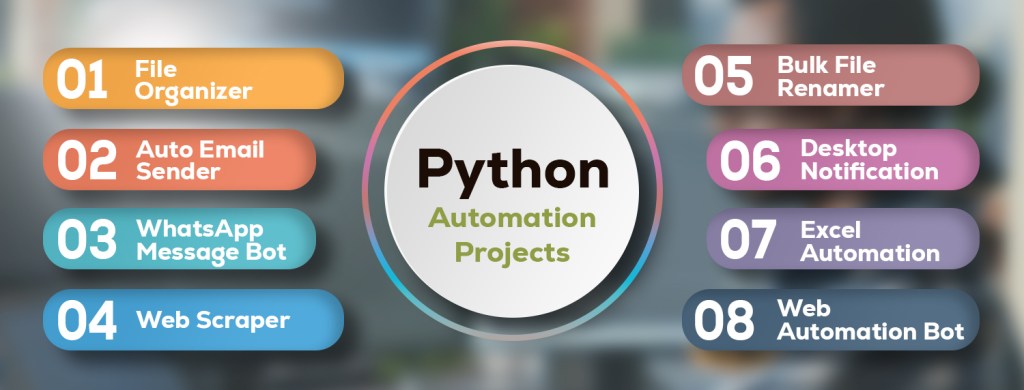
In a world that never stops generating tasks, automation is not just a luxury — it’s a necessity. Python has become the language of choice for people who want to make their computers work for them. It allows anyone, whether a beginner or an experienced developer, to automate daily routines, streamline workflows, and create elegant tools that simplify life. What’s more inspiring is that most of these automations can be built in just a weekend, giving you practical results and immediate satisfaction. In this article, we’ll explore eight real-world automation projects that combine creativity, simplicity, and powerful results. Each project includes a detailed explanation and working code, ready to run and expand.

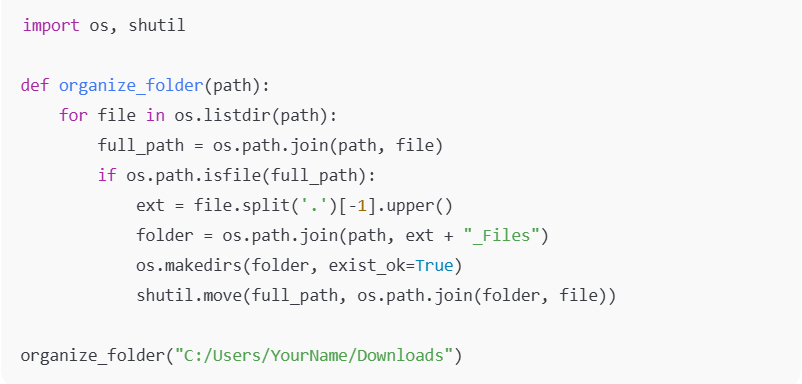
Let’s be honest — everyone’s Downloads folder looks like a battlefield. PDFs, images, ZIP archives, and installers all live together in digital chaos. A File Organizer is one of the simplest yet most satisfying automation scripts you can build. It scans a target folder, detects the file extensions, creates categorized subfolders, and moves each file into its proper place. This saves time, reduces clutter, and gives your workspace a touch of order.

Beyond personal use, such automation can be scaled for offices to organize report folders, designers to manage creative assets, or photographers to sort by file type. It’s the foundation of file automation — understanding how to navigate directories, classify files, and manipulate them programmatically.

This script can be adapted to group by date, size, or even project names — the perfect first step toward smarter digital management.

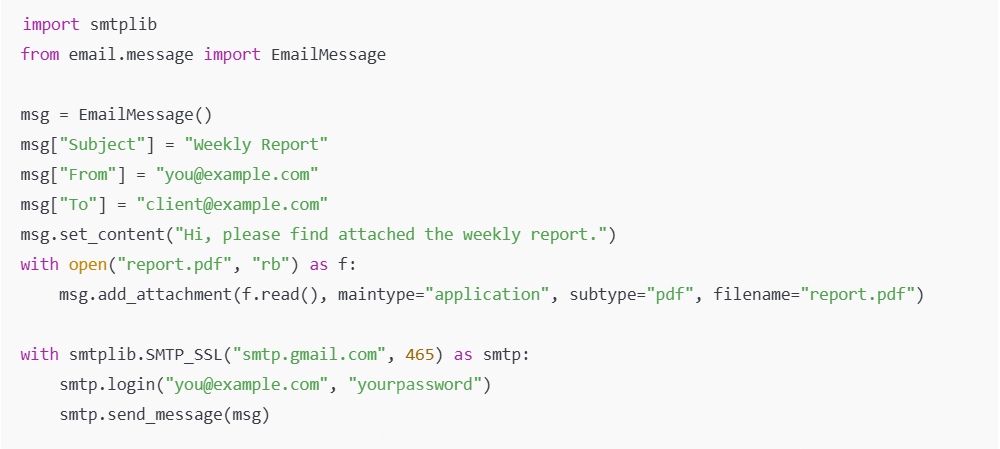
Every professional has at least one recurring email to send: reports, invoices, weekly updates, or newsletters. Manually sending them every week is a waste of time. That’s where an Auto Email Sender steps in. Using Python’s smtplib and email libraries, you can compose and send messages automatically, even with attachments. You can integrate it with your reporting scripts to send data automatically at the end of each process.

This project teaches you about SMTP protocols, secure authentication, and automating digital communication. It also helps you understand how businesses automate entire email flows using scripts or scheduled tasks. You can later add personalization and dynamic content fetched from spreadsheets or databases.

Set it on a scheduler, and you’ve got yourself an email assistant who never forgets or gets tired.

Imagine sending birthday wishes, reminders, or meeting alerts without lifting a finger. With the pywhatkit library, Python can automate WhatsApp messages right from your desktop. You define the message, the recipient, and the exact time — and the bot does the rest.

This project introduces you to simple automation that interacts with web applications through browser control. It’s particularly useful for small businesses or freelancers who manage multiple clients and want to send personalized yet automated updates. It’s also a gentle entry into browser-driven automation and time scheduling.

Once you see your computer send that message without your input, you’ll feel the real satisfaction of automation.

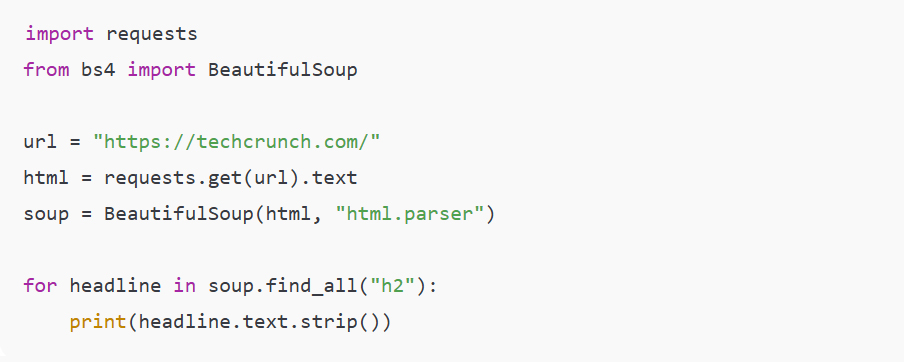
Web scraping is the heart of data automation — a way to collect information automatically from websites without manual copy-paste work. Whether it’s scraping job listings, product prices, or blog titles, Python’s BeautifulSoup and requests libraries make the process simple and powerful.

A Web Scraper can become part of many real-world systems — price tracking bots, research tools, or content aggregators. It introduces you to the HTML structure of websites and teaches you how to extract meaningful patterns. It’s also an excellent first step toward data analytics, since most analysis begins with data collection.

Once you’ve mastered this, you can expand it to scrape multiple pages, store data in CSV files, and even monitor changes over time.

Advertisements

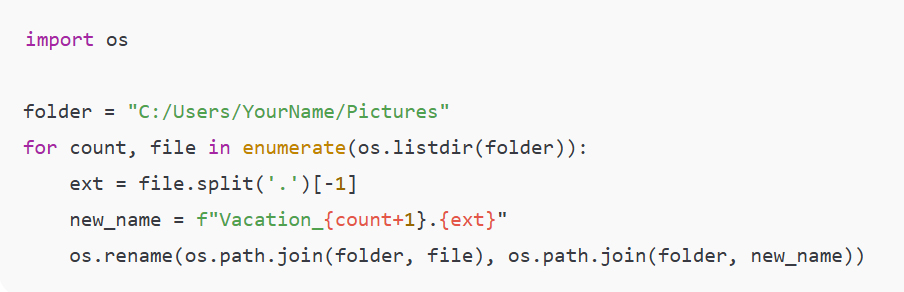
If you’ve ever had to rename hundreds of files — like photos, documents, or reports — you know the pain. The Bulk File Renamer eliminates that pain instantly. By looping through files in a folder, you can rename them with a consistent pattern, making them searchable and organized.

This project is particularly helpful for creative professionals, teachers, or office administrators. It introduces iteration and string formatting while giving immediate practical benefits.

After you run it, your files will instantly follow a perfect naming convention — a simple yet satisfying reward for your Python skills.

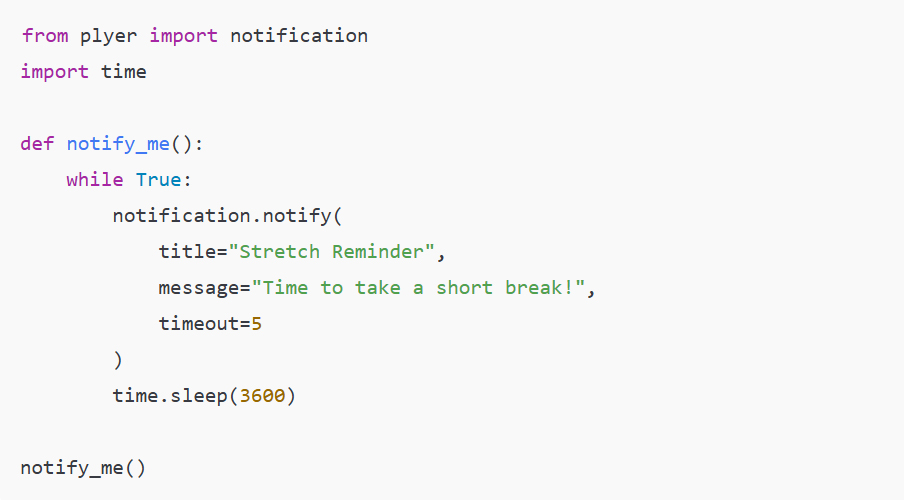
Modern life is full of distractions, and sometimes the simplest automation can bring balance. A Desktop Notification App is one of those. You can make Python send you notifications — like reminding you to stretch, hydrate, or check an important site. The plyer library makes it surprisingly easy.

This project is not just about productivity; it teaches you how applications communicate with your operating system and how automation can serve human well-being, not just efficiency.

You can even connect it to other scripts to notify you when a background task finishes or when a website updates.

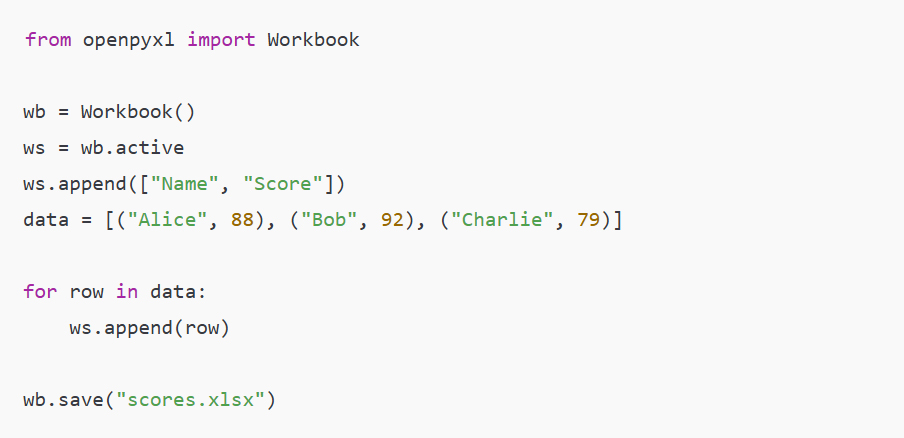
If your work involves data or reporting, Excel Automation is a game changer. Instead of manually updating sheets, you can use Python’s OpenPyXL library to fill in data, apply formulas, and save formatted Excel reports automatically.

This automation is especially powerful for analysts, accountants, teachers, or managers who regularly produce structured reports. It introduces concepts of data manipulation, file writing, and office integration — all essential skills for business automation.

Once you understand this foundation, you can automate monthly reports, combine multiple data sources, or even generate charts directly from Python.

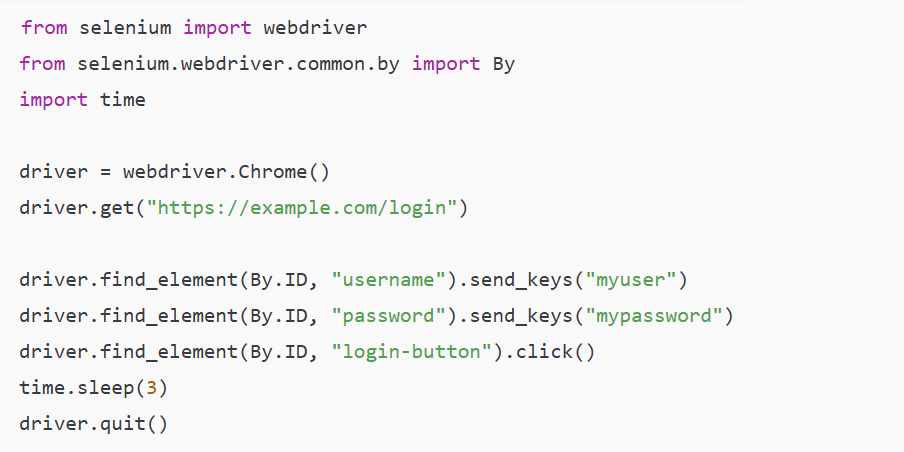
Finally, the Web Automation Bot. This is where automation meets intelligence. With Selenium, you can control a real browser — open websites, log in, click buttons, and extract information — just like a human would. It’s used in automated testing, social media bots, and even e-commerce monitoring tools.

This project teaches browser control, DOM manipulation, and event simulation. It’s a more advanced automation, but once you build it, you’ll see how close you are to creating full-scale automation systems.

From here, you can scale up to automate entire workflows — logging into dashboards, downloading reports, or posting updates online.

Conclusion

Each of these projects represents a small window into a much larger world — the world of automation-driven thinking. What makes them valuable isn’t just the code but the mindset they build: the idea that every repetitive task can be transformed into a system that runs on its own. Once you start building these automations, you begin to see possibilities everywhere — from your desktop to your business processes. So, take this weekend to experiment, learn, and enjoy the moment when your computer starts working for you instead of the other way around.

Advertisements

ثمانية مشاريع أتمتة بايثون عملية لإتقانها في 48 ساعة

Advertisements

في عالمٍ لا يتوقف فيه توليد المهام لم تعد الأتمتة مجرد ترف بل ضرورة، إذ أصبحت بايثون اللغة المفضلة لمن يرغبون في تشغيل حواسيبهم فهي تتيح لأي شخص أتمتة روتينه اليومي وتبسيط سير العمل وإنشاء أدوات أنيقة تُبسط الحياة سواءً كان مبتدئاً أو مطوراً خبيراً، والأمر الأكثر إلهاماً هو إمكانية بناء معظم هذه الأتمتة في عطلة نهاية أسبوع واحدة فقط أي خلال 48 ساعة مما يمنحك نتائج عملية ورضا فورياً

وفي هذه المقالة سنستكشف ثمانية مشاريع أتمتة عملية تجمع بين الإبداع والبساطة والنتائج الفعّالة، بحيث يتضمن كل مشروع شرحاً مفصلاً وشيفرة برمجية جاهزة للتشغيل والتوسع  

لنكن صريحين – يبدو مجلد التنزيلات لدى الجميع أشبه بساحة معركة

وملفات التثبيت ZIP والصور وملفات PDF فملفات

كلها تعيش معاً في فوضى رقمية، فمُنظّم الملفات يعدُّ أحد أبسط نصوص الأتمتة وأكثرها إرضاءً على الإطلاق فهو يفحص المجلد المُستهدف ويكتشف امتدادات الملفات ويُنشئ مجلدات فرعية مُصنّفة وينقل كل ملف إلى مكانه المُناسب، هذا يُوفّر الوقت ويُقلّل الفوضى ويُضفي على مساحة عملك لمسةً من التنظيم، وبعيداً عن الاستخدام الشخصي يُمكن توسيع نطاق هذه الأتمتة لتشمل المكاتب لتنظيم مجلدات التقارير وللمصممين لإدارة الأصول الإبداعية وللمصورين للفرز حسب نوع الملف، إنه أساس أتمتة الملفات – فهم كيفية التنقل بين المجلدات وتصنيف الملفات ومعالجتها برمجياً

يمكن تعديل هذا النص البرمجي للتجميع حسب التاريخ أو الحجم أو حتى أسماء المشاريع، وهي الخطوة الأولى المثالية نحو إدارة رقمية أكثر ذكاءً

يُرسل كل مُحترف بريداً إلكترونياً واحداً على الأقل بشكل مُتكرر: تقارير، فواتير، تحديثات أسبوعية، أو رسائل إخبارية، فإرسالها يدوياً كل أسبوع مُضيعة للوقت، هنا يأتي دور مُرسِل البريد الإلكتروني التلقائي

والبريد الإلكتروني في بايثون smtplib فباستخدام مكتبات

يمكنك إنشاء الرسائل وإرسالها تلقائياً حتى مع المرفقات يمكنك دمجه مع نصوص التقارير لإرسال البيانات تلقائياً في نهاية كل عملية

والمصادقة الآمنة SMTP يُعلّمك هذا المشروع بروتوكولات

وأتمتة الاتصالات الرقمية، كما يُساعدك على فهم كيفية أتمتة الشركات لتدفقات البريد الإلكتروني بالكامل باستخدام النصوص أو المهام المجدولة، يمكنك لاحقاً إضافة محتوى مُخصص وديناميكي من جداول البيانات أو قواعد البيانات  

باستخدام مُجدول ستحصل على مُساعد بريد إلكتروني لا ينسى ولا يتعب أبداً

تخيل إرسال تهنئة عيد ميلاد أو تذكيرات أو تنبيهات اجتماعات دون أي عناء

يُمكن لبايثون أتمتة رسائل واتساب مُباشرةً من سطح مكتبك pywhatkit فمع مكتبة

ما عليك سوى تحديد الرسالة والمُستلِم والوقت المُحدد – وسيتولى البوت الباقي، يُعرّفك هذا المشروع على أتمتة بسيطة تتفاعل مع تطبيقات الويب من خلال التحكم في المتصفح وهو مفيد بشكل خاص للشركات الصغيرة أو المستقلين الذين يديرون عملاء متعددين ويرغبون في إرسال تحديثات مخصصة وتلقائية في آنٍ واحد، كما أنه يُمثل مدخلاً سهلاً إلى الأتمتة المُدارة من خلال المتصفح وجدولة الوقت

بمجرد أن ترى جهاز الكمبيوتر الخاص بك يُرسل تلك الرسالة دون تدخل منك ستشعر بالرضا الحقيقي عن الأتمتة

يُعدّ كشط البيانات من الويب جوهر أتمتة البيانات، فهو طريقة لجمع المعلومات تلقائياً من مواقع الويب دون الحاجة إلى النسخ واللصق اليدوي، فسواءً كان الأمر يتعلق بكشط قوائم الوظائف أو أسعار المنتجات أو عناوين المدونات

ومكتبات الطلبات في بايثون BeautifulSoup فإن مكتبة

تجعل العملية بسيطة وفعالة، يمكن أن يُصبح كشط البيانات من الويب جزءاً من العديد من الأنظمة العملية مثل روبوتات تتبع الأسعار وأدوات البحث أو مُجمّعات المحتوى

لمواقع الويب HTML يُعرّفك على بنية

ويُعلّمك كيفية استخراج أنماط ذات معنى، كما أنه خطوة أولى ممتازة نحو تحليلات البيانات حيث تبدأ معظم التحليلات بجمع البيانات 

بمجرد إتقان هذه الميزة يمكنك توسيعها لاستخراج صفحات متعددة وتخزين البيانات في ملفات CSV وحتى مراقبة التغييرات مع مرور الوقت  

Advertisements

إذا سبق لك أن اضطررت لإعادة تسمية مئات الملفات ( مثل الصور أو المستندات أو التقارير ) فمهمتك مرهقة وصعبة للغاية، تُزيل أداة إعادة تسمية الملفات المجمعة هذه الصعوبة فوراً، فمن خلال تكرار الملفات في مجلد يمكنك إعادة تسميتها بنمط متسق مما يجعلها قابلة للبحث ومنظمة، هذا المشروع مفيد بشكل خاص للمحترفين المبدعين والمعلمين ومسؤولي المكاتب فهو يُقدم التكرار وتنسيق السلاسل النصية مع توفير فوائد عملية فورية

بعد تشغيله ستتبع ملفاتك فوراً اصطلاح تسمية مثالي – مكافأة بسيطة ولكنها مُرضية لمهاراتك في بايثون

الحياة العصرية مليئة بالمشتتات وأحياناً تُحقق أبسط الأتمتة التوازن، تطبيق إشعارات سطح المكتب هو أحد هذه التطبيقات، إذ يمكنك جعل بايثون يرسل لك إشعارات مثل تذكيرك بالتمدد أو شرب الماء أو زيارة موقع مهم، مساعدك المذهل في هذه العملية

فهي تُسهّل الأمر بشكل رائع Plyer هو مكتبة

لا يقتصر هذا المشروع على الإنتاجية فحسب؛ بل يُعلّمك كيفية تواصل التطبيقات مع نظام التشغيل لديك وكيف يُمكن للأتمتة أن تُعزز رفاهية الإنسان وليس الكفاءة فحسب

يمكنك أيضاً ربطه ببرامج نصية أخرى لإعلامك عند انتهاء مهمة خلفية أو عند تحديث موقع ويب

إذا كان عملك يتضمن بيانات أو تقارير فإن أتمتة إكسل تُحدث نقلة نوعية، فبدلاً من تحديث جداول البيانات يدوياً  

من بايثون OpenPyXL يُمكنك استخدام مكتبة

لملء البيانات وتطبيق الصيغ وحفظ تقارير إكسل المُنسّقة تلقائياً

هذه الأتمتة فعّالة بشكل خاص للمحللين والمحاسبين والمعلمين والمديرين الذين يُصدرون تقارير مُهيكلة بانتظام، إذ يُقدّم هذا الكتاب مفاهيم معالجة البيانات وكتابة الملفات وتكامل المكاتب – وهي مهارات أساسية لأتمتة الأعمال

بمجرد فهمك لهذه الأساسيات يمكنك أتمتة التقارير الشهرية ودمج مصادر بيانات متعددة أو حتى إنشاء مخططات بيانية مباشرةً من بايثون

وأخيراً بوت أتمتة الويب وهنا تلتقي الأتمتة بالذكاء، فمع سيلينيوم يمكنك التحكم في متصفح حقيقي – فتح مواقع الويب وتسجيل الدخول والنقر على الأزرار واستخراج المعلومات – تماماً كما يفعل الإنسان، يُستخدم في الاختبارات الآلية وروبوتات وسائل التواصل الاجتماعي وحتى أدوات مراقبة التجارة الإلكترونية

يُعلّم هذا المشروع التحكم في المتصفح

ومحاكاة الأحداث (DOM) ومعالجة نماذج الكائنات

إنه أتمتة أكثر تقدماً ولكن بمجرد إنشائه ستدرك مدى قربك من إنشاء أنظمة أتمتة شاملة

من هنا يمكنك التوسع لأتمتة سير العمل بالكامل – تسجيل الدخول إلى لوحات المعلومات وتنزيل التقارير أو نشر التحديثات عبر الإنترنت

يُمثل كلٌّ من هذه المشاريع نافذةً صغيرةً على عالمٍ أوسع بكثير – عالم التفكير المُدار بالأتمتة، ما يجعلها قيّمةً ليس فقط الكود بل العقلية التي تُكوّنها: فكرة أن كل مهمةٍ متكررةٍ يمكن تحويلها إلى نظامٍ يعملُ تلقائياً، فبمجرد البدء في بناء هذه الأتمتة ستبدأ برؤية الإمكانيات في كل مكان – من سطح المكتب إلى عمليات عملك، لذا استغل عطلة نهاية الأسبوع هذه للتجربة والتعلم والاستمتاع باللحظة التي يبدأ فيها جهاز الكمبيوتر بالعمل لصالحك بدلاً من العكس

Advertisements

How Data Engineers Are Redefining Their Future in the Age of AI

Advertisements

There was a time when data engineers were the silent backbone of the digital world. They built invisible pipelines that powered analytics dashboards and business decisions while their work lived quietly in the background. Yet as we step into 2025, a powerful shift has begun. The era of artificial intelligence has changed everything. The same engineers who once shaped data flows are now shaping intelligence itself. The walls between data engineering and AI engineering are collapsing, giving birth to a new kind of professional — one who does not just move data but gives it meaning, logic, and life.

For years data engineers were defined by the pipeline. Their mission was to extract, transform, and load massive amounts of data with precision. They were masters of efficiency and reliability since business intelligence depended on their craft. But as AI systems began to demand cleaner, smarter, and more contextual data, the traditional boundaries of their work started to blur. Data was no longer a static resource stored in warehouses. It became dynamic and intelligent, ready to be consumed by models that learn and adapt.

This transformation forced data engineers to rethink their purpose. They began to explore new languages, frameworks, and architectures that serve the needs of AI systems rather than just reports. The rise of feature stores, real-time data pipelines, and model-ready datasets became a natural evolution. What was once a backend support role is now a creative and strategic discipline deeply embedded in the core of AI development.

In 2025 the distance between data and intelligence has nearly vanished. Companies realized that no AI model can thrive without a strong data foundation, and no data pipeline is meaningful unless it serves intelligent systems. This convergence turned data engineers into AI engineers almost by necessity. They are now the architects who design the flow of information that feeds neural networks, fine-tunes machine learning algorithms, and maintains the ethical integrity of data usage.

Instead of stopping at ETL processes, data engineers are now involved in designing feedback loops that help models learn from real-world behavior. They collaborate with machine learning experts to ensure that data quality aligns with algorithmic precision. They implement data observability tools that detect drift and bias. In short, they became the silent partners of artificial intelligence, merging data logic with machine cognition.

Advertisements

The modern AI engineer who once began as a data engineer no longer lives in a world of static scripts. He navigates dynamic ecosystems filled with streaming data, distributed architectures, and intelligent agents. Python and SQL remain essential, but so do TensorFlow, PyTorch, and MLOps tools. Understanding how to automate model deployment, monitor data pipelines, and handle ethical AI constraints has become part of their daily routine.

They have become fluent in the language of AI systems while never forgetting their roots in data infrastructure. Their expertise bridges two worlds — one of data reliability and another of model intelligence. The result is a new generation of engineers who see data as a living entity that must be nurtured, protected, and taught to think.

In 2025, technology companies are no longer hiring data engineers and AI engineers as separate positions. Instead, they are creating hybrid roles that demand deep data expertise combined with applied AI knowledge. Startups and enterprises alike seek professionals who can both build a data platform and deploy a model on top of it. This merging of skill sets has reshaped hiring patterns across industries from finance to healthcare to manufacturing.

Businesses now understand that the journey from raw data to intelligent decision-making must be seamless. The engineer who can handle that entire journey becomes priceless. They are not just developers anymore but system thinkers who shape the DNA of digital intelligence.

The rise of AI engineers from the roots of data engineering tells a larger story about how technology evolves. Each generation of innovation absorbs the one before it. Just as web developers became full-stack engineers, data engineers are becoming full-intelligence engineers. The future belongs to those who understand both the flow of information and the architecture of intelligence.

This shift will not slow down. Automation tools will make traditional data work easier, but the demand for human insight will grow. The world will need engineers who can blend structure with creativity, logic with vision, and pipelines with perception. And that is precisely what this new wave of AI engineers represents — a bridge between the mechanical and the meaningful.

As we look ahead to the years beyond 2025, the title “data engineer” may fade, but its spirit will remain stronger than ever. The professionals who once built data pipelines are now shaping the veins of artificial intelligence. Their role is no longer about moving information but about awakening it. They have become the builders of intelligent systems that not only process data but understand it. The silent era of engineering has ended, and a new one has begun — where data engineers have become AI engineers, and intelligence is no longer a dream but a craft.

Advertisements

كيف يُعيد مهندسو البيانات رسم مستقبلهم في عصر الذكاء الاصطناعي

Advertisements

كان مهندسو البيانات في الماضي العمود الفقري الصامت للعالم الرقمي، فقد بنوا قنوات اتصال غير مرئية تُشغّل لوحات معلومات التحليلات وقرارات الأعمال بينما كان عملهم يُدار بهدوء في الخلفية، ومع حلول عام 2025 بدأ تحول جذري، إذ قد غيّر عصر الذكاء الاصطناعي كل شيء فالمهندسون أنفسهم الذين شكّلوا تدفقات البيانات يُشكّلون الآن الذكاء الاصطناعي نفسه، ومن الملاحظ أن الحواجز بين هندسة البيانات وهندسة الذكاء الاصطناعي بدأت تنهار، مما يُمهّد الطريق لظهور نوع جديد من المهنيين – مهني لا يكتفي بنقل البيانات فحسب بل يُضفي عليها معنىً ومنطقاً وحياة

لسنوات كان مهندسو البيانات يُعرّفون بقنوات الاتصال، إذ كانت مهمتهم استخراج كميات هائلة من البيانات وتحويلها وتحميلها بدقة، وكانوا بارعين في الكفاءة والموثوقية لأن ذكاء الأعمال يعتمد على حرفتهم، ولكن مع تزايد طلب أنظمة الذكاء الاصطناعي على بيانات أنظف وأذكى وأكثر ارتباطاً بالسياق فبدأت الحدود التقليدية لعملهم تتلاشى، ولم تعد البيانات مورداً ثابتاً مُخزّناً في المستودعات بل أصبحت البيانات ديناميكية وذكية وجاهزة للاستخدام من قبل النماذج التي تتعلم وتتكيف

أجبر هذا التحول مهندسي البيانات على إعادة التفكير في أهدافهم فبدأوا في استكشاف لغات وأطر عمل وهياكل جديدة تلبي احتياجات أنظمة الذكاء الاصطناعي بدلاً من مجرد التقارير، وأصبح ظهور مخازن الميزات وخطوط أنابيب البيانات الفورية ومجموعات البيانات الجاهزة للنماذج تطوراً طبيعياً وما كان في السابق دور دعم خلفي  أصبح الآن تخصصاً إبداعياً واستراتيجياً متأصلاً بعمق في جوهر تطوير الذكاء الاصطناعي

في عام 2025 تلاشت تقريباً الفجوة بين البيانات والذكاء، إذ أدركت الشركات أنه لا يمكن لأي نموذج ذكاء اصطناعي أن يزدهر بدون أساس متين من البيانات ولا جدوى لأي خط أنابيب بيانات إلا إذا خدم الأنظمة الذكية، فحوّل هذا التقارب مهندسي البيانات إلى مهندسي ذكاء اصطناعي بحكم الضرورة، وهم الآن المهندسون الذين يصممون تدفق المعلومات الذي يغذي الشبكات العصبية ويضبط خوارزميات التعلم الآلي ويحافظ على النزاهة الأخلاقية لاستخدام البيانات

بدلاً من التوقف عند عمليات استخراج وتحويل وتحميل البيانات يشارك مهندسو البيانات الآن في تصميم حلقات التغذية الراجعة التي تساعد النماذج على التعلم من السلوك الواقعي، فيتعاونون مع خبراء التعلم الآلي لضمان توافق جودة البيانات مع دقة الخوارزميات ويطبقون أدوات مراقبة البيانات التي تكشف عن الانحراف والتحيز، إذاً باختصار أصبحوا بمثابة شركاء صامتين للذكاء الاصطناعي يدمجون منطق البيانات مع الإدراك الآلي

لم يعد مهندس الذكاء الاصطناعي الحديث الذي بدأ كمهندس بيانات يعيش في عالم البرامج النصية الثابتة، فهو يتنقل بين أنظمة بيئية ديناميكية مليئة ببيانات متدفقة وبنى موزعة ووكلاء أذكياء

أساسيتين SQL إذ لا تزال بايثون و

TensorFlow و PyTorch و MLOps وكذلك أدوات

وعليه أصبح فهم كيفية أتمتة نشر النماذج ومراقبة خطوط أنابيب البيانات والتعامل مع قيود الذكاء الاصطناعي الأخلاقية جزءاً من روتينهم اليومي

أصبحوا بارعين في لغة أنظمة الذكاء الاصطناعي مع الحفاظ على جذورهم في البنية التحتية للبيانات، بحيث تربط خبرتهم بين عالمين أحدهما موثوقية البيانات والآخر ذكاء النماذج، والنتيجة هي جيل جديد من المهندسين الذين يرون البيانات ككيان حي يجب رعايته وحمايته وتعليمه التفكير

Advertisements

في عام 2025 لم تعد شركات التكنولوجيا تُوظّف مهندسي البيانات ومهندسي الذكاء الاصطناعي كمناصب منفصلة بل إنها تُنشئ أدواراً هجينة تتطلب خبرةً عميقةً في البيانات إلى جانب معرفةٍ تطبيقيةٍ بالذكاء الاصطناعي، إذ تبحث الشركات الناشئة والمؤسسات التجارية على حدٍ سواء عن متخصصين قادرين على بناء منصة بيانات وتطبيق نموذجٍ قائمٍ عليها، وقد أعاد هذا الدمج بين المهارات تشكيل أنماط التوظيف في مختلف القطاعات من المالية إلى الرعاية الصحية إلى التصنيع

تُدرك الشركات الآن أن الرحلة من البيانات الخام إلى اتخاذ القرارات الذكية يجب أن تكون سلسة، ويصبح المهندس الذي يُدير هذه الرحلة بأكملها لا يُقدّر بثمن، فهم لم يعودوا مُجرّد مُطوّرين بل مُفكّرون نُظم يُشكّلون جوهر الذكاء الرقمي

يُعبّر صعود مهندسي الذكاء الاصطناعي من جذور هندسة البيانات عن قصةٍ أعمق حول كيفية تطور التكنولوجيا، فكل جيلٍ من الابتكارات يستوعب الجيل الذي يسبقه وكما أصبح مُطوّرو الويب مهندسين مُتكاملين يُصبح مهندسو البيانات مهندسي ذكاءٍ كامل، المستقبل ملكٌ لأولئك الذين يفهمون تدفق المعلومات وبنية الذكاء

لن يتباطأ هذا التحول، إذ ستُسهّل أدوات الأتمتة العمل بالبيانات التقليدية لكن الطلب على البصيرة البشرية سيزداد، إذ سيحتاج العالم إلى مهندسين قادرين على مزج البنية بالإبداع والمنطق بالرؤية وخطوط الأنابيب بالإدراك، وهذا تحديداً ما تُمثّله هذه الموجة الجديدة من مهندسي الذكاء الاصطناعي – جسر بين الآلي والمعنى

مع تطلعنا إلى ما بعد عام ٢٠٢٥ قد يتلاشى لقب “مهندس بيانات” لكن روحه ستبقى أقوى من أي وقت مضى  فالمحترفون الذين بنوا خطوط أنابيب البيانات يُشكّلون الآن شرايين الذكاء الاصطناعي، فلم يعد دورهم نقل المعلومات بل إيقاظها، وعليه أصبحوا بناة أنظمة ذكية لا تُعالج البيانات فحسب بل تفهمها أيضاً، لقد انتهى عصر الهندسة الصامت وبدأ عصر جديد حيث أصبح مهندسو البيانات مهندسي ذكاء اصطناعي ولم يعد الذكاء حلماً بل حرفة

Advertisements

Inside the Mind of a Confused AI- Six Cartoon Scenarios

Advertisements

In the world of modern technology, satire writes itself. Our devices update while we sleep, our data travels through invisible clouds, and our AI assistants occasionally mistake sarcasm for affection. If an artist ever tried to sketch the digital age, it would look like a mix of confusion, brilliance, and a dash of existential dread — which is exactly what these six cartoon concepts capture.

Each cartoon is a humorous reflection of our uneasy friendship with data, intelligence, computers, and the all-powerful Cloud. You might laugh, or you might just recognize your daily struggle with a login screen. Either way, welcome to the funniest serious commentary you’ll read today.

Concept:
A business analyst stands beside a murky lake labeled “Data Lake”, holding a fishing rod tangled with broken dashboards. Behind him, a sign reads: “No Swimming — Undefined Values.”

Insight:
Companies were promised crystal-clear insight, but without proper management, their “data lakes” turned into “data swamps.” This cartoon pokes fun at the irony that storing too much data without structure leads to less clarity — not more.

Concept:
An AI robot lies on a therapist’s couch saying, “Sometimes I feel like humans only like me for my predictions.” The therapist, another AI, takes notes on a tablet labeled “Machine Learning Journal.”

Insight:
Artificial intelligence has become so “smart” that we project human emotions onto it. This scene satirizes our growing emotional dependence on technology — and how AI often mirrors our own insecurities back at us.

Concept:
A cheerful worker uploads files to the cloud, only for the next panel to show a thundercloud raining error messages: “Connection Lost,” “Try Again Later,” “Unknown Issue.”

Insight:
The Cloud has become a symbol of both convenience and fragility. This cartoon reflects how our entire digital lives depend on invisible servers that sometimes just… don’t feel like cooperating.

Advertisements

Concept:
An overworked laptop with dark circles under its webcam says, “I’ve been updating since 3 a.m. — can I go into sleep mode now?” Nearby, a human drinks coffee, exhausted from waiting.

Insight:
Computers are our most loyal coworkers — until they decide to restart during a deadline. The humor here hides a truth about our digital burnout: even machines need downtime, and so do we.

Concept:
A smartphone hides behind its screen, whispering, “Don’t worry, I only listen sometimes.” Around it, dozens of tiny apps peek through keyholes.

Insight:
This cartoon comments on the illusion of privacy in a world where every app quietly watches. It’s a funny — but unsettling — reminder that our devices might know us better than we know ourselves.

Concept:
An AI proudly displays its painting — a surreal image that looks suspiciously like data charts turned into abstract art. The human critic says, “Impressive. But why is it signed ‘Version 2.3’?”

Insight:
AI creativity blurs the line between logic and imagination. This cartoon captures the moment machines start expressing beauty through patterns — and we start questioning what it means to be “creative.”

Technology has always been serious business — but beneath the code, spreadsheets, and cloud servers lies a quietly comic story of human ambition. These six cartoons remind us that every algorithm reflects its creator, every dataset hides a human flaw, and every crash, update, or “unknown error” is just another way the universe keeps us humble.

The next time your computer freezes mid-task, don’t get angry — just imagine the cartoon. You’ll laugh, then reboot.

Advertisements

داخل عقل ذكاء اصطناعي مُربك- ستة سيناريوهات كرتونية

Advertisements

في عالم التكنولوجيا الحديثة تُكتب السخرية نفسها، إذ تُحدّث أجهزتنا أثناء نومنا وتنتقل بياناتنا عبر سُحُبٍ خفية وأحياناً ما يُخطئ مساعدونا بالذكاء الاصطناعي بين السخرية والمودة، فلو حاول فنانٌ رسم العصر الرقمي لبدا مزيجاً من الارتباك والبراعة وقليل من الخوف الوجودي وهو بالضبط ما تُجسّده هذه المفاهيم الكرتونية الستة

يُمثّل كل رسمٍ كاريكاتيري انعكاساً فكاهياً لصداقتنا المتوترة مع البيانات والذكاء وأجهزة الكمبيوتر والسحابة الإلكترونية الجبارة، قد تضحك أو قد تُدرك ببساطة معاناتك اليومية مع شاشة تسجيل الدخول، وعلى أي حال مرحباً بك في أطرف تعليقٍ جادٍّ ستقرأه اليوم

: الفكرة

يقف مُحلّل أعمال بجانب بحيرةٍ مُظلمةٍ كُتب عليها “بحيرة البيانات” حاملاً صنارة صيدٍ مُتشابكةٍ مع لوحات القيادة المُعطّلة وخلفه لافتةٌ كُتب عليها: “ممنوع السباحة – قيمٌ غير مُحدّدة”

: رؤية ثاقبة

وُعدت الشركات برؤية ثاقبة ولكن بدون إدارة سليمة تحولت “بحيرات بياناتها” إلى “مستنقعات بيانات”، يسخر هذا الرسم الكاريكاتوري من مفارقة أن تخزين بيانات كثيرة دون هيكلة يؤدي إلى وضوح أقل لا أكثر

: الفكرة

يرقد روبوت ذكاء اصطناعي على أريكة المعالج النفسي قائلاً: أحياناً أشعر أن البشر لا يحبونني إلا لتوقعاتي، فيدوّن المعالج وهو روبوت ذكاء اصطناعي آخر ملاحظات على جهاز لوحي يحمل عنوان “مجلة التعلم الآلي”

: رؤية ثاقبة

أصبح الذكاء الاصطناعي “ذكياً” لدرجة أننا نُسقط عليه المشاعر البشرية، إذ يسخر هذا المشهد من اعتمادنا العاطفي المتزايد على التكنولوجيا وكيف يعكس الذكاء الاصطناعي في كثير من الأحيان مخاوفنا الشخصية

: الفكرة

يُحمّل عاملٌ مُبتهج ملفاتٍ إلى السحابة فتُظهر اللوحة التالية سحابةً مُمطرةً تُمطر رسائل خطأ: “انقطع الاتصال”، “حاول مُجدداً لاحقاً”، “مشكلة غير معروفة”

: لمحة

أصبحت السحابة رمزاً للراحة والهشاشة، إذ يُجسّد هذا الرسم الكاريكاتوري كيف تعتمد حياتنا الرقمية بأكملها على خوادم غير مرئية والتي أحياناً لا تشعر بالرغبة في التعاون

Advertisements

: الفكرة

يقول كمبيوتر محمول مُرهق وهالات سوداء أسفل كاميرا الويب: أُحدّث منذ الثالثة صباحاً هل يُمكنني الدخول في وضع السكون الآن؟” في الجوار يشرب شخصٌ قهوته مُنهكاً من الانتظار

: لمحة

أجهزة الكمبيوتر هي أكثر زملاء العمل إخلاصاً لنا حتى تُقرر إعادة تشغيلها خلال موعد نهائي، فتُخفي الفكاهة هنا حقيقةً حول إرهاقنا الرقمي : حتى الآلات تحتاج إلى وقتٍ للتوقف ونحن أيضاً

: الفكرة

هاتف ذكي يختبئ خلف شاشته ويهمس: “لا تقلق أنا أكتفي بالاستماع فقط أحياناً “، حوله تسترق عشرات التطبيقات الصغيرة النظر من خلال ثقوب المفاتيح

: لمحة

يُعلق هذا الرسم الكاريكاتوري على وهم الخصوصية في عالم تراقبه فيه كل التطبيقات بصمت، إنه تذكير طريف – ولكنه مُقلق – بأن أجهزتنا قد تعرفنا أفضل مما نعرف أنفسنا

: الفكرة

يعرض الذكاء الاصطناعي بفخر لوحته وهي عبارة عن صورة سريالية تبدو بشكل مُريب كرسوم بيانية مُحوَّلة إلى فن تجريدي، يقول الناقد البشري: “مُبهرة، لكن لماذا تحمل توقيع ” الإصدار ٢.٣”؟

: لمحة

يُطمس إبداع الذكاء الاصطناعي الخط الفاصل بين المنطق والخيال، إذ يُصوِّر هذا الرسم الكاريكاتوري اللحظة التي تبدأ فيها الآلات بالتعبير عن الجمال من خلال الأنماط – ونبدأ بالتساؤل عن معنى أن تكون “مُبدعاً”

لطالما كانت التكنولوجيا عملاً جاداً ولكن وراء الأكواد البرمجية وجداول البيانات وخوادم السحابة تكمن قصةٌ هزليةٌ هادئةٌ عن طموح الإنسان، تُذكرنا هذه الرسوم الكاريكاتورية الستة بأن كل خوارزميةٍ تعكس مُنشئها وكل مجموعة بياناتٍ تُخفي عيباً بشرياً وكل عطلٍ أو تحديثٍ أو “خطأٍ غير معروف” هو مجرد وسيلةٍ أخرى

في المرة القادمة التي يتجمد فيها جهاز الكمبيوتر الخاص بك أثناء القيام بمهمةٍ ما لا تغضب ، بل تخيّل فقط الرسم الكاريكاتوري، ببساطة ستضحك ثم تُعيد تشغيله

Advertisements

Python Data Hacks Every Student Should Master

Advertisements

Python is the language that made data handling accessible to both beginners and experts. Yet, many students often overlook its hidden tricks—those little shortcuts and powerful functions that can save hours of work. Whether you’re dealing with messy datasets, writing code for assignments, or preparing for data-driven jobs, knowing these techniques can make you more efficient and stand out among peers.

Below are nine Python data tricks, complete with explanations and real-life examples, that you’ll wish you had discovered back in college.

Instead of writing long loops, Python allows you to process lists elegantly.

Example:

Use Case in College: Quickly filtering and transforming exam scores, like pulling out all passing grades above 60 and squaring them for analysis.

When you need both the index and the value from a list, enumerate() saves you from writing manual counters.

Example:

Output:

Why it helps: No more creating separate index = 0 counters in your assignments.

The * operator allows you to grab multiple values at once.

Example:

 In Practice: Splitting the top two highest exam grades from the rest.

When you have two lists that should be combined, zip() does the magic.

Example:

Why it matters: Perfect for combining student names with their grades.

Advertisements

Just like list comprehensions, but for key-value pairs.

Example:

In Research: Building quick lookup tables for datasets.

Counting items in data doesn’t need manual loops—use Counter

Example:

Why it rocks: Instantly count survey responses or repeated items in experiments.

Instead of using + or format(), f-strings keep your code clean.

Example:

College Hack: Quickly generate report summaries.

Anonymous functions can make sorting or filtering seamless.

Example:

Application: Sorting students by grades in just one line.

If you’re working with larger datasets, Pandas is a must.

Example:

Why it matters in college: Easy statistical calculations on survey results or lab data.

These nine tricks are not about memorizing syntax but about thinking like a Pythonic problem solver. Whether you’re cleaning messy data, analyzing exam results, or preparing datasets for machine learning, these shortcuts save time and make your work more professional.

The earlier you adopt these techniques, the more efficient and confident you’ll become in handling real-world data problems.

Advertisements

٩ حيل بيانات بايثون ينبغي على كل طالب إتقانها

Advertisements

بايثون هي اللغة التي جعلت معالجة البيانات في متناول المبتدئين والخبراء على حد سواء، ومع ذلك غالباً ما يغفل العديد من الطلاب عن حيلها الخفية – تلك الاختصارات الصغيرة والوظائف القوية التي يمكن أن توفر ساعات من العمل، سواء كنت تتعامل مع مجموعات بيانات غير منظمة أو تكتب برمجيات لواجبات أو تستعد لوظائف تعتمد على البيانات فإن معرفة هذه التقنيات يمكن أن تجعلك أكثر كفاءة وتبرز بين أقرانك

فيما يلي تسع حيل بيانات في بايثون كاملة مع الشروحات وأمثلة واقعية ستتمنى لو اكتشفتها من قبل

بدلاً من كتابة حلقات طويلة تتيح لك بايثون معالجة القوائم بأناقة

:مثال

حالة استخدام في الكلية: تصفية وتحويل درجات الامتحانات بسرعة، مثل سحب جميع الدرجات الناجحة التي تزيد عن 60 وتربيعها للتحليل

عندما تحتاج إلى كل من الفهرس والقيمة من قائمة

توفر عليك عناء كتابة عدادات يدوية enumerate() فإن دالة

: مثال

: المخرجات

لماذا يُفيدك هذا: لم يعد هناك حاجة لإنشاء عدادات منفصلة لمؤشر = ٠ في واجباتك

يُتيح لك مُعامل النجمة * الحصول على قيم متعددة في آنٍ واحد

: مثال

في التطبيق العملي: فصل أعلى درجتين في الامتحان عن البقية

Advertisements

عندما يكون لديك قائمتان يجب دمجهما

المهمة على أكمل وجه zip() تُؤدي دالة

: مثال

لماذا يُفيدك هذا: مثالي لدمج أسماء الطلاب مع درجاتهم

تماماً مثل فهم القوائم ولكن لأزواج المفتاح والقيمة

: مثال

في البحث: إنشاء جداول بحث سريعة لمجموعات البيانات

لا يحتاج عدّ العناصر في البيانات إلى حلقات يدوية – استخدم العداد

: مثال

أهميته: حساب استجابات الاستبيان أو العناصر المتكررة في التجارب فوراً

format() بدلاً من استخدام + أو

على نظافة الكود F تحافظ سلاسل

: مثال

خدعة جامعية : إنشاء ملخصات التقارير بسرعة

يمكن للدوال المجهولة أن تجعل عملية الفرز أو التصفية سلسة

: مثال

تطبيق: فرز الطلاب حسب الدرجات في سطر واحد فقط

ضروري Pandas إذا كنت تعمل مع مجموعات بيانات أكبر فإن

: مثال

أهميته في الجامعة : حسابات إحصائية سهلة لنتائج الاستبيان أو بيانات المختبر

لا تتعلق هذه الحيل التسع بحفظ قواعد اللغة بل بالتفكير كحلٍّ لمشكلات بايثونية، فسواء كنت تُنظّف بياناتٍ مُركّبة أو تُحلّل نتائج امتحانات أو تُجهّز مجموعات بيانات للتعلم الآلي فإن هذه الاختصارات تُوفّر الوقت وتُضفي على عملك طابعاً احترافياً

كلما اعتمدت هذه التقنيات مُبكراً كلما زادت كفاءتك وثقتك بنفسك في التعامل مع مشاكل البيانات الواقعية

Advertisements

Skills You Need to Become a Data Scientist in 2025

Advertisements

The data-driven era we live in makes data science one of the most attractive and future-proof careers. In 2025, the role of the data scientist has expanded beyond crunching numbers—it has become central to shaping business decisions, driving innovation, and even influencing government policies. Organizations are no longer looking for just analysts; they want professionals who can handle complex data systems, embrace artificial intelligence, and clearly translate results into actionable strategies. If you are wondering how to step into this field today, you need a clear roadmap that balances technical depth, practical projects, and future-oriented skills.

At the heart of data science lies mathematics. Concepts such as linear algebra, probability, and statistics form the backbone of nearly every model or algorithm. A solid understanding of these principles allows you to evaluate results instead of blindly trusting tools. For example, when analyzing medical data, statistical reasoning helps determine whether a correlation is real or just random. Without this foundation, you may end up with models that look impressive but produce misleading insights. In 2025, employers still prioritize this knowledge, as it ensures you are not just a tool user but also a problem solver.

While math gives you theory, programming gives you power. Python remains the dominant language, with libraries like NumPy, Pandas, and Scikit-learn forming a data scientist’s daily toolkit. R continues to be valued for advanced statistics, while SQL remains essential for querying and managing databases. Beyond coding, cloud-based platforms like AWS SageMaker, Google BigQuery, and Azure ML have become industry standards. For example, a retail company dealing with millions of customer records will expect you to pull, clean, and model data directly in the cloud. Mastering these tools makes you adaptable in diverse working environments.

In 2025, companies care less about what courses you took and more about what you can actually do. That’s why building a portfolio of projects is non-negotiable. Real-world projects—such as predicting housing prices, analyzing stock market sentiment, or developing a COVID-19 data dashboard—showcase not just technical skills but also your ability to think critically and communicate results. When hiring, managers are impressed by candidates who can walk them through a portfolio project, explaining why they made certain choices and how their work can be applied to real business challenges.

Advertisements

The best model in the world is useless if you cannot explain its results. In 2025, data scientists are increasingly judged on their ability to communicate clearly. Visualization tools such as Tableau and Power BI allow you to turn complex analyses into simple, intuitive dashboards. More importantly, you must develop the skill of storytelling—framing your findings in ways that decision-makers can act on. For instance, telling an executive team that a model has 90% accuracy is not enough; you must translate that into what it means for revenue growth, customer retention, or operational efficiency.

Artificial intelligence has transformed data science. Tools like AutoML and AI assistants now automate repetitive coding and model selection. While some fear this reduces the demand for data scientists, the reality is the opposite: it makes the role more strategic. Your job in 2025 is not to compete with AI, but to guide it, validate its outputs, and connect its insights to business objectives. Think of yourself less as a “programmer” and more as a “data strategist.” This shift means you must stay updated on the latest AI-powered workflows and learn how to use them as allies rather than competitors.

The final piece of the puzzle is community. Data science evolves too quickly to master in isolation. Joining Kaggle competitions, contributing to GitHub projects, or attending industry conferences will keep you sharp and visible. Networking often leads to opportunities that technical skills alone cannot unlock. For example, someone you collaborate with in an online hackathon might later refer you for a role in a top tech company. Continuous learning—through courses, certifications, and research—is what keeps a data scientist relevant in the long run.

Becoming a data scientist in 2025 is both challenging and rewarding. It requires you to combine strong mathematical knowledge, practical programming expertise, and hands-on project experience with the ability to tell compelling stories from data. It also means embracing AI as a partner and staying connected with the global data science community. If you commit to this journey, you’ll be preparing not just for a job, but for a career that places you at the heart of the digital revolution. Start small, stay consistent, and remember: the future belongs to those who can turn information into insight.

Advertisements

المهارات اللازمة لتصبح عالم بيانات في عام ٢٠٢٥

Advertisements

يجعل عصر البيانات الذي نعيش فيه من علم البيانات أحد أكثر المهن جاذبيةً واستعداداً للمستقبل، ففي عام ٢٠٢٥ توسّع دور عالم البيانات ليتجاوز مجرد تحليل الأرقام ليصبح محورياً في صياغة قرارات الأعمال ودفع عجلة الابتكار وحتى التأثير على السياسات الحكومية، إذ لم تعد المؤسسات تبحث عن محللين فحسب بل تريد متخصصين قادرين على التعامل مع أنظمة البيانات المعقدة وتبني الذكاء الاصطناعي وترجمة النتائج بوضوح إلى استراتيجيات عملية

إذا كنت تتساءل عن كيفية دخول هذا المجال اليوم فأنت بحاجة إلى خارطة طريق واضحة تُوازن بين العمق التقني والمشاريع العملية والمهارات المستقبلية

تكمن الرياضيات في جوهر علم البيانات، إذ تُشكل مفاهيم مثل الجبر الخطي والاحتمالات والإحصاء العمود الفقري لكل نموذج أو خوارزمية تقريباً، ويتيح لك الفهم المتين لهذه المبادئ تقييم النتائج بدلاً من الاعتماد بشكل أعمى على الأدوات، فعلى سبيل المثال: عند تحليل البيانات الطبية يُساعد الاستدلال الإحصائي في تحديد ما إذا كان الارتباط حقيقياً أم مجرد عشوائي، فبدون هذا الأساس قد ينتهي بك الأمر بنماذج تبدو مبهرة ولكنها تُقدم رؤىً مُضللة، وفي عام ٢٠٢٥ لا يزال أصحاب العمل يُعطون الأولوية لهذه المعرفة لأنها تضمن لك ليس فقط استخدام الأدوات بل أيضاً القدرة على حل المشكلات

بينما تُعطيك الرياضيات النظرية تُعطيك البرمجة القوة، إذ لا يزال بايثون هو اللغة السائدة حيث تُشكل مكتبات

NumPy و Pandas و Scikit-learn مثل

مجموعة الأدوات اليومية لعالم البيانات

تُقدر بقيمتها للإحصاءات المتقدمة R ولا تزال لغة

أساسية للاستعلام عن قواعد البيانات وإدارتها SQL بينما لا تزال

إلى جانب البرمجة أصبحت المنصات السحابية

AWS SageMaker و Google BigQuery و Azure ML مثل

معايير صناعية، فعلى سبيل المثال تتوقع منك شركة تجزئة تتعامل مع ملايين سجلات العملاء سحب البيانات وتنظيفها ونمذجتها مباشرةً في السحابة، وعليه فإن إتقان هذه الأدوات يُتيح لك القدرة على التكيف في بيئات العمل المتنوعة

مؤخراً أصبحت الشركات أقل اهتماماً بالدورات التي التحقتَ بها وأكثر اهتماماً بما يمكنك إنجازه فعلياً، ولذلك يُعدّ بناء محفظة مشاريع أمراً لا غنى عنه فالمشاريع الواقعية مثل التنبؤ بأسعار المساكن وتحليل اتجاهات سوق الأسهم أو تطوير لوحة معلومات بيانات كوفيد ١٩ لا تُظهر المهارات التقنية فحسب بل تُظهر أيضاً قدرتك على التفكير النقدي وتوصيل النتائج، وعند التوظيف يُعجب المدراء بالمرشحين الذين يستطيعون شرح مشروع المحفظة لهم وشرح أسباب اتخاذهم قرارات معينة وكيفية تطبيق عملهم على تحديات الأعمال الحقيقية

Advertisements

أفضل نموذج في العالم لا قيمة له إذا لم تتمكن من شرح نتائجه، ففي عام ٢٠٢٥ يُقيّم علماء البيانات بشكل متزايد بناءً على قدرتهم على التواصل بوضوح

Tableau و Power BI إذ تتيح لك أدوات التصور مثل

تحويل التحليلات المعقدة إلى لوحات معلومات بسيطة وسهلة الاستخدام، والأهم من ذلك يجب عليك تطوير مهارة سرد القصص – صياغة نتائجك بطرق يمكن لصانعي القرار العمل عليها، فعلى سبيل المثال: لا يكفي إخبار فريق تنفيذي بأن دقة نموذج ما تبلغ 90% بل يجب ترجمة ذلك إلى ما يعنيه ذلك لنمو الإيرادات أو الحفاظ على العملاء أو الكفاءة التشغيلية

أحدَثَ الذكاء الاصطناعي تحولاً جذرياً في علم البيانات

AutoML إذ تُؤتمت أدوات مثل

ومساعدي الذكاء الاصطناعي الآن عمليات الترميز المتكررة واختيار النماذج، وبينما يخشى البعض من أن يُقلل هذا من الطلب على علماء البيانات فإن الواقع هو عكس ذلك، فهو يجعل الدور أكثر استراتيجية، وعليه فإن وظيفتك في عام 2025 ليست منافسة الذكاء الاصطناعي بل توجيهه والتحقق من صحة مخرجاته وربط رؤاه بأهداف العمل، فكّر في نفسك أقل كـ”مبرمج” وأكثر كـ”استراتيجي بيانات”، هذا التحول يعني أنه يجب عليك البقاء على اطلاع دائم بأحدث سير العمل المدعومة بالذكاء الاصطناعي وتعلم كيفية استخدامها كحلفاء بدلاً من منافسين

الجزء الأخير من اللغز هو المجتمع، إذ يتطور علم البيانات بسرعة كبيرة جداً بحيث لا يمكن إتقانه بمعزل عن الآخرين

Kaggle فالمشاركة في مسابقات

GitHub أو المساهمة في مشاريع

أو حضور مؤتمرات الصناعة ستُبقيك متألقاً وواضحاً، فغالباً ما يُتيح لك التواصل فرصاً لا تُتاح لك بالمهارات التقنية وحدها، فعلى سبيل المثال قد يُرشّحك شخصٌ تتعاون معه في هاكاثون إلكتروني لاحقاً لوظيفة في شركة تقنية رائدة، وعليه فالتعلم المستمر من خلال الدورات والشهادات والبحث هو ما يُبقي عالم البيانات ذا صلة على المدى الطويل

يُعدّ العمل كعالم بيانات في عام ٢٠٢٥ تحدياً ومكافأة في آنٍ واحد، إذ يتطلب منك الجمع بين المعرفة الرياضية القوية والخبرة العملية في البرمجة والخبرة العملية في المشاريع والقدرة على سرد قصص مُلهمة من البيانات، كما يعني ذلك تبني الذكاء الاصطناعي كشريك والبقاء على تواصل مع مجتمع علوم البيانات العالمي، وبالالتزام بهذه الرحلة لن تُهيئ نفسك لوظيفة فحسب بل لمهنة تضعك في قلب الثورة الرقمية، ابدأ بخطوات صغيرة والتزم بالثبات وتذكر: المستقبل لمن يُحوّل المعلومات إلى رؤى

Advertisements

The Ultimate Data Science Roadmap to Land Your Dream Job

Advertisements

The field of data science has become one of the most sought-after career paths in today’s digital economy. With industries relying on data-driven decisions more than ever, companies are constantly searching for skilled professionals who can turn raw information into meaningful insights. Yet for newcomers, the biggest question remains: where do you start, and how do you navigate the overwhelming list of tools, concepts, and frameworks? The truth is, you don’t need to learn everything. You just need a clear, structured roadmap that leads directly to employability.

In this article, I will walk you through the only data science roadmap you need to get a job, breaking down each stage into practical, narrative-driven steps that ensure you not only learn but also position yourself as a competitive candidate.

Every strong data scientist begins with mathematics, not because you need to become a mathematician, but because the language of data is built on numbers, probability, and patterns. Concepts like linear algebra, calculus, and statistics serve as the bedrock of understanding how algorithms work and how predictions are made. For example, understanding the gradient in calculus is not about solving equations on paper, but about recognizing how optimization happens in machine learning models like gradient descent. Similarly, grasping probability helps you evaluate risks, detect biases, and interpret uncertainty in predictions. Without this foundation, you may find yourself relying blindly on libraries without ever comprehending what’s happening behind the scenes. And in interviews, recruiters often test this depth of knowledge. Think of this stage as building the grammar before you start writing in the language of data.

Once the mathematics is in place, the next step is to learn how to communicate with data effectively—and this is where programming comes in. Python has emerged as the undisputed king of data science languages, thanks to its simplicity and vast ecosystem of libraries like NumPy, Pandas, Scikit-learn, and TensorFlow. However, R also remains valuable, particularly in research and academic environments. Learning programming is not just about syntax; it is about developing problem-solving skills. Imagine being handed a messy dataset full of missing values, outliers, and inconsistent formatting. Your task as a data scientist is to clean, transform, and prepare that data so that it can tell a story. Through consistent coding practice, such as participating in Kaggle competitions or working on personal projects, you start developing an intuition for handling real-world data challenges. This hands-on experience becomes your proof of competence in job applications.

At its heart, data science is about storytelling, and visualization is the way you make data’s story come alive. Employers want to see if you can take complex, multi-dimensional datasets and simplify them into insights that decision-makers can understand. This is why mastering tools like Matplotlib, Seaborn, or Plotly is crucial. Beyond Python libraries, platforms such as Power BI or Tableau also enhance your ability to create compelling dashboards. For example, imagine presenting a sales forecast to a boardroom—numbers alone may seem abstract, but a clear line chart showing trends or a heatmap highlighting problem areas instantly resonates with the audience. The ability to visualize effectively often becomes the deciding factor in whether your work is recognized and implemented within an organization.

Advertisements

With foundations in mathematics, programming, and visualization established, the next step is venturing into machine learning. This is where theory meets practice, and you begin to teach machines how to make decisions. Start with supervised learning methods such as linear regression, logistic regression, and decision trees, then gradually move into more advanced algorithms like random forests, gradient boosting, and support vector machines. From there, unsupervised learning methods like clustering or dimensionality reduction broaden your perspective. What matters most is not memorizing formulas but understanding the intuition behind each algorithm—why you would use it, what kind of data it works best with, and how to evaluate its performance using metrics like accuracy, precision, or recall. Recruiters often focus on your ability to explain machine learning concepts in plain language, which shows that you don’t just “know” the algorithm but truly understand it.

No matter how many courses you complete or how many books you read, employers ultimately look for proof of application. This is where projects become the centerpiece of your roadmap. Start with small, guided projects like predicting housing prices or analyzing customer churn, then move toward larger, end-to-end case studies. For instance, you could build a sentiment analysis model for social media data or create a recommendation system similar to what Netflix or Amazon uses. Beyond showcasing your technical ability, projects demonstrate initiative and creativity. The key is to document your work on platforms like GitHub and share your learning journey on LinkedIn or personal blogs. In today’s job market, recruiters often review your portfolio before they even invite you for an interview, and a strong collection of projects can significantly set you apart.

The final step in the roadmap is translating all your skills into employability. This means learning how to craft a resume that highlights not just your technical tools but also the impact of your projects. Instead of listing “Python, Pandas, Scikit-learn,” focus on what you achieved with them, such as “Developed a machine learning model that improved prediction accuracy by 15%.” Equally important is preparing for interviews, which often include both technical tests and behavioral questions. You might be asked to code live, solve case studies, or explain your approach to a data problem. Beyond the technical side, employers want to know if you can communicate with non-technical teams, adapt quickly, and think critically under pressure. Networking also plays a huge role—attending meetups, joining online communities, and seeking mentorship can open doors to opportunities you wouldn’t find on job boards.

The journey to becoming a data scientist may appear overwhelming at first glance, but with the right roadmap, it becomes a structured and achievable process. Start with building your mathematical foundation, then progress into programming, analysis, machine learning, and projects, before finally polishing your professional profile for the job market. Remember, the goal is not to learn everything at once but to follow a step-by-step path that steadily builds both competence and confidence. Employers are not just looking for people who know the tools—they want problem-solvers, storytellers, and innovators who can bring data to life. Follow this roadmap with persistence, and you will not only become job-ready but also set yourself on the path toward a rewarding career in data science.

Advertisements

خارطة الطريق المثالية لعلم البيانات لتحقيق وظيفة أحلامك

Advertisements

أصبح مجال علم البيانات من أكثر المسارات المهنية رواجاً في الاقتصاد الرقمي اليوم، ومع اعتماد القطاعات على القرارات القائمة على البيانات أكثر من أي وقت مضى تبحث الشركات باستمرار عن متخصصين مهرة قادرين على تحويل المعلومات الخام إلى رؤى قيّمة، ومع ذلك يبقى السؤال الأهم بالنسبة للمبتدئين: من أين تبدأ وكيف تتعامل مع القائمة الهائلة من الأدوات والمفاهيم والأطر؟ في الحقيقة لستَ بحاجة إلى تعلم كل شيء، كل ما تحتاجه هو خارطة طريق واضحة ومنظمة تُفضي مباشرةً إلى فرص التوظيف

وفي هذه المقالة سأشرح لك خارطة الطريق الوحيدة التي تحتاجها في علم البيانات للحصول على وظيفة مُقسّماً كل مرحلة إلى خطوات عملية مبنية على سرد قصصي تضمن لك ليس فقط التعلم بل أيضاً وضع نفسك كمرشح تنافسي

يبدأ كل عالِم بيانات قوي بالرياضيات ليس لأنك بحاجة إلى أن تصبح عالم رياضيات ولكن لأن لغة البيانات مبنية على الأرقام والاحتمالات والأنماط، إذ تُشكّل مفاهيم مثل الجبر الخطي وحساب التفاضل والتكامل والإحصاء أساساً لفهم كيفية عمل الخوارزميات وكيفية التنبؤ، فعلى سبيل المثال لا يقتصر فهم التدرج في حساب التفاضل والتكامل على حل المعادلات على الورق بل يشمل إدراك كيفية حدوث التحسين في نماذج التعلم الآلي مثل انحدار التدرج،  وبالمثل يُساعدك فهم الاحتمالات على تقييم المخاطر واكتشاف التحيزات وتفسير عدم اليقين في التنبؤات، فبدون هذا الأساس قد تجد نفسك تعتمد بشكل أعمى على المكتبات دون فهم ما يحدث خلف الكواليس، وفي المقابلات غالباً ما يختبر مسؤولو التوظيف هذا العمق من المعرفة، تخيّل هذه المرحلة كبناء القواعد قبل البدء في الكتابة بلغة البيانات

بمجرد إتقان الرياضيات فإن الخطوة التالية هي تعلم كيفية التواصل مع البيانات بفعالية وهنا يأتي دور البرمجة،  برزت بايثون كملكة لغات علم البيانات بلا منازع بفضل بساطتها ونطاقها الواسع من المكتبات

NumPy و Pandas و Scikit-learn و TensorFlow مثل

قيّمة R ومع ذلك لا تزال لغة

لا سيما في البيئات البحثية والأكاديمية،  تعلّم البرمجة لا يقتصر على بناء الجملة فحسب بل يشمل أيضاً تطوير مهارات حل المشكلات، فتخيّل أنك تُسلّم مجموعة بيانات مُربكة مليئة بالقيم الناقصة والقيم الشاذة والتنسيق غير المتسق، مهمتك كعالِم بيانات هي تنظيف هذه البيانات وتحويلها وتجهيزها بحيث تُمكّنك من سرد قصة، إذاً من خلال ممارسة البرمجة بانتظام

Kaggle مثل المشاركة في مسابقات

أو العمل على مشاريع شخصية تبدأ في تطوير حدسك للتعامل مع تحديات البيانات الواقعية  تُصبح هذه التجربة العملية دليلاً على كفاءتك في طلبات التوظيف

في جوهره يتمحور علم البيانات حول سرد القصص والتصور هو الطريقة التي تُضفي بها الحيوية على قصة البيانات، إذ يرغب أصحاب العمل في معرفة ما إذا كان بإمكانك استخدام مجموعات البيانات المعقدة ومتعددة الأبعاد وتبسيطها إلى رؤى يمكن لصانعي القرار فهمها، ولهذا السبب

Plotly أو Seaborn أو Matplotlib يُعدّ إتقان أدوات مثل

أمراً بالغ الأهمية

Tableau أو Power BI إلى جانب مكتبات بايثون تُعزز منصات مثل

قدرتك على إنشاء لوحات معلومات جذابة، وعلى سبيل المثال تخيّل عرض توقعات مبيعات أمام مجلس إدارة قد تبدو الأرقام وحدها مجردة لكن مخططاً خطياً واضحاً يُظهر الاتجاهات أو خريطة حرارية تُبرز مواطن الخلل تلقى صدى فورياً لدى الجمهور، وعليه غالباً ما تُصبح القدرة على التصور الفعّال العامل الحاسم في تقدير عملك وتطبيقه داخل المؤسسة

Advertisements

بعد إرساء أسس الرياضيات والبرمجة والتصور تأتي الخطوة التالية وهي الانغماس في التعلم الآلي، وهنا تلتقي النظرية بالتطبيق وتبدأ بتعليم الآلات كيفية اتخاذ القرارات، لذا ابدأ بأساليب التعلم المُشرف مثل الانحدار الخطي والانحدار اللوجستي وأشجار القرار ثم انتقل تدريجياً إلى خوارزميات أكثر تقدماً مثل الغابات العشوائية وتعزيز التدرج وآلات المتجهات الداعمة، من هنا تُوسّع أساليب التعلم غير المُشرف مثل التجميع أو تقليل الأبعاد آفاقك، وتذكر دائماً الأهم ليس حفظ الصيغ بل فهم جوهر كل خوارزمية أي سبب استخدامها ونوع البيانات التي تعمل معها بشكل أفضل وكيفية تقييم أدائها باستخدام مقاييس مثل الدقة والإتقان والتذكر، فغالباً ما يركز مسؤولو التوظيف على قدرتك على شرح مفاهيم التعلم الآلي بلغة واضحة مما يدل على أنك لا “تعرف” الخوارزمية فحسب بل تفهمها فهماً حقيقياً

بغض النظر عن عدد الدورات التي تُكملها أو عدد الكتب التي تقرأها يبحث أصحاب العمل في النهاية عن دليل على طلبك للوظيفة، وهنا تصبح المشاريع محور خارطة طريقك، لذا ابدأ بمشاريع صغيرة وموجهة مثل التنبؤ بأسعار المساكن أو تحليل معدل فقدان العملاء ثم انتقل إلى دراسات حالة أكبر وأكثر شمولية، فعلى سبيل المثال يمكنك بناء نموذج لتحليل المشاعر لبيانات وسائل التواصل الاجتماعي أو إنشاء نظام توصيات مشابه لما تستخدمه نتفليكس أو أمازون، إلى جانب إبراز قدراتك التقنية تُظهر المشاريع روح المبادرة والإبداع

GitHub ويكمن السر في توثيق عملك على منصات مثل

LinkedIn ومشاركة رحلة التعلم الخاصة بك على

أو المدونات الشخصية، ففي سوق العمل اليوم غالباً ما يُراجع مسؤولو التوظيف ملف أعمالك قبل دعوتك لإجراء مقابلة ويمكن لمجموعة قوية من المشاريع أن تُميزك بشكل كبير

الخطوة الأخيرة في خارطة الطريق هي ترجمة جميع مهاراتك إلى فرص عمل، وهذا يعني تعلم كيفية صياغة سيرة ذاتية تُبرز ليس فقط أدواتك التقنية ولكن أيضاً تأثير مشاريعك، فبدلاً من ذكر “بايثون، باندا، سكيت ليرن”، ركّز على ما حققته باستخدامها مثل “طوّرت نموذج تعلّم آلي حسّن دقة التنبؤ بنسبة 15%”، ولا يقلّ أهميةً التحضير للمقابلات والتي غالباً ما تشمل اختبارات تقنية وأسئلة سلوكية، قد يُطلب منك البرمجة مباشرةً أو حلّ دراسات حالة  أو شرح منهجك في حل مشكلة بيانات، إضافة إلى الجانب التقني يرغب أصحاب العمل بمعرفة قدرتك على التواصل مع الفرق غير التقنية والتكيّف بسرعة والتفكير النقدي تحت الضغط، كما يلعب التواصل دوراً هاماً – فحضور اللقاءات والانضمام إلى المجتمعات الإلكترونية والبحث عن الإرشاد كلها عوامل تفتح لك آفاقاً جديدة لفرص عمل لم تكن لتجدها في مواقع التوظيف

قد تبدو رحلة التحول إلى عالم بيانات شاقة للوهلة الأولى ولكن مع خارطة الطريق الصحيحة تصبح عملية منظمة وقابلة للتحقيق، لذا ابدأ ببناء أساسك الرياضي ثم تقدّم نحو البرمجة والتحليل والتعلّم الآلي والمشاريع قبل أن تُحسّن ملفك المهني لسوق العمل، تذكر أن الهدف ليس تعلم كل شيء دفعةً واحدة بل اتباع مسار تدريجي يبني الكفاءة والثقة بالنفس باستمرار، إذ لا يبحث أصحاب العمل فقط عن أشخاص يجيدون استخدام الأدوات بل يريدون من يجيد حل المشاكل ويروي القصص، ومبتكرين قادرين على تجسيد البيانات، لذا اتبع هذه الخارطة بإصرار ولن تصبح جاهزاً للوظيفة فحسب بل ستضع نفسك أيضاً على الطريق نحو مهنة مجزية في مجال علوم البيانات

Advertisements

From Raw Data to Model Input: How to Design Effective Data Pipelines

Advertisements

A data pipeline is a structured workflow that transports raw data from multiple sources (databases, APIs, logs, IoT sensors, etc.) through a sequence of processes such as cleaning, transformation, feature extraction, and storage before feeding it into machine learning models. Unlike ad-hoc scripts, pipelines are automated, repeatable, and scalable—ensuring consistent results over time.

Real-life example: Imagine a fraud detection system at a bank. Every transaction stream needs to be captured in real-time, validated, enriched with customer history, and transformed into numerical features that a model can understand. Without a pipeline, data would be chaotic and models would fail.

Designing a robust ML pipeline involves breaking it into logical components, each handling a specific responsibility.

  1. Data Ingestion – The entry point of data from structured (SQL databases) or unstructured sources (social media feeds, images).
  2. Data Storage – Raw data is stored in data lakes (e.g., AWS S3, Hadoop) or structured warehouses (e.g., Snowflake, BigQuery).
  3. Data Processing & Transformation – Cleaning, normalizing, and feature engineering using frameworks like Apache Spark or Pandas.
  4. Feature Store – A centralized repository to manage and serve features consistently across training and inference.
  5. Model Serving Layer – Once trained, models consume data from the pipeline for real-time predictions.
  6. Monitoring & Logging – Ensures pipeline stability, detects anomalies, and triggers alerts when failures occur.

Here’s a simple conceptual diagram of the flow:

[ Data Sources ] ---> [ Ingestion Layer ] ---> [ Storage ] ---> [ Processing & Transformation ] ---> [ Feature Store ] ---> [ ML Model ] ---> [ Predictions ]

This modular architecture ensures flexibility: you can swap out technologies at each stage (e.g., Kafka for ingestion, Spark for processing) without breaking the pipeline.

Not all machine learning applications require the same data speed. Choosing between batch and streaming pipelines is a crucial design decision.

  • Batch Pipelines: Data is processed in chunks at scheduled intervals (daily, weekly). Example: an e-commerce company analyzing customer purchase data every night to update recommendation models.
  • Streaming Pipelines: Data is processed continuously in real-time. Example: ride-hailing apps (like Uber) that use live GPS signals to predict ETAs.

Hybrid architectures often combine both—batch pipelines for historical insights and streaming for instant responses.

Advertisements
  1. Automation First – Manual steps increase error probability. Automate ingestion, validation, and monitoring.
  2. Data Quality Gates – Validate data at every stage (e.g., schema checks, missing value detection).
  3. Scalability – Use distributed processing frameworks (Spark, Flink) for large datasets.
  4. Reusability & Modularity – Build pipelines as reusable blocks (ETL, feature extraction).
  5. Versioning – Track versions of both datasets and models to ensure reproducibility.
  6. Security & Compliance – Protect sensitive data (especially in healthcare or finance).

A factory wants to predict machine failures using sensor data.

  • Ingestion: IoT devices stream data to Kafka.
  • Storage: Raw sensor logs land in a cloud data lake.
  • Processing: Spark cleans noisy readings and aggregates features like “average vibration per minute.”
  • Feature Store: Derived metrics are stored for both training and real-time inference.
  • Model Deployment: A classification model predicts failure probability, sending alerts to engineers.

This pipeline reduces downtime and saves costs by enabling preventive action.

[ IoT Sensors ] --> [ Kafka Stream ] --> [ Data Lake ] --> [ Spark Processing ] --> [ Feature Store ] --> [ ML Model API ] --> [ Maintenance Alerts ]

Designing a data pipeline for machine learning is not just about moving data—it is about engineering trust in the data lifecycle. A well-structured pipeline ensures that models receive clean, timely, and relevant inputs, thereby improving their accuracy and reliability. Whether it’s batch or streaming, the key lies in building modular, automated, and scalable architectures. For organizations investing in AI, strong pipelines are the invisible backbone of their success.

Advertisements

من البيانات الخام إلى مدخلات النموذج: كيفية تصميم خطوط أنابيب بيانات فعّالة

Advertisements

خط أنابيب البيانات هو سير عمل مُنظّم ينقل البيانات الخام من مصادر متعددة (قواعد البيانات، واجهات برمجة التطبيقات، السجلات، أجهزة استشعار إنترنت الأشياء، إلخ) عبر سلسلة من العمليات مثل التنظيف والتحويل واستخراج الميزات والتخزين قبل إدخالها في نماذج التعلم الآلي، فعلى عكس البرامج النصية المخصصة تتميز خطوط الأنابيب بالأتمتة والتكرار والقابلية للتطوير مما يضمن نتائج متسقة مع مرور الوقت

مثال: تخيّل نظاماً للكشف عن الاحتيال في أحد البنوك، يجب التقاط كل تدفق من المعاملات في الوقت الفعلي والتحقق من صحته وإثرائه بسجلات العملاء وتحويله إلى خصائص رقمية يمكن للنموذج فهمها، إذاً بدون خط أنابيب ستكون البيانات فوضوية وستفشل النماذج

يتضمن تصميم خط أنابيب قوي للتعلم الآلي تقسيمه إلى مكونات منطقية كل منها يتعامل مع مسؤولية محددة

١. استيعاب البيانات : نقطة إدخال البيانات من مصادر مُهيكلة

أو غير مُهيكلة SQL مثل قواعد بيانات

مثل موجزات وسائل التواصل الاجتماعي والصور

٢. تخزين البيانات : تخزن البيانات الخام في بحيرات بيانات

Hadoop و AWS S3 :مثل

BigQuery و Snowflake :ومستودعات مهيكلة، مثل

٣. معالجة البيانات وتحويلها : التنظيف وهندسة الميزات

Pandas أو Apache Spark باستخدام أطر عمل مثل

٤. مخزن الميزات : مستودع مركزي لإدارة الميزات وتقديمها باستمرار عبر التدريب والاستدلال

٥. طبقة تقديم النماذج : بمجرد تدريبها تستهلك النماذج البيانات من خط الأنابيب للتنبؤات في الوقت الفعلي

٦. المراقبة والتسجيل : يضمن استقرار خط الأنابيب ويكتشف أي تشوهات ويُطلق تنبيهات عند حدوث أعطال

فيما يلي مخطط مفاهيمي بسيط للتدفق

[ Data Sources ] ---> [ Ingestion Layer ] ---> [ Storage ] ---> [ Processing & Transformation ] ---> [ Feature Store ] ---> [ ML Model ] ---> [ Predictions ]

تضمن هذه البنية المعيارية المرونة: يمكنك تبديل التقنيات في كل مرحلة

للمعالجة Spark للاستيعاب و Kafka : مثل

دون تعطيل خط الأنابيب

Advertisements

لا تتطلب جميع تطبيقات التعلم الآلي نفس سرعة البيانات، إذ يُعد الاختيار بين خطوط أنابيب الدفعات والتدفق قراراً تصميمياً حاسماً

خطوط أنابيب الدفعات: تُعالج البيانات في مجموعات على فترات زمنية مجدولة (يومياً، أسبوعياً)، فعلى سبيل مثال: شركة تجارة إلكترونية تُحلل بيانات مشتريات العملاء كل ليلة لتحديث نماذج التوصيات

خطوط أنابيب التدفق: تُعالج البيانات باستمرار وفي الوقت الفعلي، ومثالاً على ذلك: تطبيقات حجز السيارات (مثل أوبر)

GPS التي تستخدم إشارات

المباشرة للتنبؤ بوقت الوصول المتوقع

غالباً ما تجمع البنى الهجينة بين الاثنين : خطوط أنابيب الدفعات للرؤى التاريخية والتدفق للاستجابات الفورية

الأتمتة أولاً : الخطوات اليدوية تزيد من احتمالية الخطأ، لذا يوصى بأتمتة عمليات الاستيعاب والتحقق والمراقبة *

بوابات جودة البيانات : التحقق من صحة البيانات في كل مرحلة (مثل: فحص المخططات واكتشاف القيم المفقودة) *

(Spark وFlink) قابلية التوسع : استخدام أطر المعالجة الموزعة *

لمجموعات البيانات الكبيرة

إعادة الاستخدام والتركيبية : بناء خطوط الأنابيب ككتل قابلة لإعادة الاستخدام (استخراج وتحويل وتحميل البيانات، واستخراج الميزات)

إدارة الإصدارات : تتبع إصدارات كل من مجموعات البيانات والنماذج لضمان إمكانية إعادة الإنتاج *

الأمان والامتثال : حماية البيانات الحساسة (خاصةً في مجال الرعاية الصحية أو التمويل) *

يرغب مصنع في التنبؤ بأعطال الآلات باستخدام بيانات المستشعر

Kafka الاستيعاب : تُرسل أجهزة إنترنت الأشياء البيانات إلى *

التخزين : تُحفظ سجلات المستشعر الخام في بحيرة بيانات سحابية *

القراءات غير المرغوب فيها Spark المعالجة : يُنظف *

” ويُجمّع ميزات مثل “متوسط ​​الاهتزاز في الدقيقة

مخزن الميزات : تُخزَّن المقاييس المُشتقة للتدريب والاستدلال الفوري *

نشر النموذج : يتنبأ نموذج التصنيف باحتمالية الأعطال ويرسل تنبيهات إلى المهندسين *

يُقلِّل هذا الخط من وقت التوقف عن العمل ويُوفِّر التكاليف من خلال تمكين الإجراءات الوقائية

[ IoT Sensors ] --> [ Kafka Stream ] --> [ Data Lake ] --> [ Spark Processing ] --> [ Feature Store ] --> [ ML Model API ] --> [ Maintenance Alerts ]

لا يقتصر تصميم خط أنابيب بيانات للتعلم الآلي على نقل البيانات فحسب بل يشمل أيضاً بناء الثقة الهندسية في دورة حياة البيانات، يضمن خط الأنابيب المُنظَّم جيداً تلقي النماذج لمدخلات دقيقة وفي الوقت المناسب وذات صلة مما يُحسِّن دقتها وموثوقيتها، سواءً كان ذلك بنظام الدفعات أو البث يكمن السر في بناء هياكل معيارية وآلية وقابلة للتطوير، فبالنسبة للمؤسسات التي تستثمر في الذكاء الاصطناعي تُشكِّل خطوط الأنابيب القوية العمود الفقري غير المرئي لنجاحها

Advertisements

The Secret AI Stack of the World’s Best Data Analysts

Advertisements

In the rapidly evolving world of data analytics, the difference between an average analyst and one in the top 1% often comes down to the tools they use. While many professionals still rely heavily on spreadsheets and basic dashboards, the elite class of analysts integrates artificial intelligence into their workflow. These tools allow them to move faster, uncover patterns others miss, and tell compelling stories with data. What separates them from the rest is not only their skill set but also their ability to harness AI as an extension of their expertise.

ChatGPT has quickly become the quiet partner of many top analysts. Beyond its obvious role as a conversational AI, it functions as a code assistant, a research aide, and even a data storytelling companion. Instead of spending hours debugging SQL queries or rewriting Python scripts, analysts turn to ChatGPT to speed up technical tasks. Even more importantly, it helps explain statistical concepts in clear, client-friendly language, turning complicated findings into digestible insights. A financial analyst, for example, may rely on ChatGPT to reformat client reports instantly, saving hours that would have been spent manually editing.

Microsoft’s Power BI has long been a cornerstone of business intelligence, but with the integration of Copilot, it has transformed into something even more powerful. Analysts now rely on Copilot to generate DAX formulas from plain English prompts, summarize entire dashboards, and automatically provide executive-ready insights. Instead of creating static reports, elite analysts craft data stories that speak directly to decision-makers. Copilot doesn’t just make the process faster—it makes it smarter, empowering analysts to focus on interpretation rather than technical execution.

Tableau has always excelled in visualization, but when combined with Einstein AI, it offers predictive capabilities that make analysts stand out. Elite professionals use it not only to present data beautifully but also to forecast trends, detect anomalies, and run natural language queries without writing a single line of code. A marketing analyst, for instance, may ask Tableau’s AI to predict customer churn, receiving accurate forecasts that once required complex modeling. This ability to blend visualization with prediction is what makes Tableau a secret weapon for top analysts.

While building machine learning models used to be the domain of data scientists, tools like DataRobot have democratized the process. The world’s top analysts use it to rapidly build, test, and deploy predictive models without sacrificing accuracy. What makes DataRobot essential is not just automation, but also explainability—it helps analysts understand and communicate how the model works. This transparency is crucial when executives ask, “Why does the model recommend this decision?” With DataRobot, analysts can provide both speed and clarity.

Advertisements

Data is not always structured, and some of the richest insights come from unstructured text such as customer reviews, survey responses, and support tickets. This is where MonkeyLearn proves indispensable. Elite analysts use it to extract keywords, classify topics, and perform sentiment analysis in minutes. Instead of manually coding NLP models, they rely on MonkeyLearn’s AI-driven automation to unlock meaning from text-heavy datasets. A company looking to understand thousands of customer complaints can gain actionable insights almost instantly, something that would otherwise take weeks of manual work.

For analysts dealing with large and messy datasets, Alteryx is a game-changer. Its AI-powered workflow automation allows analysts to clean, prepare, and analyze data with drag-and-drop ease. But what makes it invaluable to top professionals is its ability to integrate predictive analytics directly into workflows. Elite analysts use Alteryx not just to save time, but to build smart, repeatable processes that scale. This frees them to focus on higher-level thinking—finding the “why” behind the numbers instead of wrestling with raw data.

When it comes to enterprise-scale analytics, Google Cloud’s Vertex AI is the tool of choice for the top tier of analysts. It allows them to train and deploy machine learning models at scale, integrate pre-trained APIs for natural language processing and computer vision, and connect seamlessly with BigQuery to analyze massive datasets. For a retail analyst managing thousands of SKUs across multiple markets, Vertex AI provides demand forecasting that is both powerful and precise. The ability to scale AI across global datasets is what makes this platform indispensable for the elite.

The difference between a good analyst and a world-class one often comes down to how effectively they integrate AI into their daily work. The top 1% are not just skilled in analysis—they are skilled in choosing the right tools. ChatGPT helps them work faster, Power BI Copilot and Tableau Einstein allow them to tell richer stories, DataRobot accelerates machine learning, MonkeyLearn unlocks text data, Alteryx streamlines workflows, and Vertex AI delivers enterprise-level scale. Together, these tools give analysts a competitive edge that turns raw data into strategic power. If you want to step into the ranks of the top 1%, these are the tools to master today.

Advertisements

أدوات الذكاء الاصطناعي لنخبة محللي البيانات في العالم

Advertisements

مقدمة

في عالم تحليلات البيانات سريع التطور غالباً ما يكمن الفرق بين المحلل التقليدي والمحلل المصنف من بين أفضل 1% في الأدوات التي يستخدمونها، فبينما لا يزال العديد من المحترفين يعتمدون بشكل كبير على جداول البيانات ولوحات المعلومات الأساسية تُدمج النخبة من المحللين الذكاء الاصطناعي في سير عملهم، بحيث تُمكّنهم هذه الأدوات من العمل بشكل أسرع واكتشاف الأنماط التي يغفل عنها الآخرون وسرد قصص مُقنعة باستخدام البيانات، ما يميزهم عن غيرهم ليس فقط مهاراتهم بل أيضاً قدرتهم على تسخير الذكاء الاصطناعي كامتداد لخبرتهم

الشريك الأمثل للعديد من كبار المحللين ChatGPT سرعان ما أصبح

فبالإضافة إلى دوره الواضح كذكاء اصطناعي مُحادث

كمساعد برمجي ومساعد بحثي ChatGPT يعمل

وحتى رفيق في سرد ​​قصص البيانات

SQL فبدلاً من قضاء ساعات في تصحيح أخطاء استعلامات

Python أو إعادة كتابة نصوص

لتسريع المهام التقنية ChatGPT يلجأ المحللون إلى

والأهم من ذلك أنه يُساعد في شرح المفاهيم الإحصائية بلغة واضحة وسهلة الفهم مما يُحوّل النتائج المعقدة إلى رؤى واضحة

ChatGPT فعلى سبيل المثال قد يعتمد المحلل المالي على

لإعادة تنسيق تقارير العملاء فوراً مما يوفر ساعات كان من الممكن قضاؤها في التحرير اليدوي

Power BI لطالما كان

من مايكروسوفت حجر الزاوية في استخبارات الأعمال

أصبح أكثر فعالية Copilot ولكن مع دمج

DAX لإنشاء صيغ Copilot يعتمد المحللون الآن على

من خلال مطالبات بسيطة وتلخيص لوحات معلومات كاملة وتقديم رؤى جاهزة للتنفيذيين تلقائياً، فبدلاً من إنشاء تقارير ثابتة يصمم المحللون المتميزون قصص بيانات تخاطب صانعي القرار مباشرةً

على تسريع العملية Copilot ولا يقتصر دور

فحسب بل يجعلها أكثر ذكاءً مما يُمكّن المحللين من التركيز على التفسير بدلاً من التنفيذ الفني

في مجال التصور Tableau لطالما تميز

فإنه يوفر قدرات تنبؤية Einstein AI ولكن عند دمجه مع

تجعل المحللين متميزين، إذ يستخدمه نخبة المحترفين ليس فقط لعرض البيانات بشكل جميل بل أيضاً للتنبؤ بالاتجاهات واكتشاف الشذوذ وتشغيل استعلامات اللغة الطبيعية دون الحاجة لكتابة سطر واحد من التعليمات البرمجية، وعلى سبيل المثال قد يطلب محلل تسويق

Tableau من الذكاء الاصطناعي في

التنبؤ بمعدل فقدان العملاء ليحصل على توقعات دقيقة كانت تتطلب في السابق نمذجة معقدة

Tableau هذه القدرة على دمج التصور مع التنبؤ هي ما يجعل

سلاحاً سرياً لكبار المحللين

Advertisements

في حين كان بناء نماذج التعلم الآلي حكراً على علماء البيانات

DataRobot إلا أن أدوات مثل

جعلت العملية أكثر سهولة، بحيث يستخدمه كبار المحللين في العالم لبناء نماذج تنبؤية واختبارها ونشرها بسرعة دون التضحية بالدقة

أساسياً ليس الأتمتة فحسب بل أيضاً سهولة الشرح DataRobot ما يجعل

( فهو يساعد المحللين على فهم كيفية عمل النموذج والتواصل معه )

وتُعد هذه الشفافية أمراً بالغ الأهمية عندما يسأل المدراء التنفيذيون: ” لماذا يوصي النموذج بهذا القرار”؟

يمكن للمحللين توفير السرعة والوضوح DataRobot مع

البيانات ليست دائماً منظمة وتأتي بعض أغنى الرؤى من نصوص غير منظمة مثل تقييمات العملاء وردود الاستبيانات وتذاكر الدعم

MonkeyLearn وهنا تبرز أهمية

إذ يستخدمه محللون محترفون لاستخراج الكلمات المفتاحية وتصنيف المواضيع وإجراء تحليلات المشاعر في دقائق، فبدلاً من برمجة نماذج معالجة اللغة الطبيعية يدوياً

المدعومة بالذكاء الاصطناعي MonkeyLearn يعتمدون على أتمتة

لاستخلاص المعنى من مجموعات البيانات الغنية بالنصوص، إذ يمكن للشركة التي تسعى لفهم آلاف شكاوى العملاء الحصول على رؤى عملية على الفور تقريباً وهو أمر قد يستغرق أسابيع من العمل اليدوي

بالنسبة للمحللين الذين يتعاملون مع مجموعات بيانات كبيرة ومعقدة

أداةً ثورية Alteryx يُعد

إذ تتيح أتمتة سير العمل المدعومة بالذكاء الاصطناعي للمحللين تنظيف البيانات وإعدادها وتحليلها بسهولة السحب والإفلات، لكن ما يجعله لا يُقدّر بثمن بالنسبة لكبار المهنيين هو قدرته على دمج التحليلات التنبؤية مباشرةً في سير العمل، وعليه يستخدم المحللون المتميزون هذه الأداة ليس فقط لتوفير الوقت فحسب بل لبناء عمليات ذكية وقابلة للتكرار وقابلة للتوسع، وهذا يُتيح لهم التركيز على التفكير على مستوى أعلى إيجاد “السبب” وراء الأرقام بدلاً من التعامل مع البيانات الخام

عندما يتعلق الأمر بالتحليلات على مستوى المؤسسات

Google Cloud من Vertex AI يُعد

الأداة المُفضلة لكبار المحللين، فهو يُمكّنهم من تدريب ونشر نماذج التعلم الآلي على نطاق واسع ودمج واجهات برمجة التطبيقات المُدربة مسبقاً لمعالجة اللغة الطبيعية والرؤية الحاسوبية

لتحليل مجموعات البيانات الضخمة BigQuery والاتصال بسلاسة مع

إذاً بالنسبة لمحللي التجزئة

(SKUs) الذين يُديرون آلاف وحدات التخزين

Vertex AI عبر أسواق مُتعددة يُوفر

تنبؤات قوية ودقيقة بالطلب

إن القدرة على توسيع نطاق الذكاء الاصطناعي عبر مجموعات البيانات العالمية هي ما يجعل هذه المنصة لا غنى عنها للنخبة

غالباً ما يكمن الفرق بين محلل جيد ومحلل عالمي المستوى في مدى فعالية دمج الذكاء الاصطناعي في عملهم اليومي، إذ لا يقتصر تفوق الـ 1% على مهارة التحليل فحسب بل يتعداه إلى مهارة اختيار الأدوات المناسبة

على العمل بشكل أسرع ChatGPT يساعدهم

Tableau Einstein و Power BI Copilot ويتيح لهم

سرد قصص أكثر ثراءً

التعلم الآلي DataRobot ويُسرّع

تحليل البيانات النصية MonkeyLearn ويُتيح

سير العمل Alteryx ويُبسط

Vertex AI ويُتيح

توسعاً على مستوى المؤسسات، تمنح هذه الأدوات مجتمعةً المحللين ميزة تنافسية تُحوّل البيانات الخام إلى قوة استراتيجية، إذا كنت ترغب في الانضمام إلى صفوف الـ 1% فهذه هي الأدوات التي يجب إتقانها اليوم

Advertisements

From Dates to Insights – Building an Interactive Calendar in Power BI

Advertisements

A calendar is more than a way to track dates—it’s a powerful tool for analyzing patterns over time. In Power BI, building a dynamic calendar visual allows you to explore performance across days, weeks, months, and years in an interactive and visually appealing way.

In this guide, we’ll walk step by step through creating a professional dynamic calendar visualization in Power BI, supported with examples and DAX code.

Most reports rely heavily on the time dimension, but traditional charts often fail to highlight day-by-day patterns. A calendar visual helps you:

  • Spot distributions: Identify the busiest and slowest days at a glance.
  • Enable easy comparisons: Compare performance across weeks or months.
  • Deliver visual impact: Present data in a format users instantly understand.

example: An e-commerce store uses a dynamic calendar to see which days drive the most orders, helping the marketing team plan promotions strategically.

Before building the visual, you need a proper Date Table. You can generate one in Power BI using DAX:

Tip: Don’t forget to mark it as a Date Table in Power BI.

Advertisements

Now let’s transform this into a calendar view using the Matrix visual:

  1. Add a Matrix visual.
  2. Place Month and Year on the rows.
  3. Place Weekday on the columns.
  4. Use Day or a measure (like total sales) in the values field.

The Matrix will now display your data in a grid resembling a calendar.

To turn the static calendar into an interactive tool:

  • Conditional formatting: Color cells based on values (e.g., green = high sales, red = low).
  • Slicers: Allow users to filter by year, month, or product.
  • Tooltips: Show detailed insights when hovering over a specific day.

Real-world example: A service company uses tooltips to display daily customer visits and revenue when hovering over a date.

Measures make your calendar more insightful. For example, to calculate sales:

Or count daily orders:

You can then display these measures inside the calendar, making each cell a mini insight point.

To polish your calendar visualization:

  • Use Custom Visuals like Calendar by MAQ Software from AppSource.
  • Apply Themes that align with your company branding.
  • Add Year-over-Year comparisons for more advanced analytics.

Building a dynamic calendar visual in Power BI is not just about aesthetics—it’s about making time-based insights accessible and actionable. With a Date Table, a Matrix visual, and some interactivity, you can transform raw numbers into a calendar that tells a story.

Next time you design a Power BI report, try including a calendar visual—you’ll be surprised how much clarity it brings to your data.

Advertisements

Power BI من التواريخ إلى الرؤى – إنشاء تقويم تفاعلي في

Advertisements

التقويم ليس مجرد وسيلة لتتبع التواريخ، بل هو أداة فعّالة لتحليل الأنماط بمرور الوقت

: يتيح لك إنشاء عرض مرئي ديناميكي للتقويم Power BI ففي

استكشاف الأداء على مدار الأيام والأسابيع والأشهر والسنوات بطريقة تفاعلية وجذابة بصرياً

في هذا الدليل سنشرح خطوة بخطوة كيفية إنشاء عرض احترافي

DAX مدعوماً بأمثلة وأكواد Power BI للتقويم الديناميكي في

تعتمد معظم التقارير بشكل كبير على بُعد الوقت ولكن المخططات التقليدية غالباً ما تفشل في إبراز الأنماط اليومية، يساعدك عرض التقويم المرئي على

تحديد التوزيعات: تحديد الأيام الأكثر ازدحاماً والأبطأ في لمحة

تسهيل المقارنات: مقارنة الأداء على مدار الأسابيع أو الأشهر

تقديم تأثير بصري: عرض البيانات بتنسيق يفهمه المستخدمون فوراً

مثال: يستخدم متجر للتجارة الإلكترونية تقويماً ديناميكياً لمعرفة الأيام التي تشهد أكبر عدد من الطلبات مما يساعد فريق التسويق على التخطيط الاستراتيجي للحملات الترويجية

قبل إنشاء المخطط ستحتاج إلى جدول تواريخ مناسب

DAX باستخدام Power BI فيمكنك إنشاء واحد في

Power BI نصيحة: لا تنسى تحديده كجدول تواريخ في

Advertisements

Matrix Visual لنحوّل الآن هذا إلى عرض تقويم باستخدام

Matrix Visual أضف

ضع الشهر والسنة في الصفوف

ضع يوم الأسبوع في الأعمدة

استخدم اليوم أو مقياساً (مثل إجمالي المبيعات) في حقل القيم

الآن بياناتك في شبكة تشبه التقويم Matrix ستعرض

مثال: تخطيط تقويم يعرض عدد الطلبات اليومية في عرض شهري

لتحويل التقويم الثابت إلى أداة تفاعلية

التنسيق الشرطي: لوّن الخلايا بناءً على القيم (مثلاً: الأخضر = أعلى مبيعات، الأحمر = أقل مبيعات)

المُقسّمات: تسمح للمستخدمين بالتصفية حسب السنة أو الشهر أو المنتج

تلميحات الأدوات: عرض رؤى تفصيلية عند تمرير مؤشر الماوس فوق يوم محدد

مثال: تستخدم شركة خدمات تلميحات لعرض زيارات العملاء اليومية والإيرادات عند تمرير مؤشر الماوس فوق تاريخ معين

:تجعل المقاييس تقويمك أكثر دقة، فعلى سبيل المثال، لحساب المبيعات

: أو لحساب الطلبات اليومية

يمكنك بعد ذلك عرض هذه المقاييس داخل التقويم مما يجعل كل خلية بمثابة نقطة إدراك صغيرة

لتحسين عرض تقويمك: استخدم عناصر مرئية مخصصة

AppSource من MAQ Software من Calendar مثل

طبّق سمات تتوافق مع هوية شركتك

أضف مقارنات سنوية لتحليلات أكثر تقدماً

Power BI لا يقتصر إنشاء عرض تقويم ديناميكي في

على الجانب الجمالي فحسب بل يهدف أيضاً إلى جعل الرؤى الزمنية في متناول الجميع وقابلة للتنفيذ، فباستخدام جدول بيانات وعرض مصفوفة وبعض التفاعل يمكنك تحويل الأرقام الخام إلى تقويم يروي قصة

Power BI في المرة القادمة التي تصمم فيها تقرير

جرّب تضمين عرض تقويم – ستندهش من مدى الوضوح الذي يُضفيه على بياناتك

Advertisements

How I Designed My Best KPI Card in Power BI

Advertisements

In the world of data visualization, small details often make the biggest difference. One of the most powerful yet simple visuals in Power BI is the KPI card. It may look minimal, but when designed correctly, it can turn raw numbers into quick, actionable insights. In this article, I’ll walk you through how I created my best Power BI KPI card, the thought process behind it, and why it made such a strong impact on reporting and decision-making.

A KPI card in Power BI is a visual element that highlights one key number—such as revenue, profit margin, or customer retention rate. It provides quick snapshots of performance without overwhelming users with too much detail.

Example: Instead of showing a whole sales report, a KPI card might just show “Monthly Sales: $120,000”, making it clear and easy to digest.

When I started using Power BI, my KPI cards were plain—just numbers in a box. While functional, they didn’t tell a story or give enough context. I realized that a great KPI card should not only show a value but also:

  • Indicate progress toward a goal
  • Highlight changes over time
  • Use colors and icons to guide attention

For example, a sales KPI card showing $120,000 (up 15%) in green is much more insightful than just showing $120,000.

1. Choosing the Right Metric

I picked Net Profit Margin as the main KPI because it reflects both sales and costs, offering a balanced view of performance.

2. Adding Context with Targets

I set a target margin of 20%. Instead of just showing the current margin, the KPI card displayed:

  • Current Margin: 18%
  • Target: 20%
  • Status: Slightly below target
Advertisements

3. Using Conditional Formatting

I applied colors to quickly signal performance:

  • Green if margin ≥ 20%
  • Yellow if between 15–19%
  • Red if < 15%

This way, managers could immediately see performance without reading details.

4. Enhancing with Trend Indicators

I included an up/down arrow to show whether the margin improved compared to last month. A simple arrow added huge clarity.

This KPI card stood out because it wasn’t just a number—it was a decision-making tool. Executives could glance at it and instantly know:

  • Current performance
  • How close we were to the goal
  • Whether we were improving or declining

It turned reporting into actionable insights, and that’s the ultimate goal of Power BI.

Imagine a retail company using this KPI card.

  • January Margin: 18% (red arrow down)
  • February Margin: 21% (green arrow up)

Within seconds, leadership knows that February outperformed expectations and that corrective actions taken in January worked.

A well-designed KPI card in Power BI is more than a simple number. It’s a visual story that provides clarity, direction, and impact. My best KPI card combined clear metrics, contextual targets, color coding, and trend indicators—transforming data into meaningful insights.

If you haven’t experimented with KPI cards yet, start small but design with purpose. A single card can be more powerful than a whole dashboard if done right.

Advertisements

Power BI في KPI كيف صممت أفضل بطاقة

Advertisements

في عالم تصور البيانات غالباً ما تُحدث التفاصيل الصغيرة فرقاً كبيراً

KPI إذ تُعد بطاقة مؤشرات الأداء الرئيسية

Power BI من أقوى العناصر المرئية وأكثرها بساطةً في

وهي قد تبدو بسيطة ولكن عند تصميمها بشكل صحيح يُمكنها تحويل الأرقام الخام إلى رؤى سريعة وقابلة للتنفيذ، وفي هذه المقالة سأشرح لكم

Power BI في  KPI كيف صممتُ أفضل بطاقة  

والعملية الفكرية وراءها ولماذا كان لها هذا التأثير القوي على إعداد التقارير واتخاذ القرارات

Power BI في KPI بطاقة

هي عنصر مرئي يُبرز رقماً رئيسياً واحداً مثل الإيرادات أو هامش الربح أو معدل الاحتفاظ بالعملاء، فتُوفر البطاقة لمحات سريعة عن الأداء دون إثقال كاهل المستخدمين بتفاصيل كثيرة

مثال: بدلاً من عرض تقرير مبيعات كامل قد تعرض بطاقة مؤشرات الأداء الرئيسية ” المبيعات الشهرية : 120,000 دولار أمريكي” مما يجعلها واضحة وسهلة الفهم

KPI كانت بطاقات Power BI عندما بدأتُ باستخدام  

الخاصة بي بسيطة مجرد أرقام في مربع، وعلى الرغم من فعاليتها إلا أنها لم تسرد قصة أو تُقدم سياقاً كافياً، حينها أدركتُ أن بطاقة مؤشرات الأداء الرئيسية الفعّالة لا ينبغي أن تُظهر قيمةً فحسب بل ينبغي أيضاً أن تتضمن

•  الإشارة إلى التقدم نحو هدف

•  إبراز التغييرات بمرور الوقت

•  استخدام الألوان والأيقونات لتوجيه الانتباه

على سبيل المثال: بطاقة مؤشرات أداء رئيسية للمبيعات تُظهر 120,000 دولار أمريكي (بزيادة 15%) باللون الأخضر تُعدّ أكثر ثراءً من مجرد إظهار 120,000 دولار أمريكي

Advertisements

1. اختيار المقياس المناسب

اخترتُ هامش صافي الربح كمؤشر أداء رئيسي لأنه يعكس كلاً من المبيعات والتكاليف مما يُقدم رؤية متوازنة للأداء

2. إضافة سياق للأهداف

حددتُ هامش ربح مستهدفاً بنسبة 20% بدلاً من مجرد عرض الهامش الحالي، وعليه عرضت بطاقة مؤشر الأداء الرئيسي ما يلي

18% : الهامش الحالي

20% : الهدف

الحالة: أقل بقليل من الهدف

٣. استخدام التنسيق الشرطي

استخدمتُ ألواناً للإشارة بسرعة إلى الأداء

• ٪أخضر إذا كان الهامش ≥ ٢٠

• ٪ أصفر إذا كان بين ١٥٪ و١٩

• أحمر إذا كان أقل من ٪١٥

بهذه الطريقة تمكن المدراء من رؤية الأداء فوراً دون الحاجة إلى قراءة التفاصيل

٤. التحسين باستخدام مؤشرات الاتجاه

أضفتُ سهماً لأعلى/لأسفل لإظهار ما إذا كان الهامش قد تحسن مقارنةً بالشهر الماضي، بحيث أضاف سهم بسيط وضوحاً كبيراً  

برزت بطاقة مؤشر الأداء الرئيسي هذه لأنها لم تكن مجرد رقم بل كانت أداة لاتخاذ القرارات، فيمكن للمديرين التنفيذيين إلقاء نظرة سريعة عليها ومعرفة ما يلي
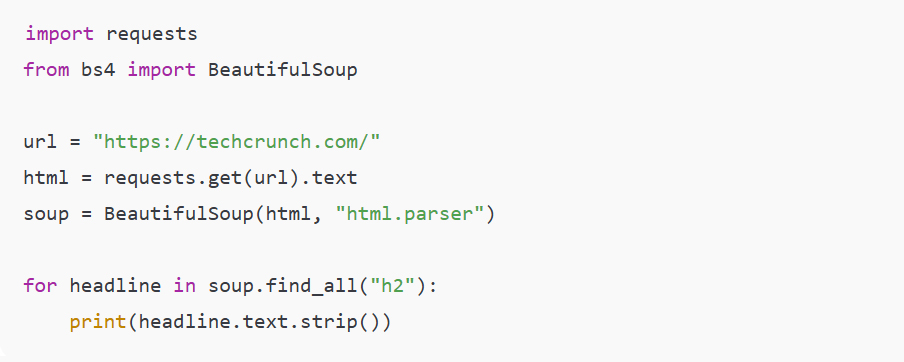
•  الأداء الحالي

•  مدى قربنا من الهدف

•  ما إذا كنا نتحسن أم نتراجع

لقد حوّلت التقارير إلى رؤى عملية

Power BI وهذا هو الهدف الرئيسي لدى

: مثال

تخيل شركة تجزئة تستخدم بطاقة مؤشرات الأداء الرئيسية هذه

• هامش يناير: ١٨٪ (سهم أحمر للأسفل)

• هامش فبراير: ٢١٪ (سهم أخضر للأعلى)

في غضون ثوانٍ تُدرك القيادة أن أداء فبراير فاق التوقعات وأن الإجراءات التصحيحية المتخذة في يناير نجحت

Power BI بطاقة مؤشرات الأداء الرئيسية المُصممة جيداً في

هي أكثر من مجرد رقم بسيط، إنها قصة بصرية تُقدم الوضوح والتوجيه والتأثير، أفضل بطاقة مؤشرات أداء رئيسية لديّ جمعت بين مقاييس واضحة وأهداف سياقية وترميز ألوان ومؤشرات اتجاهات مما يُحوّل البيانات إلى رؤى قيّمة

إذا لم تُجرّب بطاقات مؤشرات الأداء الرئيسية بعد فابدأ بمشاريع صغيرة ولكن صمّمها بهدف، فبطاقة واحدة يُمكن أن تكون أقوى من لوحة معلومات كاملة إذا تم تنفيذها بشكل صحيح

Advertisements

Mastering the Math for Machine Learning / A Step-by-Step Guide

Advertisements

When people hear “machine learning,” they often imagine advanced algorithms, massive datasets, and futuristic applications. But at the heart of all of this lies a very old discipline: mathematics.

It is the language that powers every neural network, regression model, and recommendation system. Many learners feel intimidated because they think they need to master every single branch of math. The truth is, you don’t — you only need to focus on the specific areas that drive machine learning forward.

This article will guide you step by step through the math you need, why it matters, and how to actually learn it without getting lost.

Linear algebra forms the foundation of machine learning. Data in machine learning is often represented as vectors and matrices. For example, a grayscale image can be thought of as a matrix where each element corresponds to the brightness of a pixel. When you feed that image into a machine learning model, it performs matrix operations to detect patterns such as edges, shapes, and textures.

To get comfortable, focus on the basics: vectors, matrices, matrix multiplication, dot products, and eigenvalues. Once you understand these, you’ll see why every deep learning library (like TensorFlow or PyTorch) is essentially a giant machine for matrix operations.

Real-life example: When Netflix recommends movies, it uses linear algebra to represent both users and movies in a shared space. By comparing the “distance” between your vector and a movie’s vector, the system decides whether to recommend it.

While linear algebra structures the data, calculus drives the learning process. Machine learning models improve themselves by minimizing error — and that is achieved through derivatives and gradients.

For instance, the popular Gradient Descent algorithm is simply an application of calculus. By taking the derivative of the loss function with respect to model parameters, the algorithm knows which direction to move to reduce errors. You don’t need to master every integration trick, but you should feel comfortable with derivatives, partial derivatives, and gradients.

Real-life example: Imagine training a self-driving car’s vision system. The model makes a mistake identifying a stop sign. Gradient Descent kicks in, adjusting the model’s internal parameters (weights) slightly so that next time, the probability of recognizing the stop sign is higher. That entire process is powered by calculus.

Machine learning is about making predictions under uncertainty, and that’s exactly where probability and statistics come in. Without them, you can’t evaluate models, understand error rates, or deal with randomness in data.

Key concepts include probability distributions, expectation, variance, conditional probability, and hypothesis testing. These tools help you answer questions like: How confident is the model in its prediction? Is this result meaningful, or just random noise?

Real-life example: In spam detection, a model doesn’t “know” for sure if an email is spam. Instead, it assigns a probability, such as 95% spam vs. 5% not spam. That probability comes from statistical modeling and probability theory.

Advertisements

Every machine learning model has one ultimate goal: optimization. Whether it’s minimizing the error in predictions or maximizing the accuracy of classification, optimization ensures the model keeps getting better.

Basic optimization concepts include cost functions, convexity, constraints, and gradient-based optimization methods. Even complex deep learning boils down to solving optimization problems efficiently.

Real-life example: Support Vector Machines (SVMs), one of the classic ML algorithms, rely entirely on optimization to find the best decision boundary between two classes. Without optimization, the algorithm wouldn’t know which boundary is the “best.”

Though sometimes overlooked, discrete mathematics provides the foundation for algorithms and data structures — both critical in machine learning. Concepts like sets, combinatorics, and graph theory help us design efficient models and handle structured data.

Real-life example: Decision trees, widely used in machine learning, depend heavily on concepts from discrete math. They split data based on logical conditions and count possible outcomes — exactly the kind of reasoning that discrete math teaches.

  • Start small, but stay consistent. Pick one math topic and dedicate short daily sessions to it.
  • Apply while you learn. Don’t study math in isolation. Code small ML models in Python to see concepts like gradients or matrices in action.
  • Use visual resources. Channels like 3Blue1Brown make abstract concepts like eigenvectors and gradient descent easy to grasp visually.
  • Practice problems. Work through exercises, not just theory. Solving problems cements your understanding.

You don’t need to be a mathematician to succeed in machine learning, but you do need the right mathematical foundations. Focus on linear algebra for data representation, calculus for learning dynamics, probability and statistics for handling uncertainty, optimization for model improvement, and discrete math for algorithmic thinking. When you learn these topics gradually and connect them to coding practice, math stops being an obstacle and becomes your greatest ally in building powerful machine learning models.

Advertisements

إتقان الرياضيات للتعلم الآلي

دليل خطوة بخطوة

Advertisements

عندما يسمع الناس عن “التعلم الآلي” غالباً ما يتخيلون خوارزميات متقدمة ومجموعات بيانات ضخمة وتطبيقات مستقبلية، لكن في جوهر كل هذا يمكن تلخيص الموضوع باختصاص شامل : الرياضيات

إنها اللغة التي تُشغّل كل شبكة عصبية ونموذج انحدار ونظام توصية، إذ يشعر العديد من المتعلمين بالرهبة لأنهم يعتقدون أنهم بحاجة إلى إتقان كل فرع من فروع الرياضيات لكن الحقيقة ليست كذلك، فما عليك سوى التركيز على المجالات المحددة التي تُمكّن التعلم الآلي من التقدم

سترشدك هذه المقالة خطوة بخطوة خلال الرياضيات التي تحتاجها وأهميتها وكيفية تعلمها فعلياً دون أن تضيع

يُشكّل الجبر الخطي أساس التعلم الآلي، فغالباً ما تُمثّل البيانات في التعلم الآلي كمتجهات ومصفوفات، فعلى سبيل المثال يمكن اعتبار صورة تدرج الرمادي مصفوفة حيث يُقابل كل عنصر سطوع بكسل، وعند إدخال تلك الصورة في نموذج تعلّم آلي يُجري عمليات مصفوفة لاكتشاف أنماط مثل الحواف والأشكال والقوام للتعود على الأساسيات ركّز على المتجهات والمصفوفات وضرب المصفوفات وحاصل الضرب النقطي والقيم الذاتية، فبمجرد فهمك لهذه الأساسيات ستدرك لماذا تُعدّ كل مكتبة تعلّم عميق

PyTorch أو TensorFlow :مثل

في جوهرها آلة عملاقة لعمليات المصفوفات

: وعلى سبيل المثال

بأفلام Netflix عندما تُوصي

فإنها تستخدم الجبر الخطي لتمثيل كلٍّ من المستخدمين والأفلام في مساحة مشتركة بمقارنة “المسافة” بين متجهك ومتجه الفيلم يُقرر النظام ما إذا كان سيُوصي به أم لا

بينما يُنظّم الجبر الخطي البيانات يُحرّك التفاضل والتكامل عملية التعلم، إذ تُحسّن نماذج تعلّم الآلة نفسها من خلال تقليل الأخطاء ويتحقق ذلك من خلال المشتقات والتدرجات

على سبيل المثال: خوارزمية الانحدار التدرجي الشائعة هي ببساطة تطبيق للتفاضل والتكامل، فبأخذ مشتقة دالة الخسارة بالنسبة لمعلمات النموذج تعرف الخوارزمية الاتجاه الذي يجب أن تتحرك فيه لتقليل الأخطاء، إذاً لستَ بحاجة إلى إتقان جميع حيل التكامل ولكن يجب أن تكون مُلِماً بالمشتقات والمشتقات الجزئية والتدرجات

ومثالنا على ذلك: تخيّل تدريب نظام رؤية لسيارة ذاتية القيادة يرتكب النموذج خطأً في تحديد إشارة توقف، يبدأ الانحدار التدريجي مع تعديل المعلمات الداخلية للنموذج (الأوزان) قليلاً بحيث يكون احتمال التعرف على إشارة التوقف في المرة القادمة أعلى، تعتمد هذه العملية برمتها على حساب التفاضل والتكامل

يتعلق التعلم الآلي بالتنبؤات في ظل التفاوت بين الشك واليقين، وهنا تحديداً يأتي دور الاحتمالات والإحصاء، فبدونهما لا يمكنك تقييم النماذج أو فهم معدلات الخطأ أو التعامل مع العشوائية في البيانات

تشمل المفاهيم الرئيسية توزيعات الاحتمالات والتوقع والتباين والاحتمال الشرطي واختبار الفرضيات، إذ تساعدك هذه الأدوات في الإجابة على أسئلة مثل: ما مدى ثقة النموذج في تنبؤاته؟ هل هذه النتيجة ذات معنى أم أنها مجرد ضوضاء عشوائية؟

مثال: في عملية اكتشاف البريد العشوائي لا “يتأكد” النموذج من كون البريد الإلكتروني بريداً عشوائياً، فبدلاً من ذلك يُحدد احتمالاً مثل 95% بريد عشوائي مقابل 5% ليس بريداً عشوائياً ، يأتي هذا الاحتمال من النمذجة الإحصائية ونظرية الاحتمالات

Advertisements

لكل نموذج تعلم آلي هدف نهائي واحد: التحسين، فسواء كان ذلك تقليل الخطأ في التنبؤات أو زيادة دقة التصنيف إلى أقصى حد فإن التحسين يضمن استمرار تحسن النموذج

تشمل مفاهيم التحسين الأساسية دوال التكلفة والتحدب والقيود وطرق التحسين القائمة على التدرج، حتى التعلم العميق المعقد يتلخص في حل مشاكل التحسين بكفاءة فعلي سبيل المثال

SVMs إن آلات دعم المتجهات

وهي إحدى خوارزميات التعلم الآلي الكلاسيكية تعتمد كلياً على التحسين لإيجاد أفضل حدود القرار بين فئتين، فبدون التحسين لن تعرف الخوارزمية أي الحدود “الأفضل”

على الرغم من إغفالها أحياناً تُوفر الرياضيات المنفصلة الأساس للخوارزميات وهياكل البيانات وكلاهما أساسي في التعلم الآلي، بحيث تساعدنا مفاهيم مثل المجموعات والتوافقيات ونظرية الرسوم البيانية في تصميم نماذج فعّالة ومعالجة البيانات المُهيكلة

مثال من الحياة الواقعية: تعتمد أشجار القرار المُستخدمة على نطاق واسع في التعلم الآلي بشكل كبير على مفاهيم من الرياضيات المنفصلة، فهي تُقسّم البيانات بناءً على الشروط المنطقية وتُحصي النتائج المُحتملة وهو بالضبط نوع التفكير الذي تُعلّمه الرياضيات المنفصلة

ابدأ بخطوات صغيرة ولكن حافظ على الاتساق، اختر موضوعاً رياضياً واحداً وخصص له جلسات يومية قصيرة *

طبّق ما تعلمته أثناء الدرس ولا تدرس الرياضيات بمعزل عن غيرها، ثم برمج نماذج تعلم آلي صغيرة باستخدام بايثون لرؤية مفاهيم مثل التدرجات أو المصفوفات عملياً

استخدم الموارد البصرية *

تجعل المفاهيم المجردة Blue1Brown3 قنوات مثل

مثل المتجهات الذاتية وانحدار التدرج سهلة الفهم بصرياً

تدرب على حل المسائل، حلّ التمارين وليس فقط النظريات، فحل المسائل يعزز فهمك *

لست بحاجة إلى أن تكون عالم رياضيات لتنجح في التعلم الآلي ولكنك تحتاج إلى الأسس الرياضية الصحيحة، ركّز على الجبر الخطي لتمثيل البيانات وحساب التفاضل والتكامل لتعلم الديناميكيات والاحتمالات والإحصاء لمعالجة عدم اليقين والتحسين لتحسين النماذج والرياضيات المنفصلة للتفكير الخوارزمي، فعندما تتعلم هذه المواضيع تدريجياً وتربطها بممارسة البرمجة تتوقف الرياضيات عن كونها عائقاً وتصبح حليفك الأكبر في بناء نماذج تعلم آلي فعّالة

Advertisements

How Pandas Changed the Way I Work with Data Forever

Advertisements

If you’ve ever stared at rows of messy data in a CSV file and felt overwhelmed, you’re not alone. Like many newcomers to data analysis, I once struggled with cleaning, transforming, and analyzing datasets—until I discovered the true power of Pandas, Python’s go-to data manipulation library. In this article, I’ll walk you through the data workflow I wish I had known when I first started. Whether you’re a beginner or someone who’s used Pandas but still feels stuck, this guide will make your data tasks smoother and more intuitive.

When I first learned Pandas, I treated it like a spreadsheet with some coding on top. Big mistake. I would manipulate lists or dictionaries and use Pandas only occasionally. It wasn’t until I fully embraced the DataFrame as my primary data structure that things started making sense.

The moment everything clicked was when I started thinking in DataFrames—as in, blocks of data that you manipulate with chainable methods. Imagine each operation as a transformation on a flowing river of data, rather than discrete manual edits. This mental shift makes complex operations easier to reason through and structure logically.

Pro Tip: Always load your data into a DataFrame, not a list, dict, or array, unless you absolutely have to.

Data rarely comes clean. It usually arrives with missing values, duplicates, inconsistent types, or poorly named columns. If you skip this step, you’ll run into problems down the line when performing analysis.

The workflow I now follow (and recommend) is:

  • Check data types to understand what you’re dealing with
  • Handle missing values to prevent errors
  • Remove duplicates to avoid skewed results
  • Normalize column names for readability and easier access

Pandas makes this easy and consistent, especially once you get familiar with the basic syntax.

These simple commands can clean up even the messiest CSV files.

Instead of assigning intermediate results to new variables and cluttering your notebook or script, Pandas allows for method chaining. This style improves both readability and maintainability of your code.

When you chain methods, each step is like a filter or transformer in a pipeline. You can clearly see what’s happening to the data at each point. It reduces the cognitive load and removes the need for multiple temporary variables.

By chaining, your logic stays close together and easy to trace.

Once your data is clean, analysis becomes a breeze if you master these three powerful tools: groupby(), agg(), and pivot_table(). They are the backbone of summary statistics, trend spotting, and dimensional analysis.

  • GroupBy lets you split your data into groups and apply computations on each group.
  • Agg lets you define multiple aggregation functions like sum, mean, count, etc.
  • Pivot tables reshape your data for cross-comparisons across categories.

These are key steps to go from raw data to valuable insight.

You’ll use these in nearly every project, so it’s worth getting comfortable with them early.

Advertisements

Pandas integrates smoothly with Matplotlib and Seaborn, two of the most popular Python plotting libraries. Rather than waiting until the end of your analysis, it’s often smarter to visualize as you go.

Early plotting helps catch outliers, understand distributions, and spot anomalies or trends. You don’t need fancy dashboards—even a simple histogram or line chart can provide key insights that numbers alone can’t.

Making visualization part of your standard workflow will greatly improve your understanding of the data.

After cleaning, analyzing, and visualizing your data, you need to share or store the results. Pandas makes it effortless to export your DataFrame in various formats.

Exporting your data isn’t just about saving your work—it’s about creating reusable, shareable assets for collaborators or clients. Whether it’s a clean CSV or a styled Excel file, always include this final step.

Don’t let your insights live only in your notebook—get them out there.

If you notice you’re repeating the same steps across projects or datasets, it’s time to automate. This can be as simple as creating a reusable function or as advanced as building an entire pipeline script.

Functions help encapsulate logic and make your code modular. It also makes onboarding easier when sharing your work with teammates or revisiting it months later.

Start small, and automate more as you go.

At first, Pandas felt clunky to me—too many functions, too many options. But once I embraced the data workflow mindset—clean, chain, group, visualize, export—it all made sense.

If you’re new to Pandas, don’t try to memorize every method. Instead, focus on the workflow. Build your foundation around practical tasks, and Pandas will become your favorite tool in no time.

Bonus Cheat Sheet: My Go-To Workflow

  1. read_csv()
  2. df.info(), df.describe()
  3. dropna(), drop_duplicates()
  4. assign(), query()
  5. groupby(), agg(), pivot_table()
  6. plot()
  7. to_csv() or to_excel()
Advertisements

طريقة عملي مع البيانات إلى الأبد Pandas كيف غيّرت

Advertisements

إذا سبق لك أن حدقت في صفوف

CSV من البيانات غير المرتبة في ملف

وشعرت بالإرهاق فأنت لست وحدك، وكالعديد من المبتدئين في تحليل البيانات واجهتُ صعوبةً في تنظيف مجموعات البيانات وتحويلها وتحليلها

Pandas حتى اكتشفتُ القوة الحقيقية لـ

مكتبة بايثون المُفضلة لمعالجة البيانات، وفي هذه المقالة سأشرح لك سير عمل البيانات الذي كنت أتمنى لو عرفته عندما بدأتُ

Pandas سواءً كنتَ مبتدئاً أو شخصاً استخدم

ولكنه لا يزال يشعر بالتعثر سيجعل هذا الدليل مهامك المتعلقة بالبيانات أكثر سلاسةً وبديهية

لأول مرة Pandas عندما تعلمتُ

تعاملتُ معه كجدول بيانات مُضاف إليه بعض الأكواد البرمجية، وهذا كان خطأً فادحاً، إذ كنتُ أتعامل مع القوائم أو القواميس

من حين لآخر فقط Pandas وأستخدم

DataFrame ولم أبدأ في فهم الأمور إلا بعد أن اعتمدتُ

بالكامل كهيكل بياناتي الأساسي، كانت اللحظة التي أدركت فيها كل شيء هي اللحظة التي بدأت فيها التفكير في أطر البيانات – أي كتل البيانات التي تُعالج بطرق متسلسلة، تخيل كل عملية كتحويل على سيل متدفق من البيانات بدلاً من عمليات التحرير اليدوية المنفصلة، هذا التحول الفكري يُسهّل فهم العمليات المعقدة وهيكلتها منطقياً

DataFream نصيحة احترافية: حمّل بياناتك دائماً في

وليس قائمة أو قاموس أو مصفوفة إلا إذا كنتَ مضطراً لذلك

نادراً ما تكون البيانات سليمة، فعادةً ما تصل بقيم ناقصة أو بيانات مكررة أو أنواع غير متسقة أو أعمدة بأسماء غير صحيحة، فإذا تخطيتَ هذه الخطوة فستواجه مشاكل لاحقاً عند إجراء التحليل

:سير العمل الذي أتبعه الآن (وأوصي به) هو

التحقق من أنواع البيانات لفهم ما تتعامل معه *

معالجة القيم المفقودة لتجنب الأخطاء *

إزالة التكرارات لتجنب النتائج غير الدقيقة *

توحيد أسماء الأعمدة لسهولة القراءة وسهولة الوصول *

هذا الأمر ويجعله متسقاً Pandas يُسهّل

خاصةً بعد التعود على أساسيات بناء الجملة

يمكن لهذه الأوامر البسيطة

الأكثر فوضوية CSV تنظيف حتى ملفات

بدلاً من تعيين نتائج وسيطة لمتغيرات جديدة وإرباك دفتر ملاحظاتك أو نصك البرمجي

بتسلسل الدوال Pandas يسمح

إذ يُحسّن هذا الأسلوب من سهولة قراءة الكود وصيانته

عند تسلسل الدوال تكون كل خطوة بمثابة مُرشِّح أو مُحوِّل في خط أنابيب، فيمكنك رؤية ما يحدث للبيانات بوضوح في كل نقطة، فيُقلل هذا من العبء المعرفي ويُلغي الحاجة إلى متغيرات مؤقتة متعددة

من خلال التسلسل يبقى منطقك مترابطاً وسهل التتبع

:بمجرد أن تصبح بياناتك واضحة سيصبح التحليل سهلاً للغاية إذا أتقنت هذه الأدوات الثلاث القوية

groupby() و agg() و pivot_table()

تُعدّ هذه الأدوات أساساً لإحصاءات التلخيص ورصد الاتجاهات وتحليل الأبعاد

تقسيم بياناتك إلى مجموعات GroupBy تتيح لك *

وتطبيق الحسابات على كل مجموعة

تعريف دوال تجميع متعددة Agg تتيح لك *

مثل المجموع والمتوسط والعدد.. إلخ

تشكيل بياناتك Pivot تُعيد جداول *

لإجراء مقارنات متقاطعة عبر الفئات

هذه خطوات أساسية للانتقال من البيانات الخام إلى رؤى قيّمة

ستستخدم هذه الأدوات في كل مشروع تقريباً لذا يُنصح بالتدرب عليها مُبكراً
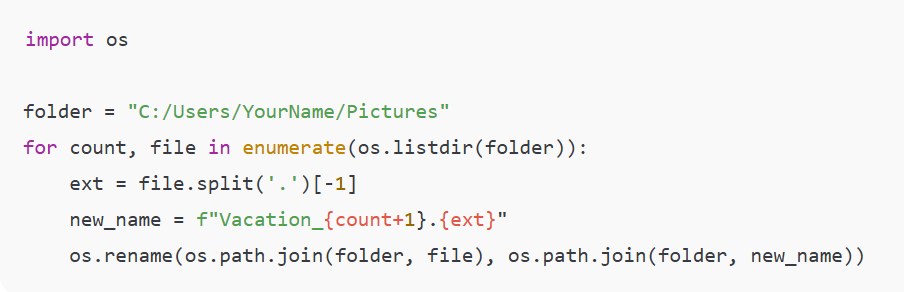
Advertisements

Seabornو Matplotlib بسلاسة مع Pandas يتكامل

وهما من أشهر مكتبات رسم بايثون، فبدلاً من الانتظار حتى نهاية التحليل غالباً ما يكون من الأذكى التصور أثناء العمل، ويساعد التخطيط المبكر على رصد القيم الشاذة وفهم التوزيعات ورصد الشذوذ أو الاتجاهات، فلستَ بحاجة إلى لوحات معلومات معقدة – حتى مُدرج تكراري أو مخطط خطي بسيط يُمكنه توفير رؤى رئيسية لا تستطيع الأرقام وحدها توفيرها

إن جعل التصور جزءاً من سير عملك القياسي سيُحسّن فهمك للبيانات بشكل كبير

بعد تنظيف بياناتك وتحليلها وتصورها ستحتاج إلى مشاركة النتائج أو تخزينها

تصدير إطار البيانات الخاص بك بتنسيقات مُختلفة Pandas يُسهّل

لا يقتصر تصدير بياناتك على حفظ عملك فحسب بل يشمل إنشاء أصول قابلة لإعادة الاستخدام والمشاركة للمتعاونين أو العملاء

Excel نظيفاً أو ملف CSV فسواءً كان ملف

مُنسقاً احرص دائماً على تضمين هذه الخطوة الأخيرة

لا تدع رؤاك تُحفظ في دفتر ملاحظاتك فقط انشرها

إذا لاحظتَ أنك تُكرر نفس الخطوات في المشاريع أو مجموعات البيانات فقد حان وقت الأتمتة، فقد يكون هذا بسيطاً كإنشاء دالة قابلة لإعادة الاستخدام أو متقدماً كإنشاء نص برمجي كامل لخط أنابيب

تساعد الدوال على تغليف المنطق وجعل شيفرتك معيارية، كما أنها تُسهّل عملية الإدماج عند مشاركة عملك مع زملائك في الفريق أو إعادة النظر فيه بعد أشهر

ابدأ بخطوات صغيرة وأتمت المزيد مع مرور الوقت

في البداية شعرتُ أن باندا غير عملي فوظائفه وخياراته كثيرة جداً، لكن بمجرد أن اتبعتُ عقلية سير عمل البيانات : التنظيف والتسلسل والتجميع والتصور ثم التصدير أصبح كل شيء منطقياً

إذا كنتَ جديداً على باندا فلا تحاول حفظ جميع الطرق، وبدلاً من ذلك ركّز على سير العمل وابنِ أساسك حول المهام العملية وسيصبح باندا أداتك المفضلة في وقت قصير

: سير العمل المفضل لدي

  1. read_csv()
  2. df.info(), df.describe()
  3. dropna(), drop_duplicates()
  4. assign(), query()
  5. groupby(), agg(), pivot_table()
  6. plot()
  7. to_csv() or to_excel()
Advertisements

Python Libraries That Replaced My DIY Scripts

Advertisements

As a Python developer, I used to pride myself on writing everything from scratch. Whether it was a quick script to clean a dataset or a complex automation workflow, I found joy in crafting each line of code myself. But over time, I realized that reinvention isn’t always smart — especially when the Python ecosystem offers libraries so powerful and polished, they simply outshine any homegrown solution. Here are the eight libraries that made me retire my own scripts.

I used to write long, clunky loops to clean and manipulate CSV files. Then I discovered Pandas. With one-liners like df.dropna() or df.groupby(), I was doing in seconds what used to take hours. Whether I’m merging datasets or reshaping tables, Pandas has become my Swiss Army knife for data.

Scraping the web used to be a nightmare of regex and fragile string manipulation. BeautifulSoup changed that. With its intuitive syntax, parsing HTML and XML now feels like reading a book. I stopped worrying about malformed tags and started focusing on insights.

That one line replaced dozens of lines of messy parsing logic.

Ever tried to use urllib.request? I did — once. Then I met Requests. It made HTTP calls human-friendly. With simple methods like .get() and .post(), Requests reads like plain English. I no longer need to wrestle with headers, sessions, or cookies on my own.

It just works. Every time.

For CLI tools, I used to rely on argparse. It worked, but the syntax was verbose. Typer changed my world. Built on top of Click, it lets me build rich CLI apps using Python type hints. It’s intuitive, readable, and scalable — even for complex tools.

With Typer, I shipped tools 3x faster.

Advertisements

I once wrote a monstrous VBA script to generate Excel reports. That ended the day I found OpenPyXL. It lets me create, read, and edit .xlsx files natively in Python. I can style cells, create charts, and update formulas without opening Excel.

Excel automation is now just another Python script — no macros, no drama.

Debugging output and CLI logs were always boring, until I started using Rich. This library transformed my terminal output into a colorful, styled experience with progress bars, tables, markdown, and even live updates.

Rich made my tools feel like apps, not scripts.

Instead of writing cron jobs or manually handling datetime logic, I now use schedule. It lets me define jobs in a language that almost reads like English.

It’s like having a built-in personal assistant for Python.

I once wrote scripts to automate workflows in specific apps, relying on API access (if available). But many apps don’t have APIs. That’s where PyAutoGUI comes in. It controls the mouse, keyboard, and screen like a robot assistant.

I’ve used it to batch-edit images, generate reports, and even auto-fill web forms — no backend access required.

There’s pride in writing original code. But there’s power in knowing when not to. These libraries saved me hours of frustration, reduced bugs, and supercharged my productivity. If you’re still writing your own scripts for tasks that are already solved — maybe it’s time to stop.

Let Python’s ecosystem do the heavy lifting. You’ve got better things to build.

Advertisements

مكتبات بايثون التي حلت محل نصوصي البرمجية التي كنتُ أُعدّها بنفسي

Advertisements

بصفتي مطور بايثون كنت أفتخر بكتابة كل شيء من الصفر، سواءً كان نصاً برمجياً سريعاً لتنظيف مجموعة بيانات أو سير عمل أتمتة معقداً، كنت أجد متعة في صياغة كل سطر من الشيفرة بنفسي، لكن مع مرور الوقت أدركت أن إعادة الابتكار ليست دائماً ذكية خاصةً عندما يوفر نظام بايثون مكتبات قوية ومتطورة لدرجة أنها ببساطة تتفوق على أي حل محلي

إليكم هذه المكتبات الثماني التي دفعتني للتخلي عن نصوصي البرمجية الخاصة

ومعالجتها CSV كنت أكتب حلقات طويلة ومعقدة لتنظيف ملفات

ثم اكتشفت باندا، فباستخدام جمل قصيرة

df.groupby() أو df.dropna() مثل

كنت أنجز في ثوانٍ ما كان يستغرق ساعات، سواءً كنت أدمج مجموعات البيانات أو أعيد تشكيل الجداول

قبل باندا: 50 سطراً من الحلقات المتداخلة
بعد باندا: 3 أسطر بشكل أنيق

كان استخراج بيانات الويب كابوساً من التعبيرات العادية والتلاعب الهش بالسلاسل النصية

ذلك BeautifulSoup غيّر

بفضل بنيته النحوية البديهية

الآن أشبه بقراءة كتاب HTML و XML أصبح تحليل

لم أعد أقلق بشأن العلامات المشوهة وبدأت بالتركيز على الأفكار

حلّ هذا السطر محل عشرات الأسطر من منطق التحليل الفوضوي

؟ urllib.request هل سبق لك أن حاولت استخدام

Requests فعلت ذلك مرة واحدة ثم وجدت

سهلة الاستخدام HTTP جعل مكالمات

.get() و .post() باستخدام طرق بسيطة مثل

سهلة القراءة Requests أصبحت

لم أعد بحاجة إلى التعامل مع الرؤوس أو الجلسات أو ملفات تعريف الارتباط بمفردي

إنه يعمل ببساطة في كل مرة

،في أدوات سطر الأوامر argparse كنت أعتمد على

كان يعمل، لكن بناء الجملة كان مُطوّلاً

حياتي Typer غيّر

Click بُني على

Python وهو يُتيح لي بناء تطبيقات سطر أوامر غنية باستخدام تلميحات نوع

إنه بديهي وسهل القراءة وقابل للتطوير حتى للأدوات المُعقدة

أصبحت الأدوات أسرع بثلاث مرات Typer مع

Advertisements

Excel لإنشاء تقارير VBA كتبتُ ذات مرة نصًا برمجيًا ضخمًا بلغة

OpenPyXL انتهى ذلك اليوم الذي اكتشفتُ فيه

Python وقراءتها وتحريرها تلقائيًا في .xlsx يُتيح لي إنشاء ملفات

يُمكنني تنسيق الخلايا، وإنشاء المخططات البيانية

Excel وتحديث الصيغ دون الحاجة لفتح

Python الآن مجرد نص برمجي آخر في Excel أصبحت أتمتة

بدون وحدات ماكرو بدون تعقيدات

Rich حتى بدأتُ باستخدام

حوّلت هذه المكتبة مخرجات طرفيتي إلى تجربة زاهية الألوان وأنيقة

Markdown مع أشرطة تقدم وجداول ورموز

وحتى تحديثات مباشرة

Datetime أو التعامل يدوياً مع cron بدلاً من كتابة مهام

Schedule أستخدم الآن

يتيح لي هذا تحديد المهام بلغة تُشبه الإنجليزية تقريباً

Python يشبه الأمر وجود مساعد شخصي مدمج في

كتبتُ سابقاً نصوصاً برمجية لأتمتة سير العمل في تطبيقات محددة بالاعتماد على الوصول إلى واجهة برمجة التطبيقات (إن وُجدت). لكن العديد من التطبيقات لا تحتوي على واجهات برمجة تطبيقات

PyAutoGUI وهنا يأتي دور

فهو يتحكم في الماوس ولوحة المفاتيح والشاشة كمساعد آلي

لقد استخدمته لتحرير الصور دفعةً واحدة وإنشاء التقارير وحتى ملء نماذج الويب تلقائيًا دون الحاجة إلى الوصول إلى الواجهة الخلفية

يكمن الفخر في كتابة أكواد أصلية ولكن تكمن القوة في معرفة متى لا تفعل ذلك، لقد وفرت عليّ هذه المكتبات ساعات من الإحباط وقللت من الأخطاء البرمجية وعززت إنتاجيتي بشكل كبير، فإذا كنت لا تزال تكتب نصوصك البرمجية الخاصة لمهام تم حلها بالفعل فربما حان الوقت للتوقف

دع بيئة بايثون تتولى المهمة الصعبة، لديك أشياء أفضل لتفعلها

Advertisements

Behind the Scenes: Data Science’s Role in Great Customer Service

Advertisements

In the age of information, data science has quietly transformed from a buzzword to a secret weapon behind every great customer experience. Companies today don’t just rely on good training and courteous staff — they also lean heavily on the silent force of algorithms and predictive models that keep their customer support running like a well-oiled machine.

So, what’s the hidden magic that makes data science so powerful in this space? Let’s break it down.

Every chat message, support ticket, or phone call holds a wealth of information. Traditionally, companies would handle these one by one, reactively solving issues. But modern customer support teams harness data science to process thousands — even millions — of interactions and distill them into meaningful trends.

By applying natural language processing (NLP), support teams can analyze what customers are talking about in real-time: Are there recurring complaints? Where are customers getting stuck? What product features are confusing?

This insight doesn’t just help solve individual cases faster — it feeds back into product improvements, FAQ updates, and proactive outreach that stops problems before they spread.

One of the secret superpowers of data science is prediction. By analyzing historical patterns, machine learning models can flag customers who are likely to churn, escalate, or leave a bad review.

Imagine knowing which users will probably run into payment errors or shipping delays — and reaching out with helpful guidance before they even file a ticket. That’s the next level of support.

Big companies like Amazon, Netflix, and telecom giants have invested millions in this approach — but the same technology is becoming accessible for small businesses through SaaS platforms and affordable AI tools.

Not all support interactions need a human agent. Bots powered by data science handle routine questions 24/7: order tracking, password resets, account updates. These AI assistants learn from massive datasets to answer with near-human fluency — but the real magic is that they free up human agents for high-value conversations that require empathy and nuanced judgment.

This hybrid approach means customers get faster replies for simple requests and more personalized help for complex ones — a win-win for satisfaction and operational costs.

Advertisements

Data science also powers personalization. With the right models, a support team can instantly pull up a customer’s past purchases, preferences, and issues — and tailor the conversation accordingly.

Instead of asking a customer to repeat their story for the fifth time, the agent (or the AI) knows exactly what they bought, when they called last, and what solutions worked before. This level of context not only saves time but builds trust.

Support managers used to rely on static reports — now, live dashboards powered by data analytics track agent performance, ticket volumes, resolution times, and customer sentiment in real-time.

This visibility lets teams spot bottlenecks as they happen, shift resources quickly, and reward top performers. Data-driven coaching has become the norm, not the exception.

When done right, customers never even notice the data science humming in the background — they just feel heard, understood, and helped.

For businesses, the ROI is clear: fewer support costs, happier customers, and a constant stream of insights to improve products and services. The secret power of data science in customer support isn’t about replacing people — it’s about making them smarter, faster, and better equipped to deliver experiences that keep customers coming back.

Advertisements

كواليس دور علم البيانات في خدمة عملاء متميزة

Advertisements

في عصر المعلومات تحوّل علم البيانات بهدوء من مجرد مصطلح شائع إلى سلاح سري وراء كل تجربة عملاء رائعة، إذ لا تعتمد الشركات اليوم على التدريب الجيد والموظفين المهذبين فحسب، بل تعتمد أيضاً بشكل كبير على القوة الصامتة للخوارزميات والنماذج التنبؤية التي تُبقي دعم العملاء يعمل بكفاءة عالية، إذاً ما هو السر الكامن وراء قوة علم البيانات في هذا المجال؟ دعونا نوضح ذلك

تحمل كل رسالة دردشة أو تذكرة دعم أو مكالمة هاتفية ثروة من المعلومات، فتقليدياً كانت الشركات تتعامل مع هذه المعلومات واحدة تلو الأخرى وتحل المشكلات بشكل تفاعلي، لكن فرق دعم العملاء الحديثة تُسخّر علم البيانات لمعالجة آلاف – بل ملايين – التفاعلات وتحويلها إلى اتجاهات هادفة

 (NLP) فمن خلال تطبيق معالجة اللغة الطبيعية

يُمكن لفرق الدعم تحليل ما يتحدث عنه العملاء في الوقت الفعلي: هل هناك شكاوى متكررة؟ أين يواجه العملاء صعوبة؟ ما هي ميزات المنتج المُربكة؟ لا تقتصر هذه الرؤية على حل الحالات الفردية بشكل أسرع فحسب، بل تُسهم أيضاً في تحسينات المنتج وتحديثات الأسئلة الشائعة والتواصل الاستباقي الذي يُوقف المشاكل قبل انتشارها

يُعدّ التنبؤ إحدى القوى العظمى السرية لعلم البيانات، فمن خلال تحليل الأنماط التاريخية يُمكن لنماذج التعلم الآلي تحديد العملاء الذين يُحتمل أن يُغادروا الخدمة أو يُصعّدوا التعامل أو يتركوا تقييماً سيئاً، تخيل معرفة المستخدمين الذين يُحتمل أن يواجهوا أخطاء في الدفع أو تأخيراً في الشحن – والتواصل معهم بإرشادات مفيدة حتى قبل تقديمهم للشكوى، هذا هو المستوى التالي من الدعم وعليه استثمرت شركات كبيرة مثل أمازون ونتفليكس وشركات الاتصالات العملاقة ملايين الدولارات في هذا النهج، لكن التكنولوجيا نفسها

SaaS أصبحت متاحة للشركات الصغيرة من خلال منصات

وأدوات الذكاء الاصطناعي بأسعار معقولة

لا تحتاج جميع تفاعلات الدعم إلى موظف بشري، إذ تتعامل الروبوتات المُدعمة بعلم البيانات مع الأسئلة الروتينية على مدار الساعة طوال أيام الأسبوع: تتبُّع الطلبات وإعادة تعيين كلمات المرور وتحديثات الحساب، بحيث يتعلم مساعدو الذكاء الاصطناعي من مجموعات بيانات ضخمة للإجابة بطلاقة تكاد تكون بشرية، لكن السر يكمن في أنهم يُتيحون للوكلاء البشريين إجراء محادثات عالية القيمة تتطلب التعاطف والحكم الدقيق، هذا النهج الهجين يعني حصول العملاء على ردود أسرع للطلبات البسيطة ومساعدة أكثر تخصيصاً للطلبات المعقدة وهو أمر مربح للطرفين من حيث الرضا وتكاليف التشغيل

Advertisements

يُعزز علم البيانات التخصيص أيضاً، فباستخدام النماذج المناسبة يمكن لفريق الدعم الاطلاع فوراً على مشتريات العميل السابقة وتفضيلاته ومشاكله وتصميم المحادثة وفقاً لذلك، فبدلاً من مطالبة العميل بتكرار قصته للمرة الخامسة يعرف الوكيل (أو الذكاء الاصطناعي) بالضبط ما اشتراه ومتى اتصل آخر مرة والحلول التي نجحت سابقاً، وهذا المستوى من السياق لا يوفر الوقت فحسب بل يبني الثقة أيضاً

كان مديرو الدعم يعتمدون في السابق على التقارير الثابتة، أمّا الآن فتُتيح لوحات معلومات مباشرة مدعومة بتحليلات البيانات تتبع أداء الوكلاء وحجم الطلبات وأوقات الحل وتفاعل العملاء في الوقت الفعلي، فتتيح هذه الرؤية للفرق رصد الاختناقات فور حدوثها وتحويل الموارد بسرعة ومكافأة أفضل الموظفين أداءً، وعليه أصبح التدريب القائم على البيانات هو القاعدة وليس الاستثناء  

عند تطبيقها بشكل صحيح لا يلاحظ العملاء حتى عمل علم البيانات في الخلفية بل يشعرون فقط بأنه مسموع ومفهوم ومدعوم، فبالنسبة للشركات فإن عائد الاستثمار واضح: تكاليف دعم أقل وعملاء أكثر رضا وتدفق مستمر من الأفكار لتحسين المنتجات والخدمات، بحيث لا تكمن القوة الخفية لعلم البيانات في دعم العملاء في استبدال الموظفين، بل في جعلهم أكثر ذكاءً وسرعةً وتجهيزاً لتقديم تجارب تجذب العملاء للعودة

Advertisements

Quit Wasting Money on Random AI Courses – These Books Are All You Need

Advertisements

In today’s world, Artificial Intelligence feels like an unavoidable buzzword — and with good reason. It’s transforming industries, reshaping how we work, and opening up opportunities that didn’t exist a decade ago. Naturally, thousands of eager learners flock to online AI courses hoping to become AI experts overnight. But here’s the uncomfortable truth: jumping from one random course to another often leaves you with shallow, disconnected knowledge and no real ability to solve real-world problems.

Too many people buy yet another course, hoping this one will finally “click.” They skim through a few video lessons, copy some code snippets, maybe run a basic neural network — but when it comes time to build something meaningful or troubleshoot an issue, they feel completely lost. That’s because real understanding doesn’t come from binge-watching lectures. It comes from deliberate, structured learning — and for that, you still can’t beat good books.

It’s not that online courses are bad. Many are well-produced and taught by experts. But when you hop from one to the next without a plan, you’re patching together fragments of knowledge with no strong foundation underneath. You might learn to run someone else’s code — but do you really understand why it works? Could you adapt it to a new problem? Could you explain it to someone else?

This shallow learning leaves you vulnerable. The field of AI evolves quickly, and tools and libraries change all the time. If you don’t understand the core principles, you’ll constantly feel like you’re playing catch-up — and sooner or later, you’ll burn out or give up altogether.

Books force you to slow down. They take you deeper than any 3-hour video course ever will. When you work through a book — with a pen, paper, and plenty of time to think — you build a mental framework that helps you connect ideas, question assumptions, and truly own what you learn.

So, if you’re ready to ditch the random course cycle, here are a few books that can build your AI knowledge from the ground up and make you a better practitioner for years to come.

This book is a heavyweight classic for a reason. It’s not an easy read — but it lays out the mathematical and statistical foundations that power modern machine learning. Expect to revisit your linear algebra and probability knowledge. Work through the derivations. Try to implement the algorithms from scratch. By the time you’re done, you’ll see behind the curtain of so many “black box” models you find online.

Think of this book as your deep dive into the world of neural networks and modern AI systems. It explains the mechanics behind deep learning architectures, why they work, where they fail, and how to build better models. If you want to understand how the tools like TensorFlow or PyTorch are built — not just how to call their functions — this is your map.

This is the standard textbook in university-level AI courses. It doesn’t just cover machine learning — it explores the entire landscape of AI, including logic, planning, knowledge representation, robotics, and even the philosophical questions we face when building intelligent machines. It’s a book that broadens your view and shows you that AI is more than just training models.

Advertisements

If Bishop’s and Goodfellow’s tomes feel intimidating, this book is a perfect starting point. It condenses core ML concepts into a readable, concise format. You won’t master every detail from it alone, but it’s excellent for building a mental map before you go deeper — or for refreshing key ideas when you need a quick reference.

Learning AI isn’t only about equations and algorithms — it’s also about understanding its quirks and limitations. This book is a witty, accessible look at how AI works (and fails) in the real world, through hilarious experiments and relatable explanations. It reminds you not to take every AI claim at face value, and gives you a healthy sense of skepticism — an essential trait for any serious AI learner.

Don’t treat these books like bedtime reading. Slow down. Take notes. Highlight passages. Rework the math by hand. Build small projects to test the theories you read about. The goal isn’t just to finish the book — it’s to absorb it so well that you can explain what you learned to someone else.

When you do need a course — and sometimes you will — you’ll approach it with intention. You’ll know exactly what you want to learn: a specific framework, tool, or implementation detail. That way, the course becomes a practical supplement, not your only source of truth.

The tech world is full of shiny tools and short-lived trends, but the principles that power AI — probability, statistics, optimization, and logic — don’t go out of style. If you build your learning on a solid foundation, you’ll always be able to pick up new skills, adapt to changing tools, and stay ahead of the hype.

So next time you’re tempted to buy yet another AI crash course, pause. Pick up a good book instead. Make some coffee, find a quiet place, and give yourself permission to dig deep. Your future self — the one solving real-world AI problems with confidence — will thank you.

Advertisements

توقف عن إهدار المال على دورات الذكاء الاصطناعي العشوائية – هذه الكتب هي كل ما تحتاجه

Advertisements

في عالمنا اليوم يبدو الذكاء الاصطناعي مصطلحاً شائعاً لا مفر منه، ولسبب وجيه فهو يُحدث تحولات في الصناعات ويُعيد تشكيل أساليب عملنا ويفتح آفاقاً جديدة لم تكن موجودة قبل عقد من الزمان، وبطبيعة الحال يتوافد آلاف المتعلمين المتحمسين على دورات الذكاء الاصطناعي عبر الإنترنت أملاً في أن يصبحوا خبراء في الذكاء الاصطناعي بين عشية وضحاها، ولكن إليكم الحقيقة الصادمة: إن الانتقال من دورة عشوائية إلى أخرى غالباً ما يُخلّف لديك معرفة سطحية ومنفصلة ويفقدك القدرة الحقيقية على حل مشاكل العالم الحقيقي

يشتري الكثيرون دورة أخرى على أمل أن تُجدي هذه الدورة نفعاً، فيُشاهدون بعض دروس الفيديو بسرعة وينسخون بعض مقتطفات الأكواد البرمجية وربما يُشغّلون شبكة عصبية أساسية ولكن عندما يحين وقت بناء شيء ذي معنى أو استكشاف مشكلة ما يشعرون بالضياع التام، ذلك لأن الفهم الحقيقي لا يأتي من كثرة مشاهدة المحاضرات بل يأتي من التعلم المُتأني والمنظم، ولهذا لا يُمكنك التغلب على الكتب الجيدة

ليس الأمر أن الدورات عبر الإنترنت سيئة، فالعديد منها مُعدّة جيداً ويُدرّسها خبراء لكن عندما تتنقل من واحد إلى آخر دون خطة مدروسة فأنت تُجمّع شظايا من المعرفة دون أساس متين، قد تتعلم تشغيل شيفرة شخص آخر – ولكن هل تفهم حقاً سبب نجاحها؟ هل يمكنك تكييفها مع مشكلة جديدة؟ هل يمكنك شرحها لشخص آخر؟

هذا التعلم السطحي يجعلك عرضة للخطر، فمجال الذكاء الاصطناعي يتطور بسرعة والأدوات والمكتبات تتغير باستمرار، فإذا لم تفهم المبادئ الأساسية ستشعر باستمرار وكأنك تحاول اللحاق بالركب وعاجلاً أم آجلاً ستُنهك أو تستسلم تماماً

الكتب تُجبرك على التباطؤ فهي تأخذك إلى عمق أكبر من أي دورة فيديو مدتها ثلاث ساعات، فعندما تُمعن النظر في كتاب – بقلم وورقة ووقت كافٍ للتفكير – فإنك تبني إطاراً ذهنياً يساعدك على ربط الأفكار وطرح الأسئلة وامتلاك ما تتعلمه حقاً

إذا كنت مستعداً للتخلي عن الدورات الدراسية العشوائية فإليك بعض الكتب التي يمكنها بناء معرفتك بالذكاء الاصطناعي من الصفر وجعلك ممارساً أفضل لسنوات قادمة

يُعد هذا الكتاب من الكتب الكلاسيكية المهمة لسبب وجيه، صحيح أنه ليس سهل القراءة لكنه يُرسي الأسس الرياضية والإحصائية التي تُعزز التعلم الآلي الحديث، توقع إعادة النظر في معرفتك بالجبر الخطي والاحتمالات واعمل على الاشتقاقات وحاول تطبيق الخوارزميات من الصفر، وعند الانتهاء سترى خلف الستار العديد من نماذج “الصندوق الأسود” التي تجدها على الإنترنت

اعتبر هذا الكتاب بمثابة رحلة متعمقة في عالم الشبكات العصبية وأنظمة الذكاء الاصطناعي الحديثة، إذ يشرح هذا الكتاب آليات هياكل التعلم العميق وأسباب نجاحها ومواطن فشلها وكيفية بناء نماذج أفضل، فإذا كنت ترغب في فهم كيفية بناء أدوات

PyTorch أو TensorFlow مثل

وليس فقط كيفية استدعاء وظائفها فهذا هو دليلك

Advertisements

هذا الكتاب هو المرجع الأساسي في دورات الذكاء الاصطناعي على مستوى الجامعات، إذ لا يقتصر على تغطية التعلم الآلي فحسب بل يستكشف آفاق الذكاء الاصطناعي بالكامل بما في ذلك المنطق والتخطيط وتمثيل المعرفة والروبوتات وحتى الأسئلة الفلسفية التي نواجهها عند بناء الآلات الذكية، إنه كتاب يوسع آفاقك ويوضح لك أن الذكاء الاصطناعي أكثر من مجرد نماذج تدريب

لا يقتصر تعلم الذكاء الاصطناعي على المعادلات والخوارزميات، بل يشمل أيضاً فهم خصائصه وحدوده، فيقدم هذا الكتاب نظرة بارعة وسهلة الفهم على كيفية عمل الذكاء الاصطناعي (وفشله) في العالم الواقعي، فمن خلال تجارب شيقة وشروحات واقعية يذكرك الكتاب بألا تأخذ كل ادعاء يتعلق بالذكاء الاصطناعي على محمل الجد ويمنحك شعوراً صحياً بالشك وهي سمة أساسية لأي متعلم جاد للذكاء الاصطناعي

لا تتعامل مع هذه الكتب كقراءة قبل النوم، بل دوّن ملاحظاتك وحدّد بعض المقاطع وأعد حل المسائل الرياضية يدوياً ثم أنشئ مشاريع صغيرة لاختبار النظريات التي قرأتها، فالهدف ليس مجرد إنهاء الكتاب بل استيعابه جيداً بما يكفي لشرح ما تعلمته لشخص آخر

عندما تحتاج إلى دورة تدريبية ستتعامل معها بوعي، ستعرف بالضبط ما تريد تعلمه: إطار عمل محدد أو أداة أو تفاصيل تطبيقية، وبهذه الطريقة تصبح الدورة مُكمّلاً عملياً وليست مصدرك الوحيد للحقيقة

عالم التكنولوجيا مليء بالأدوات اللامعة والاتجاهات قصيرة الأمد، لكن المبادئ التي تُحرّك الذكاء الاصطناعي كالاحتمالات والإحصاء والتحسين والمنطق لا تفقد رونقها، فإذا بنيتَ تعلّمك على أساس متين ستتمكن دائماً من اكتساب مهارات جديدة والتكيف مع الأدوات المتغيرة والبقاء في صدارة هذا الصخب العلمي السريع التطور  

لذا في المرة القادمة التي تُغريك فيها فكرة شراء دورة مكثفة أخرى في الذكاء الاصطناعي توقف قليلاً، التقط كتاباً جيداً بدلاً من ذلك، حضّر بعض القهوة وابحث عن مكان هادئ وامنح نفسك الإذن للتعمق، ستشكرك ذاتك المستقبلية التي ستحل مشاكل الذكاء الاصطناعي في العالم الحقيقي بثقة  على هذا الصنيع

Advertisements

How to Shine in Today’s Data Science Job Market

Advertisements

The data science job market is booming, but so is the competition. Companies want data scientists who are not just technically strong, but also able to communicate insights and solve real problems. To stand out, you need to understand what employers value most. Technical skills, soft skills, and industry-specific knowledge all play an important role.

One of the best ways to get noticed is to have a portfolio that proves what you can do. Don’t rely only on your resume. Create a portfolio website where you showcase your projects. Include case studies, GitHub repositories, and even visual dashboards if possible. Make sure each project tells a clear story — what was the problem, what data did you use, how did you solve it, and what impact did it have?

Recruiters expect you to know popular tools and programming languages like Python, R, SQL, and frameworks like TensorFlow or PyTorch for machine learning. But beyond just listing them, show that you’ve applied them. For example, share a project where you used Python for web scraping or R for statistical analysis. This practical application makes your skills credible.

Technical skills alone won’t guarantee you a job. Companies love data scientists who can explain complex findings in simple terms, work well in teams, and communicate with non-technical stakeholders. Practice storytelling with data — try presenting your projects in videos or blog posts. It shows you know how to translate data into decisions.

If you’re just starting out, internships, volunteering, or freelancing can make a huge difference. Contribute to open-source data science projects or participate in hackathons. These experiences help you learn teamwork, solve real-world problems, and make connections in the field.

Advertisements

Don’t underestimate the power of networking. Attend data science meetups, webinars, and conferences. Engage in online communities like LinkedIn groups or Kaggle forums. Many opportunities come through word of mouth, so let people know you’re looking and ready.

Customize your resume and cover letter for each job. Highlight the skills and projects that match the job description. Use keywords that recruiters use. This small effort can help your application pass automated screening tools and reach a real human.

The field of data science evolves fast. Stay updated by taking new courses, earning certifications, or learning emerging tools and trends. Showing that you’re committed to growth makes you a stronger candidate.

Standing out in the data science job market is about more than just technical skills. Build a portfolio that proves your abilities, develop your communication skills, gain experience, and make real connections. If you do this consistently, you’ll position yourself ahead of the competition.

Advertisements

كيف تتألق في سوق عمل علوم البيانات اليوم

Advertisements

يشهد سوق عمل علوم البيانات ازدهاراً ملحوظاً وكذلك المنافسة، إذ تبحث الشركات عن علماء بيانات لا يتمتعون بالكفاءة التقنية فحسب بل أيضاً بالقدرة على توصيل الأفكار وحل المشكلات الحقيقية، ولكي تتميز عليك أن تفهم أكثر ما يُقدّره أصحاب العمل، تلعب المهارات التقنية والمهارات الشخصية والمعرفة المتخصصة دوراً هاماً

من أفضل الطرق لجذب الانتباه هي إنشاء محفظة أعمال تُثبت قدراتك، لا تعتمد فقط على سيرتك الذاتية، بل أنشئ موقعاً إلكترونياً لعرض مشاريعك

GitHub وأدرج دراسات الحالة ومستودعات

وحتى لوحات المعلومات المرئية إن أمكن وتأكد من أن كل مشروع يروي قصة واضحة – ما هي المشكلة وما البيانات التي استخدمتها وكيف حلّتها وما هو تأثيرها

يتوقع منك مسؤولو التوظيف معرفة الأدوات الشائعة

SQL و R ولغات البرمجة مثل بايثون و

للتعلم الآلي PyTorch أو TensorFlow وأطر عمل مثل

ولكن بالإضافة إلى مجرد ذكرها أظهر أنك طبقتها، فعلى سبيل المثال شارك مشروعاً استخدمت فيه بايثون

للتحليل الإحصائي R لاستخراج البيانات من الويب أو

هذا التطبيق العملي يجعل مهاراتك موثوقة

المهارات التقنية وحدها لا تضمن لك وظيفة، إذ تُفضل الشركات علماء البيانات الذين يستطيعون شرح النتائج المعقدة بعبارات بسيطة والعمل بكفاءة ضمن فرق والتواصل مع أصحاب المصلحة غير التقنيين، لذا مارس سرد القصص باستخدام البيانات – حاول عرض مشاريعك في مقاطع فيديو أو منشورات مدونة، هذا يُظهر لك قدرتك على ترجمة البيانات إلى قرارات

إذا كنت مبتدئاً فإن التدريب العملي أو التطوع أو العمل الحر يُمكن أن يُحدث فرقاً كبيراً، لذا ساهم في مشاريع علوم البيانات مفتوحة المصدر أو شارك في هاكاثونات، إذ تساعدك هذه التجارب على تعلم العمل الجماعي وحل المشكلات الواقعية وبناء علاقات في هذا المجال

Advertisements

لا تستهن بقوة التواصل واحرص على حضور لقاءات وندوات ومؤتمرات علم البيانات وشارك في مجتمعات إلكترونية

Kaggle أو منتديات LinkedIn مثل مجموعات

فالعديد من الفرص تأتي من خلال التواصل الشفهي لذا أخبر الناس أنك تبحث عن وظيفة ومستعد لها

خصّص سيرتك الذاتية وخطاب التغطية لكل وظيفة وسلّط الضوء على المهارات والمشاريع التي تتوافق مع وصف الوظيفة واستخدم الكلمات المفتاحية التي يستخدمها مسؤولو التوظيف، هذا الجهد البسيط يمكن أن يساعد طلبك على اجتياز أدوات الفرز الآلية والوصول إلى شخص حقيقي

يتطور مجال علم البيانات بسرعة، لذا ابقَ على اطلاع دائم من خلال الالتحاق بدورات جديدة أو الحصول على شهادات أو تعلّم الأدوات والاتجاهات الناشئة، إن إظهار التزامك بالنمو يجعلك مرشحاً أقوى

التميز في سوق عمل علم البيانات لا يقتصر على المهارات التقنية فحسب، لذا أنشئ ملف أعمال يُثبت قدراتك وطوّر مهاراتك في التواصل واكتسب الخبرة وكوّن علاقات حقيقية إذا فعلت ذلك باستمرار فستضع نفسك في صدارة المنافسة

Advertisements

How to Spot LLM-Generated Python Code at a Glance

Advertisements

Introduction: The Rise of LLM-Generated Code

In recent years, the explosion of large language models (LLMs) like ChatGPT and Codex has dramatically changed how developers write and interact with code. These models, trained on vast datasets of code and natural language, can now generate entire programs or solve complex problems from simple prompts. But as their use becomes more widespread, a new question arises—how can one tell if a piece of Python code was written by a human developer or by an LLM? While these models are capable and often indistinguishable from seasoned coders at first glance, there are still telltale signs in the structure, style, and logic of the code that can betray its machine origin.

1. Overuse of Comments and Literal Explanations

One of the clearest signs that code may have been written by an LLM is the excessive use of comments. LLMs tend to document every single step of the code, often restating the obvious. You might see comments like # create a variable right before x = 5, or # return the result before a return statement. While documentation is a good practice, this level of verbosity is uncommon among experienced human developers, who typically write comments only where context or reasoning isn’t immediately clear from the code. LLMs, however, are optimized to “explain” and “teach” in natural language, often mirroring tutorial-like patterns.

2. Redundant or Overly Generic Variable Names

LLMs often default to safe, generic naming conventions like data, result, temp, or value, even when more meaningful names would make the code clearer. For instance, in a function analyzing user behavior, a human might use click_rate or session_length, whereas an LLM might stick with data and metric. This genericity stems from the model’s tendency to avoid assumptions, which leads it to play things conservatively unless explicitly instructed otherwise. While not definitive on its own, consistent blandness in naming—especially when better domain-specific choices are obvious—can be a strong clue.

3. Consistently Clean Formatting and Structure

LLMs are extremely consistent when it comes to code formatting. Indentation is uniform, line lengths are well-managed, and spacing tends to follow PEP8 recommendations almost religiously. While this sounds like a positive trait, it can actually be a subtle giveaway. Human-written code, especially in informal or prototyping contexts, often has minor inconsistencies—a missed blank line here, an overly long function elsewhere, or slightly inconsistent docstring formatting. LLMs don’t “get tired” or “sloppy”; their outputs are unusually tidy unless prompted otherwise.

4. Over-Engineering Simple Tasks

Sometimes, LLMs will take a simple problem and solve it in an unnecessarily complex way. For example, a human might write if item in list: but an LLM might create a loop and check for membership manually—especially in more open-ended prompts. This stems from their broad training base, where they’ve “seen” many ways to solve similar problems and might overfit to more generic patterns. This complexity isn’t always wrong, but it’s often not how a developer who’s experienced in Python would approach the problem.

Advertisements

5. Inclusion of Edge Case Handling Without Necessity

LLMs often include edge case handling even when it might not be strictly necessary. For instance, in code that processes input from a clearly defined dataset, an LLM might still add checks like if input is None: or if len(array) == 0:. This behavior reflects the LLM’s bias toward generality and safety—it doesn’t know the constraints of the data unless told explicitly, so it preemptively includes protective logic. A human who understands the context may skip such checks for brevity or efficiency.

6. Code That Looks “Too Tutorial-Like”

LLM-generated code often mimics the tone and structure of programming tutorials or documentation examples.

You may see a main function with an if __name__ == "__main__": block in a script that doesn’t need it. Or functions may be more modular than necessary for the size of the task. These are patterns picked up from countless educational resources the LLM has trained on. Humans often write messier, more pragmatic code in real-world settings—especially when prototyping or exploring.

7. A Lack of Personal or Contextual Style

Every developer develops their own subtle fingerprint over time—a preference for certain idioms, naming schemes, or even whimsical variable names. LLMs, on the other hand, generate code that feels neutral and impersonal. You won’t see inside jokes in function names or highly specialized abbreviations unless prompted. The code is highly readable, but it lacks personality. While this trait can vary depending on the prompt and model temperature, it’s often noticeable in large enough codebases.

8. Uniformly Optimistic Coding Style

Finally, LLM-generated Python code often assumes a “happy path” execution style while simultaneously including some error handling. It tends to avoid more nuanced debugging strategies like logging to files, raising specific exceptions, or using breakpoint tools. This results in code that feels clean but sometimes lacks the depth of error-tracing and robustness that seasoned developers build into systems through experience and iteration.

Conclusion: Recognizing the Machine Signature

As LLMs continue to evolve and improve, the line between human- and machine-written code will become increasingly blurred. However, by paying attention to stylistic choices, verbosity, naming conventions, and structural tendencies, you can still often spot the subtle clues of an LLM’s hand in a Python script. These differences aren’t inherently bad—in fact, LLMs can write very high-quality, maintainable code—but recognizing their style is useful for educators, code reviewers, and developers working in collaborative environments where transparency about tooling is important. In the future, detecting LLM-generated code may become even more critical as we navigate the ethics and implications of AI-assisted development.

Advertisements

علامات تشير إلى أن كود بايثون الخاص بك كُتب بواسطة ذكاء اصطناعي، وليس بواسطة مطوّر بشري

Advertisements

(LLMs) في السنوات الأخيرة غيّر انتشار نماذج اللغات الكبيرة

جذرياً طريقة كتابة المطورين Codexو ChatGPT مثل

للشيفرة البرمجية وتفاعلهم معها، إذ تستطيع هذه النماذج المُدرّبة على مجموعات بيانات ضخمة من الشيفرة البرمجية واللغة الطبيعية، والآن يمكن إنشاء برامج كاملة أو حل مشكلات معقدة من خلال توجيهات بسيطة، ولكن مع ازدياد استخدامها يُطرح سؤال جديد: كيف يُمكن للمرء أن يُميّز ما إذا كان جزء من شيفرة بايثون

؟ LLM قد كُتب بواسطة مُطوّر بشري أم بواسطة

في حين أن هذه النماذج قادرة وغالباً ما يصعب تمييزها عن المبرمجين المُحنّكين للوهلة الأولى لا تزال هناك علامات دالة في بنية الشيفرة وأسلوبها ومنطقها يُمكن أن تُشير إلى أصلها الآلي

LLM من أوضح الدلائل على أن الشيفرة البرمجية قد كُتبت بواسطة

هو الإفراط في استخدام التعليقات

إلى توثيق كل خطوة من خطوات الشيفرة البرمجية LLM إذ يميل مُتخصصو

وغالباً ما يُعيدون صياغة ما هو واضح، فقد قد ترى تعليقات مثل

x = 5 قبل # create a variable

return قبل # return the result أو

مع أن التوثيق ممارسة جيدة إلا أن هذا المستوى من الإسهاب غير شائع بين المطورين البشريين ذوي الخبرة الذين عادةً ما يكتبون التعليقات فقط عندما لا يكون السياق أو المنطق واضحاً من الكود مباشرةً

لشرح وتدريب اللغة الطبيعية LLM ومع ذلك صُممت نماذج

وغالباً ما تعكس أنماطاً شبيهة بالبرامج التعليمية

أسماءً عامة وآمنة LLM غالباً ما تستخدم نماذج

حتى عندما تجعل الأسماء الأكثر دلالة الكود أكثر وضوحاً، فعلى سبيل المثال: في دالة تُحلل سلوك المستخدم

session_length أو click_rate فقد يستخدم المطور البشري

بالبيانات والمقياس LLM بينما قد تلتزم نماذج

ينبع هذا التعميم من ميل النموذج إلى تجنب الافتراضات مما يؤدي إلى استخدامه لتحفظ ما لم يُطلب منه خلاف ذلك صراحةً، بالرغم من أن التسمية غير الدقيقة باستمرار – خاصةً عند وجود خيارات أفضل خاصة بالمجال – فقد تكون دليلاً قوياً

باتساقها الشديد فيما يتعلق بتنسيق الكود LLM تتميز برامج

فالمسافات البادئة موحدة وأطوال الأسطر مُدارة جيداً

بدقة متناهية PEP8 والمسافات تميل إلى اتباع توصيات

ورغم أن هذه الميزة تبدو إيجابية إلا أنها قد تكون في الواقع مؤشراً خفياً، فالكود المكتوب يدوياً وخاصةً في سياقات النماذج الأولية أو غير الرسمية غالباً ما يحتوي على تناقضات طفيفة – سطر فارغ مفقود هنا أو دالة طويلة جداً في مكان آخر أو تنسيق غير متسق قليلاً لسلسلة الوثائق، برامج ماجستير إدارة الأعمال لا “تتعب” أو “تتسم بالإهمال” فمخرجاتها مرتبة بشكل غير عادي ما لم يُطلب منها خلاف ذلك

مشكلة بسيطة LLM في بعض الأحيان تأخذ برامج

وتحلها بطريقة معقدة لا داعي لها

if item in list: فعلى سبيل المثال قد يكتب المطوّر البشري

LLM بينما قد يُنشئ مبرمجو

حلقة ويتحققون من العضوية يدوياً خاصةً في المطالبات ذات النهايات المفتوحة، ينبع هذا من قاعدة تدريبهم الواسعة حيث “اطلعوا” على العديد من الطرق لحل مشكلات مماثلة وقد يُفرطون في التكيف مع أنماط أكثر عمومية هذا التعقيد ليس خاطئاً دائماً ولكنه غالباً ما لا يكون الطريقة التي يتعامل بها مطور ذو خبرة في بايثون مع المشكلة

Advertisements

معالجة الحالات الشاذة LLM غالباً ما تتضمن برامج

حتى عندما لا تكون ضرورية تماماً، فعلى سبيل المثال في الكود الذي يعالج المدخلات من مجموعة بيانات محددة بوضوح

أيضاً فحوصات LLM قد تُضيف برامج

if len(array) == 0: أو if input is None: مثل

LLM يعكس هذا السلوك تحيز برامج

نحو العمومية والسلامة فهي لا تعرف قيود البيانات إلا إذا تم إخبارها صراحةً  لذا فهي تُضيف منطقاً وقائياً بشكل استباقي، قد يتجاهل الإنسان الذي يفهم السياق هذه الفحوصات للإيجاز أو الكفاءة

غالباً ما تُحاكي الشيفرة المُولّدة في برامج ماجستير إدارة الأعمال أسلوب وبنية دروس البرمجة أو أمثلة التوثيق

if name == “main”: فقد ترى دالة رئيسية تحتوي على كتلة

في نص برمجي لا يحتاج إليها، أو قد تكون الدوال أكثر نمطية من اللازم لحجم المهمة، هذه أنماط مُكتسبة من مصادر تعليمية لا حصر لها تدرب عليها برنامج ماجستير إدارة الأعمال، غالباً ما يكتب البشر شيفرة أكثر تعقيداً وواقعية في بيئات واقعية خاصةً عند إنشاء النماذج الأولية أو الاستكشاف
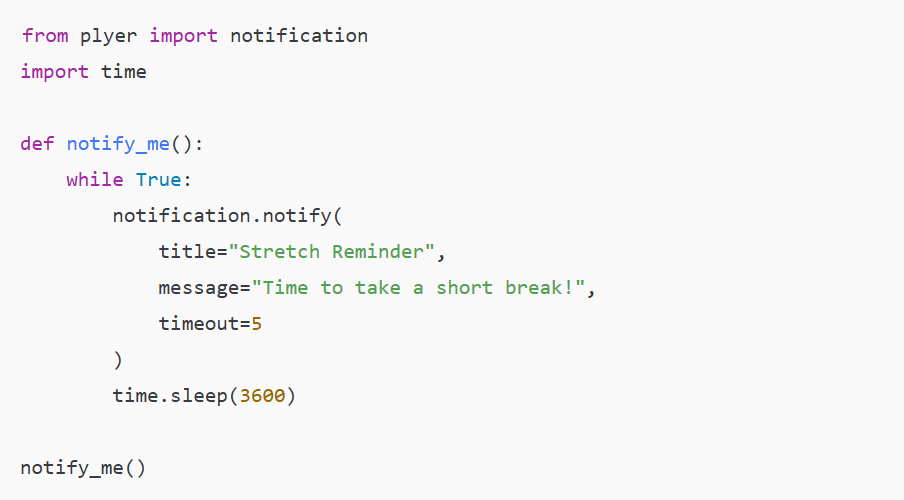
يُكوّن كل مطور بصمة خفية خاصة به بمرور الوقت مثل تفضيل بعض التعبيرات الاصطلاحية أو أنظمة التسمية أو حتى أسماء المتغيرات الغريبة، ومن ناحية أخرى تُولّد برامج ماجستير إدارة الأعمال شيفرة تبدو محايدة وغير شخصية، لن ترى نكاتاً داخلية في أسماء الدوال أو اختصارات متخصصة للغاية إلا إذا طُلب منك ذلك، الشيفرة سهلة القراءة لكنها تفتقر إلى الشخصية، وعلى الرغم من أن هذه السمة قد تختلف اعتماداً على موجه الأوامر ودرجة حرارة النموذج إلا أنها غالباً ما تكون ملحوظة في قواعد البيانات الكبيرة بدرجة كافية

أخيراً، غالباً ما تتخذ أكواد بايثون المُولّدة من قِبل ماجستير إدارة الأعمال أسلوب تنفيذ “مُريح” مع تضمينها في الوقت نفسه بعض معالجة الأخطاء. تميل هذه الأكواد إلى تجنب استراتيجيات تصحيح الأخطاء الأكثر دقة، مثل تسجيل الدخول إلى الملفات، أو إثارة استثناءات مُحددة، أو استخدام أدوات نقاط التوقف. ينتج عن هذا أكواد تبدو نظيفة، لكنها تفتقر أحياناً إلى عمق تتبع الأخطاء والمتانة التي يُدمجها المطورون المخضرمون في الأنظمة من خلال الخبرة والتكرار.

LLM مع استمرار تطور وتحسين برامج

سيزداد الغموض بين الكود المكتوب بواسطة الإنسان والآلة، ومع ذلك ومن خلال الانتباه إلى الخيارات الأسلوبية والإسهاب واتفاقيات التسمية والاتجاهات الهيكلية لا يزال بإمكانك في كثير من الأحيان رصد الدلائل الدقيقة لخط يد ماجستير إدارة الأعمال في نص بايثون، هذه الاختلافات ليست سيئة في جوهرها – في الواقع يستطيع طلاب ماجستير القانون كتابة أكواد برمجية عالية الجودة وقابلة للصيانة – لكن إدراك أسلوبهم مفيد للمعلمين ومراجعي الأكواد البرمجية والمطورين الذين يعملون في بيئات تعاونية حيث تكون الشفافية في استخدام الأدوات أمراً بالغ الأهمية، في المستقبل قد يصبح اكتشاف الأكواد البرمجية المُولّدة من طلاب ماجستير القانون أكثر أهمية مع بحثنا في أخلاقيات وآثار التطوير بمساعدة الذكاء الاصطناعي

Advertisements

Behind the Scenes of My Data Analytics Resource Pack, And Why It’s in High Demand?

Advertisements

In the fast-paced world of data analytics, tools, templates, and shortcuts can make the difference between working efficiently and drowning in spreadsheets. Like many data analysts, I found myself repeatedly building similar dashboards, queries, and reports for different clients or projects. It occurred to me—what if I could transform my repeatable processes and best practices into a single, powerful resource pack that others could benefit from?

Thus began the journey of creating my Data Analytics Resource Pack—a comprehensive, plug-and-play collection of tools, templates, and guides designed for analysts, students, and businesses alike. But creating it was more than just compiling files. It required strategic thinking, user research, and iteration. And the payoff? It sells consistently and is now a trusted toolset in the community.

Before building anything, I asked myself a key question: “What are the biggest pain points for new and intermediate data analysts?”
To answer that, I reviewed forum discussions, surveyed LinkedIn connections, and read countless Reddit threads in r/dataanalysis and r/datascience.

  • Lack of reusable, customizable Excel/Google Sheets dashboards
  • Confusion over structuring SQL queries efficiently
  • Inconsistency in visual reporting in tools like Power BI or Tableau
  • Poor understanding of KPI frameworks in business contexts
  • Too much time spent writing documentation and metadata tables manually

These insights shaped the skeleton of my resource pack. The goal was to eliminate redundancy and standardize efficiency.

Once I defined the needs, I began creating assets under four key categories:

  1. SQL & Query Optimization Templates
    I included frequently used query patterns (JOINs, window functions, date aggregations) with business case examples, like tracking customer churn or inventory turnover.
    Interactive Example: I embedded a Google Colab notebook that lets users run and tweak SQL code using SQLite in-browser.
  2. Excel & Google Sheets Dashboards
    These templates covered marketing funnels, financial KPIs, and A/B test tracking. Each came with dropdown filters, conditional formatting, and slicers.
    Interactive Example: A pre-linked Google Sheet with editable fields that users could copy and test instantly.
  3. Power BI / Tableau Starter Kits
    I included pre-configured dashboards with dummy datasets for practice. These visualizations covered product analytics, customer segmentation, and real-time sales tracking.
    Interactive Example: A shared Tableau Public workbook embedded via iframe with interactive filters.
  4. Documentation & Reporting Templates
    Analysts often overlook documentation. I created Notion-based templates for project charters, data dictionaries, and stakeholder report briefs.

By keeping the tools modular, users could pick and choose what they needed—without being overwhelmed.

Advertisements

The success of the resource pack wasn’t just about content—it was also about how I packaged it.

  • File Organization: Clearly named folders with version histories, separated by tool/platform
  • Onboarding Guide: A 10-minute “Getting Started” PDF and a Loom walkthrough video
  • Version Control: All files hosted on Google Drive with update notifications via email list
  • Bonus Content: A private Notion workspace with exclusive resources, released monthly

These extras created a premium experience that made users feel supported and guided, even after purchase.

I didn’t launch with a big ad budget. Instead, I leveraged authentic sharing and educational marketing:

  • LinkedIn Case Studies: I wrote posts showing before-and-after examples of using the templates
  • Free Mini-Packs: I gave away a subset of tools in exchange for email signups
  • Webinars: I hosted live walkthroughs explaining how to use the pack with real datasets
  • Testimonials: Early users left reviews, which I featured on my site with permission

This community-first approach created a word-of-mouth loop. People began tagging me in posts, sharing my tools in Slack groups, and recommending it in bootcamp cohorts.

The resource pack continues to sell because it saves time, solves real problems, and evolves:

  • Time-saving: Users get instant access to what would otherwise take months to build.
  • Applicability: Works across industries—finance, marketing, logistics, and e-commerce.
  • Continual Updates: Subscribers know they’ll get new material every quarter.

In short, the value isn’t just the tools—it’s the time, clarity, and confidence those tools bring.

Creating the Data Analytics Resource Pack taught me a crucial lesson: the best products emerge when you listen, simplify, and deliver with care. As data analysts, we already solve problems every day. Packaging that skill into a resource others can use is just the next step in leveraging your value.

If you’re a data analyst thinking about building a product, start by listening. Look at the questions people ask again and again. That’s where the opportunity lives.

Advertisements

كواليس حزمة مصادر تحليلات البيانات الخاصة بي، وسبب الطلب الكبير عليها
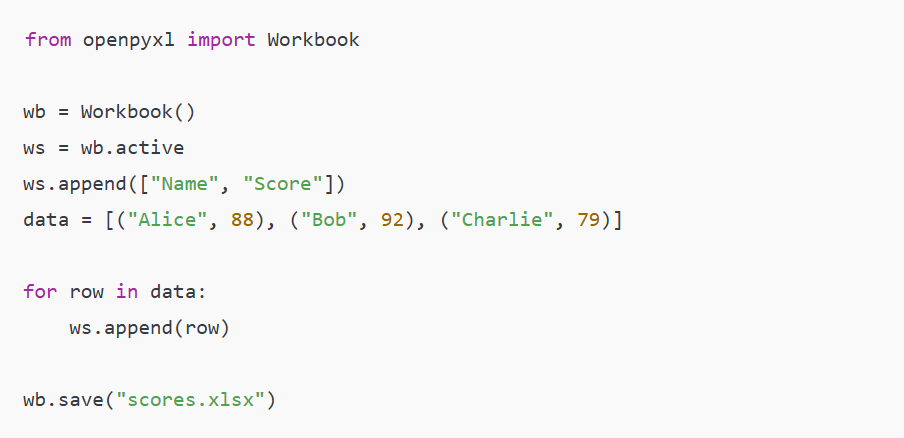
Advertisements

في عالم تحليلات البيانات سريع الخطى تُحدث الأدوات والقوالب والاختصارات فرقاً كبيراً بين العمل بكفاءة والغرق في جداول البيانات، وكحال العديد من محللي البيانات وجدتُ نفسي أُنشئ لوحات معلومات واستعلامات وتقارير متشابهة بشكل متكرر لعملاء أو مشاريع مختلفة، فخطر ببالي هذا السؤال: ماذا لو استطعتُ تحويل عملياتي المتكررة وأفضل ممارساتي إلى حزمة موارد واحدة فعّالة يستفيد منها الآخرون؟

وهكذا بدأتُ رحلة إنشاء حزمة موارد تحليلات البيانات الخاصة بي – وهي مجموعة شاملة وجاهزة للتوصيل والتشغيل من الأدوات والقوالب والأدلة المصممة للمحللين والطلاب والشركات على حد سواء، لكن إنشاءها لم يقتصر على تجميع الملفات فحسب بل تطلب تفكيراً استراتيجياً وتكراراً وبحثاً عن المستخدمين، والنتيجة؟ تُباع هذه الحزمة باستمرار وهي الآن مجموعة أدوات موثوقة في مجتمعنا

قبل البدء بأي مشروع سألت نفسي سؤالاً محورياً: ما هي أكبر نقاط الضعف التي يواجهها محللو البيانات الجدد والمتوسطون؟ للإجابة عن هذا السؤال راجعتُ مناقشات المنتديات

LinkedIn واستطلعتُ آراء معارفي على

Reddit وقرأتُ عدداً لا يُحصى من نقاشات

r/datascience و r/dataanalysis حول

عدم وجود لوحات معلومات قابلة لإعادة الاستخدام *

Excel/Google Sheets والتخصيص في

بكفاءة SQL ارتباك بشأن هيكلة استعلامات *

Tableau أو Power BI عدم اتساق التقارير المرئية في أدوات مثل *

ضعف فهم أطر مؤشرات الأداء الرئيسية في سياقات الأعمال *

قضاء وقت طويل في كتابة الوثائق وجداول البيانات الوصفية يدوياً *

شكّلت هذه الأفكار أساس حزمة الموارد الخاصة بي، كان الهدف هو التخلص من التكرار وتوحيد الكفاءة

بمجرد تحديد الاحتياجات، بدأتُ بإنشاء أصول ضمن أربع فئات رئيسية

1- والاستعلامات SQL قوالب تحسين

أدرجتُ أنماط الاستعلامات الشائعة الاستخدام

(ووظائف النوافذ وتجميعات البيانات JOINs)

مع أمثلة لدراسات الجدوى مثل تتبع فقدان العملاء أو دوران المخزون

Google Colab مثال: قمتُ بتضمين دفتر ملاحظات

SQL الذي يتيح للمستخدمين تشغيل وتعديل شيفرة

في المتصفح SQLite باستخدام

2Google وجداول بيانات Excel لوحات معلومات

غطت هذه القوالب مسارات التسويق ومؤشرات الأداء الرئيسية المالية

وجاء كل منها مزوداً بمرشحات منسدلة A/B وتتبع اختبارات

وتنسيق شرطي وشرائح

مُرتبط مسبقاً بحقول قابلة للتعديل Google مثال: جدول بيانات

يمكن للمستخدمين نسخها واختبارها فوراً

3- Power BI / Tableau Starter مجموعات

أدرجتُ لوحات معلومات مُعدّة مسبقاً مع مجموعات بيانات تجريبية للتدريب، غطت هذه التصورات تحليلات المنتج وتجزئة العملاء وتتبع المبيعات في الوقت الفعلي

عام Tableau مثال: مصنف

مع فلاتر تفاعلية iframe مشترك مُدمج عبر

4- قوالب التوثيق والتقارير

غالباً ما يغفل المحللون عن التوثيق

لمواثيق المشاريع Notion فأنشأتُ قوالب مبنية على

وقواميس البيانات وملخصات تقارير أصحاب المصلحة

من خلال الحفاظ على تصميم الأدوات بشكل معياري، تمكن المستخدمون من اختيار ما يحتاجونه دون عناء

لم يقتصر نجاح حزمة الموارد على المحتوى فحسب بل امتد إلى كيفية تجميعها

تنظيم الملفات: مجلدات ذات أسماء واضحة مع تواريخ الإصدارات مفصولة حسب الأداة/المنصة *

مدته 10 دقائق بعنوان “البدء PDF دليل التوجيه: ملف *

Loom وفيديو توضيحي لـ

:التحكم في الإصدارات *

Google Drive جميع الملفات مُستضافة على

مع إشعارات بالتحديثات عبر قائمة البريد الإلكتروني

:محتوى إضافي *

خاصة مع موارد حصرية، تُصدر شهرياً Notion مساحة عمل

هذه الإضافات خلقت تجربة مميزة جعلت المستخدمين يشعرون بالدعم والتوجيه حتى بعد الشراء *

Advertisements

لم أطلق مشروعي بميزانية إعلانية كبيرة بل استفدتُ من المشاركة الأصيلة والتسويق التعليمي

:LinkedIn دراسات حالة على *

كتبتُ منشوراتٍ تُظهر أمثلةً قبل وبعد استخدام القوالب

: حزم صغيرة مجانية *

قدّمتُ مجموعةً فرعيةً من الأدوات مقابل الاشتراك عبر البريد الإلكتروني

: ندوات عبر الإنترنت *

استضفتُ عروضاً توضيحيةً مباشرةً تشرح كيفية استخدام الحزمة مع مجموعات بيانات حقيقية

: شهادات *

ترك المستخدمون الأوائل تقييمات وقد نشرتُها على موقعي بإذن، هذا النهج الذي يُركّز على المجتمع أولاً خلقَ تداولاً شفهياً، بدأ الناس بالإشارة إليّ في المنشورات

Slack ومشاركة أدواتي في مجموعات

والتوصية بها في مجموعات المعسكرات التدريبية

لا تزال حزمة الموارد تُباع لأنها تُوفّر الوقت وتُحلّ مشاكل حقيقية وتُطوّر

توفير الوقت: يحصل المستخدمون على وصول فوري إلى ما قد يستغرق شهوراً لبنائه

قابلية التطبيق: مُناسبٌ لجميع القطاعات – المالية والتسويق والخدمات اللوجستية والتجارة الإلكترونية

تحديثات مستمرة: يعلم المشتركون أنهم سيحصلون على مواد جديدة كل ثلاثة أشهر

باختصار.. القيمة لا تقتصر على الأدوات فحسب بل تشمل أيضاً الوقت والوضوح والثقة التي توفرها هذه الأدوات

لقد علمني إنشاء حزمة موارد تحليلات البيانات درساً حاسماً: تظهر أفضل المنتجات عند الاستماع وتبسيط وتقديم الدعم، كمحللين للبيانات نقوم بالفعل بحل المشكلات كل يوم، تعبئة هذه المهارة في مورد يمكن للآخرين استخدامه هو مجرد الخطوة التالية في الاستفادة من قيمتك

إذا كنت محلل بيانات تفكر في بناء منتج فابدأ بالاستماع، انظر إلى الأسئلة التي يطرحها الناس مراراً وتكراراً، هذا هو المكان الذي تعيش فيه الفرصة

Advertisements

How I Use AI Every Day as a Data Analyst

Advertisements

The integration of Artificial Intelligence (AI) into data analytics has transformed how professionals like myself work, think, and deliver results. As a data analyst, AI is not just a buzzword—it’s an everyday assistant, decision-making partner, and a powerful tool that amplifies productivity. From data cleaning to insights generation, AI supports me at every stage of the analytical process. In this article, I’ll walk you through how AI is woven into my daily workflow and why I consider it indispensable.

One of the most time-consuming aspects of data analysis is cleaning and preparing datasets. AI tools help me automate this process significantly. For instance, I use AI-enhanced spreadsheet tools and Python libraries like Pandas AI to detect outliers, impute missing values, and suggest corrections in data formatting. Previously, these steps would require manual inspection or complex if-else logic. Now, with AI’s pattern recognition, data inconsistencies are flagged automatically, and in many cases, AI even proposes the best course of action. This allows me to focus more on analytical thinking rather than tedious preprocessing.

Once the data is clean, the next step is exploration—understanding the story hidden within. Here, AI shines by accelerating the discovery of correlations and anomalies. I often rely on AI-powered visualization platforms such as Power BI with Copilot or Tableau’s Ask Data feature. These tools allow me to pose natural language questions like “Which product category had the steepest revenue decline last quarter?” and get instant, meaningful charts in return. AI doesn’t just surface insights; it guides me to patterns I might have missed, making exploratory analysis more intuitive and less biased.

Every analyst knows the repetitive nature of reporting—weekly sales updates, monthly performance summaries, etc. Instead of manually generating these reports, I’ve automated them using AI-driven scheduling tools that also interpret the data. Using ChatGPT via API integration, I can automatically generate narrative explanations of KPIs and append them to dashboards. The output reads like a human-written summary, which adds context for stakeholders. This saves hours of work every week and ensures consistency and clarity in reporting.

AI takes my forecasting work to a new level. Traditional statistical models like ARIMA or exponential smoothing are still valuable, but AI-based forecasting models (such as those available in Facebook Prophet or AutoML platforms) can handle more variables, detect seasonality better, and adapt to sudden changes in the data. For instance, when predicting customer churn or future demand, I use machine learning models that are enhanced with AI to automatically tune hyperparameters and evaluate multiple model types in one go. This significantly increases accuracy while reducing modeling time.

Advertisements

A major part of modern analytics includes dealing with unstructured data—survey responses, customer reviews, chat logs, etc. AI enables me to process these text-based sources through Natural Language Processing (NLP). I use tools like spaCy, OpenAI’s embeddings, and Google Cloud NLP to classify sentiment, extract keywords, and group responses by topic. This gives structure to otherwise messy data and allows me to incorporate qualitative insights into quantitative dashboards—a powerful combination that delivers richer decision-making insights to my team.

Rather than waiting to review data after the fact, AI empowers me to set up real-time monitoring systems. I use AI anomaly detection tools in platforms like Azure Monitor and Datadog to continuously track business metrics. If anything unusual happens—say, a 40% drop in website conversions or an unexpected spike in cost-per-click—I get instant alerts. These intelligent monitoring systems not only notify me, but also attempt to explain the root cause using contextual data. It turns reactive work into proactive insight.

AI doesn’t just help with data—it helps with my day-to-day workflow too. I use AI writing assistants like Grammarly and ChatGPT to draft emails, explain data findings to non-technical stakeholders, and even generate technical documentation. I also rely on AI calendar assistants and meeting summarizers like Otter.ai to capture meeting notes, extract action items, and keep projects organized. By offloading mundane tasks to AI, I free up time to do what really matters: thinking critically about data and translating it into impact.

Finally, the most surprising and transformative use of AI in my day is as a thought partner. When I hit a roadblock—say, unsure which statistical test to use or whether my data sampling approach is valid—I often turn to AI tools like ChatGPT for suggestions. It’s like brainstorming with a fast, knowledgeable colleague who can offer perspectives, generate hypotheses, or even debug my SQL queries. This collaboration doesn’t replace human judgment, but it enhances it by giving me confidence in exploring ideas more quickly.

The role of a data analyst is evolving fast, and AI is at the heart of that evolution. It doesn’t just make tasks faster—it makes them smarter. From improving the quality of data to sharpening insights and increasing productivity, AI is the ultimate co-pilot in my analytical journey. It’s not a luxury anymore; it’s a necessity. And as AI continues to improve, I’m excited about how much more it can enhance not only my workflow but the entire field of data analytics.

Advertisements

كيف أستخدم الذكاء الاصطناعي يومياً كمحلل بيانات؟

Advertisements

أحدث دمج الذكاء الاصطناعي في تحليلات البيانات نقلة نوعية في طريقة عمل المهنيين مثلي وتفكيرهم وتحقيقهم للنتائج، فبصفتي محلل بيانات لا يُعد الذكاء الاصطناعي مجرد مصطلح شائع بل هو مساعد يومي وشريك في اتخاذ القرارات وأداة فعّالة تُعزز الإنتاجية، من تنظيف البيانات إلى توليد الرؤى يدعمني الذكاء الاصطناعي في كل مرحلة من مراحل العملية التحليلية

في هذه المقالة سأشرح لكم كيفية دمج الذكاء الاصطناعي في سير عملي اليومي ولماذا أعتبره لا غنى عنه

يُعد تنظيف مجموعات البيانات وإعدادها من أكثر جوانب تحليل البيانات استهلاكاً للوقت، إذ تساعدني أدوات الذكاء الاصطناعي في أتمتة هذه العملية بشكل كبير، فعلى سبيل المثال أستخدم أدوات جداول البيانات المُحسّنة بالذكاء الاصطناعي

Pandas AI ومكتبات بايثون مثل

للكشف عن القيم الشاذة وحساب القيم المفقودة واقتراح تصحيحات في تنسيق البيانات، ففي السابق كانت هذه الخطوات تتطلب فحصاً يدوياً أو منطقاً معقداً، أما الآن ومع تقنية التعرف على الأنماط التي يوفرها الذكاء الاصطناعي يتم تحديد تناقضات البيانات تلقائياً وفي كثير من الحالات يقترح الذكاء الاصطناعي أفضل الحلول، هذا يسمح لي بالتركيز أكثر على التفكير التحليلي بدلاً من المعالجة المسبقة المملة

بمجرد أن تصبح البيانات نقية تكون الخطوة التالية هي الاستكشاف – فهم ما يكمن فيها، هنا يتألق الذكاء الاصطناعي بتسريع اكتشاف الارتباطات والشذوذ، فغالباً ما أعتمد على منصات التصور المدعومة بالذكاء الاصطناعي

Copilot مع Power BI مثل

Tableau في Ask Data أو ميزة

إذ تتيح لي هذه الأدوات طرح أسئلة بلغة طبيعية مثل “ما هي فئة المنتج التي شهدت أكبر انخفاض في الإيرادات في الربع الأخير؟” والحصول على رسوم بيانية فورية وذات معنى، ولا يقتصر دور الذكاء الاصطناعي على تقديم رؤى سطحية فحسب؛ بل يرشدني إلى أنماط ربما فاتتني مما يجعل التحليل الاستكشافي أكثر سهولة وأقل تحيزاً

يدرك كل محلل الطبيعة التكرارية للتقارير – تحديثات المبيعات الأسبوعية وملخصات الأداء الشهرية وما إلى ذلك، فبدلاً من إنشاء هذه التقارير يدوياً قمتُ بأتمتتها باستخدام أدوات جدولة تعتمد على الذكاء الاصطناعي والتي تفسر البيانات أيضاً،

عبر تكامل واجهة برمجة التطبيقات ChatGPT وباستخدام

يُمكنني تلقائياً إنشاء تفسيرات سردية لمؤشرات الأداء الرئيسية وإضافتها إلى لوحات المعلومات، وعليه تبدو النتائج كملخص مكتوب يدوياً مما يُضيف سياقاً لأصحاب المصلحة وهذا يُوفر ساعات من العمل أسبوعياً ويضمن الاتساق والوضوح في التقارير

يرتقي الذكاء الاصطناعي بعملي في التنبؤ إلى مستوى جديد، إذ لا تزال النماذج الإحصائية التقليدية

أو التنعيم الأسّي قيّمة ARIMA مثل

لكن نماذج التنبؤ القائمة على الذكاء الاصطناعي

AutoML أو Facebook Prophet مثل تلك المتوفرة في منصات

قادرة على التعامل مع المزيد من المتغيرات واكتشاف التغيرات الموسمية بشكل أفضل والتكيف مع التغيرات المفاجئة في البيانات، فعلى سبيل المثال: عند التنبؤ بانخفاض عدد العملاء أو الطلب المستقبلي أستخدم نماذج تعلّم آلي مُحسّنة بالذكاء الاصطناعي لضبط المعاملات الفائقة تلقائياً وتقييم أنواع نماذج متعددة دفعةً واحدة، هذا يزيد الدقة بشكل كبير مع تقليل وقت النمذجة

Advertisements

يشمل جزء كبير من التحليلات الحديثة التعامل مع البيانات غير المنظمة – ردود الاستبيانات  وتقييمات العملاء وسجلات الدردشة.. إلخ، يُمكّنني الذكاء الاصطناعي من معالجة هذه المصادر النصية

(NLP) من خلال معالجة اللغة الطبيعية

OpenAI وتضمينات spaCy أستخدم أدوات مثل

لتصنيف المشاعر Google Cloud NLP و

واستخراج الكلمات الرئيسية وتجميع الردود حسب الموضوع، هذا يُضفي هيكلية على البيانات التي قد تكون غير منظمة ويسمح لي بدمج الرؤى النوعية في لوحات معلومات كمية – وهو مزيج قوي يُقدم رؤى أغنى لاتخاذ القرارات لفريقي

بدلاً من انتظار مراجعة البيانات لاحقاً يُمكّنني الذكاء الاصطناعي من إعداد أنظمة مراقبة في الوقت الفعلي، إذ أستخدم أدوات كشف الشذوذ بالذكاء الاصطناعي في منصات

لتتبع مقاييس الأعمال باستمرار Datadog و Azure Monitor مثل

وفي حال حدوث أي شيء غير عادي مثل انخفاض بنسبة 40% في تحويلات مواقع الويب أو ارتفاع غير متوقع في تكلفة النقرة أتلقى تنبيهات فورية، وبالمناسبة لا تُعلمني أنظمة المراقبة الذكية هذه فحسب بل تحاول أيضاً شرح السبب الجذري باستخدام البيانات السياقية، إنها تُحوّل العمل التفاعلي إلى رؤى استباقية

لصياغة رسائل البريد الإلكتروني ChatGPT و Grammarly مثل

وشرح نتائج البيانات لأصحاب المصلحة غير التقنيين وحتى إنشاء وثائق تقنية، كما أعتمد على مساعدي تقويم الذكاء الاصطناعي

لتسجيل ملاحظات الاجتماعات Otter.ai وملخصي الاجتماعات مثل

واستخراج بنود العمل والحفاظ على تنظيم المشاريع، فمن خلال تكليف الذكاء الاصطناعي بالمهام الروتينية أُوفر وقتاً للقيام بما هو مهم حقاً: التفكير النقدي في البيانات وترجمتها إلى نتائج ملموسة

وأخيراً يُعدّ استخدام الذكاء الاصطناعي كشريك فكري من أكثر الاستخدامات إثارةً للدهشة والتغيير في حياتي، فعندما أواجه عقبةً ما ، مثلاً: عدم التأكد من أي اختبار إحصائي أستخدم أو مدى صحة أسلوبي في أخذ عينات البيانات فغالباً ما ألجأ إلى أدوات الذكاء الاصطناعي

للحصول على اقتراحات ChatGPT مثل

يشبه الأمر تبادل الأفكار مع زميل سريع المعرفة قادر على تقديم وجهات نظر ووضع فرضيات

SQL أو حتى تصحيح أخطاء استعلامات

هذا التعاون لا يُغني عن الحكمة البشرية بل يُعززها إذ يمنحني الثقة في استكشاف الأفكار بسرعة أكبر

يتطور دور محلل البيانات بسرعة والذكاء الاصطناعي هو جوهر هذا التطور، فهو لا يُسرّع المهام فحسب بل يجعلها أكثر ذكاءً، فمن تحسين جودة البيانات إلى تعزيز الرؤى وزيادة الإنتاجية، يُعدّ الذكاء الاصطناعي الشريك الأمثل في رحلتي التحليلية، لم يعد ترفاً بل ضرورة ومع استمرار تحسن الذكاء الاصطناعي أشعر بالحماس تجاه مدى قدرته على تعزيز ليس فقط سير العمل الخاص بي بل ومجال تحليل البيانات بأكمله

Advertisements

2025 and Data Analytics: Is the Window of Opportunity Closing?

Advertisements

By mid-2025, it’s hard to ignore just how central data analytics has become in shaping the modern world. Over the past decade, data has transitioned from a niche back-office function to a pillar of strategic decision-making across nearly every industry. Governments, corporations, non-profits, and startups alike have invested heavily in data infrastructure, talent, and tools to harness the predictive and diagnostic power of information. In this data-driven era, organizations that failed to embrace analytics risked irrelevance. Yet now, the conversation is beginning to shift. With the rise of automation, increasing regulatory constraints, and a maturing marketplace, many professionals and business leaders are asking a sobering question: Is the window of opportunity in data analytics starting to close? This article explores that question through the lens of innovation, labor dynamics, regulatory change, and strategic transformation.

One of the most significant developments reshaping data analytics in 2025 is the rise of generative AI and automated analytical tools. The introduction of large language models (LLMs), AutoML systems, and user-friendly interfaces has made it dramatically easier for non-technical users to perform complex data tasks. Business users can now query databases using natural language, generate predictive models without writing a single line of code, and visualize insights in seconds with AI-assisted dashboards. On the surface, this democratization seems like a triumph—organizations can make data-informed decisions faster and more affordably. But this progress also raises fundamental questions about the role of the traditional data analyst. As machines increasingly handle the technical execution, the core value of the human analyst is being reevaluated. Analysts are now expected to do more than produce models—they must contextualize findings, apply domain-specific judgment, and align recommendations with organizational strategy. The opportunity isn’t gone—but it’s moving up the value chain, demanding greater business fluency and creative problem-solving from data professionals.

Between 2015 and 2023, the exploding demand for data professionals sparked a global wave of upskilling. Universities launched new degrees, online platforms offered certification bootcamps, and employers invested in internal training. By 2025, this momentum has resulted in an abundant talent pool—especially at the entry level. Roles that once required rare skills are now more accessible, and basic competencies in Python, SQL, and data visualization are often considered standard. As a result, competition has intensified, and salaries for junior roles have plateaued or declined in some regions. The most sought-after professionals today are not just data-literate—they are domain experts who can speak the language of the industry they serve. For example, a data scientist with deep knowledge of supply chain operations is more valuable to a logistics company than a generalist analyst with broader but shallower capabilities. The market no longer rewards technical skills alone; instead, it favors hybrid professionals who bring cross-disciplinary insight and the ability to turn raw data into strategic intelligence.

Advertisements

As the power of data has grown, so too have the concerns around how it is collected, stored, and applied. In 2025, data privacy is no longer a peripheral issue—it’s at the heart of digital governance. Stringent regulatory frameworks such as the General Data Protection Regulation (GDPR), the California Consumer Privacy Act (CCPA), and new legislation emerging across Asia and Latin America have fundamentally altered the landscape. Organizations must now navigate a complex web of compliance, consent, data sovereignty, and transparency. Additionally, high-profile data breaches and ethical missteps have made the public more skeptical about how their information is used. As a result, companies are increasingly investing in privacy-preserving technologies like differential privacy, federated learning, and synthetic data. This environment places new responsibilities on data professionals, who must balance analytical ambition with legal and ethical prudence. The opportunity to innovate remains—but it must now be done within a framework of accountability, trust, and regulatory foresight.

In the early years of the data revolution, many organizations embraced analytics with a sense of experimental enthusiasm. Data teams were given free rein to explore, build models, and produce dashboards—often with little scrutiny over business outcomes. In 2025, that phase has largely passed. Executives are demanding clear ROI on data investments. Boards want to see how analytics drives revenue, reduces costs, or creates competitive advantage. This pressure has led to a more mature approach to data operations. Rather than treating data science as a standalone function, organizations are embedding analytics within core business units—ensuring that insights are not only generated but also implemented. Analysts and data scientists are now working side-by-side with marketing, finance, operations, and product teams to shape initiatives and measure success. This evolution requires professionals to be as comfortable in a business meeting as they are with a Jupyter notebook. The data analytics field is not contracting—it’s consolidating into a more structured, accountable, and business-oriented discipline.

So, is the window of opportunity closing for data analytics in 2025? The answer depends on how you define opportunity. For those who seek easy entry and quick rewards, the landscape is indeed more challenging. The influx of talent, automation of routine tasks, and rising expectations mean that superficial skills are no longer enough. But for those willing to adapt, specialize, and deepen their impact, the opportunities are arguably greater than ever. The field is evolving from an experimental frontier to a critical enterprise function. It demands a new kind of professional—one who can navigate technology, ethics, business, and human behavior. In that sense, the window hasn’t closed—it’s simply moved higher. Those who reach for it with a broader set of skills and a deeper understanding of context will find it still wide open.

Advertisements

عام ٢٠٢٥ وتحليل البيانات: هل تضيق نافذة الفرص؟

Advertisements

مع انتصاف عام 2025 يصعب تجاهل الدور المحوري الذي اكتسبته تحليلات البيانات في تشكيل عالمنا الحديث، فعلى مدار العقد الماضي تحولت البيانات من وظيفة إدارية متخصصة إلى ركيزة أساسية في صنع القرار الاستراتيجي في جميع القطاعات تقريباً، وقد استثمرت الحكومات والشركات والمنظمات غير الربحية والشركات الناشئة على حد سواء بكثافة في البنية التحتية للبيانات والمواهب والأدوات اللازمة لتسخير القوة التنبؤية والتشخيصية للمعلومات، ففي هذا العصر الذي تعتمد فيه البيانات على البيانات تُواجه المؤسسات التي لم تتبنَّ التحليلات خطر فقدان أهميتها، ومع ذلك بدأ النقاش يتحول الآن، فمع صعود الأتمتة وتزايد القيود التنظيمية ونضوج السوق يطرح العديد من المهنيين وقادة الأعمال سؤالاً جاداً: هل بدأت نافذة الفرص المتاحة في تحليلات البيانات تضيق؟ تستكشف هذه المقالة هذا السؤال من منظور الابتكار وديناميكيات العمل والتغيير التنظيمي والتحول الاستراتيجي

يُعدّ ظهور الذكاء الاصطناعي التوليدي وأدوات التحليل الآلي من أهم التطورات التي تُعيد تشكيل تحليلات البيانات في عام 2025

AutoML وأنظمة (LLMs) وقد سهّل إدخال نماذج اللغات الكبيرة

والواجهات سهلة الاستخدام بشكل كبير على المستخدمين غير التقنيين أداء مهام البيانات المعقدة، فأصبح بإمكان مستخدمي الأعمال الآن الاستعلام عن قواعد البيانات باستخدام اللغة الطبيعية وإنشاء نماذج تنبؤية دون الحاجة إلى كتابة سطر واحد من التعليمات البرمجية وتصور الرؤى في ثوانٍ معدودة باستخدام لوحات معلومات مدعومة بالذكاء الاصطناعي، فللوهلة الأولى يبدو هذا التحول الديمقراطي بمثابة انتصار – إذ يُمكن للمؤسسات اتخاذ قرارات مستنيرة بالبيانات بشكل أسرع وبتكلفة أقل، إلا أن هذا التقدم يثير أيضاً تساؤلات جوهرية حول دور محلل البيانات التقليدي، فمع تزايد تولي الآلات للتنفيذ الفني تُعاد تقييم القيمة الأساسية للمحلل البشري، إذ يُتوقع من المحللين الآن أن يفعلوا أكثر من مجرد إنتاج النماذج – بل يجب عليهم وضع النتائج في سياقها الصحيح وتطبيق أحكام خاصة بمجال معين ومواءمة التوصيات مع استراتيجية المؤسسة، لم تنتهِ الفرصة بعد بل إنها تتقدم في سلسلة القيمة مطالبةً متخصصي البيانات بإتقان أكبر للأعمال وإبداع في حل المشكلات

بين عامي 2015 و2023 أشعل الطلب المتزايد على متخصصي البيانات موجة عالمية من الارتقاء بالمهارات، إذ أطلقت الجامعات برامج دراسية جديدة وقدمت منصات إلكترونية دورات تدريبية للحصول على شهادات واستثمر أصحاب العمل في التدريب الداخلي، فبحلول عام 2025 أدى هذا الزخم إلى وفرة في المواهب لا سيما في مستوى المبتدئين، فأصبحت الأدوار التي كانت تتطلب مهارات نادرة في السابق أكثر سهولة الآن

SQLوغالباً ما تُعتبر الكفاءات الأساسية في بايثون و

وتصور البيانات أساسية، ونتيجة لذلك اشتدت المنافسة وتوقفت رواتب المناصب المبتدئة أو انخفضت في بعض المناطق، وعليه فإن أكثر المتخصصين طلباً اليوم ليسوا مجرد متعلمين في مجال البيانات بل هم خبراء في هذا المجال يتحدثون لغة الصناعة التي يخدمونها، فعلى سبيل المثال يُعدّ عالم البيانات ذو المعرفة العميقة بعمليات سلسلة التوريد أكثر قيمةً لشركة لوجستية من محلل عامّ بقدرات أوسع وإن كانت سطحية، ولم يعد السوق يكافئ المهارات التقنية فحسب بل يُفضّل المهنيين الهجينين الذين يُقدّمون رؤىً متعددة التخصصات والقدرة على تحويل البيانات الخام إلى معلومات استخباراتية استراتيجية

Advertisements

مع تنامي قوة البيانات تزايدت المخاوف بشأن كيفية جمعها وتخزينها وتطبيقها، ففي عام 2025 لم تعد خصوصية البيانات مسألةً هامشية بل أصبحت في صميم الحوكمة الرقمية، فقد غيّرت الأطر التنظيمية الصارمة

(GDPR) مثل اللائحة العامة لحماية البيانات

(CCPA) وقانون خصوصية المستهلك في كاليفورنيا

والتشريعات الجديدة الناشئة في جميع أنحاء آسيا وأمريكا اللاتينية غيّرت المشهدَ بشكل جذري، إذ يجب على المؤسسات الآن التعامل مع شبكة معقدة من الامتثال والموافقة وسيادة البيانات والشفافية، بالإضافة إلى ذلك أدت خروقات البيانات البارزة والأخطاء الأخلاقية إلى زيادة تشكيك الجمهور في كيفية استخدام معلوماتهم، نتيجةً لذلك تستثمر الشركات بشكل متزايد في تقنيات الحفاظ على الخصوصية مثل الخصوصية التفاضلية والتعلم الفيدرالي والبيانات التركيبية، فتُلقي هذه البيئة بمسؤوليات جديدة على عاتق متخصصي البيانات الذين يجب عليهم الموازنة بين الطموح التحليلي والحصافة القانونية والأخلاقية، إذ لا تزال فرصة الابتكار قائمة ولكن يجب أن يتم ذلك الآن في إطار من المساءلة والثقة والاستشراف التنظيمي

في السنوات الأولى لثورة البيانات تبنّت العديد من المؤسسات التحليلات بحماس تجريبي، فمُنحت فرق البيانات حرية كاملة لاستكشاف البيانات وبناء النماذج وإنتاج لوحات المعلومات غالباً مع تدقيق محدود لنتائج الأعمال، ففي عام 2025 انقضت هذه المرحلة إلى حد كبير، إذ يطالب المدراء التنفيذيون بعائد استثمار واضح على استثمارات البيانات، وترغب مجالس الإدارة في معرفة كيف تُعزز التحليلات الإيرادات وتُخفض التكاليف أو تُنشئ ميزة تنافسية، وقد أدى هذا الضغط إلى نهج أكثر نضجاً لعمليات البيانات، فبدلاً من اعتبار علم البيانات وظيفة مستقلة تُدمج المؤسسات التحليلات ضمن وحدات الأعمال الأساسية مما يضمن ليس فقط توليد الرؤى بل تنفيذها أيضاً  ويعمل المحللون وعلماء البيانات الآن جنباً إلى جنب مع فرق التسويق والمالية والعمليات والمنتجات لصياغة المبادرات وقياس النجاح، ويتطلب هذا التطور من المهنيين أن يكونوا مرتاحين في اجتماعات العمل

Jupyter كما هم مع دفتر ملاحظات

إذاً مجال تحليلات البيانات لا يتقلص بل يتجه نحو تخصص أكثر هيكلية ومساءلة وتركيزاً على الأعمال

إذاً هل تُغلق نافذة الفرص أمام تحليلات البيانات في عام ٢٠٢٥؟ يعتمد الجواب على كيفية تعريفك للفرصة، فبالنسبة لمن يسعون إلى دخول سهل ومكافآت سريعة فإن المشهد أكثر صعوبة، فتدفق المواهب وأتمتة المهام الروتينية وارتفاع التوقعات يعني أن المهارات السطحية لم تعد كافية، أما بالنسبة لمن يرغبون في التكيف والتخصص وتعميق تأثيرهم فيمكن القول إن الفرص أكبر من أي وقت مضى، فهذا المجال يتطور من مجرد مجال تجريبي إلى وظيفة مؤسسية حيوية، إذ يتطلب نوعاً جديداً من المهنيين – شخصاً قادراً على التعامل مع التكنولوجيا والأخلاقيات والأعمال والسلوك البشري، وبهذا المعنى لم تُغلق النافذة بل توسعت! أما أولئك الذين يسعون إليها بمجموعة أوسع من المهارات وفهم أعمق للسياق فسيجدونها لا تزال مفتوحة على مصراعيها
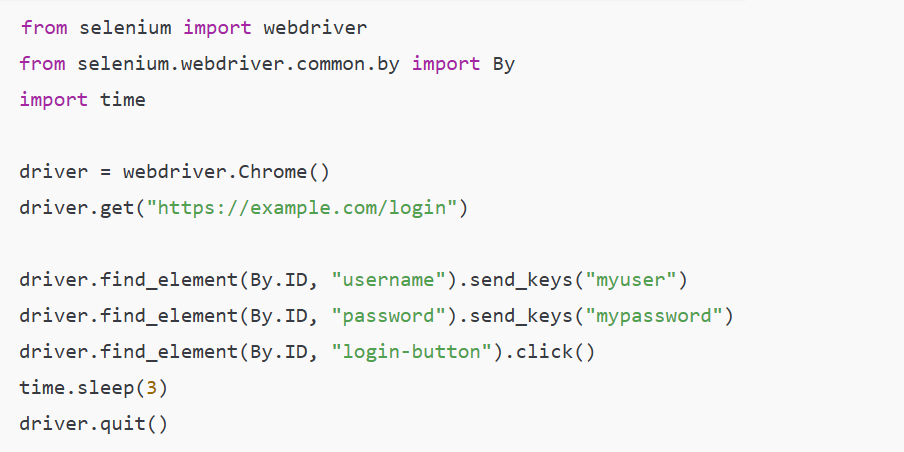
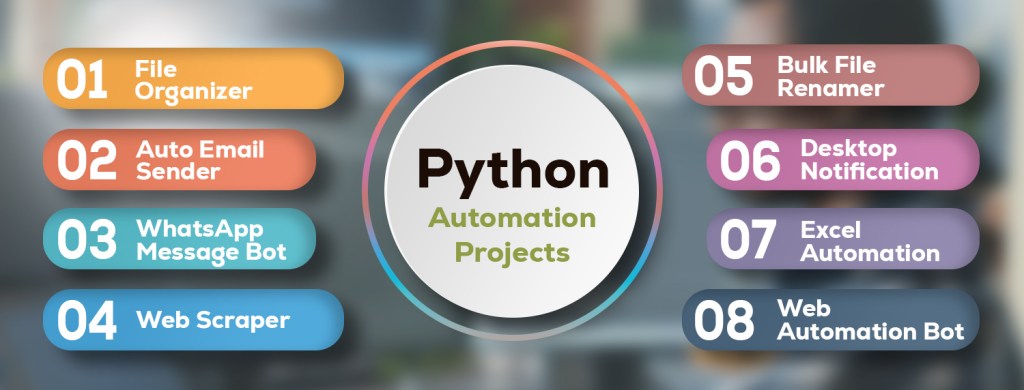
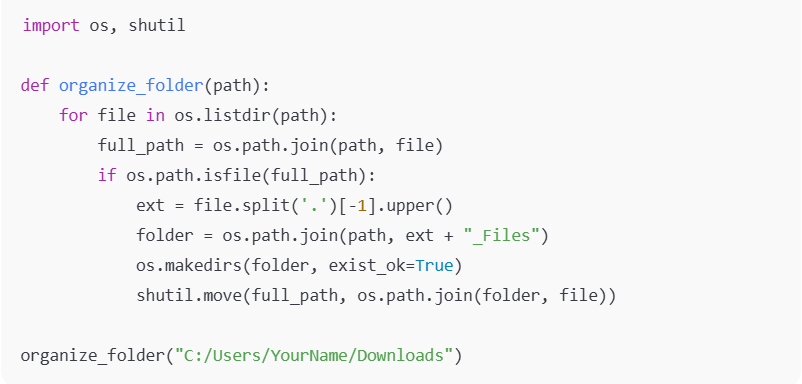
Advertisements

What Are the Alternatives to Dispensing with the Two Functions pd.read_csv() and pd.to_csv()?

Advertisements

The pandas library in Python provides powerful tools for data manipulation and analysis. Two of the most frequently used functions are pd.read_csv() for reading CSV files and pd.to_csv() for writing DataFrames to CSV files. While these functions are widely adopted due to their simplicity and efficiency, there are scenarios where alternatives might be preferable or even necessary. This article explores why one might avoid pd.read_csv() and pd.to_csv() and what alternative methods exist, categorized by different use cases.

Some common reasons include:

  1. Performance issues with very large datasets.
  2. Data stored in other formats (Excel, JSON, SQL, etc.).
  3. Integration with cloud storage or databases.
  4. Security or compliance constraints (e.g., encryption, access control).
  5. Real-time or in-memory data that doesn’t involve files.

1. Alternatives to: pd.read_csv()

A. Reading from Other File Formats

a. Excel Files

b. JSON Files

c. Parquet Files (Optimized for large datasets)

d. HDF5 Format (Hierarchical Data Format)

e. SQL Databases

B. Reading from In-Memory Objects

a. Reading from a String (using io.StringIO)

b. Reading from a Byte Stream (e.g., in web APIs)

C. Reading from Cloud Storage

a. Google Cloud Storage (using gcsfs)

b. Amazon S3 (using s3fs)

Advertisements

2. Alternatives to: pd.to_csv()

A. Writing to Other File Formats

a. Excel

b. JSON

c. Parquet

d. HDF5

e. SQL Databases

B. Writing to In-Memory or Networked Destinations

a. Export to a String

b. Export to Bytes (for APIs or web)

c. Save to Cloud Storage (e.g., AWS S3)

If avoiding pandas entirely:

A. Use Python’s Built-in csv Module

B. Use numpy for Numeric Data

Conclusion

While pd.read_csv() and pd.to_csv() are extremely versatile, a wide range of alternatives exist to suit various needs: from handling different data formats and sources, to performance optimization and cloud integrations. By understanding the context and requirements of your data workflow, you can select the most appropriate method for reading and writing data efficiently.

Advertisements

Mastering Data Analytics: Your Path to the Top 1% in 2025

Advertisements

In a world flooded with dashboards, KPIs, and big data buzzwords, the role of a data analyst has become both highly coveted and oversaturated. Everyone wants to be a data analyst — but only a select few break into the top 1%. These are the professionals who don’t just crunch numbers; they influence billion-dollar decisions, predict business outcomes before they happen, and lead teams toward data-driven innovation. The year 2025 is poised to be a turning point — the emergence of AI, automation, and new business expectations is rapidly shifting what it means to be “great” in this field. If you’re a data analyst or aspire to be one, the question is no longer “how do I get a job?” but rather, “how do I become irreplaceable?” That’s what this article is all about — not surviving, but standing out.

Most aspiring analysts obsess over tools: Python, SQL, Power BI, Tableau — and sure, these are essential. But here’s an overlooked truth: the top 1% analysts understand why people need data, not just how to analyze it. They listen to stakeholders with empathy, translate fuzzy business needs into clear metrics, and speak the language of decision-makers — not just of databases. You can have the cleanest dashboards in the world, but if you can’t connect them to a business narrative or decision, your insights go unheard. In 2025, soft skills are no longer optional. Learn how to ask better questions, read between the lines of a stakeholder’s request, and communicate findings like a storyteller. Technical brilliance may get you hired, but communication excellence will make you unforgettable.

There’s a growing myth in the analytics community: to be successful, you must learn every tool. One week it’s Power BI, the next it’s Looker Studio, then Snowflake, R, and even Rust. But the top 1% know that true mastery comes from depth, not breadth. They pick a few core tools — like SQL, Python, and Power BI — and explore them beyond surface tutorials. They learn how to write efficient queries, automate repetitive tasks, and build end-to-end reporting pipelines. They dive into advanced DAX in Power BI or build predictive models using Python’s scikit-learn. In 2025, companies want analysts who don’t just follow a tutorial — they want those who can build internal frameworks, optimize performance, and create scalable solutions. Focus your time on becoming irreplaceable in your core tools, and the rest will follow.

This might be the biggest mindset shift you need to make: stop seeing yourself as a report generator, and start thinking like a product manager. Top 1% analysts treat every dashboard like a product — they consider the user experience, track engagement, and iterate based on feedback. They don’t just deliver a report and disappear; they build tools that evolve with the business. In 2025, data analysts who can design self-serve experiences, reduce decision latency, and champion data adoption will be in a league of their own. Ask yourself: how can I turn my dashboard into a product that people want to use every day? How can I measure its impact? This product mindset makes you more valuable than any line of code you write.

Advertisements

Here’s a secret the top 1% know: your influence doesn’t begin in meetings or interviews — it starts online. Building a personal brand as a data analyst in 2025 is not about bragging, it’s about sharing. Whether it’s on LinkedIn, Medium, or YouTube, the most respected analysts share real insights, mini case studies, tutorials, or even failures they’ve learned from. When you show your process publicly, people trust your skill before they meet you. You attract opportunities, build credibility, and join a global community. The top analysts of today didn’t wait for a company to validate them — they published their learning journey, shared dashboards, and collaborated openly. If you want to rise to the top, don’t just level up in silence. Document your wins, your experiments, and your perspectives. The spotlight won’t find you unless you’re visible.

2025 is not just about better dashboards. It’s about knowing what’s coming — and preparing for it. The top analysts are already exploring how AI copilots will change data analysis, how real-time data streaming will impact decision-making, and how data governance and ethics will play a central role in business trust. They understand that automation will replace repetitive tasks — but not the analysts who think critically, explain patterns, and lead with context. To stay ahead, you must continuously ask: what’s next? Subscribe to trends, explore new tools with curiosity, and always keep one eye on the horizon. Being among the top 1% means thinking beyond today’s problem and anticipating tomorrow’s possibilities.

The journey to the top 1% is not linear, and it certainly isn’t easy. It’s a combination of technical depth, business empathy, communication, and forward-thinking. But here’s the good news — the path is open to anyone who chooses to walk it with discipline and curiosity. Now, I want to hear from you: What do you think separates average data analysts from the great ones? What’s the one area you’re focusing on in 2025 to rise above the noise? Let’s open the floor — comment below, share your thoughts, and let’s grow together.

Advertisements

إتقان تحليلات البيانات: طريقك إلى القمة في عام ٢٠٢٥

Advertisements

في عالمٍ يعجّ بلوحات المعلومات ومؤشرات الأداء الرئيسية ومصطلحات البيانات الضخمة أصبح دور محلل البيانات مطلوباً بشدة ومُشبعاً، إذ يطمح الجميع إلى أن يصبح محلل بيانات لكن قلة قليلة فقط هي من تصل إلى هذه المكانة، فهؤلاء هم المحترفون الذين لا يكتفون بتحليل الأرقام فحسب؛ بل يؤثرون في قراراتٍ بمليارات الدولارات ويتوقعون نتائج الأعمال قبل حدوثها ويقودون فرق العمل نحو الابتكار القائم على البيانات، وعليه فمن المتوقع أن يكون عام 2025 نقطة تحول فظهور الذكاء الاصطناعي والأتمتة وتوقعات الأعمال الجديدة يُغيّر بسرعة مفهوم “التميز” في هذا المجال، لذا فإذا كنت محلل بيانات أو تطمح إلى أن تكون كذلك فإن السؤال لم يعد ( كيف أحصل على وظيفة؟ ) بل “كيف أصبح محلل لا يُعوّض؟” هذا هو محور هذه المقالة – ليس مجرد البقاء بل التميز

يُهوى معظم المحللين الطموحين بأدوات مثل بايثون

SQL، Power BI، Tableau

وهي أدوات أساسية بلا شك، لكن إليك حقيقة مُغفلة هي أن أفضل 1% من المحللين يفهمون سبب حاجة الناس للبيانات وليس فقط كيفية تحليلها، إذ أنهم يستمعون إلى أصحاب المصلحة بتعاطف  ويترجمون احتياجات العمل الغامضة إلى مقاييس واضحة ويتحدثون بلغة صانعي القرار – وليس فقط لغة قواعد البيانات، وقد تمتلك أدق لوحات معلومات في العالم ولكن إذا لم تتمكن من ربطها بسردية عمل أو قرار فلن تُسمع رؤاك، وفي وقتنا الراهن لم تعد المهارات الشخصية اختيارية، لذا تعلم كيفية طرح أسئلة أفضل وقراءة ما بين سطور طلب صاحب المصلحة وتوصيل النتائج كقاصّ محترف، بحيث قد تُؤهلك البراعة التقنية للتوظيف لكن التميز في التواصل سيجعلك استثنائياً

هناك خرافة متنامية في مجتمع التحليلات تقول: لكي تنجح يجب أن تتعلم كل أداة

Power BI فأسبوع يُركزون على

Looker Studio ثم أسبوعٌ آخر على

Snowflake، و R ثم

Rust وحتى

لكنّ أفضل 1% من الخبراء يدركون أنّ الإتقان الحقيقي يكمن في العمق لا في الاتساع، فيختارون بعض الأدوات الأساسية

SQL و Python و Power BI مثل

ويستكشفونها بما يتجاوز الدروس التعليمية السطحية، فيتعلمون كيفية كتابة استعلامات فعّالة وأتمتة المهام المتكررة وبناء مسارات تقارير شاملة

Power BI المتقدم في DAX ويتعمقون في

أو يبنون نماذج تنبؤية باستخدام

Python من scikit-learn

في عام 2025 تريد الشركات محللين لا يتبعون دروساً تعليمية فحسب – بل يريدون من يستطيعون بناء أطر عمل داخلية وتحسين الأداء وابتكار حلول قابلة للتطوير، لذا ركّز وقتك على أن تصبح لا غنى عنك في أدواتك الأساسية وسيأتي الباقي تباعاً

Advertisements

قد يكون هذا هو أكبر تغيير في عقليتك تحتاج إليه، لذا توقّف عن رؤية نفسك كمُنشئ تقارير وابدأ بالتفكير كمدير منتج، إذ يتعامل أفضل 1% من المحللين مع كل لوحة معلومات كمنتج فهم يراعون تجربة المستخدم ويتتبعون التفاعل ويكررون العمل بناءً على الملاحظات، فهم لا يقدمون تقريراً ويختفون فحسب؛ بل يبنون أدوات تتطور مع تطور العمل، لذا في وقتنا الحالي وفي المستقبل القريب سيحتل محللو البيانات القادرون على تصميم تجارب الخدمة الذاتية وتقليل زمن اتخاذ القرار ودعم تبني البيانات مكانة مرموقة، لذا اسأل نفسك: كيف يمكنني تحويل لوحة معلوماتي إلى منتج يرغب الناس في استخدامه يومياً؟ كيف يمكنني قياس تأثيره؟ هذه العقلية المنتجة تجعلك أكثر قيمة من أي سطر برمجي تكتبه

إليك سراً يعرفه أفضل 1% يقول: تأثيرك لا يبدأ في الاجتماعات أو المقابلات بل يبدأ عبر الإنترنت، فبناء علامة تجارية شخصية كمحلل بيانات في عام 2025 لا يتعلق بالتفاخر بل بالمشاركة

LinkedIn أو Medium أو YouTube فسواء كان ذلك على

يشارك المحللون الأكثر احتراماً رؤى حقيقية ودراسات حالة مختصرة ودروساً تعليمية أو حتى تجارب فاشلة تعلموا منها، فعندما تُظهر عمليتك إلى العلن يثق الناس بمهاراتك قبل أن يلتقوا بك، فأنت تجذب الفرص وتبني المصداقية وتنضم إلى مجتمع عالمي، واعلم جيداً أن كبار المحللين لم ينتظروا يوماً شركةً لتثبت جدارتهم، بل نشروا رحلة تعلمهم وشاركوا لوحات المعلومات وتعاونوا بانفتاح، لذا إن كنت راغباً في الارتقاء إلى القمة فلا تكتفِ بالارتقاء في صمت، وثّق نجاحاتك وتجاربك ووجهات نظرك، لن تجدك الأضواء إلا إذا كنت مرئياً

لا يقتصر عام 2025 على تحسين لوحات المعلومات بل يتعلق بمعرفة ما هو آتٍ والاستعداد له، إذ يستكشف كبار المحللين بالفعل كيف سيُغير مساعدو الذكاء الاصطناعي تحليل البيانات وكيف سيؤثر تدفق البيانات في الوقت الفعلي على عملية صنع القرار وكيف ستلعب حوكمة البيانات وأخلاقياتها دوراً محورياً في ثقة الأعمال، إذ أنهم يدركون أن الأتمتة ستحل محل المهام المتكررة  ولكن ليس المحللين الذين يفكرون بشكل نقدي ويشرحون الأنماط ويقودون وفقاً للسياق، وعليك أن تدرك أن البقاء في الطليعة يقتضي أن تسأل باستمرار: ما التالي؟ لذا تابع أحدث التوجهات واستكشف الأدوات الجديدة بفضول وراقب الأفق دائماً، فأن تكون ضمن أفضل 1% يعني التفكير فيما يتجاوز مشكلة اليوم وتوقع إمكانيات الغد

الرحلة إلى أفضل 1% ليست خطية وهي بالتأكيد ليست سهلة، إنها مزيج من العمق التقني والتعاطف مع بيئة العمل والتواصل والتفكير المستقبلي، لكن إليكم الخبر السار: الطريق مفتوح لكل من يختار خوضه بانضباط وفضول، الآن أود أن أسمع منكم: ما الذي يميز محللي البيانات العاديين عن المحللين المتميزين برأيكم؟ ما هو المجال الذي تركزون عليه في عام ٢٠٢٥ للارتقاء فوق مستوى التوقعات؟ دعونا نفتح باب النقاش – علّقوا أدناه وشاركوا أفكاركم ولننمو معاً

Advertisements

A Data Visualization Reality – Where Creativity Meets Clarity

Advertisements

In a world flooded with data, how we interpret and communicate that data has never been more crucial. Data visualization has emerged as a vital bridge between raw information and actionable insights. But there’s an ongoing conversation among practitioners and enthusiasts: is data visualization more of an art or a science?

The answer isn’t straightforward—because data visualization is beautifully both.

At its core, data visualization is the graphical representation of information and data. Using elements like charts, graphs, maps, and infographics, it allows us to understand trends, patterns, and outliers in complex datasets.

Well-designed visualizations make data accessible. They allow businesses to make strategic decisions, researchers to share findings, and the general public to grasp information quickly and intuitively.

Those who see data visualization as a science focus on precision, structure, and integrity. In this camp, visualization is about:

  • Accuracy: Representing data truthfully without distortion.
  • Statistical Validity: Ensuring visualizations reflect correct mathematical relationships.
  • Cognitive Load Reduction: Using design to aid, not hinder, comprehension.
  • Standardization: Leveraging best practices, such as Edward Tufte’s principles or the use of proven chart types like bar graphs and scatter plots.

In this approach, visualization is about function. The scientist values clean lines, logical hierarchies, and clarity. A line chart that helps a policymaker spot a declining trend in public health data is a successful outcome—no need for bells and whistles.

Advertisements

Then there are those who view data visualization as an art form—an opportunity to communicate information in an evocative and emotional way. For these creators, the visualization isn’t just about clarity but about:

  • Creativity: Breaking free from rigid templates to design unique visual experiences.
  • Emotion: Making the audience feel something about the data, not just understand it.
  • Storytelling: Weaving narratives that guide viewers through the data.
  • Aesthetics: Using color theory, composition, typography, and style to create beauty.

Artists might design visualizations that resemble abstract paintings or interactive experiences that invite exploration. These visuals often push the boundaries of what charts can do, combining artistic intuition with data integrity.

The most effective data visualizations often live at the intersection of art and science. They:

  • Balance beauty with function
  • Tell a story without distorting truth
  • Evoke curiosity while remaining grounded in facts

For instance, Florence Nightingale’s 19th-century rose diagram wasn’t just a statistical tool; it was a persuasive visual statement that changed public health policy. Similarly, modern visual storytellers like Giorgia Lupi combine data, illustration, and emotion to create deeply human experiences.

In the age of big data, the ability to extract meaning from complexity is power. Data visualization allows us to:

  • Detect patterns hidden in thousands of rows
  • Make decisions faster with clear dashboards
  • Communicate results across teams and stakeholders
  • Educate and inform the public in impactful ways

Whether you’re a business analyst, journalist, policymaker, or designer, understanding how to visualize data is an essential skill.

Today, numerous tools cater to both the artistic and scientific mind:

  • Scientific/Structured Tools: Tableau, Power BI, Excel, R, Python (Matplotlib, Seaborn)
  • Artistic/Customizable Tools: D3.js, Processing, Adobe Illustrator (for static visuals), and even Figma

These tools offer different levels of flexibility, interactivity, and creative control.

To see data visualization solely as a science is to risk losing its emotional impact. To view it only as an art form is to risk clarity and truth. But when you treat it as both—a discipline that respects data while embracing creativity—you unlock its full potential.

Data visualization is an art grounded in science. And in the hands of a skilled practitioner, it becomes a powerful language—a way of speaking the truth with beauty.

Advertisements

فن تصور البيانات: حيث يلتقي الإبداع بالوضوح

Advertisements

في عالمٍ غارقٍ بالبيانات لم تكن كيفية تفسيرنا لتلك البيانات وتوصيلها أكثر أهميةً من أي وقتٍ مضى، وقد برز تصور البيانات كجسرٍ حيويٍّ بين المعلومات الخام والرؤى العملية ولكن هناك نقاشٌ مستمرٌّ بين الممارسين والمتحمسين: هل تصور البيانات فنٌّ أم علمٌ؟

الإجابة ليست واضحةً لأن تصور البيانات يجمع بينهما بشكلٍ رائع

في جوهره تصور البيانات هو التمثيل البياني للمعلومات والبيانات وباستخدام عناصر مثل المخططات البيانية والخرائط والرسوم البيانية يُتيح لنا فهم الاتجاهات والأنماط والقيم الشاذة في مجموعات البيانات المعقدة

التصورات المُصمَّمة جيداً تجعل البيانات في متناول الجميع، فهي تُتيح للشركات اتخاذ قراراتٍ استراتيجية وللباحثين مشاركة النتائج وللجمهور العام فهم المعلومات بسرعةٍ وبديهة

يُركِّز أولئك الذين يعتبرون تصور البيانات علماً على الدقة والهيكلية والنزاهة، وفي هذا السياق يتمحور التصور حول

الدقة: تمثيل البيانات بصدق ودون تحريف

الصلاحية الإحصائية: ضمان أن تعكس التصورات العلاقات الرياضية الصحيحة

تخفيف العبء المعرفي: استخدام التصميم لتعزيز الفهم لا لإعاقته

التوحيد القياسي: الاستفادة من أفضل الممارسات مثل مبادئ إدوارد توفته أو استخدام أنواع الرسوم البيانية المجربة مثل الرسوم البيانية الشريطية ومخططات التشتت

في هذا النهج يتمحور التصور حول الوظيفة، إذ يُقدّر العالم الخطوط الواضحة والتسلسلات الهرمية المنطقية والوضوح، ويُعدّ الرسم البياني الخطي الذي يساعد صانع السياسات على رصد اتجاه انحداري في بيانات الصحة العامة نتيجة ناجحة – دون الحاجة إلى أي إضافات أو إضافات

ثم هناك من ينظرون إلى تصور البيانات كشكل فني أي فرصة لتوصيل المعلومات بطريقة مثيرة للعواطف، فبالنسبة لهؤلاء المبدعين لا يقتصر التصور على الوضوح فحسب بل يشمل أيضاً

الإبداع: التحرر من القوالب الجامدة لتصميم تجارب بصرية فريدة

التأثير العاطفي: جعل الجمهور يشعر بشيء ما تجاه البيانات وليس مجرد فهمها

سرد القصص: نسج سرديات تُرشد المشاهدين عبر البيانات

الجماليات: استخدام نظرية الألوان والتركيب والطباعة والأسلوب لخلق الجمال

• قد يصمم الفنانون تصورات تُشبه اللوحات التجريدية أو التجارب التفاعلية التي تدعو إلى الاستكشاف، فغالباً ما تتجاوز هذه المرئيات حدود ما يمكن أن تقدمه المخططات البيانية جامعةً بين الحدس الفني وسلامة البيانات

Advertisements

:غالباً ما تكمن أكثر تصورات البيانات فعالية في تقاطع الفن والعلم، فهي

• توازن بين الجمال والوظيفة

• تروي قصة دون تشويه الحقيقة

• تثير الفضول مع الحفاظ على الأسس المنطقية

على سبيل المثال لم يكن مخطط الوردة الذي صممته فلورنس نايتنجيل في القرن التاسع عشر مجرد أداة إحصائية، بل كان بياناً بصرياً مقنعاً غيّر سياسة الصحة العامة ، وبالمثل يجمع رواة القصص البصرية المعاصرون مثل جورجيا لوبي بين البيانات والرسوم التوضيحية والعاطفة لخلق تجارب إنسانية عميقة

في عصر البيانات الضخمة تُعدّ القدرة على استخلاص المعنى من التعقيد قوةً حقيقية يُتيح لنا تصور البيانات ما يلي:

• اكتشاف الأنماط المخفية في آلاف الصفوف

• اتخاذ القرارات بشكل أسرع باستخدام لوحات معلومات واضحة

• إيصال النتائج إلى الفرق وأصحاب المصلحة

• تثقيف الجمهور وإعلامه بطرق مؤثرة سواء كنت محلل أعمال أو صحفياً أو صانع سياسات أو مصمماً فإن فهم كيفية تصور البيانات مهارة أساسية

:تلبي العديد من الأدوات اليوم احتياجات كل من العقل الفني والعلمي

: أدوات علمية/مهيكلة *

Tableau، Power BI، Excel، R، Python (Matplotlib، Seaborn)

:أدوات فنية/قابلة للتخصيص *

(للصور الثابتة) Adobe Illustrator , Processing ,D3.js

إن النظر إلى تصوير البيانات كعلمٍ فقط يُخاطر بفقدان تأثيره العاطفي، وإن النظر إليه كشكلٍ فنيٍّ فقط يُخاطر بالوضوح والحقيقة، ولكن عندما تتعامل معه على أنهما معاً – أي تخصصٍ يحترم البيانات ويحتضن الإبداع – فإنك تُطلق العنان لكامل إمكاناته

تصوير البيانات فنٌّ قائمٌ على العلم، وعلى يد مُمارسٍ ماهر، يُصبح لغةً قويةً – وسيلةً للتعبير عن الحقيقة بجمال

Advertisements

You are a Professional Data Analyst if you Answer This Questions

Advertisements

Becoming a professional data analyst isn’t just about mastering software or memorizing formulas. It’s about thinking critically, asking the right questions, and understanding the story behind the data. If you can confidently answer the following questions — not just theoretically, but in practical scenarios — you’re well on your way to becoming a data analysis pro.

Before you even open Excel, SQL, or Python, ask yourself:
What business question am I answering?

Whether it’s identifying customer churn, optimizing sales, or forecasting trends — a true analyst knows the “why” behind the analysis.

Great analysts know: bad data = bad decisions.

Can you:

  • Identify your data sources?
  • Validate their accuracy?
  • Handle missing or inconsistent values?

Tools like SQL, Excel, and Python’s pandas help, but it’s your analytical mindset that makes the difference.

With mountains of data available, the pros know how to filter the noise.

Ask:

  • What variables are most important?
  • Which metrics directly affect the outcome?
  • Can I eliminate any irrelevant data?

This step is all about focus and efficiency.

Data rarely comes neat and tidy. Cleaning is the unglamorous but essential part of the process.

Do you know how to:

  • Handle nulls?
  • Standardize formats?
  • Remove duplicates?
  • Normalize or transform values?

Mastering data wrangling in Python, R, or Power Query is a key skill of a pro analyst.

Advertisements

A good analyst chooses tools based on the problem — not just preference.

Can you:

  • Choose between Excel, SQL, Python, or Tableau depending on the task?
  • Use statistical models or machine learning when needed?
  • Automate repetitive tasks using scripts or workflows?

Efficiency + precision = professional.

Data without a story is just numbers.

Great analysts turn raw data into insights by:

  • Identifying patterns and trends
  • Building logical narratives
  • Using visualizations to make findings clear and compelling

Ask yourself: If I showed this to a non-technical audience, would they get it?

Data analysis doesn’t end at insights — it ends at impact.

Can you:

  • Build a compelling dashboard or report?
  • Present insights to stakeholders?
  • Recommend actions backed by data?

Soft skills + storytelling = top-tier analyst.

The pros reflect on their work. After your analysis:

  • Did it lead to better decisions?
  • Were your predictions accurate?
  • Did your recommendations drive results?

Ask yourself: What could I improve next time?

A professional analyst is always evolving.

Do you:

  • Follow data blogs and communities?
  • Practice with real-world datasets (like Kaggle or public APIs)?
  • Stay updated with new tools and techniques?

Curiosity is your greatest asset.

If you can confidently answer these questions — and put them into action — you’re not just crunching numbers. You’re solving problems, telling stories, and driving value. And that’s what makes a professional data analyst.

Advertisements

أنت محلل بيانات محترف إذا أجبت عن هذه الأسئلة

Advertisements

لا يقتصر أن تصبح محلل بيانات محترفاً على إتقان البرمجيات أو حفظ المعادلات بل يشمل التفكير النقدي وطرح الأسئلة الصحيحة وفهم جوهر البيانات، لذا إذا استطعت الإجابة بثقة على الأسئلة التالية – ليس نظرياً فحسب بل عملياً أيضاً فأنت على الطريق الصحيح لتصبح محلل بياناتٍ محترفٍ

اسأل نفسك Excel أو SQL أو Python قبل أن تفتح برنامج

ما هو سؤال العمل الذي أجيب عليه؟

سواءً كان ذلك تحديد معدل فقدان العملاء أو تحسين المبيعات أو التنبؤ بالاتجاهات – يعرف المحلل الحقيقي “السبب” وراء التحليل

يعرف المحللون المتميزون أن البيانات السيئة تعني قرارات خاطئة

:هل يمكنك

تحديد مصادر بياناتك؟ *

التحقق من دقتها؟ *

معالجة القيم المفقودة أو غير المتسقة؟ *

مفيدة Python من Pandas و Excel و SQL أدوات مثل

لكن عقليتك التحليلية هي ما يُحدث الفرق

مع توفر كميات هائلة من البيانات يعرف المحترفون كيفية تصفية البيانات غير الضرورية

:اسأل

ما هي المتغيرات الأكثر أهمية؟ *

ما هي المقاييس التي تؤثر بشكل مباشر على النتيجة؟ *

هل يمكنني حذف أي بيانات غير ذات صلة؟ *

تتعلق هذه الخطوة بالتركيز والكفاءة

Advertisements

نادراً ما تأتي البيانات نظيفة ومرتبة، لذا يُعدّ التنظيف جزءاً أساسياً من العملية ولكنه ليس مُلفتاً للنظر

: هل تعرف كيفية

التعامل مع القيم الفارغة؟ *

توحيد التنسيقات؟ *

إزالة التكرارات؟ *

تطبيع أو تحويل القيم؟ *

Power Query أو R أو Python يُعد إتقان معالجة البيانات في

مهارة أساسية للمحلل المحترف

ما هي الأدوات والتقنيات المناسبة للاستخدام؟

يختار المحلل الجيد الأدوات بناءً على المشكلة وليس فقط على التفضيلات

هل يمكنك الاختيار بين

حسب المهمة؟ Excel أو SQL أو Python أو Tableau *

استخدام النماذج الإحصائية أو التعلم الآلي عند الحاجة؟ *

أتمتة المهام المتكررة باستخدام البرامج النصية أو سير العمل؟ *

الكفاءة + الدقة = احترافية

البيانات بدون قصة هي مجرد أرقام

يُحوّل المحللون المتميزون البيانات الخام إلى رؤى من خلال

تحديد الأنماط والاتجاهات *

بناء سرديات منطقية *

استخدام التصورات لجعل النتائج واضحة ومقنعة *

اسأل نفسك: إذا عرضتُ هذا على جمهور غير متخصص فهل سيفهمونه؟

لا يقتصر تحليل البيانات على الرؤى بل على التأثير

:هل يمكنك

إنشاء لوحة معلومات أو تقرير جذاب؟ *

عرض الرؤى على أصحاب المصلحة؟ *

هل توصي بإجراءات مدعومة بالبيانات؟ *

المهارات الشخصية + سرد القصص = محلل من الطراز الأول

يُقيّم المحترفون عملهم بعد تحليلك

هل أدى إلى قرارات أفضل؟ *

هل كانت توقعاتك دقيقة؟ *

هل حققت توصياتك نتائج؟ *

اسأل نفسك: ما الذي يُمكنني تحسينه في المرة القادمة؟

المحلل المحترف في تطور دائم

هل أنت

تتابع مدونات ومجتمعات البيانات؟ *

تتدرب على مجموعات بيانات واقعية *

؟( أو واجهات برمجة التطبيقات العامة Kaggle :مثل )

تبقى على اطلاع بأحدث الأدوات والتقنيات؟ *

الفضول هو أعظم ثروتك

إذا استطعت الإجابة على هذه الأسئلة بثقة وتطبيقها عملياً فأنت لا تُحلل الأرقام فحسب بل تُحل المشكلات وتُروي القصص وتُحقق القيمة وهذا ما يُميز محلل البيانات المحترف

Advertisements

Data Science 2025 – The Comprehensive Roadmap

Advertisements

Data Science has evolved into one of the most sought-after careers in the tech industry, driven by advancements in artificial intelligence, machine learning, and big data analytics. As we step into 2025, the demand for skilled data scientists continues to grow across various industries, from healthcare to finance and e-commerce. This roadmap is designed to provide a structured approach to mastering data science, covering fundamental concepts, essential tools, and real-world applications.

Before diving into complex algorithms and big data processing, it is crucial to understand the foundation of data science.

Definition and Scope: Data Science is the interdisciplinary field that combines statistics, programming, and domain expertise to extract insights from data. For example, in healthcare, predictive models analyze patient data to forecast disease outbreaks and personalize treatment plans.

Mathematics & Statistics: Concepts such as probability, linear algebra, and statistical inference are the backbone of data science. A strong grasp of these topics enables data scientists to develop models that provide actionable insights, such as predicting customer churn in a subscription service.

Programming is a fundamental skill in data science, with Python and R being the most popular choices.

Python: Widely used due to its versatility and extensive libraries such as NumPy, Pandas, and Scikit-learn. For instance, Netflix uses Python to analyze user viewing patterns and recommend content.

R: Preferred in academia and research for statistical analysis and visualization, with applications in pharmaceutical companies for clinical trials and drug efficacy studies.

Data is often messy and unstructured, making data cleaning a vital step in the data science workflow.

Data Collection: Sourcing data from APIs, web scraping, or databases like SQL. For example, e-commerce platforms collect user purchase history to understand buying trends.

Data Cleaning: Handling missing values, removing duplicates, and standardizing formats using libraries like Pandas. Poor data quality in financial analytics can lead to inaccurate risk assessments, affecting investment decisions.

EDA is the process of analyzing data sets to summarize their main characteristics and discover patterns.

Data Visualization: Using Matplotlib and Seaborn to create charts and graphs. For instance, sales teams use bar charts to identify seasonal trends in product demand.

Statistical Analysis: Identifying correlations and distributions. In sports analytics, teams analyze player performance data to refine strategies and optimize team selection.

Advertisements

Machine learning allows computers to learn patterns from data and make predictions without being explicitly programmed.

Supervised Learning: Training models using labeled data. A bank may use classification models to detect fraudulent transactions.

Unsupervised Learning: Clustering and association techniques to find hidden patterns, such as customer segmentation in marketing campaigns.

Deep Learning: Neural networks that power AI applications like image recognition in self-driving cars.

With the exponential growth of data, big data technologies are essential for efficient processing and analysis.

Hadoop & Spark: Distributed computing frameworks for handling massive datasets. Social media companies process user interactions using Spark to recommend personalized content.

NoSQL Databases: MongoDB and Cassandra for handling unstructured data in real-time applications, such as ride-sharing apps tracking driver and passenger locations.

Deploying models into production ensures they provide value in real-world applications.

Flask & FastAPI: Creating APIs for machine learning models. A healthcare provider may deploy a patient risk assessment model via an API to integrate it into hospital management systems.

MLOps: Automating ML pipelines using CI/CD tools. For instance, companies like Spotify continuously update their recommendation engines based on user listening habits.

Data science has ethical implications, and addressing biases is critical to ensuring fairness and accuracy.

Bias in AI Models: AI models trained on biased data can produce discriminatory results. For example, biased hiring algorithms may favor certain demographics over others.

Data Privacy: Adhering to regulations like GDPR and CCPA to protect user data, as seen in tech companies implementing stricter data-sharing policies.

The journey to becoming a proficient data scientist in 2025 requires a strong foundation in mathematics, programming, machine learning, and big data technologies. By following this roadmap, aspiring data scientists can build the necessary skills to solve real-world problems across various industries. With continuous learning and hands-on practice, mastering data science is an achievable goal.

Advertisements

خارطة الطريق الشاملة لعلم البيانات 2025

Advertisements

تطور علم البيانات ليصبح من أكثر المهن رواجاً في قطاع التكنولوجيا مدفوعاً بالتطورات في الذكاء الاصطناعي والتعلم الآلي وتحليلات البيانات الضخمة، ومع حلول عام 2025 يستمر الطلب على علماء البيانات المهرة في النمو في مختلف القطاعات من الرعاية الصحية إلى التمويل والتجارة الإلكترونية، صُممت هذه الخارطة لتوفير نهج منظم لإتقان علم البيانات يغطي المفاهيم الأساسية والأدوات الضرورية والتطبيقات العملية

قبل الخوض في الخوارزميات المعقدة ومعالجة البيانات الضخمة من الضروري فهم أسس علم البيانات

التعريف والنطاق: علم البيانات هو مجال متعدد التخصصات يجمع بين الإحصاء والبرمجة والخبرة في مختلف المجالات لاستخلاص رؤى من البيانات، فعلى سبيل المثال: في مجال الرعاية الصحية تُحلل النماذج التنبؤية بيانات المرضى للتنبؤ بتفشي الأمراض وتخصيص خطط العلاج

الرياضيات والإحصاء: تُشكل مفاهيم مثل الاحتمالات والجبر الخطي والاستدلال الإحصائي العمود الفقري لعلم البيانات، ويُمكّن الإلمام القوي بهذه المواضيع علماء البيانات من تطوير نماذج تُقدم رؤى عملية مثل التنبؤ بانخفاض عدد العملاء في خدمة الاشتراك

تُعدّ البرمجة مهارة أساسية في علم البيانات

الخيارين الأكثر شيوعاً Rويُعدّ بايثون و

بايثون: يُستخدم على نطاق واسع نظراً لتعدد استخداماته ومكتباته الواسعة

NumPy و Pandas و Scikit-learn مثل

بايثون لتحليل أنماط مشاهدة Netflix فعلى سبيل المثال: تستخدم

المستخدمين وتوصية المحتوى

يُفضّل استخدامه في الأوساط الأكاديمية :R

والبحثية للتحليل الإحصائي والتصور وله تطبيقات في شركات الأدوية للتجارب السريرية ودراسات فعالية الأدوية

غالباً ما تكون البيانات فوضوية وغير مُهيكلة مما يجعل تنظيفها خطوة حيوية في سير عمل علم البيانات

جمع البيانات: الحصول على البيانات

(APIs) من واجهات برمجة التطبيقات

أو كشط البيانات من الويب أو قواعد البيانات مثل SQL، على سبيل المثال: تجمع منصات التجارة الإلكترونية سجل مشتريات المستخدمين لفهم اتجاهات الشراء

تنظيف البيانات: معالجة القيم المفقودة وإزالة التكرارات وتوحيد التنسيقات

Pandas باستخدام مكتبات مثل

وقد يؤدي ضعف جودة البيانات في التحليلات المالية إلى تقييمات غير دقيقة للمخاطر مما يؤثر على قرارات الاستثمار

تحليل البيانات الاستكشافي هو عملية تحليل مجموعات البيانات لتلخيص خصائصها الرئيسية واكتشاف أنماطها

:التصور البياني

لإنشاء المخططات والرسوم البيانية Matplotlib و Seaborn استخدام

فعلى سبيل المثال: تستخدم فرق المبيعات المخططات الشريطية لتحديد الاتجاهات الموسمية في الطلب على المنتجات

التحليل الإحصائي: تحديد الارتباطات والتوزيعات، ففي التحليلات الرياضية تُحلل الفرق بيانات أداء اللاعبين لتحسين الاستراتيجيات وتحسين اختيار الفريق

Advertisements

يسمح التعلم الآلي لأجهزة الكمبيوتر بتعلم الأنماط من البيانات وإجراء تنبؤات دون الحاجة إلى برمجة صريحة

التعلم المُشرف: تدريب النماذج باستخدام بيانات مُصنفة بحيث قد يستخدم البنك نماذج التصنيف للكشف عن المعاملات الاحتيالية

التعلم غير المُشرف: تقنيات التجميع والترابط لاكتشاف الأنماط الخفية مثل تقسيم العملاء في الحملات التسويقية

التعلم العميق: الشبكات العصبية التي تُشغّل تطبيقات الذكاء الاصطناعي مثل التعرف على الصور في السيارات ذاتية القيادة

مع النمو الهائل للبيانات تُعدّ تقنيات البيانات الضخمة أساسيةً للمعالجة والتحليل الفعّال

:Hadoop و Spark

أطر عمل حوسبة موزعة للتعامل مع مجموعات البيانات الضخمة، إذ تُعالج شركات التواصل الاجتماعي تفاعلات المستخدمين

لتوصية محتوى مُخصّص Spark باستخدام

: MongoDB قواعد بيانات

Cassandra و NoSQL

للتعامل مع البيانات غير المُهيكلة في تطبيقات الوقت الفعلي مثل تطبيقات مشاركة الرحلات التي تتتبّع مواقع السائقين والركاب

يضمن نشر النماذج في بيئة الإنتاج تقديم قيمة مُضافة في التطبيقات الواقعية

إنشاء واجهات برمجة تطبيقات لنماذج التعلم الآلي : Flask و FastAPI

بحيث يُمكن لمُقدّم الرعاية الصحية نشر نموذج تقييم مخاطر المريض عبر واجهة برمجة تطبيقات لدمجه في أنظمة إدارة المستشفيات

: (MLOps) عمليات التعلم الآلي

أتمتة مسارات التعلم الآلي باستخدام أدوات

(CI/CD) التكامل المستمر/التضمين المستمر

Spotify فعلى سبيل المثال: تُحدّث شركات مثل

محركات التوصيات الخاصة بها باستمرار بناءً على عادات استماع المستخدمين

لعلم البيانات آثار أخلاقية ومعالجة التحيزات أمر بالغ الأهمية لضمان العدالة والدقة

التحيز في نماذج الذكاء الاصطناعي: يمكن أن تُنتج نماذج الذكاء الاصطناعي المُدرّبة على بيانات متحيزة نتائج تمييزية، فعلى سبيل المثال: قد تُفضّل خوارزميات التوظيف المتحيزة فئات سكانية مُعيّنة على أخرى

خصوصية البيانات: الالتزام بلوائح مثل اللائحة العامة

وقانون خصوصية المستهلك (GDPR) لحماية البيانات

لحماية بيانات المستخدم (CCPA) في كاليفورنيا

كما هو الحال في شركات التكنولوجيا التي تُطبّق سياسات أكثر صرامة لمشاركة البيانات

تتطلب رحلة التحول إلى عالم بيانات ماهر بحلول عام ٢٠٢٥ أساساً متيناً في الرياضيات والبرمجة والتعلم الآلي وتقنيات البيانات الضخمة، فباتباع هذه الخارطة يمكن لعلماء البيانات الطموحين بناء المهارات اللازمة لحل مشكلات واقعية في مختلف القطاعات، ومع التعلم المستمر والممارسة العملية يُصبح إتقان علم البيانات هدفاً قابلاً للتحقيق

Advertisements

Best way to deal with the (hard level) question in SQL interview

Advertisements

In Meta’s data science and data engineering interviews, candidates often encounter complex SQL questions that assess their ability to handle real-world data scenarios. One such challenging question is:

Given a table of Facebook posts, for each user who posted at least twice in 2024, write a SQL query to find the number of days between each user’s first post of the year and last post of the year in 2024. Output the user and the number of days between each user’s first and last post.

Table Schema:

  • posts
    • user_id (INTEGER): ID of the user who made the post
    • post_id (INTEGER): Unique ID of the post
    • post_date (DATE): Date when the post was made

Approach:

  1. Filter Posts from 2024:
    • Select posts where the post_date falls within the year 2024.
  2. Identify First and Last Post Dates:
    • For each user, determine the minimum (first_post_date) and maximum (last_post_date) post dates in 2024.
  3. Calculate the Difference in Days:
    • Compute the difference in days between last_post_date and first_post_date for each user.
  4. Filter Users with At Least Two Posts:
    • Ensure that only users who have posted more than once are considered.

SQL Solution:

Advertisements

Explanation:

  • Common Table Expression (CTE): user_posts_2024 filters posts from 2024 and groups them by user_id. It calculates the first and last post dates and counts the total posts per user.
  • Main Query: Selects users with more than one post and computes the difference in days between their first and last posts using the DATEDIFF function.

Key Considerations:

  • Date Functions: The DATEDIFF function calculates the difference between two dates. Note that the syntax may vary depending on the SQL dialect. For instance, in some systems, the order of parameters in DATEDIFF might be reversed.
  • Filtering by Date: Ensure the date filter accurately captures the entire year of 2024.
  • Handling Users with Single Posts: By counting posts per user and filtering out those with only one post (post_count > 1), we ensure that only users with multiple posts are considered.

Personal Experience:

In my experience preparing for SQL interviews at major tech companies, including Meta, it’s crucial to practice a variety of SQL problems that test different aspects of data manipulation and analysis. Resources like DataLemur offer curated questions that mirror the complexity and style of actual interview scenarios.

datalemur.com

Additionally, engaging in mock interviews and solving problems from platforms like StrataScratch can provide practical experience and enhance problem-solving skills.

stratascratch.com

By systematically practicing such problems and understanding the underlying concepts, candidates can develop the proficiency needed to excel in SQL interviews at Meta and similar companies.

Advertisements

SQL التعامل الأمثل مع سؤال (المستوى الصعب) في مقابلة

Advertisements

في مقابلات علوم البيانات وهندسة البيانات في ميتا غالباً ما يواجه المرشحون

معقدة تقيم قدرتهم على التعامل SQL أسئلة

مع سيناريوهات البيانات في العالم الحقيقي

:أحد هذه الأسئلة الصعبة هو

بالنظر إلى جدول منشورات فيسبوك لكل مستخدم نشر مرتين على الأقل في عام 2024

SQL اكتب استعلام

للعثور على عدد الأيام بين أول منشور لكل مستخدم في العام وآخر منشور في العام في عام 2024

قم بإخراج المستخدم وعدد الأيام بين أول منشور وآخر منشور لكل مستخدم

:مخطط الجدول

posts

معرف المستخدم الذي نشر المنشور :user_id (INTEGER)

معرف فريد للمنشور :post_id (INTEGER)

التاريخ الذي تم فيه نشر المنشور :post_date (DATE)

:النهج

    تصفية المنشورات من عام 2024 *

    حدد المنشورات التي يقع تاريخ النشر فيها ضمن عام 2024

    حدد تاريخي أول وآخر منشور *

    (first_post_date) بالنسبة لكل مستخدم، حدد تاريخي النشر الأدنى

    في عام 2024 (last_post_date) والأقصى

    : احسب الفرق بالأيام *

    last_post_date احسب الفرق بالأيام بين

    لكل مستخدم first_post_date و

    :تصفية المستخدمين الذين لديهم منشوران على الأقل *

    تأكد من مراعاة المستخدمين الذين نشروا أكثر من مرة فقط

    : SQL حل

    Advertisements

    :توضيح

    (CTE) تعبير الجدول الشائع

    بتصفية المنشورات من عام 2024 user_posts_2024 يقوم

    user_id وتجميعها حسب

    يحسب تاريخ أول وآخر منشور ويحسب إجمالي المنشورات لكل مستخدم

    الاستعلام الرئيسي: يحدد المستخدمين الذين لديهم أكثر من منشور ويحسب الفرق بالأيام بين منشوراتهم الأولى والأخيرة

    DATEDIFF باستخدام دالة

    :الاعتبارات الرئيسية

    الفرق بين تاريخين DATEDIFF وظائف التاريخ: تحسب الدالة

    SQL لاحظ أن بناء الجملة قد يختلف حسب لهجة

    على سبيل المثال في بعض الأنظمة

    معكوساً DATEDIFF قد يكون ترتيب المعلمات في

    التصفية حسب التاريخ : تأكد من أن مرشح التاريخ يلتقط بدقة عام 2024 بالكامل

    التعامل مع المستخدمين الذين لديهم منشورات فردية: من خلال حساب المنشورات لكل مستخدم وتصفية تلك التي

    (post_count > 1) تحتوي على منشور واحد فقط

    نضمن مراعاة المستخدمين الذين لديهم منشورات متعددة فقط

    :الخبرة الشخصية

    SQL في تجربتي في التحضير لمقابلات

    في شركات التكنولوجيا الكبرى

    Meta بما في ذلك

    SQL من الأهمية بمكان ممارسة مجموعة متنوعة من مشكلات

    التي تختبر جوانب مختلفة من معالجة البيانات وتحليلها

    DataLemur تقدم الموارد مثل

    أسئلة مختارة تعكس تعقيد وأسلوب سيناريوهات المقابلات الفعلية

    datalemur.com

    بالإضافة إلى ذلك فإن المشاركة في المقابلات التجريبية

    StrataScratch وحل المشكلات من منصات مثل

    يمكن أن توفر خبرة عملية وتعزز مهارات حل المشكلات

    stratascratch.com

    من خلال ممارسة مثل هذه المشكلات بشكل منهجي وفهم المفاهيم الأساسية يمكن للمرشحين تطوير الكفاءة اللازمة

    في ميتا والشركات المماثلة SQL للتفوق في مقابلات

    Advertisements

    10 Key Predictions for The Landscape of Data Science and Ai in 2025

    Advertisements

    By 2025, data science and artificial intelligence (AI) continue to evolve, influencing various sectors and reshaping our daily lives. Here are ten key predictions for the landscape of data science and AI in 2025, supported by current statistics and trends:

    AI algorithms are enabling brands to offer unprecedented levels of personalization. In 2024, 70% of consumers noted a clear distinction between companies effectively leveraging AI in customer service and those that are not. This trend is expected to intensify, with AI delivering tailored experiences across shopping, entertainment, and healthcare.

    itransition.com

    As AI systems become integral to decision-making, the demand for transparency has surged. In 2024, 94% of data and AI leaders reported an increased focus on data due to AI interest, underscoring the need for explainable AI to build trust and ensure ethical use.

    sloanreview.mit.edu

    With rising data breaches and privacy concerns, there’s a shift towards privacy-preserving technologies. By 2025, it’s anticipated that 40% of large organizations will implement privacy-enhancing computation techniques in analytics, balancing innovation with security.

    pwc.com

    AI is moving beyond routine tasks to automate complex processes in industries like law, finance, and healthcare. For instance, automating middle-office tasks with AI can save North American banks $70 billion by 2025.

    itransition.com

    Governments and organizations are establishing robust AI ethics guidelines and regulatory frameworks. In 2024, 49% of technology leaders reported that AI was fully integrated into their companies’ core business strategy, highlighting the need for ethical oversight.

    pwc.com

    Advertisements

    The fusion of quantum computing and AI is expected to revolutionize areas like drug discovery and cryptography. By 2025, major tech companies are projected to invest significantly in quantum AI research, aiming to achieve breakthroughs in data processing speeds and capabilities.

    forbes.com

    AI processing is increasingly occurring on devices rather than centralized servers. This shift enhances real-time data processing, reduces latency, and improves data security. The global edge AI software market is projected to reach $3.15 billion by 2025, reflecting this trend.

    forbes.com

    AI systems capable of understanding and integrating data from multiple sources are becoming standard. In 2024, 83% of Chief Data Officers and data leaders prioritized generative AI, indicating a move towards more advanced, multimodal applications.

    datacamp.com

    AI is playing a pivotal role in addressing climate change by optimizing energy consumption and promoting sustainable practices. By 2025, AI-driven solutions are expected to reduce global greenhouse gas emissions by 4%, equivalent to 2.4 gigatons of CO2.

    pwc.com

    User-friendly AI tools are empowering individuals without technical backgrounds. In 2024, 67% of top-performing companies benefited from generative AI-based product and service innovation, reflecting a broader trend towards accessible AI solutions.

    itransition.com

    In conclusion, 2025 is shaping up to be a transformative year for data science and AI, with advancements poised to enhance personalization, transparency, and efficiency across various sectors. Staying informed and adaptable will be crucial for individuals and organizations aiming to thrive in this dynamic landscape.

    Advertisements

    عشرة تنبؤات رئيسية في علم البيانات والذكاء الاصطناعي في عام 2025

    Advertisements

    مع حلول عام 2025 يستمر علم البيانات والذكاء الاصطناعي في التطور مما يؤثر على قطاعات مختلفة ويعيد تشكيل حياتنا اليومية

    :فيما يلي عشرة تنبؤات رئيسية لمشهد علم البيانات والذكاء الاصطناعي في عام 2025 مدعومة بالإحصائيات والاتجاهات الحالية

    تمكن خوارزميات الذكاء الاصطناعي العلامات التجارية من تقديم مستويات غير مسبوقة من التخصيص، ففي عام 2024 لاحظ 70% من المستهلكين تمييزاً واضحاً بين الشركات التي تستفيد بشكل فعال من الذكاء الاصطناعي في خدمة العملاء وتلك التي لا تفعل ذلك، ومن المتوقع أن يشتد هذا الاتجاه مع تقديم الذكاء الاصطناعي لتجارب مخصصة عبر التسوق والترفيه والرعاية الصحية

    مع تزايد أهمية أنظمة الذكاء الاصطناعي في عملية صنع القرار ارتفع الطلب على الشفافية، ففي عام 2024 أفاد 94% من قادة البيانات والذكاء الاصطناعي بزيادة التركيز على البيانات بسبب الاهتمام بالذكاء الاصطناعي مما يؤكد الحاجة إلى الذكاء الاصطناعي القابل للتفسير لبناء الثقة وضمان الاستخدام الأخلاقي

    مع تزايد خروقات البيانات ومخاوف الخصوصية هناك تحول نحو تقنيات الحفاظ على الخصوصية، فبحلول عام 2025 من المتوقع أن تنفذ 40% من المؤسسات الكبيرة تقنيات الحوسبة المعززة للخصوصية في التحليلات وموازنة الابتكار بالأمان

    يتجاوز الذكاء الاصطناعي المهام الروتينية لأتمتة العمليات المعقدة في الصناعات مثل القانون والتمويل والرعاية الصحية، فعلى سبيل المثال يمكن أن يوفر أتمتة مهام المكتب الأوسط باستخدام الذكاء الاصطناعي للبنوك في أمريكا الشمالية 70 مليار دولار بحلول عام 2025

    تضع الحكومات والمنظمات إرشادات أخلاقية قوية وأطر تنظيمية للذكاء الاصطناعي، ففي عام 2024 أفاد 49% من قادة التكنولوجيا أن الذكاء الاصطناعي تم دمجه بالكامل في استراتيجية الأعمال الأساسية لشركاتهم مما يسلط الضوء على الحاجة إلى الرقابة الأخلاقية

    Advertisements

    من المتوقع أن يؤدي اندماج الحوسبة الكمومية والذكاء الاصطناعي إلى إحداث ثورة في مجالات مثل اكتشاف الأدوية والتشفير، فبحلول عام 2025 من المتوقع أن تستثمر شركات التكنولوجيا الكبرى بشكل كبير في أبحاث الذكاء الاصطناعي الكمي بهدف تحقيق اختراقات في سرعات وقدرات معالجة البيانات

    تتم معالجة الذكاء الاصطناعي بشكل متزايد على الأجهزة بدلاً من الخوادم المركزية مما يعزز معالجة البيانات في الوقت الفعلي ويقلل من زمن الوصول ويحسن أمان البيانات، ومن المتوقع أن يصل سوق برمجيات الذكاء الاصطناعي الحافة العالمي إلى 3.15 مليار دولار بحلول عام 2025 مما يعكس هذا الاتجاه

    أصبحت أنظمة الذكاء الاصطناعي القادرة على فهم ودمج البيانات من مصادر متعددة معيارية، ففي عام 2024 أعطى 83% من كبار مسؤولي البيانات وقادة البيانات الأولوية للذكاء الاصطناعي التوليدي مما يشير إلى التحرك نحو تطبيقات متعددة الوسائط وأكثر تقدماً

    يلعب الذكاء الاصطناعي دوراً محورياً في معالجة تغير المناخ من خلال تحسين استهلاك الطاقة وتعزيز الممارسات المستدامة، فبحلول عام 2025 من المتوقع أن تعمل الحلول القائمة على الذكاء الاصطناعي على تقليل انبعاثات الغازات المسببة للانحباس الحراري العالمي بنسبة 4% أي ما يعادل 2.4 جيجا طن من ثاني أكسيد الكربون

    تعمل أدوات الذكاء الاصطناعي سهلة الاستخدام على تمكين الأفراد الذين ليس لديهم خلفيات تقنية، ففي عام 2024 استفادت 67% من الشركات ذات الأداء الأفضل من ابتكار المنتجات والخدمات القائمة على الذكاء الاصطناعي التوليدي مما يعكس اتجاهاً أوسع نحو حلول الذكاء الاصطناعي التي يمكن الوصول إليها

    Advertisements

    Can We Distill Years of Expertise in Data Science into Just Few Minutes?

    Advertisements

    In the fast-paced world of technology, data science has emerged as one of the most transformative fields, influencing industries across the globe. Mastering data science requires years of learning and experience, yet we will attempt to distill years of expertise into just few minutes.

    This essay highlights the fundamental pillars of data science, its essential tools, and key applications, providing a concise yet comprehensive understanding of this dynamic domain.

    Data science is an interdisciplinary field that combines statistics, programming, and domain expertise to extract meaningful insights from data. The journey begins with understanding mathematics, particularly statistics and linear algebra, which form the backbone of data analysis. Probability, hypothesis testing, regression models, and clustering techniques are crucial in interpreting data trends.

    Programming is another cornerstone of data science, with Python and R being the most widely used languages. Libraries such as NumPy, Pandas, Matplotlib, and Scikit-learn in Python facilitate efficient data manipulation, visualization, and machine learning model implementation.

    Raw data is rarely perfect. Data scientists spend a significant portion of their time cleaning, preprocessing, and transforming data. Techniques such as handling missing values, removing duplicates, encoding categorical variables, and normalizing data ensure accuracy and reliability. SQL plays a vital role in querying databases, while tools like Apache Spark handle big data efficiently.

    Before diving into modeling, understanding the dataset is crucial. Exploratory Data Analysis (EDA) involves summarizing main characteristics through statistical summaries, visualizations, and pattern detection. Libraries such as Seaborn and Plotly assist in generating insightful graphs that reveal correlations and anomalies within the data.

    Advertisements

    Machine learning is the heart of data science. It can be broadly classified into:

    Supervised Learning: Algorithms like linear regression, decision trees, random forests, and neural networks make predictions based on labeled data.

    Unsupervised Learning: Techniques such as k-means clustering and principal component analysis (PCA) help uncover hidden patterns in unlabeled data.

    Reinforcement Learning: Used in robotics and gaming, this technique allows models to learn optimal strategies through rewards and penalties.

    Deep learning, powered by neural networks and frameworks like TensorFlow and PyTorch, has revolutionized fields such as image recognition and natural language processing (NLP).

    Building a model is not enough; assessing its performance is crucial. Metrics such as accuracy, precision, recall, and F1-score help evaluate classification models, while RMSE and R-squared measure regression models. Techniques like cross-validation, hyperparameter tuning, and ensemble methods improve model robustness and accuracy.

    Once a model is optimized, deploying it for real-world use is the next step. Cloud platforms such as AWS, Google Cloud, and Azure provide scalable solutions. Deployment tools like Flask and FastAPI allow integration with applications. Monitoring and updating models ensure continued performance over time.

    Data science continues to evolve with advancements in AI, automation, and ethical considerations. Explainable AI (XAI), AutoML, and federated learning are reshaping the field. Understanding the ethical implications of AI, including bias mitigation and data privacy, is becoming increasingly important.

    Conclusion

    years of data science encompasses vast knowledge, yet at its core, it is about transforming raw data into actionable insights. Mastering the fundamentals, staying updated with emerging technologies, and continuously experimenting are key to success in this field. Whether you are a beginner or an experienced practitioner, the journey of data science is one of constant learning and innovation.

    Advertisements

    هل يمكننا تلخيص سنوات من الخبرة في علم البيانات في بضع دقائق فقط؟

    Advertisements

    في عالم التكنولوجيا المتسارع برز علم البيانات كواحد من أكثر المجالات تحولاً حيث يؤثر على الصناعات في جميع أنحاء العالم، فيتطلب إتقان علم البيانات سنوات من التعلم والخبرة ومع ذلك سنحاول تلخيص عدة سنوات من الخبرة في دقائق فقط

    تسلط هذه المقالة الضوء على الركائز الأساسية لعلم البيانات وأدواته الأساسية وتطبيقاته الرئيسية مما يوفر فهماً موجزاً ​​وشاملاً لهذا المجال الديناميكي

    علم البيانات هو مجال متعدد التخصصات يجمع بين الإحصاء والبرمجة والخبرة في المجال لاستخراج رؤى ذات مغزى من البيانات، فتبدأ الرحلة بفهم الرياضيات وخاصة الإحصاء والجبر الخطي والتي تشكل العمود الفقري لتحليل البيانات، وتعد الاحتمالات واختبار الفرضيات ونماذج الانحدار وتقنيات التجميع أمراً بالغ الأهمية في تفسير اتجاهات البيانات البرمجة هي حجر الزاوية الآخر لعلم البيانات

    أكثر اللغات استخداماً R حيث تعد لغة بايثون ولغة

    وبالتالي تسهل المكتبات

    في بايثون Scikit-learn و Matplotlib و Pandas و NumPy :مثل

    معالجة البيانات بكفاءة وتصورها وتنفيذ نموذج التعلم الآلي

    نادراً ما تكون البيانات الخام مثالية، إذ يقضي علماء البيانات جزءاً كبيراً من وقتهم في تنظيف البيانات ومعالجتها مسبقاً وتحويلها، وتضمن التقنيات مثل التعامل مع القيم المفقودة وإزالة التكرارات وترميز المتغيرات التصنيفية وتطبيع البيانات الدقة والموثوقية

    دوراً حيوياً في استعلام قواعد البيانات بينما تتعامل أدوات SQL وتلعب

    مع البيانات الضخمة بكفاءة Apache Spark مثل

    قبل الخوض في النمذجة يعد فهم مجموعة البيانات أمراً بالغ الأهمية، إذ يتضمن تحليل البيانات الاستكشافي تلخيص الخصائص الرئيسية من خلال الملخصات الإحصائية والتصورات واكتشاف الأنماط

    Plotly و Seaborn :وتساعد المكتبات مثل

    في إنشاء رسوم بيانية ثاقبة تكشف عن الارتباطات والشذوذ داخل البيانات

    Advertisements

    :يعتبر التعلم الآلي جوهر علم البيانات ويمكن تصنيفه على نطاق واسع إلى

    التعلم الخاضع للإشراف: تقوم الخوارزميات مثل الانحدار الخطي وأشجار القرار والغابات العشوائية والشبكات العصبية بإجراء تنبؤات بناءً على بيانات مصنفة

    التعلم غير الخاضع للإشراف: تساعد تقنيات مثل التجميع

    (PCA) وتحليل المكونات الأساسية k باستخدام متوسطات

    في الكشف عن الأنماط المخفية في البيانات غير المصنفة

    التعلم التعزيزي: يستخدم هذا الأسلوب في الروبوتات والألعاب ويسمح للنماذج بتعلم الاستراتيجيات المثلى من خلال المكافآت والعقوبات

    أحدث التعلم العميق المدعوم بالشبكات العصبية والأطر

    TensorFlow و PyTorch :مثل

    NLP ثورة في مجالات مثل التعرف على الصور ومعالجة اللغة الطبيعية  

    إن بناء النموذج ليس كافياً فتقييم أدائه أمر بالغ الأهمية، فتساعد المقاييس

    F1 مثل الدقة والدقة والتذكر ودرجة

    R-squared  و RMSE في تقييم نماذج التصنيف بينما تقيس

    نماذج الانحدار، وتعمل التقنيات مثل التحقق المتبادل وضبط المعلمات الفائقة وطرق المجموعة على تحسين قوة النموذج ودقته

    بمجرد تحسين النموذج فإن نشره للاستخدام في العالم الحقيقي هو الخطوة التالية، إذ توفر منصات السحابة

    AWS و Google Cloud  و Azure :مثل

    حلولاً قابلة للتطوير، وبالتالي تسمح أدوات النشر

    Flask و FastAPI :مثل

    بالتكامل مع التطبيقات فتضمن مراقبة وتحديث النماذج الأداء المستمر بمرور الوقت

    يستمر علم البيانات في التطور مع التقدم في الذكاء الاصطناعي والأتمتة والاعتبارات الأخلاقية

    AutoMLو (XAI) بحيث يعيد الذكاء الاصطناعي القابل للتفسير

    والتعلم الفيدرالي تشكيل المجال، وعليه أصبح فهم الآثار الأخلاقية للذكاء الاصطناعي بما في ذلك التخفيف من التحيز وخصوصية البيانات مهماً بشكل متزايد

    الخلاصة

    عدة سنوات من علم البيانات تشمل معرفة واسعة ولكن في جوهرها يتعلق الأمر بتحويل البيانات الخام إلى رؤى قابلة للتنفيذ، وبالتالي فإن إتقان الأساسيات ومواكبة التقنيات الحديثة والتجريب المستمر هي مفتاح النجاح في هذا المجال، سواء كنت مبتدئاً أو ممارساً متمرساً فإن رحلة علم البيانات هي رحلة تعلم وابتكار مستمرين

    Advertisements

    Some Key Strategies to Ensure Continued Growth and Success in Data Science

    Advertisements

    In the fast-evolving world of data analytics, staying ahead requires a combination of technical expertise, adaptability, and strategic foresight. As businesses increasingly rely on data-driven decision-making, the role of a data analyst has become pivotal. Here are some key strategies to ensure continued growth and success in this dynamic field.

    The foundation of a successful data analyst lies in their technical proficiency. Core skills such as data manipulation, visualization, and statistical analysis are non-negotiable. Proficiency in tools like Python, R, SQL, and Excel is essential. Furthermore, familiarity with data visualization platforms such as Tableau, Power BI, or Looker can make your insights more impactful and accessible to stakeholders.

    To stay ahead, dedicate time to learning emerging technologies and tools. For example, cloud platforms like AWS, Azure, and Google Cloud are becoming increasingly relevant for handling large-scale data. Additionally, understanding machine learning fundamentals and algorithms can provide a competitive edge.

    The data analytics landscape is constantly changing, with new tools, frameworks, and methodologies emerging regularly. A growth mindset—characterized by curiosity and a willingness to learn—is crucial for staying relevant. Attend workshops, webinars, and industry conferences to keep abreast of the latest trends and best practices.

    Online learning platforms such as Coursera, Udemy, and LinkedIn Learning offer specialized courses on topics like advanced data analytics, AI, and big data. Subscribing to industry blogs, podcasts, and newsletters can also help you stay informed about new developments and opportunities.

    Technical expertise is only one part of the equation. Data analysts must also understand the business context of their work. Familiarize yourself with your company’s industry, goals, and challenges. This knowledge enables you to frame your analysis in a way that directly addresses organizational needs and drives value.

    Collaborate with stakeholders to understand their pain points and decision-making processes. By aligning your insights with business objectives, you can position yourself as a strategic partner rather than just a technical resource.

    The ability to communicate complex data insights clearly and effectively is a hallmark of a great data analyst. Strong communication skills—both written and verbal—are essential for presenting findings to non-technical audiences.

    Practice creating concise reports, compelling dashboards, and impactful presentations. Storytelling with data is a valuable skill that helps convey the significance of your analysis. Use visualizations to make data more digestible and actionable for decision-makers.

    Advertisements

    Networking with other professionals in the field can provide valuable insights, mentorship, and career opportunities. Join online forums, social media groups, and professional organizations such as the International Institute for Analytics (IIA) or the Data Science Association.

    Participating in hackathons, meetups, and local events can also expand your network. Engaging with others in the analytics community allows you to exchange ideas, stay inspired, and learn from peers’ experiences.

    In a field where time is of the essence, automating repetitive tasks can significantly boost productivity. Learn to use scripting and automation tools like Python libraries (e.g., Pandas and NumPy) or workflow management platforms such as Apache Airflow.

    Additionally, staying informed about advancements in AI and machine learning can help you leverage automation for more sophisticated tasks, such as predictive modeling and anomaly detection.

    As the volume and importance of data grow, so does the responsibility to handle it ethically. Familiarize yourself with data privacy regulations like GDPR and CCPA, and ensure compliance in your work. Ethical data practices build trust with stakeholders and safeguard your organization from legal risks.

    Consider taking courses or earning certifications in data ethics and governance to demonstrate your commitment to responsible analytics.

    Finally, continually evaluate your own growth and performance. Set clear goals, whether it’s mastering a new tool, completing a certification, or improving your presentation skills. Regularly review your achievements and identify areas for improvement.

    Solicit feedback from colleagues and supervisors to gain insights into how you can enhance your contributions. By tracking your progress, you can stay motivated and focused on long-term career growth.

    The role of a data analyst is both challenging and rewarding. By mastering technical skills, cultivating a growth mindset, and aligning your work with business objectives, you can stay ahead in this competitive field. Communication, networking, and ethical practices further enhance your value as a data professional. Ultimately, a commitment to continuous learning and self-improvement will ensure your success as a data analyst in the ever-changing world of data analytics.

    Advertisements

    بعض الاستراتيجيات الرئيسية لضمان النجاح والنمو المستمر في علم البيانات

    Advertisements

    في عالم تحليل البيانات سريع التطور يتطلب البقاء متقدماً مزيجاً من الخبرة الفنية والقدرة على التكيف الاستراتيجي، ومع اعتماد الشركات بشكل متزايد على اتخاذ القرارات القائمة على البيانات أصبح دور محلل البيانات محورياً

    فيما يلي بعض الاستراتيجيات الرئيسية لضمان بقائك في المقدمة في هذا المجال الديناميكي

    يعتمد أساس محلل البيانات الناجح على كفاءته الفنية، فالمهارات الأساسية مثل معالجة البيانات والتصور والتحليل الإحصائي غير قابلة للجدل

    أمراً ضرورياً Excel و SQL و Python إذ تعد الكفاءة في أدوات مثل

    وعلاوة على ذلك فإن الإلمام بمنصات تصور البيانات

    Looker أو Power BI أو Tableau مثل

    يمكن أن يجعل رؤيتك أكثر تأثيراً ويمكن الوصول إليها من قبل أصحاب العمل

    للبقاء متقدماً خصص وقتاً لتعلم التقنيات والأدوات الحديثة، فعلى سبيل المثال أصبحت منصات السحابة

    Google Cloud و AWS مثل

    ذات صلة متزايدة بالتعامل مع البيانات واسعة النطاق، بالإضافة إلى ذلك فإن فهم أساسيات التعلم الآلي والخوارزميات يمكن أن يوفر لك ميزة تنافسية

    يتغير مشهد تحليلات البيانات باستمرار مع ظهور أدوات وأطر ومنهجيات جديدة بانتظام، إذ تعد عقلية النمو – التي تتميز بالفضول والرغبة في التعلم – أمراً بالغ الأهمية للبقاء على صلة، لذا احرص على حضور ورش العمل والندوات عبر الإنترنت ومؤتمرات الصناعة لمواكبة أحدث الاتجاهات وأفضل الممارسات تقدم منصات التعلم عبر الإنترنت

    LinkedIn Learning و Udemy و Coursera مثل

    دورات متخصصة حول مواضيع مثل تحليلات البيانات المتقدمة والذكاء الاصطناعي والبيانات الضخمة، بحيث يمكن أن يساعدك الاشتراك في مدونات الصناعة والبودكاست والنشرات الإخبارية أيضاً في البقاء على اطلاع بالتطورات والفرص الجديدة

    الخبرة الفنية ليست سوى جزء واحد من المعادلة، إذ يجب على محللي البيانات أيضاً فهم السياق التجاري لعملهم، لذا تعرف على صناعة شركتك وأهدافها وتحدياتها، إذ تمكنك هذه المعرفة من صياغة تحليلك بطريقة تعالج بشكل مباشر احتياجات المنظمة وتساهم في دفع عجلة تطورها إلى الأمام

    تعاون مع أصحاب المصلحة لفهم نقاط ضعفهم وعمليات صنع القرار، فمن خلال مواءمة رؤاك مع أهداف العمل يمكنك وضع نفسك كشريك استراتيجي بدلاً من مجرد مورد فني

    القدرة على توصيل رؤى البيانات المعقدة بوضوح وفعالية هي السمة المميزة لمحلل البيانات العظيم، فمهارات الاتصال القوية – سواء المكتوبة أو اللفظية – ضرورية لتقديم النتائج للجمهور غير الفني

    تدرب على إنشاء تقارير موجزة ولوحات معلومات مقنعة وعروض تقديمية مؤثرة، إذ يعد سرد القصص بالبيانات مهارة قيمة تساعد في نقل أهمية تحليلك، واستخدم التصورات لجعل البيانات أكثر قابلية للهضم وقابلية للتنفيذ لصناع القرار

    Advertisements

    يمكن أن يوفر التواصل مع المهنيين الآخرين في هذا المجال رؤى قيمة وإرشاداً وفرصاً وظيفية، لذا احرص دائماً إلى الانضمام إلى المنتديات عبر الإنترنت ومجموعات وسائل التواصل الاجتماعي والمنظمات المهنية

    أو جمعية علوم البيانات (IIA) مثل المعهد الدولي للتحليلات

    المشاركة في اللقاءات والأحداث المحلية يمكن أن توسع شبكتك أيضاً، إذ يتيح لك التواصل مع الآخرين في مجتمع التحليلات تبادل الأفكار والبقاء مستوحى والتعلم من تجارب الأقران

    اعلم دائماً أن الوقت هو جوهر الأمر، ومن هذا المنطق يمكن أن يؤدي أتمتة المهام المتكررة إلى تعزيز الإنتاجية بشكل كبير، لذا تعلم كيفية استخدام أدوات البرمجة النصية والأتمتة مثل مكتبات بايثون

    Apache Airflow أو منصات إدارة سير العمل مثل

    بالإضافة إلى ذلك فإن البقاء على اطلاع بالتطورات في الذكاء الاصطناعي والتعلم الآلي يمكن أن يساعدك في الاستفادة من الأتمتة للمهام الأكثر تعقيداً مثل النمذجة التنبؤية واكتشاف الشذوذ

    مع نمو حجم وأهمية البيانات تزداد أيضاً مسؤولية التعامل معها بشكل أخلاقي، لذا تعرف على لوائح خصوصية البيانات

    وتأكد من الالتزام في عملك CCPA و GDPR مثل

    فممارسات البيانات الأخلاقية تبني الثقة مع أصحاب المصلحة وتحمي مؤسستك من المخاطر القانونية

    فكر في أخذ دورات أو الحصول على شهادات في أخلاقيات البيانات والحوكمة لإثبات التزامك بالتحليلات المسؤولة

    أخيراً.. قم بتقييم نموك وأدائك باستمرار وذلك عن طريق تحديد أهداف واضحة، سواء كانت إتقان أداة جديدة أو إكمال شهادة أو تحسين مهارات العرض التقديمي، لذا راجع إنجازاتك بانتظام وحدد مجالات التحسين

    اطلب ملاحظات من الزملاء والمشرفين للحصول على رؤى حول كيفية تحسين مساهماتك، فمن خلال تتبع تقدمك يمكنك البقاء متحفزاً ومركزاً على النمو الوظيفي على المدى الطويل

    الخلاصة

    دور محلل البيانات هو أمر صعب ولكنه يستحق العناء، فمن خلال إتقان المهارات الفنية من خلال تنمية عقلية النمو ومواءمة عملك مع أهداف العمل يمكنك البقاء في المقدمة في هذا المجال التنافسي، كما تعمل الاتصالات والتواصل والممارسات الأخلاقية على تعزيز قيمتك كمحترف بيانات، وفي النهاية سيضمن الالتزام بالتعلم المستمر وتحسين الذات نجاحك كمحلل بيانات في عالم تحليل البيانات المتغير باستمرار

    Advertisements

    How does Integrating Python into Excel is the Significant Boost in Data Analysts Work Efficiency?

    Advertisements

    In recent years, the integration of Python into Microsoft Excel has revolutionized the field of data analysis. This development bridges the gap between two of the most widely used tools in data analytics, bringing together the accessibility of Excel with the advanced capabilities of Python. This combination is poised to reshape how data analysts work by enhancing efficiency, enabling advanced analytics, and fostering greater collaboration.

    One of the most immediate benefits of integrating Python into Excel is the significant boost in efficiency. Excel has long been the go-to tool for basic data manipulation and visualization, while Python excels in handling large datasets, automation, and advanced computations. Previously, analysts had to switch between these tools, exporting and importing data between Excel and Python environments. With Python now embedded in Excel, this workflow becomes seamless, saving time and reducing errors. For instance, tasks like cleaning data, automating repetitive processes, or performing complex calculations can now be executed directly within Excel, eliminating redundant steps.

    Python’s integration into Excel democratizes access to advanced analytics. Python’s robust libraries, such as Pandas, NumPy, and Matplotlib, empower users to perform sophisticated data manipulation, statistical analysis, and data visualization. Analysts who are already comfortable with Excel can now leverage these powerful tools without needing extensive programming expertise. For example, tasks such as predictive modeling, trend analysis, and machine learning—once the domain of specialized data scientists—can now be performed within Excel by leveraging Python scripts. This makes advanced analytics more accessible to a broader audience, fostering innovation and enabling businesses to extract deeper insights from their data.

    Advertisements

    Another transformative aspect of this integration is its potential to enhance collaboration. Data analysts often work alongside professionals who may not have programming expertise but are proficient in Excel. By embedding Python directly into Excel, analysts can create solutions that are easily shared and understood by non-technical team members. Python’s ability to generate visually appealing and interactive dashboards, combined with Excel’s familiar interface, ensures that insights are communicated effectively across diverse teams. Additionally, this integration reduces the reliance on external tools, creating a unified platform for analysis and reporting.

    While the integration of Python into Excel offers numerous advantages, it also presents challenges. Users must invest time in learning Python to fully harness its capabilities. Organizations may also need to provide training and resources to bridge the skill gap. Furthermore, managing computational performance within Excel when dealing with large datasets or resource-intensive Python scripts will require careful optimization.

    Conclusion

    The integration of Python into Excel marks a pivotal moment in the evolution of data analytics. By combining the strengths of both tools, data analysts can work more efficiently, perform advanced analyses, and collaborate more effectively. While there are challenges to address, the potential benefits far outweigh the drawbacks. As this integration continues to evolve, it will undoubtedly reshape the way data analysts work, driving innovation and unlocking new possibilities in the field of analytics.

    Advertisements

    كيف يعتبر دمج بايثون في إكسل بمثابة تعزيز كبير لكفاءة عمل محللي البيانات؟

    Advertisements

    في السنوات الأخيرة أحدث دمج بايثون في مايكروسوفت إكسل ثورة في مجال تحليل البيانات، إذ يعمل هذا التطور على سد الفجوة بين اثنتين من أكثر الأدوات استخداماً في تحليل البيانات حيث يجمع بين إمكانية الوصول إلى إكسل والقدرات المتقدمة لبايثون، فمن المتوقع أن يعيد هذا المزيج تشكيل طريقة عمل محللي البيانات من خلال تعزيز الكفاءة وتمكين التحليلات المتقدمة وتعزيز التعاون بشكل أكبر

    تتمثل إحدى الفوائد الأكثر أهمية لدمج بايثون في إكسل في الزيادة الكبيرة في الكفاءة، إذ لطالما كان إكسل هو الأداة المفضلة لمعالجة البيانات الأساسية وتصورها بينما يتفوق بايثون في التعامل مع مجموعات البيانات الكبيرة والأتمتة والحسابات المتقدمة، ففي السابق كان على المحللين التبديل بين هذه الأدوات وتصدير البيانات واستيرادها بين بيئات إكسل وبايثون، ولكن مع تضمين بايثون الآن في إكسل أصبح سير العمل هذا سلساً مما يوفر الوقت ويقلل الأخطاء، فعلى سبيل المثال يمكن الآن تنفيذ مهام مثل تنظيف البيانات أو أتمتة العمليات المتكررة أو إجراء حسابات معقدة مباشرةً داخل إكسل، مما يلغي الخطوات المكررة.

    يعمل دمج بايثون في إكسل على إضفاء الطابع الديمقراطي على الوصول إلى التحليلات المتقدمة

    Matplotlib و NumPy و Pandas فتعمل مكتبات بايثون القوية مثل

    على تمكين المستخدمين من إجراء معالجة معقدة للبيانات والتحليل الإحصائي وتصور البيانات، ويمكن للمحللين الذين يشعرون بالراحة بالفعل مع إكسل الآن الاستفادة من هذه الأدوات القوية دون الحاجة إلى خبرة برمجة واسعة النطاق، فعلى سبيل المثال يمكن الآن تنفيذ مهام مثل النمذجة التنبؤية وتحليل الاتجاهات والتعلم الآلي داخل إكسل من خلال الاستفادة من نصوص بايثون وهذا يجعل التحليلات المتقدمة أكثر سهولة في الوصول إليها لجمهور أوسع مما يعزز الابتكار ويمكِّن الشركات من استخراج رؤى أعمق من بياناتها

    Advertisements

    هناك جانب تحويلي آخر لهذا التكامل وهو قدرته على تعزيز التعاون، فغالباً ما يعمل محللو البيانات جنباً إلى جنب مع المحترفين الذين قد لا يتمتعون بخبرة في البرمجة ولكنهم بارعون في إكسل، فمن خلال تضمين بايثون مباشرة في إكسل يمكن للمحللين إنشاء حلول يمكن مشاركتها وفهمها بسهولة من قبل أعضاء الفريق غير الفنيين، وبالتالي تضمن قدرة بايثون على إنشاء لوحات معلومات جذابة بصرياً وتفاعلية جنباً إلى جنب مع واجهة إكسل المألوفة ومن ثم توصيل الأفكار بشكل فعال عبر فرق متنوعة، وبالإضافة إلى ذلك يقلل هذا التكامل من الاعتماد على الأدوات الخارجية مما يخلق منصة موحدة للتحليل وإعداد التقارير

    في حين أن دمج بايثون في إكسل يوفر العديد من المزايا فإنه يقدم أيضاً تحديات يجب على المستخدمين استثمار الوقت في تعلم بايثون للاستفادة الكاملة من قدراته، وقد تحتاج المؤسسات أيضاً إلى توفير التدريب والموارد لسد فجوة المهارات، علاوة على ذلك فإن إدارة الأداء الحسابي داخل إكسل عند التعامل مع مجموعات بيانات كبيرة أو نصوص بايثون كثيفة الموارد ستتطلب تحسيناً دقيقاً

    :نستخلص مما سبق

    يمثل دمج بايثون في إكسل لحظة محورية في تطور تحليلات البيانات، فمن خلال الجمع بين نقاط القوة في كلتا الأداتين يمكن لمحللي البيانات العمل بكفاءة أكبر وإجراء تحليلات متقدمة والتعاون بشكل أكثر فعالية، ورغم التحديات التي يتعين علينا معالجتها فإن الفوائد المحتملة تفوق بكثير العيوب ومع استمرار تطور هذا التكامل فإنه سيعمل بلا شك على إعادة تشكيل الطريقة التي يعمل بها محللو البيانات مما سيدفع عجلة الابتكار ويفتح آفاقاً جديدة لإمكانيات في مجال التحليلات

    Advertisements

    step-by-step guide to learning the math needed for data science

    Advertisements

    In the era of big data and machine learning, data science has emerged as a critical field, enabling businesses and researchers to make informed decisions. However, the backbone of data science lies in mathematics, which is essential for understanding the algorithms, models, and techniques used. For those new to data science, mastering the required mathematical concepts can seem daunting. Here’s a step-by-step guide to learning the math needed for data science.

    The primary areas of math relevant to data science include:

    • Linear Algebra: This is foundational for understanding concepts like matrices, vectors, and their operations, which are widely used in machine learning algorithms and neural networks.
    • Calculus: Knowledge of derivatives and integrals is vital for optimization problems, which are at the heart of model training.
    • Probability and Statistics: These are essential for analyzing data, understanding distributions, and building predictive models.
    • Discrete Mathematics: Concepts like set theory and graph theory can help in database management and network analysis.

    Rather than diving deep into abstract theory, begin by understanding how math applies to real-world data problems. For instance, learn about matrix operations in linear algebra through examples like image manipulation or recommendation systems. Online tutorials and courses often tie mathematical concepts to coding exercises, making the learning process more engaging.

    Platforms like Khan Academy, Coursera, and edX offer beginner-friendly courses in mathematics for data science. Start with foundational topics like basic statistics or linear algebra before progressing to advanced concepts. Many of these courses also incorporate Python or R for practical exercises, allowing you to apply math to data problems immediately.

    Advertisements

    Programming libraries such as NumPy, SciPy, and pandas in Python provide built-in functions to perform mathematical operations. Practicing with these tools not only solidifies mathematical understanding but also prepares you to tackle real-world data science projects.

    Solving data science problems on platforms like Kaggle or HackerRank helps reinforce mathematical concepts. For example, while working on a regression problem, you can delve into the calculus behind gradient descent or use statistical tests to validate results.

    Collaborating with peers can accelerate learning. Online forums like Stack Overflow or Reddit’s r/datascience are excellent places to ask questions, share resources, and learn from others’ experiences.

    Finally, remember that learning math for data science is a gradual process. Focus on building a solid foundation and tackle advanced topics as your confidence grows. Stay curious, and don’t hesitate to revisit concepts that feel challenging.

    Conclusion:

    While data science requires proficiency in math, the key to mastering it lies in consistent practice, using real-world applications, and leveraging modern learning tools. By approaching mathematical concepts step by step and integrating them into practical data science projects, you’ll not only enhance your technical skills but also gain the confidence needed to excel in this dynamic field.

    Advertisements

    دليل خطوة بخطوة لتعلم الرياضيات اللازمة لعلم البيانات

    Advertisements

    في عصر البيانات الضخمة والتعلم الآلي برز علم البيانات كمجال بالغ الأهمية مما يتيح للشركات والباحثين اتخاذ قرارات مستنيرة، ومع ذلك فإن العمود الفقري لعلم البيانات يكمن في الرياضيات وهو أمر ضروري لفهم الخوارزميات والنماذج والتقنيات المستخدمة، فبالنسبة لأولئك الجدد في علم البيانات قد يبدو إتقان المفاهيم الرياضية المطلوبة أمراً شاقاً

    :إليك دليل خطوة بخطوة لتعلم الرياضيات اللازمة لعلم البيانات

    :تشمل المجالات الأساسية للرياضيات ذات الصلة بعلم البيانات ما يلي

    الجبر الخطي: يعد هذا أساساً لفهم المفاهيم مثل المصفوفات والمتجهات وعملياتها والتي تُستخدم على نطاق واسع في خوارزميات التعلم الآلي والشبكات العصبية

    حساب التفاضل والتكامل: تعد معرفة المشتقات والتكاملات أمراً حيوياً لمشاكل التحسين والتي تشكل جوهر تدريب النموذج

    الاحتمالات والإحصاء: تعد هذه ضرورية لتحليل البيانات وفهم التوزيعات وبناء النماذج التنبؤية

    الرياضيات المنفصلة: يمكن أن تساعد المفاهيم مثل نظرية المجموعات ونظرية الرسم البياني في إدارة قواعد البيانات وتحليل الشبكات

    بدلاً من التعمق في النظرية المجردة ابدأ بفهم كيفية تطبيق الرياضيات على مشاكل البيانات في العالم الحقيقي، على سبيل المثال تعرّف على عمليات المصفوفة في الجبر الخطي من خلال أمثلة مثل معالجة الصور أو أنظمة التوصية، فغالباً ما تربط الدروس التعليمية والدورات التدريبية عبر الإنترنت المفاهيم الرياضية بتمارين الترميز مما يجعل عملية التعلم أكثر جاذبية

    Khan Academy و Coursera و edX تقدم منصات مثل

    دورات تدريبية للمبتدئين في الرياضيات لعلوم البيانات، لذا ابدأ بالموضوعات الأساسية مثل الإحصاء الأساسي أو الجبر الخطي قبل التقدم إلى المفاهيم المتقدمة، فتتضمن العديد من هذه الدورات أيضاً Python أو R للتدريبات العملية مما يسمح لك بتطبيق الرياضيات على مشاكل البيانات على الفور

    Advertisements

    في بايثون NumPy و SciPy و pandas توفر مكتبات البرمجة مثل

    وظائف مدمجة لإجراء العمليات الرياضية، فالتدرب على هذه الأدوات لا يعزز فهمك للرياضيات فحسب بل ويجهزك أيضاً للتعامل مع مشاريع علم البيانات في العالم الحقيقي

    يساعد حل مشكلات علم البيانات

    HackerRank أو Kaggle على منصات مثل

    في تعزيز المفاهيم الرياضية، فعلى سبيل المثال أثناء العمل على مشكلة الانحدار يمكنك التعمق في حساب التفاضل والتكامل وراء الانحدار التدريجي أو استخدام الاختبارات الإحصائية للتحقق من صحة النتائج

    يمكن أن يؤدي التعاون مع الأقران إلى تسريع التعلم، إذ تعد المنتديات

    Reddit’s r/datascience أو Stack Overflow عبر الإنترنت مثل

    أماكن ممتازة لطرح الأسئلة ومشاركة الموارد والتعلم من تجارب الآخرين

    أخيراً تذكر أن تعلم الرياضيات لعلم البيانات هو عملية تدريجية وركز على بناء أساس متين وتناول الموضوعات المتقدمة مع نمو ثقتك بنفسك وحافظ على فضولك ولا تتردد في إعادة النظر في المفاهيم التي تشعر أنها صعبة

    الخلاصة

    في حين يتطلب علم البيانات إتقان الرياضيات فإن مفتاح إتقانها يكمن في الممارسة المستمرة واستخدام التطبيقات في العالم الحقيقي والاستفادة من أدوات التعلم الحديثة، فمن خلال التعامل مع المفاهيم الرياضية خطوة بخطوة ودمجها في مشاريع علم البيانات العملية لن تعمل على تعزيز مهاراتك الفنية فحسب بل ستكتسب أيضاً الثقة اللازمة للتفوق في هذا المجال الديناميكي

    Advertisements
    Advertisements

    The Essential Steps to Becoming a Successful Data Analyst

    Advertisements

    In today’s data-driven world, the role of a data analyst has emerged as one of the most sought-after professions. A “real” data analyst is not merely someone who understands numbers but a professional capable of extracting meaningful insights from data and translating them into actionable strategies. Becoming a proficient data analyst requires a combination of technical expertise, business acumen, and a continuous learning mindset. This essay explores the essential steps to becoming a successful data analyst.

    The journey to becoming a data analyst begins with understanding the basics. Foundational knowledge in mathematics and statistics is crucial since these form the backbone of data analysis. Concepts such as probability, descriptive statistics, and hypothesis testing are indispensable tools for interpreting data. Moreover, familiarity with Excel is often a stepping stone, as it allows beginners to perform data cleaning and basic analysis tasks.

    A firm grasp of SQL (Structured Query Language) is also essential. SQL enables analysts to extract and manipulate data from relational databases, which is a fundamental aspect of the job. These skills form the core of data analysis and serve as the foundation for more advanced techniques.

    A “real” data analyst is equipped with advanced technical skills that go beyond basic tools. Learning programming languages such as Python and R is highly recommended. These languages allow analysts to perform complex data manipulation, automate repetitive tasks, and create visualizations. Libraries like Pandas, NumPy, and Matplotlib in Python, or ggplot2 in R, are invaluable for data analysis.

    In addition to programming, proficiency in data visualization tools like Tableau and Power BI is essential. These tools enable analysts to present data in an intuitive and visually appealing way, making it easier for stakeholders to grasp insights. As data grows in size and complexity, familiarity with big data technologies like Hadoop or Spark can also provide a competitive edge.

    Technical skills alone do not make a great data analyst. The ability to understand the business context is equally important. A real data analyst knows how to ask the right questions and align their analysis with business objectives. This involves identifying key performance indicators (KPIs), understanding the target audience, and framing insights in a way that drives decision-making.

    Business acumen also includes effective communication. Analysts must bridge the gap between raw data and business strategies by presenting findings in a clear and concise manner. Storytelling with data is a powerful skill that ensures stakeholders can act on the insights provided.

    Advertisements

    Real-world experience is crucial for becoming a proficient data analyst. Internships and entry-level positions provide exposure to practical challenges, from handling messy datasets to meeting tight deadlines. Working on personal projects is another excellent way to build experience. By analyzing publicly available datasets, aspiring analysts can create a portfolio that showcases their skills and problem-solving abilities.

    Online platforms like Kaggle offer opportunities to work on real-world problems and participate in competitions, allowing analysts to benchmark their skills against a global community. These experiences not only enhance technical proficiency but also foster a deeper understanding of how to approach complex problems.

    The field of data analytics is dynamic, with new tools, techniques, and technologies emerging regularly. To stay relevant, a data analyst must adopt a growth mindset and commit to continuous learning. Online courses, certifications, and webinars are excellent resources for staying updated. Certifications from organizations like Google, IBM, or Microsoft can validate an analyst’s skills and make them more attractive to employers.

    Networking within the data analytics community can also provide valuable insights into industry trends and best practices. Attending conferences, joining professional groups, and engaging in online forums can help analysts stay connected and informed.

    While technical and analytical skills are critical, soft skills often differentiate a good data analyst from a great one. Problem-solving is at the heart of data analysis, requiring creativity and critical thinking. Time management is equally important, as analysts often juggle multiple projects with competing deadlines.

    Teamwork and collaboration are vital, as analysts frequently work with cross-functional teams, including marketing, finance, and operations. The ability to communicate effectively, both verbally and visually, ensures that insights are understood and acted upon.

    Conclusion

    Becoming a “real” data analyst is a multifaceted journey that combines technical expertise, business understanding, and practical experience. It requires a solid foundation in statistics and programming, mastery of visualization tools, and the ability to communicate insights effectively. By continuously learning and adapting to new challenges, aspiring analysts can establish themselves as valuable contributors in the ever-evolving world of data analytics. With dedication and persistence, anyone can transform raw data into powerful insights that drive meaningful change.

    Advertisements

    الخطوات الأساسية لتصبح محلل بيانات ناجحاً

    Advertisements

    في عالم اليوم الذي تحركه البيانات برز دور محلل البيانات كواحد من أكثر المهن المطلوبة، فمحلل البيانات “الحقيقي” ليس مجرد شخص يفهم الأرقام ولكنه محترف قادر على استخراج رؤى ذات مغزى من البيانات وترجمتها إلى استراتيجيات قابلة للتنفيذ، إذ يتطلب أن تصبح محلل بيانات ماهراً مزيجاً من الخبرة الفنية وفطنة الأعمال وعقلية التعلم المستمر

    يستكشف هذا المقال الخطوات الأساسية لتصبح محلل بيانات ناجحاً

    تبدأ الرحلة لتصبح محلل بيانات بفهم الأساسيات، فالمعرفة الأساسية في الرياضيات والإحصاء أمر بالغ الأهمية لأنها تشكل العمود الفقري لتحليل البيانات، والمفاهيم مثل الاحتمالات والإحصاء الوصفي واختبار الفرضيات هي أدوات لا غنى عنها لتفسير البيانات، علاوة على ذلك غالباً ما تكون الألفة مع برنامج إكسل بمثابة حجر الأساس بحيث تسمح للمبتدئين بأداء مهام تنظيف البيانات والتحليل الأساسية

    (لغة الاستعلام الهيكلية) SQL يعد الفهم القوي لـ

    أمراً ضرورياً أيضاً، إذ تمكّن هذه اللغة المحللين من استخراج البيانات ومعالجتها من قواعد البيانات العلائقية وهو جانب أساسي من الوظيفة، بحيث تشكل هذه المهارات جوهر تحليل البيانات وتعمل كأساس لتقنيات أكثر تقدماً

    يتمتع محلل البيانات “الحقيقي” بمهارات فنية متقدمة تتجاوز الأدوات الأساسية، إذ يوصى بشدة بتعلم لغات البرمجة

    إذ أن هذه اللغات R مثل بايثون و

    تسمح للمحللين بإجراء معالجة معقدة للبيانات وأتمتة المهام المتكررة وإنشاء تصورات، لذا تعد المكتبات

    في بايثون Pandas و NumPy و Matplotlib مثل

    لا تقدر بثمن لتحليل البيانات R في ggplot2 أو

    بالإضافة إلى البرمجة فإن إتقان أدوات تصور البيانات

    أمر ضروري Tableau و Power BI مثل

    بحيث تمكن هذه الأدوات المحللين من تقديم البيانات بطريقة بديهية وجذابة بصرياً مما يسهل على أصحاب المصلحة فهم الرؤى، وعليه ومع نمو حجم البيانات وتعقيدها يمكن أن توفر الألفة بتقنيات البيانات الضخمة

    أيضاً ميزة تنافسية Hadoop أو Spark مثل

    لا تكفي المهارات الفنية وحدها لصنع محلل بيانات رائع، إذ أن القدرة على فهم سياق العمل مهمة بنفس القدر، فيعرف محلل البيانات الحقيقي كيفية طرح الأسئلة الصحيحة ومواءمة تحليله مع أهداف العمل، فيتضمن هذا تحديد مؤشرات الأداء الرئيسية وفهم الجمهور المستهدف وصياغة الأفكار بطريقة تدفع عملية اتخاذ القرار

    تتضمن الفطنة التجارية أيضاً التواصل الفعال بحيث يجب على المحللين سد الفجوة بين البيانات الخام واستراتيجيات العمل من خلال تقديم النتائج بطريقة واضحة وموجزة، وعليه فإن سرد القصص باستخدام البيانات مهارة قوية تضمن قدرة أصحاب المصلحة على التصرف بناءً على الأفكار المقدمة

    Advertisements

    إن الخبرة في العالم الحقيقي أمر بالغ الأهمية لكي تصبح محلل بيانات ماهراً، فتوفر التدريبات والمناصب الأولية التعرض للتحديات العملية من التعامل مع مجموعات البيانات الفوضوية إلى تلبية المواعيد النهائية الضيقة، فيعد العمل في المشاريع الشخصية طريقة ممتازة أخرى لبناء الخبرة، فمن خلال تحليل مجموعات البيانات المتاحة للجمهور يمكن للمحللين الطموحين إنشاء محفظة تعرض مهاراتهم وقدراتهم على حل المشكلات

    Kaggle توفر المنصات عبر الإنترنت مثل

    فرصاً للعمل على مشاكل العالم الحقيقي والمشاركة في المسابقات مما يسمح للمحللين بمقارنة مهاراتهم بمجتمع عالمي، فلا تعمل هذه التجارب على تعزيز الكفاءة الفنية فحسب بل تعزز أيضاً فهماً أعمق لكيفية التعامل مع المشكلات المعقدة

    يعتبر مجال تحليل البيانات ديناميكياً مع ظهور أدوات وتقنيات جديدة بانتظام للبقاء على صلة يجب على محلل البيانات تبني عقلية النمو والالتزام بالتعلم المستمر، فالدورات التدريبية عبر الإنترنت والشهادات والندوات عبر الإنترنت هي موارد ممتازة للبقاء على اطلاع

    Google أو IBM أو Microsoft ويمكن للشهادات من منظمات مثل

    التحقق من صحة مهارات المحلل وجعلها أكثر جاذبية لأصحاب العمل

    يمكن أن توفر الشبكات داخل مجتمع تحليل البيانات أيضاً رؤى قيمة حول اتجاهات الصناعة وأفضل الممارسات، إذ يمكن أن يساعد حضور المؤتمرات والانضمام إلى المجموعات المهنية والمشاركة في المنتديات عبر الإنترنت المحللين على البقاء على اتصال وإطلاع

    في حين أن المهارات الفنية والتحليلية بالغة الأهمية فإن المهارات الشخصية غالباً ما تميز محلل البيانات الجيد عن المحلل المتمرس بحيث يعتبر حل المشكلات هو جوهر تحليل البيانات ويتطلب الإبداع والتفكير النقدي، كما أن إدارة الوقت مهمة بنفس القدر حيث غالباً ما يتنقل المحللون بين مشاريع متعددة ومواعيد نهائية متنافسة

    إن العمل الجماعي والتعاون أمران حيويان حيث يعمل المحللون غالباً مع فرق متعددة الوظائف بما في ذلك التسويق والتمويل والعمليات، وتضمن القدرة على التواصل بشكل فعال سواء لفظياً أو بصرياً فهم الأفكار والعمل عليها

    الخلاصة

    إن التحول إلى محلل بيانات “حقيقي” هو رحلة متعددة الأوجه تجمع بين الخبرة الفنية وفهم الأعمال والخبرة العملية ويتطلب الأمر أساساً متيناً في الإحصاء والبرمجة وإتقان أدوات التصور والقدرة على توصيل الأفكار بشكل فعال، ومن خلال التعلم المستمر والتكيف مع التحديات الجديدة يمكن للمحللين الطموحين ترسيخ أنفسهم كمساهمين قيمين في عالم تحليل البيانات المتطور باستمرار، وبالتفاني والمثابرة يمكن لأي شخص تحويل البيانات الخام إلى رؤى قوية تدفع إلى تغيير ذي مغزى

    Advertisements

    Best SQL Statements for Most of Your Data Science Tasks

    Advertisements

    Structured Query Language (SQL) is an indispensable tool for data scientists. It provides the means to manage, manipulate, and analyze data stored in relational databases. Mastering SQL not only enhances efficiency in handling large datasets but also equips you to extract actionable insights. Here, we’ll discuss some of the best SQL statements to streamline common data science tasks, from data extraction to aggregation and transformation.

    The SELECT statement is foundational for querying data from a database. With its versatility, you can retrieve specific columns, apply filters, and sort results.

    This statement allows you to filter data using the WHERE clause and arrange it with ORDER BY. For example, selecting sales data for a specific year can be achieved with this straightforward syntax.

    Data aggregation is central to many data science tasks. The GROUP BY clause, combined with aggregate functions like SUM, AVG, COUNT, MIN, and MAX, is essential for summarizing data.

    This query can help compute metrics like average sales per region or the number of customers per category.

    Data often resides in multiple tables, necessitating joins. SQL provides various join types (INNER JOIN, LEFT JOIN, RIGHT JOIN, FULL OUTER JOIN) to merge datasets.

    Using joins, you can connect tables to enrich your data, such as merging customer details with purchase histories.

    The CASE statement introduces conditional logic, enabling the creation of new derived columns based on existing data.

    This is particularly useful for creating classifications or labels directly in the query.

    Advertisements

    Common Table Expressions (CTEs) and subqueries simplify complex SQL tasks by breaking them into manageable parts.

    Using a CTE:

    CTEs improve readability and allow the reuse of intermediate results in the main query.

    Window functions are powerful for performing calculations across rows related to the current row, such as rankings or running totals.

    These are ideal for scenarios like identifying the top-performing products in each category.

    For modifying data, INSERT, UPDATE, and DELETE statements are invaluable.

    Insert new data:

    Update existing records:

    Delete unwanted rows:

    These commands maintain database integrity and keep the dataset relevant for analysis.

    When working with multiple queries, UNION combines results into a single output, ensuring uniqueness, while UNION ALL includes duplicates.

    This is helpful for consolidating data from different sources.

    SQL allows for reshaping data with PIVOT and UNPIVOT, converting rows into columns or vice versa for easier analysis.

    This approach is useful for creating summary tables for reporting.

    Lastly, the EXPLAIN statement helps optimize query performance by revealing execution plans.

    This ensures your queries are efficient and scalable for large datasets.

    Conclusion

    SQL’s robustness and versatility make it a cornerstone of data science workflows. By mastering these key statements, data scientists can efficiently manage data extraction, transformation, and analysis tasks. Whether handling large-scale databases or generating quick insights, SQL remains an invaluable ally in the data-driven world.

    Advertisements

    لمعظم مهام علوم البيانات SQL أفضل عبارات

    Advertisements

    SQL تعد لغة الاستعلامات المنظمة

    أداة لا غنى عنها لعلماء البيانات

    فهي توفر الوسائل اللازمة لإدارة البيانات المخزنة في قواعد البيانات العلائقية ومعالجتها وتحليلها، فإتقان لغة الاستعلامات المنظمة لا يعزز الكفاءة في التعامل مع مجموعات البيانات الكبيرة فحسب بل يزودك أيضاً بأدوات لاستخراج رؤى قابلة للتنفيذ

    SQL سنناقش هنا بعضاً من أفضل عبارات

    لتبسيط مهام علوم البيانات الشائعة من استخراج البيانات إلى التجميع والتحويل

    أساسية لاستعلام البيانات من قاعدة البيانات SELECT تعد عبارة

    فبفضل تنوعها يمكنك استرداد أعمدة معينة وتطبيق عوامل التصفية وفرز النتائج

    تتيح لك هذه العبارة تصفية البيانات

    ORDER BY وترتيبها باستخدام WHERE باستخدام عبارة

    فعلى سبيل المثال يمكن تحقيق تحديد بيانات المبيعات لسنة معينة باستخدام هذا النحو البسيط

    يعد تجميع البيانات أمراً أساسياً للعديد من مهام علوم البيانات

    جنباً إلى جنب مع وظائف التجميع GROUP BY فمثلاً تعتبر جملة

    SUM و AVG و COUNT و MIN و MAX :مثل

    ضرورية لتلخيص البيانات

    يمكن أن يساعد هذا الاستعلام في حساب مقاييس مثل متوسط ​​المبيعات لكل منطقة أو عدد العملاء لكل فئة

    غالباً ما توجد البيانات في جداول متعددة مما يستلزم عمليات الضم

    أنواعاً مختلفة من عمليات الضم SQL ويوفر

    (INNER JOIN و LEFT JOIN و RIGHT JOIN و FULL OUTER JOIN)

    لدمج مجموعات البيانات

    باستخدام عمليات الضم يمكنك ربط الجداول لإثراء بياناتك مثل دمج تفاصيل العملاء مع سجلات الشراء

    CASE يقدم بيان

    منطقاً شرطياً مما يتيح إنشاء أعمدة مشتقة جديدة استناداً إلى البيانات الموجودة

    هذا مفيد بشكل خاص لإنشاء التصنيفات أو العلامات مباشرة في الاستعلام

    SQL تبسط تعبيرات الجدول الشائعة والاستعلامات الفرعية مهام

    المعقدة من خلال تقسيمها إلى أجزاء يمكن إدارتها

    :استخدام تعبيرات الجدول الشائعة

    تعمل تعبيرات الجدول الشائعة على تحسين قابلية القراءة وتسمح بإعادة استخدام النتائج الوسيطة في الاستعلام الرئيسي

    Advertisements

    تعتبر وظائف النافذة قوية لإجراء الحسابات عبر الصفوف المتعلقة بالصف الحالي مثل التصنيفات أو الإجماليات الجارية

    هذه مثالية لسيناريوهات مثل تحديد المنتجات ذات الأداء الأعلى في كل فئة

    لتعديل البيانات تعتبر عبارات الإدراج والتحديث والحذف لا تقدر بثمن

    :إدراج بيانات جديدة

    :تحديث السجلات الموجودة

    :حذف الصفوف غير المرغوب فيها

    تحافظ هذه الأوامر على سلامة قاعدة البيانات وتحافظ على أهمية مجموعة البيانات للتحليل

    النتائج UNION عند العمل مع استعلامات متعددة يجمع

    في إخراج واحد مما يضمن التفرد

    التكرارات UNION ALL بينما يتضمن

    وهذا مفيد لدمج البيانات من مصادر مختلفة

    UNPIVOTو PIVOT بإعادة تشكيل البيانات باستخدام SQL يسمح

    وتحويل الصفوف إلى أعمدة أو العكس لتسهيل التحليل

    هذا النهج مفيد لإنشاء جداول ملخصة لإعداد التقارير

    في تحسين أداء الاستعلام EXPLAIN تساعد عبارة

    من خلال الكشف عن خطط التنفيذ

    وهذا يضمن أن تكون استعلاماتك فعالة وقابلة للتطوير لمجموعات البيانات الكبيرة

    ختــــاماً

    وتنوعها تجعلها حجر الزاوية SQL إن قوة

    في سير عمل علوم البيانات، فمن خلال إتقان هذه العبارات الرئيسية يمكن لعلماء البيانات إدارة مهام استخراج البيانات وتحويلها وتحليلها بكفاءة، وسواء كنت تتعامل مع قواعد بيانات واسعة النطاق

    SQLأو تقوم بإنشاء رؤى سريعة فإن

    تظل حليفاً لا يقدر بثمن في عالم مدفوع بالبيانات

    Advertisements

    Is Python Still the Reigning King of Data Science?

    Advertisements

    Python has been a dominant force in the field of data science for over a decade. Known for its simplicity, readability, and a vast ecosystem of libraries, Python has established itself as the go-to language for data scientists worldwide. However, the landscape of data science is constantly evolving, with new tools and technologies emerging. This raises an important question: Is Python still the reigning king of data science?

    Python’s popularity in data science is largely attributed to its rich ecosystem of libraries and frameworks. Libraries like NumPy, Pandas, and Matplotlib provide powerful tools for data manipulation, analysis, and visualization. Additionally, Python’s machine learning libraries, such as scikit-learn, TensorFlow, and PyTorch, have revolutionized how data scientists build and deploy predictive models.

    Another key factor in Python’s dominance is its versatility. Python is not only used for data science but also for web development, automation, and scripting. This versatility has made it an attractive choice for individuals and organizations looking to consolidate their tech stack. Its user-friendly syntax also lowers the barrier to entry for beginners, making it a favorite for those new to programming.

    While Python remains a powerful tool, it faces increasing competition. R, a language developed specifically for statistical computing, is still preferred in academia and industries that require advanced statistical analysis. R offers packages like ggplot2 and dplyr that rival Python’s capabilities.

    Additionally, the rise of languages like Julia and tools like SQL and Tableau has introduced alternatives that are often faster or more specialized. Julia, for instance, is gaining traction for its speed and efficiency in numerical computations, which can be a limitation for Python in certain scenarios.

    Advertisements

    Moreover, the field of data science is seeing a shift towards low-code and no-code platforms like Alteryx and DataRobot, which aim to make data science more accessible to non-programmers. These platforms can handle many tasks traditionally performed using Python, potentially reducing its ubiquity.

    The future of Python in data science also depends on its ability to adapt to emerging trends. For instance, the integration of artificial intelligence and deep learning has created demand for even more specialized tools and frameworks. While Python’s TensorFlow and PyTorch dominate this space, competition from platforms like Google’s JAX and Facebook’s ONNX is growing.

    Python also faces challenges in big data environments, where tools like Apache Spark and languages like Scala or Rust are often more efficient. However, Python’s adaptability is evident in the development of libraries like PySpark, which bridges the gap between Python and Spark.

    Conclusion

    While Python faces growing competition, it remains the king of data science due to its extensive library support, versatility, and a large, active community. However, its continued dominance is not guaranteed. As the field evolves, Python must keep pace with new challenges and trends to maintain its position. For now, Python’s reign remains strong, but the future of data science may see a more diverse set of tools sharing the throne.

    Advertisements

    هل لا يزال بايثون هو الملك الحاكم لعلوم البيانات؟

    Advertisements

    لقد كان بايثون قوة مهيمنة في مجال علوم البيانات لأكثر من عقد من الزمان، إذ تشتهر لغة بايثون ببساطتها وسهولة قراءتها ونظامها البيئي الواسع من المكتبات وقد أثبتت نفسها كلغة مفضلة لعلماء البيانات في جميع أنحاء العالم، ومع ذلك فإن مشهد علوم البيانات يتطور باستمرار مع ظهور أدوات وتقنيات جديدة، وهذا يثير سؤالاً مهماً: هل لا يزال بايثون هو الملك الحاكم لعلوم البيانات؟

    تعزى شعبية بايثون في علوم البيانات إلى حد كبير إلى نظامها البيئي الغني بالمكتبات والأطر

    NumPy و Pandas و Matplotlib بحيث توفر المكتبات مثل

    أدوات قوية للتلاعب بالبيانات وتحليلها وتصورها، بالإضافة إلى ذلك أحدثت مكتبات التعلم الآلي في بايثون

    scikit-learn و TensorFlow و PyTorch مثل

    ثورة في كيفية بناء علماء البيانات ونشر النماذج التنبؤية

    عامل رئيسي آخر في هيمنة بايثون هو تنوعها، إذ لا يُستخدم بايثون في علم البيانات فحسب بل يُستخدم أيضاً في تطوير الويب والأتمتة وبرمجة النصوص البرمجية وقد جعل هذا التنوع منه خياراً جذاباً للأفراد والمؤسسات التي تتطلع إلى توحيد مجموعة التقنيات الخاصة بها، كما يعمل بناء الجملة سهل الاستخدام على خفض حاجز الدخول للمبتدئين مما يجعله المفضل للمبتدئين في البرمجة

    في حين تظل بايثون أداة قوية إلا أنها تواجه منافسة متزايدة

    وهي لغة تم تطويرها خصيصاً للحوسبة الإحصائية R فلا تزال لغة

    مفضلة في الأوساط الأكاديمية والصناعات التي تتطلب تحليلاً إحصائياً متقدماً

    تنافس قدرات بايثون dplyr و ggplot2 حزماً مثل R تقدم

    Julia بالإضافة إلى ذلك أدى ظهور لغات مثل

    Tableau و SQL وأدوات مثل

    إلى تقديم بدائل غالباً ما تكون أسرع أو أكثر تخصصاً

    قوة دفع لسرعتها وكفاءتها Julia فعلى سبيل المثال تكتسب

    في الحسابات العددية والتي يمكن أن تشكل قيداً لـبايثون في سيناريوهات معينة

    علاوة على ذلك يشهد مجال علم البيانات تحولاً نحو منصات منخفضة الكود

    DataRobot و Alteryx ومن دون كود مثل

    والتي تهدف إلى جعل علم البيانات أكثر سهولة في الوصول إليه لغير المبرمجين، إذ يمكن لهذه المنصات التعامل مع العديد من المهام التي يتم إجراؤها تقليدياً باستخدام بايثون مما قد يقلل من انتشارها

    Advertisements

    يعتمد مستقبل بايثون في علم البيانات أيضاً على قدرته على التكيف مع الاتجاهات الناشئة، فعلى سبيل المثال أدى دمج الذكاء الاصطناعي والتعلم العميق إلى خلق طلب على أدوات وأطر عمل أكثر تخصصاً

    من بايثون على هذا المجال PyTorch و TensorFlow في حين تهيمن

    Google من JAX فإن المنافسة من منصات مثل

    آخذة في الازدياد Facebook من ONNX و

    يواجه بايثون أيضاً تحديات في بيئات البيانات الضخمة

    Apache Spark حيث غالباً ما تكون أدوات مثل

    أكثر كفاءة Rust أو Scala ولغات مثل

    ومع ذلك فإن قدرة بايثون على التكيف واضحة

    PySpark في تطوير مكتبات مثل

    Spark والتي تسد الفجوة بين بايثون و

    في حين يواجه بايثون منافسة متزايدة فإنه يظل ملك علم البيانات نظراً لدعم مكتبته الواسع وتعدد استخداماته ومجتمعه النشط الكبير، ومع ذلك فإن هيمنته المستمرة ليست مضمونة ومع تطور المجال يجب على بايثون مواكبة التحديات والاتجاهات الجديدة للحفاظ على مكانته

    في الوقت الحالي لا يزال حكم بايثون قوياً لكن مستقبل علم البيانات قد يشهد مجموعة أكثر تنوعاً من الأدوات التي تتقاسم العرش مع بايثون الملك

    Advertisements

    Become a Data Scientist Using ChatGPT: A Comprehensive Guide

    Advertisements

    In today’s data-driven world, the demand for data scientists has surged. Companies across industries seek professionals who can analyze vast amounts of data to extract meaningful insights, drive decision-making, and foster innovation. With the advent of advanced tools like ChatGPT, aspiring data scientists can harness artificial intelligence to accelerate their learning journey. This comprehensive guide explores how to become a data scientist using ChatGPT, outlining essential skills, resources, and practical steps to achieve success in this field.

    Before embarking on the path to becoming a data scientist, it’s crucial to understand the role’s core responsibilities. Data scientists combine statistical analysis, programming, and domain expertise to interpret complex data sets. Their work involves data collection, cleaning, visualization, and applying machine learning algorithms to develop predictive models. Strong communication skills are also essential, as data scientists must convey their findings to non-technical stakeholders.

    To thrive as a data scientist, one must develop a blend of technical and soft skills:

    • Programming Languages: Proficiency in programming languages such as Python and R is fundamental for data manipulation and analysis. ChatGPT can assist by providing coding examples, explaining syntax, and troubleshooting common programming issues.
    • Statistical Analysis: Understanding statistical concepts and methodologies is crucial for interpreting data accurately. Using ChatGPT, learners can explore statistical theories, ask for clarifications, and practice problem-solving.
    • Data Visualization: Data scientists must be adept at visualizing data to communicate insights effectively. Tools like Matplotlib, Seaborn, or Tableau are essential. ChatGPT can recommend visualization techniques and help users understand how to implement them.
    • Machine Learning: Familiarity with machine learning algorithms, their applications, and limitations is vital. ChatGPT can explain various algorithms, guide users through the implementation process, and suggest resources for deeper learning.
    • Domain Knowledge: Having domain-specific knowledge allows data scientists to contextualize their findings. ChatGPT can assist users in researching specific industries, trends, and challenges.
    Advertisements

    To become a proficient data scientist, leveraging online resources is essential. Here’s how ChatGPT can enhance the learning experience:

    • Online Courses: Platforms like Coursera, edX, and Udacity offer specialized courses in data science. ChatGPT can help users choose courses based on their current skill levels and learning goals.
    • Books and Articles: Reading foundational texts such as “An Introduction to Statistical Learning” or “Python for Data Analysis” provides in-depth knowledge. ChatGPT can summarize concepts or discuss key points from these resources.
    • Interactive Learning: Websites like Kaggle offer hands-on data science projects. Users can ask ChatGPT for project ideas, guidance on data sets, and tips for competition participation.
    • Communities and Forums: Engaging with online communities, such as Stack Overflow or Reddit’s data science threads, is invaluable for networking and problem-solving. ChatGPT can help users navigate these platforms and formulate questions for discussions.

    Gaining practical experience is crucial in the journey to becoming a data scientist. Here’s how to leverage ChatGPT for this purpose:

    • Personal Projects: Starting personal projects allows users to apply their skills and create a portfolio. ChatGPT can suggest project ideas based on interests and help users outline project plans.
    • Collaborative Work: Collaborating with peers on data science projects fosters teamwork and broadens perspectives. ChatGPT can assist in forming project groups and facilitating communication.
    • Internships and Job Opportunities: Seeking internships or entry-level positions provides real-world experience. ChatGPT can guide users on how to craft impactful resumes, prepare for interviews, and network effectively.

    Data science is an ever-evolving field. Continuous learning is vital to stay current with the latest trends and technologies. ChatGPT can support users in various ways:

    • Stay Updated: Following industry news and advancements is essential. ChatGPT can summarize articles, suggest relevant blogs, and recommend thought leaders to follow.
    • Advanced Topics: Exploring advanced topics like deep learning, natural language processing, and big data analytics can set users apart. ChatGPT can recommend advanced courses and resources to dive deeper into these subjects.
    • Feedback and Improvement: Seeking feedback on projects and analyses is crucial for growth. ChatGPT can provide constructive feedback on data visualizations and models based on user inputs.

    Becoming a data scientist is a rewarding journey filled with opportunities for growth and innovation. By harnessing the power of ChatGPT, aspiring data scientists can streamline their learning process, gain practical experience, and develop the skills necessary to excel in this dynamic field. With dedication, continuous learning, and the right resources, anyone can embark on a successful career in data science and contribute to the ever-expanding world of data-driven decision-making.

    Advertisements

    ChatGPT دليلك الشامل لتصبح عالِم بيانات باستخدام

    Advertisements

    في عالم اليوم الذي تحركه البيانات ارتفع الطلب على علماء البيانات بشكل كبير، إذ تبحث الشركات في مختلف الصناعات عن محترفين يمكنهم تحليل كميات هائلة من البيانات لاستخراج رؤى ذات مغزى ودفع عملية اتخاذ القرار وتعزيز الابتكار

    ChatGPT مع ظهور أدوات متقدمة مثل

    يمكن لعلماء البيانات الطموحين الاستفادة من الذكاء الاصطناعي لتسريع رحلة التعلم الخاصة بهم

    ChatGPT يستكشف هذا الدليل الشامل كيفية أن تصبح عالم بيانات باستخدام

    ويحدد المهارات الأساسية والموارد والخطوات العملية لتحقيق النجاح في هذا المجال

    قبل الشروع في مسار التحول إلى عالم بيانات من الضروري فهم المسؤوليات الأساسية للدور يجمع علماء البيانات بين التحليل الإحصائي والبرمجة والخبرة في المجال لتفسير مجموعات البيانات المعقدة يتضمن عملهم جمع البيانات وتنظيفها وتصورها وتطبيق خوارزميات التعلم الآلي لتطوير نماذج تنبؤية، وتعد مهارات الاتصال القوية ضرورية أيضاً حيث يجب على علماء البيانات نقل نتائجهم إلى أصحاب المصلحة غير الفنيين

    :لكي تنجح كعالم بيانات يجب عليك تطوير مزيج من المهارات التقنية والمرنة

    Rلغات البرمجة: إتقان لغات البرمجة مثل بايثون و

    أمر أساسي لمعالجة البيانات وتحليلها

    من خلال توفير أمثلة الترميز ChatGPT إذ يمكن أن يساعد

    وشرح بناء الجملة واستكشاف مشكلات البرمجة الشائعة وإصلاحها

    التحليل الإحصائي: يعد فهم المفاهيم والمنهجيات الإحصائية أمراً بالغ الأهمية

    ChatGPT لتفسير البيانات بدقة باستخدام

    فيمكن للمتعلمين استكشاف النظريات الإحصائية وطلب التوضيحات وممارسة حل المشكلات

    تصور البيانات: يجب أن يكون علماء البيانات بارعين في تصور البيانات للتواصل بشكل فعال

    ضرورية Matplotlib أو Seaborn أو Tableau :وتعد الأدوات مثل

    التوصية بتقنيات التصور ومساعدة المستخدمين على فهم كيفية تنفيذها ChatGPT ويمكن لـ

    التعلم الآلي: يعد الإلمام بخوارزميات التعلم الآلي وتطبيقاتها وقيودها أمراً حيوياً

    شرح خوارزميات مختلفة وتوجيه المستخدمين ChatGPT يمكن لـ

    خلال عملية التنفيذ واقتراح موارد للتعلم العميق

    معرفة المجال: إن امتلاك معرفة محددة بالمجال يسمح لعلماء البيانات بوضع نتائجهم في سياقها الصحيح

    مساعدة المستخدمين في البحث ChatGPT فيمكن لـ

    عن صناعات واتجاهات وتحديات محددة

    Advertisements

    لكي تصبح عالم بيانات ماهر فإن الاستفادة من الموارد عبر الإنترنت أمر ضروري

    :تعزيز تجربة التعلم ChatGPT وإليك كيف يمكن لـ

    :الدورات التدريبية عبر الإنترنت

    دورات متخصصة في علم البيانات Coursera و edX و Udacity :تقدم منصات مثل

    مساعدة المستخدمين في اختيار الدورات التدريبية ChatGPT ويمكن لـ

    بناءً على مستويات مهاراتهم الحالية وأهداف التعلم

    الكتب والمقالات: توفر قراءة النصوص الأساسية مثل “مقدمة إلى التعلم الإحصائي” أو “بايثون لتحليل البيانات” معرفة متعمقة

    تلخيص المفاهيم أو مناقشة النقاط الرئيسية من هذه الموارد ChatGPT فيمكن لـ

    مشاريع علمية عملية للبيانات Kaggle التعلم التفاعلي: تقدم مواقع الويب مثل

    ChatGPT يمكن للمستخدمين أن يطلبوا من

    أفكاراً للمشروعات وإرشادات حول مجموعات البيانات ونصائح للمشاركة في المنافسة

    المجتمعات والمنتديات: يعد التفاعل مع المجتمعات عبر الإنترنت

     Stack Overflow أو Reddit’s data science threads مثل

    أمراً لا يقدر بثمن للتواصل وحل المشكلات

    المستخدمين ChatGPT ويمكن أن يساعد

    في التنقل عبر هذه المنصات وصياغة الأسئلة للمناقشات

    يعد اكتساب الخبرة العملية أمراً بالغ الأهمية في الرحلة إلى أن تصبح عالم بيانات

    لهذا الغرض ChatGPT إليك كيفية الاستفادة من

    المشاريع الشخصية: يتيح بدء المشاريع الشخصية للمستخدمين تطبيق مهاراتهم

    اقتراح أفكار المشاريع ChatGPT وإنشاء محفظة يمكن لـ

    بناءً على الاهتمامات ومساعدة المستخدمين في تحديد خطط المشروع

    العمل التعاوني: يعزز التعاون مع الأقران في مشاريع علوم البيانات العمل الجماعي ويوسع آفاق العمل

    المساعدة في تشكيل مجموعات المشاريع وتسهيل التواصل ChatGPT ويمكن لـ

    التدريب وفرص العمل: يوفر البحث عن التدريب أو الوظائف المبتدئة خبرة في العالم الحقيقي

    توجيه المستخدمين حول كيفية صياغة السيرة الذاتية ChatGPT يمكن لـ

    المؤثرة والاستعداد للمقابلات والتواصل بشكل فعال

    يعد علم البيانات مجالاً متطوراً باستمرار ويعد التعلم المستمر أمراً حيوياً لمواكبة أحدث الاتجاهات والتقنيات

    : دعم المستخدمين بطرق مختلفة ChatGPT يمكن لـ

    البقاء على اطلاع: يعد متابعة أخبار الصناعة والتطورات أمراً ضرورياً

    تلخيص المقالات ChatGPT يمكن لـ

    واقتراح المدونات ذات الصلة والتوصية بقادة الفكر لمتابعتهم

    الموضوعات المتقدمة: يمكن أن يميز استكشاف الموضوعات المتقدمة مثل التعلم العميق ومعالجة اللغة الطبيعية وتحليلات البيانات الضخمة المستخدمين

    التوصية بدورات وموارد متقدمة للتعمق في هذه الموضوعات ChatGPT ويمكن لـ

    الملاحظات والتحسينات: يعد البحث عن الملاحظات حول المشاريع والتحليلات أمراً بالغ الأهمية للنمو

    توفير ردود الفعل الفعّالة على تصورات البيانات ChatGPT ويمكن لـ

    والنماذج القائمة على مدخلات المستخدم

    إن التحول إلى عالم بيانات هو رحلة مجزية مليئة بفرص النمو والابتكار

    يمكن لعلماء البيانات الطموحين ChatGPT فمن خلال الاستفادة من قوة

    تبسيط عملية التعلم الخاصة بهم واكتساب الخبرة العملية وتطوير المهارات اللازمة للتفوق في هذا المجال الديناميكي، فمع التفاني والتعلم المستمر والموارد المناسبة يمكن لأي شخص الشروع في مهنة ناجحة في علم البيانات والمساهمة في عالم اتخاذ القرار القائم على البيانات المتوسع باستمرار

    Advertisements

    A Spotify Data Scientist’s Full Guide: 5 Steps Must-Do when Start Data Science Journy

    Advertisements

    Introduction

    Spotify is among the world’s top streaming platforms, with data science playing a critical role in personalizing user experiences, optimizing recommendations, and driving business decisions. Spotify’s data scientists must analyze large datasets, recognize patterns, and draw meaningful insights. Here’s a five-step guide to the essential skills and processes involved in the role of a Spotify data scientist, including data gathering, data cleaning, exploratory analysis, model building, and visualization.

    The first and most crucial step in any data science process is gathering relevant data. At Spotify, data scientists work with various data types such as user listening history, song metadata, and platform interactions. The data is collected from multiple sources including user interaction logs, music track metadata, and external APIs. Spotify data scientists use platforms like Hadoop and Spark to handle and store data efficiently due to its large volume and need for scalability.

    Key Techniques and Tools

    • Hadoop and Spark: To handle massive data streams.
    • SQL: For querying databases and performing data extraction.
    • Python: For managing datasets and preliminary analysis.

    Raw data is rarely ready for analysis right off the bat. Data cleaning is a crucial phase that involves filtering out incomplete, incorrect, or irrelevant data to ensure accuracy. For example, Spotify data scientists may remove duplicate songs, clean incomplete user profiles, or format timestamps.

    Key Techniques and Tools

    • Python libraries (e.g., Pandas): For cleaning, filtering, and organizing data.
    • Regular Expressions (Regex): For text data cleaning.
    • Handling Missing Values: By techniques like interpolation or mean imputation.
    Advertisements

    EDA is essential for understanding the data’s structure and identifying any underlying trends. Spotify data scientists might analyze user behavior by examining listening habits, peak streaming times, or song genre preferences. This phase helps generate hypotheses and prepare the dataset for model building.

    Key Techniques and Tools

    • Matplotlib and Seaborn: For creating visualizations like histograms and scatter plots.
    • Feature Engineering: Generating new variables that capture significant patterns in data.
    • Statistical Analysis: Using basic statistics to detect outliers and establish relationships.

    The core of Spotify’s personalized recommendations lies in machine learning models that predict user preferences. Spotify data scientists utilize collaborative filtering, natural language processing (NLP), and neural networks to build recommendation systems. A/B testing is also often employed to evaluate different model configurations.

    Key Techniques and Tools

    • Scikit-Learn and TensorFlow: For building machine learning models.
    • Collaborative Filtering: To find patterns in user preferences based on listening history.
    • NLP: For processing song lyrics and generating playlists that fit user tastes.

    After building and fine-tuning models, data scientists at Spotify present their findings to various stakeholders. Visualization tools are crucial in making the results understandable and actionable. Spotify data scientists use dashboards and visual reports to display trends, model accuracy, and recommendations.

    Key Techniques and Tools

    • Tableau and PowerBI: For interactive dashboards and reports.
    • Presentation Skills: To communicate findings effectively to non-technical audiences.
    • Visualization Techniques: Like heatmaps, line charts, and bar charts.

    A Spotify data scientist’s role is both challenging and rewarding, with each of the five steps being integral to the entire data science workflow. Mastering each step helps data scientists provide Spotify users with personalized recommendations and the best possible experience. By developing skills in data gathering, cleaning, EDA, model building, and visualization, aspiring data scientists can make an impactful contribution to music streaming innovation at Spotify.

    Advertisements

    Spotify دليل كامل لعلماء البيانات في

    خمس خطوات يجب القيام بها عند بدء رحلة علم البيانات

    Advertisements

    مقدمة

    من بين أفضل منصات البث في العالم Spotify تعتبر

    حيث يلعب علم البيانات دوراً حاسماً في تخصيص تجارب المستخدم وتحسين التوصيات ودفع قرارات العمل

    تحليل مجموعات Spotify يجب على علماء البيانات في

    البيانات الكبيرة والتعرف على الأنماط واستخلاص رؤى ذات مغزى

    فيما يلي دليل من خمس خطوات للمهارات والعمليات الأساسية المشاركة

    بما في ذلك جمع البيانات Spotify في دور عالم بيانات

    وتنظيف البيانات والتحليل الاستكشافي وبناء النماذج والتصور

    الخطوة الأولى والأكثر أهمية في أي عملية علم بيانات

    Spotify هي جمع البيانات ذات الصلة في

    إذ يعمل علماء البيانات مع أنواع مختلفة من البيانات مثل سجل استماع المستخدم وبيانات تعريف الأغاني وتفاعلات المنصة، ويتم جمع البيانات من مصادر متعددة بما في ذلك سجلات تفاعل المستخدم وبيانات تعريف المقطوعات الموسيقية وواجهات برمجة التطبيقات الخارجية

    Hadoop و Spark منصات مثل Spotify يستخدم علماء البيانات في

    للتعامل مع البيانات وتخزينها بكفاءة نظراً لحجمها الكبير والحاجة إلى قابلية التوسع

    التقنيات والأدوات الرئيسية

    للتعامل مع تدفقات البيانات الضخمة : Hadoop و Spark *

    للاستعلام عن قواعد البيانات وإجراء استخراج البيانات : SQL *

    لإدارة مجموعات البيانات والتحليل الأولي : Python *

    نادراً ما تكون البيانات الخام جاهزة للتحليل فوراً، لذا يعد تنظيف البيانات مرحلة حاسمة تتضمن تصفية البيانات غير المكتملة أو غير الصحيحة أو غير ذات الصلة لضمان الدقة

    Spotify فعلى سبيل المثال قد يقوم علماء بيانات

    بإزالة الأغاني المكررة أو تنظيف ملفات تعريف المستخدم غير المكتملة أو تنسيق الطوابع الزمنية

    التقنيات والأدوات الرئيسية

    لتنظيف البيانات وتصفيتها وتنظيمها Pandas :مكتبات بايثون على سبيل المثال *

    لتنظيف بيانات النص :(Regex) التعبيرات العادية *

    التعامل مع القيم المفقودة: من خلال تقنيات مثل الاستيفاء أو حساب المتوسط *

    Advertisements

    يعد تحليل البيانات الاستكشافي ضرورياً لفهم بنية البيانات وتحديد أي اتجاهات أساسية

    Spotify فقد يقوم علماء بيانات

    بتحليل سلوك المستخدم من خلال فحص عادات الاستماع أو أوقات الذروة أو تفضيلات نوع الأغنية تساعد هذه المرحلة في توليد الفرضيات وإعداد مجموعة البيانات لبناء النموذج

    التقنيات والأدوات الرئيسية

    لإنشاء تصورات مثل الرسوم البيانية والمخططات التشتتية :Matplotlib و Seaborn *

    هندسة الميزات: إنشاء متغيرات جديدة تلتقط أنماطاً مهمة في البيانات *

    التحليل الإحصائي: استخدام الإحصائيات الأساسية للكشف عن القيم المتطرفة وإقامة العلاقات *

    Spotify يقع جوهر التوصيات الشخصية لـ

    في نماذج التعلم الآلي التي تتنبأ بتفضيلات المستخدم

    (NLP) التصفية التعاونية ومعالجة اللغة الطبيعية Spotify يستخدم علماء بيانات

    والشبكات العصبية لبناء أنظمة التوصية

    A/B فغالباً ما يتم استخدام اختبار

    أيضاً لتقييم تكوينات النموذج المختلفة

    التقنيات والأدوات الرئيسية

    لبناء نماذج التعلم الآلي :Scikit-Learn و TensorFlow *

    التصفية التعاونية: للعثور على أنماط في تفضيلات المستخدم بناءً على تاريخ الاستماع *

    معالجة اللغة الطبيعية: لمعالجة كلمات الأغاني وإنشاء قوائم تشغيل تناسب أذواق المستخدم *

    Spotify بعد بناء النماذج وضبطها يعرض علماء البيانات في

    نتائجهم على أصحاب المصلحة المختلفين، وتعتبر أدوات التصور أمراً بالغ الأهمية في جعل النتائج مفهومة وقابلة للتنفيذ

    Spotify ويستخدم علماء البيانات في

    لوحات المعلومات والتقارير المرئية لعرض الاتجاهات ودقة النموذج والتوصيات

    التقنيات والأدوات الرئيسية

    للوحات المعلومات والتقارير التفاعلية : Tableau و PowerBI *

    مهارات العرض: لتوصيل النتائج بشكل فعال للجمهور غير الفني *

    تقنيات التصور: مثل خرائط الحرارة والمخططات الخطية والمخططات الشريطية *

    صعب وفعال في نفس الوقت Spotify دور عالم البيانات في

    حيث تعد كل خطوة من الخطوات الخمس جزءاً لا يتجزأ من سير عمل علم البيانات بالكامل، ويساعد إتقان كل خطوة علماء البيانات

    Spotify على تزويد مستخدمي

    بتوصيات مخصصة وأفضل تجربة ممكنة من خلال تطوير المهارات في جمع البيانات وتنظيفها وتحليلها إلكترونياً وبناء النماذج والتصور، ويمكن لعلماء البيانات الطموحين تقديم مساهمة مؤثرة

    Spotify في ابتكار بث الموسيقى على

    Advertisements

    What the Functions That Data Scientists Must Mastering to Can Excel in Python?

    Advertisements

    Data science has emerged as one of the most sought-after fields in recent years, and Python has become its most popular programming language. Python’s versatility, simplicity, and a vast library ecosystem have made it the go-to language for data analysis, machine learning, and automation. However, mastering Python is not just about knowing syntax or using basic libraries. To truly excel, data scientists must be adept in certain key Python functions. These functions enable efficient data handling, manipulation, and analysis, helping professionals extract meaningful insights from vast datasets. Without mastering these core functions, data scientists risk falling behind in a fast-paced, data-driven world.

    A strong understanding of Python’s functional programming functions—map(), filter(), and reduce()—is essential for any data scientist. These functions allow efficient manipulation of data in a clear and concise manner.

    • map() applies a function to every element in a sequence, making it extremely useful when transforming datasets. Instead of using loops, map() streamlines the code, improving readability and performance.
    • filter() selects elements from a dataset based on a specified condition, making it a powerful tool for cleaning data by removing unwanted entries without needing verbose loop structures.
    • reduce() applies a rolling computation to sequential pairs in a dataset, which is vital in scenarios like calculating cumulative statistics or combining results from multiple sources.

    While some may think of these functions as “advanced,” mastering them is a mark of efficiency and proficiency in data manipulation—an everyday task for a data scientist.

    Data manipulation is one of the most critical aspects of a data scientist’s role, and Python’s pandas library is at the heart of this task. Among the various functions in pandas, three stand out as indispensable: apply(), groupby(), and merge().

    • apply() allows for custom function applications across DataFrame rows or columns, granting tremendous flexibility. It is an essential tool when data scientists need to implement more complex transformations that go beyond simple arithmetic operations.
    • groupby() enables data aggregation and summarization by grouping datasets based on certain criteria. This function is invaluable for statistical analysis, giving data scientists the power to uncover trends and patterns in datasets, such as sales grouped by region or average purchase value segmented by customer demographics.
    • merge() is vital for combining datasets, which is common when working with multiple data sources. It allows for seamless data integration, enabling large datasets to be merged, concatenated, or joined based on matching keys. Mastery of this function is crucial for building complex datasets necessary for thorough analysis.

    The numpy library, central to scientific computing in Python, provides data scientists with powerful tools for numerical operations. Three functions—reshape(), arange(), and linspace()—are particularly crucial when dealing with arrays and matrices.

    • reshape() allows data scientists to change the shape of arrays without altering their data, a common requirement when working with multidimensional data structures. This function is essential for preparing data for machine learning models, where input formats must often conform to specific dimensions.
    • arange() generates arrays of evenly spaced values, providing a flexible way to create sequences of numbers without loops. It simplifies the process of generating datasets for testing algorithms, such as creating a series of timestamps or equally spaced intervals.
    • linspace() also generates evenly spaced numbers but allows for greater control over the number of intervals within a specified range. This function is frequently used in mathematical simulations and modeling, enabling data scientists to fine-tune their analyses or visualize results with precision.
    Advertisements

    Data visualization is an integral part of a data scientist’s job, and matplotlib is one of the most commonly used libraries for this task. Three core functions that data scientists must master are plot(), scatter(), and hist().

    • plot() is the foundation for creating line graphs, which are often used to show trends or compare data over time. It’s a must-have tool for any data scientist looking to communicate insights effectively.
    • scatter() is essential for plotting relationships between two variables. Understanding how to use this function is vital for visualizing correlations, which can be the first step in building predictive models.
    • hist() generates histograms, which are key to understanding the distribution of a dataset. This function is particularly important in exploratory data analysis (EDA), where understanding the underlying structure of data can inform subsequent modeling approaches.

    The itertools library in Python is a lesser-known but highly powerful toolset for data scientists, especially in scenarios that require combinatorial calculations.

    • product() computes the Cartesian product of input iterables, making it useful for generating combinations of features, configurations, or hyperparameters in machine learning workflows.
    • combinations() and permutations() are fundamental for solving problems where the arrangement or selection of elements is important, such as in optimization tasks or feature selection during model development.

    Mastering these functions significantly reduces the complexity of code needed to explore multiple possible configurations or selections of data, providing data scientists with deeper flexibility in problem-solving.

    The field of data science requires not only an understanding of statistical principles and machine learning techniques but also mastery over the programming tools that make this analysis possible. Python’s built-in functions and libraries are essential for any data scientist’s toolbox, and learning to use them effectively is non-negotiable for success. From the efficiency of map() and filter() to the powerful data manipulation capabilities of pandas, these functions allow data scientists to perform their job faster and more effectively. By mastering these functions, data scientists can ensure they remain competitive and excel in their careers, ready to tackle increasingly complex data challenges.

    Advertisements

    ما هي الوظائف التي يجب على علماء البيانات إتقانها لكي يتمكنوا من التفوق في بايثون؟

    Advertisements

    لقد برز علم البيانات كواحد من أكثر المجالات المرغوبة في السنوات الأخيرة وأصبحت بايثون لغة البرمجة الأكثر شعبية، جعلت تنوع بايثون وبساطتها ونظامها البيئي الواسع للمكتبات منها اللغة المفضلة لتحليل البيانات والتعلم الآلي والأتمتة ومع ذلك فإن إتقان بايثون لا يقتصر فقط على معرفة قواعد اللغة أو استخدام المكتبات الأساسية وللتفوق الأمثل يجب أن يكون علماء البيانات بارعين في وظائف بايثون الرئيسية معينة بحيث تمكنهم هذه الوظائف من التعامل مع البيانات والتلاعب بها وتحليلها بكفاءة مما يساعد المحترفين على استخراج رؤى ذات مغزى من مجموعات البيانات الضخمة، فبدون إتقان هذه الوظائف الأساسية يخاطر علماء البيانات بالتخلف في عالم متسارع الخطى مدفوع وذاخر بالبيانات

    إن الفهم القوي لوظائف البرمجة الوظيفية في بايثون

    map() و filter() و reduce()

    أمر ضروري لأي عالم بيانات إذ تسمح هذه الوظائف بالتلاعب الفعال بالبيانات بطريقة واضحة وموجزة

    تطبق هذه دالة على كل عنصر في تسلسل : map()

    مما يجعلها مفيدة للغاية عند تحويل مجموعات البيانات فبدلاً من استخدام الحلقات تعمل هذه الدالة على تبسيط التعليمات البرمجية وتحسين قابلية القراءة والأداء

    تحدد هذه الدالة عناصر من مجموعة بيانات : filter()

    بناءً على شرط محدد مما يجعلها أداة قوية لتنظيف البيانات عن طريق إزالة الإدخالات غير المرغوب فيها دون الحاجة إلى هياكل حلقة مطولة

    تطبق هذه الدالة حساباً متدحرجاً : Reduce()

    على أزواج متسلسلة في مجموعة بيانات وهو أمر حيوي في سيناريوهات مثل حساب الإحصائيات التراكمية أو الجمع بين النتائج من مصادر متعددة

    في حين قد يعتقد البعض أن هذه الوظائف “متقدمة” فإن إتقانها هو علامة على الكفاءة والإتقان في معالجة البيانات وهي مهمة يومية لعالم البيانات

    يعد معالجة البيانات أحد أهم جوانب دور عالم البيانات

    في بايثون هي جوهر هذه المهمة pandas ومكتبة

    pandas فمن بين الوظائف المختلفة في

    :تبرز ثلاث وظائف باعتبارها لا غنى عنها

    apply() و groupby() و merge()

    تتيح تطبيقات الوظائف المخصصة : apply()

    DataFrame عبر صفوف أو أعمدة

    مما يمنح مرونة هائلة، إنها أداة أساسية عندما يحتاج علماء البيانات إلى تنفيذ تحويلات أكثر تعقيداً تتجاوز العمليات الحسابية البسيطة

    تمكّن تجميع البيانات وتلخيصها : groupby()

    من خلال تجميع مجموعات البيانات بناءً على معايير معينة، هذه الوظيفة لا تقدر بثمن للتحليل الإحصائي مما يمنح علماء البيانات القدرة على اكتشاف الاتجاهات والأنماط في مجموعات البيانات مثل المبيعات المجمعة حسب المنطقة أو متوسط ​​قيمة الشراء المجزأة حسب التركيبة السكانية للعملاء

    تعتبر حيوية لدمج مجموعات البيانات : merge()

    وهو أمر شائع عند العمل مع مصادر بيانات متعددة فهي تسمح بالتكامل السلس للبيانات مما يتيح دمج مجموعات البيانات الكبيرة أو ربطها أو ضمها بناءً على مفاتيح مطابقة، يعد إتقان هذه الوظيفة أمراً بالغ الأهمية لبناء مجموعات بيانات معقدة ضرورية للتحليل الشامل

    التي تعد أساسية للحوسبة العلمية NumPy توفر مكتبة

    في بايثون لعلماء البيانات أدوات قوية للعمليات العددية

    reshape() و arange() و linspace() هناك ثلاث وظائف

    بالغة الأهمية بشكل خاص عند التعامل مع المصفوفات

    تتيح لعلماء البيانات تغيير شكل المصفوفات دون تغيير بياناتها : reshape()

    وهو متطلب شائع عند العمل مع هياكل البيانات متعددة الأبعاد، تعد هذه الوظيفة ضرورية لإعداد البيانات لنماذج التعلم الآلي حيث يجب أن تتوافق تنسيقات الإدخال غالباً مع أبعاد معينة

    تولد مصفوفات من القيم المتباعدة بالتساوي : arange()

    مما يوفر طريقة مرنة لإنشاء تسلسلات من الأرقام بدون حلقات، إنها تبسط عملية إنشاء مجموعات البيانات لاختبار الخوارزميات مثل إنشاء سلسلة من الطوابع الزمنية أو الفواصل المتباعدة بالتساوي

    تولد أيضاً أرقاماً متباعدة بالتساوي : linspace()

    ولكنها تسمح بقدر أكبر من التحكم في عدد الفواصل ضمن نطاق محدد، تُستخدم هذه الوظيفة بشكل متكرر في عمليات المحاكاة والنمذجة الرياضية مما يتيح لعلماء البيانات ضبط تحليلاتهم أو تصور النتائج بدقة

    Advertisements

    يُعد تصور البيانات جزءاً لا يتجزأ من عمل عالم البيانات

    هي واحدة من المكتبات الأكثر استخداماً لهذه المهمة matplotlibو

    هي الأساس لإنشاء الرسوم البيانية الخطية : plot()

    والتي تُستخدم غالباً لإظهار الاتجاهات أو مقارنة البيانات بمرور الوقت، إنها أداة لا غنى عنها لأي عالم بيانات يتطلع إلى توصيل الأفكار بشكل فعال

    ضرورية لرسم العلاقات بين متغيرين : scatter()

    بحيث يعد فهم كيفية استخدام هذه الوظيفة أمراً حيوياً لتصور الارتباطات والتي يمكن أن تكون الخطوة الأولى في بناء النماذج التنبؤية

    تولد هذه دالة مخططات بيانية : hist()

    وهي مفتاح لفهم توزيع مجموعة البيانات

    (EDA) هذه الدالة مهمة بشكل خاص في تحليل البيانات الاستكشافي

    حيث يمكن لفهم البنية الأساسية للبيانات أن يفيد في مناهج النمذجة اللاحقة

    في بايثون مجموعة أدوات أقل شهرة itertools تعتبر مكتبة

    ولكنها قوية للغاية لعلماء البيانات وخاصة في السيناريوهات التي تتطلب حسابات تركيبية

    تحسب حاصل الضرب الديكارتي للعناصر القابلة للتكرار في الإدخال : product()

    مما يجعلها مفيدة لتوليد مجموعات من الميزات أو التكوينات أو المعلمات الفائقة في سير عمل التعلم الآلي

    أساسية لحل المشكلات : combinations() و permutations()

    حيث يكون ترتيب العناصر أو اختيارها مهماً كما هو الحال في مهام التحسين أو اختيار الميزات أثناء تطوير النموذج

    يؤدي إتقان هذه الوظائف إلى تقليل تعقيد التعليمات البرمجية المطلوبة لاستكشاف تكوينات أو اختيارات متعددة محتملة للبيانات بشكل كبير مما يوفر لعلماء البيانات مرونة أعمق في حل المشكلات

    لا يتطلب مجال علم البيانات فهم المبادئ الإحصائية وتقنيات التعلم الآلي فحسب بل يتطلب أيضاً إتقان أدوات البرمجة التي تجعل هذا التحليل ممكناً، تعد الوظائف والمكتبات المضمنة في بايثون ضرورية لمجموعة أدوات أي عالم بيانات وتعلم كيفية استخدامها بشكل فعال أمر لا يمكن المساومة عليه لتحقيق النجاح

     map() و filter() من كفاءة

    pandas إلى قدرات معالجة البيانات القوية في

    بحيث تسمح هذه الوظائف لعلماء البيانات بأداء وظائفهم بشكل أسرع وأكثر فعالية، من خلال إتقان هذه الوظائف يمكن لعلماء البيانات ضمان بقائهم قادرين على المنافسة والتفوق في حياتهم المهنية وجاهزين لمواجهة تحديات البيانات المعقدة بشكل متزايد

    Advertisements

    What Data Structures Should Data Scientists and Machine Learning Engineers Know?

    Advertisements

    In the fields of data science and machine learning, understanding and working with data is crucial. Data structures are the foundation of how we store, organize, and manipulate data. Whether you’re working on a simple machine learning model or a large-scale data pipeline, choosing the right data structure can impact the performance, efficiency, and scalability of your solution. Below are the key data structures that every data scientist and machine learning engineer should know.

    Arrays are one of the most basic and commonly used data structures. They store elements of the same data type in contiguous memory locations. In machine learning, arrays are often used to store data points, feature vectors, or image pixel values. NumPy arrays (ndarrays) are particularly important for scientific computing in Python due to their efficiency and ease of use.

    Key features:

    • Fixed size
    • Direct access via index
    • Efficient memory usage
    • Support for mathematical operations with libraries like NumPy

    Use cases in ML/DS:

    • Storing input data for machine learning models
    • Efficient numerical computations
    • Operations on multi-dimensional data like images and matrices

    Python’s built-in list data structure is dynamic and can store elements of different types. Lists are versatile and support various operations like insertion, deletion, and concatenation.

    Key features:

    • Dynamic size (can grow or shrink)
    • Can store elements of different types
    • Efficient for sequential access

    Use cases in ML/DS:

    • Storing sequences of variable-length data (e.g., sentences in NLP)
    • Maintaining collections of data points during exploratory data analysis
    • Buffering batches of data for training

    Stacks and queues are linear data structures that organize elements based on specific order principles. Stacks follow the LIFO (Last In, First Out) principle, while queues follow FIFO (First In, First Out).

    Stacks are used in algorithms like depth-first search (DFS) and backtracking. Queues are important for tasks requiring first-come-first-serve processing, like breadth-first search (BFS) or implementing pipelines for data streaming.

    Key features:

    • Stack: LIFO, useful for recursion and undo functionality
    • Queue: FIFO, useful for sequential task execution

    Use cases in ML/DS:

    • DFS/BFS in graph traversal algorithms
    • Managing tasks in processing pipelines (e.g., loading data in batches)
    • Backtracking algorithms used in optimization problems

    Hash tables store key-value pairs and offer constant-time average complexity for lookups, insertions, and deletions. In Python, dictionaries are the most common implementation of hash tables.

    Key features:

    • Fast access via keys
    • No fixed size, grows dynamically
    • Allows for quick lookups, making it ideal for caching

    Use cases in ML/DS:

    • Storing feature-to-index mappings in NLP tasks (word embeddings, one-hot encoding)
    • Caching intermediate results in dynamic programming solutions
    • Counting occurrences of data points (e.g., word frequencies in text analysis)

    A set is an unordered collection of unique elements, which allows for fast membership checking, insertions, and deletions. Sets are useful when you need to enforce uniqueness or compare different groups of data.

    Key features:

    • Only stores unique elements
    • Fast membership checking
    • Unordered, with no duplicate entries

    Use cases in ML/DS:

    • Removing duplicates from datasets
    • Identifying unique values in a column
    • Performing set operations like unions and intersections (useful in recommender systems)
    Advertisements

    Graphs represent relationships between entities (nodes/vertices) and are especially useful in scenarios where data points are interconnected, like social networks, web pages, or transportation systems. Graphs can be directed or undirected and weighted or unweighted, depending on the relationships they model.

    Key features:

    • Consists of nodes (vertices) and edges (connections)
    • Can represent complex relationships
    • Efficient traversal using algorithms like DFS and BFS

    Use cases in ML/DS:

    • Modeling relationships in social network analysis
    • Representing decision-making processes in algorithms
    • Graph neural networks (GNNs) for deep learning on graph-structured data
    • Route optimization and recommendation systems

    Heaps are specialized tree-based data structures that efficiently support priority-based element retrieval. A heap maintains the smallest (min-heap) or largest (max-heap) element at the top of the tree, making it easy to extract the highest or lowest priority item.

    Key features:

    • Allows quick retrieval of the maximum or minimum element
    • Efficient insertions and deletions while maintaining order

    Use cases in ML/DS:

    • Implementing priority-based algorithms (e.g., Dijkstra’s algorithm for shortest paths)
    • Managing queues in real-time systems and simulations
    • Extracting the top-k elements from a dataset

    Trees are hierarchical data structures made up of nodes connected by edges. Binary trees, binary search trees (BSTs), and decision trees are some of the commonly used variations in machine learning.

    Key features:

    • Nodes with parent-child relationships
    • Supports efficient searching, insertion, and deletion
    • Binary search trees allow for ordered data access

    Use cases in ML/DS:

    • Decision trees and random forests for classification and regression
    • Storing hierarchical data (e.g., folder structures, taxonomies)
    • Optimizing search tasks using BSTs

    Matrices are a specific type of 2D array that is crucial for handling mathematical operations in machine learning and data science. Matrix operations, such as multiplication, addition, and inversion, are central to many algorithms, including linear regression, neural networks, and PCA.

    Key features:

    • Efficient for representing and manipulating multi-dimensional data
    • Supports algebraic operations like matrix multiplication and inversion

    Use cases in ML/DS:

    • Storing and manipulating input data for machine learning models
    • Representing and transforming data in linear algebra-based algorithms
    • Performing operations like dot products and vector transformations

    Tensors are multi-dimensional arrays, and they are generalizations of matrices to higher dimensions. In deep learning, tensors are essential as they represent inputs, weights, and intermediate calculations in neural networks.

    Key features:

    • Generalization of matrices to n-dimensions
    • Highly efficient in storing and manipulating multi-dimensional data
    • Supported by libraries like TensorFlow and PyTorch

    Use cases in ML/DS:

    • Representing data in deep learning models
    • Storing and updating neural network weights
    • Performing backpropagation in gradient-based optimization methods

    Conclusion

    Understanding these data structures and their use cases can greatly enhance a data scientist’s or machine learning engineer’s ability to develop efficient, scalable solutions. Selecting the appropriate data structure for a given task ensures that algorithms perform optimally, both in terms of time complexity and memory usage. For anyone serious about working in data science and machine learning, building a strong foundation in these data structures is essential.

    Advertisements

    ما هي هياكل البيانات التي يجب أن يعرفها علماء البيانات ومهندسو التعلم الآلي؟

    Advertisements

    في مجالات علم البيانات والتعلم الآلي يعد فهم البيانات والعمل بها أمراً بالغ الأهمية تشكل هياكل البيانات الأساس لكيفية تخزين البيانات وتنظيمها ومعالجتها سواء كنت تعمل على نموذج تعلم آلي بسيط أو خط أنابيب بيانات واسع النطاق فإن اختيار هيكل البيانات الصحيح يمكن أن يؤثر على أداء وكفاءة وقابلية توسيع الحل الخاص بك

    :فيما يلي هياكل البيانات الرئيسية التي يجب أن يعرفها كل عالم بيانات ومهندس تعلم آلي

    تعتبر المصفوفات واحدة من أكثر هياكل البيانات الأساسية شيوعاً فهي تخزن عناصر من نفس نوع البيانات في مواقع ذاكرة متجاورة في التعلم الآلي، فغالباً ما تُستخدم المصفوفات لتخزين نقاط البيانات أو متجهات الميزات أو قيم بكسل الصورة

    NumPy (ndarrays) تعد مصفوفات

    مهمة بشكل خاص للحوسبة العلمية في بايثون نظراً لكفاءتها وسهولة استخدامها

    :الميزات الرئيسية

    حجم ثابت *

    الوصول المباشر عبر الفهرس *

    استخدام فعال للذاكرة *

    NumPy دعم العمليات الحسابية باستخدام مكتبات مثل *

    : ML/DS حالات الاستخدام في

    تخزين بيانات الإدخال لنماذج التعلم الآلي *

    الحسابات الرقمية الفعّالة *

    العمليات على البيانات متعددة الأبعاد مثل الصور والمصفوفات *

    بنية بيانات القائمة المضمنة في بايثون ديناميكية ويمكنها تخزين عناصر من أنواع مختلفة القوائم متعددة الاستخدامات وتدعم عمليات مختلفة مثل الإدراج والحذف والتسلسل

    :الميزات الرئيسية

    الحجم الديناميكي (يمكن أن ينمو أو يتقلص) *

    يمكن تخزين عناصر من أنواع مختلفة *

    فعال للوصول المتسلسل *

    : ML/DS حالات الاستخدام في

    تخزين تسلسلات من البيانات ذات الطول المتغير (على سبيل المثال، الجمل في معالجة اللغة الطبيعية) *

    الحفاظ على مجموعات من نقاط البيانات أثناء تحليل البيانات الاستكشافي *

    تخزين دفعات البيانات مؤقتاً للتدريب *

    هي هياكل بيانات خطية تنظم العناصر بناءً على مبادئ ترتيب محددة

    (آخر ما دخل، أول ما خرج) LIFO مبدأ Stacks تتبع

    (أول ما دخل، أول ما خرج) FIFO مبدأ Queues بينما تتبع

    (DFS) في خوارزميات مثل البحث بالعمق أولاً Stacks  تُستخدم

    Queues والتتبع العكسي بينما تعد

    مهمة للمهام التي تتطلب معالجة على أساس أسبقية الحضور

    أو تنفيذ خطوط الأنابيب لبث البيانات (BFS) مثل البحث بالعرض أولاً

    :الميزات الرئيسية

    مفيد لوظائف التكرار والتراجع LIFO :Stack 

    مفيد لتنفيذ المهام المتسلسلة FIFO :Queue

    : ML/DS حالات الاستخدام في

    في خوارزميات عبور الرسم البياني DFS/BFS

    إدارة المهام في خطوط الأنابيب المعالجة (على سبيل المثال، تحميل البيانات في دفعات)

    خوارزميات التتبع العكسي المستخدمة في مشاكل التحسين

    تخزن جداول التجزئة أزواج القيمة الرئيسية وتوفر تعقيداً متوسطاً ثابت الوقت لعمليات البحث والإدراج والحذف في بايثون، تعد القواميس التنفيذ الأكثر شيوعاً لجداول التجزئة

    :الميزات الرئيسية

    الوصول السريع عبر المفاتيح *

    لا يوجد حجم ثابت ينمو بشكل ديناميكي *

    يسمح بالبحث السريع مما يجعله مثالياً للتخزين المؤقت *

    : ML/DS حالات الاستخدام في

    تخزين تعيينات الميزة إلى الفهرس في مهام معالجة اللغة الطبيعية (تضمين الكلمات والترميز الساخن) *

    تخزين النتائج الوسيطة في حلول البرمجة الديناميكية *

    حساب تكرارات نقاط البيانات (على سبيل المثال: ترددات الكلمات في تحليل النص) *

    المجموعة عبارة عن مجموعة غير مرتبة من العناصر الفريدة مما يسمح بالتحقق السريع من العضوية والإدراجات والحذف، المجموعات مفيدة عندما تحتاج إلى فرض التفرد أو مقارنة مجموعات مختلفة من البيانات

    :الميزات الرئيسية

    تخزين العناصر الفريدة فقط *

    فحص سريع للعضوية *

    غير مرتب، بدون إدخالات مكررة *

    : ML/DS حالات الاستخدام في

    إزالة العناصر المكررة من مجموعات البيانات *

    تحديد القيم الفريدة في عمود *

    إجراء عمليات المجموعة مثل الاتحادات والتقاطعات (مفيدة في أنظمة التوصية) *

    Advertisements

    تمثل الرسوم البيانية العلاقات بين الكيانات (العقد/الرؤوس) وهي مفيدة بشكل خاص في السيناريوهات حيث تكون نقاط البيانات مترابطة مثل الشبكات الاجتماعية أو صفحات الويب أو أنظمة النقل، يمكن توجيه الرسوم البيانية أو عدم توجيهها وترجيحها أو عدم ترجيحها اعتماداً على العلاقات التي تحاكيها

    :الميزات الرئيسية

    تتكون من عقد (رؤوس) وحواف (اتصالات) *

    يمكن أن تمثل علاقات معقدة *

    DFS و BFS عبور فعال باستخدام خوارزميات مثل *

    : ML/DS حالات الاستخدام في

    نمذجة العلاقات في تحليل الشبكات الاجتماعية *

    تمثيل عمليات اتخاذ القرار في الخوارزميات *

    للتعلم العميق على البيانات المهيكلة بيانياً (GNNs) شبكات عصبية بيانية *

    أنظمة تحسين المسار والتوصية *

    هي هياكل بيانات متخصصة قائمة على الشجرة تدعم بكفاءة استرداد العناصر القائمة على الأولوية

    (max-heap) أو أكبر عنصر (min-heap) على أصغر عنصر Heap تحافظ

    في أعلى الشجرة، مما يسهل استخراج العنصر ذي الأولوية الأعلى أو الأدنى

    :الميزات الرئيسية

    يتيح الاسترجاع السريع للعنصر الأقصى أو الأدنى *

    الإدراج والحذف بكفاءة مع الحفاظ على الترتيب *

    : ML/DS حالات الاستخدام في

    تنفيذ خوارزميات تعتمد على الأولوية (على سبيل المثال، خوارزمية ديكسترا لأقصر المسارات) *

    إدارة قوائم الانتظار في أنظمة المحاكاة في الوقت الفعلي *

    استخراج العناصر الأعلى من مجموعة البيانات *

    الأشجار هي هياكل البيانات الهرمية المكونة من عقد متصلة بواسطة حواف الأشجار الثنائية

    (BSTs) وأشجار البحث الثنائية

    وأشجار القرار هي بعض الاختلافات المستخدمة بشكل شائع في التعلم الآلي

    :الميزات الرئيسية

    العقد ذات علاقات الوالد والطفل *

    تدعم البحث والإدراج والحذف بكفاءة *

    تسمح أشجار البحث الثنائية بالوصول المنظم للبيانات *

    : ML/DS حالات الاستخدام في

    أشجار القرار والغابات العشوائية للتصنيف والانحدار *

    تخزين البيانات الهرمية (على سبيل المثال، هياكل المجلدات، التصنيفات) *

    تحسين مهام البحث باستخدام أشجار البحث الثنائية *

    هي نوع معين من المصفوفات ثنائية الأبعاد التي تعد بالغة الأهمية للتعامل مع العمليات الرياضية في التعلم الآلي وعلوم البيانات، عمليات المصفوفات مثل الضرب والجمع والعكس هي مركزية للعديد من الخوارزميات بما في ذلك الانحدار الخطي والشبكات العصبية وتحليل المكونات الرئيسية

    :الميزات الرئيسية

    فعال لتمثيل ومعالجة البيانات متعددة الأبعاد *

    يدعم العمليات الجبرية مثل ضرب المصفوفات وعكسها *

    : ML/DS حالات الاستخدام في

    تخزين ومعالجة بيانات الإدخال لنماذج التعلم الآلي *

    تمثيل البيانات وتحويلها في الخوارزميات القائمة على الجبر الخطي *

    إجراء عمليات مثل حاصل ضرب النقاط وتحويلات المتجهات *

    هي عبارة عن مصفوفات متعددة الأبعاد، وهي تعميمات للمصفوفات إلى أبعاد أعلى في التعلم العميق

    ضرورية Tensors تعد

    لأنها تمثل المدخلات والأوزان والحسابات الوسيطة في الشبكات العصبية

    :الميزات الرئيسية

    n تعميم المصفوفات إلى أبعاد *

    كفاءة عالية في تخزين ومعالجة البيانات متعددة الأبعاد *

    TensorFlow و PyTorch مدعومة من مكتبات مثل *

    : ML/DS حالات الاستخدام في

    تمثيل البيانات في نماذج التعلم العميق *

    تخزين وتحديث أوزان الشبكة العصبية *

    إجراء الانتشار العكسي في طرق التحسين القائمة على التدرج *

    الخلاصة

    إن فهم هياكل البيانات هذه وحالات استخدامها يمكن أن يعزز بشكل كبير قدرة عالم البيانات أو مهندس التعلم الآلي على تطوير حلول فعالة وقابلة للتطوير، يضمن اختيار هيكل البيانات المناسب لمهمة معينة أن تعمل الخوارزميات بشكل مثالي سواء من حيث تعقيد الوقت أو استخدام الذاكرة بالنسبة لأي شخص جاد في العمل في علم البيانات والتعلم الآلي فإن بناء أساس قوي في هياكل البيانات هذه أمر ضروري

    Advertisements

    Get Insights from Disorderly Data by Using Generative AI

    Advertisements

    In today’s data-driven world, businesses are constantly generating vast amounts of data. However, much of this data is disorderly—unstructured, noisy, and difficult to analyze. Traditional data analysis techniques often struggle with such messy data. Enter Generative AI, an innovative approach capable of transforming disorderly data into actionable insights. This article delves into how generative AI is revolutionizing the field of data analytics, making sense of complex datasets that were previously challenging to work with.

    Disorderly data, also known as unstructured data, includes information that doesn’t fit neatly into databases. Examples include text documents, images, social media posts, and even audio or video files. Unlike structured data (such as spreadsheets), disorderly data lacks a predefined format, making it harder to process using traditional algorithms.

    Disorderly data poses several challenges:

    Volume and Variety: The sheer volume and variety of disorderly data make it overwhelming for traditional analysis tools.

    Ambiguity and Redundancy: Disorderly data often includes irrelevant or redundant information that complicates analysis.

    Contextual Understanding: Extracting meaningful insights from disorderly data requires understanding context, a task that can be challenging for conventional algorithms.

    This is where Generative AI comes into play, offering an efficient way to process and make sense of such data.

    Generative AI, powered by advanced algorithms like transformers and neural networks, excels in processing and understanding unstructured data. Here’s how it works:

    Pattern Recognition: Generative AI models identify patterns in noisy data that might not be immediately apparent to human analysts.

    Data Synthesis: It can generate new data based on learned patterns, filling in gaps, and offering deeper insights into hidden relationships.

    Contextual Understanding: With natural language processing (NLP) and other capabilities, Generative AI can understand context in a more human-like manner.

    Example Use Case: A retail company wants to analyze customer reviews (text data) to improve its product. Traditional analytics may struggle with the unstructured nature of reviews, but Generative AI can extract common sentiments, identify trends, and even predict future customer preferences.

    Advertisements

    Natural Language Processing (NLP): Used for extracting meaning from text-based disorderly data, NLP enables AI to process human language and extract key themes.

    Image and Video Analysis: Generative models can analyze disorderly visual data, such as images and videos, to find hidden patterns and insights.

    Reinforcement Learning: This technique allows generative AI to learn and adapt, refining its analysis of disorderly data over time.

    Faster Insights: Generative AI can process vast amounts of data quickly, turning disorderly datasets into usable insights within minutes or hours.

    Scalability: Whether the dataset is small or massive, generative AI scales effortlessly, handling complex data scenarios that would overwhelm traditional systems.

    Reduced Human Effort: By automating data analysis, businesses can reduce the need for extensive human intervention, freeing up resources for other critical tasks.

    As generative AI continues to evolve, its application in data analytics will become even more transformative. We can expect advances in the following areas:

    Improved Data Augmentation: AI models will be able to generate synthetic data that complements existing disorderly datasets, enriching analysis.

    Real-Time Insights: Generative AI will enable real-time insights from streaming data, such as live social media feeds or sensor data.

    Greater Predictive Capabilities: By learning from disorderly data, generative AI will enhance its ability to predict trends and behaviors across industries.

    Conclusion

    Disorderly data, once seen as a challenge, is now a rich resource for actionable insights thanks to Generative AI. By leveraging advanced techniques such as NLP, pattern recognition, and data synthesis, businesses can now harness the power of unstructured data to gain a competitive edge. The future of data analytics lies in generative models that continue to evolve and adapt to the complexities of real-world data.

    Generative AI not only makes sense of disorderly data but also unlocks its full potential, offering unprecedented opportunities for innovation and growth.

    Advertisements

    استخراج رؤى من البيانات غير المنظمة باستخدام الذكاء الاصطناعي التوليدي

    Advertisements

    في عالم اليوم الذي تحركه البيانات تولد الشركات باستمرار كميات هائلة من البيانات ومع ذلك فإن الكثير من هذه البيانات غير المنظمة تعتبر عشوائية ومشتتة يصعب تحليلها، فغالباً ما تكافح تقنيات تحليل البيانات التقليدية مع مثل هذه البيانات الفوضوية أدخل الذكاء الاصطناعي التوليدي وهو نهج مبتكر قادر على تحويل البيانات غير المنظمة إلى رؤى قابلة للتنفيذ تتعمق هذه المقالة في كيفية إحداث الذكاء الاصطناعي التوليدي ثورة في مجال تحليلات البيانات وإضفاء معنى على مجموعات البيانات المعقدة التي كانت صعبة في السابق للعمل معها

    1. فهم البيانات غير المنظمة

    تتضمن البيانات غير المنظمة معلومات لا تتناسب بشكل أنيق مع قواعد البيانات تشمل الأمثلة المستندات النصية والصور ومنشورات وسائل التواصل الاجتماعي وحتى ملفات الصوت أو الفيديو على عكس البيانات المنظمة (مثل جداول البيانات)، تفتقر البيانات غير المنظمة إلى تنسيق محدد مسبقاً مما يجعل معالجتها باستخدام الخوارزميات التقليدية أكثر صعوبة

    2. التحديات في استخراج الأفكار من البيانات غير المنظمة

    :تفرض البيانات غير المنظمة العديد من التحديات

    الحجم والتنوع: إن الحجم والتنوع الهائل للبيانات غير المنظمة يجعلانها مرهقة لأدوات التحليل التقليدية

    الغموض والتكرار: غالباً ما تتضمن البيانات غير المنظمة معلومات غير ذات صلة أو مكررة مما يعقد التحليل

    الفهم السياقي: يتطلب استخراج الأفكار ذات المغزى من البيانات غير المنظمة فهم السياق وهي مهمة قد تكون صعبة بالنسبة للخوارزميات التقليدية

    وهنا يأتي دور الذكاء الاصطناعي التوليدي الذي يوفر طريقة فعالة لمعالجة مثل هذه البيانات وفهمها

    3. كيف يتعامل الذكاء الاصطناعي التوليدي مع البيانات غير المنظمة

    يتفوق الذكاء الاصطناعي التوليدي المدعوم بخوارزميات متقدمة مثل المحولات والشبكات العصبية في معالجة وفهم البيانات غير المنظمة، إليك كيفية عملها

    التعرف على الأنماط: تحدد نماذج الذكاء الاصطناعي التوليدي الأنماط في البيانات المشوشة التي قد لا تكون واضحة على الفور للمحللين البشريين

    تركيب البيانات: يمكنها توليد بيانات جديدة بناءً على الأنماط المكتسبة وملء الفجوات وتقديم رؤى أعمق للعلاقات المخفية

    (NLP) الفهم السياقي: باستخدام معالجة اللغة الطبيعية

    والقدرات الأخرى يمكن للذكاء الاصطناعي التوليدي فهم السياق بطريقة أكثر شبهاً بالإنسان

    مثال على حالة الاستخدام: تريد شركة بيع بالتجزئة تحليل مراجعات العملاء (بيانات نصية) لتحسين منتجها قد تواجه التحليلات التقليدية صعوبة في التعامل مع الطبيعة غير المنظمة للمراجعات ولكن الذكاء الاصطناعي التوليدي يمكنه استخراج المشاعر المشتركة وتحديد الاتجاهات وحتى التنبؤ بتفضيلات العملاء في المستقبل

    Advertisements

    4. التقنيات الرئيسية في الذكاء الاصطناعي التوليدي للبيانات غير المنظمة

    :(NLP) معالجة اللغة الطبيعية

    تُستخدم لاستخراج المعنى من البيانات غير المنظمة المستندة إلى النص وتمكّن معالجة اللغة الطبيعية الذكاء الاصطناعي من معالجة اللغة البشرية واستخراج الموضوعات الرئيسية

    تحليل الصور والفيديو: يمكن للنماذج التوليدية تحليل البيانات المرئية غير المنظمة مثل الصور ومقاطع الفيديو للعثور على الأنماط والرؤى المخفية

    التعلم التعزيزي: تسمح هذه التقنية للذكاء الاصطناعي التوليدي بالتعلم والتكيف وتحسين تحليله للبيانات غير المنظمة بمرور الوقت

    5. فوائد استخدام الذكاء الاصطناعي التوليدي للبيانات غير المنظمة

    رؤى أسرع: يمكن للذكاء الاصطناعي التوليدي معالجة كميات هائلة من البيانات بسرعة وتحويل مجموعات البيانات غير المنظمة إلى رؤى قابلة للاستخدام في غضون دقائق أو ساعات

    قابلية التوسع: سواء كانت مجموعة البيانات صغيرة أو ضخمة فإن الذكاء الاصطناعي التوليدي يتوسع بسهولة ويتعامل مع سيناريوهات البيانات المعقدة التي من شأنها أن تطغى على الأنظمة التقليدية

    الجهد البشري المنخفض: من خلال أتمتة تحليل البيانات يمكن للشركات تقليل الحاجة إلى التدخل البشري المكثف وتحرير الموارد لمهام حاسمة أخرى

    6. التأثيرات المستقبلية للذكاء الاصطناعي التوليدي في تحليلات البيانات

    مع استمرار تطور الذكاء الاصطناعي التوليدي سيصبح تطبيقه في تحليلات البيانات أكثر تحولاً يمكننا أن نتوقع تقدماً في المجالات التالية

    تحسين زيادة البيانات: ستكون نماذج الذكاء الاصطناعي قادرة على توليد بيانات اصطناعية تكمل مجموعات البيانات غير المنظمة الموجودة مما يثري التحليل

    رؤى في الوقت الفعلي: سيمكن الذكاء الاصطناعي التوليدي من الحصول على رؤى في الوقت الفعلي من البيانات المتدفقة مثل موجزات الوسائط الاجتماعية المباشرة أو بيانات المستشعر

    قدرات تنبؤية أكبر: من خلال التعلم من البيانات غير المنظمة سيعزز الذكاء الاصطناعي التوليدي قدرته على التنبؤ بالاتجاهات والسلوكيات عبر الصناعات

    الخلاصة

    البيانات غير المنظمة التي كانت تُعتبر تحدياً في السابق أصبحت الآن مصدراً غنياً للرؤى القابلة للتنفيذ بفضل الذكاء الاصطناعي التوليدي، فمن خلال الاستفادة من التقنيات المتقدمة مثل معالجة اللغة الطبيعية والتعرف على الأنماط وتوليف البيانات يمكن للشركات الآن الاستفادة من قوة البيانات غير المنظمة للحصول على ميزة تنافسية، يكمن مستقبل تحليلات البيانات في النماذج التوليدية التي تستمر في التطور والتكيف مع تعقيدات البيانات في العالم الحقيقي

    لا يعمل الذكاء الاصطناعي التوليدي على فهم البيانات غير المنظمة فحسب بل إنه يفتح أيضاً إمكاناتها الكاملة مما يوفر فرصاً غير مسبوقة للإبداع والنمو

    Advertisements

    How to Communicate with others as a Data Scientist – Building Meaningful Connections

    Advertisements

    In today’s data-driven world, networking is essential for data scientists looking to grow their careers. Whether you’re just starting out or already an experienced professional, building a strong network can open doors to new opportunities, collaborations, and insights. Here are some strategies to effectively network as a data scientist.

    Becoming an active member of data science communities is one of the best ways to meet like-minded professionals. Online platforms such as Kaggle, Reddit’s data science community, or Stack Overflow allow you to share your work, ask for advice, and participate in discussions. These forums can also serve as a platform to showcase your expertise.

    Suggestions:

    • Participate in Kaggle competitions.
    • Answer questions on Stack Overflow.
    • Engage in Reddit threads focused on data science topics.

    Attending meetups, webinars, and conferences can put you face-to-face with industry experts, recruiters, and other professionals. These events provide opportunities to exchange ideas, learn about new trends, and gain insights into how others are tackling challenges in the field. Major conferences like Strata Data Conference, KDD, or PyData are great places to start.

    Tips:

    • Prepare a short introduction about yourself, highlighting your skills and interests.
    • Have a few questions ready for speakers and attendees to facilitate meaningful conversations.
    • Follow up with people you meet through LinkedIn or email.

    LinkedIn remains one of the most powerful platforms for professional networking. As a data scientist, keeping your profile updated with your latest projects, publications, and skills can attract recruiters, potential collaborators, or mentors. Joining data science groups and actively participating in discussions also helps build visibility.

    Actionable Steps:

    • Post regularly about your projects, industry trends, or data science news.
    • Connect with other professionals, and personalize your connection requests with a short note.
    • Engage with content shared by others in the industry by liking, commenting, or sharing.

    One of the most effective ways to build a network is through contributions to open-source projects. Contributing to libraries like TensorFlow, PyTorch, or pandas showcases your expertise while providing the chance to collaborate with experienced developers and data scientists.

    How to Start:

    • Explore repositories on GitHub that interest you.
    • Start by fixing bugs, writing documentation, or adding new features.
    • Engage with the community of contributors and ask questions.
    Advertisements

    Collaborating with others on data science projects not only helps you build your portfolio but also expands your professional network. You can team up with other data scientists from online communities, boot camps, or meetups to work on real-world problems or open-source projects.

    Where to Find Collaborators:

    • Join hackathons or data science competitions (e.g., Kaggle).
    • Reach out to peers in online forums, such as LinkedIn or GitHub, for project collaboration.
    • Participate in collaborative events like Datathons or sprints.

    Following and engaging with thought leaders in the data science community is a great way to stay informed about the latest trends and advancements. Many influential data scientists share valuable content through blogs, podcasts, YouTube channels, and social media platforms. Commenting on their content or asking insightful questions can initiate meaningful exchanges.

    Key Thought Leaders to Follow:

    • Andrew Ng (Coursera, AI pioneer)
    • Hilary Mason (Cloudera Fast Forward Labs)
    • Hadley Wickham (RStudio, tidyverse)
    • Ben Lorica (O’Reilly Media)

    Engage with them on platforms like Twitter or by attending their webinars and talks.

    Networking is a two-way street, and helping others is a great way to build long-lasting relationships. As you gain more experience, consider offering mentorship to newcomers or providing assistance in areas where others might struggle. Not only does this strengthen your network, but it also builds goodwill within the community.

    Ways to Contribute:

    • Offer to review someone’s code or provide feedback on their portfolio.
    • Share resources that helped you learn or overcome challenges.
    • Provide mentorship through programs or boot camps.

    Conclusion

    Networking as a data scientist involves more than just attending events and collecting contacts. It’s about building meaningful, mutually beneficial relationships that can help you stay informed, find collaborators, and advance your career. By engaging with communities, contributing to open-source projects, and consistently interacting with professionals in the field, you can develop a strong network that will support your growth in the rapidly evolving world of data science.

    Advertisements

    كيفية التواصل مع الآخرين كعالِم بيانات – بناء علاقات مفيدة

    Advertisements

    في عالم اليوم الذي تحركه البيانات يعد التواصل أمراً ضرورياً لعلماء البيانات الذين يتطلعون إلى تنمية حياتهم المهنية سواء كنت قد بدأت للتو أو كنت محترفاً متمرساً بالفعل فإن بناء شبكة قوية يمكن أن يفتح الأبواب أمام فرص جديدة وتعاونات ورؤى فيما يلي بعض الاستراتيجيات للتواصل بشكل فعال كعالم بيانات

    يعد أن تصبح عضواً نشطاً في مجتمعات علوم البيانات أحد أفضل الطرق لمقابلة محترفين متشابهين في التفكير

    Kaggle تتيح لك المنصات عبر الإنترنت مثل

    Stack Overflow أو Reddit أو مجتمع علوم البيانات في

    مشاركة عملك وطلب النصيحة والمشاركة في المناقشات يمكن أن تعمل هذه المنتديات أيضاً كمنصة لعرض خبرتك

    :الاقتراحات

    Kaggle المشاركة في مسابقات *

    Stack Overflow الإجابة على الأسئلة على *

    التي تركز على مواضيع علوم البيانات Reddit المشاركة في مواضيع *

    إن حضور الاجتماعات والندوات عبر الإنترنت والمؤتمرات يمكن أن يضعك وجهاً لوجه مع خبراء الصناعة وموظفي التوظيف وغيرهم من المهنيين، توفر هذه الأحداث فرصاً لتبادل الأفكار والتعرف على الاتجاهات الجديدة واكتساب رؤى حول كيفية معالجة الآخرين للتحديات في هذا المجال المؤتمرات الكبرى

    PyData أو KDD أو Strata Data مثل مؤتمر

    هي أماكن رائعة للبدء

    :نصائح

    قم بإعداد مقدمة قصيرة عن نفسك مع تسليط الضوء على مهاراتك واهتماماتك *

    قم بإعداد بعض الأسئلة للمتحدثين والحاضرين لتسهيل المحادثات الهادفة *

    أو البريد الإلكتروني LinkedIn تابع الأشخاص الذين تقابلهم عبر *

    أحد أقوى المنصات للتواصل المهني LinkedIn يظل

    بصفتك عالم بيانات فإن تحديث ملفك الشخصي بأحدث مشاريعك ومنشوراتك ومهاراتك يمكن أن يجذب موظفي التوظيف أو المتعاونين المحتملين أو المرشدين كما يساعد الانضمام إلى مجموعات علوم البيانات والمشاركة بنشاط في المناقشات في بناء الرؤية

    :خطوات قابلة للتنفيذ

    انشر بانتظام عن مشاريعك أو اتجاهات الصناعة أو أخبار علوم البيانات *

    تواصل مع محترفين آخرين وقم بتخصيص طلبات الاتصال الخاصة بك بملاحظة قصيرة *

    تفاعل مع المحتوى الذي شاركه آخرون في الصناعة من خلال الإعجاب أو التعليق أو المشاركة *

    تُعد المساهمات في مشاريع مفتوحة المصدر واحدة من أكثر الطرق فعالية لبناء شبكة

    pandas أو PyTorch أو TensorFlow تُبرز المساهمة في المكتبات مثل

    خبرتك مع توفير فرصة للتعاون مع المطورين وعلماء البيانات ذوي الخبرة

    :كيفية البدء

    التي تهمك GitHub استكشف المستودعات على *

    ابدأ بإصلاح الأخطاء أو كتابة الوثائق أو إضافة ميزات جديدة *

    تفاعل مع مجتمع المساهمين واطرح الأسئلة *

    Advertisements

    لا يساعدك التعاون مع الآخرين في مشاريع علوم البيانات في بناء محفظتك فحسب بل يوسع أيضاً شبكتك المهنية يمكنك التعاون مع علماء بيانات آخرين من المجتمعات عبر الإنترنت أو المعسكرات التدريبية أو اللقاءات للعمل على مشاكل العالم الحقيقي أو مشاريع مفتوحة المصدر

    :أين تجد المتعاونين

    Kaggle انضم إلى مسابقات علوم البيانات مثل منصة *

    تواصل مع الزملاء في المنتديات عبر الإنترنت *

    للتعاون في المشروع GitHub أو LinkedIn مثل

    شارك في الأحداث التعاونية مثل المسابقات أو السباقات *

    إن متابعة قادة الفكر في مجتمع علوم البيانات والتواصل معهم هي طريقة رائعة للبقاء على اطلاع بأحدث الاتجاهات والتطورات يشارك العديد من علماء البيانات المؤثرين محتوى قيماً من خلال المدونات والبودكاست وقنوات يوتيوب ومنصات التواصل الاجتماعي يمكن أن يؤدي التعليق على محتواهم أو طرح أسئلة ثاقبة إلى بدء تبادلات مفيدة

    :قادة فكريون رئيسيون يجب متابعتهم

    • Andrew Ng (Coursera, AI pioneer)
    • Hilary Mason (Cloudera Fast Forward Labs)
    • Hadley Wickham (RStudio, tidyverse)
    • Ben Lorica (O’Reilly Media)

    تواصل معهم على منصات مثل تويتر أو من خلال حضور ندواتهم عبر الإنترنت ومحاضراتهم

    التواصل هو طريق ذو اتجاهين ومساعدة الآخرين هي وسيلة رائعة لبناء علاقات طويلة الأمد مع اكتساب المزيد من الخبرة، فكر في تقديم التوجيه والإرشاد للقادمين الجدد أو تقديم المساعدة في المجالات التي قد يواجه فيها الآخرون صعوبات هذا لا يعزز شبكتك فحسب بل إنه يبني أيضاً حسن النية داخل المجتمع

    :طرق المساهمة

    عرض مراجعة كود شخص ما أو تقديم ملاحظات حول محفظته *

    مشاركة الموارد التي ساعدتك على التعلم أو التغلب على التحديات *

    تقديم التوجيه والإرشاد من خلال البرامج أو المعسكرات التدريبية *

    الاستنتاج

    إن التواصل كعالم بيانات لا يقتصر على حضور الفعاليات وجمع جهات الاتصال بل يتعلق ببناء علاقات مفيدة ومتبادلة المنفعة يمكن أن تساعدك على البقاء على اطلاع والعثور على المتعاونين وتعزيز حياتك المهنية، من خلال التواصل مع المجتمعات والمساهمة في مشاريع مفتوحة المصدر والتفاعل باستمرار مع المحترفين في هذا المجال يمكنك تطوير شبكة قوية من شأنها دعم نموك في عالم علوم البيانات سريع التطور

    Advertisements

    What is the development in data science in 2024?

    Advertisements

    Data science continues to evolve rapidly, driven by advancements in technology, increasing volumes of data, and the growing demand for data-driven decision-making across various sectors. The year 2024 brings several notable developments in the field of data science, influencing how data is collected, processed, analyzed, and utilized. This article explores the key advancements and trends shaping data science in 2024.

    A. AutoML and Democratization of AI

    • AutoML Advancements: Automated Machine Learning (AutoML) tools have become more sophisticated, enabling non-experts to build complex machine learning models. These tools handle data preprocessing, feature selection, model selection, and hyperparameter tuning with minimal human intervention.
    • Democratization of AI: With the rise of user-friendly AI platforms, more organizations can leverage AI without needing extensive technical expertise. This democratization is making AI accessible to small and medium-sized enterprises (SMEs) and even individual users.

    B. Explainable AI (XAI)

    • Transparency in AI Models: Explainable AI has gained traction, addressing the black-box nature of many AI models. XAI techniques provide insights into how models make decisions, enhancing trust and enabling regulatory compliance.
    • Application in Critical Sectors: In healthcare, finance, and legal sectors, where transparency and accountability are paramount, XAI is crucial for adopting AI technologies.

    A. Data Fabric and Data Mesh

    • Data Fabric: This architecture integrates data across various environments, including on-premises, cloud, and hybrid systems. It enables seamless data access, management, and governance, breaking down data silos.
    • Data Mesh: A decentralized data architecture that promotes data ownership within business domains. It enhances scalability and agility by treating data as a product and emphasizing self-service data infrastructure.

    B. Real-Time Data Processing

    • Stream Processing: Technologies like Apache Kafka, Apache Flink, and Amazon Kinesis have improved, facilitating real-time data ingestion, processing, and analysis. Real-time analytics are increasingly crucial for applications in finance, e-commerce, and IoT.
    • Edge Computing: With the proliferation of IoT devices, edge computing has become more prevalent. It allows data processing closer to the data source, reducing latency and bandwidth usage.
    Advertisements

    A. Privacy-Enhancing Technologies (PETs)

    • Federated Learning: This technique enables model training across multiple decentralized devices or servers while keeping data localized. It enhances privacy by avoiding central data aggregation.
    • Differential Privacy: Differential privacy techniques are being integrated into data analysis workflows to ensure that individual data points cannot be re-identified from aggregate data sets.

    B. Data Governance and Compliance

    • Regulatory Frameworks: Stricter data privacy regulations worldwide, such as GDPR, CCPA, and new regional laws, require organizations to implement robust data governance frameworks.
    • AI Ethics and Responsible AI: Organizations are increasingly focusing on ethical AI practices, ensuring that AI systems are fair, transparent, and accountable.

    A. Augmented Analytics

    • AI-Driven Insights: Augmented analytics uses AI and machine learning to enhance data analytics processes. It automates data preparation, insight generation, and explanation, enabling users to uncover hidden patterns and trends quickly.
    • Natural Language Processing (NLP): NLP capabilities in analytics platforms allow users to query data and generate reports using natural language, making data analysis more accessible.

    B. Immersive Data Visualization

    • Virtual Reality (VR) and Augmented Reality (AR): VR and AR are being used to create immersive data visualizations, providing new ways to interact with and understand complex data sets.
    • Interactive Dashboards: Enhanced interactive features in dashboards allow users to explore data dynamically, improving the analytical experience and decision-making process.

    A. Healthcare

    • Precision Medicine: Advances in data science are driving precision medicine, where treatments are tailored to individual patients based on their genetic, environmental, and lifestyle data.
    • Predictive Analytics: Predictive models are used for early disease detection, patient risk stratification, and optimizing treatment plans.

    B. Finance

    • Fraud Detection: Machine learning models for fraud detection are becoming more sophisticated, utilizing vast amounts of transactional data to identify and prevent fraudulent activities.
    • Algorithmic Trading: Data science continues to revolutionize algorithmic trading, with models that analyze market trends and execute trades at high speeds.

    C. Environmental Science

    • Climate Modeling: Advanced data science techniques are improving climate models, helping predict weather patterns and understand the impacts of climate change.
    • Sustainability Initiatives: Data analytics is playing a crucial role in sustainability initiatives, from optimizing resource usage to monitoring environmental health.

    The developments in data science in 2024 are transforming how data is leveraged across various industries. Enhanced machine learning and AI capabilities, advanced data integration and management techniques, improved data privacy and security measures, and innovative data visualization tools are driving this transformation. As these trends continue to evolve, the role of data science in solving complex problems and driving business innovation will only become more significant. Organizations and professionals in the field must stay abreast of these advancements to harness the full potential of data science in the coming years.

    Advertisements

    ما هو التطور الذي حصل على علم البيانات في العام ٢٠٢٤؟

    Advertisements

    يستمر علم البيانات في التطور بسرعة مدفوعاً بالتقدم في التكنولوجيا وزيادة أحجام البيانات والطلب المتزايد على اتخاذ القرارات القائمة على البيانات عبر مختلف القطاعات، إذ يجلب عام 2024 العديد من التطورات البارزة في مجال علم البيانات مما يؤثر على كيفية جمع البيانات ومعالجتها وتحليلها واستخدامها

    تستكشف هذه المقالة التطورات والاتجاهات الرئيسية التي تشكل علم البيانات في عام 2024

    أ. التعلم الآلي وتقنيات الذكاء الاصطناعي

    تطورات التعلم الآلي: أصبحت أدوات التعلم الآلي أكثر تطوراً، مما يمكِّن غير الخبراء من بناء نماذج التعلم الآلي المعقدة تتعامل هذه الأدوات مع معالجة البيانات مسبقاً واختيار الميزات واختيار النموذج وضبط المعلمات الفائقة مع الحد الأدنى من التدخل البشري

    تقنيات الذكاء الاصطناعي: مع ظهور منصات الذكاء الاصطناعي سهلة الاستخدام يمكن لمزيد من المنظمات الاستفادة من الذكاء الاصطناعي دون الحاجة إلى خبرة تقنية واسعة النطاق، بحيث تجعل هذه الميزات الذكاء الاصطناعي في متناول الشركات الصغيرة والمتوسطة الحجم وحتى المستخدمين الأفراد

    ب. الذكاء الاصطناعي القابل للتفسير

    الشفافية في نماذج الذكاء الاصطناعي: اكتسب الذكاء الاصطناعي القابل للتفسير رواجاً كبيراً، حيث عالج الطبيعة الغامضة للعديد من نماذج الذكاء الاصطناعي، توفر تقنيات الذكاء الاصطناعي القابل للتفسير رؤى حول كيفية اتخاذ النماذج للقرارات وتعزيز الثقة وتمكين الامتثال التنظيمي

    التطبيق في القطاعات الحرجة: في قطاعات الرعاية الصحية والمالية والقانونية بحيث تكون الشفافية والمساءلة في غاية الأهمية، يعد الذكاء الاصطناعي القابل للتفسير أمراً بالغ الأهمية لتبني تقنيات الذكاء الاصطناعي

    أ. نسيج البيانات وشبكة البيانات

    نسيج البيانات: يدمج هذا الهيكل البيانات عبر بيئات مختلفة بما في ذلك الأنظمة المحلية والسحابية والهجينة، إنه يتيح الوصول السلس إلى البيانات وإدارتها وحوكمتها

    شبكة البيانات: هيكل بيانات لامركزي يعزز ملكية البيانات داخل مجالات الأعمال، إنه يعزز قابلية التوسع والمرونة من خلال التعامل مع البيانات كمنتج والتأكيد على البنية الأساسية للبيانات ذاتية الخدمة

    ب. معالجة البيانات في الوقت الفعلي

    معالجة التدفق: تحسنت التقنيات مثل

    Apache Kafka و Apache Flink و Amazon Kinesis

    مما سهل استيعاب البيانات ومعالجتها وتحليلها في الوقت الفعلي، أصبحت التحليلات في الوقت الفعلي ذات أهمية متزايدة للتطبيقات في التمويل والتجارة الإلكترونية وإنترنت الأشياء

    الحوسبة الحافة: مع انتشار أجهزة الإنترنت أصبحت الحوسبة الحافة أكثر انتشاراً فهي تسمح بمعالجة البيانات بالقرب من مصدر البيانات مما يقلل من زمن الوصول واستخدام النطاق الترددي

    (PETs) أ. تقنيات تعزيز الخصوصية

    التعلم الفيدرالي: تمكن هذه التقنية من تدريب النموذج عبر أجهزة أو خوادم متعددة لامركزية مع الحفاظ على توطين البيانات وهي تعزز الخصوصية من خلال تجنب تجميع البيانات المركزية

    الخصوصية التفاضلية: يتم دمج تقنيات الخصوصية التفاضلية في سير عمل تحليل البيانات لضمان عدم إمكانية إعادة تحديد نقاط البيانات الفردية من مجموعات البيانات المجمعة

    ب. حوكمة البيانات والامتثال

    الأطر التنظيمية: تتطلب لوائح خصوصية البيانات الأكثر صرامة في جميع أنحاء العالم مثل اللائحة العامة لحماية البيانات وقانون خصوصية المستهلك في كاليفورنيا والقوانين الإقليمية الجديدة من المنظمات تنفيذ أطر حوكمة بيانات قوية

    أخلاقيات الذكاء الاصطناعي والذكاء الاصطناعي المسؤول: تركز المنظمات بشكل متزايد على ممارسات الذكاء الاصطناعي الأخلاقية مما يضمن أن تكون أنظمة الذكاء الاصطناعي عادلة وشفافة وخاضعة للمساءلة

    Advertisements

    أ. التحليلات المعززة

    الرؤى التي يقودها الذكاء الاصطناعي: تستخدم التحليلات المعززة الذكاء الاصطناعي والتعلم الآلي لتحسين عمليات تحليل البيانات فهي تعمل على أتمتة إعداد البيانات وتوليد الرؤى وتفسيرها مما يتيح للمستخدمين اكتشاف الأنماط والاتجاهات المخفية بسرعة

    :(NLP) معالجة اللغة الطبيعية

    تتيح قدرات معالجة اللغة الطبيعية في منصات التحليلات للمستخدمين الاستعلام عن البيانات وإنشاء التقارير باستخدام اللغة الطبيعية مما يجعل تحليل البيانات أكثر سهولة في الوصول

    ب. التصور الدقيق للبيانات

    الواقع الافتراضي والواقع المعزز: يتم استخدام الواقع الافتراضي والواقع المعزز لإنشاء تصورات دقيقة للبيانات، مما يوفر طرقاً جديدة للتفاعل مع مجموعات البيانات المعقدة وفهمها

    لوحات المعلومات التفاعلية: تتيح الميزات التفاعلية المحسنة في لوحات المعلومات للمستخدمين استكشاف البيانات بشكل ديناميكي مما يحسن التجربة التحليلية وعملية اتخاذ القرار

    أ. الرعاية الصحية

    الطب الدقيق: تعمل التطورات في علوم البيانات على دفع الطب الدقيق حيث يتم تصميم العلاجات للمرضى الأفراد بناءً على بياناتهم الوراثية والبيئية ونمط حياتهم

    التحليلات التنبؤية: تُستخدم النماذج التنبؤية للكشف المبكر عن الأمراض وتصنيف مخاطر المرضى وتحسين خطط العلاج

    ب. التمويل

    اكتشاف الاحتيال: أصبحت نماذج التعلم الآلي للكشف عن الاحتيال أكثر تطوراً، حيث تستخدم كميات هائلة من البيانات المعاملاتية لتحديد الأنشطة الاحتيالية ومنعها

    التداول الخوارزمي: يواصل علم البيانات إحداث ثورة في التداول الخوارزمي من خلال نماذج تحلل اتجاهات السوق وتنفذ الصفقات بسرعات عالية

    ج. علم البيئة

    • نمذجة المناخ: تعمل تقنيات علوم البيانات المتقدمة على تحسين نماذج المناخ مما يساعد في التنبؤ بأنماط الطقس وفهم تأثيرات تغير المناخ

    • مبادرات الاستدامة: تلعب تحليلات البيانات دوراً حاسماً في مبادرات الاستدامة من تحسين استخدام الموارد إلى مراقبة الصحة البيئية

    إن التطورات في علوم البيانات في عام 2024 تعمل على تحويل كيفية الاستفادة من البيانات عبر مختلف الصناعات، إن قدرات التعلم الآلي والذكاء الاصطناعي المحسنة وتقنيات تكامل وإدارة البيانات المتقدمة وتدابير خصوصية البيانات والأمان المحسنة وأدوات تصور البيانات المبتكرة هي التي تقود هذا التحول، ومع استمرار تطور هذه الاتجاهات فإن دور علوم البيانات في حل المشكلات المعقدة ودفع الابتكار التجاري سيصبح أكثر أهمية، يجب على المنظمات والمهنيين في هذا المجال مواكبة هذه التطورات لتسخير الإمكانات الكاملة لعلوم البيانات في السنوات القادمة

    Advertisements

    Data Modeling in Power BI: A Comprehensive Guide

    Advertisements

    Power BI is a powerful business analytics tool by Microsoft that enables users to visualize and share insights from their data. One of the core components of effectively using Power BI is data modeling. Data modeling in Power BI involves organizing and structuring data to create a coherent, efficient, and insightful data model that facilitates accurate reporting and analysis. This guide will explore the fundamentals of data modeling in Power BI, including key concepts, best practices, and illustrative examples.

    Data modeling is the process of creating a data model for the data to be stored in a database. This model is a conceptual representation of data objects, the associations between different data objects, and the rules. In Power BI, data modeling helps in organizing and relating data from different sources in a way that makes it easy to create reports and dashboards.

    1. Tables and Relationships

    • Tables: Tables are the fundamental building blocks in Power BI. Each table represents a collection of related data.
    • Relationships: Relationships define how tables are connected to each other. They can be one-to-one, one-to-many, or many-to-many.

    2. Primary Keys and Foreign Keys

    • Primary Key: A unique identifier for each record in a table.
    • Foreign Key: A field in one table that uniquely identifies a row of another table.

    3. Star Schema and Snowflake Schema

    • Star Schema: A central fact table surrounded by dimension tables. It is straightforward and easy to understand.
    • Snowflake Schema: A more complex schema where dimension tables are normalized into multiple related tables.

    4. DAX (Data Analysis Expressions)

    • A formula language used to create calculated columns, measures, and custom tables in Power BI.
    Advertisements

    1. Import Data

    • Use Power BI’s data connectors to import data from various sources such as Excel, SQL Server, Azure, and online services.

    2. Clean and Transform Data

    • Use Power Query Editor to clean and transform data. This includes removing duplicates, filtering rows, renaming columns, and more.

    3. Create Relationships

    • Define relationships between tables using primary and foreign keys to connect related data.

    4. Create Calculated Columns and Measures

    • Use DAX to create calculated columns and measures for advanced data calculations and aggregations.

    5. Define Hierarchies

    • Create hierarchies in dimension tables to facilitate drill-down analysis in reports.

    6. Optimize the Data Model

    • Optimize data model performance by minimizing the number of columns, reducing data granularity, and using summarized data where possible.

    1. Use a Star Schema

    • Prefer a star schema over a snowflake schema for simplicity and performance.

    2. Keep the Data Model Simple

    • Avoid unnecessary complexity. Use clear and descriptive names for tables and columns.

    3. Normalize Data

    • Normalize data to reduce redundancy and improve data integrity.

    4. Create Measures Instead of Calculated Columns

    • Use measures for aggregations as they are calculated on the fly and do not increase the data model size.

    5. Optimize Relationships

    • Use single-directional relationships when possible to improve performance.

    Data modeling is a critical aspect of creating efficient and insightful Power BI reports and dashboards. By understanding and applying the key concepts and best practices discussed in this guide, you can create robust data models that support accurate analysis and reporting. Remember to keep your data model simple, use a star schema, and optimize for performance. Happy data modeling!


    This article provides a comprehensive overview of data modeling in Power BI, with practical steps, best practices, and illustrative examples to guide you through the process.

    Advertisements

     دليل شامل – Power BI نمذجة البيانات في

    Advertisements

    هي أداة تحليل أعمال قوية من مايكروسوفت Power BI

    تمكن المستخدمين من تصور ومشاركة الأفكار من بياناتهم

    بشكل فعال هو نمذجة البيانات Power BI أحد المكونات الأساسية لاستخدام

    Power BI تتضمن نمذجة البيانات في

    تنظيم البيانات وهيكلتها لإنشاء نموذج بيانات متماسك وفعال وعميق يسهل إعداد التقارير والتحليل الدقيق

    Power BI سيستكشف هذا الدليل أساسيات نمذجة البيانات في

    بما في ذلك المفاهيم الرئيسية وأفضل الممارسات والأمثلة التوضيحية

    نمذجة البيانات هي عملية إنشاء نموذج بيانات لتخزين البيانات في قاعدة بيانات، هذا النموذج هو تمثيل مفاهيمي لكائنات البيانات والارتباطات بين كائنات البيانات المختلفة والقواعد

    تساعد نمذجة البيانات في تنظيم البيانات Power BI في

    وربطها من مصادر مختلفة بطريقة تسهل إنشاء التقارير ولوحات المعلومات

    1. الجداول والعلاقات

    Power BI الجداول: الجداول هي اللبنات الأساسية في

    إذ يمثل كل جدول مجموعة من البيانات ذات الصلة

    العلاقات: تحدد العلاقات كيفية اتصال الجداول ببعضها البعض، يمكن أن تكون من واحد إلى واحد أو من واحد إلى كثير أو من كثير إلى كثير

    2. المفاتيح الأساسية والمفاتيح الخارجية

    المفتاح الأساسي: معرف فريد لكل سجل في جدول

    المفتاح الخارجي: حقل في جدول واحد يحدد بشكل فريد صفًا في جدول آخر

    3. مخطط النجمة ومخطط حبة الثلج

    مخطط النجمة: جدول حقائق مركزي محاط بجداول الأبعاد، إنه واضح وسهل الفهم

    مخطط حبة الثلج: مخطط أكثر تعقيدًا حيث يتم توحيد جداول الأبعاد في جداول متعددة ذات صلة

    4. DAX (تعبيرات تحليل البيانات)

    لغة صيغة تستخدم لإنشاء أعمدة محسوبة

    Power BI ومقاييس وجداول مخصصة في

    Advertisements

    1. استيراد البيانات

    لاستيراد البيانات Power BI استخدم موصلات البيانات في

    والخدمات عبر الإنترنت Excel و SQL Server و Azure من مصادر مختلفة مثل

    2. تنظيف البيانات وتحويلها

    لتنظيف البيانات وتحويلها Power Query استخدم محرر

    يتضمن ذلك إزالة التكرارات وتصفية الصفوف وإعادة تسمية الأعمدة والمزيد

    3. إنشاء علاقات

    حدد العلاقات بين الجداول باستخدام المفاتيح الأساسية والأجنبية لتوصيل البيانات ذات الصلة

    4. إنشاء أعمدة ومقاييس محسوبة

    لإنشاء أعمدة ومقاييس محسوبة لحسابات البيانات المتقدمة والتجميعات DAX استخدم

    5. تحديد التسلسلات الهرمية

    قم بإنشاء التسلسلات الهرمية في جداول الأبعاد لتسهيل التحليل التفصيلي في التقارير

    6. تحسين نموذج البيانات

    قم بتحسين أداء نموذج البيانات من خلال تقليل عدد الأعمدة وتقليل تفاصيل البيانات واستخدام البيانات الملخصة حيثما أمكن

    1. استخدم مخطط النجمة

    يفضل مخطط النجمة على مخطط ندفة الثلج من أجل البساطة والأداء

    2. حافظ على نموذج البيانات بسيطًا

    تجنب التعقيد غير الضروري، استخدم أسماء واضحة ووصفية للجداول والأعمدة

    3. تطبيع البيانات

    تطبيع البيانات لتقليل التكرار وتحسين سلامة البيانات

    4. إنشاء مقاييس بدلاً من الأعمدة المحسوبة

    استخدم المقاييس للتجميعات حيث يتم حسابها أثناء العمل ولا تزيد من حجم نموذج البيانات

    5. تحسين العلاقات

    استخدم العلاقات أحادية الاتجاه عندما يكون ذلك ممكنًا لتحسين الأداء

    يعد نمذجة البيانات جانبًا بالغ الأهمية

    فعّالة وعميقة Power BI لإنشاء تقارير ولوحات معلومات

    فمن خلال فهم وتطبيق المفاهيم الأساسية وأفضل الممارسات التي تمت مناقشتها في هذا الدليل يمكنك إنشاء نماذج بيانات قوية تدعم التحليل الدقيق وإعداد التقارير، تذكر أن تحافظ على نموذج البيانات بسيطاً واستخدم مخطط النجوم وقم بالتحسين من أجل الأداء


    Power BI قدمت هذه المقالة نظرة عامة شاملة على نمذجة البيانات في

    مع خطوات عملية وأفضل الممارسات وأمثلة توضيحية لإرشادك خلال العملية

    Advertisements

    A Coffee Shop Sales Analysis / A Data Analysis Project

    Advertisements

    Introduction

    Analyzing sales data from a coffee shop provides valuable insights that can inform decision-making processes, enhance customer experiences, and improve profitability.

    This article outlines a comprehensive data analysis project for a coffee shop, detailing the steps taken to gather, process, and analyze sales data.

    The primary objectives of this data analysis project include:

    1. Understanding sales trends over time.
    2. Identifying the most popular products.
    3. Analyzing sales by time of day and day of the week.
    4. Evaluating the impact of promotions.
    5. Understanding customer preferences and behavior.

    Data Sources

    Data for this project can be collected from various sources, including:

    • Point-of-Sale (POS) Systems: Transaction data, including product, quantity, price, time, and date.
    • Customer Surveys: Feedback on products, service quality, and preferences.
    • Loyalty Programs: Data on repeat customers and their purchasing habits.

    Sample Data

    For simplicity, consider the following sample data structure from the POS system:

    Transaction_IDDateTimeProductQuantityPricePromotion
    12024-07-0108:05Latte25.00None
    22024-07-0108:15Espresso13.00None
    32024-07-0108:45Cappuccino14.5010% Off

    Data Cleaning

    Data cleaning involves removing duplicates, handling missing values, and correcting errors. For instance:

    • Missing Values: Filling or removing missing entries.
    • Duplicates: Removing duplicate transactions.
    • Incorrect Entries: Correcting any discrepancies in product names or prices.

    Data Transformation

    Transform the data into a format suitable for analysis. This may include:

    • Datetime Conversion: Convert date and time strings to datetime objects.
    • Feature Engineering: Create new features like Day of Week, Hour of Day, and Total Sales.

    Example in Python using Pandas:

    Sales Trends Over Time

    Analyzing sales over different time periods helps identify trends and seasonal patterns.

    • Daily Sales: Sum of sales for each day.
    • Weekly and Monthly Trends: Aggregating daily sales into weekly or monthly totals to observe longer-term trends.

    Popular Products

    Identifying the best-selling products can guide inventory and marketing strategies.

    Sales by Time of Day and Day of Week

    Understanding peak hours and busy days helps in staff scheduling and promotional planning.

    Advertisements

    Impact of Promotions

    Evaluate the effectiveness of promotions by comparing sales during promotional periods with regular periods.

    Customer Preferences and Behavior

    Analyzing data from loyalty programs and surveys can provide insights into customer preferences.

    Visualizing the analysis results makes it easier to communicate insights.

    • Line Charts: For sales trends over time.
    • Bar Charts: For product popularity and sales by day/hour.
    • Pie Charts: For market share of different products.
    • Heatmaps: For sales distribution across different times and days.

    Example Visualizations

    Sales Trends

    Product Popularity

    This coffee shop sales analysis project demonstrates how to collect, process, and analyze sales data to gain valuable insights. By understanding sales trends, popular products, and customer behavior, coffee shop owners can make informed decisions to enhance their operations and profitability. Implementing data-driven strategies can lead to better inventory management, targeted marketing campaigns, and improved customer satisfaction.

    Advertisements

    مشروع تحليل البيانات – تحليل مبيعات المقاهي

    Advertisements

    يوفر تحليل بيانات المبيعات من المقهى رؤى قيمة يمكن أن تفيد عمليات صنع القرار وتعزيز تجارب العملاء وتحسين الربح

    توضح هذه المقالة مشروعًا شاملاً لتحليل البيانات لأحد المقاهي مع توضيح الخطوات المتخذة لجمع بيانات المبيعات ومعالجتها وتحليلها

    :تشمل الأهداف الأساسية لمشروع تحليل البيانات ما يلي

    1. فهم اتجاهات المبيعات مع مرور الوقت

    2. التعرف على المنتجات الأكثر رواجاً

    3. تحليل المبيعات حسب الوقت من اليوم واليوم من الأسبوع

    4. تقييم أثر الترقيات

    5. فهم تفضيلات العملاء وسلوكهم

    :مصادر البيانات

    :يمكن جمع البيانات لهذا المشروع من مصادر مختلفة بما في ذلك

    : (POS) أنظمة نقاط البيع *

    بيانات المعاملات بما في ذلك المنتج والكمية والسعر والوقت والتاريخ

    استطلاعات العملاء : ردود الفعل على المنتجات وجودة الخدمة والتفضيلات *

    برنامج العملاء الدائمين : بيانات عن العملاء المتكررين وعاداتهم الشرائية *

    : بيانات العينة

    للتبسيط خذ بعين الاعتبار بنية البيانات النموذجية التالية من نظام نقطة البيع

    Transaction_IDDateTimeProductQuantityPricePromotion
    12024-07-0108:05Latte25.00None
    22024-07-0108:15Espresso13.00None
    32024-07-0108:45Cappuccino14.5010% Off

    تنظيف البيانات

    : يتضمن تنظيف البيانات إزالة التكرارات ومعالجة القيم المفقودة وتصحيح الأخطاء، على سبيل المثال

    القيم المفقودة: ملء أو إزالة الإدخالات المفقودة *

    التكرارات: إزالة المعاملات المكررة *

    إدخالات غير صحيحة: تصحيح أي اختلافات في أسماء المنتجات أو الأسعار *

    :تحويل البيانات

    :تحويل البيانات إلى تنسيق مناسب للتحليل، قد يشمل ذلك

    تحويل التاريخ والوقت: تحويل سلاسل التاريخ والوقت إلى كائنات التاريخ والوقت *

    هندسة الميزات: إنشاء ميزات جديدة مثل يوم من الأسبوع وساعة من اليوم وإجمالي المبيعات *

    : Pandas مثال في بايثون باستخدام

    :اتجاهات المبيعات مع مرور الوقت

    يساعد تحليل المبيعات على مدى فترات زمنية مختلفة في تحديد الاتجاهات والأنماط الموسمية

    المبيعات اليومية: مجموع المبيعات لكل يوم

    الاتجاهات الأسبوعية والشهرية: تجميع المبيعات اليومية إلى مجاميع أسبوعية أو شهرية لمراقبة الاتجاهات طويلة الأمد

    Advertisements

    المنتجات الشعبية

    يمكن أن يؤدي تحديد المنتجات الأكثر مبيعًا إلى توجيه استراتيجيات المخزون والتسويق

    المبيعات حسب الوقت من اليوم واليوم من الأسبوع

    يساعد فهم ساعات الذروة والأيام المزدحمة في جدولة الموظفين والتخطيط الترويجي

    :تأثير الترقيات

    تقييم فعالية العروض الترويجية من خلال مقارنة المبيعات خلال الفترات الترويجية بالفترات العادية

    :تفضيلات العملاء وسلوكهم

    يمكن أن يوفر تحليل البيانات من برامج الولاء والاستطلاعات نظرة ثاقبة لتفضيلات العملاء

    يؤدي تصور نتائج التحليل إلى تسهيل توصيل الرؤى

    الرسوم البيانية الخطية: لاتجاهات المبيعات مع مرور الوقت *

    الرسوم البيانية الشريطية: لمعرفة شعبية المنتج ومبيعاته حسب اليوم/الساعة *

    الرسوم البيانية الدائرية: لحصة السوق من المنتجات المختلفة *

    الخرائط الحرارية: لتوزيع المبيعات عبر أوقات وأيام مختلفة *

    :اتجاهات المبيعات

    :شعبية المنتج

    يوضح مشروع تحليل مبيعات المقاهي كيفية جمع بيانات المبيعات ومعالجتها وتحليلها للحصول على رؤى قيمة، من خلال فهم اتجاهات المبيعات والمنتجات الشعبية وسلوك العملاء يمكن لأصحاب المقاهي اتخاذ قرارات مستنيرة لتعزيز عملياتهم وربحيتهم، ويمكن أن يؤدي تنفيذ الاستراتيجيات المبنية على البيانات إلى إدارة أفضل للمخزون وحملات تسويقية مستهدفة وتحسين رضا العملاء

    Advertisements

    The 5 Data Science Skills You Can’t Ignore in 2024

    Advertisements

    In the ever-evolving landscape of data science, staying ahead of the curve requires a keen understanding of the skills that are driving the industry forward. As we move further into 2024, several key competencies have emerged as critical for data scientists. These skills not only enhance individual capabilities but also ensure that organizations can leverage data effectively to drive decision-making and innovation. Here are the five data science skills you can’t ignore in 2024:

    Machine learning (ML) and artificial intelligence (AI) continue to be at the forefront of data science. As these technologies evolve, the demand for advanced expertise in this area has skyrocketed. Understanding complex algorithms, neural networks, and deep learning frameworks is crucial.

    • Deep Learning: Mastery of deep learning frameworks such as TensorFlow and PyTorch is essential. Deep learning, a subset of machine learning, focuses on neural networks with many layers (deep neural networks). These are particularly effective in tasks such as image and speech recognition, natural language processing, and complex pattern recognition.
    • Natural Language Processing (NLP): With the explosion of unstructured data from sources like social media, customer reviews, and other text-heavy formats, NLP has become a vital skill. Understanding NLP techniques such as sentiment analysis, entity recognition, and language generation is critical for extracting meaningful insights from text data.
    • Model Optimization: Beyond building models, optimizing them for performance and efficiency is key. Techniques like hyperparameter tuning, cross-validation, and deployment-ready solutions ensure that ML models are both robust and scalable.

    Data engineering is the backbone of data science, ensuring that data is collected, stored, and processed efficiently. With the volume of data growing exponentially, the role of data engineers has become more crucial than ever.

    • Big Data Technologies: Proficiency in big data tools such as Hadoop, Spark, and Kafka is vital. These technologies enable the processing and analysis of large datasets that traditional databases cannot handle.
    • Data Warehousing Solutions: Understanding cloud-based data warehousing solutions like Amazon Redshift, Google BigQuery, and Snowflake is important. These platforms offer scalable, flexible, and cost-effective data storage and processing solutions.
    • ETL Processes: Extract, Transform, Load (ETL) processes are fundamental in preparing data for analysis. Knowledge of ETL tools like Apache NiFi, Talend, and Informatica ensures that data is clean, reliable, and ready for use.

    Data visualization and storytelling are about transforming data into actionable insights. The ability to communicate complex information in a clear and compelling way is invaluable.

    • Visualization Tools: Proficiency in tools such as Tableau, Power BI, and D3.js is essential. These tools help create interactive and intuitive visual representations of data.
    • Design Principles: Understanding design principles and best practices for visual communication ensures that visualizations are not only aesthetically pleasing but also effective in conveying the intended message.
    • Storytelling Techniques: Beyond visualization, storytelling involves crafting a narrative that contextualizes data insights. This skill is critical for engaging stakeholders and driving data-driven decision-making.
    Advertisements

    Cloud computing has revolutionized the way data is stored, processed, and analyzed. Familiarity with cloud platforms and data management strategies is a must for modern data scientists.

    • Cloud Platforms: Expertise in platforms like AWS, Google Cloud, and Azure is crucial. These platforms offer a range of services from data storage and processing to machine learning and AI capabilities.
    • Data Security and Governance: Understanding data security protocols and governance frameworks ensures that data is handled responsibly. This includes knowledge of GDPR, CCPA, and other regulatory requirements.
    • Scalable Solutions: Implementing scalable solutions that can handle growing data volumes without compromising performance is essential. This involves using distributed computing and parallel processing techniques.

    While technical skills are paramount, domain expertise and business acumen are equally important. Understanding the specific industry and business context in which data science is applied can significantly enhance the impact of data-driven solutions.

    • Industry Knowledge: Gaining expertise in specific industries such as finance, healthcare, or retail allows data scientists to tailor their approaches to the unique challenges and opportunities within those sectors.
    • Problem-Solving Skills: The ability to translate business problems into data science problems and vice versa is crucial. This requires a deep understanding of both the technical and business aspects of a project.
    • Communication Skills: Effectively communicating findings and recommendations to non-technical stakeholders ensures that data insights are acted upon. This involves simplifying complex concepts and focusing on the business value of data science initiatives.

    Conclusion

    As we navigate through 2024, the data science landscape will continue to evolve, driven by advancements in technology and changing business needs. By mastering these five key skills—advanced machine learning and AI, data engineering, data visualization and storytelling, cloud computing and data management, and domain expertise and business acumen—data scientists can position themselves at the cutting edge of the industry. These competencies not only enhance individual careers but also empower organizations to harness the full potential of their data, driving innovation, efficiency, and growth.

    Advertisements

    مهارات علم البيانات الخمس التي لا يمكنك تجاهلها في عام 2024

    Advertisements

    في المشهد المتطور باستمرار لعلم البيانات يتطلب البقاء في الطليعة فهماً عميقاً للمهارات التي تدفع الصناعة إلى الأمام، مع تقدمنا ​​نحو عام 2024 ظهرت العديد من الكفاءات الرئيسية باعتبارها بالغة الأهمية لعلماء البيانات، لا تعمل هذه المهارات على تعزيز القدرات الفردية فحسب بل تضمن أيضاً قدرة المؤسسات على الاستفادة من البيانات بشكل فعال لدفع عملية صنع القرار والابتكار

    فيما يلي مهارات علم البيانات الخمس التي لا يمكنك تجاهلها في عام 2024

    لا يزال التعلم الآلي والذكاء الاصطناعي في طليعة علوم البيانات، ومع تطور هذه التقنيات ارتفع الطلب على الخبرة المتقدمة في هذا المجال بشكل كبير، يعد فهم الخوارزميات المعقدة والشبكات العصبية وأطر التعلم العميق أمرًا بالغ الأهمية

    أمراً ضرورياً PyTorch و TensorFlow التعلم العميق: يعد إتقان أطر التعلم العميق مثل

    التعلم العميق وهو مجموعة فرعية من التعلم الآلي يركز على الشبكات العصبية ذات الطبقات المتعددة (الشبكات العصبية العميقة) وهي فعالة بشكل خاص في مهام مثل التعرف على الصور والكلام ومعالجة اللغة الطبيعية والتعرف على الأنماط المعقدة

    معالجة اللغات الطبيعية: مع تزايد البيانات غير المنظمة من مصادر مثل وسائل التواصل الاجتماعي ومراجعات العملاء وغيرها من التنسيقات التي تحتوي على نصوص ثقيلة أصبحت البرمجة اللغوية العصبية مهارة حيوية. يعد فهم تقنيات البرمجة اللغوية العصبية مثل تحليل المشاعر والتعرف على الكيانات وتوليد اللغة أمراً بالغ الأهمية لاستخلاص رؤى ذات معنى من البيانات النصية

    تحسين النموذج: إلى جانب بناء النماذج يعد تحسينها من أجل الأداء والكفاءة أمراً أساسياً تضمن تقنيات مثل ضبط المعلمات الفائقة والتحقق المتبادل والحلول الجاهزة للنشر أن تكون نماذج تعلم الآلة قوية وقابلة للتطوير

    هندسة البيانات هي العمود الفقري لعلم البيانات مما يضمن جمع البيانات وتخزينها ومعالجتها بكفاءة. مع تزايد حجم البيانات بشكل كبير أصبح دور مهندسي البيانات أكثر أهمية من أي وقت مضى

    تقنيات البيانات الضخمة: يعد إتقان أدوات البيانات الضخمة

    أمراً حيوياً Kafkaو Sparkو Hadoop مثل

    تتيح هذه التقنيات معالجة وتحليل مجموعات البيانات الكبيرة التي لا تستطيع قواعد البيانات التقليدية التعامل معها

    حلول تخزين البيانات: من المهم فهم حلول تخزين البيانات المستندة

    Snowflakeو Google BigQueryو Amazon Redshift إلى السحابة مثل

    توفر هذه الأنظمة الأساسية حلولاً لتخزين البيانات ومعالجتها قابلة للتطوير ومرنة وفعالة من حيث التكلفة

    :ETL عمليات

    (ETL) تعد عمليات الاستخراج والتحويل والتحميل

    ETL أساسية في إعداد البيانات للتحليل، بحيث تضمن المعرفة بأدوات

    Apache NiFi و Talend و Informatica مثل

    أن تكون البيانات نظيفة وموثوقة وجاهزة للاستخدام

    Advertisements

    يدور تصور البيانات وسرد القصص حول تحويل البيانات إلى رؤى قابلة للتنفيذ، إن القدرة على توصيل المعلومات المعقدة بطريقة واضحة ومقنعة لا تقدر بثمن

    Tableau و Power BI أدوات التصور: يعد الكفاءة في أدوات مثل

    أمراً ضرورياً، تساعد هذه الأدوات في إنشاء تمثيلات مرئية تفاعلية وبديهية للبيانات

    مبادئ التصميم: إن فهم مبادئ التصميم وأفضل الممارسات للاتصال المرئي يضمن أن التصورات ليست ممتعة من الناحية الجمالية فحسب بل فعالة أيضًا في نقل الرسالة المقصودة

    تقنيات سرد القصص: إلى جانب التصور يتضمن سرد القصص صياغة سرد يضع رؤى البيانات في سياقها بحيث تعد هذه المهارة أمراً بالغ الأهمية لإشراك أصحاب المصلحة وقيادة عملية صنع القرار المستندة إلى البيانات

    أحدثت الحوسبة السحابية ثورة في طريقة تخزين البيانات ومعالجتها وتحليلها، فيعد الإلمام بالمنصات السحابية واستراتيجيات إدارة البيانات أمراً ضرورياً لعلماء البيانات المعاصرين

    الأنظمة الأساسية السحابية: تعد الخبرة في الأنظمة الأساسية

    أمراً بالغ الأهمية AWS و Google Cloud و Azure مثل

    تقدم هذه المنصات مجموعة من الخدمات بدءاً من تخزين البيانات ومعالجتها وحتى التعلم الآلي وقدرات الذكاء الاصطناعي

    أمن البيانات وحوكمتها: إن فهم بروتوكولات أمان البيانات وأطر الحوكمة يضمن التعامل مع البيانات بطريقة مسؤولة

    (GDPR) يتضمن ذلك معرفة القانون العام لحماية البيانات

    (CCPA) وقانون خصوصية المستهلك في كاليفورنيا

    والمتطلبات التنظيمية الأخرى

    الحلول القابلة للتطوير: يعد تنفيذ الحلول القابلة للتطوير والتي يمكنها التعامل مع أحجام البيانات المتزايدة دون المساس بالأداء أمراً ضرورياً، يتضمن ذلك استخدام تقنيات الحوسبة الموزعة والمعالجة المتوازية

    في حين أن المهارات التقنية لها أهمية قصوى فإن الخبرة في المجال والفطنة التجارية لهما نفس القدر من الأهمية، إن فهم سياق الصناعة والأعمال المحدد الذي يتم فيه تطبيق علم البيانات يمكن أن يعزز بشكل كبير تأثير الحلول المستندة إلى البيانات

    المعرفة الصناعية: اكتساب الخبرة في صناعات محددة مثل التمويل أو الرعاية الصحية أو البيع بالتجزئة يسمح لعلماء البيانات بتكييف مناهجهم مع التحديات والفرص الفريدة داخل تلك القطاعات

    مهارات حل المشكلات: تعد القدرة على ترجمة مشكلات العمل إلى مشكلات في علم البيانات والعكس أمراً بالغ الأهمية، وهذا يتطلب فهماً عميقاً للجوانب الفنية والتجارية للمشروع

    مهارات الاتصال: يضمن توصيل النتائج والتوصيات بشكل فعال إلى أصحاب المصلحة غير التقنيين العمل بناءً على رؤى البيانات، يتضمن ذلك تبسيط المفاهيم المعقدة والتركيز على القيمة التجارية لمبادرات علوم البيانات

    خاتمة

    بينما ننتقل إلى عام 2024 سيستمر مشهد علوم البيانات في التطور مدفوعاً بالتقدم التكنولوجي واحتياجات الأعمال المتغيرة، من خلال إتقان هذه المهارات الخمس الأساسية التعلم الآلي المتقدم والذكاء الاصطناعي وهندسة البيانات وتصور البيانات وسرد القصص والحوسبة السحابية وإدارة البيانات والخبرة في المجال والفطنة التجارية يمكن لعلماء البيانات أن يضعوا أنفسهم في طليعة الصناعة، فلا تعمل هذه الكفاءات على تعزيز الوظائف الفردية فحسب بل تعمل أيضاً على تمكين المؤسسات من تسخير الإمكانات الكاملة لبياناتها ودفع الابتكار والكفاءة والنمو

    Advertisements

    8 Best Practices for Data Science

    Advertisements

    Data science is a multidisciplinary field that uses scientific methods, processes, algorithms, and systems to extract knowledge and insights from structured and unstructured data. The success of a data science project hinges on following best practices that ensure efficiency, accuracy, and reproducibility. Here are eight best practices that every data scientist should adhere to:

    Importance:

    • Establishing a clear understanding of the problem sets the direction for the entire project.
    • Helps in identifying the goals, requirements, and constraints of the project.

    Steps:

    • Collaborate with stakeholders to gather detailed requirements.
    • Formulate the problem statement as a specific question or hypothesis.
    • Identify the metrics for success.

    Importance:

    • High-quality data is the foundation of any data science project.
    • Cleaning the data ensures that the analysis is accurate and reliable.

    Steps:

    • Collect data from reliable sources.
    • Handle missing values and outliers.
    • Ensure data consistency and accuracy through validation checks.
    • Document the data cleaning process for reproducibility.

    Importance:

    • EDA helps in understanding the underlying patterns and relationships in the data.
    • It guides feature selection and model selection.

    Steps:

    • Use statistical summaries and visualizations to explore the data.
    • Identify key variables and their distributions.
    • Detect anomalies and patterns that may influence the modeling process.

    Importance:

    • Feature engineering can significantly improve the performance of machine learning models.
    • It involves creating new features from existing data to better represent the underlying problem.

    Steps:

    • Generate new features using domain knowledge.
    • Transform features to improve their predictive power.
    • Select the most relevant features using techniques like correlation analysis and feature importance.
    Advertisements

    Importance:

    • Choosing the right model and evaluation metrics is crucial for the success of the project.
    • Different models and metrics may be suitable for different types of problems.

    Steps:

    • Experiment with various algorithms and techniques.
    • Use cross-validation to assess model performance.
    • Choose evaluation metrics that align with the business objectives (e.g., accuracy, precision, recall, F1 score).

    Importance:

    • Training the model with optimal hyperparameters ensures the best possible performance.
    • Proper tuning avoids overfitting and underfitting.

    Steps:

    • Split the data into training and validation sets.
    • Use techniques like grid search or random search for hyperparameter tuning.
    • Monitor training and validation performance to detect overfitting.

    Importance:

    • Deploying the model in a production environment allows it to provide real-time predictions.
    • Continuous monitoring ensures that the model remains accurate and relevant over time.

    Steps:

    • Use tools and frameworks that support scalable deployment (e.g., Docker, Kubernetes).
    • Implement monitoring to track model performance and detect drift.
    • Set up a feedback loop to update the model with new data.

    Importance:

    • Documentation ensures that the project can be understood and replicated by others.
    • Reproducibility is essential for validating results and maintaining trust in the findings.

    Steps:

    • Document the entire workflow, including data sources, preprocessing steps, and model parameters.
    • Use version control systems (e.g., Git) to track changes in code and data.
    • Share code, data, and results in a structured format to facilitate collaboration.

    Conclusion Adhering to these best practices in data science helps ensure that projects are executed efficiently, results are reliable, and insights are actionable. By defining the problem clearly, collecting and cleaning data meticulously, conducting thorough exploratory data analysis, engineering features effectively, selecting and evaluating models appropriately, training and tuning models carefully, deploying and monitoring models rigorously, and maintaining comprehensive documentation, data scientists can maximize the impact of their work and contribute valuable insights to their organizations.

    Advertisements

    أفضل 8 ممارسات في علم البيانات

    Advertisements

    علم البيانات هو مجال متعدد التخصصات يستخدم الأساليب العلمية والعمليات والخوارزميات والأنظمة لاستخراج المعرفة والرؤى من البيانات المنظمة وغير المنظمة، يعتمد نجاح مشروع علم البيانات على اتباع أفضل الممارسات التي تضمن الكفاءة والدقة وقابلية التكرار

    فيما يلي ثمانية من أفضل الممارسات التي يجب على كل عالم بيانات الالتزام بها

    :أهميتها

    إنشاء فهم واضح للمشكلة يحدد الاتجاه للمشروع بأكمله *

    يساعد في تحديد أهداف ومتطلبات وقيود المشروع *

    :الخطوات

    التعاون مع أصحاب المصلحة لجمع المتطلبات التفصيلية *

    صياغة بيان المشكلة كسؤال محدد أو فرضية *

    تحديد مقاييس النجاح *

    :أهميتها

    البيانات عالية الجودة هي أساس أي مشروع لعلم البيانات *

    تنظيف البيانات يضمن دقة التحليل وموثوقيته *

    :الخطوات

    جمع البيانات من مصادر موثوقة *

    التعامل مع القيم المفقودة والقيم المتطرفة *

    ضمان اتساق البيانات ودقتها من خلال عمليات التحقق من الصحة *

    توثيق عملية تنظيف البيانات من أجل إمكانية تكرار نتائج *

    :أهميتها

    يساعد تحليل البيانات الاستكشافية في فهم الأنماط والعلاقات الأساسية في البيانات *

    أنه يوجه اختيار الميزة واختيار النموذج *

    :الخطوات

    استخدم الملخصات الإحصائية والمرئيات لاستكشاف البيانات *

    تحديد المتغيرات الرئيسية وتوزيعاتها *

    الكشف عن الحالات الشاذة والأنماط التي قد تؤثر على عملية النمذجة *

    :أهميتها

    يمكن لهندسة الميزات تحسين أداء نماذج التعلم الآلي بشكل كبير *

    يتضمن إنشاء ميزات جديدة من البيانات الموجودة لتمثيل المشكلة الأساسية بشكل أفضل *

    :الخطوات

    إنشاء ميزات جديدة باستخدام المعرفة بالمجال *

    تحويل الميزات لتحسين قدرتها التنبؤية *

    تحديد الميزات الأكثر صلة باستخدام تقنيات مثل تحليل الارتباط وأهمية الميزة *

    Advertisements

    :أهميته

    يعد اختيار النموذج الصحيح ومقاييس التقييم أمرًا بالغ الأهمية لنجاح المشروع *

    نماذج ومقاييس مختلفة قد تكون مناسبة لأنواع مختلفة من المشاكل *

    :الخطوات

    تجربة مختلف الخوارزميات والتقنيات *

    استخدام التحقق المتبادل لتقييم أداء النموذج *

    (F1 اختر مقاييس التقييم التي تتوافق مع أهداف العمل (على سبيل المثال الدقة والاستدعاء ودرجة *

    :أهميته

    تدريب النموذج باستخدام المعلمات الفائقة الأمثل يضمن أفضل أداء ممكن *

    الضبط السليم يتجنب الإفراط في التجهيز أو التجهيز غير المناسب *

    :الخطوات

    تقسيم البيانات إلى مجموعات التدريب والتحقق من الصحة *

    استخدم تقنيات مثل بحث الشبكة أو البحث العشوائي لضبط المعلمة الفائقة *

    مراقبة أداء التدريب والتحقق من الصحة للكشف عن التجاوز *

    :أهميته

    يتيح نشر النموذج في بيئة الإنتاج إمكانية تقديم تنبؤات في الوقت الفعلي *

    تضمن المراقبة المستمرة بقاء النموذج دقيقًا وملائمًا بمرور الوقت *

    :الخطوات

    استخدم الأدوات والأطر التي تدعم النشر القابل للتطوير *

    Kubernetes و Docker على سبيل المثال *

    تنفيذ المراقبة لتتبع أداء النموذج واكتشاف الانحراف *

    قم بإعداد حلقة ردود الفعل لتحديث النموذج ببيانات جديدة

    :أهميته

    يضمن التوثيق إمكانية فهم المشروع وتكراره من قبل الآخرين *

    تعد إمكانية التكرار أمرًا ضروريًا للتحقق من صحة النتائج والحفاظ على الثقة في النتائج *

    :الخطوات

    توثيق سير العمل بأكمله بما في ذلك مصادر البيانات وخطوات المعالجة المسبقة ومعلمات النموذج *

    لتتبع التغييرات في التعليمات البرمجية والبيانات Git استخدم أنظمة التحكم في الإصدار مثل *

    مشاركة التعليمات البرمجية والبيانات والنتائج بتنسيق منظم لتسهيل التعاون *

    خاتمة

    يساعد الالتزام بأفضل الممارسات في علم البيانات على ضمان تنفيذ المشاريع بكفاءة وموثوقية النتائج وقابلة للتنفيذ، فمن خلال تحديد المشكلة بوضوح وجمع البيانات وتنظيفها بدقة وإجراء تحليل شامل للبيانات الاستكشافية والميزات الهندسية بفعالية واختيار النماذج وتقييمها بشكل مناسب وتدريب النماذج وضبطها بعناية ونشر النماذج ومراقبتها بدقة والحفاظ على التوثيق الشامل يمكن لعلماء البيانات إثبات جدارتهم في عملهم وبالتالي المساهمة برؤى قيمة لمنظماتهم

    Advertisements

    Using ChatGPT as a Data Scientist – A Detailed Guide

    Advertisements

    ChatGPT, a large language model developed by OpenAI, is an incredibly versatile tool that can assist data scientists in various stages of their workflow. Here’s a comprehensive guide on how you can leverage ChatGPT in your data science projects.

    a. Data Interpretation:

    • Data Summarization: ChatGPT can provide summaries of data by reading descriptions, metadata, and sample data points. This is useful for understanding the context of the data.
    • Statistical Insights: It can offer insights into basic statistics like mean, median, mode, standard deviation, and more, helping you understand the distribution of your data.

    b. Exploratory Data Analysis (EDA):

    • EDA Techniques: ChatGPT can suggest various EDA techniques such as plotting histograms, scatter plots, box plots, and more.
    • Insights from Visualizations: Although ChatGPT cannot create visualizations directly, it can suggest tools and libraries (like Matplotlib, Seaborn, Plotly) and interpret the results of your plots.

    a. Identifying Issues:

    • Missing Values: ChatGPT can provide strategies to handle missing values, such as imputation techniques or removal strategies.
    • Outliers Detection: It can suggest methods to detect and handle outliers, such as Z-score, IQR, or visualization techniques.

    b. Data Transformation:

    • Normalization and Scaling: It can explain when and why to apply normalization or scaling and how to use libraries like Scikit-learn for these transformations.
    • Encoding Categorical Variables: ChatGPT can guide on different encoding techniques like one-hot encoding, label encoding, and when to use each.

    a. Creating New Features:

    • Feature Creation: ChatGPT can help brainstorm new features that might be useful for your model, such as polynomial features, interaction terms, or domain-specific features.
    • Dimensionality Reduction: It can explain techniques like PCA (Principal Component Analysis) and t-SNE for reducing the number of features while retaining essential information.

    b. Feature Selection:

    • Selection Techniques: ChatGPT can suggest techniques for feature selection like Recursive Feature Elimination (RFE), feature importance from tree-based models, or correlation analysis.
    • Interpreting Results: It can help interpret the results of feature selection techniques to decide which features to retain.
    Advertisements

    a. Choosing Algorithms:

    • Algorithm Selection: ChatGPT can recommend different machine learning algorithms based on the problem type (regression, classification, clustering) and dataset characteristics.
    • Hyperparameter Tuning: It can provide insights into hyperparameters for various algorithms and suggest strategies like Grid Search, Random Search, or Bayesian Optimization for tuning them.

    b. Model Training and Evaluation:

    • Training Models: ChatGPT can guide through the process of training models using popular libraries like Scikit-learn, TensorFlow, and PyTorch.
    • Evaluation Metrics: It can explain different evaluation metrics (accuracy, precision, recall, F1 score, ROC-AUC for classification; RMSE, MAE for regression) and help interpret the results.

    a. Deployment Strategies:

    • Deployment Options: ChatGPT can suggest various deployment options, such as Flask/Django for creating APIs, using cloud services like AWS, Google Cloud, or Azure for scalable deployments.
    • Containerization: It can explain the benefits of using Docker for containerizing your models and provide guidance on creating Docker images.

    b. Monitoring and Maintenance:

    • Monitoring Tools: ChatGPT can recommend tools for monitoring model performance in production, such as Prometheus, Grafana, or custom logging solutions.
    • Model Retraining: It can suggest strategies for maintaining and retraining models as new data comes in, ensuring your models remain accurate over time.

    a. Pipeline Automation:

    • Pipeline Tools: ChatGPT can introduce tools for automating data pipelines like Apache Airflow, Prefect, or Luigi.
    • CI/CD for ML: It can explain the concepts of Continuous Integration and Continuous Deployment (CI/CD) in the context of machine learning and suggest tools like Jenkins, GitHub Actions, or GitLab CI.

    a. Educational Resources:

    • Books and Courses: ChatGPT can recommend books, online courses, and tutorials to help you deepen your knowledge in data science.
    • Research Papers: It can provide summaries and explanations of recent research papers in machine learning and data science.

    b. Community and Forums:

    • Discussion Platforms: ChatGPT can point you to forums and communities like Stack Overflow, Reddit (r/datascience, r/machinelearning), and specialized Slack or Discord groups for networking and problem-solving.

    ChatGPT is a powerful assistant for data scientists, offering support across the entire data science lifecycle. From initial data exploration to deploying and monitoring models, ChatGPT can provide valuable insights, suggest tools and techniques, and help troubleshoot issues, making your data science projects more efficient and effective. By integrating ChatGPT into your workflow, you can enhance your productivity, stay updated with the latest advancements, and ultimately, deliver better data-driven solutions.

    Advertisements

    كعالِم بيانات: دليل تفصيلي ChatGPT استخدام

    Advertisements

    OpenAI وهو نموذج لغة كبير تم تطويره بواسطة ChatGPT يعد

    أداة متعددة الاستخدامات بشكل لا يصدق يمكنها مساعدة علماء البيانات في مراحل مختلفة من سير عملهم

    ChatGPT فيما يلي دليل شامل حول كيفية الاستفادة من

    :في مشاريع علوم البيانات الخاصة بك

    :أ. تفسير البيانات

    ChatGPT تلخيص البيانات: يمكن لـ

    تقديم ملخصات للبيانات من خلال قراءة الأوصاف والبيانات الوصفية ونقاط البيانات النموذجية وهذا مفيد لفهم سياق البيانات

    الرؤى الإحصائية: يمكنها تقديم رؤى حول الإحصائيات الأساسية مثل المتوسط ​​والوسيط والمنوال والانحراف المعياري والمزيد مما يساعدك على فهم توزيع بياناتك

    : (EDA) ب. تحليل البيانات الاستكشافية

    : EDA تقنيات

    EDA اقتراح تقنيات ChatGPT يمكن لـ

    المختلفة مثل رسم الرسوم البيانية والمؤامرات المبعثرة والمؤامرات المربعة والمزيد

    ChatGPT رؤى من التصورات: على الرغم من أن

    لا يمكنه إنشاء تصورات مباشرة إلا أنه يمكنه اقتراح أدوات

    وتفسير نتائج مخططاتك (Matplotlib وSeaborn وPlotly :ومكتبات (مثل

    :أ. تحديد المشكلات

    ChatGPT القيم المفقودة: يمكن لـ

    توفير إستراتيجيات للتعامل مع القيم المفقودة مثل تقنيات التضمين أو إستراتيجيات الإزالة

    اكتشاف القيم المتطرفة: يمكن أن يقترح طرقًا لاكتشاف القيم المتطرفة والتعامل معها

    أو تقنيات التصور Z-score أو IQR مثل

    :ب. تحويل البيانات

    التطبيع والقياس: يمكن أن يوضح متى ولماذا يتم تطبيق التطبيع أو القياس وكيفية استخدام

    لهذه التحولات Scikit-learn :مكتبات مثل

    ChatGPT تشفير المتغيرات الفئوية: يمكن لـ

    توجيه تقنيات التشفير المختلفة مثل التشفير الفردي وترميز الملصقات ومتى يتم استخدام كل منها

    : أ. إنشاء ميزات جديدة

    ChatGPT إنشاء الميزات: يمكن أن يساعد

    في تبادل الأفكار حول الميزات الجديدة التي قد تكون مفيدة لنموذجك مثل الميزات متعددة الحدود أو مصطلحات التفاعل أو الميزات الخاصة بالمجال

    (تحليل المكونات الرئيسية) PCA تقليل الأبعاد: يمكنه شرح تقنيات مثل

    لتقليل عدد الميزات مع الاحتفاظ بالمعلومات الأساسية t-SNE و

    : ب. اختيار ميزة

    ChatGPT تقنيات الاختيار: يمكن لـ

    (RFE) اقتراح تقنيات لاختيار الميزات مثل إزالة الميزات المتكررة

    أو أهمية الميزة من النماذج المستندة إلى الشجرة أو تحليل الارتباط

    تفسير النتائج: يمكن أن يساعد في تفسير نتائج تقنيات اختيار الميزات لتحديد الميزات التي سيتم الاحتفاظ بها

    Advertisements

    : أ. اختيار الخوارزميات

    ChatGPT اختيار الخوارزمية: يمكن لـ

    أن يوصي بخوارزميات مختلفة للتعلم الآلي بناءً على نوع المشكلة (الانحدار، التصنيف، التجميع) وخصائص مجموعة البيانات

    ضبط المعلمات الفائقة: يمكنه تقديم رؤى حول المعلمات الفائقة للخوارزميات المختلفة واقتراح

    لضبطها Grid Search أو Random Search أو Bayesian Optimization إستراتيجيات مثل

    : ب. نموذج التدريب والتقييم

    ChatGPT نماذج التدريب: يمكن لـ

    توجيه عملية نماذج التدريب باستخدام المكتبات الشائعة

    Scikit-learn وTensorFlow وPyTorch : مثل

    مقاييس التقييم: يمكن أن تشرح مقاييس التقييم المختلفة

    للتصنيف ROC-AUC ،F1 الدقة، الدقة، الاستدعاء، درجة

    للانحدار MAE ،RMSE

    وتساعد في تفسير النتائج

    :أ. استراتيجيات النشر

    ChatGPT خيارات النشر: يمكن لـ

    Flask/Django اقتراح خيارات نشر متنوعة مثل

    لإنشاء واجهات برمجة التطبيقات

    Azure أو Google Cloud أو AWS واستخدام الخدمات السحابية مثل

    لعمليات نشر قابلة للتطوير

    Docker النقل بالحاويات: يمكنه شرح فوائد استخدام

    Docker لوضع نماذجك في حاويات وتقديم إرشادات حول إنشاء صور

    :ب. المراقبة والصيانة

    ChatGPT أدوات المراقبة: يمكن لـ

    أن يوصي بأدوات لمراقبة أداء النموذج في الإنتاج

    أو حلول التسجيل المخصصة Grafana أو Prometheus مثل

    إعادة تدريب النماذج: يمكنها اقتراح إستراتيجيات لصيانة النماذج وإعادة تدريبها عند وصول بيانات جديدة مما يضمن بقاء نماذجك دقيقة بمرور الوقت

    : أ. أتمتة خطوط الأنابيب

    ChatGPT أدوات خطوط الأنابيب: يمكن لـ

    تقديم أدوات لأتمتة خطوط أنابيب البيانات

    Apache Airflow أو Prefect أو Luigi مثل

    :ML لـ CI/CD

    (CI/CD) يمكنه شرح مفاهيم التكامل المستمر والنشر المستمر

    في سياق التعلم الآلي واقتراح أدوات مثل

    Jenkins أو GitHub Actions أو GitLab CI

    : أ. أحداث غير متوقعة

    ChatGPT الكتب والدورات: يمكن لـ

    أن يوصي بالكتب والدورات التدريبية عبر الإنترنت والبرامج التعليمية لمساعدتك على تعميق معرفتك في علم البيانات

    الأوراق البحثية: يمكن أن توفر ملخصات وشروحات للأوراق البحثية الحديثة في التعلم الآلي وعلوم البيانات

    : ب. المجتمع والمنتديات

    ChatGPT منصات المناقشة: يمكن لـ

    توجيهك إلى المنتديات والمجتمعات مثل

    Stack Overflow و Reddit (r/datascience و r/machinelearning)

    المتخصصة للتواصل وحل المشكلات Slack أو Discord ومجموعات

    مساعداً قوياً لعلماء البيانات ChatGPT يعد

    حيث يقدم الدعم عبر دورة حياة علم البيانات بأكملها بدءاً من استكشاف البيانات الأولية وحتى نشر النماذج ومراقبتها

    ChatGPT يمكن لـ

    توفير رؤى قيمة واقتراح الأدوات والتقنيات والمساعدة في استكشاف المشكلات وإصلاحها مما يجعل مشاريع علوم البيانات الخاصة بك أكثر كفاءة وفعالية

    ChatGPT من خلال دمج

    في سير عملك يمكنك تحسين إنتاجيتك والبقاء على اطلاع بأحدث التطورات وفي النهاية تقديم حلول أفضل تعتمد على البيانات

    Advertisements

    Power Query / Formatting Date Time

    Advertisements

    Power Query is a powerful tool for manipulating and cleaning data, and it offers various features for managing dates. Here are some essential steps and techniques for handling date formats:

    • When you import data into Power Query, ensure that date columns have the correct data type. Sometimes Power Query’s automatic detection gets it wrong, so verify that all columns are correctly recognized as dates.
    • To change a specific column into a date format, you have several options:
      • Click the data type icon in the column header and select “Date.”
      • Select the column, then click Transform > Data Type > Date from the Ribbon.
      • Right-click on the column header and choose Change Type > Date.
      • You can also modify the applied data type directly in the M code to ensure proper recognition.
      • From a date column, you can extract various details using Power Query functions. These include:
        • Year
        • Days in the month
        • Week of the year
        • Day name
        • Day of the year
      Advertisements
      • To format dates in a specific way, you can use the Date.ToText function. It accepts a date value and optional parameters for formatting and culture settings.
      • Combine Date.ToText with custom format strings to achieve precise and varied date formats in a single line of code.
      • If you’re dealing with common formats like DD/MM/YYYY, MM/DD/YYYY, or YYYY-MM-DD, you can easily change the format:
        • Import your data into Power Query.
        • Select the date column to be formatted.
        • Right-click and choose Change Type > Date.
        • Select the desired predefined format (e.g., DD/MM/YYYY) and click OK.

        Remember, mastering date formatting in Power Query can significantly simplify your data processing tasks. Feel free to explore more advanced scenarios and create custom formats tailored to your needs!

        Advertisements

        تنسيق التاريخ والوقت Power Query

        Advertisements

        أداة قوية لمعالجة البيانات وتنظيفها Power Query يعد

        كما يوفر ميزات متنوعة لإدارة التواريخ فيما يلي بعض الخطوات والتقنيات الأساسية للتعامل مع تنسيقات التاريخ

        Power Query عند استيراد البيانات إلى

        تأكد من أن أعمدة التاريخ تحتوي على نوع البيانات الصحيح

        Power Query ففي بعض الأحيان يحدث خطأ في الاكتشاف التلقائي لـ

        لذا تحقق من أنه تم التعرف على جميع الأعمدة بشكل صحيح كتواريخ

        لتغيير عمود معين إلى تنسيق تاريخ لديك عدة خيارات

        Date  في رأس العمود وحدد Data Type انقر على أيقونة

        Date < Data Type< Transform   حدد العمود ثم انقر فوق

        Date < Change Type   انقر بزر الماوس الأيمن على رأس العمود واختر

        M يمكنك أيضًا تعديل نوع البيانات المطبق مباشرة في كود

        لضمان التعرف الصحيح

        من عمود التاريخ يمكنك استخراج تفاصيل متنوعة

        :وتشمل Power Query باستخدام وظائف

        Year

        Days in the month

        Week of the year

        Day name

        Day of the year

        Advertisements

        لتنسيق التواريخ بطريقة معينة

        Date.ToText يمكنك استخدام الدالة

        يقبل قيمة التاريخ والمعلمات الاختيارية لإعدادات التنسيق والثقافة

        Date.ToText قم بدمج

        مع سلاسل التنسيق المخصصة لتحقيق تنسيقات تاريخ دقيقة ومتنوعة في سطر واحد من التعليمات البرمجية

        إذا كنت تتعامل مع تنسيقات شائعة مثل

        DD/MM/YYYY

        MM/DD/YYYY

        YYYY-MM-DD

        فيمكنك تغيير التنسيق بسهولة

        Power Query قم باستيراد بياناتك إلى

        حدد عمود التاريخ المراد تنسيقه

        Date< Change Type انقر بزر الماوس الأيمن واختر

        حدد التنسيق المحدد مسبقًا المطلوب

        DD/MM/YYYY : على سبيل المثال

        OK وانقر فوق

        Power Query تذكر أن إتقان تنسيق التاريخ في

        يمكن أن يبسط مهام معالجة البيانات بشكل كبير لا تتردد في استكشاف تقنيات أكثر تقدماً وإنشاء تنسيقات مخصصة تناسب احتياجاتك

        Advertisements

        A Comprehensive Guide “How to Transition from Physics to Data Science”

        Advertisements

        Introduction

        The realms of physics and data science may seem distinct at first glance, but they share a common foundation in analytical thinking, problem-solving, and quantitative analysis. Physicists are trained to decipher complex systems, model phenomena, and handle large datasets—all skills that are incredibly valuable in data science. As the demand for data scientists continues to grow across various industries, many physicists find themselves well-positioned to make a career transition into this exciting field. This guide outlines the steps and considerations for physicists aiming to transition into data science.

        Understanding the Overlap

        Physics and data science intersect in several key areas:

        • Mathematical Modeling: Both fields require strong skills in mathematics and the ability to build models that represent real-world phenomena.
        • Statistical Analysis: Understanding statistical methods is crucial for analyzing experimental data in physics and for extracting insights from datasets in data science.
        • Computational Skills: Proficiency in programming and computational tools is essential in both domains for solving complex problems.

        Key Skills to Develop

        While physicists already possess a strong analytical background, transitioning to data science requires acquiring specific skills and knowledge:

        1. Programming Languages: Proficiency in programming languages such as Python and R is essential. These languages are widely used for data analysis, machine learning, and data visualization.
        2. Data Manipulation and Cleaning: Learning how to preprocess and clean data using libraries like pandas (Python) or dplyr (R) is fundamental.
        3. Machine Learning: Familiarity with machine learning algorithms and frameworks (e.g., scikit-learn, TensorFlow, PyTorch) is crucial for developing predictive models.
        4. Data Visualization: Tools like Matplotlib, Seaborn, and Tableau help in visualizing data and presenting findings clearly.
        5. Database Management: Understanding SQL and NoSQL databases is important for efficiently storing and retrieving large datasets.
        Advertisements

        Educational Pathways

        Several educational resources can help bridge the gap between physics and data science:

        • Online Courses and Certifications: Platforms like Coursera, edX, and Udacity offer specialized courses and certifications in data science, machine learning, and artificial intelligence.
        • Bootcamps: Intensive data science bootcamps provide hands-on experience and often include career support and networking opportunities.
        • Graduate Programs: Enrolling in a master’s program in data science or a related field can provide a structured learning environment and credential.

        Gaining Practical Experience

        Hands-on experience is critical for a successful transition:

        • Projects: Undertake personal or open-source projects that involve data analysis, machine learning, and data visualization to build a portfolio.
        • Internships: Seek internships or part-time roles in data science to gain industry experience and apply theoretical knowledge to real-world problems.
        • Competitions: Participate in data science competitions on platforms like Kaggle to solve challenging problems and improve your skills.

        Networking and Community Engagement

        Building a professional network and engaging with the data science community can provide valuable insights and opportunities:

        • Meetups and Conferences: Attend data science meetups, workshops, and conferences to learn from experts and network with professionals in the field.
        • Online Communities: Join online forums and communities such as Reddit’s r/datascience, Stack Overflow, and LinkedIn groups to seek advice, share knowledge, and stay updated with industry trends.
        • Mentorship: Find a mentor in the data science field who can provide guidance, feedback, and support throughout your transition.

        Tailoring Your Resume and Job Search

        Effectively marketing your skills and experience is crucial when applying for data science roles:

        • Highlight Transferable Skills: Emphasize your analytical skills, problem-solving abilities, and experience with data in your resume and cover letter.
        • Showcase Projects and Experience: Include relevant projects, internships, and any practical experience that demonstrates your proficiency in data science tools and techniques.
        • Tailor Applications: Customize your resume and cover letter for each job application to align with the specific requirements and keywords of the job posting.

        Conclusion

        Transitioning from physics to data science is a feasible and rewarding career move that leverages your existing analytical skills and quantitative background. By developing new competencies in programming, machine learning, and data analysis, gaining practical experience, and actively engaging with the data science community, you can successfully navigate this transition and thrive in the burgeoning field of data science. The journey requires dedication, continuous learning, and a proactive approach to building your skillset and professional network, but the potential for growth and impact in this dynamic field is substantial.

        Advertisements

        دليل شامل حول كيفية الانتقال من الفيزياء إلى علم البيانات

        Advertisements

        مقدمة

        قد يبدو مجالا الفيزياء وعلوم البيانات مختلفين للوهلة الأولى لكنهما يشتركان في أساس مشترك في التفكير التحليلي وحل المشكلات والتحليل الكمي، يتم تدريب الفيزيائيين على فك رموز الأنظمة المعقدة ونمذجة الظواهر والتعامل مع مجموعات البيانات الكبيرة – وكلها مهارات ذات قيمة كبيرة في علم البيانات، مع استمرار نمو الطلب على علماء البيانات عبر مختلف الصناعات يجد العديد من الفيزيائيين أنفسهم في وضع جيد يسمح لهم بالانتقال الوظيفي إلى هذا المجال المثير

        يوضح هذا الدليل الخطوات والاعتبارات الخاصة بالفيزيائيين الذين يهدفون إلى الانتقال إلى علم البيانات

        تتقاطع الفيزياء وعلوم البيانات في عدة مجالات رئيسية

        النمذجة الرياضية: يتطلب كلا المجالين مهارات قوية في الرياضيات والقدرة على بناء نماذج تمثل ظواهر العالم الحقيقي

        التحليل الإحصائي: يعد فهم الأساليب الإحصائية أمرًا بالغ الأهمية لتحليل البيانات التجريبية في الفيزياء واستخلاص الأفكار من مجموعات البيانات في علم البيانات

        المهارات الحسابية: الكفاءة في البرمجة والأدوات الحسابية أمر ضروري في كلا المجالين لحل المشاكل المعقدة

        في حين أن الفيزيائيين يمتلكون بالفعل خلفية تحليلية قوية فإن الانتقال إلى علم البيانات يتطلب اكتساب مهارات ومعرفة محددة

        1. لغات البرمجة

        أمراً ضرورياً Rيعد إتقان لغات البرمجة مثل بايثون و

        تُستخدم هذه اللغات على نطاق واسع لتحليل البيانات والتعلم الآلي وتصور البيانات

        2. معالجة البيانات وتنظيفها

        يعد تعلم كيفية المعالجة المسبقة للبيانات وتنظيفها باستخدام مكتبات مثل

        أمراً أساسياً dplyr (R) أو pandas (Python)

        3. التعلم الآلي

        يعد الإلمام بخوارزميات وأطر التعلم الآلي

        PyTorchو TensorFlow و scikit-learn على سبيل المثال

        أمراً بالغ الأهمية لتطوير النماذج التنبؤية

        4. تصور البيانات

        Tableau و Seaborn و Matplotlib تساعد أدوات مثل

        في تصور البيانات وعرض النتائج بوضوح

        5. إدارة قواعد البيانات

        NoSQL و SQL يعد فهم قواعد بيانات

        أمراً مهماً لتخزين مجموعات البيانات الكبيرة واسترجاعها بكفاءة

        Advertisements

        يمكن أن تساعد العديد من الموارد التعليمية في سد الفجوة بين الفيزياء وعلوم البيانات

        الدورات والشهادات عبر الإنترنت

        Udacity و edX و Coursera تقدم منصات مثل

        دورات وشهادات متخصصة في علوم البيانات والتعلم الآلي والذكاء الاصطناعي

        المعسكرات التدريبية

        توفر المعسكرات التدريبية المكثفة لعلوم البيانات خبرة عملية وغالباً ما تتضمن دعماً وظيفياً وفرصاً للتواصل

        برامج الدراسات العليا

        يمكن أن يوفر التسجيل في برنامج الماجستير في علوم البيانات أو في مجال ذي صلة بيئة تعليمية منظمة وبيانات اعتماد

        تعتبر الخبرة العملية أمرًا بالغ الأهمية لتحقيق انتقال ناجح

        المشاريع: تنفيذ مشاريع شخصية أو مفتوحة المصدر تتضمن تحليل البيانات والتعلم الآلي وتصور البيانات لبناء محفظة

        التدريب الداخلي: ابحث عن التدريب الداخلي أو الأدوار بدوام جزئي في علوم البيانات لاكتساب خبرة الصناعة وتطبيق المعرفة النظرية على مشاكل العالم الحقيقي

        :المسابقات

        Kaggle شارك في مسابقات علوم البيانات على منصات مثل

        لحل المشكلات الصعبة وتحسين مهاراتك

        :يمكن أن يوفر بناء شبكة احترافية والتفاعل مع مجتمع علوم البيانات رؤى وفرصاً قيمة

        اللقاءات والمؤتمرات: احضر اجتماعات وورش عمل ومؤتمرات علوم البيانات للتعلم من الخبراء والتواصل مع المتخصصين في هذا المجال

        المجتمعات عبر الإنترنت: انضم إلى المنتديات والمجتمعات عبر الإنترنت

        LinkedIn و Stack Overflow و r/datascience مثل مجموعات

        لطلب المشورة ومشاركة المعرفة والبقاء على اطلاع دائم باتجاهات الصناعة

        الإرشاد: ​​ابحث عن مرشد في مجال علم البيانات يمكنه تقديم التوجيه والتعليقات والدعم طوال فترة انتقالك

        يعد تسويق مهاراتك وخبراتك بشكل فعال أمراً بالغ الأهمية عند التقدم لأدوار علم البيانات:

        تسليط الضوء على المهارات القابلة للتحويل: أكد على مهاراتك التحليلية وقدراتك على حل المشكلات وخبرتك في التعامل مع البيانات الموجودة في سيرتك الذاتية وخطاب التقديم

        عرض المشاريع والخبرات: قم بتضمين المشاريع ذات الصلة والتدريب الداخلي وأي خبرة عملية توضح كفاءتك في أدوات وتقنيات علم البيانات

        تخصيص التطبيقات: قم بتخصيص سيرتك الذاتية وخطاب تقديمي لكل طلب وظيفة لتتوافق مع المتطلبات المحددة والكلمات الرئيسية لنشر الوظيفة

        خاتمة

        يعد الانتقال من الفيزياء إلى علم البيانات خطوة مهنية مجدية ومجزية تعمل على تعزيز مهاراتك التحليلية الحالية وخلفيتك الكمية. من خلال تطوير كفاءات جديدة في البرمجة والتعلم الآلي وتحليل البيانات واكتساب الخبرة العملية والمشاركة بنشاط مع مجتمع علوم البيانات يمكنك التنقل بنجاح في هذا التحول والازدهار في مجال علم البيانات المزدهر، تتطلب الرحلة التفاني والتعلم المستمر ونهج استباقي لبناء مجموعة المهارات الخاصة بك والشبكة المهنية، ولكن إمكانات النمو والتأثير في هذا المجال الديناميكي كبيرة

        Advertisements

        Exploratory Data Analysis / Hotel Booking project

        Advertisements

        We start with the following steps:

        * Dataset and context

        The data set in our project represents hotel reservation information in the city

        This reservation information includes the time of reservation, the duration of stay, the number of people who wish to reserve, classified according to (adults – children – babies) and the number of garages available for parking

        * The stage of importing and reading data packages

        At this point we have to import packages and libraries for data analysis and visualization

        We can now read the data set

        To show us the data as follows

        *The data Preparation stage includes the following steps:

        1. Handling Missing Values:

        It appears to us that there are four columns whose values are empty, and in order to deal with them, we must understand the context of the data, and this is done by doing what is shown in the following figure:

        2. Convert column values:

        We have to replace the random values by further analysis

        3. Change Data Styles:

        Now we need to modify some columns that are still in the string types

        4. Handling duplicates:

        We have to remove the duplicate rows and to find out the number of duplicate rows we will run the following code

        5. Create new columns by combining other columns:

        6. Drop unnecessary columns

        We do this because we used it to create new columns

        * Descriptive analysis and correlations:

        We can implement this function to return the description of the data in the DataFrame

        We will use this data to perform the statistical analysis

        Correlation heatmap

        We will now construct the relationship between the image of the strength of the relationships between the numerical variables

        We’ll touch on using this map for EDA later

        * Exploratory data analysis:

        As for the EDA procedure, and in order to stay on the right path, it is preferable that we follow the following steps:

        After the data preparation process, we export the file to csv and then import it into Tableau to perform visualization later

        By looking at the previous map, we have several inquiries about the relationships between features

        We will use the previous map and visualizations to formulate the following inquiries:

        From the data set, we selected three main elements: Booking, hotel, and customer

        Booking:

        1. What is the big picture for booking rooms throughout the year and month?

        2. What are the best booking channels?

        3. Will the reservation requester include meals with the reservation menu?

        hotel:

        4. Which hotels are the most popular and how many bookings do they have during the year?

        5. Compare those hotels in the customer group.

        6. Compare those hotels on customer type.

        customers:

        7. What are the types of customer requests when staying in different room types?

        8. Knowing the highest frequency of guests and the highest length of stay.

        9. What is the impact of the presence of children on the parents’ decision to order meals and the length of stay?

        10. For children and babies, what is their preferred type of room?

        Advertisements

        *Visualization and conclusion stage:

        It is the visualization stage using Tableau

        1. What is the big picture for booking rooms throughout the year and month?

        We’ll look at a three-year period in our next scenario

        Check-out is observed in a large number of rooms, in return, a large percentage of the rooms are cancelled

        The number of rooms that were booked, but the customers did not show up, was very large

        Room reservations are classified by months:

        We will notice that bookings in 2016 were at their peak, especially between the months of April and July

        2. What are the best booking channels?

        It shows us that direct channel is prevalent over hotel booking channels

        While it shows us the reservation channels over time, it did not appear effective in hotel reservations, as is the case in the GDS channel

        3. Will the reservation requester include meals with the reservation menu?

        It is expected that the number of meals will increase with the increase in the number of reservation days, so we note that the months of July and August witness a large number of meals and booked rooms, then the numbers take a rapid decline after that

        4. Which hotels are the most popular and how many bookings do they have during the year?

        We are processing reservations for two hotels, City Hotel and Resort Hotel

        Both hotels started booking around 2015

        In comparison, we find that the City Hotel had approximately 19,000 reservations in 2016.

        On the other hand, we find that the Resort Hotel had 12,200 reservations in the same year

        5. Compare those hotels in the customer group.

        The proportion of reservations among adults is ten times higher than the children’s group and thirty times higher than the infant group

        This rate is also fixed at the Resort Hotel

        6. Compare those hotels on customer type.

        The main client type is Transient, followed by the Transient-Party client type, and then the contract client type

        In the result, we see that the Resort hotel has a higher percentage of the contract customer type, with a total of 8182

        City Hotel scored only 2,390

        Omitting the Group customer type

        7. What are the types of customer requests when staying in different room types?

        The percentage of requests for parking spaces is directly proportional to the percentage of special requests submitted by customers, so it increases with its increase

        We notice an increase in the number of guests in rooms D and A

        Considering that these two rooms are the most common, this means that there is a high demand for requests

        8. Knowing the highest frequency of guests and the highest length of stay.

        The following chart shows data on the number of repeat guests and total stays aggregated by market movement

        The number of repeat visitors within the corporate sector reached 1,445 visitors, and in return 579 visitors made reservations at the hotel again via the Internet, with a total length of stay of 103,554 nights.

        The corporate segment has the highest number of repeat guests at 1,445, but their total number of nights is very low. Meanwhile, 579 online guests booked the hotel again, with a total stay of 103,554 nights.

        9. What is the impact of the presence of children on the parents’ decision to order meals and the length of stay?

        It is clear that the presence of children has a direct impact on the parents’ decision to choose to order meals and the duration of stay. Families with children tend to request additional meals but less stay, as we can see in the figure

        10. For children and babies, what is their preferred type of room?

        Considering that

        G, F, A are common rooms for children

        G, D, A are common rooms for babies

        We conclude that rooms G and A are most suitable for visitors with children and babies

        Excluding rooms H, E, and B from the preferred rooms for the same clients

        Thus, we have completed our project and learned about the most important points that must be taken into account when undertaking any project of this kind

        Advertisements

        مشروع حجز الفنادق – تحليل البيانات الاستكشافية

        Advertisements

        نبدأ بالخطوات التالية:

        مجوعة البيانات وسياقها *

        تمثل مجموعة البيانات في مشروعنا معلومات الحجز بالفنادق المتواجدة في المدينة

        معلومات الحجز هذه تشمل وقت الحجز ومدة الإقامة وعدد الأشخاص الراغبين بالحجز مصنفين حسب (البالغين – الأطفال – الرضع ) وعدد الكراجات المتاحة لوقوف السيارات

        : مرحلة استيراد حزم البيانات وقراءتها *

        علينا في هذه المرحلة أن نقوم باستيراد الحزم والمكتبات لتحليل البيانات وتصورها

        يمكننا الآن قراءة مجموعة البيانات

        لتظهر لنا البيانات على الشكل التالي

        : مرحلة تجهيز البيانات وتتضمن الخطوات التالية*

        1. معالجة القيم المفقودة:

        يظهر لنا أن هناك أربعة أعمدة قيمها فارغة، وللتعامل معها ينبغي علينا فهم سياق البيانات ويتم ذلك بإجراء ما هو موضح في الرسم التالي

        2. تحويل قيم الأعمدة:  

        علينا استبدال القيم العشوائية بواسطة مزيد من التحليل

        3. تغيير أنماط البيانات:

        نحتاج الآن إلى تعديل بعض الأعمدة التي لا تزال في أنواع السلاسل

        4. معالجة التكرارات:

        علينا إزالة الصفوف المكررة ولمعرفة عدد الصفوف المكررة سنقوم بتشغيل الكود التالي

        5. إنشاء أعمدة جديدة عن طريق الجمع بين الأعمدة الأخرى:

        6. إسقاط الأعمدة غير الضرورية

        نقوم بهذا الإجراء لأننا استعملناها لإنشاء أعمدة جديدة  

        * التحليل الوصفي والارتباطات:

        يمكننا تنفيذ هذه الوظيفة من إرجاع

        DataFrame وصف البيانات في

        سنستخدم هذه البيانات لإجراء التحليل الإحصائي

        Correlation heatmap

        سنبني الآن العلاقة بين صورة قوة العلاقات بين المتغيرات العددية 

        EDA سنتطرق لاحقاً لاستخدام هذه الخريطة لـ

        : تحليل البيانات الاستكشافية *

        ولكي نبقى في الطريق الصحيح يُفضَّل أن نقوم باتباع الخطوات التالية

        بعد عملية تحضير البيانات نقوم

        Tableau ثم الاستيراد إلى csv بتصدير الملف إلى

        لإجراء التصور فيما بعد

        من خلال النظر في الخارطة السابقة يتكون لدينا عدة استفسارات عن العلاقات بين السمات

        :سنستعين بالخارطة السابقة وبالتصورات لتكوين الاستفسارات التالية:

        من مجموعة البيانات قمنا باختيار ثلاثة عناصر أساسية هي: الحجز، الفندق، العميل 

        الحجز

        1. ما هي الصورة الكبيرة لحجز الغرف طيلة العام والشهر؟

        2. ما هي قنوات الحجز الأفضل؟

        3. هل سيُدرِج طالب الحجز وجبات الطعام مع قائمة الحجز؟  

        الفندق

        4. أي الفنادق تعتبر الأكثر شعبية وكم عدد الحجوزات لديها خلال العام؟

        5. مقارنة تلك الفنادق في مجموعة العملاء.

        6. مقارنة تلك الفنادق على نوع العملاء.

        العملاء

        7. ما هي نوعية طلبات العملاء عند إقامتهم في أنواع الغرف المختلفة؟

        8. معرفة أعلى معدل تكرار للنزلاء وأعلى مدة إقامة.

        9. ما مدى تأثير وجود الأطفال على قرار الأهل بطلب وجبات الطعام ومدة الإقامة؟

        10. بالنسبة لوجود الأطفال والرضع ما هي نوعية الغرف المفضلة لديهم؟  

        Advertisements

        : مرحلة التصور والاستنتاج *

        Tableau وهي مرحلة التصور باستخدام

        1. ما هي الصورة الكبيرة لحجز الغرف طيلة العام والشهر؟

        سنتناول فترة ثلاث سنوات في تصورنا التالي

        لوحظ تسجيل مغادرة في عدد كبير من الغرف، بالمقابل يتم إلغاء نسبة كبيرة من الغرف

        عدد الغرف التي تم حجزها ولكن العملاء لم يحضروا إليها كان كبيراً جداً

        :حجوزات الغرف مصنفة حسب الأشهر

        سنلاحظ أن الحجوزات عام 2016 كانت في أوجها وخصوصاً بين شهري نيسان وتموز

        2. ما هي قنوات الحجز الأفضل؟

        يظهر لنا أن القناة المباشرة هي السائدة على قنوات حجز الفنادق

        في حين يظهر لنا قنوات الحجز بمرور الوقت لم تظهر فعالية في عمليات الجحز الفندقي كما هو الحال في قناة GDS

        3. هل سيُدرِج طالب الحجز وجبات الطعام مع قائمة الحجز؟

        من المتوقع أن عدد وجبات الطعام ستزداد مع زيادة عدد أيام الحجز، فنلاحظ أن شهري تموز وآب يشهدان عدداً كبيراً في الوجبات والغرف المحجوزة ثم تأخذ الأرقام بالانحدار بشكل سريع بعد ذلك

        4. أي الفنادق تعتبر الأكثر شعبية وكم عدد الحجوزات لديها خلال العام؟

        نقوم بدراسة حجوزات لاثنين من الفنادق هما City Hotel و Resort Hotel

        كلا الفندقين بدأ حجوزاتهما في 2015 تقريباً

        وبالمقارنة نجد أن فندق City Hotel بلغ عدد حجوزاته 19000 حجز تقريباً في العام 2016

        بالمقابل نجد أن فندق Resort Hotel بلغ عدد حجوزاته 12200 حجز في نفس العام

        5. مقارنة تلك الفنادق في مجوعة العملاء.

        نسبة الحجوزات بين البالغين هي أعلى بعشر مرات من مجوعة الأطفال وأعلى بثلاثون مرة من مجموعة الرُّضَّع

        هذه النسبة ثابتة أيضاً في Resort Hotel

        6. مقارنة تلك الفنادق على نوع العملاء.

        Transient نوع العميل الرئيسي هو

        Transient-Party يليه نوع عميل

        contract ثم نوع عميل

        Resort نرى في النتيجة أن فندق

        بمجموع 8182 contract يسجل نسبة أعلى من نوع عميل

        مجموع 2390 فقط City بينما سجل فندق

        7. ما هي نوعية طلبات العملاء عند إقامتهم في أنواع الغرف المختلفة؟

        تتناسب نسبة طلبات أماكن وقوف السيارات طرداً مع نسبة الطلب الخاص المقدم من قبل العملاء فتزداد بازدياده

        D , A نلاحظ ارتفاع عدد نزلاء الغرفتين

        وباعتبار أن هاتين الغرفتين هما الأكثر شيوعاً هذا يعني يؤدي إلى ارتفاع الطلب على الطلبات

        8. معرفة أعلى معدل تكرار للنزلاء وأعلى مدة إقامة.

        يوضح لنا المخطط التالي بيانات حول عدد الضيوف المتكررين وإجمالي الإقامة المجمعة حسب حركة السوق

        بلغ عدد الزوار المتكررين ضمن قطاع الشركات 1445 زائر، وبالمقابل قام 579 زائراً بالحجز في الفندق مرة أخرى عن طريق الإنترنت وبلغ إجمالي مدة الإقامة 103554 ليلة   

        يحتوي قطاع الشركات على أكبر عدد من الضيوف المتكررين وهو 1445 ضيفًا ، ولكن إجمالي عدد لياليهم منخفض جدًا. وفي الوقت نفسه ، حجز 579 ضيفًا على الإنترنت في الفندق مرة أخرى ، وبلغ إجمالي مدة الإقامة 103554 ليلة.

        9. ما مدى تأثير وجود الأطفال على قرار الأهل بطلب وجبات الطعام ومدة الإقامة؟

        يتضح أن وجود الأطفال له تأثير مباشر على قرار الأهل في اختيار طلب وجبات الطعام ومدة الإقامة، فالأسرة التي لديها أطفال تميل لطلب وجبات إضافية ولكن إقامة أقل كما نلاحظ في الشكل

        10. بالنسبة لوجود الأطفال والرضع ما هي نوعية الغرف المفضلة لديهم؟

        على اعتبار أن

        هي غرف شائعة للأطفال G, F, A

        هي غرف شائعة للرضع G, D, A

        G , A نستنتج أن الغرف

        هي الأنسب للزوار الذي لديهم أطفال ورضع

        من الغرف المفضلة للنفس العملاء H , E , B مع استبعاد الغرف

        وبهذا نكون قد أتممنا مشروعنا وتعرفنا على أبرز النقاط الواجب مراعاتها عند القيام بأي مشروع من هذا النوع

        Advertisements

        What is the concept of data cleaning?

        Advertisements

        Data cleaning

        Data sets often contain errors or inconsistencies, especially when collected from multiple sources. In these cases, it is necessary to organize that data, correct errors, remove redundant entries, work to organize and format data, and exclude outliers. These procedures are called data cleaning.

        The purpose of data cleaning

        This process aims to detect any defect in the data and deal with it from the beginning, thus avoiding wasting time spent on arriving at incorrect results

        In other words, early detection and fixing of errors leads to correct results

        This fully applies to data analysis. Going with clean and formatted data enables analysts to save time and get the best results.

        Here is an example showing the stages of data cleaning:

        In this example we used Jupyter Notebook to run Python code inside Visual Studio Code

        The code is in the GitHub repository at the link

        https://github.com/mahesh989/Basic-Data-Cleaning

        The first stage: reading the data:

        This is done in our example using pandas by reading the data that we import from the source in the link:

        https://github.com/justmarkham/DAT8/blob/master/data/chipotle.tsv

        So that the libraries to be used are called

        The second stage:

        a. Observing Data

        This stage aims to identify the data structure in terms of type and distribution in order to detect errors and imbalances in the data

         This process will print the first and last 10 entries of the dataset and thus determine the applicable dataset type so that you choose the first or last entry according to the desired purpose and then output using df.head(10)

        We notice some NaN entries in the Choice_description column

        and a dollar sign in the item_price column

        B. Data types of columns

        You must now determine what type of data is in each column

        In the following code, we define the column names and data types in an organized and coordinated manner

        The output is:

        Advertisements

        The third stage: data cleaning

        a. Change the data type

        If the work requires converting data types, this is done while monitoring the data

        In our example item_price includes a dollar sign, we can remove it and replace it with float64 because it contains a decimal number

        B. Missing or empty values

        The stage of searching for missing values in the data set comes:

        The output is:

        We notice from the output result above that the null value is represented by True, while False does not represent null values
        We’ll have to find the number of null entries in the table using the sum because we won’t be able to see all the real values in the table

        This procedure indicates to us the columns that contain null values and the number of them is empty. We can also note that the “option_description” column is the column that contains empty entries and 1246 of them are empty

        We can also determine the presence of null values for each column and find the number as in the following image

        We then proceed to find the missing values for each column

        In our example, we notice that only one column contains null values

        It should be noted here that it is necessary to calculate the percentage of the values in each column because, especially in the case of large data, it is possible that there will be empty values within several columns.

        The output is:

        We find here that the description column contains missing values by 27%, and this percentage does not necessitate deleting the entire column because it did not exceed 70%, which is the percentage of missing values that if found in a column, it is preferable to get rid of it

        Another approach to dealing with missing values when cleaning data is to depend on the type of data and the defect to be addressed

        To further clarify we have the column “choice_description” and to understand what the problem is we check the unique entries in this column to get more solutions

        Now we make sure how many choice_description contains choice_description

        Considering that the missing values are for the customer’s choice, they can be replaced on the assumption that these customers did not give details of their requests, so we replace the missing values with “Regular”.

        And replace the null values with “Regular Order”

        The output is:

        Now let’s make sure that there are null values

        By replacing null values with their descriptions, we got rid of all the missing values and began to improve our data

        B. Remove redundancy

        Now we will check the number of duplicate entries and then get rid of them and this deletion is not done if at least one of the entries is different from row to row as duplicate entries mean that all rows are exactly the same as the other row

        We can check by running the code

        The output is:

        We will now delete duplicate entries

        As a precautionary step we will make sure that there are no duplicate entries again

        c. Delete extra spaces

        That is, getting rid of spaces, extra spaces that are useless between letters and words

        This task can be carried out by them:

        • String processing functions
        • regular expressions
        • Data cleaning tools

        Fourth stage: data export

        This step involves exporting the clean data keeping in mind that in our example we are working on a narrow and simplified scale

        This code writes the cleaned data to a new CSV file named cleaned_data.csv

        In the same path as our Python script with the ability to modify the file name and path as required

        The argument index = False indicates that pandas does not include row index numbers in the exported data.

        Fifth stage: data visualization using Tableau

        We have reached the end of the data filtering journey with the clean data which we will export to visualization and now ready for easy analysis

        Advertisements

        ما هو مفهوم تنظيف البيانات؟

        Advertisements

        تنظيف البيانات

        غالباً ما تحتوي مجموعات البيانات على أخطاء أو تناقضات وخصوصاً عند تجميعها من مصادر متعددة ففي هذه الحالات من الضروري تنظيم تلك البيانات وتصحيح الأخطاء وإزالة الإدخالات المتكررة والعمل على تنظيم وتنسيق البيانات واستبعاد القيم المتطرفة، هذه الإجراءات تسمى تنظيف البيانات

        الهدف من تنظيف البيانات

        تهدف هذه العملية إلى اكتشاف أي خلل في البيانات والتعامل معه منذ البداية مما يجنِّب هدر الوقت المستهلك في الوصل إلى نتائج غير صحيحة

        وبمعنى آخر، اكتشاف الأخطاء وإصلاحها في وقت مبكر يوصلنا إلى نتائج صحيحة بشكل مؤكد

        وهذا ينطبق تماماً على تحليل البيانات فالمضي ببيانات نظيفة ومنسقة يمكِّن المحللين من توفير الوقت والحصول على أفضل النتائج

        وهذا مثال يوضح مراحل تنظيف البيانات

        Jupyter Notebook في هذا المثال استخدمنا

         Visual Studio Code لتشغيل كود بايثون داخل

        على الرابط GitHub الكود موجود في مستودع

        https://github.com/mahesh989/Basic-Data-Cleaning

        المرحلة الأولى: قراءة البيانات

        يتم ذلك في مثالنا باستخدام باندا بأن نقرأ البيانات التي نستوردها من المصدر الموجود في الرابط

        https://github.com/justmarkham/DAT8/blob/master/data/chipotle.tsv

        بحيث يتم استدعاء المكتبات المراد الاستعانة بها

        :المرحلة الثانية

        أ. مراقبة البيانات

        تهدف هذه المرحلة إلى التعرف على بنية البيانات من حيث النوع والتوزيع بغية اكتشاف الأخطاء والخلل في البيانات

        بهذه العملية سيتم طباعة الإدخالات العشرة الأولى والأخيرة من مجموعة البيانات وبالتالي تحديد نوع مجموعة البيانات المعمول بها بحيث تختار الإدخال الأول أو الأخير وفق الغرض المطلوب

        df.head(10) ثم الناتج باستخدام

        NaN نلاحظ بعض إدخالات

        Choice_description في عمود

        item_price وعلامة الدولار في عمود

        ب. أنواع بيانات الأعمدة

        لابد الآن من تحديد نوع البيانات الموجودة في كل عمود

        في الكود التالي يتحدد لدينا أسماء الأعمدة وأنواع البيانات بأسلوب منظم ومنسق

        : النتيجة

        Advertisements

        المرحلة الثالثة: تنظيف البيانات

        أ. تغيير نوع البيانات

        إذا تطلب العمل تحويل أنواع البيانات فيتم ذلك أثناء مراقبة البيانات

        علامة الدولار item_price وفي مثالنا يتضمن

        float64 نستطيع إزالته واستبداله بـ

        لاحتوائه على رقم عشري   

        ب. القيم المفقودة أو الفارغة

        تأتي مرحلة البحث عن القيم المفقودة في مجموعة البيانات

        النتيجة

        نلاحظ من نتيجة الإخراج أعلاه

        True أن القيمة الخالية متمثلة بـ

        False بينما لا يمثل

        قيماً خالية سنضطر إلى البحث عن عدد الإدخالات الخالية في الجدول باستخدام المجموع لأننا لن نستطيع رؤية كل القيم الحقيقية الموجودة في الجدول

        يدلنا هذا الإجراء على الأعمدة التي تتضمن قيم خالية وعددها فارغ ويمكن أن نلاحظ أيضاً

        “option_description” أن العمود

        هو العمود الذي يحوي إدخالات فارغة و1246 منها خالية

        كما ويمكننا تحديد وجود القيم الخالية لكل عمود مع إيجاد الرقم كما في الصورة التالية

        ثم نتوجه إلى العثور على القيم المفقودة لكل عمود

        وفي مثالنا نلاحظ أن عمود واحد فقط يتضمن قيم فارغة

        يجدر التنويه هنا إلى أنه من الضروري حساب النسبة المئوية للقيم الموجودة في كل عمود لأنه وخصوصاً في حالة وجود بيانات ضخمة فمن المحتمل وجود قيم فارغة ضمن عدة أعمدة

        النتيجة

        description  نجد هنا أن عمود

        يحوي قيم مفقودة بنسبة 27%  وهذه النسبة لا تستوجب حذف العمود بأكمله لأنها لم تتجاوز 70% وهي نسبة القيم المفقودة التي إن وجدت في عمود فيفضل التخلص منه ومن الطرق الأخرى المتبعة في التعامل مع القيم المفقودة عند تنظيف البيانات الاعتماد على نوع البيانات والخلل المطلوب معالجته

        “choice_description”ولمزيد من التوضيح لدينا العمود

        ولفهم ماهية المشكلة نتحقق من الإدخالات الفريدة في هذا العمود لنحصل على مزيد من الحلول

        choice_description نتأكد الآن من عدد

        choice_description الذي يتضمن

        على اعتبار أن القيم المفقودة مخصصة لاختيار العميل فيمكن استبدالها على فرض أن هؤلاء العملاء لم يعطوا تفصيلاً عن طلباتهم

        ” Regular” فنستبدل القيم المفقودة بـ

        ” Regular Order” ونستبدل القيم الخالية بـ

        النتيجة

        ولنتأكد الآن من وجود قيم خالية

        وعن طريق استبدال القيم الخالية بالأوصاف الخاصة بها تخلصنا من جميع القيم المفقودة وهكذا بدأنا بتحسين بياناتنا

        ب. إزالة التكرار

        سنتحقق الآن من عدد الإدخالات المكررة لنقوم بعد ذلك بالتخلص منها وعملية الحذف هذه لا تتم إذا كان أحد الإدخالات على الأقل مختلفاً من صف إلى آخر حيث أن الإدخالات المتكررة تعني أن جميع الصفوف متطابقة تماماً مع الصف الآخر

        يمكننا التحقق من خلال تشغيل الكود

        النتيجة

        سنقوم الآن بحذف الإدخالات المتكررة

        كخطوة احترازية سنتأكد من عدم وجود إدخالات مكررة مرة أخرى

        ج. حذف المسافات الزائدة

        أي التخلص من المسافات الفراغات الإضافية التي لا فائدة منها بين الأحرف والكلمات

        ويمكن أن تنفذ هذه المهمة منها

        وظائف معالجة السلاسل

        التعبيرات العادية

        الأدوات المخصصة لتنظيف البيانات

        المرحلة الرابعة: تصدير البيانات

        هذه الخطوة تتضمن تصدير البيانات النظيفة مع الأخذ بعين الاعتبار أننا في مثالنا نعمل على نطاق ضيق ومبسط

        يعمل هذا الكود على كتابية البيانات المنظفة

        cleaned_data.csv جديد اسمه CSV إلى ملف

        في نفس المسار مثل نص بايثون الخاص بنا مع إمكانية تعديل اسم الملف والمسار حسب المطلوب

        index = False تدل الوسيطة

        أن “باندا” لا تقوم بتضمين أرقام فهرس الصفوف في البيانات المصدرة

        المرحلة الخامسة: تصور البيانات باستخدام تابلو

        وصلنا إلى نهاية رحلة تصفية البيانات بحصولنا على البيانات النظيفة والتي سنصدرها إلى التصور فهي الآن جاهزة لإجراء عملية التحليل بسهولة

        Advertisements

        The 10 most popular machine learning algorithms for 2024

        Advertisements

        1. Linear regression

        This term stands for a process of statistical analysis to test the relationship between two continuous variables, the first is independent and the second is one dependent

        This type of statistics is used to find the best line through a set of data points that in turn will reveal the best future predictions

        The simple linear regression equation is as follows:

        y = b0 + b1*x

        y is the dependent variable

        x represents the independent variable

        b0 represents the y-intercept (the point of intersection of the y-axis with the line)

        b1 represents the slope of the line

        And by the method of least squares, we can get the most appropriate line, that is, the line that reduces the sum of the square differences between the actual and expected values of the value of y

        We can also customize the work of linear regression to expand it to several independent variables, then it is called multiple linear regression, whose equation is as follows:

        y = b0 + b1x1 + b2x2 +… + bn * xn

        x1, x2, …, xn represent the independent variables

        b1, b2, …, bn represent the corresponding variables

        As mentioned above, linear regression is useful for obtaining future predictions, as is the case when predicting stock prices or determining future sales of a specific product, and this is done by making predictions about the dependent variable

        However, there are cases in which the regression model is not very accurate, in the event that there are extreme values that do not take the direction of the data in general

        In order to show the optimal treatment in linear regression in the presence of extreme values, the following figure is given

        – Neutralizing outliers from the data set before training the model

        – Minimize the effect of outliers by applying a transform as taking a data log

        Use powerful regression methods such as RANSAC or Theil-Sen because they mitigate the negative impact of outliers more effectively than traditional linear regression.

        However, it cannot be denied that linear regression is an effective and commonly used statistical method

        2. Logistic regression

        It is a statistical method used to obtain predictions for options that bear two options, i.e. binary outcome, by relying on one or more independent variables, and this regression has a role in classification and sorting functions, such as predicting customer behavior and other tasks.

        The work of logistic regression is based on a sigmoid function that sets the input variables to a probability between 0 and 1, and then comes the role of the prediction to get the possible outcome

        Logistic regression is represented by the following equation:

        P(y=1|x) = 1/(1+e^-(b0 + b1x1 + b2x2 + … + bn*xn))

        P(y = 1|x) represents the probability that the outcome of y is 1 compared to the input variables x

        b0 represents the intercept

        b1, b2, …, bn represent the coefficients of the input variables x1, x2, …, xn

        By training the model on a data set and using the optimization algorithm, the coefficients are determined and then used to make predictions by entering new data and calculating the probability that the result is 1

        In the following diagram we see the logistic regression model

        By examining the previous diagram , we find that the input variables x1 and x2 were used to predict the result y that has two options.

        This regression is tasked with assigning the input variables to a probability that will determine in the future the shape of the expectation of the outcome

        The coefficients b1 and b2 are determined by training the model on a data set and setting the threshold to 0.5.

        3. Support Vector Machines (SVMs)

        SVM is a powerful algorithm for both classification and regression. It divides data points into different categories by finding the optimal level with maximum margin. SVMs have been successfully applied in various fields, including image recognition, text classification, and bioinformatics.

        The cases where SVMs are used are when the data cannot be separated by a straight line, this channel can distribute the data over a high-dimensional swath to facilitate the detection of nonlinear boundaries

        SVMs have proven memory utilization, they focus on storing only the support vectors without the entire data set, and they are highly efficient in high-dimensional spaces even if the number of features is greater than the number of samples

        This technique is strong against outliers due to its dependence on support vectors

        However, one of the drawbacks of this technique is that it is sensitive to kernel function selection, and it is not effective for large data sets, as its training time is often very long.

        4. Decision Trees:

        Decision trees are multi-pronged algorithms that build a tree-like model of decisions and their possible outcomes. By asking a series of questions, decision trees classify data into categories or predict continuous values. They are common in areas such as finance, customer segmentation, and manufacturing

        So, it is a tree-like diagram, where each internal set forms a decision point, while the leaf node expresses prediction

        To explain how the decision tree works:

        The process of building the tree begins with selecting the root node so that it is easy to sort the data into different categories, then the data is iteratively divided into subgroups based on the values of the input features in order to find a classification formula that facilitates the sorting of the different data or required values

        The decision tree diagram is easy to understand as it enables the user to create a well-defined visualization that allows the correct and beneficial decision-making

        However, it should be known that the deeper the decision tree and the greater the number of its leaves, the greater the probability of neglecting the data, and this is one of the negative aspects of the decision tree.

        If we want to talk about other negative aspects, it must be noted that the decision tree is often sensitive to the order of the input features, and this leads to different tree diagrams, and on the other hand, the final tree may not give the best result.

        5. Random Forest:

        The random forest is a group learning method that combines many decision trees to improve prediction accuracy. Each tree is built on a random subset of the training data and features. Random forests are effective for classification and regression tasks, finding applications in areas such as finance, healthcare, and bioinformatics.

        Random forests are used if the data in a single decision tree is subject to overfitting, thus improving the model with greater accuracy

        This forest is formed using the Bootstrapping technique which generates multiple decision trees

        It is a statistical method based on randomly selecting data points and replacing them with the original data set. As a result, multiple data sets are formed that include a different set of data points that are later used to train individual decision trees.

        Random forest allows to improve overall model performance by reducing the correlation between trees within a random forest because it relies on using a random subset of features for each tree and this method is called “random subspace”.

        One of the drawbacks of a random forest is the higher computational cost of training and predictions as the number of trees in a forest increases

        In addition to its lower interpretability compared to a single decision tree, it is superior to a single decision tree by being less prone to overfitting and having a higher ability to handle high-dimensional datasets.

        Advertisements

        6. Naive Bayes

        Naive Bayes is a probability algorithm based on Bayes’ theory with the assumption of independence between features. Despite its simplicity, Naive Bayes performs well in many real-world applications, such as spam filtering, sentiment analysis, and document classification.

        Based on Bayes’ theorem, the probability of a particular class is calculated according to the values of the input features

        There are different types of probability distributions when implementing the Naive Bayes algorithm, depending on the type of data

        Among them:

        Gaussian: for continuous data

        Multinomial: for discrete data

        Bernoulli: for binary data

        Turning to the advantages of using this algorithm, we can say that it enjoys its simplicity and quality in terms of its need for less training data compared to other algorithms, and it is also characterized by the ability to deal with missing data.

        But if we want to talk about the negatives, we will collide with their dependence on the assumption of independence between features, which often contradicts real-world data.

        In addition, it is negatively affected by the presence of features different from the data set, so the level of performance decreases and the required efficiency decreases with it

        7. KNN

        KNN is a non-parametric algorithm that classifies new data points based on their proximity to the seeded examples on the training set. It is widely used in pattern recognition and recommendation systems

        KNN can handle classification and regression tasks.

        That is, it relies on assigning similarity to similar data points

        After choosing the k value, the value closest to the prediction, the data is sorted into training and test sets to make a prediction for a new input by calculating the distance between the entry and each data point in the training set, then choosing the k nearest data points to set the prediction later using the closest set of data points

        8. K-means

        The working principle of this algorithm is based on the random selection of k centroids

        So that k represents the number of clusters we want to create and then each data point is mapped to the cluster that was closest to the central point

        So it is an algorithm that relies on grouping similar data points together and it is based on distance so that distances are calculated to assign a point to a group

        This algorithm is used in many market segmentation, image compression and many other widely used applications

        The downside of this algorithm is that its assumptions for data sets often do not match the real world

        9. Dimensional reduction algorithms

        This algorithm aims to reduce the number of features in the data set while preserving the necessary information. This technique is called “Dimensional Reduction”.

        Like many dimension reduction algorithms, this algorithm makes data visualization easy and simple.

        As in Principal Components Analysis (PCA)

        and linear discriminant analysis (LDA)

        Distributed Random Neighborhood Modulation (t-SNE)

        We will come to explain each one separately

        * Principal Component Analysis (PCA): It is a linear pattern of dimension reduction. Principal components can be defined as a set of correlated variables that have been orthogonally transformed into uncorrelated linear variables. Its aim is to identify patterns in the data and reduce its dimensions while preserving the necessary information.

        * Linear Discrimination Analysis (LDA): is a supervised dimensionality reduction pattern used to obtain the most discriminating features of the sorting and classifying function

        *t-Distributed Stochastic Neighbor Embedding (t-SNE)

        It is a well-proven nonlinear dimension reduction technique for visualizing high-dimensional data in order to obtain a low-dimensional representation that prevents loss of data structure.

        The downside of the dimension reduction technique is that some necessary information may be lost during the dimension reduction process

        It is also necessary to know the type of data and the task to be performed in order to choose the dimension reduction technique, so the process of determining the appropriate number of dimensions to keep may be somewhat difficult.

        10. Gradient boosting algorithm and AdaBoosting algorithm

        They are two algorithms used in classification and regression functions and they are widely used in machine learning

        The working principle of these two algorithms is based on forming an effective model by collecting several weak models

        Gradient enhancement:

        It depends on building a pattern in a progressive manner according to multiple stages, starting from installing a simple model on the data (such as a decision tree, for example) and then correcting the errors made by the previous models by adding additional models. Thus, each added model obtains agreement with the negative gradient of the loss function in terms of the predictions of the previous model.

        In this way, the final output of the model is the result of assembling the individual models

        AdaBoost:

        It is an acronym for Adaptive Boosting. This algorithm is similar to its predecessor in terms of its mechanism of action by relying on creating a pattern for the forward staging method and differs from the gradient boosting algorithm by focusing on improving the performance of weak models by adjusting the weights of the training data in each iteration, i.e. it depends on the wrong training models according to the previous model. It then adjusts the weights for the erroneous models so that they have a higher probability of being selected in the next iteration until finally arriving at a model weighted for all individual models. These two algorithms are characterized by their ability to deal with wide types of numerical and categorical data, and they are also characterized by their strength in dealing with the extreme value and with data with missing values, so they are used in many practical applications

        Advertisements

        أشهر عشرة خوارزميات التعلم الآلي للعام 2024

        Advertisements

        1. الانحدار الخطي

        يرمز هذا المصطلح إلى عملية تحليل إحصائي لاختبار العلاقة بين متغيرين مستمرين الأول مستقل والثاني تابع واحد

        يستخدم هذا النوع من الإحصاء لإيجاد الخط الأفضل عن طريق مجموعة من نقاط البيانات التي بدورها ستكشف لنا التنبؤات المستقبلية الأفضل  

        :تتمثل معادلة الانحدار الخطي البسيط بالشكل التالي

        y = b0 + b1*x

        متغير التابع y يمثل

        المتغير المستقل x يمثل

        y تقاطع b0 يمثل

        (مع الخط y نقطة تقاطع المحور)

        ميل الخط b1 يمثل

        وبطريقة المربعات الصغرى نستطيع الحصول على الخط الأنسب أي الخط الذي يقلل من مجموع الفروق المربعة بين القيم الفعلية

        y والمتوقعة للقيمة

        كما وأننا نستطيع تخصيص عمل الانحدار الخطي ليتوسع إلى عدة متغيرات مستقلة فيسمى عندها الانحدار الخطي المتعدد والذي تتمثل معادلته بالشكل التالي

        y = b0 + b1x1 + b2x2 +… + bn * xn

        المتغيرات المستقلة x1 ، x2 ، … ، xn  تمثل

        المتغيرات المقابلة b1 ، b2 ، … ، bn  وتمثل

        وكما ذكرنا آنفاً يفيد الانحدار الخطي للحصول على التنبؤات المستقبلية، كما هو الحال عند التنبؤ بأسعار الأسهم أو تحديد مبيعات مستقبلية لمنتج معين ويتم ذلك بإجراء تنبؤات حول المتغير التابع

        إلا أنه يوجد حالات لا يكون فيها نموذج الانحدار دقيق جداً وذلك في حال وجود قيم متطرفة لا تأخذ اتجاه البيانات بشكل عام

        ولتبيان التعامل الأمثل في الانحدار الخطي بوجود القيم المتطرفة على الشكل التالي

        تحييد القيم المتطرفة وإبعادها من مجموعة البيانات قبل تدريب النموذج *

        تقليل تأثير القيم المتطرفة عن طريق تطبيق تحويل كأخذ سجل البيانات *

        Theil-Senأو RANSAC استخدام طرق الانحدار القوية مثل *

        لأنها تخفف من التأثير السلبي للقيم المتطرفة بفعالية أكبر من الانحدار الخطي التقليدي

        ومع ذلك لا يمكن إنكار أن الانحدار الخطي يعتبر طريقة إحصاء فعالة وشائعة الاستخدام

        2. الانحدار اللوجستي

        وهو طريقة إحصاء تستخدم للحصول على تنبؤات للخيارات التي تحتمل خيارين أي ثنائية النتيجة وذلك بالاعتماد على مغير مستقل أو أكثر كما وأن لهذا الانحدار دور في وظائف التصنيف والفرز كأن يتنبأ بسلوك العملاء وغيرها من المهام الأخرى  

        يعتمد عمل الانحدار اللوجستي على دالة سينية تقوم بتعيين متغيرات الإدخال

        إلى احتمال بين صفر وواحد

        ثم يأتي دور التوقع للحصول على النتيجة المحتملة

        :يتمثل الانحدار اللوجستي بالمعادلة التالية

        P(y=1|x) = 1/(1+e^-(b0 + b1x1 + b2x2 + … + bn*xn))

        P (y = 1 | x) يمثل

        1 هي y احتمال أن تكون نتيجة

        x مقارنةً مع متغيرات الإدخال

        التقاطع b0 تمثل

        b1 ، b2 ، … ، bn  تمثل

        معامِلات متغيرات الإدخال

         x1 ، x2 ، …  ، xn

        ومن خلال تدريب النموذج على مجموعة بيانات والاستعانة بخوارزمية التحسين يتم تحديد المعاملات ثم يتم استخدامه في إجراء التنبؤات عن طريق إدخال بيانات جديدة

        1 وحساب احتمالية أن تكون النتيجة

        في الشكل التالي نلاحظ نموذج الانحدار اللوجستي

        وبدراسة الشكل السابق نجد أنه استُخدمت

        y للتنبؤ بالنتيجة x2و x1 متغيرات الإدخال

        التي تحتمل خيارين

        يتولى هذا الانحدار مهمة تعيين متغيرات الإدخال إلى احتمالية والتي ستحدد مستقبلاً شكل التوقع للنتيجة

        b2و b1 أما المعامِلان

        فيتحددان من خلال تدريب النموذج على مجموعة بيانات

        0.5 وتعيين الحد على

        3. (SVMs) دعم آلات المتجهات

        خوارزمية قوية لكل من التصنيف والانحدار SVM يعد

        يقسم نقاط البيانات إلى فئات مختلفة من خلال إيجاد المستوى الأمثل مع الحد الأقصى للهامش

        بنجاح في مجالات مختلفةSVMs تم تطبيق

        بما في ذلك التعرف على الصور وتصنيف النص والمعلوماتية الحيوية

        SVMs تعتبر الحالات التي تستخدم فيها

        هي التي لا يمكن فيها فصل البيانات بخط مستقيم، فبإمكان هذه القنية أن توزع البيانات على رقعة عالية الأبعاد لتسهيل اكتشاف حدود غير خطية

        قدرتها على استخدام الذاكرة SVMs أثبتت أجهزة

        فهي تركز على تخزين متجهات الدعم فقط دون الحاجة إلى مجموعة البيانات كلها، كما وأنها تتمتع بكفاءة عالية في المساحات عالية الأبعاد حتى لو كان عدد الميزات أكبر من عدد العينات

        تعتبر هذه التقنية قوية ضد القيم المتطرفة نظراً لاعتمادها على ناقلات الدعم

        إلا أن أحد سلبيات هذه التقنية هو أنها

        kernel حساسة لاختيار وظيفة

        كما أنها غير فعالة لمجموعات البيانات الضخمة كونها وقت التدريب فيها طويل جداً على الأغلب

        4. أشجار القرار

        أشجار القرار هي خوارزميات متعددة الجوانب تبني نموذجًا شبيهًا بالشجرة من القرارات ونتائجها المحتملة. من خلال طرح سلسلة من الأسئلة، تصنف أشجار القرار البيانات إلى فئات أو تتنبأ بقيم مستمرة. وهي شائعة في مجالات مثل التمويل وتجزئة العملاء والتصنيع

        إذاً هي مخطط يشبه الشجرة بحيث تشكل كل عدة داخلية نقطة قرار أما العقدة الورقية فتعبر عن التنبؤ

        :ولشرح عمل شجرة القرار

        تبدأ عملية بناء الشجرة باختيار عقدة الجذر بحيث يسهل فرز البيانات إلى فئات مختلفة، ثم يتم تقسيم البيانات إلى مجموعات فرعية بشكل متكرر بالاعتماد على قيم ميزات الإدخال بغية إيجاد صيغة تصنيفية تسهل فرز البيانات المختلفة أو القيم المطلوبة

        مخطط شجرة القرار سهل الفهم فهو يمكن المستخدم من إنشاء تصور واضح المعالم يتيح اتخاذ القرار الصائب والمفيد

        إلا يجب معرفة أنه كلما كانت شجرة القرار عميقة أكثر وكان عدد أوراقها أكبر كلما زاد احتمال التفريط في البيانات وهذا أحد الجوانب السلبية في شجرة القرار

        وإذا أردنا التحدث عن جوانب سلبية أخرى فلابد من التنويه إلى أن شجرة القرار غالباً ما تكون حساسة لترتيب ميزات الإدخال وهذا يؤدي إلى مخططات شجرية مختلفة والمقابل قد لا تعطي الشجرة النهائية النتيجة الأفضل

        Advertisements

        5. الغابة العشوائية

        الغابة العشوائية هي طريقة تعلم جماعية تجمع بين العديد من أشجار القرار لتحسين دقة التنبؤ، كل شجرة مبنية على مجموعة فرعية عشوائية من بيانات التدريب والميزات، تعتبر الغابات العشوائية فعالة في مهام التصنيف والانحدار وإيجاد تطبيقات في مجالات مثل التمويل والرعاية الصحية والمعلوماتية الحيوية

        ويتم استخدام الغابات العشوائية في حال كانت البيانات في شجرة قرار واحدة معرضة للإفراط في التجهيز وبالتالي تحسين النموذج بدقة أكبر

        Bootstrapping  يتم تشكيل هذه الغابة باستخدام تقنية

        التي تقوم بإنشاء أشجار قرارات متعددة

        وهي طريقة إحصائية تعتمد على اختيار عشوائي لنقاط بيانات واستبدالها مع مجموعة البيانات الأصلية فتتشكل بالنتيجة مجموعات بيانات متعددة تتضمن مجموعة مختلفة من نقاط البيانات المستخدمة لاحقاً لتدريب أشجار القرار الفردية

        تتيح الغابة العشوائية تحسين أداء النموذج بشكل عام عن طريق تقليل الارتباط بين الأشجار ضمن الغابة العشوائية لأنها تعتمد على استخدام مجموعة فرعية عشوائية من الميزات لكل شجرة وهذه الطريقة تسمى “الفضاء الجزئي العشوائي”

        أحد سلبيات الغابة العشوائية يكمن في ارتفاع التكلفة الحسابية للتدريب والتنبؤات كلما زاد عدد الأشجار في الغابة علاوة على انخفاض قابلية التفسير مقارنة بشجرة قرار واحدة إلا أنها تتفوق على شجرة القرار الواحدة بكونها أقل عرضة للإفراط في التجهيز وقدرتها العالية على التعامل مع مجموعات بيانات عالية الأبعاد

        6. Naive Bayes

        هي خوارزمية احتمالية تعتمد على نظرية بايز مع افتراض الاستقلال بين الميزات

        Naive Bayes على الرغم من بساطته فإن

        يعمل بشكل جيد في العديد من تطبيقات العالم الحقيقي، مثل تصفية البريد العشوائي، وتحليل المشاعر، وتصنيف المستندات

        بالاعتماد على نظرية بايز يتم حساب احتمالية فئة معينة وفق قيم ميزات الإدخال ويوجد أنواع مختلفة من التوزيعات الاحتمالية

        تستخدم حسب نمط البيانات Naive Bayes عند تنفيذ خوارزمية   

        :نذكر منها

        للبيانات المستمرة :Gaussian

        للبيانات المنفصلة :Multinomial

        للبيانات الثنائية :Bernoulli

        وبالتطرق إلى إيجابيات استخدام هذه الخوارزمية فيمكننا القول أنها تتمتع ببساطتها وجودتها من حيث حاجتها لبيانات تدريب أقل مقارنة بالخوارزميات الأخرى وتتميز أيضاً بإمكانية التعامل مع البيانات المفقودة  

        أما إذا أردنا التحدث عن السلبيات فسنصطدم باعتمادها على افتراض الاستقلال بين الميزات والذي غالباً ما يتعارض مع بيانات العالم الواقعي

        إضافة إلى أنها تتأثر سلباً بوجود ميزات مختلفة عن مجوعة البيانات فينخفض مستوى الأداء وتقل معها الكفاءة المطلوبة

        7. KNN

        هي خوارزمية غير معلمية تصنف نقاط البيانات الجديدة بناءً على قربها من الأمثلة المصنفة في مجموعة التدريب، يستخدم على نطاق واسع في التعرف على الأنماط وأنظمة التوصية

        التعامل مع مهام التصنيف والانحدار KNN يمكن لـ

        أي أنها تعتمد على إضفاء صفة التشابه على نقاط البيانات المتشابهة

        القيمة الأقرب للتنبؤ k بعد اختيار قيمة

        يتم فرز البيانات إلى مجموعات تدريب واختبار لعمل تنبؤ لمدخل جديد عن طريق حساب المسافة بين الإدخال وكل نقطة بيانات في مجموعة التدريب

        أقرب نقاط البيانات k ثم تختار

        ليتم تعيين التنبؤ لاحقاً باستخدام المجموعة الأكثر قرباً لنقاط البيانات

        8. K-means

        يعتمد مبدأ عمل هذه الخوارزمية

        k centroids على الاختيار العشوائي لـ

        عدد المجموعات التي نريد إنشاءها k بحيث تمثل

        ثم يتم تحديد كل نقطة بيانات إلى المجموعة التي تم أقرب نقطة مركزية

        إذاً هي خوارزمية تعتمد على تجميع نقاط البيانات المتشابهة معاً وهي قائمة على المسافة بحيث تُحسب المسافات لتعيين نقطة إلى مجموعة

        تستخدم هذه الخوارزمية في كثير من تطبيقات تجزئة السوق وضغط الصور وغيرها العديد من التطبيقات الواسعة الاستخدام

        يتمثل الجانب السلبي لهذه الخوارزمية هو أن افتراضاتها لمجموعات البيانات لا تطابق الواقع الحقيقي في أغلب حيان

        9. خوارزميات تقليل الأبعاد

        تهدف هذه الخوارزمية إلى تقليل عدد الميزات في مجموعة البيانات مع المحافظة على المعلومات الضرورية، تسمى هذه التقنية تقليل الأبعاد

        تسهم هذه الخوارزمية في جعل تصور البيانات أمراً سهلاً وبسيطاً شأنها شأن كثير من خوارزميات تقليل الأبعاد

        (PCA) كما في تحليل المكونات الرئيسية

        (LDA) والتحليل التمييزي الخطي

        (t-SNE)  والتضمين المتجاور العشوائي الموزع

        وسنأتي على شرح كل واحدة منها على حدا

        : (PCA) تحليل المكون الرئيسي *

        هو نمط خطي لتقليل الأبعاد، ويمكن تعريف المكونات الأساسية بأنها مجموعة من المتغيرات المرتبطة تم تحويلها تحويلاً متعامداً إلى متغيرات خطية غير مترابطة، الهدف منه تحديد الأنماط في البيانات وتقليل أبعادها مع المحافظة على المعلومات الضرورية

        : (LDA) تحليل التمييز الخطي *

        هو نمط تقليل الأبعاد خاضع للإشراف يستخدم بغية الحصول على السمات الأكثر تمييزاً لوظيفة الفرز والتصنيف

        t-Distributed Stochastic Neighbor Embedding (t-SNE) تضمين *

        وهي تقنية لتقليل الأبعاد غير الخطية أثبتت جدارتها لتصور البيانات عالية الأبعاد بغية الحصول على تمثيل منخفض الأبعاد يَحُول دون فقدان بنية البيانات

        تتمثل سلبيات تقنية تقليل الأبعاد هو أنه بعض المعلومات الضرورية قد تتعرض الفقدان أثناء عملية تقليل الأبعاد

        كما وأنه من الضروري معرفة نوع البيانات والمهمة المطلوب تنفيذها لاختيار تقنية تقليل الأبعاد لذا قد تكون عملية تحديد العدد الأنسب للأبعاد للاحتفاظ بها صعبة نوعاً ما

        10. AdaBoosting خوارزمية تعزيز التدرج وخوارزمية  

        وهما خوارزميتان تستخدمان في وظائف التصنيف والانحدار وهما تستخدمان على نطاق واسع في التعلم الآلي

        يعتمد مبدأ عمل هاتين الخوارزميتين على تشكيل نموذج فعال من خلال جمع عدة نماذج ضعيفة

        :تعزيز التدرج

        تعتمد على بناء نمط بأسلوب تقدمي وفق مراحل متعددة انطلاقاً من تركيب نموذج بسيط على البيانات (كشجرة القرار مثلاً) ثم تصحيح الأخطاء التي ارتكبتها النماذج السابقة وذلك بإضافة نماذج إضافية وبذلك يحصل كل نموذج مضاف على توافق مع التدرج السلبي لوظيفة الخسارة من حيث تنبؤات النموذج السابق

        وعلى هذا النحو يكون الناتج النهائي للنموذج هو حصيلة تجميع النماذج الفردية

        :AdaBoost

        Adaptive Boosting وهي اختصار لـ

        تشبه هذه الخوارزمية سابقتها من حيث آلية عملها باعتمادها على إنشاء نمط لأسلوب المرحلي للأمام وتختلف عن خوارزمية تعزيز التدرج بتركيزها على تحسين أداء النماذج الضعيفة من خلال تعديل أوزان بيانات التدريب في كل تكرار أي أنها تعتمد على نماذج التدريب الخاطئة حسب النموذج السابق وثم تثوم بتعديل الأوزان النماذج الخاطئة بحيث يصبح لديها احتمال أكبر للاختيار في التكرار الذي يليه حتى الوصول في النهاية إلى نموذج مرجح لجميع النماذج الفردية

        تمتاز هاتان الخوارزميتان إلى بقدرتهما على التعامل مع أنماط واسعة من البيانات الرقمية منها والفئوية وتمتازان أيضاً بقوتهما بالتعامل مع القيمة المتطرفة ومع البيانات ذات القيم المفقودة لذا تستخدمان في العديد من التطبيقات العملية  

        Advertisements

        Points to consider before applying to a data science master’s degree

        Advertisements

        According to statistics conducted by websites on the Internet, thousands of master’s degrees related to data science and artificial intelligence are offered all over the world, and we often see promotional advertisements used by universities about the importance of data science and the necessity of obtaining these certificates

        In this article, we will try to highlight the things that must be taken into consideration before obtaining a master’s degree in data science

        What is your goal of obtaining a master’s degree?

        In other words, what advantages will you get with a master’s degree in data science?

        The motives differ from one person to another regarding the pursuit of a master’s degree, but if we take a comprehensive look at the desire of the large group and the majority of students, we see that the goal is summed up in several points:

        Discipline and responsibility: Often, a person’s self-learning journey is undisciplined and lacks coordination and organization, so the way you study to obtain a master’s degree will draw a specific and organized educational path for you, and thus it will give you a measure of organization and responsibility.

        Effective rapid learning: Your desire to obtain a master’s degree will develop your motivation to learn and acquire more experiences and skills that you may not be able to obtain during your normal learning journey.

        Functional competence: To be a data scientist with high efficiency and sufficient experience, then you have great opportunities to get a good job in data science if you were not employed before, but if you were employed, the prospects are open to you to get a job promotion that provides you with many capabilities that are commensurate with your level. Scientific and raise your status

        Scientific curiosity: No matter how much experience and knowledge you have in artificial intelligence, you must be certain that there are topics and skills that you must discover, do not let your interests stop at a certain limit, you still have a lot to learn

        In view of these motives, it may come to mind that it is imperative for every data scientist to seek to obtain this scientific degree, and this is wrong thinking in fact, or at least the subject is not in this way of inevitable necessity, but rather it is in the end an advanced scientific degree that undoubtedly qualifies its bearer Because he has preference in the field of data science, especially artificial intelligence, but this does not mean that someone who does not hold a master’s degree in data science is not qualified to be successful and expert, not necessarily, because every hardworking person has a share of success

        Is a master’s degree enough to achieve your goals as a data scientist?

        In order for us to be able to answer this question accurately, we must understand a very important matter. Whatever the level of your academic degrees and in any field, whether a master’s degree, a doctorate, or other scientific degrees, we cannot in any way neglect the factor of experience, without experience and personal skill in dealing with any A specific field, scientific degrees alone cannot make the holder reach advanced stages within his field and specialization, because experience is evidence of good dealing and behavior, especially in some difficult situations and problems that one encounters during his scientific and practical career. Some situations require prior experience in dealing with this type of problem that was not I have been included in the master’s degree studies, and these experiences are not acquired overnight, but are formed as a result of a group of experiences that varied between finding solutions, good behavior, and learning from mistakes and benefiting from them. It is known that he who does not make mistakes does not learn. Experience sometimes comes after a decisive decision or a bold step. The expert has a treasure in his hands that the holders of higher degrees may not possess sometimes, as he is able to seize the weakest opportunity and turn it into a strong and successful project.

        With all of the above, we conclude that obtaining a master’s degree is a good thing and becomes a strength factor if it is supported by sufficient experience. These two elements, if available together, undoubtedly constitute a data scientist with a high level of competence and skill.

        Does time help achieve goals enough?

        The time factor is considered one of the main factors that contribute to achieving the desired goal. There is no doubt that studying in complete writing helps in obtaining the largest possible amount of information at an appropriate speed. It is directly related to data science as papers related to the social sciences of the Internet and the design of questionnaires, so a master’s degree student in data science is not restricted to an optimal investment of time, so what is consumed less time in regular studies in general does not lead you to a scientific degree that a master’s degree gives you

        Advertisements

        Is there an alternative to a master’s degree?

        Through what we have reached in this research, we have a question that arises: Is it possible to say that someone who does not have a master’s degree is considered unqualified to be a capable and professional data scientist and does not have opportunities like those possessed by a master’s degree?

        In fact, this statement is not absolute, despite the prevailing custom that holders of a master’s degree are preferred over those who do not hold a master’s degree, and holders of a doctorate are preferred over holders of master’s degrees, and so on.

        Of course, obtaining more certificates requires more years of study, perhaps up to 7 years, and then comes the shocking fact that 3 years of experience, especially with regard to the file for applying for a job in artificial intelligence, may outperform all of the long years of study mentioned.

        In order not to confuse matters with each other and make the reader feel a bit of hesitation in the information presented, it can be said that the holder of a PhD remains the focus of attention of potential employers, because, in my opinion, he would not have reached what he has reached if he did not have the necessary experience that would lead him to this scientific degree.

        Does the financial return of the master’s degree holder compensate for what he spent on the learning journey?

        There are many people who obtained a master’s degree who were shocked that the job salary did not meet their aspirations and therefore fell into the trap of the misconception that the money they spent when studying a master’s degree cannot be compensated through job ranks, even in the short term, at least

        In this case, the solution is preventive, not curative, and this is done in a wise manner during the study process. Instead of random spending on full-time study, it is possible to study part-time while preserving the job and thus the salary, which is the first thing that falls within the scope of good management in spending. Scholarships that contribute significantly to covering a good portion of the tuition fees

        Make sure to get a good source of information in learning:

        The name of the university or educational unit, no matter how well-known, does not necessarily indicate that it is a good source of information, but what determines the quality of these educational centers is the extent to which students interact with the course and the results of graduates. All you have to do is search for opinions and official statistics on any course issued by any An educational unit that offers this type of studies, thus increasing your chances of finding a leading educational unit that will provide you with a sound and good study

        Are these courses compatible with your scientific level?

        As a continuation of the previous paragraph and in the midst of talking about the good selection of appropriate courses, it should be noted that it is necessary to know whether these courses are appropriate in their content and style to your scientific level, as the course may present topics for beginners that others who are more experienced see as very simple

        And this is what actually happened when one of the major universities included the gathering of academic groups at the beginning of its training program, which it started with an intensive course in programming, which made this course for some a boring matter and a waste of time.

        Do not forget, after making sure that you follow courses that suit your academic level, to investigate whether these courses provide graduates with job opportunities based on what was studied in the course. The job is online, full time or part time

        Is studying data science the best option for you?

        Being content with what one undertakes, whether it is study or work, is an important factor in the success of this project. No person can be creative in any field unless he is completely convinced of what he is doing.

        There are many people for whom the option of studying a master’s degree is an opportunity to postpone decisions related to what he should do in their lives, but in fact, in this case, the subject of a valuable study like this turns into a great waste of time. Practical experience that expands your skills and knowledge in the field of data science and artificial intelligence

        Data science is a multi-disciplinary science with many branches and ramifications, all of which are of value and open up wide horizons of knowledge and experiences for its students that reach its owner to what he aspires to and make his goals within sight and reaching them is only a matter of time.

        In the end, dear reader: We hope that you have obtained the benefit and enjoyment in this article, and do not forget to share your opinion with us in the aforementioned, with our wishes for success and success for you.

        Advertisements

        النقاط التي يجب مراعاتها قبل التقدم إلى درجة ماجستير بعلم البيانات

        Advertisements

        وفق إحصائيات أجرتها مواقع على شبكة الإنترنت يتم تقديم آلاف درجات الماجستير المختصة بعلوم البيانات والذكاء الاصطناعي في جميع أنحاء العالم وكثيراً ما نشاهد الإعلانات الترويجية التي تستخدمها الجامعات حول أهمية علم البيانات وضرورة الحصول على هذه الشهادات

        وسنحاول في هذا المقال تسليط الضوء على الأشياء التي يجب أخذها بعين الاعتبار قبل الحصول على درجة الماجستير في علم البيانات

        ما هو هدفك من الحصول على درجة الماجستير؟

        أو بمعنى آخر ماهي الميزات التي ستحصل عليها بحصولك على درجة الماجستير في علوم البيانات

        تختلف الدوافع من شخص لآخر حول السعي لحصول على درجة الماجستير لكن إذا ألقينا نظرة شمولية على الرغبة لدى الفئة الكبيرة والغالبية من الطلاب نرى أن الغاية تتلخص في عدة نقاط

        الانضباط والمسؤولية : فغالباً ما يكون الإنسان برحلة تعلمه الذاتية غير منضبط ويفتقد إلى التنسيق والتنظيم ، لذا فطريقة دراستك للحصول على درجة الماجستير سترسم أمامك مساراً تعليمياً محدداً ومنظماً وبالتالي ستمنحك قدراً من التنظيم والمسؤولية

        التعلم السريع الفعال : رغبتك في الحصول على درجة الماجستير ستنمي عندك الدافع للتعلم واكتساب المزيد من الخبرات والمهارات التي قد لا تستطيع الحصول عليها أثناء رحلة تعلمك الاعتيادية

        الكفاءة الوظيفية :  أن تكون عالِم بيانات يتمتع بالكفاءة العالية والخبرة الكافية فأنت أمام فرص كبيرة للحصول على وظيفة جيدة في علم البيانات إن لم تكن موظف من قبل ، أما إن كنت موظفاً فالآفاق مفتوحة أمامك للحصول على ترقية وظيفية توفر لك العديد من الإمكانات التي تتناسب مع مستواك العلمي وترفع من مكانتك

        الفضول العلمي : مهما كنت تمتلك من الخبرة والمعرفة في الذكاء الاصطناعي ، إلا أنه يجب أن تكون على يقين أن هناك مواضيع ومهارات عليك اكتشافها ، لا تدع اهتماماتك تقف عند حد معين، مازال أمامك الكثير لتتعلمه  

        وبالنظر إلى هذه الدوافع قد يتبادر إلى الأذهان أنه من الضرورة الحتمية لكل عالِم بيانات أن يسعى للحصول على هذه الدرجة العلمية، وهذا تفكير خاطئ في الحقيقة أو على الأقل ليس الموضوع بهذه الصورة من الضرورة الحتمية بل هو في النهاية درجة علمية متقدمة لا شك أنها تؤهل حاملها لأن يكون ذو أفضلية في مجال علم البيانات ولا سيما الذكاء الاصطناعي ، ولكن هذا لا يعني أن من لا يحمل درجة الماجستير في علم البيانات ليس مؤهلاً لأن يكون ناجحاً وخبيراً , لا ليس بالضرورة فلكل مجتهد نصيب من النجاح

        هل يكفي نَيل درجة الماجستير في تحقيق أهدافك كعالِم بيانات ؟

        لنستطيع الإجابة على هذا السؤال بشكل دقيق لابد أن نفهم أمراً مهماً جداً ، مهما بلغ مستوى شهاداتك العلمية وفي أي مجال سواء ماجستير أو دكتوراه أو غيرها من الدرجات العلمية ، فلا يمكن بأي شكل من الأشكال أن نهمل عامل الخبرة فبدون الخبرة والمهارة الشخصية في التعامل مع أي مجال معين لا يمكن للدرجات العلمية وحدها أن تجعل حاملها يصل إلى مراحل متقدمة ضمن مجاله واختصاصه لأن الخبرة دليل حسن التعامل والتصرف ولاسيما في بعض المواقف الصعبة والمشاكل التي تعترض المرء أثناء مسيرته العلمية والعملية فبعض المواقف تتطلب خبرة مسبقة في التعامل مع هذا النوع من المشاكل لم تكن قد أُدرجت في فصول دراسة درجة الماجستير وهذه الخبرات لا تُكتسب بين يوم وليلة وإنما تتشكل نتيجة مجوعة تجارب تنوعت بين إيجاد الحلول وحسن التصرف والتعلم من الأخطاء والاستفادة منها فمن المعروف أنه من لا يخطئ لا يتعلم، الخبرة تأتي أحياناً بعد قرار حاسم أو خطوة جريئة ، الإنسان الخبير يمتلك بين يديه كنزاً قد لا يمتلكه أصحاب الشهادات العليا أحياناً فهو قادر على انتهاز أضعف الفرصة وتحويلها إلى مشروع قوي وناجح

        ومع كل ما سبق نستنتج أن الحصول على درجة ماجستير أمر جيد ويصبح عامل قوة إن كان مدعوماً بالخبرة الكافية فهذان العنصران إن توفرا معاً فهما دون شك يكوِّنان عالِم بيانات على مستوى عالي من الكفاءة والمهارة 

        هل يساعد الوقت في تحقيق الأهداف بشكل كافٍ ؟

        يعتبر عامل الوقت من العوامل الأساسية التي تسهم في تحقيق الهدف المرجو ومما لا شك فيه أن الدراسة بدوان كامل تساعد في الحصول على أكبر قدر ممكن من المعلومات بسرعة مناسبة ولكن عند دراسة درجة الماجستير الأمر مختلف قليلاً إذ يتحتم على الدارس دراسة أوراق بحثية في عدة مواضيع لا علاقة لها مباشرة بعلوم البيانات كأوراق تتعلق بالعلوم الاجتماعية للإنترنت وتصميم الاستبيانات ، إذاً طالب درجة الماجستير في علم البيانات غير مقيد باستثمار أمثل للوقت ، فما يُستهلك من وقت أقل في الدراسات العادية على العموم لا يوصلك إلى درجة علمية تعطيك إياها درجة الماجستير

        Advertisements

        هل يوجد بديل لدرجة الماجستير؟

        من خلال ما توصلنا إليه في هذا البحث أصبح لدينا سؤال يطرح نفسه : هل يمكن القول بأن مَن لا يملك درجة ماجستير يعتبر غير مؤهل لأن يكون عالِم بيانات قدير ومحترف ولا يملك فرص كتلك التي يمتلكها الحائز على درجة ماجستير ؟

        في الحقيقة هذا الكلام غير مطلق رغم العرف السائد بأن حامل الماجستير يُفضَّل على من لا يحملها وحامل الدكتوراه مفضَّل على حامل الماجستير وهكذا

        وبالطبع الحصول على مزيد من الشهادات يتطلب المزيد من سنوات الدراسة ربما تصل 7 سنوات ثم تأتي الحقيقة الصادمة بأن 3 سنوات من الخبرة وخاصة فيما يتعلق بملف التقدم لوظيفة في الذكاء الاصطناعي ربما تتفوق على كل ما ذكر من السنوات الطويلة في الدراسة

        وكي لا تختلط الأمور ببعضها ويشعر القارئ بشيء من التذبذب في المعلومات المطروحة يمكن القول بأن حامل الدكتوراه يبقى محط أنظار أصحاب العمل المحتملين لأنه باعتقادي ما كان ليصل إلى ما وصل إليه لو أنه لم يكن يمتلك الخبرة اللازمة التي توصله إلى هذه الدرجة العلمية

        هل يعوض العائد المادي لحامل درجة الماجستير ما أنفقه في رحلة التعلم ؟

        هناك العديد من الأشخاص الذين حصول على درجة الماجستير صُدموا بأن الراتب الوظيفي لا يلبي تطلعاتهم وبالتالي وقعوا في فخ الاعتقاد الخاطئ بأن المال الذي أنفقوه عند دراسة درجة الماجستير لا يمكن تعويضه من خلال الرتب الوظيفي ولو على المدى القريب على أقل تقدير

        في هذه الحالة يكون الحل وقائي لا علاجي، ويتم ذلك في التصرف الحكيم أثناء عملية الدراسة فبدلاً من الإنفاق العشوائي على الدراسة بدوام كامل يمكن الدراسة بدوام جزئي مع المحافظة على الوظيفة وبالتالي الراتب وهي أولى الأمور التي تدخل في حيز التدبير الجيد في الإنفاق ، كما وأن التقديم على منح دراسية تسهم بشكل كبير في تغطية جزء لا بأس به من المصروف الدراسي

        :احرص على الحصول على مصدر معلومات جيد في التعلم

        ليس بالضرورة أن يدل اسم الجامعة أو الوحدة التعليمية مهما كان مشهوراً على أنه مصدر معلومات جيد ، ولكن ما يحدد جودة هذه المراكز التعليمية هو مدى تفاعل الطلاب مع الدورة ونتائج الخريجين ، كل ما عليك فعله هو البحث عن الآراء والإحصاءات الرسمية عن أي دورة صادرة عن أي وحدة تعليمية تقدم هذا النوع من الدراسات وبهذا تزيد فرصك في العثور على وحدة تعليمية رائدة تؤمن لك دراسة سليمة وجيدة    

        هل تتماشى هذه الدورات مع مستواك العلمي ؟

        استطراداً للفقرة السابقة وفي خضم الحديث عن حسن اختيار الدورات المناسبة يجب التنويه إلى ضرورة معرفة فيما إذا كانت هذه الدورات تناسب في محتواها وأسلوبها مستواك العلمي فلربما تطرح الدورة موضوعات للمبتدئين يراها آخرون ممن هم أكثر خبرة على أنها بسيطة جداً

        وهذا ما حصل بالفعل عندما قامت إحدى الجامعات الكبرى بضم جمع الفئات الأكاديمية في مستهل برنامجها التدريبي الذي بدأته بدورة مكثفة في البرمجة مما جعل هذه الدورة بالنسبة للبعض أمراً مملاً وفيه مضيعة للوقت

        لا تنسى بعد تأكدك من اتباع دورات تناسب مستواك العلمي أن تتحرى فيما إذا كانت هذه الدورات توفر للخريجين فرص عمل استناداً لما تم دراسته في الدورة ، يمكن اعتبار أنك وُفقت تماماً في اتباع الدورة الأمثل إذا حصلت على فرصة عمل مناسبة بعد التخرج  ولا يهم إن كانت هذه الوظيفة أونلاين أو بدوام كامل أو جزئي       

        هل دراسة علم البيانات هي الخيار الأفضل بالنسبة لك ؟

        القناعة فيما يُقدِم عليه المرء سواء كان دراسة أو عمل هي عامل مهم في نجاح هذا المشروع فلا يمكن لأي شخص أن يبدع في أي مجال مالم يكن مقتنع تماماً بما يقوم به

        هناك الكثير من الأشخاص يكون خيار دراسة الماجستير بالنسبة لهم هو بمثابة فرصة لتأجيل قرارات تتعلق بما يجب عليه فعله في حياتهم ولكن في الحقيقة وفي هذه الحالة يتحول موضوع دراسة قيمة مثل هذه إلى إهدار كبير للوقت ، فالأجدر في مثل هذه الحالات أن يستهلك الوقت الضائع في اكتساب خبرة العملية التي توسع من مهاراتك ومعارفك في مجال علم البيانات والذكاء الاصطناعي  

        علم البيانات علم متعدد المجالات وفروعه كثيرة ومتشعبة وكلها ذات قيمة وتفتح أمام دارسيها آفاق واسعة من المعارف والخبرات التي تصل بصاحبها إلى ما يرنو إليه وتجعل أهدافه في مرمى نظره والوصول إليها مسألة وقت لا أكثر

        في النهاية عزيزي القارئ : نرجو أن تكون قد حصلت على الفائدة والمتعة في هذه المقالة ولا تنسى أن تشاركنا رأيك في ذُكر آنفاً ، مع تمنياتنا لك بالتوفيق والنجاح   

        Advertisements

        Machine learning roadmap from zero to professional – 2024

        Advertisements

        Machine learning is the science of the times, as the demand for its learning is increasing rapidly and significantly

        In this article, we will shed light on the best way to learn machine learning skills so that the learner can invest them in the future in developing scientific research worldwide.

        Therefore, we must first mention the concept of machine learning in a nutshell

        Machine learning is a set of information that is fed into a computer in order to develop and grow over time by developing statistical models and algorithms on which computer systems operate without resorting to specific orders.

        Machine learning map:

        The first stage: learning the programming language

        In this case, it is preferable to learn Python, as it is the most powerful and popular, due to the libraries it contains such as Pandas, Numpy, and Scikit, which are specialized in machine learning, statistics, and mathematics.

        The second stage: learning linear algebra

        Linear learning is one of the branches of mathematics, but it tends to deal with linear transformations and is also concerned with dealing with matrices and vectors.

        Learning linear algebra is a crucial step forward in the journey of studying machine learning

        The third stage: learning the basic libraries of Python

        They are as we have mentioned:

        1. Pandas
        2. Numpy
        3. Sci-kit learn

        While there are other libraries for Python, these three libraries are considered the most efficient to serve their application to machine learning techniques.

        Advertisements

        The fourth stage: learning machine learning algorithms

        They are three types:

        1. Supervised machine learning
        2. Unsupervised machine learning
        3. Reinforcement machine learning

        Regression Algorithms

        Regularization Algorithms

        Instance-Based Algorithms

        Decision Tree Algorithms

        Clustering Algorithms

        Bayesian Algorithms

        Association Rule Learning Algorithms

        Ensemble Algorithms

        Dimensionality Reduction Algorithms

        Artificial Neural Network Algorithms

        Deep Learning Neural Network Algorithms

        Fifth stage: continuous practice

        This stage is no less important than the previous steps, and this is achieved by applying the previous steps to a variety of data sets

        You can gain a lot of experience with algorithms by participating in Kaggle contests

        Advertisements

        خارطة طريق التعلم الآلي من الصفر حتى الاحتراف – 2024

        Advertisements

        يعتبر التعلم الآلي علم العصر إذ يزداد الإقبال على تعلمه بشكل متسارع وملحوظ

        وفي هذا المقال سنسلط الضوء على الطريقة الأمثل لتعلم مهارات التعلم الآلي بحيث يتمكن المتعلم من استثمارها مستقبلاً في تطوير الأبحاث العلمية على مستوى العالم

        لذا لابد في البداية من أن ننوه إلى مفهوم التعلم الآلي باختصار

        التعلم الآلي هو مجموعة من المعلومات تُلقَّن إلى الكمبيوتر بغية تطويره ونموه مع مرور الزمن عن طريق تطوير النماذج الإحصائية والخوارزميات التي تعمل عليها أنظمة الحاسوب دون اللجوء إلى أوامر محددة

        :خارطة التعلم الآلي

        المرحلة الأولى : تعلم لغة البرمجة في هذه الحالة يفضل تعلم بايثون فهي الأقوى والأكثر شيوعاً نظراً لما تحويه من مكتبات

        Pandas و Numpy و Scikit : مثل

        وهي مختصة بالتعلم الآلي والإحصاء والرياضيات

        المرحلة الثانية : تعلم الجبر الخطي

        يعتبر التعلم الخطي أحد فروع علوم الرياضيات إلا أنه يتجه إلى التعامل مع التحولات الخطية ويهتم أيضاً بالتعامل مع المصفوفات والمتجهات

        ويعتبر تعلم الجبر الخطي خطوة مفصلية للمضي قدماً في رحلة دراسة التعلم الآلي

        المرحلة الثالثة : تعلم المكتبات الأساسية لبايثون

        : وهي كما أسلفنا

        1. Pandas
        2. Numpy
        3. Sci-kit learn

        ومع وجود مكتبات أخرى لبايثون إلا أن هذه المكتبات الثلاثة تعتبر الأكثر كفاءة بما يخدم تطبيقها على تقنيات التعلم الآلي

        Advertisements

        المرحلة الرابعة : تعلم خوارزميات التعلم الآلي

        : وهي ثلاثة أنواع

        1. Supervised machine learning
        2. Unsupervised machine learning
        3. Reinforcement machine learning

        خوارزميات الانحدار

        خوارزميات التنظيم

        الخوارزميات القائمة على المثيل

        خوارزميات شجرة القرار

        خوارزميات التجميع

        Bayesian Algorithms

        خوارزميات تعلم قواعد الرابطة

        خوارزميات المجموعة

        خوارزميات تخفيض الأبعاد

        خوارزميات الشبكة العصبية الاصطناعية

        خوارزميات التعلم العميق للشبكة العصبية

        المرحلة الخامسة : الممارسة المستمرة

        وهذه المرحلة لا تقل أهمية عن الخطوات السابقة ويتحقق ذلك عن طريق تطبيق الخطوات السابقة على مجموعات متنوعة من البيانات ويمكنك اكتساب خبرة كبيرة بالتعامل مع الخوارزميات عن طريق

        Kaggle  المشاركة في مسابقات

        Advertisements

        10Excel functions for data analysis

        Advertisements

        The Excel program is one of the programs that has features and characteristics that help the user to analyze data easily, and due to the multiple formulas and functions it provides that are capable of carrying out a set of operations, from which we will discuss in our article these functions of calculations, character and date text tasks, and a set of other research tasks

        1. CONCATENATE

        This formula is considered one of the most effective formulas in analyzing data, despite its ease and simplicity of working with it. Its task is to use dates, texts, numbers, and different data present in several cells and merge them into one cell.

        SYNTAX = CONCATENATE (text1, text2, [text3], …)

        Concatenate multiple cell values

        The simple CONCATENATE formula for the values of two cells A2 and B2 is as follows:

        = CONCATENATE (A2, B2)

        The values will be combined without using any delimiter, and to separate the values with a space we use “ ”

        =CONCATENATE(A3, “ “, B3)

        Connect a string of texts and the computed value

        You can also bind a string and a computed value to the formula as in the example of restoring the current date

        =CONCATENATE(“Today is ”, TEXT(TODAY(), “dd-mmm-yy”))

        You can verify that the results provided by the CONCATENATE function are correct by doing the following:

        In all cases, the result of the CONCATENATE function is a text string, even if all the source values are numbers

        Make sure there is a text argument in the CONCATENATE function to ensure that it works

        You have to pay close attention to the validity of the text argument in order for the CONCATENATE function to work correctly, otherwise the formula will return the error #VALUE! This is because the arguments are not valid

        2.Len()

        This function is used to know the number of characters in one cell, or when dealing with text that contains a limited number of characters, or to know the difference between the numbers of a group of products

        SYNTAX = LEN (text)

        3.Days()

        This function is used to calculate the number of days between two dates

        SYNTAX = DAYS (end_date, start_date)

        4.Networkdays

        It is considered to be a function of date and time in Excel and is often used by finance and accounting departments to exclude the number of weekends to determine the wages of employees based on the calculation of actual working days for them or the calculation of the total number of working days for a specific project

        SYNTAX = NETWORKDAYS (start_date, end_date, [holidays])

        5.Sumifs()

        It is one of the most common formulas in Excel and is considered one of the most important functions for data analysts =SUMIFS. =SUM, especially for conducting data collection under sample conditions

        SYNTAX = SUMIFS (sum_range, range1, criteria1, [range2], [criteria2], …)

        Advertisements

        6. Averageifs()

        This task allows the average to be extracted from one or more parameters

        SYNTAX = AVERAGEIFS (avg_rng, range1, criteria1, [range2], [criteria2], …)

        7. Countsifs()

        It is an important tool in data analysis and it is similar to SUMIFS. In most functions it counts the number of values that satisfy certain conditions but it doesn’t need a summation range

        SYNTAX = COUNTIFS (range, criteria)

        8.Count()

        Its job is to determine whether a cell is empty or not by discovering gaps in the data set without you, as a data analyst, having to restructure it.

        SYNTAX = COUNTA (value1, [value2], …)

        9. Vlookup()

        This shortcut stands for Vertically searching for a value in the leftmost column of the table so that you can return a value in the same row of the column you specify

        SYNTAX = VLOOKUP (lookup_value, table_array, column_index_num, [range_lookup])

        We will explain the arguments to the VLOOKUP function

        – lookup_value : is the value to look up in the first column of the table

        table – : indicates the table from which the value is to be retrieved

        -col_index: returns the column in the table from the value

        range_lookup – :

        Optional: TRUE = approximate match

        Default: FALSE = exact match

        The following table will explain the use of VLOOKUP

        Cell A11 contains the lookup value

        A2:E7 is the table array

        3 is the column index with the information for the sections

        0 is the search for the range

        If you press the Enter key, it will return “Marketing”, which indicates that Stuart works in the marketing department

        10. Lookup()

        In it, “horizontal” is represented by the letter H, and it searches for one or more values in the top row of the table, then it retrieves a value from a row you specify in the table or row from the same column if this tool makes things easier, for example when the values you use are in the rows The first one from the spreadsheet and you need to look at a certain number of rows, this tool will do the trick

        SYNTAX = HLOOKUP (lookup_value, table_array, row_index, [range_lookup])

        Let’s learn about Hlookup’s arguments

        Lookup_Value denotes the attached value

        table — the table from which you need to retrieve data

        ROW_INDEX which is the row number to restore the data

        Range_lookup for exact and approximate matching, and that is determined by specifying the validity of the default value, so the match is approximate

        In our next example, we’ll search for the city Jenson is from using Hlookup.

        The search value shown in H23 is Jenson

        G1: M5 is the table array

        4 is the row index number

        0 is for an approximate match

        Pressing enter will take you back to New York.

        at the end

        We conclude from the above how effective Excel is in analyzing data. By learning its formulas and functions, you can make work easier for you and thus save a lot of time and effort.

        Advertisements

        عشرة وظائف لإكسل في تحليل البيانات

        Advertisements

        يعتبر برنامج إكسل من البرامج التي تتمتع بميزات وخصائص تعين المستخدم على تحليل البيانات بسهولة ونظراً لما يوفره من صيغ ووظائف متعددة قادرة على تنفيذ مجوعة عمليات سنتناول منها في مقالنا هذه وظائف العمليات الحسابية ومهام نصوص الأحرف والتاريخ ومجموعة أخرى من مهام البحث

        CONCATENATE 1

        تعتبر هذه الصيغة من الصيغ الأكثر فاعلية في تحليل البيانات رغم سهولتها وبساطة العمل بها وهي مهمتها استخدام التواريخ والنصوص والأرقام وبيانات مختلفة موجودة في عدة خلايا ودمجها في خلية واحدة

        SYNTAX = CONCATENATE (text1, text2, [text3], …)

        تسلسل قيم خلايا متعددة

        CONCATENATE صيغة

        A2 و B2 البسيطة لقيم خليتين

        هي كما يلي

        = CONCATENATE (A2، B2)

        “ “سيتم دمج القيم بدون استخدام أي محدد ، ولفصم القيم بمسافة نستخدم

        =CONCATENATE(A3, “ “, B3)

        ربط سلسلة من النصوص والقيمة المحسوبة

        كما ويمكنك ربط سلسلة نصية وقيمة محسوبة بالصيغة كما في المثال الموضح عن استعادة التاريخ الحالي

        =CONCATENATE(“Today is “, TEXT(TODAY(), “dd-mmm-yy”))

        ويمكنك التأكد من صحة النتائج التي تقدمها

        CONCATENATE الدالة

        من خلال اتباع ما يلي

        في جميع الأحوال تكون نتيجة *

        CONCATENATE الدالة

        عبارة عن سلسلة نصية وإن كانت جميع قيم المصدر أرقاماً

        احرص على وجود وسيطة نصية في *

        CONCATENATE دالة

        لضمان عملها

        وعليك أن تنتبه جيداً من صحة الوسيطة النصية لكي تعمل *

        CONCATENATE الدالة

        بشكل صحيح وإلا فالصيغة

        #VALUE! سترجع لك الخطأ

        وهذا سببه أن الوسيطات غير صالحة

        Len() 2.

        تستخدم هذه الدالة لمعرفة عدد الأحرف في الخلية الواحدة ، أو عند التعامل مع نص يحوي عدد محدود من الأحرف أو معرفة الاختلاف بين أرقام مجموعة من المنتجات

        SYNTAX = LEN (text)

        Days() 3.

        تستخدم هذه الدالة لحساب عدد الأيام الواقعة بين تاريخين

        SYNTAX =DAYS (end_date, start_date)

        Networkdays4.

        وهي تعتبر أنها دالة التاريخ والوقت في إكسل وتستخدم غالباً من قبل أقسام المالية والمحاسبة لاستبعاد عدد عطلات نهاية الأسبوع لتحديد أجور الموظفين بناءً على حساب أيام العمل الفعلية لهم أو حساب عدد كامل أيام العمل لمشروع معين   

        SYNTAX = NETWORKDAYS (start_date, end_date, [holidays])

        Sumifs() 5.

        وهي من الصيغ المتداولة بكثرة في إكسل وتعتبر من أهم الوظائف بالنسبة لمحللي البيانات

        =SUMIFS. =SUM

        وخصوصاً لإجراء عملية جمع للبيانات وفق شروط معينة

        SYNTAX = SUMIFS (sum_range, range1, criteria1, [range2], [criteria2], …)

        Advertisements

        Averageifs() 6.

        تتيح هذه المهمة استخلاص المتوسط من معلمة واحدة أو أكثر

        SYNTAX = AVERAGEIFS (avg_rng, range1, criteria1, [range2], [criteria2], …)

        Countsifs() 7.

        من الأدوات المهمة في تحليل البيانات

        SUMIFS. وهي تتشابه مع

        في معظم الوظائف فهي تقوم بحساب عدد القيم التي تحقق شروط معينة إلا أنها لا تحتاج إلى نطاق جمع

        SYNTAX = COUNTIFS (range, criteria)

        8. Counta()

        مهمتها هي أن تحدد هل الخلية فارغة أم لا من خلال اكتشاف الفجوات الموجودة في مجموعة البيانات دون أن تضطر كمحلل بيانات إلى إعادة هيكلتها

        SYNTAX = COUNTA (value1, [value2], …)

        9. Vlookup()

        يدل هذا الاختصار على البحث الشاقولي عن قيمة ما في العمود الكائن في أقصى يسار الجدول ليتسنى لك إرجاع قيمة في نفس الصف من العمود الذي تحدده

        SYNTAX = VLOOKUP (lookup_value, table_array, column_index_num, [range_lookup])

        VLOOKUP وسنقوم بشرح الوسيطات للدالة

        lookup_value

        هي القيمة التي عليك البحث عنها في العمود الأول من الجدول

        table

        يدل على الجدول التي يتم استرداد القيمة منه

        col_index

        يتيح استعادة العمود الموجود في الجدول من القيمة

        range_lookup

        اختياري : TRUE = approximate match

        افتراضي : FALSE = exact match

        VLOOKUP وسيوضح الجدول التالي استخدام

        lookup تحوي قيمة A11 الخلية

        هي صفوف الجدول A2: E7

        رقم 3 هو فهرس العمود مع المعلومات الخاصة بالأقسام

        رقم 0 هو البحث عن النطاق

        Enter وفي حال الضغط على مفتاح

        فسيعيد “التسويق” وهذه دلالة على أن

        يعمل في قسم التسويق Stuart

        10. Hlookup()

        “وفيه يمثل “الأفقي

        H بالحرف

        وهو يبحث عن قيمة واحدة أو أكثر في الصف العلوي من الجدول، ثم يقوم باستعادة قيمة من صف تحدده في الجدول أو الصف من نفس العمود إذا تقوم هذه الأداة بتسهيل الأمور أكثر فمثلاً عند تكون القيم التي تستخدمها موجودة في الصفوف الأولى من جدول البيانات واحتجت إلى أن تتطلع على عدد صفوف معين فهذه الأداة تفي بالغرض 

        SYNTAX = HLOOKUP (lookup_value, table_array, row_index, [range_lookup])

        Hlookup لنتعرف على وسيطات

        Lookup_Value  

        يدل على القيمة المرفقة

        table — 

        وهو الجدول الذي عليك استعادة البيانات منه

        ROW_INDEX

        وهو رقم الصف لاستعادة البيانات

        Range_lookup

        للمطابقة الدقيقة والتقريبية وذلك يتحدد بتحديد صحة القيمة الافتراضية فبصحتها يكون التطابق تقريبي

        في مثالنا التالي سنقوم بالبحث عن المدينة

        Jenson التي ينتمي إليها

        Hlookup. باستخدام

        Jenson وهي H23 تظهر قيمة البحث في

        هي صفوف الجدول G1: M5

        رقم 4 فهرس الصف

        رقم 0 اختبار تقريبي

        Enter وبالضغط على  

        “سيعيدك إلى ” نيويورك  

        وفي الختام

        نستخلص مما سبق مدى فاعلية إكسل في تحليل البيانات فبتعلمك صيغه ووظائفه يمكنك تسهيل العمل عليك وبالتالي توفر الكثير من الوقت والجهد 

        Advertisements

        Data Analyst Roadmap for 2024

        Advertisements

        We will learn about the roadmap for those coming to data analysis for the year 2023, supported by links to tools, tutorials, and online courses.

        The primary function of data analysts within any company is to fully study customer data in order to provide the best service to them and to conduct statistics that enable service providers to know the most appropriate behavior for the customer.

        Data Analyst Roadmap for 2023

        Learning programming is the first step to embarking on the data analysis journey, and knowledge of computer science, especially databases and SQL, also helps in this. In the midst of our conversation, we will mention the resources necessary to make you a data analyst.

        This map is your guide to learning the skills of a successful data analyst for the year 2023. It includes the basic steps for the stages of learning in a simplified and understandable manner. If you see that there are other tools added to this map, we are pleased to interact with you and mention them in the comments. Your opinion is important to us.

        Now we will discuss the important resources mentioned in this map:

        1. Learn Python

        There is no doubt that learning the Python language is the ideal start to the journey of learning data analysis. Learning the codes of this programming language is an essential pillar of data analysis jobs. There is complete compatibility between data analysis and visualization packages and the Python language, in addition to the existence of a wide environment of users of this language. It helps you find solutions to professional problems that you may encounter, and this also enhances the presence of a large number of online Python courses, and here we recommend specializing in Python from Coursera, through which you can use Python at an intermediate level within three months at most

        Python For Everybody

        Coursera offers a very useful educational course for beginners in the Python language, as it starts from the basics of Python, then it will take you to the web, interact with the database in this language

        By learning the Python language, you have come a long and important way in learning data analysis, then we can move on to other things that must be learned after the Python language.

        Advertisements

        2. Data visualization and processing

        It is very necessary for the data analyst to be fully aware of data visualization, as you need, by virtue of your work, to convert the raw data into charts to clarify it further

        Therefore, you must learn visualization and data processing libraries, which we will talk about some of them with an explanation of the different tools and features between one library and another

        Numpy Library

        The working principle of this library depends on matrices and the implementation of arithmetic operations, and it is widely circulated among data analysts and it is recommended to learn it at the beginning

        Pandas Library

        Dedicated to importing and modifying data, you need to analyze and clean the data

        Matplotlib library

        This library is open source, so it is the most popular among data analysts, and thus you can find a large number of users that you can use to solve some problems that you may encounter, in addition to that it offers an infinite number of charts to work on

        Seaborn Library

        It differs from its predecessor in that it provides infinite layouts that can be customized to suit your requirements and are easy to learn

        Tableau Library

        Just import your data into this library then unleash your imagination and start customizing your visualizations because it offers you the use of data visualization without having to learn any programming language

        3. Learn to count:

        One of the indications of increasing employment opportunities for a data analyst is his possession of statistics skills, and the importance of learning statistics lies in dealing with a large number of data in a deep way, so you need to make predictions based on decisions that you have to make according to the results of counting this data

        We recommend learning this course provided by the Coursera platform for beginners in statistics, which starts you from the basics related to sampling, distribution, probability, regression, etc.

        Conclusion:

        Have you noticed the simplicity of this roadmap that you can rely on to become an experienced data analyst? Of course, we cannot limit learning the programming language to the Python language, as you can learn other languages, the R language, but it is agreed that the Python language is very ideal for data analysis without neglecting the importance of the rest of the languages

        With our wishes of success

        Here are some great sources of learning:

        We hope that we have achieved in this article the ideas that benefit data analysts, and do not forget to share with us in the comments the ideas that you see adding more value to this map .. We are waiting for you.    

        Advertisements

        خارطة الطريق الخاصة بمحلل البيانات لعام 2024

        Advertisements

        سنتعرف على خارطة الطريق للمقبلين على تحليل البيانات للعام 2023 مدعومة بالروابط الخاصة بالأدوات والبرامج التعليمية وبالدورات التدريبية عبر الإنترنت

        تكمن الوظيفة الأساسية لمحللي البيانات ضمن أي شركة في دراسة كاملة حول بيانات العملاء بغية توفير الخدمة الأمثل لهم وإجراء إحصائيات تمكن مقدمي الخدمة من معرفة السلوك الأنسب للعميل

        خارطة طريق محلل البيانات لعام 2023

        يعتبر تعلم البرمجة هو الخطوة الأولى للسير في رحلة تحليل البيانات ويساعد في ذلك أيضاً معرفة علوم الكمبيوتر

        SQLوخاصة قواعد البيانات و  

        وسنأتي في خضم حديثنا على ذكر الموارد اللازمة لتجعل منك محلل بيانات

        تعتبر هذه الخارطة دليلك لتعلم مهارات محلل البيانات الناجح لعام 2023 ، فهي تتضمن الخطوات الأساسية لمراحل التعلم بشكل مبسط ومفهوم ولك إن كنت ترى أن هناك أدوات أخرى تضاف إلى هذه الخارطة فيسعدنا تفاعلك معنا وذكرها في التعليقات فرأيك مهم بالنسبة لنا والآن سنتطرق إلى ذكر الموارد المهمة الواردة في هذه الخارطة

        1. تعلّم لغة بايثون

        مما لا شك فيه أن تعلم لغة بايثون هو البداية المثالية لرحلة تعلم تحليل البيانات فتعلم كودات لغة البرمجة هذه هو ركن أساسي من أركان وظائف تحليل البيانات ، فهناك توافق تام بين حزم تحليل البيانات والتصور وبين لغة بايثون ، علاوة على وجود بيئة واسعة من مستخدمي هذه اللغة تساعدك على إيجاد الحلول للمشاكل المهنية التي قد تعترضك وهذا أيضاً يعزز وجود عدد كبير من الدورات التعليمية للغة بايثون عبر الإنترنت وهنا ننصح بتخصص بايثون من كورسيرا التي من خلالها يمكنك أن تستخدم بايثون بمستوى متوسط خلال ثلاثة أشهر على الأكثر

        بايثون للجميع

        تقدم كورسيرا دورة تعليمية مفيدة جداً للمبتدئين في لغة بايثون فهي تبدأ من أساسيات بايثون ثم ستنتقل بك إلى الويب التفاعل مع قاعدة البيانات بهذه اللغة

        وبتعلمك للغة بايثون تكون قد قطعت شوطاً كبيراً ومهماً في تعلم تحليل البيانات، عندها يمكن أن ننتقل إلى الأمور الأخرى التي يجب تعلمها بعد لغة بايثون

        Advertisements

        2. التصور ومعالجة البيانات

        من الضروري جداً لمحلل البيانات أن يكون على دراية تامة بتصور البيانات، فأنت بحاجة بحكم عملك أن تقوم بعملية تحويل البيانات الأولية إلى مخططات لإيضاحها بشكل أكبر

        لذا لابد لك من تعلم مكتبات التصور ومعالجة البيانات والتي سنتناول الحديث عن بعضها مع توضيح اختلاف الأدوات والميزات بين مكتبة وأخرى

        Numpy مكتبة 

        يعتمد مبدأ عمل هذه المكتبة على المصفوفات وتنفيذ العمليات الحسابية وهي متداولة بكثرة بين محللي البيانات وينصح بتعلمها في البداية

        Pandas مكتبة

        مخصصة لاستيراد البيانات والتعديل عليها فأنت بحاجة إلى تحليل البيانات وتنظيفها

        Matplotlib مكتبة

        تعتبر هذه المكتبة مفتوحة المصدر لذا فهي الأكثر شيوعاً بين محللي البيانات وبهذا يمكنك إيجاد عدد كبير من المستخدمين الذين يمكنك الاستعانة بهم لحل بعض المشاكل التي قد تعترضك فضلاً عن أنها تقدم عدد لا نهائي من المخططات للعمل عليها

        Seaborn مكتبة

        تختلف عن سابقتها بأنها توفر مخططات لا حصر لها يمكن بتخصيصها بما يتلاءم مع متطلباتك وهي سهلة التعلم

        Tableau مكتبة

        ما عليك إلا استيراد بياناتك إلى هذه المكتبة ثم أطلق العنان لمخيلتك وابدأ بتخصيص تصوراتك لأنها توفر لك استخدام تصور البيانات دون الحاجة إلى تعلم أي لغة برمجة

        3. تعلَّم الإحصاء

        من دلائل زيادة فرص التوظيف بالنسبة لمحلل البيانات هو امتلاكه لمهارات الإحصاء وتكمن أهمية تعلم الإحصاء في التعامل مع عدد كبير من البيانات وبشكل عميق، إذاً أنت بحاجة لإجراء التنبؤات استناداً إلى قرارات عليك اتخاذها وفق نتائج إحصاء هذه البيانات ننصح بتعلم هذه الدورة المقدمة من منصة كورسيرا للمبتدئين في الإحصاء التي تنطلق بك من الأساسيات المتعلقة بأخذ العينات وتوزيعها والاحتمال والانحدار.. إلخ  

        : الخلاصة

        هل لاحظت بساطة هذه الخارطة التي يمكنك الاعتماد عليها لتصبح محلل بيانات متمرس ؟ طبعاً لا يمكننا أن نحصر تعلم لغة البرمجة بلغة بايثون

        R فبإمكانك تعلم لغات أخرى كلغة

        ولكن من المتفق عليه أن لغة بايثون مثالية جداً لتحليل البيانات دون إهمال أهمية باقي اللغات

        مع تمنياتنا لكم بالتوفيق

        : إليكم بعض المصادر المهمة للتعلم

        تمنى أن نكون قد حققنا في هذه المقالة الأفكار التي تعود على محللي البيانات بالفائدة المرجوة ولا تنسى أن تشاركنا في التعليقات بالأفكار التي تراها تضيف إلى هذه الخريطة قيمة أكبر.. نحن بانتظارك

        Advertisements

        Mistakes You Might Make As A Beginner Programmer

        Advertisements

        As a beginner in programming, you must fall into some errors that often result from any new start in a specific field. In fact, this is considered normal, and like other sciences that are the gateway to the world of modern technology, programming is considered one of the most important techniques that must be fully mastered and professionalized, and thus avoided. Making mistakes that novice programmers often make, which we will highlight in this article:

        1) Haste and lack of concentration in writing the code:

        It is not possible in any way to obtain a correct and accurate code that works on small and large applications if it had not been planned before with a lot of focus and accuracy. The stage of preparing the code must include important stages that must be studied on each one of them, which are in order: thinking, then research, then Planning, writing, verification, and modification if necessary.

        Programming is not only just a code book, but also a technology that requires skill and creativity based on logic.

        2) Not preparing an appropriate plan before commencing writing code:

        As the absence of a general plan prepared for writing the appropriate codes is one of the most important factors of dispersion, so there must be no excessive planning in preparing the code, meaning that you do not need to exaggerate in preparing a model plan that consumes your time and effort, but rather it is sufficient to form a simplified idea through which you can start correctly and this It does not mean that you may not have to change the plan during work, but at least you have laid a correct foundation stone that you can rely on, whether to continue the work or amend it if necessary.

        So, following this approach to planning makes it easier for you to act according to the requirements of the situation, such as adding or removing features that you did not think of in the first place, or fixing a defect somewhere, and this explicitly teaches you to be smooth and flexible in programming, ready to deal with any emergency circumstance.

        3) neglecting code quality:

        Coding quality is one of the most important pillars of writing correct code. Code is good when it is clear and readable. Otherwise, it turns into stale code.

        Moreover, clarity of the code is the best way to properly form executable code and this is the primary task of the programmer

        Any defect in the simplest things can prevent the code from working properly. For example, inconsistency with indentation and capitalization breaks the code from working, as shown in the example:

        Also, long lines are usually difficult to read, so you should avoid exceeding 80 characters in each line of code.

        In order to avoid making such errors, you can use the checking and formatting tools available in JavaScript, through which you can fix what can be fixed, so avoid yourself entering into mazes that are difficult for you to solve

        The best option to maintain the quality of the codes for you is to know the most common errors and work to avoid them, including:

        • Too many lines used in a file or function, breaking up long code into many smaller parts makes it easier for you to test each one separately

        • Lack of clarity in naming short or specific variables

        • Not describing the encoding of strings and raw numbers, and to avoid that, be sure to put the values indicating this encoding in a constant and give it an appropriate name

        • Waste of time in dealing with simple problems that can be dealt with with a little skill and maneuvering in the use of appropriate abbreviations

        • Neglecting appropriate alternatives that lead to ease of reading, such as exaggerated use in conditional logic

        4) Haste to use the first solution:

        This happens when the novice programmer searches for solutions that rid him of the problems he encounters, so he hastens to use the first solution he produces without taking into account the complications that will result that may hinder the correct programming and thus lead to failure, so the first solution is not necessarily the correct one.

        Therefore, it is better to discover several solutions and choose the most appropriate one. Here, a very important point should be noted, which is that if you do not come up with several solutions to a problem, you are most likely unable to identify the problem accurately.

        The evidence of the programmer’s skill lies in his choice of the simplest solution to address the problem, and not in his escape to the first solution he reaches in order to get rid of the problem immediately.

        5) Sticking to the idea of the first solution:

        Completely avoid sticking to the first solution, even if it requires more effort from you. When you feel doubt about the correctness of the solution, quickly get rid of the bad code and try to understand the problem and re-understand it more accurately, and always remember the skill is to get a simple solution that makes it easier for you to make appropriate decisions in dealing with the problem. You can also use source control tools such as GIT that provide many useful solutions

        6) Rely on Google:

        Beginner programmers often resort to solving some of the problems that they encounter while writing codes through the Google search engine. The problem that they faced may have faced many before them, so the solution is often present, and this actually saves some time in searching for a solution to the problem somewhat, and this is apparent, but have you thought This solution in the form of a line of code will continue with you as appropriate to your situation, be very careful not to use any line of code that is not clear to you and if you see it as the solution to your problem

        7) Not using encapsulation:

        Encapsulation is a system that works to protect variables in applications by hiding properties while maintaining the possibility of benefiting from them. This system is useful, for example, for making safe changes in the internal parts of functions without exposure to other parts. Neglecting the packaging process often leads to difficulty in maintaining systems

        8) Wrong view of the future:

        It is necessary for the programmer to have an insight and to study all the possibilities for each next step when writing code, and this is useful in testing advanced cases, but be careful not to let this view be your guide to implementing the expected needs by writing code that you do not need now, assuming that you can need it in the future Stay as consistent as possible with the style of coding you need in your day.

        9) Use wrong data structure:

        Determining the strengths and weaknesses of the data structures used in the programming language is evidence of the programmer’s skill and experience in this field. This point can be illustrated by some practical examples:

        • If we talk about the JavaScript language, we find that the array is the most used list, and the most used map structure is an object.
        • In order to manage the list of records, each record contains a specific identifier to search for, maps (objects) must be used instead of lists (arrays), and the use of numerical lists is the best option if the goal is to push values into the list

        10) Turn your code into a mess:

        In the event that there are codes that cause defects and irregularities in the code, they must be dealt with immediately and the resulting chaos removed, as in the following cases:

        • Duplicate code: This occurs when code is copied and pasted into a line of code, which leads to defects and irregularities resulting from code repetition.
        • Neglecting the use of the configuration file: If a certain value is used in different places in the code, this value belongs to the configuration file, to which any new value added to the code must belong anyway
        • Avoid unnecessary conditional statements (if): It is known that conditional statements are logic associated with at least two possibilities, and it is necessary to avoid unimportant conditions while maintaining readability, so what is meant here is that expanding the function with sub-logic follows a conditional statement (if) at the expense of Inclusion of another task causes unnecessary clutter and should be avoided as much as possible To clarify the issue of the conditional statement (if), consider this code:

        Note that the problem is with the isOdd function, but have you noticed a more obvious problem?

        The if statement is unnecessary, here is the equivalent code:

        11) Include comments on understandable things:

        It is necessary, even if it seems difficult at first, to avoid, as much as possible, including comments on understandable and obvious matters, as you can replace them with elements bearing names that are added to the code

        For clarification, see the example with additional comments:

        Notice the difference when writing the code without comments in this screenshot:

        So, we noticed that listing names is more effective than including unimportant comments

        However, this rule should not be generalized on the foundations of programming in general, but there are cases in which clarity is not complete without the inclusion of comments, in such cases you should structure your comments to know the reason for the existence of this code instead of a question and so on, even those who prefer to include comments We advise them to avoid mentioning the obvious matters, and to crystallize this idea more deeply, we note this example, which shows the presence of unnecessary comments:

        Advertisements

        12) Don’t include tests in your code:

        Some programmers may think that they do not need to write tests in the code, and most likely they test their programs manually, and this may be out of their excessive confidence that they do not need to write tests in their code, but this cannot be considered negative at all because even if you want to know the mechanism Test automatically, you have to test it manually

        If you pass an interaction test with one of your applications and want to perform the same interaction automatically next time, you must return to the code editor to add more instructions.

        Here it should be noted that your memory may betray you in retrieving the test of successful checks after each change in the code, so assign this task to the computer and you only have to start guessing or creating your own checks even before writing the code. Development based on TDD testing, albeit not It is available to everyone but it positively influences your style which guides you to create the best design

        13) Do you think that the task is going well?

        Let’s see this image showing a function that implements the sumOddValues property. Does it have an error?

        Have you noticed that the above code is incomplete, although it deals properly with certain cases, but it contains many problems, including:

        First problem: Where does the null input handle?

        There is an error that detects the function’s execution caused by calling it without arguments

        There are two reasons why this erroneous code may occur:

        • The details of your job implementation should not be shown to its users

        • In the event that your job does not work with users and the error is caused by incorrect use, this will appear clearly, so you can program an exception thrown by the job, which the user refers to as follows:

         Better yet, you can avoid the error issue by programming your function to ignore null inputs

        The second problem: wrong entries are not handled

        See what the function will throw if the function is fetched with an object, string, or integer value:

        Although array.reduce is a function

        Anything that calls function (42) in our previous example is called an array inside a function because we named the function argument array so we noticed that the error says that 42.reduce is not a function

        But maybe if the error appeared in the following form it would be more useful

        It should be noted here that the aforementioned two problems are secondary errors that must be avoided intuitively, in addition to the existence of cases that require thinking and planning, as in the following example, which shows what will happen if we use negative values

        The function here should have been called sumPositiveOddNumbers so that the previous line does not appear

        The third problem: Not testing all the correct cases due to forgetting some exceptional cases.

        The number (2) is included in the group even though it should not be in it

        This problem appeared because reduce used only the first value in the collection as the initial value of the accumulator which is in our previous example number 2 so the solution here is that reduce accepts a second argument to be used as the initial value of the accumulator

        This is where testing is necessary, although you may have discovered the problem when writing the code and including the tests with other operations

        14) Exaggerated reassurance about the validity of current code

        Some codes may seem useful to novice programmers, so they use them safely in their code, without knowing that sometimes they may be bad, but they were put because the developer was forced to put them in this way, causing problems for beginners, so it is necessary here to include a comment by developers targeting beginners to clarify There is a reason why this code is included in this way

        Therefore, as a beginner, you should put any code that you want to use from another place into question until you understand what it is and why it exists in order to avoid making mistakes that you are indispensable for.

        15) Extra care to use the ideal methods in programming

        Although the ideal methods are called by this name, they do not always carry this meaning, and this happens when the novice programmer devotes most of his attention to following the ideal methods, or at least the methods that he deems ideal, ignoring some cases that require him to act differently to some of the basic rules in programming. Situations that will put you in front of a challenge that only your good behavior and skill that you will need to develop through dealing with these circumstances will save you.

        16) The obsession with poor performance

        To get rid of the obsession with fear of making mistakes during programming, always be careful from the beginning, with every line of code pay close attention and recall your information and skills that avoid you from making mistakes, but this concern to improve your performance before starting should not be exaggerated and good judgment before starting It is he who will help you to decide whether the situation is preparing to improve performance before starting, or that the improvement in some cases will be an unjustified waste of time and effort.

        17) Not choosing user-friendly experiences

        One of the characteristics of the successful programmer is that he always puts himself in the place of the user and looks at the application that he designed or developed from the user’s point of view. By adding them to your list of affiliate links, this helps a lot in getting better results

        18) Disregard for users’ experience by developers

        Each programmer has his own preferred method and tools in the programming process, some of them are good, some are less good, and some are bad, but in general, the tools used in programming can be called quality according to their locations. There are cases where the tools are good at a time when the same tools are bad in other places.

        The novice programmer often prefers the widely circulated tools, regardless of their usefulness in his programming, as he is a novice programmer, but in order for this programmer to start moving to higher levels of experience, he must select tools based on their efficiency in addressing certain functions that require their use in the first place, so the programmer gains more openness And good behavior and gets rid of a problem that many suffer from, which is clinging to tools that they used to deal with in all cases.

        19) Data problems caused by code errors

        Data are the basic pillars that form the structure of programs, which are basically an interface for entering new information or deleting old ones from it. Therefore, the smallest error in the code will lead to an unexpected defect in the data, and this is what some novice programmers fall into if they sometimes use codes that they think have succeeded in Validation tests believe that a broken feature is not necessary The problem is exacerbated when the validation program continuously introduces data problems that were not understood from the beginning, causing it to accumulate until it reaches an irreversible level where it is impossible to restore the correct state. To avoid this problem, you can use Multiple layers of data validation, or at least the use of database-specific constraints, which we will now learn about when adding tables and columns to your database:

        • A NOT NULL constraint applied to a column means that null values are excluded from this column by specifying the field source as not empty in the database
        • A UNIQUE constraint applied to a column means that duplicate values are excluded within the entire table. This constraint is ideal for user tables related to entering data for a username or e-mail.
        • The CHECK constraint is a custom expression, and in order for data to be accepted, it must evaluate to true. This is ideal for a percentage column that contains integer values from zero to 100.
        • PRIMARY KEY constraint Each table in the database includes a key to identify its records, which means that the column values are not empty and also unique
        • The FOREIGN KEY constraint indicates that the column values must match the values recorded in another table column, which often represents a primary key.

        One of the common problems experienced by beginners related to data integrity is the wrong handling of transactions. If a group of operations related to each other needs to change the data source itself, it must be wrapped in a transaction that allows it to be rolled back in the event of a defect or failure in one of these operations.

        20) Create new programs wheel

        In the world of programming, things change continuously and rapidly, and services and requirements are available in a way that exceeds the ability of the team to keep up with it as it should, and the wheel of programs is like these changing services, so you may not find what you need as a programmer in one of these wheels, so the invention of a new wheel seems inevitable, but in most cases if it exists If the standard wheel design meets your needs, it is best not to design a new wheel

        There are many options for software wheels available online and you can try before you buy according to what you need and feature that enables you to see its internal design in addition to that it is free

        21) The negative idea of code reviews

        Beginner programmers often take a negative attitude towards code reviews, thinking that they are a criticism of them, but as a beginner programmer, if you adopt this attitude, you must completely change your view and invest in code reviews optimally, as it is your opportunity to learn and gain more experience. Every time you learn something new It will be of practical value to you in this field

        On the contrary, if you look at the subject in a more comprehensive way, the code reviews may make mistakes and you correct yourself, and therefore you are facing an opportunity to teach and learn, and this in itself is a source of pride for you as a programmer, making your way towards professionalism.

        22) Rule out the idea of using source control

        One of the negatives that some novice programmers fall into is underestimating the strength of the source control system. Perhaps the reason is because they believe that source control is limited to presenting their changes to others and building on them, but the topic goes far beyond this idea. Commitment messages communicate your implementations as a novice programmer and use them to help supervisors to Your code needs to know how the code got to its current state

        Another benefit of source control is the use of features such as scaling options, selective restore, store, reset, mod, and many other valuable tools for your encoding flow.

        23) Minimize the use of the common country as much as possible

        The common country is a source of problems and should be avoided as much as possible or at the very least reduce its use to the maximum extent, as the more global the scope, the worse the scope of this common condition, so new cases must be maintained in narrow ranges and it is necessary to ensure that they do not leak to the top

        24) Not treating mistakes as useful

        Many people hate seeing small red error messages while programming, but in fact, the appearance of errors indicates that you are getting more knowledgeable and getting to know more about the glitches that occur even with professional programmers, so you work to remedy them in the future.

        25) Continuous and prolonged exhaustion

        The novice programmer has an obsession that he must complete the work he is required to do, whatever the cost, and as soon as possible, and this is what drives him to work for long periods, forgetting that he needs rest. These long periods of sitting and thinking cause fatigue, and often the programmer, after long hours of work, reaches a stage where he has not He is no longer able to think even in front of the simplest things, so he stands helpless, so taking a break is necessary to restore mental activity and mental balance.

        Advertisements

        الأخطاء التي قد ترتكبها كمبرمج مبتدئ

        Advertisements

        كمبتدئ في البرمجة لابد وأن تقع في بعض الأخطاء التي تنتج غالباً عن أي انطلاقة جديدة في مجال معين و حقيقةً يعتبر هذا أمراً طبيعياً، وكغيرها من العلوم التي هي بوابة الدخول إلى عالَم التكنولوجيا الحديثة تعتبر البرمجة أحد أهم التقنيات التي يجب إتقانها واحترافها بشكل كامل وبالتالي تجنب الوقوع في الأخطاء التي غالباً ما يقع فيها المبرمجون المبتدئون والتي سنسلط الضوء عليها في مقالتنا هذه

        1) التسرع وعدم التركز في كتابة الكود

        لا يمكن بأي حالة من الأحوال الحصول على كود صحيح ودقيق يعمل على التطبيقات الصغيرة والكبيرة إن لم يكن قد خُطِّط له من قبل بكثير من التركيز والدقة فمرحلة إعداد الكود يجب أن تشمل مراحل هامة لابد من الوقوف على كل واحدة منها وهي بالترتيب: التفكير ثم البحث ثم التخطيط ثم الكتابة ثم التحقق ثم التعديل إذا اقتضى الأمر

        فالبرمجة ليست فقط مجرد كتاب تعليمات برمجية فحسب ، بل هي أيضاً تقنية تتطلب المهارة والإبداع المستند إلى المنطق

        2) عدم إعداد خطة مناسبة قبل الشروع في كتابة الكودات البرمجية

        إذ أن غياب الخطة العامة المعدّة لكتابة الكودات المناسبة أحد أبرز عوامل التشتت لذا لابد من التخطيط غير المفرط في إعداد التعليمات البرمجية أي أنك لست بحاجة إلى المبالغة من إعداد خطة نموذجية تستهلك منك الوقت والجهد بل يكفي أن تكوّن فكرة مبسطة تستطيع من خلالها الانطلاق بشكل صحيح وهذا لا يعني أنك قد لا تضطر إلى تغيير الخطة أثناء العمل ولكنك على الأقل تكون قد وضعت حجر أساس صحيح يمكنك الاعتماد عليه سواء في تتمة العمل أو التعديل إن تطلب الأمر

        إذاً اتباع هذا النهج في التخطيط يسهل عليك التصرف وفق مقتضيات الحال كإضافة أو إزالة ميزات لم تكن تخطر ببالك أساساً ، أو إصلاح خلل في مكان ما وهذا يعلمك صراحة أن تكون سلساً ومرناً في البرمجة مستعد للتعامل مع أي ظرف طارئ

        3) إهمال جودة الكود

        جودة الترميز هي أهم دعائم كتابة تعليمات برمجية صحيحة وتستمد الكودات صفة الجودة عندما تكون واضحة وقابلة للقراءة وإلا ستتحول إلى رموز لا معنى لها

        علاوة على أن وضوح الكود هو الطريقة الأمثل لتكوين تعليمات برمجية قابلة للتنفيذ بشكل صحيح وهذه هي المهمة الأساسية للمبرمج

        إن أي خلل في أبسط الأمور يمكن أن يعيق عمل الكودات البرمجية بشكل صحيح فعلى سبيل المثال عدم الاتساق مع المسافة البادئة والكتابة بالأحرف الكبيرة يعطل عمل التعليمات البرمجية كما هو موضح في المثال

        كما وأن السطور الطويلة تكون عادة صعبة القراءة لذا عليك تجنب تجاوز 80 حرفاً في كل سطر من أسطر الكودات البرمجية

        ولتفادي الوقوع في مثل هذه الأخطاء يمكنك الاستعانة باستخدام أدوات الفحص والتنسيق المتوفرة في جافا سكريبت فمن خلالها يمكنك إصلاح ما يمكن إصلاحه فتجنب نفسك الدخول في متاهات يصعب عليك حلها

        ويبقى الخيار الأفضل للحفاظ على جودة الكودات بالنسبة لك هو معرفة الأخطاء الأكثر شيوعاً والعمل على تلافيها والتي نذكر منها

        كثرة الأسطر المستخدمة في ملف أو دالة فتجزئة التعليمات البرمجية الطويلة إلى عدة أجزاء أصغر يسهل عليك اختبار كل منها على حدى

        عدم الوضوح في تسمية المتغيرات القصيرة أو المحدَّدة بنوع معين

        عدم وصف ترميز السلاسل والأرقام الأولية ، ولتجنب ذلك احرص على وضع القيم الدالة على هذا الترميز في ثابت واطلق عليها اسماً مناسباً

        هدر الوقت في معالجة مشاكل بسيطة يمكن أن تعالج بقليل من الحنكة والمناورة في استخدام اختصارات مناسبة

        إهمال البدائل المناسبة التي توصل إلى سهولة القراءة كالاستخدام المبالغ فيه في المنطق الشرطي

        4) التسرع في استعمال الحل الأول:

        وهذا يحدث عندما يبحث المبرمج المبتدئ عن الحلول التي تخلصه من المشاكل التي تعترضه فيسارع إلى استعمال أول حل ينتج معه دون الأخذ بعين الاعتبار ما سينتج عنه من تعقيدات ربما تعيق سير البرمجة بشكل صحيح وبالتالي توصل إلى الفشل , فليس بالضرورة أن يكون الحل الأول هو الأصح

        لذا من الأفضل اكتشاف عدة حلول واختيار الأنسب منها ، ويجب هنا التنويه إلى نقطة مهمة جداً هي أن عدم التوصل إلى عدة حلول لمشكلة ما فأنت على الأغلب لم تستطع تحديد المشكلة بدقة

        فدليل مهارة المبرمج يكمن في اختياره لأبسط حل في معالجة المشكلة وليس بهروبه إلى أول حل يصل إليه ليتخلص من المشكلة فوراً

        5) التشبث بفكرة الحل الأول

        تجنب تماماً التمسك بالحل الأول ولو تطلب منك ذلك المزيد من الجهد فعند شعورك بمجرد الشك في صحة الحل سارع فوراً إلى التخلص من الشيفرة السيئة وحاول استيعاب المشكلة وإعادة فهمها بدقة أكبر وتذكر دائماً المهارة هي الحصول على حل بسيط يسهل عليك اتخاذ القرارات المناسبة في معالجة المشكلة، كما ويمكنك الاستعانة بأدوات التحكم بالمصدر مثل GIT التي توفر العديد من الحلول المفيدة

        6) الاعتماد على جوجل:

        كثيراً ما يلجأ المبرمجون المبتدئون إلى حل بعض المشاكل التي تعترضهم أثناء كتابة الأكواد عن طريق محرك البحث جوجل فالمشكلة التي واجهتهم ربما واجهت الكثيرين قبلهم , فالحل إذاً موجود غالباً وهذا في الحقيقة يوفر بعض الوقت في البحث عن حل المشكلة نوعاً ما وهذا ظاهر الأمر ولكن هل فكرت أن هذا الحل الموجود على شكل سطر من التعليمات البرمجية سيستمر معك بما يتلاءم مع حالتك أنت، احرص تمام الحرص على عدم استخدام أي سطر من التعليمات البرمجية غير الواضح بالنسبة لك وإن كنت ترى فيه الحل لمشكلتك

        7) عدم استخدام التغليف

        والتغليف هي منظومة تعمل على حماية المتغيرات في التطبيقات عن طريق إخفاء خصائص مع الإبقاء على إمكانية الاستفادة منها وهذه المنظومة تفيد على سبيل المثال إجراء تغييرات آمنة في الأجزاء الداخلية للوظائف دون التعرض للأجزاء الأخرى وكثيراً ما يؤدي إهمال عملية التغليف إلى صعوبة صيانة الأنظمة

        8) النظرة الخاطئة للمستقبل

        من الضروري أن يتمتع المبرمج بنظرة ثاقبة وأن يدرس جميع الاحتمالات عن كل خطوة قادمة عند كتابة التعليمات البرمجية وهذا يفيد في اختبار الحالات المتقدمة، ولكن انتبه لا تجعل هذه النظرة هي دليلك لتنفيذ الاحتياجات المتوقعة بأن تكتب كود لا تحتاجه الآن بفرض أنك يمكن أن تحتاجه في المستقبل ابقَ قدر الإمكان محافظاً على نمط الترميز الذي تحتاجه في يومك

        9) استخدام بنية بيانات خاطئة

        يعتبر تحديد مواطن القوة والضعف في هياكل البيانات المستخدمة في لغة البرمجة دليل على مهارة المبرمج وخبرته في هذا المجال ويمكن توضيح هذه النقطة ببعض النماذج العملية

        إذا تحدثنا عن لغة جافا سكريبت نجد أن المصفوفة هي القائمة الأكثر استخداماً وأن أكثر بنية الخريطة استخداماً هي كائن 

        ولإدارة قائمة السجلات يحتوي كل سجل منها على معرف خاص بالبحث عنه يجب استخدام الخرائط (الكائنات) بدلاً من استخدام القوائم (المصفوفات)، ويعتبر استخدام القائم العددية أفضل خيار إذا كان الهدف هو دفع القيم إلى القائمة  

        10) تحويل التعليمات البرمجية إلى فوضى

        في حالة وجود كودات تسبب خلل وعدم انتظام في التعليمات البرمجية فيجب التعامل معها فوراً وإزالة الفوضى الناتجة كما في الحالات التالية

        كود مكرر: ويحدث ذلك عند نسخ كود ولصقه في سطر برمجي مما يؤدي إلى حدوث خلل وعدم انتظام ناتجين عن تكرار الكود

        إهمال استخدام ملف التكوين : في حال استخدام قيمة معينة في أماكن مختلفة في التعليمات البرمجية فإن هذه القيمة تنتمي إلى ملف التكوين الذي لابد من تكون أي قيمة جديدة مضافة إلى الشيفرة تنتمي له على أي حال 

        : (if) تجنب العبارات الشرطية غير الضرورية

        من المعروف أن العبارات الشرطية هي منطق يرتبط باحتمالين على الأقل ومن الضروري تجنب الشروط غير المهمة مع الحفاظ على سهولة القراءة إذاً فالمراد هنا أن توسيع الدالة بمنطق فرعي

        (if) يتبع عبارة شرطية

        على حساب إدراج مهمة أخرى يسبب فوضى لا داعي لها ويجب تجنبها قدر الإمكان

        (if) وللتوضيح بالنسبة لموضوع العبارة الشرطية

        أمعن النظر في هذا الكود

        isOdd لاحظ وجود المشكلة في الدالة

        ولكن هل لاحظت مشكلة أكثر وضوحاً ؟

        غير ضرورية if عبارة

        : هنا رمز مكافئ

        11) إدراج تعليقات على الأشياء المفهومة

        من الضروري وإن بدا الأمر صعباً في البداية أن تتجنب قدر الإمكان إدراج تعليقات على الأمور المفهومة والواضحة إذ يمكنك استبدالها بعناصر تحمل أسماء تضاف إلى التعليمات البرمجيةوللتوضيح شاهد المثال الذي يحوي على تعليقات إضافية

        : لاحظ الفرق عند كتابة الكود بدون تعليقات في هذه الصورة

        إذاً لاحظنا أن إدراج أسماء هو أمر مجدي أكثر من إدراج التعليقات غير المهمة إلا أنه لا يجب تعميم هذه القاعدة على أسس البرمجة عموماً بل هناك حالات لا يكتمل فيها الوضوح إلا بإدراج تعليقات، ففي مثل هذه الحالات ينبغي عليك هيكلة تعليقاتك لمعرفة سبب وجود هذا الكود بدلاً من سؤال وما إلى ذلك من أمور، حتى أولئك الذين يفضلون إدراج تعليقات ننصحهم بتجنب التنويه عن الأمور الواضحة ولتتبلور هذه الفكرة بشكل أعمق نلاحظ هذا المثال الذي يوضح وجود تعليقات لا داعي لوجودها

        Advertisements

        12) عدم إدراج الاختبارات في التعليمات البرمجية

        قد يعتقد بعض المبرمجين أنهم ليسوا بحاجة إلى كتابة اختبارات في التعليمات البرمجية وعلى الأرجح يقومون باختبار برامجهم يدوياً وقد يكون ذلك من باب ثقتهم الزائدة بأنهم ليسوا بحاجة إلى كتابة اختبارات في تعليماتهم البرمجية ولكن لا يمكن اعتبار هذا الكلام سلبي بالمطلق لأنه حتى إذا كنت تريد معرفة آلية الاختبار تلقائياً فيجب عليك اختباره يدوياً

        وإذا نجحت في اختبار تفاعل مع أحد تطبيقاتك وتريد إجراء نفس التفاعل تلقائياً في المرة القادمة فيجب عليك الرجوع إلى محرر التعليمات البرمجية لإضافة المزيد من التعليمات وهنا تجدر الإشارة إلى أنك قد تخونك ذاكرتك في استرجاع اختبار عمليات التحقق الناجحة بعد كل تغيير في الرمز ، لذا أسند هذه المهمة إلى الكمبيوتر وما عليك إلا أن تبدأ بالتخمين أو إنشاء عمليات التحقق الخاصة بك ولو قبل كتابة الكود

        TDD فالتطوير المعتمد على اختبار

        وإن كان غير متاح للجميع إلا أنه يؤثر إيجابياً على أسلوبك الذي يرشدك إلى إنشاء أفضل تصميم  

        13) هل تعتقد أن المَهمة تسير على أكمل وجه؟

        دعنا نشاهد هذه الصورة التي تُظهر

        sumOddValues وظيفة تنفذ خاصية

        هل تحتوي على خطأ ما؟

        هل لاحظت أن الكود أعلاه غير مكتمل؟ على الرغم من أنه يتعامل بشكل سليم مع حالات معينة إلا أنه يحوي العديد من المشاكل سأذكر منها

        المشكلة الأولى: أين معالجة الإدخال الفارغ ؟

        هناك خطأ يكشف عن تنفيذ الوظيفة ناتج عن استدعائها بدون وسيطات

        وهناك سببين لحدوث هذا الرمز الخاطئ

        لا يجب أن تظهر تفاصيل تنفيذ وظيفتك لمستخدميها في حال لم تعمل وظيفتك مع المستخدمين وكان الخطأ ناجم عن استخدام غير صحيح فهذا سيظهر بوضوح لذا يمكنك أن تبرمج استثناءً تطرحه الوظيفة يشير إليه المستخدم كما يلي

        والأفضل من ذلك أن تتفادى موضوع ظهور الخطأ بأن تبرمج وظيفتك على تجاهل المدخلات الفارغة

        المشكلة الثانية: المدخلات الخاطئة لا يوجد معالجة لها

        شاهد ما ستطرحه الوظيفة في حال تم جلب الدالة بقيمة كائن أو سلسلة أو عدد صحيح

        هي دالّة array.reduce مع أن

        إن أي شيء تستدعي به الوظيفة (42) في مثالنا السابق يسمى مصفوفة داخل دالة لأننا قمنا بتسمية مصفوفة وسيطة الوظيفة

        لذا لاحظنا أن الخطأ يقول أن

        42.reduce

        ليس دالة

        ولكن ربما لو كان الخطأ ظهر على الشكل التالي لكان أكثر جدوى

        ويجب التنويه هنا إلى أن المشكلتين آنفتي الذكر هما من الأخطاء الثانوية التي يجب العمل على تلافيها بديهياً علاوة على وجود حالات تتطلب التفكير فيها والتخطيط لها كما في المثال التالي الذي يوضح ما سوف يحدث إذا استخدمنا قيم سالبة

        كان يجب تسمية الدالة هنا

        sumPositiveOddNumbers

        لكي لا يظهر لنا الخط السابق

        المشكلة الثالثة: عدم اختبار كل الحالات الصحيحة بسبب نسيان بعض الحالات الاستثنائية وما سنراه في الصورة التالية هو نموذج عن حالة سليمة وبسيطة لوظيفة لم يتم التعامل معها بشكل صحيح

        تم إدراج الرقم (2) في المجموعة رغم أنه لا يجب وجوده فيها

        reduce ظهرت هذه المشكلة لأن  

        استخدم فقط القيمة الأولى في المجموعة كقيمة أولية للمجمع  والتي هي في مثالنا السابق رقم 2 لذا فالحل يكمن

        reduce هنا في أن يقبل

        وسيطة ثانية لاستخدامها كقيمة

        accumulator أولية لـ

        هنا تكمن ضرورة القيام باختبارات رغم أنك قد تكون قد اكتشفت المشكلة عند كتابة الكود وتضمين الاختبارات بعمليات أخرى

        14) الاطمئنان المبالغ فيه لصحة التعليمات البرمجية الحالية

        قد تبدو بعض الكودات مفيدة بالنسبة للمبرمجين المبتدئين فيستعملونها باطمئنان في التعليمات البرمجية الخاصة بهم، دون علمهم أنها أحياناً قد تكون سيئة ولكنها وضعت لأن المطور أجبر على وضعها بهذه الطريقة فتسبب مشاكل لدى المبتدئين ، لذا من الضروري هنا إدراج تعليق من قبل المطورين يستهدفون به المبتدئين يوضحون فيه سبب إدراج هذا الكود بهذه الطريقة

        لذا يجدر بك كمبتدئ أن تضع أي كود تريد استخدامه من مكان آخر موضع الشك إلى أن تفهم ماهيته وسبب وجوده لتفادي الوقوع في أخطاء أنت بغنى عنها

        15) الحرص الزائد على استخدام الطرق المثالية في البرمجة  

        على الرغم من تسمية الطرق المثالية بهذا الاسم إلا أنها لا تحمل دائماً هذا المعنى وهذا يحدث عندما ينصرف جل اهتمام المبرمج المبتدئ باتباع الطرق المثالية أو على الأقل الطرق التي يراها هو بنظره مثالية متجاهلاً بعض الحالات التي تتطلب منه تصرفاً مغايراً لبعض القواعد الأساسية في البرمجة ، هناك حالات ستضعك أمام تحدي لا ينجيك منه إلا حُسن تصرفك ومهارتك التي ستحتاج إلى تنميتها من خلال تعاملك مع هذه الظروف

        16) وسواس سوء الأداء  

        للتخلص من وسواس الخوف من الوقوع في الأخطاء أثناء البرمجة احرص دائماً على توخي الحذر منذ البداية ، مع كل سطر برمجي انتبه جيداً واستدعي معلوماتك ومهاراتك التي تجنبك الوقوع في الخطأ ولكن هذا الحرص في تحسين أدائك قبل البدء لا يجب أن يكون مبالغاً فيه وحسن التقدير قبل البدء هو الذي سيعينك على اتخاذ القرار فيما إذا كان الوضع يستعدي تحسين الأداء قبل البدء أم أن التحسين في البعض الحالات سيكون مضيعة للوقت والجهد بدون مبرر

        17) عدم اختيار تجارب تناسب المستخدمين  

        من سمات المبرمج الناجح أنه دائماً ما يقوم بوضع نفسه مكان المستخدم وينظر إلى التطبيق الذي صممه أو طوره من وجهة نظر المستخدم فعلى سبيل المثال إن كانت الميزة تتضمن الحصول على معلومات يقوم المستخدم بإدخالها فقم كمطور بإلحاقها بالنموذج الذي لديك وإن كانت لإضافة رابط مع صفحة أخرى فقم بإضافتها إلى قائمة الروابط المتفرعة لديك وهذا يساعد كثيراً في الحصول على نتائج أفضل

        18) تجاهل تجربة المستخدمين من قبل المطورين

        لكل مبرمج طريقته وأدواته المفضلة في عملية البرمجة ومنها الجيد ومنها الأقل جودة ومنها السيء ولكن بشكل عام يمكن أن تطلق صفة الجودة على الأدوات المستخدمة في البرمجة حسب مواضعها فهناك حالات تكون الأدوات جيدة في الوقت الذي تكون فيه نفس هذه الأدوات سيئة في أماكن أخرى

        فغالباً ما يفضل المبرمج المبتدئ الأدوات المتداولة بكثرة بغض النظر عن فائدتها في البرمجة الخاصة به فهو مبرمج مبتدئ ولكن لكي يبدأ هذا المبرمج بالانتقال إلى مستويات أعلى من الخبرة لابد له أن ينتقي الأدوات بناء على كفاءتها في معالجة وظائف معينة تتطلب استخدامها أصلاً فيكتسب المبرمج مزيداً من الانفتاح وحسن التصرف ويتخلص من مشكلة يعاني منها الكثيرين وهي التشبث بأدوات اعتادوا أن يتعاملوا بها مع كافة الحالات 

        19) مشاكل البيانات الناتجة عن أخطاء التعليمات البرمجية 

        البيانات هي الأعمدة الأساسية التي تشكل هيكلية البرامج التي هي بالأساس واجهة لدخال معلومات الجديدة أو حذف القديمة منها لذا فإن أصغر خطأ في الكود سيؤدي إلى خلل غير متوقع في البيانات وهذا ما يقع فيه بعض المبرمجين المبتدئين إذا يقومن في بعض الأحيان باستخدام كودات يظنون أنها نجحت في اختبارات التحقق باعتقادهم أن أحد الميزات المعطَّلة لا ضرورة لها وتتفاقم المشكلة عندما يقوم برنامج التحقق بإدخال مشاكل البيانات التي لم تكن مفهومة منذ البداية وبشكل مستمر مما يؤدي إلى تراكمها حتى تصل إلى مستوى لا يمكن التراجع عنه بحيث يستحيل معه استعادة الوضع السليم ولتجنب هذه المشكلة يمكنك استخدام طبقات متعددة من عمليات التحقق من صحة البيانات أو على الأقل استخدام القيود الخاصة بقاعدة البيانات والتي سنتعرف عليها الآن وذلك عند إضافة جداول وأعمدة إلى قاعدة البيانات الخاصة بك

        NOT NULL قيد *

        المطبق على عمود يعني استبعاد القيم الفارغة من هذا العمود من خلال تحديد مصدر الحقل على أنه ليس فارغاً في قاعدة البيانات

        UNIQUE  قيد *

        المطبق على العمود يعني استبعاد القيم المكررة داخل الجدول كاملاً وهذا القيد مثالي لجداول المستخدمين المتعلقة بإدخال بيانات لاسم مستخدم أو بريد إلكتروني  

        CHECK قيد *

        وهو تعبير مخصص وليتم قبول البيانات فيه يجب تقييمه إلى صحيح وهذا مثالي لعمود النسب المئوية الذي يحوي القيم الصحيحة من صفر إلى 100 

        PRIMARY KEY قيد *

        يضمن كل جدول في قاعدة البيانات مفتاح للتعريف بسجلاته وهو يعني أن قيم العمود ليست فارغة وفريدة أيضاً

        FOREIGN KEY  قيد *

        وهو يدل على وجوب تطابق قيم العمود مع القيم المدونة في عمود جدول آخر والذي يمثل غالباً مفتاحاً أساسياً

        ومن المشاكل الشائعة التي يعاني منها المبتدئون والمتعلقة بسلامة البيانات هي التعامل الخاطئ مع المعاملات ، فإذا احتاجت مجموعة من العمليات المرتبطة مع بعضها البعض إلى تغيير مصدر البيانات نفسه فيجب أن يتم تغليفها بمعاملة تتيح التراجع عنها في حال حدوث خلل أو فشل في إحدى هذه العمليات

        20) ابتكار عجلة برامج جديدة

        في عالم البرمجة تتغير الأشياء بشكل مستمر ومتسارع وتتوفر الخدمات والمتطلبات بشكل يفوق قدرة فريق مواكبته كما يجب وعجلة البرامج شأنها كشأن هذه الخدمات المتغيرة لذا فقد لا تجد كمبرمج ضالتك في إحدى هذه العجلات لذا فاختراع عجلة جديد يبدو أمراً لا مفر منه ولكن في أغلب الحالات إن وجدت أن التصميم النموذجي للعجلة يلبي احتياجك فمن الأفضل أن لا تقوم بتصميم عجلة جديدة

        هناك العديد من الخيارات لعجلات البرامج المتاحة عبر الإنترنت ويمكنك التجريب قبل الشراء وفق ما تحتاجه وتتميز بأنها تمكنك من رؤية تصميمها الداخلي علاوة على أنها مجانية  

        21) الفكرة السلبية عن مراجعات الكود

        غالباً ما يتخذ المبرمجون المبتدئون موقفاً سلبياً من مراجعات الكود ظناً منهم أنها تمثل انتقاداً لهم ولكن يجب عليك كمبرمج مبتدئ إن كنت تتبنى هذا الموقف أن تغير نظرتك تماماً وأن تستثمر مراجعات الكود بالشكل الأمثل فهي فرصتك للتعلم واكتساب مزيد من الخبرة ففي كل مرة تتعلم فيها شيئاً جديداً سيشكل بالنسبة لك قيمة عملية في هذا المجال

        وعلى العكس إن نظرت إلى الموضوع نظرة أشمل فلربما تخطئ مراجعات الأكواد وتقوم أنت بالتصحيح وبالتالي فأنت أمام فرصة للتعليم والتعلم وهذا بحد ذاته مفخرة لك كمبرمج تشق طريقك نحو الاحتراف 

        22) استبعاد فكرة استخدام التحكم بالمصدر

        من السلبيات التي يقع بها بعض المبرمجين المبتدئين هي التقليل من قوة نظام التحكم بالمصدر، ربما يعود السبب لاعتقادهم أن التحكم بالمصدر يقتصر على تقديم تغييراتهم للآخرين والبناء عليها ولكن الموضوع يتعدى هذه الفكرة بكثير فرسائل الالتزام تقوم بتوصيل عمليات التنفيذ الخاصة بك كمبرمج مبتدئ واستخدامها لتساعد المشرفين على الكود الخاص بك في معرفة كيفية وصول الكود إلى وضعه الراهن

        كما وأن من أوجه الاستفادة من التحكم في المصدر استخدام ميزات مثل خيارات التدريج والترميم الانتقائي والتخزين وإعادة الضبط والتعديل والعديد من الأدوات الأخرى القيمة لتدفق الترميز الخاص بك       

        23) التقليل من استخدام البلد المشترك قدر الإمكان

        يعتبر البلد المشترك مصدر مشاكل ويجب تجنبه قدر الإمكان أو على أقل تقدير تقليل استخدامه إلى أقصى حد إذ أن كلما كان النطاق عالمياً ازداد نطاق هذه الحالة المشتركة سوءاً لذا يجب المحافظة على الحالات الجديدة في نطاقات ضيقة ومن الضروري التأكد من أنها لا تتسرب إلى الأعلى   

        24) عدم التعامل مع الأخطاء على أنها مفيدة 

        يكره الكثيرون رؤية رسائل الخطأ الحمراء الصغيرة أثناء البرمجة لكن في الحقيقة ظهور الأخطاء يدل على أنك تزداد معرفة وتتعرف أكثر على مواطن الخلل التي تحدث حتى مع المبرمجين المحترفين فتعمل على تداركها في المستقبل فمن لا يخطئ لا يتعلم وظهور رسالة الخطأ ليس دليل الفشل 

        25) الإرهاق المستمر ولفترات طويلة

        يبقى عند المبرمج المبتدئ هاجس أنه يجب عليه إنجاز العمل الذي عليه مهما كلف الأمر وبأسرع وقت ممكن وهذا ما يدفعه للعمل لفترات طويلة ناسياً أنه بحاجة إلى الراحة فهذه الفترات الطويلة من الجلوس والتفكير تسبب الإرهاق ، وكثير من الأحيان يصل المبرمج بعد ساعات عمل طويلة إلى مرحلة لم يعد فيها قادراً على التفكير حتى أمام أبسط الأمور يقف عاجزاً لذا فأخذ قسط من الراحة أمر ضروري لاستعادة النشاط العقلي والتوازن الذهني 

        Advertisements

        A collection of tips to improve your data analysis skills

        Advertisements

        With the scientific and technological progress, especially the rapid and remarkable development in data science and its analysis, it has become necessary for the data analyst to have sufficient experience to make him the focus of attention of companies that pursue data analysis in the course of their affairs, but this expertise does not come between day and night, but data scientists spend a long time and make a double effort They take advantage of the smallest opportunities to obtain information to reach the degree of data analyst or data engineer

        Analysis is the process of finding the most appropriate way to solve problems and process data

        So we must touch on some ways to improve your data analysis skills:

        Evaluate your skills:

        Some numbers and results may deceive you after you carry out a marketing campaign. You will think that the conversion rate is 50%, for example, but you will be shocked later that the number of potential customers is small, so this percentage does not mean that the goal was achieved at the required rate.

        The process depends on changing the ratios of the numerator and denominator in the percentage according to what is commensurate with the reality of the situation. For example, when the goal is real, the numerator can be increased, and if it is not intended, the denominator can be reduced.

        Measuring growth rate and expectations:

        Rely on a graphic line that measures the growth rate and determines the validity of expectations. With the passage of time, increasing the steady growth rate becomes difficult, as determining a percentage value that embodies performance measurement can lose the actual value of the work.

        The rule is 80/20

        The basic principle of this rule depends on focusing on a large value that represents 80% of the results and dealing with it in a manner that secures the development of performance and control of its course with complete flexibility, and this rule can be relied upon as a start to reduce the budget spent for this project

        Advertisements

        Enter the MECE system into your accounts

        It is a systematic system for addressing problems with the aim of reducing galactic calculations that consume a lot of time and effort

        3 areas of MECE can be identified:

        * Problem tree:

        The benefit of this process lies in its fragmentation of thorny and complex problems, thus facilitating their solution more easily, and to simplify this concept more, it can be said that it depends on analyzing user behavior according to certain classifications (age, profession, gender…)

        * decision tree:

        It relies on refuting decisions and potential outcomes and detailing them in the form of a graphical chart that facilitates the identification of the relative negatives and positives of each decision, to estimate the commercial value of the new plans, and then prioritizes and arranges them.

        * probability tree:

        It differs from the problem tree in that it coordinates the hypotheses more deeply and gives direct results compared to the problem tree

        Cohorts represent quality value:

        Cohorts are the groups that share certain features with each other, such as the start date, for example. They act as accurate analyzes by monitoring their persistence in using your applications and websites.

        Avoid making false statements:

        This is done before starting any process to verify the quality of data sets by monitoring and coordinating the statistics related to the data to exclude outliers and dealing with sound data. You can confirm the final results by comparing the resulting values with a similar analysis.

        Advertisements

        مجموعة نصائح لتحسين مهاراتك في تحليل البيانات

        Advertisements

        مع التقدم العلمي والتكنولوجي ولاسيما التطور المتسارع والملحوظ في علم البيانات وتحليلاتها أصبح من الضروري أن يمتلك محلل البيانات خبرة كافية تجعله محط أنظار الشركات التي تنتهج تحليل البيانات في تسير أمورها، ولكن هذه الخبرة لا تأتي بين يوم وليلة بل يمضي علماء البيانات أوقاتاً طويلة ويبذلون مجهوداً مضاعفاً ويستغلون أصغر الفرص للحصول على المعلومة للوصول إلى درجة محلل البيانات أو مهندس بيانات

        فالتحليل هو عملية العثور على الطريقة الأنسب لحل المشكلات ومعالجة البيانات

        لذا لابد من أن نتطرق إلى بعض الطرق التي تحسن مهاراتك في تحليل البيانات

        : قيّم مهاراتك

        قد تخدعك بعض الأرقام والنتائج بعد قيامك بحملة تسويقية ما، ستعتقد بأن نسبة التحويل مثلاً 50 % ولكنك ستنصدم لاحقاً بأن عدد العملاء المحتملين قليل لذا فتلك النسبة لا تعني أن الغاية تحققت بالمعدل المطلوب

        فالعملية تعتمد على تغيير نسب البسط والمقام في النسبة المئوية وفق ما يتناسب مع واقع الحال فعلى سبيل المثال عندما يكون الهدف حقيقياً يمكن زيادة البسط وإذا كان غير مقصود يمكن تقليل المقام

        : قياس معدل النمو والتوقعات

        اعتمد على خط بياني يقيس معدل نمو ويحدد صحة التوقعات، فمع مرور الزمن يصبح زيادة معدل النمو الثابت أمراً صعباً إذا أن تحديد قيمة مئوية تجسد قياس الأداء يمكن أن يضيع القيمة الفعلية للعمل

        القاعدة 20/80

        يعتمد المبدأ الأساسي لهذه القاعدة على التركيز على قيمة كبيرة تمثل 80 % من النتائج والتعامل معها بما يؤمن تطوير الأداء والتحكم بمجرياته بمرونة تامة، ويمكن الاعتماد على هذه القاعدة كبداية لخفض الميزانية المبذولة لهذا المشروع

        Advertisements

        MECE أدخِل في حساباتك منظومة

        وهي منظومة منهجية لمعالجة المشكلات بهدف تقليل الحسابات المجرات والتي تستهلك الكثير من الوقت والجهد

        : MECE ويمكن التعرف على 3 مجالات لـ

         :شجرة المشكلات *

        تكمن الفائدة من هذه العملية في تجزيئها للمشكلات الشائكة والمعقدة فيسهل بذلك حلها بسهولة أكبر، ولتبسيط هذا المفهوم أكثر يمكن القول بأنها تعتمد على تحليل سلوكيات المستخدم وفق تصنيفات معينة (العمر، المهنة، الجنس …)

         :شجرة القرار *

        تعتمد على تفنيد القراراتوالنتائج المحتملة وتفصيلهاعلى شكل مخطط رسومي يسهل تحديد السلبيات والإيجابيات النسبية لكل قرار، لتقدير القيمة التجارية للخطط الجديدة ومن ثم يتم تحديد الأولويات وترتيبها  

         :شجرة الاحتمالات *

        تختلف عن شجرة المشكلات في كونها تقوم تنسيق الفرضيات بشكل أعمق وتعطي نتائج مباشرة قياساً إلى شجرة المشكلات  

        : المجموعات النموذجية تمثل قيمة الجودة

        المجموعات النموذجية هي المجموعات التي تشترك مع بعضها بمزايا معينة كتاريخ البدء مثلاً فهُم بمثابة تحليلات دقيقة من خلال مراقبة ثباتهم على استخدام تطبيقاتك ومواقعك الإلكترونية

        : تجنب الوقوع في البيانات الخاطئة

        ويتم ذلك قبل البدء بأي عملية للتحقق من جودة مجموعات البيانات عن طريق مراقبة الإحصائيات المتعلقة بالبيانات وتنسيقها لاستبعاد القيم المتطرفة والتعامل مع البيانات السليمة ويمكنك التأكد من النتائج النهائية عن طريق مقارنة القيم الناتجة مع تحليل مماثل

        Advertisements

        12 Amazing AI Websites That Will Get You Interested

        Advertisements

        The Internet includes an endless number of websites of various disciplines and fields, with different content and topics, but the vast majority of them depend on artificial intelligence.

        Which made the mechanism of using the Internet more useful and easier for users everywhere

        In our article today, we will talk about 12 websites, all of which rely on artificial intelligence to automate various functions, and through which it is possible to create distinguished content in record time.

        1. Browse AI

        An important and summary tool for owners of commercial activities and for-profit institutions, as it allows them to know the behavior of competing companies, obtain information from the website, and follow the market movement. In addition, it suggests potential customers to you by tracking their interests that may be compatible with your services, and it is a free site for all

        2. StockAI

        This site specializes in creating attractive designs by means of artificial intelligence. This site is distinguished by the fact that anyone can use this site to create beautiful designs with one click, whether he is an expert in design or not. This site creates wonderful content that can contain a mixture of images, graphics and texts.

        3. Poised

        This site is very suitable for developing public speaking skills through the techniques it provides that allow you to hear your voice with high accuracy, which makes you recognize the negatives and positives as a speaker in front of people, in other words, the site will enable you to listen to your voice and style of public speaking as if you were one of the audience and listeners

        The site also includes videos that enable you to know the effect of body language to communicate the idea to the audience while speaking

        4. AssemblyAI

        This site enables its users to convert audio files, video clips, and live audio recording into texts that are available for editing and subtitles

        All you have to do is enter the name of the file to be converted and the location where you want to save it, then the conversion process will start according to a specific time frame, with the ability to preview it during the conversion process.

        However, what is wrong with this site is that it does not support all file types on the one hand, and on the other hand, if you want to convert a number of files, you cannot convert them together, rather you have to convert one file after the other, that is, you cannot convert a new file until after the file before it has finished.

        5. Texti. app

        This site is distinguished by its ability to find the search results accurately by offering an immediate answer to your questions, while excluding suggestions and guesses from the results.

        Once you enter the words or phrases that you want to search for, this site will start searching within the framework of the topic to be found, and then you will have to choose the most appropriate result through the description resulting from the search process

        This site saves time and effort, as it has an easy and simple interface, which makes it easier for the user to browse and search

        6. AI. Image Enlarger

        This site, with its unique tool, enables users to enlarge images with high accuracy, in addition to several important features for images and graphics

        Advertisements

        7. Sembly

        This website makes it easy for users to transcribe notes online to take notes while avoiding losing focus resulting from moving between paragraphs. The user can also record the audio directly so that the audio is converted into text that allows the listeners to understand the meaning of the audio clip, which facilitates the exchange of information. between users

        8. Synthesia

        The story of this site seems incredible. Imagine that with texts you can create professional video clips. If the mechanism of this system depends on embodying the user’s personality by creating animated images in several different languages, you can also add sound and music effects to add to your video clip more distinction and excitement.

        With all this professionalism and progress in the features provided by this site for creating video clips, its use is not limited to professionals only, but anyone can use it very easily to design videos that rely on artificial intelligence techniques.

        9. Super meme

        A special site for designing memes, which allows users to choose a set of templates or create a template on demand using the creator of memes supported by artificial intelligence. It is enough to add text and images to make memes more professional with one click, and then publish this work on social media, and your product will be the focus of attention for those looking for unique ideas And dazzling works, and thus your sales will increase and your profits will increase

        10. Podcastle AI

        Also from the site distinguished by converting text into speech with the addition of several features such as obtaining the quality of studio recordings, determining the type of voice, translating sounds into texts and many additional free features that will impress you once you see the site and get to know it

        11. NameLix

        The capabilities of this site depend on the creation of distinctive brands or the use of pre-made designs that allow you to obtain various ideas and fake logos in order to be able to determine the colors and titles that are most appropriate for your design.

        12. Murf.AI

        We have known in the previous sites in this article about sites that convert sounds into texts, but the function of this site is the opposite, that is, it converts texts, i.e. sounds similar to the human voice to the extent that the listener will think that the reader is a human, so this tool is useful for creating audio libraries with the ability to control by votes

        Using this site is smooth and simple, as the user has to download the text file so that the site converts it into an accurate and clear sound

        In addition, one of the advantages of this site is that it is a gateway to making money by providing texts that are presented in the form of accurate audio recordings that are sold to those interested in buying audio books.

        Advertisements

        اثنا عشر موقع ذكاء اصطناعي مذهلون سينالون اهتمامك

        Advertisements

        تضم شبكة الإنترنت عدد لا متناهي من المواقع الإلكترونية متعددة الاختصاصات والمجالات وعلى اختلاف محتواها ومواضيعها إلا أن الغالبية العظمى منها تعتمد على الذكاء الاصطناعي 

        مما جعل آلية استخدام الإنترنت أكثر فائدة وسهولة للمستخدمين في كل مكان

        وسنتناول في مقالتنا اليوم الحديث عن 12 موقع إلكتروني تعتمد جميعها على الذكاء الاصطناعي لأتمتة الوظائف المتنوعة كما وأصبح بالإمكان بواسطتها إنشاء محتوى متميز في زمن قياسي  

        1. Browse AI

        أداة مهمة وخلاصة لأصحاب الأنشطة التجارية والمؤسسات الربحية فهي تتيح لهم معرفة سلوك الشركات المنافسة والحصول على المعلومات من الموقع الإلكتروني ومتابعة حركة السوق وبالإضافة إلى ذلك يقترح عليك العملاء المحتملين من خلال تتبع اهتماماتهم التي قد تتوافق مع خدماتك وهو موقع مجاني للجميع

        2. StockAI

        هذا الموقع متخصص بإنشاء التصاميم الجذابة بواسطة الذكاء الاصطناعي ويمتاز هذا الموقع بأن بمقدور أي شخص أن يستخدم هذا الموقع لإنشاء التصاميم الجميلة وبنقرة واحدة سواء كان خبير بالتصميم أم لا , يبتكر هذا الموقع محتوى رائع يمكن أن يحوي مزيج من الصور والرسومات والنصوص  

        3. Poised

        هذا الموقع مناسب جداً لتطوير مهارات التحدث أمام الجمهور من خلال ما يوفره من تقنيات تتيح لك سماع صوتك بدقة عالية مما يجعلك تتعرف على السلبيات والإيجابيات كمتحدِّث أمام الناس أي بمعنى آخر سيمكنك الموقع من الاستماع إلى صوتك وأسلوبك في الخطابة كما لو كنت أحد الحضور والمستمعين

        كما يتضمن الموقع مقاطع فيديو تمكنك من معرفة تأثير لغة الجسد لإيصال الفكرة إلى الجمهور أثناء التحدث

        4. AssemblyAI

        يمكِّن هذا الموقع مستخدميه من تحويل الملفات الصوتية ومقاطع الفيديو والتسجيل الصوتي المباشر إلى نصوص متاحة للتحرير والترجمة

        ما عليك إلا أن تُدخِل اسم الملف المراد تحويله والمكان الذي تريد حفظه فيه ثم تبدأ عمليه التحويل وفق إطار زمني معين مع إمكانية معاينتها أثناء عملية التحويل

        إلا أن ما يعيب هذا الموقع أنه لا يدعم جميع أنواع الملفات من جهة , ومن جهة أخرى إذا أردت تحويل عدد من الملفات فلا يمكنك تحويلها مع بعضها بل يتوجب عليك تحويل ملف تلو الآخر أي لا يمكنك تحويل ملف جديد إلا بعد أن ينتهي الملف الذي قبله  

        5. Texti.app

        يمتاز هذا الموقع بقدرته على العثور على نتائج البحث بدقة من خلال طرح إجابة فورية على أسئلتك مع استبعاد الاقتراحات والتخمينات من النتائج

        بمجرد إدخالك للكلمات أو الجُمل التي تريد البحث عنها سيشرع هذا الموقع بالبحث ضمن إطار الموضوع المراد العثور عليه ثم يبقى أمامك اختيار النتيجة الأنسب من خلال الوصف الناتج عن عملية البحث

        يوفر هذا الموقع الوقت والجهد فهو يمتاز بواجهة سهلة وبسيطة مما يسهل على المستخدم عملية التصفح والبحث

        6. AI. Image Enlarger

        هذه الموقع وبواسطة أداته المميزة يمكن المستخدمين من تكبير الصور وبدقة عالية بالإضافة إلى عدة ميزات مهمة للصور والغرافيك

        Advertisements

        7. Sembly

        يسهل هذا الموقع على المستخدمين عملية النسخ عبر الإنترنت لتدوين الملاحظات مع تجنب الوقوع في فقدان التركيز الناتج عن الانتقال بين الفقرات , كما ويمكن للمستخدم بواسطة هذا الموقع أن يقوم بالتسجيل الصوتي مباشرة ليتم تحويل الصوت إلى نص يتيح للسامعين فهم المقصود من المقطع الصوتي مما يسهل تبادل المعلومات بين المستخدمين

        8. Synthesia

        تبدو قصة هذا الموقع لا تصدق , تخيل أنه بواسطة نصوص يمكنك إنشاء مقاطع فيديو احترافية إذا تعتمد آلية عمل هذا النظام على تجسيد شخصية المستخدم بواسطة إنشاء صور متحركة بعدة لغات مختلفة كما ويمكنك إضافة المؤثرات الصوتية والموسيقية ليضفي إلى مقطع الفيديو الخاصة بك مزيداً من التميز والإثارة

        مع كل هذه الاحترافية والتقدم في الميزات التي يوفرها هذا الموقع لإنشاء مقاطع الفيديو إلا أن استعماله لا يقتصر على المحترفين فقط بل يمكن لأي شخص الاستعانة به بمنتهى السهولة لتصميم الفيديوهات التي تعتمد على تقنيات الذكاء الاصطناعي

        9. Super Meme

        موقع خاص لتصميم الميمات والذي يتيح للمستخدمين اختيار مجموعة من القوالب أو ابتكار قالب حسب الطلب باستخدام منشئ الميمات بالمدعوم بالذكاء الاصطناعي , ويكفي إضافة نصوص وصور لجعل الميمات أكثر احترافية وبنقرة واحدة ومن ثم نشر هذا العمل على وسائل التواصل الاجتماعي وسيكون منتجك محط اهتمام الباحثين عن الأفكار المتميزة والأعمال المبهرة وبالتالي سترتفع مبيعاتك وتزيد أرباحك 

        10. Podcastle Ai

        أيضاً من الموقع المتميزة بتحويل النص إلى كلام مع إضافة عدة ميزات كالحصول على جودة تسجيلات الاستوديو وتحديد نوع الصوت وترجمة الأصوات إلى نصوص والعديد من الميزات الإضافية المجانية التي ستبهرك بمجرد اطلاعك على الموقع والتعرف عليها  

        11. NameLix

        تعتمد إمكانيات هذا الموقع على إنشاء العلامات التجارية المميزة أو الاستعانة بتصاميم مجهزة مسبقاً تتيح لك الحصول على أفكار متنوعة وشعارات وهمية لتتمكن من تحديد الألوان والعناوين الأنسب بالنسبة لتصميمك   

        12. Murf.AI

        تعرفنا في المواقع السابقة في عذا المقال على مواقع تقوم بتحويل الأصوات إلى نصوص لكن وظيفة هذا الموقع هي العكس أي أنه يقوم بتحويل النصوص أي أصوات تشبه صوت الإنسان إلى درجة أن السامع سيعتقد أن القارئ هو إنسان , إذاً هذه الأداة مفيدة لإنشاء المكتبات الصوتية مع إمكانية التحكم بالأصوات

        استخدام هذا الموقع سلس وبسيط إذ أن على المستخدم أن يحمل الملف النصي ليتولى الموقع تحويله إلى صوت دقيق وواضح أضف على ذلك أن من ميزات هذا الموقع أن يكون باباً لكسب المال من خلال تقديم نصوص تطرح على شكل تسجيلات صوتية دقيقة تباع للمهتمين بالشراء الكتب الصوتية

        Advertisements

        Comparison of business intelligence and data analysis

        Advertisements

        In this article, we will show the similarities and differences between business intelligence and data analysis, with a brief overview of each.

        In the beginning, we talk about data analysis, which in general represents data science, which is summarized in the process of extracting useful information from a data set that is examined and processed according to a specific technique in order to obtain a formula that helps take the necessary and appropriate measures to ensure the functioning of the business process or the work of government institutions or scientific bodies. or educational sectors optimally.

        Data analytics provides highly efficient techniques in developing the work of the commercial system as a whole, such as improving the buying and selling processes, identifying the most popular and selling products, customer behavior, etc., based on the data resulting from the analysis processes, within the framework of two types of data analysis:

        Confirmed Data Analytics (CDA), which relies on statistics to determine the validity of a data set, and Exploratory Data Analytics (EDA), which relies on choosing models and types of data.

        Based on the above, we can identify four types of data analysis:

        Descriptive analytics: includes descriptions that are based on facts about a prior event, event A, and then event B

        Diagnostic analytics: focuses on why these facts occurred, regardless of what happened in the past. B did not happen because of A, but C caused B to happen

        Predictive analytics: based on future predictions based on historical data. Because B happened because of C, we expect that B will happen in the future because C happens

        Descriptive analytics: depends on directing executive actions towards a specific goal. To prevent B from happening, we must take action Z

        As for business intelligence, it includes the plans and techniques adopted by companies and institutions in dealing with business-related data to derive positive results that lead to sound decisions. Data forms, and it allows them to automate data collection and analysis, which makes it easier to carry out all tasks with the least possible time and effort.

        Business intelligence to extract key information depends on the data warehouse known as (EDW), which is the main store of primary databases collected from several sources and integrated into a central system used by the company to help it generate reports and build analyzes that in turn lead to taking the right actions.

        Based on the aforementioned, we can determine the course of the procedures that make up business intelligence according to the following:

        Collecting and converting data from different sources:

        Business intelligence tools rely on the collection of regular and random data from various sources, then they are coordinated and classified according to the requirements of companies’ strategies to keep them in the central data store to facilitate their use later in the analysis and exploration processes.

        Determine paths and recommendations:

        Business intelligence techniques contain an extensive data identification system, and thus the forecasting process by offering proposals and solutions is more accurate and effective.

        Presentation of the results in the form of graphic visualizations:

        The data visualization process is one of the techniques that has proven effective in understanding the content of the results and sharing them with others. It is a process on which business intelligence relies heavily due to the availability of charts and graphs that enable business owners to form a more comprehensive and accurate view of the results presented.

        Advertisements

        Take the appropriate measures according to the data generated in a timely manner:

        This step is usually done by comparing the previous results with the results presented at the present time for businesses and commercial activities in general, which makes it easier for the owners of these businesses to take the necessary and appropriate measures and make adjustments in record time and build a sound base for future plans.

        Differences between business intelligence and data analysis:

        We must first touch on the configurational interface of the EDW data warehouse

        The data warehouse is the basic environment for storing multi-source data in order to deal with it later, if it has absolutely no connection with the database system used in daily transactions, so the data store is intended to be used by companies and institutions to generate insights for solutions and suggestions for specific practical issues in a timely manner.

        Since the data stored within the data warehouse is multi-source and processed via the Internet, this requires that it be extracted from those sources and employed within a strategy that is compatible with the company’s work and then loaded into OLAP (i.e. online processing and analysis), and the Operational Data Store (ODS) is used to prepare Operational and commercial reports, which has a longer storage period than OLAP.

        If we want to make a simple representation of the above, we notice that the data market is a miniature model of the data warehouse, but it diverts its attention to a specific functional aspect such as sales, production and promotion plans, and this is done by a specialized branch within the general system.

        Advertisements

        مقارنة بين ذكاء الأعمال وتحليل البيانات

        Advertisements

        سنبين في هذا المقال أوجه التشابه والاختلاف بين  ذكاء الأعمال وتحليل البيانات مع ذكر نبذة مختصرة عن كل منهما

        تنطرق في البداية إلى الحديث عن تحليل البيانات الذي يمثل بالمجمل علم البيانات والذي يتلخص في عملية استخراج المعلومات المفيدة من مجموعة بيانات يتم فحصها ومعالجتها وفق تقنية معينة بغية الحصول على صيغة تساعد على اتخاذ الإجراءات اللازمة والمناسبة لضمان سير العملية التجارية أو عمل المؤسسات الحكومية أو الهيئات العلمية أو القطاعات التعليمية بالشكل الأمثل توفر تحليلاتُ البيانات تقنياتٍ ذات كفاءة عالية في تطوير عمل المنظومة التجارية ككل مثل تحسين عمليات البيع والشراء وتحديد المنتجات الأكثر طلباً وبيعاً وسلوك العملاء وغيرها وذلك بالاعتماد على البيانات الناتجة من عمليات التحليل وذلك في إطار نمطين من تحليل البيانات

        (CDA) تحليلات البيانات المؤكدة

        التي تعتمد على الإحصاء لتحديد مدى صحة مجموعة البيانات

        (EDA) وتحليلات البيانات الاستكشافية

        التي تعتمد على اختيار نماذج وأنواع البيانات

        : وبناءً على ما سبق يمكننا تحديد أربع أنواع من تحليل البيانات

        تحليلات وصفية : تتضمن الوصف الذي يعتمد على الوقائع المتعلقة بحدث سابق

        B ثم حدث A حدث

        تحليلات تشخيصية : تركز على السبب وراء حدوث تلك الحقائق بغ النظر عما حدث في السابق

        , A بسبب B لم يحدث

        B كان سبب حدوث C ولكن

        تحليلات تنبؤية : تعتمد على التنبؤات المستقبلية بالاعتماد على البيانات التاريخية

        , C حدث بسبب B لأن

        سيحدث في المستقبل B نتوقع أن

        يحدث C لأن

        تحليلات وصفية : تعتمد على توجيه إجراءات تنفيذية نحو غاية معينة

        B لمنع حدوث

        Z يجب علينا اتخاذ الإجراء

        أما ذكاء الأعمال فيتضمن الخطط والتقنيات التي تعتمدها الشركات والمؤسسات في التعامل مع البيانات المتعلقة بالأعمال لاستخلاص نتائج إيجابية تفضي إلى قرارات سليمة , وتتيح تقنيات ذكاء الأعمال لأصحاب العمل إيجاد صيغ متنوعة للبيانات لتحديد الأداء الفني للعمل كالبيانات السابقة والبيانات الحالية والبيانات الخارجية والبيانات الداخلية والبيانات المنظمة وغيرها من أشكال البيانات , كما وتتيح لهم أتمتة تجميع البيانات وتحليلاتها مما يسهل القيام بجميع المهمات بأقل وقت وجهد ممكن

        يعتمد ذكاء الأعمال لاستخراج المعلومات الرئيسية على مستودع البيانات

        (EDW) الذي يعرف باسم

        والذي هو المخزن الرئيسي لقواعد البيانات الأولية المجمَّعة من عدة مصادر والمدمجة في نظام مركزي تستخدمه الشركة ليعينها على إنشاء التقارير وبناء التحليلات التي بدورها تفضي إلى اتخاذ الإجراءات الصائبة

        : وبناءً على ما ذكر آنفاً يمكن أن نحدد مسار الإجراءات المكوِّنة لذكاء الأعمال وفق ما يلي

        : تجميع البيانات وتحويلها من مصادر مختلفة

        تعتمد أدوات ذكاء الأعمال على تجميع البيانات المنتظمة والعشوائية من مصادر مختلفة ثم يتم تنسيقها وتصنيفها وفق متطلبات استراتيجيات الشركات لتحفظ بعدها في المخزن البيانات المركزي ليسهل استخدمها لاحقاً في عمليات التحليل والاستكشاف

        : تحديد المسارات والتوصيات

        تحوي تقنيات ذكاء الأعمال نظام تحديد البيانات بشكل موسع وبالتالي تكون عملية التنبؤ بطرح الاقتراحات والحلول أكثر دقة وفاعلية

        : عرض النتائج على شكل تصورات بيانية

        تعتبر عملية تصور البيانات من التقنيات التي أثبتت فاعليتها في فهم مضمون النتائج وتشاكرها مع الآخرين وهي عملية يعتمد عليها ذكاء الأعمال بشكل كبير نظراً لما توفره من إعداد المخططات والرسوم بيانية التي يمكن أصحاب الأعمال من تكوين نظرة أكثر شمولية ودقة للنتائج المطروحة

        Advertisements

        : اتخاذ الإجراءات المناسبة وفقاً للمعطيات الناتجة في الوقت المناسب

        وعادة ما تتم هذه الخطوة بمقارنة النتائج السابقة مع النتائج المطروحة في الوقت الراهن للأعمال والأنشطة التجارية بشكل عام مما يسهل على أصحاب هذه الأعمال اتخاذ الإجراءات اللازمة والمناسبة وإجراء التعديلات في زمن قياسي وبناء قاعدة سليمة للخطط المستقبلية

        : أوجه الاختلاف بين ذكاء الأعمال وتحليل البيانات

        لابد لنا في البداية أن نتطرق إلى البينية التكوينية

        EDW   لمستودع البيانات

        مستودع البيانات هو البيئة الأساسية لتخزين البيانات متعددة المصادر بغية التعامل معها لاحقاً إذا أن لا صلة له إطلاقاً بمنظومة قاعدة البيانات المستخدمة في بالتعاملات اليومية إذاً مخزن البيانات معد لتستخدمه الشركات والمؤسسات لتكوين رؤى لحلول واقتراحات لقضايا عملية محددة في الوقت المناسب

        وبما أن البيانات المخزنة داخل مستودع البيانات هي متعددة المصادر ومعالجة عبر الإنترنت فهذا يتطلب أن يتم استخراجها من تلك المصادر وتوظيفها ضمن استراتيجية تتوافق مع عمل الشركة

        OLAP ثم يتم تحميلها في

        ( أي المعالجة والتحليل عبر الإنترنت )

        (ODS) كما ويستخدم مخزن البيانات التشغيلية

        لتجهيز التقارير التشغيلية والتجارية وهو يتمتع

        OLAP بمدة تخزين أطول من

        وإذا أردنا إجراء تمثيل بسيط لما سبق نلاحظ أن سوق البيانات هو نموذج مصغر من مستودع البيانات إلا أنه يصرف اهتمامه إلى جانب وظيفي معين كالمبيعات والإنتاج وخطط الترويج وذلك يتم بواسطة فرع مختص ضمن المنظومة العامة

        Advertisements

        10 FREE Datasets to start building your Portfolio

        Advertisements

        1. Netflix Movies and TV Shows

        To define this data set: Netflix is a media and video broadcasting platform that includes a large number of movies and TV shows, and according to statistics, its subscribers exceeded 200 million subscribers in 2021 from all over the world.

        In this case, the tabular dataset consists of lists of all the movies and TV shows available on Netflix, plus information about actors, directors, audience ratings, and other information.

        Here are some important ideas:

        * Content available in different countries

        * Choose similar content by matching attributes related to the text

        * Finding valuable and interesting content by analyzing the network of actors and directors

        * A comparison of the most popular broadcasts in recent years (movies – TV shows) on the Netflix platform.

        u can download the data from here

        https://lnkd.in/eZ3cduwK

        2. Expecting a real/fake job advertisement:

        (real or imaginary): Predicting the imaginary job description:

        This dataset includes 18,000 job attributes, of which 800 are fictitious descriptions. The data consists of text and descriptive information about jobs. The dataset can be used to build screening models that detect the fictitious attribute of fictitious jobs.

        The dataset can be used to answer the following questions:

        * You have to build a screening model based on the characteristics of the text data to determine whether the job description is real or fraudulent.

        * Focusing on words and phrases that express description and deception, adjusting and identifying them.

        Determine the characteristics of similar jobs.

        * You have to perform exploratory data analysis on the data set to find useful values from said data set.

        u can download the data from here

        https://lnkd.in/e5SDDW9G

        3. FIFA 22 Aggregate Player Dataset:

        In our example, the datasets are player data represented by their abilities and skills from FIFA 15 to FIFA 22 (“players_22.csv”). This data provides procedures for finding several comparisons for specific players through the eighth version of the FIFA game

        The following are available analytical models:

        * A comprehensive comparison between Messi and Ronaldo (compared to the statistics of their working lives – changes in skill over time)

        * The appropriate liquidity to build a team that competes on the level of the European continent, and at this point the budget does not allow the purchase of distinguished players from the eleven-man squad.

        * Analyzing a model for the most efficient n% of players (for example, we deal with the largest percentage of 5% of players) to determine the presence of basic features in the game versions such as speed, agility, and ball control. As a live example, we note that the best 5% of players in FIFA 20 version are faster And agility from the FIFA 15 version, and through this kind of comparisons, we can conclude that with more than 5% of the best players who have obtained high statistics with ball control, this means that the game’s interest in the skill and technical aspect is greater than the interest in the physical aspect.

        Specifically, we see that:

        * The URL of the excluded players.

        * The URL of the uploaded face of the player with the club or national team logo

        * Information about the player, such as nationality, the team he plays for, date of birth, salary, and others.

        * Statistics of the player’s skills, which are related to attack, defense, goalkeeper skill, and other skills.

        * Every player present in FIFA 15 through 22 versions of the game

        * More than 100 features

        * The position in which the player plays and his mission in the club and the national team

        u can download the data from here

        https://lnkd.in/eDScdUUM

        4. Forecasting book sales:

        The main success of a bookstore that sells various books lies in the high demand for effective purchases of the right books at the right time. In this context, one of the leading business events in the field of books and libraries organizes a competition to support booksellers that allows them to compete in the market.

        So the competition here is to predict the purchase quantities of a clearly defined property portfolio for each site by means of simulated data.

        Occupation :

        Being competitive requires forecasting purchase quantities for eight addresses for 2418 different locations. To build the model, simulated purchasing data will be available from an additional 2349 locations, with all data referring to a limited time period. possible.

        data :

        There are two auxiliary files available to solve the problem:

        *dmc2009_train.txt

        * dmc2009_forecast.txt

        u can download the data from here

        https://lnkd.in/eXHN2XsQ

        5. Supermarket sales:

        The densely populated areas are more prevalent for supermarkets, and this creates commercial competition among them, which reflects positively on the market movement and contributes to the growth of the economy in general.

        In our research today, we will discuss the data set that represents sales of three branches of a supermarket company for a period of ninety days. This group was chosen due to the ease of its predictive data analysis models.

        Classification data:

        Invoice ID: This is an identification number for the sales invoice

        Branch: Super Center branch (out of three branches indicated by symbols A, B and C).

        City: the most lively locations

        Customer Type: Members classify the type of customers based on membership card users and non-users.

        Gender: Specifies the gender of the customer

        Production line: It depends on distributing basic components such as food, beverages, tourism, sports, electronic accessories, decorative accessories, fashion, and others

        Product price: It is estimated in US dollars

        Quantity: It is the number of products that the customer has purchased

        Tax: It is a 5% tax fee added to the purchase value

        Total Price: The total price including tax

        Date: The date of purchase (which is the period between May and July of 2019)

        Time: which is the time of purchase (from 9 am to 8 p.m.)

        Payment: The payment method used by the customer upon purchase, and it is one of three methods (direct payment – credit card – electronic business archive).

        COGS: The value of products sold

        Total Margin Ratio: Total Margin Ratio

        Total return: the total income

        Classification: It is based on the classification of customer levels based on shopping traffic, according to a ratio estimated from 1 to 10

        u can download the data from here

        https://lnkd.in/e86UpCMv

        Advertisements

        6. Control fraudulent procedures related to credit cards:

        The process of controlling fraud in credit card transactions is very important for credit companies, which is to obtain fees from customers for products that they did not purchase

        The data set includes transactions that were carried out in two days by credit cards in September of 2013, so that several forged transactions were caught out of thousands of transactions, and thus we find a large percentage of imbalance in this data set, and fraud recorded a rate of 0.172% of the total transactions.

        The basic elements, which are the features V1, V2, … V28, were obtained using the PCA transformation, which results in the numeric input variables. However, the features that were not converted are represented by the amount and time, so that the amount represents the amount (transaction cost), and the time represents the seconds spent between one transaction and the other. As for the category attribute, it is variable according to the state of the transaction. In the case of fraud, the category takes a value of 1 and takes a value of zero if the transaction is valid.

        u can download the data from here

        https://lnkd.in/eFTsZDCW

        7. The 50 most famous fast food chains in America:

        It is the food that is sold in a restaurant or shop, and it consists of frozen or pre-cooked foods and is presented in special packages for immediate external orders. It is produced in large quantities, taking into account the speed of presentation and delivery. According to 2018 statistics, the value of fast food production reached hundreds of billions of dollars all over the world. .

        The hamburger outlets, as is the case with McDonald’s, are the most common and sought-after in the world, and other fast food outlets that depend on the on-demand assembly of basic ingredients prepared in advance in large quantities.

        It can be available in the form of kiosks, mobile cars, or quick service restaurants.

        Content :

        In our case, this data set is a study of information about the 50 best restaurant chains in America for the year 2021, and we can identify the main points of this data set:

        Fast Food Chains – Sales in America in Millions of Dollars – Average Sales Per Unit in Thousands of Dollars – Licensed Stores – Total Number of Units for 2021

        The vertical format of the dataset:

        • Fast-Food Chains – the name of the fast food chain

        • U.S. Systemwide Sales (Millions – U.S Dollars) Systemwide sales are estimated in the millions of dollars

        • Average Sales per Unit (Thousands – U.S Dollars)

        • Franchised Stores – the number of licensed stores

        • Company Stores – the number of company stores

        • 2021 Total Units – The number of total units in 2021

        • Total Change in Units from 2020 – the number of total changes from the previous year 2020

        u can download the data from here

        https://lnkd.in/esBjf5u4

        8. Forecasting Walmart store sales

        You will have in your hands the sales data of a number of Wal-Mart stores spread in many regions, so that each store includes several departments, and the task entrusted to you will be to forecast sales related to the department of each store.

        In addition, Wal-Mart carries out many promotional campaigns on an ongoing basis, especially the offers that coincide with the major official holidays, and these weeks, including holidays, receive a rating five times higher than the holidays. There is no complete historical data.

        csv stores:

        This file includes anonymous data for forty-five stores indicating the type and size of the store

        train. csv

        It is a historical training data file that includes the period between 5/2/2010 to 1/11/2012.

          It contains the following fields:

        • Store – the store number

        • Dept – the department number

        • Date – the week

        • Weekly_Sales: Sales of a specific department in a particular store

        • IsHoliday: Is it a holiday week or not

        test. csv

        This file differs from train.csv only in that sales must be forecasted for each three departments of the store, date and department in this file, otherwise it is completely identical to the train.csv file

        features. csv

        This file includes more information, such as the store, department, and the activity of the specified dates, and it contains the following fields:

        • Store – the store number

        • Date – the week

        • Temperature – the average temperature in the area

        • Fuel_Price – the price of fuel in the region

        • MarkDown1-5 – Anonymous data for marketing write-offs operated by Wal-Mart

        • CPI – a value indicating consumer prices

        • Unemployment – Unemployment rate

        • IsHoliday – Is it a week off or not?

        For the break, the four holidays coincide in the following weeks in the data set, noting that not all holidays were included in the data.

        Super Bowl: Feb. 12, 10, Feb. 11, 11, Feb. 10, 12, Feb. 8, 13

        Labor Day: Sept. 10 – 10, Sept 9 – 11, Sept 7 – 12, Sept 6 – 13

        Thanksgiving: Nov-26-10, Nov-25-11, Nov-23-12, Nov-29-Christmas: Dec-31-10, Dec-30-11, Dec-28-12, Dec-27-13

        u can download the data from here

        https://lnkd.in/eVT6h-CT

        9. Linkedin Data Analyst Task Lists

        For every beginner in data analysis, here are the simple steps for collecting, cleaning, and analyzing data:

        In terms of data collection, we wrote a script in the Python language to go through Linkedin, and we collected all the necessary data, and the choice fell on 3 sites: Africa, Canada, and America

        Advantages :

        * Designation: Job title

        Company: The name of the company

        * Description: Description of the job and the company

        * On site – remotely

        * The employee’s workplace

        Salary: The salary of the position

        * The company’s website

        * Standards: Terms of employment such as experience and nature of work

        Announcement Date: The date the job was announced

        * URL: of the job

         u can download the data from here

        https://lnkd.in/ezqxcmrE

        10. Amazon and Best Buys:

        We’ll take reviews of fifty an electronic product from online stores such as Amazon and Best Buy.

        Datafiniti includes a data set of revision history, location, classification, and metadata of references. We note that it is a huge data set, so we will learn about the best way to use this data and benefit from it as it should:

        The point of benefiting from this data lies in knowing the consumer’s opinion about the process of purchasing the product. For clarification, we define the following points:

        * What are the main uses of electronic products?

        * Determine the link between ratings and positive reviews.

        * How good is the variety of online brands?

        What is the function of Datafiniti?

        Allows direct access to website data by collecting it from a large number of websites to build common databases for commercial activity, products, and property rights.

        u can download the data from here

        https://lnkd.in/e4fBZvJ3

        Advertisements

        Advertisements

        1. والبرامج التلفزيونية Netflix أفلام :

         وللتعريف عن مجموعة البيانات هذه

        هي منصة لبث الوسائط والفيديو Netflix

        تضم عدداً كبيراً من الأفلام والبرامج التلفزيونية ووفق إحصائية فإن المشتركين لديهم تجاوز عددهم 200 مليون مشترك في عام 2021 من جميع أنحاء العالم . تتكون مجموعة البيانات المجدولة في حالتنا هذه قوائم بجميع الأفلام والبرامج التلفزيونية

        Netflix المتوفرة على

        أضف عليها معلومات عن الممثلين والمخرجين وتقييم الجمهور وغيرها من المعلومات الأخرى 

        : وفيما يلي بعض الأفكار المهمة

        المحتوى المتوفر في بلدان مختلفة *

        اختيار محتوى شبيه بواسطة مطابقة السمات المتعلقة بالنص *

        إيجاد محتوى قيِّم وممتع من خلال تحليل شبكة الممثلين والمخرجين *

        إجراء مقارنة على البث الأكثر شيوعاً في السنوات الأخيرة ( أفلام – البرامج التلفزيونية ) *

        Netflix على منصة

        : يمكنك الدخول إلى الرابط وتحميل البيانات

        https://lnkd.in/eZ3cduwK

        2. توقع الإعلان عن وظيفة حقيقة / وهمية :

        ( حقيقي أو وهمي ) : التنبؤ بالوصف الوظيفي الوهمي

        تضم مجموعة البيانات هذه 18 ألف سمة وظيفية منها 800 وصف وهمي , تتألف البيانات من نصوص ومعلومات وصفية عن الوظائف , ومن الممكن استخدام مجموعة البيانات لبناء نماذج فرز تكشف السمة المزيفة للوظائف الوهمية 

        يمكن استخدام مجموعة البيانات للإجابة عن الأسئلة التالية

        عليك بناء نموذج فرز يعتمد على خصائص البيانات النصية لتحديد ماهية الوصف الوظيفي حقيقي كان أم احتيالي*

        التركيز على الكلمات والعبارات التي تعبر عن وصف وخادع وضبطها والتعرف عليها *

        تحديد خصائص الوظائف المتماثلة *

        عليك القيام بإجراء تحليل البيانات الاستكشافية على مجموعة البيانات لمعرفة القيم المفيدة من مجموعة البيانات المذكورة *

        : يمكنك الدخول إلى الرابط وتحميل البيانات

        https://lnkd.in/e5SDDW9G

        3. الكلية للاعبين FIFA 22 مجموعة بيانات :

        تشكل مجموعات البيانات في مثالنا هذا بيانات اللاعبين ممثلة بقدراتهم ومهاراتهم من إصدار

         FIFA 22 إلى FIFA 15

        (“players_22.csv”)

        بحيث تتيح هذه البيانات إجراءات إيجاد عدة مقارنات للاعبين معينين وذلك من خلال الإصدار الثامن

        FIFA من لعبة

        مقارنة شاملة بين ميسي ورونالدو ( مقارنة بإحصائيات حياتهم العملية – المتغيرات في المهارة مع مرور الزمن ) *

        * السيولة المناسبة لبناء فريق ينافس على مستوى القارة الأوروبية وعند هذه النقطة لا تتيح الميزانية شراء لاعبين متميزين من تشكيلة الفريق المؤلف من أحد عشر لاعباً .

        n٪ تحليل نموذج لأكفأ *

        من اللاعبين ( كأن نتناول أكبر نسبة حاصلة على 5% من اللاعبين ) لتحديد وجود الميزات الأساسية في إصدارات اللعبة كالسرعة وخفة الحركة والتحكم بالكرة وبمثال حي على ذلك نلاحظ أن أفضل 5% من اللاعبين الموجودين

        FIFA 20 في إصدار 

        أكثر سرعة وخفة في الحركة

        FIFA 15من إصدار

        ومن خلال هذا النوع من المقارنات يمكننا استنتاج أنه بوجود أكثر من 5% من أفضل اللاعبين الذين نالوا إحصائيات مرتفعة بالتحكم بالكرة هذا يعني أن اهتمام اللعبة بالجانب المهاري والتقني أكبر من الاهتمام بالجانب البدني وعلى وجه التحديد نرى أن

        للاعبين المستبعدين URL عنوان *

        لملامح الوجه URL عنوان *

        المحملة للاعب مع الشعار الخاص بالنادي أو المنتخب

        المعلومات الخاصة باللاعب مثل الجنسية , الفريق الذي يلعب له , تاريخ التولد , الراتب وغيرها *

        الإحصائيات الخاصة بمهارات اللاعب والتي تتعلق بالهجوم والدفاع ومهارة حارس المرمى وغيرها من المهارات الأخرى *

        كل لاعب موجود في إصدارات *

        من الإصدار 15 حتى 22 FIFA لعبة

        ميزات كثيرة تفوق الـ 100 *

        المركز الذي يلعب به اللاعب ومهمته في النادي والمنتخب *

        : يمكنك الدخول إلى الرابط وتحميل البيانات

        https://lnkd.in/eDScdUUM

        4. التنبؤ بمبيعات الكتب :

        يكمن النجاح الرئيسي لمكتبة تبيع الكتب المتنوعة في الإقبال الكبير على عمليات الشراء الفعالة للكتب المناسبة في الوقت المناسب وفي هذا السياق تقوم إحدى الفعاليات التجارية الرائدة في مجال الكتب والمكتبات بتنظيم مسابقة لدعم بائعي الكتب تتيح لهم المنافسة في السوق

        لذا المنافسة هنا تتمثل بالتنبؤ بكميات الشراء لمحفظة ملكية معينة بوضوح لكل موقع بواسطة بيانات محاكاة

        : الوظيفة

        خوض غمار المنافسة يتطلب التنبؤ بكميات الشراء لثمانية عناوين لـ 2418 موقعاً متنوعاً , ولبناء النموذج سيتم إتاحة بيانات الشراء المحاكاة من 2349 موقعاً إضافياً مع إشارة جميع البيانات إلى فترة زمنية محدودة , والغاية هي  تقدير كميات الشراء لهذه العناوين الثمانية المتنوعة للمواقع المقدر عددها بـ  2418 بأعلى دقة ممكنة

        : البيانات

        توفر ملفان مساعدان لحل المشكلة هما

        * dmc2009_train.txt

        * dmc2009_forecast.txt

        يمكنك الدخول إلى الرابط وتحميل البيانات :

        https://lnkd.in/eXHN2XsQ

        5. مبيعات محلات السوبر ماركت :

        تُعدُّ المناطق المكتظة بالسكان أكثر انتشاراً لمحلات السوبر ماركت وهذا يخلق فيما بينها تنافساً تجارياً ينعكس إيجاباً على حركة السوق ويساهم في نمو الاقتصاد إجمالاً

        وسنتناول في بحثنا اليوم مجموعة البيانات التي تمثل مبيعات لثلاثة فروع تابعة لشركة سوبر ماركت لمدة تسعين يوماً وقد اختيرت هذه المجموعة نظراً لسهولة نماذج تحليل البيانات التنبؤية الخاصة بها

        :البيانات الخاصة بالتصنيف

        معرِّف الفاتورة : وهو عبارة عن رقم تعريفي لفاتورة المبيعات

        الفرع : فرع السوبر سنتر ( من أصل ثلاث فروع تم الإشارة إليها

        ( C و B و A بالرموز

        المدينة : المواقع الأكثر حيوية

        نوع العميل : يصنف الأعضاء نوع العملاء على أساس المستخدمين لبطاقة العضوية وغير المستخدمين لها

        الجنس : يحدد جنس العميل

        خط الإنتاج : يعتمد على توزيع المكونات الأساسية كالأطعمة والمشروبات والسياحة والرياضة والإكسسوارات الإلكترونية وإكسسوارات الزينة والأزياء .. وغيرها

        سعر المنتج : ويقدر بالدولار الأمريكي

        الكمية : وهي عدد المنتجات التي قام العميل بشرائها

        الضريبة : وهي رسوم ضريبية تقدر بقيمة 5 % تضاف لقيمة الشراء

        السعر الإجمالي : المجموع الكلي للسعر بما فيه الضريبة

        التاريخ : تاريخ الشراء ( وهي الفترة المحصورة بين مايو ويوليو من عام 2019 )

        الوقت : وهو وقت الشراء ( من 9 صباحاً إلى 8 مساءً )

        الدفع : طريقة الدفع التي يستخدمها العميل عند الشراء وهي واحدة من ثلاثة طرق ( دفع مباشر – وبطاقة ائتمان – أرشيف أعمال إلكتروني )

        قيمة المنتجات المباعة : COGS

        نسبة الهامش الكلّي : نسبة الهامش الكلي

        المردود الكلي : الدخل الإجمالي

        التصنيف : يعتمد على تصنيف مستويات العملاء بناء على حركة التسوق وفق نسبة تقدر من 1 إلى 10 

         :يمكنك الدخول إلى الرابط وتحميل البيانات

        https://lnkd.in/e86UpCMv

        Advertisements

        6. ضبط الإجراءات الاحتيالية الخاصة ببطاقات الائتمان :

        تعتبر عملية ضبط عمليات التزوير في معاملات بطاقات الائتمان من الأمور بالغة الأهمية لشركات الائتمان والمتمثلة بالحصول على رسوم من العملاء مقابل منتجات لم يقوموا بشرائها

        تضم مجموعة البيانات معاملات نُفِّذَت في يومين بواسطة بطاقات الائتمان في أيلول من عام 2013 بحيث ضُبِطَت عدة معاملات مزورة من أصل آلاف المعاملات , وبهذا نجد نسبة كبيرة من عدم التوازن في مجموعة البيانات هذه , وسجلت عمليات التزوير نسبة 0.172٪  من أصل إجمالي المعاملات

        تم الحصول على العناصر الأساسية

        V1 ، V2 ، …  V28 وهي الميزات

        PCA باستخدام تحويل

        الذي ينتج عنه متغيرات الإدخال الرقمية , إلا أن السمات التي لم يتم تحويلها تتمثل بالمبلغ والوقت بحيث يمثل المبلغ ( كلفة المعاملة ) , والوقت يمثل الثواني المستهلكة بين المعاملة والأخرى , أما سمة الفئة فهي متغيرة وفقاً للحالة التي عليها المعاملة ففي حالة الاحتيال تأخذ الفئة قيمة 1 وتأخذ قيمة صفر في حال كانت المعاملة سليمة

        يمكنك الدخول إلى الرابط وتحميل البيانات :

        https://lnkd.in/eFTsZDCW

        7. أشهر 50 سلسلة مطاعم للوجبات السريعة في أمريكا :

        هو الطعام الذي يباع في مطعم أو متجر وهو مؤلف من أطعمة مجمدة أو مطهوة مسبقاً وتُقدم في عبوات خاصة للطلبات الفورية الخارجية ويتم إنتاجها بكميات كبيرة مع مراعاة السرعة في التقديم والتوصيل ووفق إحصائيات عام 2018 وصلت قيمة إنتاج الوجبات السريعة مئات المليارات من الدولارات في جميع أنحاء العالم  

        وتعتبر منافذ بيع الهامبرغر كما هو الحال عند ماكدونالدز الأكثر شيوعاً وطلباً في العالم وغيرها من الوجبات السريعة الأخرى التي تعتمد على تجميع وفق الطلب للمكونات الأساسية المعدّة مسبقاً بكميات كبيرة

        ويمكن أن تتوفر على شكل أكشاك أو سيارات متنقلة أو مطاعم الخدمة السريعة

        المحتوى

        في حالتنا هذه تعتبر مجموعة البيانات هي دراسة لمعلومات عن أفضل 50 سلسلة مطاعم في أمريكا لعام 2021 , ويمكننا تحديد النقاط الرئيسية لمجموعة البيانات هذه

        سلاسل الوجبات السريعة – المبيعات في أمريكا مقدرة بملايين الدولارات – المعدل الوسطي للمبيعات في كل وحدة مقدرة بآلاف الدولارات – المتاجر المرخصة – العدد الكلي للوحدات لعام 2021

        : التنسيق العمودي لمجموعة البيانات

        • Fast-Food Chains – اسم سلسلة الوجبات السريعة
        • U.S. Systemwide Sales (Millions – U.S Dollars) – المبيعات على مستوى النظام الأمريكي مقدرة بملايين الدولارات
        • Average Sales per Unit (Thousands – U.S Dollars) – المعدل الوسطي للمبيعات لكل وحدة مقدرة بآلاف الدولارات
        • Franchised Stores – عدد المتاجر المرخصة
        • Company Stores – عدد مخازن الشركة
        • 2021 Total Units – عدد الوحدات الإجمالية في عام 2021
        • Total Change in Units from 2020 – عدد التغيرات الكلية عن العام السابق 2020

        يمكنك الدخول إلى الرابط وتحميل البيانات :

        https://lnkd.in/esBjf5u4

        8. Walmart التنبؤ بمبيعات متجر

        سيكون بين يديك بيانات المبيعات الخاصة بعدد من المتاجر التابعة لـوول مارت والمنتشرة في العديد من المناطق بحيث يتضمن كل متجر عدة أقسام وستكون المهمة الموكلة إليك هي التنبؤ بالمبيعات المتعلقة بالقسم الخاص بكل متجر .

        كما وأن وول مارت يقوم بالعديد من الحملات الترويجية بشكل مستمر ولاسيما العروض التي تتزامن مع الأعياد الرسمية الكبرى وتنال هذه الأسابيع بما فيها الإجازات تقييم أعلى بخمس مرات من أيام العطلات ويكمن إثبات الكفاءة في خوض هذه التجربة من خلال تحديد نتائج عمليات الشطب في أسابيع العطلات في ظل عدم وجود بيانات تاريخية كاملة .

        مخازن csv 

        يضم هذا الملف بيانات غير معلومة المصدر لخمس وأربعون متجراً تدل على نوع وحجم المتجر

        train.csv

        وهو ملف بيانات التدريب التاريخية تشمل الفترة بين 5/2/2010 ولغاية 1/11/2012

         : وهو يحوي الحقول التالية

        • Store – the store number
        • Dept – the department number
        • Date – the week
        • Weekly_Sales :  مبيعات قسم معين في متجر معين
        • IsHoliday : هل هو أسبوع عطلة أما لا

        test.csv

        train.csv هذا الملف يختلف عن

        فقط في وجوب التنبؤ بالمبيعات لكل ثلاثة أقسام من المتجر والتاريخ والقسم في هذا الملف , وعدا ذلك هو مطابق

        train.csv تماماً لـملف

        features.csv

        يتضمن هذا الملف المزيد من المعلومات كالمخزن والقسم ونشاط التواريخ المحددة وهو يحوي الحقول التالية

        • Store – the store number
        • Date – the week
        • Temperature – معدل درجة الحرارة في المنطقة
        • Fuel_Price – ثمن المحروقات في المنطقة
        • MarkDown1-5 – بيانات غير معلومة المصدر خاصة بإجراءات الشطب التسويقية التي يشغلها وول مارت
        • CPI – قيمة تدل على أسعار السمتهلك
        • Unemployment – معدل البطالة
        • IsHoliday – هل هو أسبوع عطلة أم لا ؟

        للاستراحة تصادف العطلات الأربعة في الأسابيع التالية في مجموعة البيانات مع ملاحظة أنه لم تُدرج جميع العطل في البيانات 

        Super Bowl: 12 فبراير 10 ، 11 فبراير 11 ، 10 فبراير 12 ، 8 فبراير ، 13

        Labor Day: 10 سبتمبر – 10 ، 9 سبتمبر – 11 ، 7 سبتمبر – 12 ، 6 سبتمبر – 13

        Thanksgiving: 26-نوفمبر -10 ، 25-نوفمبر -11 ، 23-نوفمبر -12 ، 29-نوفمبر -Christmas: 31 ديسمبر 10 ، 30 ديسمبر 11 ، 28 ديسمبر 12 ، 27 ديسمبر 13

        : يمكنك الدخول إلى الرابط وتحميل البيانات

        https://lnkd.in/eVT6h-CT

        9. Linkedin قوائم مهام محلل البيانات

        لكل مبتدئ في تحليل البيانات إليك الخطوات البسيطة والتي تتمثل في جمع البيانات وتنظيفها وتحليلها أما من ناحية جمع البيانات فقد قمنا بكتابة نص برمجي بلغة بايثون

         Linkedin للانتقال عبر

        وقمنا بجمع كل البيانات اللازمة ووقع الاختيار على 3 مواقع : إفريقيا وكندا وأمريكا

        ميزات

        التسمية : المسمى الوظيفي *

        الشركة : اسم الشركة *

        الوصف : وصف الوظيفة والشركة *

        في الموقع – عن بعد *

        موقع عمل الموظف *

        الراتب : راتب الوظيفة *

        موقع الشركة *

        المقاييس : شروط التوظيف كالخبرة وطبيعة العمل *

        تاريخ الإعلان : تاريخ الإعلان عن الوظيفة *

        الخاص بالوظيفة : URL الرابط *

         يمكنك الدخول إلى الرابط وتحميل البيانات

        https://lnkd.in/ezqxcmrE

        10. أمازون وأفضل المشتريات الإلكترونية :

        سنتناول تقييمات لـخمسين منتجاً إلكترونياً من متاجر إلكترونية عبر الإنترنت مثل أمازون وبيست باي

        تشمل مجموعة بيانات Datafiniti 

        تاريخ المراجعة والموقع والتصنيف والبيانات الوصفية للمراجع , نلاحظ أنها مجموعة بيانات ضخمة لذا سنتعرف على الطريقة المثلى لاستخدام هذه البيانات والاستفادة منها كما يجب

        يكمن وجه الاستفادة من هذه البيانات في معرفة رأي المستهلك في عملية شراء المنتج وللتوضيح نحدد النقاط التالية

        ما هي الاستخدامات الرئيسية للمنتجات الإلكترونية ؟ *

        تحديد الصلة بين التقييمات والمراجعات الإيجابية *

        ما مدى جودة الماركات التجارية المتنوعة عبر الإنترنت ؟ *

        ؟ Datafiniti ما وظيفة

        يتيح الوصول المباشر إلى بيانات الموقع الإلكتروني وذلك بتجميعها من عدد كبير من المواقع لبناء قواعد بيانات مشتركة للنشاط التجاري والمنتجات وحقوق الملكية 

        :يمكنك الدخول إلى الرابط وتحميل البيانات

        https://lnkd.in/e4fBZvJ3

        Advertisements

        Get Your Bar Chart To The Next Level With Python

        Advertisements

        Today we will learn to create attractive and valuable bar charts with a simple set of code backed by some experience and technical skill.

        There is no doubt that mastering the design of graphic visualizations is an important factor for any data scientist, so in this article we will learn about the most important procedures necessary to complete these designs using Python (Matplotlib & Seaborn).

        Dataset:

        In our research today, we will discuss a data set that includes information about Pokemons due to the diversity of its characteristics.

        They are characterized by continuity (Pokemons are characterized by defense, attack and other combat skills).

        It is characterized by a variety of groups (species, name and genes).

        And logical (legendary) and thus we have a balance of a variety of models to create charts.

        And to get this set of data immediately from the store by the main code related to our search as shown in this table:

        Knowing the purpose of the analysis process is the initial stage for designing strong graphic representations by finding solutions to the questions raised about the data available to us.

        Our data set can represent answers to many of the questions posed, and what the creation of an excellent chart depends on is finding a solution to the question asked about categorical values such as determining the type of Pokemon:

        In our example presented in this research, the most appropriate question to be answered is:

        What types of Pokemons have the highest attack values?

        To prepare for the answer to this question we will start by preparing the data and creating the first “master” bar chart using Group by and we can plot the data using Seaborn

        Observing what resulted in the scheme, it becomes clear to us that the information calls into question the validity of the answer to the question posed above, as it does not show us an accurate answer about the type of the highest attacking Pokemon.

        In order to reach an accurate answer, we must adjust the data according to an ascending or descending pattern and determine the number of available items. When we reach the top ten positions, for example, we can exclude random data and make the chart more organized and useful.

        With more coordination and organization, we should not neglect the aspect of choosing the most appropriate colors, and this is embodied in selecting only one color. The value of the chart is derived from the appropriateness of the colors, and choosing different colors loses this value. This is done through a few code formats that enable us to add a title, change the font size, and adjust the image size.

        We can make use of the color selection feature using Hex code.

        Here is an explanation of how to write the code:

        Advertisements

        We notice that we are beginning to see a more organized result, and here we are about to achieve a more accurate answer by identifying the type of pokemon that is the best attacker, and what increases the graphic representation is more quality, the reset dimensions, in addition to the appropriate title that attracts the attention of the reader.

        Despite the quality that we have achieved, it is possible to show a more organized and accurate scheme. This is done by removing redundant information that is useless. In our scheme, we note for each axis a name that indicates it, and it is also shown in the title. So here, repetition is useless.

        The direction of the graph also has implications that help the reader to identify the chart before reading the data itself. The prevailing definition is that reading the visualizations from left to right or from top to bottom enables the viewer to know the information that will be read first, and this is called the Z pattern.

        Applying this pattern to our chart, we will move the title to the left to be read first and shift the X axis to the top for the same reason.

        We have the following codes:

        Thus, we have obtained an ordered and understandable graphic representation, and it can be said that we have obtained the required goal by creating an ideal bar chart visualization.

        Advertisements

        أنشئ المخطط الشريطي الخاص بك للوصول إلى مستوى متقدم بواسطة بايثون

        Advertisements

        سنتعلم اليوم إنشاء مخططات شريطية جذابة وقيِّمة وبمجموعة بسيطة من التعليمات البرمجية مدعومة ببعض الخبرة والمهارة الفنية

        مما لا شك فيه أن إتقان تصميم المخططات البيانية هو عامل مهم لدى أي عالِم بيانات لذا سنتعرف في هذا المقال على أهم الإجراءات اللازمة لإنجاز هذه التصاميم على أكمل وجه

        (Matplotlib & Seaborn) باستخدام بايثون

        : مجموعة البيانات

        في بحثنا اليوم سنتناول مجموعة بيانات تضم معلومات عن البوكيمونات نظراً لتنوع خصائصها

        فهي تتصف بالاستمرارية ( فالبوكيمونات تتصف بالدفاع والهجوم وغيرها من المهارات القتالية )

        وتتصف بزمر متنوعة ( الأنواع والاسم والجينات )

        والمنطقية ( الأسطورية ) وبهذا يصبح لدينا رصيد من نماذج متنوعة لإنشاء المخططات البيانية

        وللحصول على مجموعة البيانات هذه بشكل فوري من المخزن بواسطة الكود الرئيسي المتعلق ببحثنا هذا كما هو موضح في هذا الجدول

        معرفة الهدف من عملية التحليل هو المرحلة الأولية لتصميم تمثيلات بيانية قوية وذلك عن طريق إيجاد الحلول للأسئلة المطروحة حول البيانات المتاحة لدينا

        مجموعة البيانات الموجودة لدينا يمكن أن تمثل إجابات للعديد من الأسئلة المطروحة , وما يعتمد عليه إنشاء مخطط بياني ممتاز هو إيجاد حل للتساؤل المطروح عن قيم فئوية كتحديد نوع البوكيمون

        وفي مثالنا المطروح في هذا البحث السؤال الأنسب المراد الإجابة عليه هو

        ما هي أصناف البوكيمونات التي تمتلك أعلى قيم من حيث الهجوم ؟ *

        “وللتحضير للإجابة عن هذا السؤال سنبدأ بتجهيز البيانات وإنشاء المخطط الشريطي الأول ” الرئيسي

        Group by باستخدام

        Seaborn ويمكننا رسم البيانات باستخدام

        بملاحظة ما نتج عنه المخطط يتضح لنا أن المعلومات وتدعو إلى الشك في صحة الإجابة على السؤال المطروح آنفاً إذ لا تظهر لنا إجابة دقيقة عن نوع البوكيمون الأعلى هجوماً

        وللوصل إلى إجابة دقيقة لابد لنا من ضبط البيانات وفق نسق تصاعدي أو تنازلي وتحديد عدد الأصناف المتاحة وعند الوصول إلى تحديد المراكز العشر الأولى مثلاً يصبح بإمكاننا استبعاد البيانات العشوائية وجعل المخطط أكثر تنظيماً وفائدة

        وبمزيد من التنسيق والتنظيم لا يجب أن نهمل جانب الاختيار الأنسب للألوان ويتجسد ذلك بتحديد لون واحد فقط  فقيمة المخطط  مستمدة من مناسبة الألوان واختيار الألوان المختلفة تفقده هذه القيمة وهذا يتم من خلال بضعة أنساق من التعليمات البرمجية تمكننا من إضافة عنوان وتغيير حجم الخط وتعديل قياس الصورة يمكننا الاستفادة من خاصية اختيار الألوان

        Hex باستخدام كود

        : وفيما يلي توضيح لطريقة كتابة الكود

        Advertisements

        نلاحظ أننا بدأنا نلمس نتيجة أكثر تنظيماً وها نحن على وشك تحقيق إجابة أكثر دقة بتحديد نوع البوكيمون الأفضل هجوماً , ومما زاد التمثيل البياني أكثر جودة إعادة ضبط الأبعاد إضافة إلى العنوان المناسب الذي يلفت انتباه القارئ

        ورغم الجودة التي وصلنا إليها إلا أنه بالإمكان إظهار مخطط أكثر تنظيماً ودقة ويتم ذلك عن طريق إزالة المعلومات المكررة التي لا فائدة منها وفي مخططنا نلاحظ لكل محور اسم يدل عليه وهي موضحة أيضاً في العنوان إذاً هنا التكرار لا فائدة منه كما وأن لاتجاه الرسم البياني مدلولات تعين القارئ على التعرف على المخطط قبل قراءة البيانات نفسها فالتعريف السائد أن قراءة التصورات من اليسار إلى اليمين أو من الأعلى إلى الأسفل يمكن الناظر من معرفة المعلومات التي سيتم قراءتها أولاً

         Z وهذا ما يسمى بالنمط

        وبتطبيق هذا النمط على مخططنا سنقوم بنقل العنوان إلى اليسار لتتم قراءته أولاً

        X وإزاحة المحور

        : إلى الأعلى للسبب ذاته فينتح لدينا الرموز التالية

        وبهذا نكون قد حصلنا على تمثيل بياني مرتب ومفهوم ويمكن القول أننا حصلنا على الغاية المطلوبة بإنشاء تمثيل بياني شريطي مثالي

        Advertisements

        Handling End-To-End Data Science Project

        Advertisements

        Today, we will discuss the basic concepts that data analysts rely on while practicing their job in data science, and we will go together to identify the main stages that we will pass through during our research from examples of work in the VBO Bootcamp / Miuul project.

        1. Forming an idea of the problem to be addressed:

        The most important thing that a data scientist begins to do in addressing any issue related to his professional work is to understand the problem that he must solve, and then understand the benefits that result from that solution to the institution or entity in which he works.

        A correct understanding of the type of problem or the nature of the work required helps to determine the most appropriate mechanism to address the problems and thus enhance the experiences gained through experience and practice. In our example, we will see different solutions with two different mechanisms.

        The data set used:

        The data that we will use in this project includes outputs in order to determine the budget necessary to attract the largest possible number of customers, classify them, and prepare advertising programs according to their requirements. Therefore, we followed the regression method to determine the value of the budget, and we followed the aggregation method to classify customers.

        The importance of this strategy lies in our ability to determine the level of production based on our knowledge of the profit rates that we will reach

        2- Determine the type of data we deal with

        In order to carry out this stage accurately, it requires knowledge of several points:

        A. What is the type of correlation between the data in our example?

        B. What is the primary origin of this data?

        C. Are there any null values in this data?

        D. Is there a defect in the data?

        E. Is there a specific time for the origin of this data?

        F. What are the meanings of the columns in the data set?

        And your use of the Kaggle data set will make your identification of the data type more necessary to obtain accurate results.

        * It is necessary to familiarize yourself with the instructions of the main source of data, and through this you can determine the outliers and empty records, if any.

        * Verifying all variables (categorical, numerical, and numeric) that are primarily related to the data of our project.

        * Checking the numerical variables that have been identified to assign outliers, if any.

        * Identifying the categories that are frequently present within the data and the categories that are hardly present, by exploring the locations of the categorical variables.

        * Analyze the correlation between variables to see their effect on each other, and this procedure helps us to keep the variable with the highest correlation with the dependent variable during selection.

        * Formation of a general idea of the characteristics and advantages of each element of the project.

        This is a practical application of the compilation that we conducted on the information indicating the relationship between the producer and the consumer in a specific population unit and one of the shops located in that area:

        The results show that we have: STORE_SALES=UNIT_SALES*SRP

        Under normal circumstances, you cannot understand the meaning of this concept, so you will have to search on Google to make sure that the assembly is correct.

        3- Data Preprocessing

        In our example, it is clear to us through the chart that there were no outliers or null records in the data, but we removed a duplicate column that was detected in the table.

        Through our expectation of the correlation, it became clear to us that the information is strongly related to each other:

        Grossy_sqft x Meat_sqft → Negative High Correlation

        Store_sales x Store_cost → High positive correlation

        Store_sales x SRP → High positive correlation

        Gross_weight x Net_weight → High positive correlation

        Salad_bar x Prepared_food x Coffee_bar x Video_store x Florist → positive median correlation

        Advertisements

        4. Data Engineering :

        It is essential to understand the problems that the organization you work in faces. You need to create value added from data, create key tool indicators, and other necessary tasks.

        The main goal of our project is to determine the budget necessary to obtain clients, and this is necessary in order to estimate an appropriate value for the budget that is supposed to be spent in the future at the lowest possible cost.

        We have created a number of new variants with Onehot technology

        So first we need to convert the categorical variable values into a numeric value so that we can use them in the algorithms, as shown below:

        We have obtained new columns by separating the columns by more than one value with the following operations as in the case of the arguments column.

        Here we notice the media channels that are used a lot and that directly affect the cost variable.

        Motivational words that attract customers as promotional offers have been added to the column related to the promotion category containing words such as “today” and “weekend” and other words that inform the user of the need to obtain a product during a certain period.

        We also notice that the columns passed through Onehot are within columns that have a few different values such as: country, profession.

        5. Monotheism:

        A necessary study so that no variable affects the data and to obtain effective training within the shortest possible period.

        We note that we used the StandardScaler model because our data did not contain an exception.

        If the data happens to contain an exception, then the RobustScaler model is recommended

        6. Estimation:

        Indeed, we can say that we succeeded in estimating each model by varying the different skills of machine learning, and we worked on adjusting the Hyperparameter, and before that we had excluded weakly correlated variables, and the purpose of that was to remove the correlation to obtain training in less time.

        7. Compilation:

        The second plan that we are working on in our project is to obtain customers and keep them as permanent customers, so we classified customers and worked to estimate the value needed for that

        This image shows what is meant:

        8- Graphic representation:

        Data loses its value if we do not deal with it properly. The basis on which successful analysis is built is the correct description of the data, and the best way to achieve this is to visualize the data.

        In our project we made a control panel by Microstrategy

        Project elements:

        Store sales according to its type and cost: The purpose is to determine the sales value and cost based on the type of store.

        Stores location map: This map shows the distribution of stores within the city.

        Customer Chart: It is a map that shows the classification of customers by country.

        Distribution of customers by brand: Depending on the WORD-CLOUD model, we can count the brands of customers.

        The media channel staff and the annual AVG: After doing the marketing offers, we were able to determine the appropriate membership and the audience that earns profits from that membership.

        Classification of customers: using the dispersion chart.

        Based on the division of the resulting five groups, you are now able to deal with them closely and form appropriate strategies to work according to the plans of the company in which you work

        Here are examples of the plans that we have created based on the ratios between spending and financial return:

        High cost and high financial return: It is represented in spending large amounts of money in exchange for attracting customers, then what you spent on me will return with abundant profit. By analogy, it is possible to determine the channel that receives the largest possible number of communications and exploit that by saving spending as much as possible.

        High cost and low financial return: I spend a large amount of money to attract customers, but the financial return is low. This is due to several reasons, including that customers do not find their need in my store.

        Low cost and low financial return: I spend a very small amount to get customers, but I may be the target of a specific audience who prefers a specific type of my products, whose financial returns are low. To follow the best strategy in this case, it is advisable to create a marketing campaign for preferred products based on statistics on the quantity and types of materials required.

        Low cost and high financial return: This case embodies the speed of my access to customers in the shortest possible time, which brings me a large financial profit through marketing tours for this type of customer.

        Medium cost and low financial return: I spend money to get customers, but the financial return is low. My store does not have enough materials that customers require. This problem can be solved by conducting some statistics to remedy the defect.

        Advertisements

        معالجة شاملة لمشروع علم البيانات

        Advertisements

        سنتناول اليوم المفاهيم الأساسية التي يرتكز عليها محللو البيانات أثناء ممارستهم لوظيفتهم فيما يتعلق بعلم البيانات وسنمضي سوياً لنتعرف على المراحل الرئيسية التي سنمر عليها تباعاً أثناء بحثنا هذا من أمثلة

        VBO Bootcamp / Miuul عن العمل في مشروع

        1. تكوين فكرة عن ماهية المشكلة المطلوب معالجتها :  

        أهم ما يبدأ به عالِم البيانات في معالجة أي قضية متعلقة بعمله الوظيفي هو فهم المشكلة التي يتوجب عليه حلها ثم فهم ما ينتج عن ذلك الحل من فوائد تعود على المؤسسة أو الكيان الذي يعمل فيه 

        يساعد الفهم الصحيح لنوع المشكلة أو ماهية العمل المطلوب على تحديد الآلية الأنسب لمعالجة المشاكل وبالتالي تعزيز الخبرات المكتسبة من خلال التجربة والممارسة , وفي مثالنا سنشاهد حلول مختلفة بآليتين مختلفتين

        مجموعة البيانات المستخدمة

        تتضمن البيانات التي سنستخدمها في هذا المشروع مخرجات من أجل تحديد الميزانية اللازمة لجذب أكبر عدد ممكن من العملاء وتصنيفهم وتجهيز برامج دعائية حسب متطلباتهم , لذا اتبعنا طريقة الانحدار لتحديد قيمة الميزانية واتبعنا أسلوب التجميع لتصنيف العملاء

        تكمن أهمية هذه الاستراتيجية قدرتنا على تحديد مستوى الإنتاج بناءً على معرفتنا بنسب الربح التي سنصل إليها 

        2- تحديد نوع البيانات التي نتعامل معها

        :وللقيام بهذه المرحلة بدقة يتطلب ذلك معرفة عدة نقاط

        أ. ما نوع الترابط بين البيانات في مثالنا ؟

        ب. ما هو المنشأ الأساسي لهذه البيانات ؟

        ج. هل يوجد ضمن هذه البيانات قيم فارغة ؟

        د. هل يوجد خلل في البيانات ؟

        و. هل يوجد زمن محدد لمنشأ هذه البيانات ؟ 

        ز. ما هي مدلولات الأعمدة في مجموعة البيانات ؟

        Kaggle واستخدامك لمجموعة بيانات

        سيجعل تحديدك لنوع البيانات أكثر ضرورة للحصول على نتائج دقيقة

        * من الضروري التعرف على تعليمات المصدر الرئيسي للبيانات ومن خلال ذلك تتمكن من تحديد القيم المتطرفة والسجلات الخالية إن وجدت

        التحقق من جميع المتغيرات ( الفئوية والعددية والرقمية ) التي تتعلق بصفة أساسية بالبيانات الخاصة بمشروعنا *

        تدقيق المتغيرات العددية التي تم تحديدها لتعيين القيم الشاذة إن وجدت *

        تعيين الفئات المتواجدة بكثرة ضمن البينات والفئات التي بالكاد تكون موجودة وذلك استكشاف أماكن تموضع المتغيرات الفئوية *

        * تحليل الترابط بين المتغيرات لمعرفة تأثيرها على بعضها البعض , ويفيدنا هذا الإجراء في الاحتفاظ بالمتغير ذو الارتباط الأعلى مع المتغير التابع أثناء الاختيار

        * تكوين فكرة عامة عن خصائص وميزات كل عنصر من عناصر المشروع  *

        وهذا تطبيق عملي على التجميع الذي أجريناه على المعلومات الدالة العلاقة بين المنتج والمستهلك في وحدة سكانية معينة وأحد المحلات التجارية المتواجدة في تلك المنطقة

        : تظهر النتائج أنه يوجد لدينا

        STORE_SALES=UNIT_SALES*SRP

        بالأحوال العادية لا يمكنك إدراك معنى هذا المفهوم لذا ستضطر للبحث

        للتأكد من صحة التجميع Google في

        3. استكشاف القيم المتطرفة والسجلات الخالية :

        في مثالنا يتضح لنا من خلال المخطط أنه لم تكن هناك قيم متطرفة أو سجلات خالية في البيانات ولكن أزلنا عموداً مكرراً تم اكتشافه في الجدول

        من خلال توقعنا لعلاقة الارتباط اتضح لنا أن المعلومات مرتبطة بقوة بين بعضها

        Grossy_sqft x Meat_sqft → ارتباط عالي سلبي

        Store_sales x Store_cost → ارتباط عالي إيجابي

        Store_sales x SRP → ارتباط عالي إيجابي

        Gross_weight x Net_weight → ارتباط عالي إيجابي

        Salad_bar x Prepared_food x Coffee_bar x Video_store x Florist → ارتباط متوسط إيجابي

        Advertisements

        4. هندسة البيانات :

        من الضروري فهم المشاكل التي تواجهها المؤسسة التي تعمل بها فأنت بحاجة إلى إنشاء القيم المضافة من البيانات وإنشاء مؤشرات الأداة الرئيسية وغيرها من المهام الضرورية الأخرى

        والغاية الأساسية في مشروعنا هو تحديد الميزانية اللازمة للحصول على العملاء وهذا ضروري من أجل تقدير قيمة مناسبة للميزانية المفترض صرفها في المستقبل بأقل تكلفة ممكنة

        قمنا بإنشاء عدد من المتغيرات الجديدة

        Onehot عن طريق تقنية

        إذاً نحن بحاجة أولاً إلى تحويل القيم المتغيرة الفئوية إلى قيمة عددية لكي نتمكن من استخدامها في الخوارزميات , وذلك كما على النمطالموضح أدناه

        لقد حصلنا على أعمدة جديدة عن طريق فصل الأعمدة بأكثر من قيمة مع العمليات التالية كما هو الحال في عمود الوسائط

        هنا نلاحظ القنوات الإعلامية التي تُستعمل كثيراً والتي تؤثر تأثيراً مباشراً على متغير التكلفة

        تم طرح ألفاظ تحفيزية تجذب الزبائن كعروض ترويجية أضيفت للعمود المرتبط بفئة الترويج تحوي كلمات مثل ” اليوم ” و” عطلة نهاية الأسبوع ” وغيرها من ألفاظ التي تُشعِر المستخدم بضرورة الحصول على منتج ما خلال فترة معينة

        Onehot نلاحظ أيضاً أن الأعمدة التي مرت عبر

        موجودة ضمن أعمدة حازت على عدد قليل من القيم المختلفة مثل : البلد , المهنة

        5. التوحيد :

        دراسة ضرورية لكي لا يقوم أي متغير بالتأثير على البيانات وللحصول على تدريب فعال خلال أقصر فترة ممكنة

        StandardScaler نلاحظ أننا استخدمنا نموذج

        لأن بياناتنا لم تحتوي على استثناء

        وإن حدث واحتوت البيانات على استثناء فعندها يوصى

        RobustScaler باستخدام نموذج

        6. التقدير :

        , بالفعل نستطيع القول بأننا نجحنا في تخمين كل نموذج عن طريق تنوع المهارات المختلفة للتعلم الآلي

        Hyperparameter وعملنا على ضبط

        وقبل ذلك كنا قد استثنينا المتغيرات ضعيفة الترابط , والغاية من ذلك إزالة علاقة الارتباط للحصول على تدريب في وقت أقل

        7. التجميع :

        الخطة الثانية التي نعمل عليها في مشروعنا هي  الحصول على الزبائن والمحافظة عليهم كعملاء دائمين لذا صنفنا العملاء وعملنا على تقدير القيمة اللازمة لذلك

        : وهذه الصورة توضح المقصود

        8. التمثيل البياني :

        تفقد البيانات قيمتها إن لم نكن نحسن التعامل معها كما يجب فالأساس الذي يبنى عليه التحليل الناجح هو الوصف الصحيح للبيانات وأفضل طريقة لتحقيق ذلك هو تصور البيانات

        Microstrategy في مشروعنا قمنا بصنع لوحة تحكم بواسطة

        : عناصر المشروع

        مبيعات المتجر قياساً إلى نوعه وتكلفته : الغاية هي تحديد قيمة المبيعات والتكلفة على أساس نوع المتجر

        خريطة تموضع المتاجر : تظهر هذه الخريطة توزع المتاجر ضمن المدينة

        مخطط العملاء : عبارة عن خريطة توضح تصنيف العملاء حسب البلد

        :توزيع العملاء حسب العلامة التجارية

        WORD-CLOUD بالاعتماد على نموذج

        يمكننا إحصاء العلامات التجارية الخاصة بالعملاء

        كادر القناة الإعلامية و AVG السنوي :  بعد قيامنا بالعروض التسويقية استطعنا تحديد العضوية المناسبة والجمهور الذي يكسب أرباح من تلك العضوية

        تصنيف العملاء : باستخدام مخطط التشتت

        استناداً إلى تقسيم المجموعات الخمسة الناتجة أصبح بمقدورك التعامل معها عن قرب وتكوين استراتيجيات مناسبة للعمل وفق خطط الشركة التي تعمل بها

        : إليك نماذج عن الخطط التي أنشأناها مبنية على النسب بين الإنفاق والعائد المادي

        تكلفة مرتفعة وعائد مادي مرتفع : تتمثل في إنفاق مبالغ كبيرة من المال مقابل جذب العملاء  ثم يعود ما أنفقت علي بالربح الوفير , يمكن قياساً إلى ذلك تحديد القناة التي تستقبل أكبر من عدد ممكن من اتصالات واستغلال ذلك بتوفير الإنفاق أكبر قدر ممكن 

        تكلفة مرتفعة وعائد مادي منخفض : أقوم بإنفاق مبلغ مالي كبير لجذب العملاء ولكن المردود المادي منخفض , يعود هذا لعدة أسباب منها أن الزبائن لا يجدون حاجتهم في متجري

        تكلفة قليلة وعائد مادي منخفض : أقوم بإنفاق مبلغ قليل جداً للحصول على العملاء ولكن قد أكون مقصد لجمهور معين يفضل نوع محدد من منتجاتي عوائدها المادية قليلة ولاتباع أفضل استراتيجية حول هذه الحالة يُنصح بإنشاء حملة تسويقية للمنتجات المفضلة استناداً إلى إحصائيات بمكية وأنواع المواد المطلوبة 

        تكلفة قليلة وعائد مادي مرتفع : تجسد هذه الحالة سرعة وصولي إلى العملاء بأقل وقت ممكن مما يعود علي بربح مادي كبير عن طريق جولات تسويقية لهذا النوع من العملاء

        تكلفة متوسطة وعائد مادي منخفض : أنفق المال للحصول على العملاء ولكن المردود المادي قليل , لا تتوفر في متجري المواد التي يطلبها العملاء بشكل كافي , يمكن حل هذه المشكلة بإجراء بعض الإحصائيات لتدارك الخلل 

        Advertisements

        Why Is DataCamp The Best Platform For Learning Data Science In 2023?

        Advertisements

        What is DataCamp?

        This program allows you to learn how to work with data over the Internet at a pace that is proportional to the extent to which you interact and understand the information you receive from learning the basics of non-coding skills to data science and machine learning, this program allows you to learn how to work with data online at a pace commensurate with your interaction and understanding of the information you receive.


        DataCamp Learning Strategy:

        • Complete Learning: You must complete the interactive courses

        • Continuous training: Dealing with daily problems continuously

        • Practical application: search for the most prominent problems on the ground and work to address them.

        • Evaluate yourself: identify your weaknesses and work to rectify them, identify your strengths and strive to develop them.

        Advertisements

        Here is a simple example of the effective exercises included in the platform:

        This is an example of the practical application of your learned skills:

        After learning and acquiring sufficient skill, you can start working as follows:

        Your professional start will start as a data scientist, then you will move to data analysis. Your mastery of the previous skills will qualify you to enter the world of machine learning, then you will move to data engineering, then work as a statistician and programmer.

        Advertisements

        ما الذي يجعل منصة

        DataCamp

        الأفضل لتعلم علوم البيانات في عام 2023 ؟

        Advertisements

        ؟ DataCamp ما هو برنامج

        يتيح هذا البرنامج تعلم كيفية التعامل مع البيانات عبر الإنترنت بوتيرة تتناسب مع مدى تفاعلك وفهمك للمعلومات التي تتلقاها ابتداءً من تعلم القواعد الأساسية لمهارات عدم الترميز وصولاً إلى علوم البيانات والتعلم الآلي

        : DataCamp استراتيجية التعلم في

        إتمام التعلم : عليك إتمام الكورسات التفاعلية

        التدريب المستمر : التعامل مع المشاكل اليومية بشكل مستمر

        التطبيق العملي : البحث عن أبرز المشاكل الموجودة على أرض الواقع والعمل على معالجتها

        قيّم نفسك : تعرّف على مواطن الضعف واعمل على تداركها وحدّد على نقاط القوة واحرص على تطويرها

        Advertisements

        : وهذا نموذج بسيط عن التمارين التفاعلية التي تحتويها المنصة

        : وهذا نموذج للتطبيق العملي لمهاراتك التي تعلمتها

        :بعد تعلمك واكتسابك للمهارة الكافية أصبح بإمكانك البدء بالعمل على النحو التالي

        ستنطلق بدايتك المهنية كعالِم بيانات ثم ستنتقل إلى تحليل البيانات فإتقانك للمهارات السابقة سيؤهلك للدخول إلى عالم التعلم الآلي لتنتقل بعدها إلى هندسة البيانات ثم العمل كإحصائي ومبرمج

        Advertisements

        The 10 Best Data Visualizations of 2022

        Advertisements

        In this article, we will highlight some of the best graphic visualizations for the year 2022 related to specific events that took place during this year.

        1. Most popular websites since 1993:

        In this scenario, we see a comparison between the most popular sites since 1993. It is remarkable that Yahoo still maintains advanced positions in the ranking of the most popular sites until the beginning of 2022.

        2. The time period for a hacker to set your password for 2022:

        It is noticeable in many Internet sites to adopt the principle of assigning a group of various characters and less than numbers, the above visualization shows the period of time consumed by those who try to infiltrate other sites and accounts in hacking your passwords in the current year.

        The importance of this type of visualization lies in the fact that its system relies mainly on the distribution of colors indicating the different times spent trying to decipher the password.

        3. High prices of basic materials:

        It is worth noting that the rise in the general level of prices and the continuous and increasing demand for materials is one of the results of the war between Russia and Ukraine. In the above scenario, we notice the impact of inflation on the prices of basic materials consumed on a daily basis, such as fuel, coffee and wheat.

        The concept of this type of graph can be simplified as a measurement of the rates of rise and fall in the level of a group of bar shapes with the change of time in varying proportions.

        4- The most famous fast food chains in the world:

        In the above visualization, we see the 50 most popular fast food chains, according to the amount of restaurants in America. This classification was based on the size and category of the restaurant.
        Through visualization, we see that McDonald’s is more popular than other restaurant chains around the world
        This type of visualization is called an organization chart, and it is intended to distinguish hierarchical data according to a specific classification

        5. NATO versus Russia:

        One of the most prominent events of this year is the Russian war on Ukraine. Through the graph representing the balance of power between Russia and NATO, you can get acquainted with the real information related to this issue.

        This diagram consists of an image made up of a number of illustrations that reach the viewer with the idea presented in the visualization in an attractive and understandable way.

        Advertisements

        6. The quality of students in educational facilities:

        The above visualization shows a comparison between the most and least prevalent types of studies in American colleges. Through what the graphic representation shows, we find that the demand for sciences related to technology, engineering and mathematics increases rapidly compared to the low level of demand for sciences related to arts and history.

        7. Most used web browsers over the last 28 years:

        The visualization included above shows the most used web browsers over the past 28 years, and the visualization also shows that the Google Chrome browser has the largest proportions of use relative to the rest of the browsers.

        This visualization is based on divisions within a circular chart that increases and decreases with the change of time, similar to the strip visualization, but it is distinguished from the strip visualization in distinguishing ratios more accurately, away from absolute numbers.

        8. The most spoken languages ​​in the world :

        This visualization is characterized by its simplicity, but it is of great value. It is of the bar type that identifies the most used languages ​​in the world.

        As shown in the chart, English ranks first in the world, followed by Mandarin and then Hindi.

        9. School accidents:

        This scenario dealt with statistical rates of some school shooting incidents in many countries during certain periods. The chart shows that the United States recorded the highest percentage of this type of incident compared to the rest of the countries.

        10. A further rise in prices and wages:

        In addition to the inflation that affects the daily consumed basic materials, wages also have a share of this negative impact. It is well known that with the high level of inflation, the value of the US dollar decreases compared to previous periods.

        This perception represents a schematic image that shows the variation in wage growth compared to inflation from several years ago to the present time.

        According to the above, we presented models for the best dozens of graphic visualizations of the most important events of the year 2022, which constitute useful models in different forms of graphic planning, depending on classification, sorting, and statistics. You can benefit from them if you decide to perform any type of visualization.

        Advertisements

        أفضل 10 تصورات بيانية لعام 2022

        Advertisements

        سنقوم بهذا المقال بتسلط الضوء على بعض أفضل التصورات البيانية للعام 2022 المرتبطة بأحداث معينة جرت خلال هذا العام

        1. مواقع الويب الأكثر شيوعاً منذ عام 1993

        في هذا التصور نشاهد مقارنة بين المواقع الأكثر شهرةً منذ عام 1993 ومن اللافت أن موقع ياهو ما زال محتفظاً بمراكز متقدمة سلم ترتيب تصنيف المواقع الأكثر شهرة حتى بداية عام 2022

        2. الفترة الزمنية التي يستهلكها المتسلل لتعيين كلمة المرور الخاصة بك لعام 2022

        من الملاحظ في العديد من مواقع الإنترنت اعتماد مبدأ تعيين مجموعة من الأحرف المتنوعة ومنازل أقل من الأعداد , يبين التصور أعلاه الفترة الزمنية التي يستهلكها من يحاول التسلل إلى المواقع وحسابات الآخرين في اختراق كلمات المرور الخاصة بك في العام الحالي

        تبرز أهمية هذا النوع من التصور في كون نظامه يعتمد بشكل أساسي على توزيع الألوان الدالة على اختلاف الأوقات المستهلكة في محاولة فك شيفرة كلمة المرور

        3. ارتفاع أسعار المواد الأساسية

        الجدير بالذكر أن ارتفاع المستوى العام للأسعار والطلب المستمر والمتزايد على المواد هو أحد نتائج الحرب بين روسيا وأوكرانيا وفي التصور الموضح أعلاه نلاحظ أثر التضخم على أسعار المواد الأساسية المستهلكة بشكل يومي كالمحروقات والبن والقمح

        يمكن تبسيط مفهوم هذا النوع من المخططات البيانية بأنه عبارة عن قياس لمعدلات ارتفاع وانخفاض في مستوى مجموعة من أشكال شريطية مع تغير الزمن بنسب متفاوتة

        4. سلاسل مطاعم الوجبات السريعة الأشهر في العالم

        في التصور المدرج أعلاه نرى أشهر 50 سلسلة مطاعم للوجبات السرعة حسب كمية المطاعم  الموجودة في أمريكا وقد اعتمد هذا التصنيف على حجم المطعم وفئته

        من خلال التصور نرى أن ماكدونالدز تحظى بالشهرة الأوسع مقارنة مع باقي سلاسل المطاعم المنتشرة حول العالم

        هذا النوع من التصورات يسمى مخطط هيكلي الغرض منه تمييز بيانات هرمية وفق تصنيف معين

        5. الناتو مقابل روسيا

        أحد أبرز أحداث هذا العام الحرب الروسية على أوكرانيا , من خلال الرسم البياني الممثل لميزان القوى بين روسيا والناتو تستطيع التعرف على المعلومات الحقيقة المتعلقة بهذا الموضوع

        يتألف هذا الرسم البياني من صورة مكونة من تجميع عدد من الرسوم التوضيحية توصل إلى الناظر الفكرة المطروحة في التصور بشكل جذاب ومفهوم 

        Advertisements

        6. نوعية الدارسين في المنشآت التعليمية

        التصور المدرج أعلاه يبين مقارنة بين أنواع الدراسات الأكثر والأقل انتشاراً في الكليات الأمريكية ومن خلال ما يوضحه التمثيل البياني نجد أن العلوم المتعلقة بالتكنولوجيا والهندسة والرياضيات يزيد الإقبال عليها بشكل متسارع مقارنة بانخفاض مستوى الإقبال على العلوم المتعلقة بالفنون والتاريخ

        7. متصفحات الويب الأكثر استخداماً عبر الـ 28 عاماً الأخيرة

        التصور المدرج أعلاه يوضح أكثر متصفحات الويب الأكثر استخداماً عبر الـ 28 عاماً الفائتة وكما يُظهِر التصور

        يستحوذ على النسب الأكبر Google Crome أن متصفح

        في الاستخدام نسبة إلى باقي المتصفحات

        يعتمد هذا التصور على تقسيمات ضمن مخطط دائري تتزايد وتتناقص مع تغير الزمن على غرار التصور الشريطي ولكنه يتميز عن الشريطي في تمييز النسب بدقة أكثر بعيداً عن الأرقام المطلقة 

        8. أكثر اللغات استخداماً في العالم

        يمتاز هذا التصور ببساطته ولكنه ذو قيمة كبيرة وهو من النوع الشريطي يحدد اللغات الأكثر استخداماً في العالم

        كما هو موضح في المخطط تحتل اللغة الإنكليزية المرتبة الأولى في العالم تليها الماندرين ثم الهندية  

        9. حوادث المدارس

        تناول هذا التصور نسب إحصائية لبعض حوادث إطلاق النار في المدارس في العديد من الدول خلال فترات معينة , يوضح المخطط أن الولايات المتحدة سجلت أعلى نسبة في وقوع هذا النوع من الحوادث مقارنة مع باقي البلدان 

        10. ارتفاع أكثر في الأسعار والأجور

        علاوة على تأثر المواد الأساسية المستهلكة يومياً بالتضخم  فإن للأجور نصيب أيضاً من هذا التأثر السلبي فمن من المعلوم أن مع ارتفاع مستوى التضخم تنخفض قيمة الدولار الأمريكي مقارنة بالفترات السابقة

        يمثل هذا التصور صورة تخطيطية تبين تفاوت نمو الأجور بالمقارنة مع التضخم منذ عدة أعوام إلى وقتنا الراهن 

        وفق ما ذكر أعلاه قدمنا نماذج لأفضل عشرات تصورات بيانية لأهم أحداث العام 2022 تشكل نماذج مفيدة في أشكال مختلفة للتخطيط البياني اعتماداً على التصنيف والفرز والإحصائيات يمكنك الاستفادة منها في حال قررت إجراء أي نوع من أنواع التصور 

        Advertisements

        3 Data Science Certifications you should do in order

        Advertisements

        It can be said that articles, books, and online courses help you as a beginner in data science to some extent to raise your level, but they do not alone contribute to giving you the experience that professionals have in data science, and you cannot rely on them mainly, as they will not give your resume any official value, but there is More important accredited courses that will make you the focus of attention of employers and contribute to strengthening your chances when applying for any job related to data science. We will talk about them to get to know them closely, to start with them in the following order:


        1- IBM Data Science Professional Certificate

        It is the typical course for a better start in the journey of learning data science. On the one hand, it is a free course and therefore suitable for those who do not have the money necessary to obtain certificates, and on the other hand, it gives the learner the necessary experience that gives you confidence, since the company offering this certificate is considered strong in this field.

        This course is characterized by flexibility in learning if it starts with the trainee from the basics of machine learning and the principles of the Python language from building codes to identifying machine learning algorithms and dealing with them and other important matters in building a solid base of information and all this during a training period not exceeding three months according to experts and then You are exposed to an exam that you must pass to be eligible for this certification.


        Advertisements

        2- Microsoft Certified: Azure Data Scientist Associate

        You may find similarities between this course and the first course, but it takes its importance and value because it is accredited by major technology companies in the world. By studying this course, you will have the opportunity to consolidate and enhance your information that you received in the first course, but at an advanced level compared to the first.

        This course provides you with learning how to run your own models from the base of the Azure cloud, and this training enables you to strengthen your skills in managing training costs, which are very important for data science experts, because mastering this skill is necessary in the task of machine learning training, as running a huge network on Your equipment cannot be successfully completed unless you are fully aware of the basics of the right investment for the job.


        3- DASCA’s Senior Data Scientist certification

        We can now say that after you have passed the previous two certificates, you are facing the most difficult challenge, in front of the stage of proving competence and competence in reaching the level of a professional data scientist. This certificate is provided by the Data Science Authority in the United States, and this alone is enough to make you pay all attention to obtaining it.

        A course classified as intended for those who have 4 years of experience in data science, in which you will be trained on training models on the ground. Despite the effort in this learning process, it is worth this suffering because obtaining this certificate will qualify you to apply for the job of professional data scientists that will bring you abundant financial profit.

        Although this certificate is not free, it will transfer you to a wide space of comprehensive and advanced knowledge in data science, and given that the work according to it brings you a high wage, as we mentioned above, this is enough to make you make a firm decision to go through this experience.


        Conclusion :

        Once you complete these courses, you will not need other courses, and make sure that you will be of great interest to business owners looking for employees with experience and high efficiency. Your mastery of these courses and obtaining the above-mentioned certificates will make your chances much stronger than your peers who did not obtain these certificates. Once these are mentioned Certificates in your CV, so know that you are the most prominent candidate for the offspring of a job that many who work in this type of science dream of.

        Advertisements

        ثلاثة شهادات في علوم البيانات

        يجب أن تتقنها بالترتيب

        Advertisements

        يمكن القول بأن المقالات والكتب والدورات التدريبية عبر الإنترنت تساعدك كمبتدئ في علم البيانات إلى حد ما على رفع مستواك إلا أنها لا تساهم وحدها في إكسابك الخبرة التي يمتلكها المحترفون في علم البيانات ولا يمكنك الاعتماد عليها بشكل أساسي فهي لن تمنح سيرتك الذاتية أي قيمة رسمية بل هناك دورات معتمدة أكثر أهمية من شأنها أن تجعلك محط أنظار رؤساء العمل  وتسهم في تقوية حظوظك عند التقديم إلى أي عمل وظيفي متعلق بعلم البيانات سنتناول الحديث عنها للتعرف عليها عن قرب على أن تبدأ بها على الترتيب التالي

        1-  IBM Data Science Professional شهادة

        وهي الدورة النموذجية لبداية أفضل في رحلة تعلم علوم البيانات , فمن ناحية هي دورة مجانية وبالتالي تناسب من لا يملك المال اللازم للحصول على الشهادات ومن ناحية أخرى تُكسِب المتعلم الخبرة اللازمة التي تمنحك الثقة كون الشركة المقدمة لهذه الشهادة تعتبر قوية في هذا المجال

        تمتاز هذه الدورة بمرونة في التعلم إذا تنطلق بالمتدرب من أساسيات التعلم الآلي ومبادئ لغة بايثون من بناء الأكواد إلى التعرف على خوارزميات التعلم الآلي والتعامل معها وغير ذلك من الأمور المهمة في بناء قاعدة متينة من المعلومات وكل ذلك خلال مدة تدريبية لا تتجاوز الثلاثة أشهر حسب خبراء ثم تتعرض لاختبار عليك اجتيازه لتكون مؤهلاً للحصول على هذه الشهادة

        Advertisements

        2- Azure Data Scientist Associate شهادة معتمدة من مايكروسوفت 

        قد تجد تشابهاً بين هذه الدورة والدورة الأولى ولكنها تأخذ أهميتها وقيمتها كونها معتمدة من قِبل كبرى شركات التقانة في العالم فبدراسة هذه الدورة ستكون لديك الفرصة في تثبيت وتعزيز معلوماتك التي تلقيتها في الدورة الأولى ولكن على مستوى متقدم مقارنة بالأولى

        تؤمن لك هذه الدورة تعلم كيفية تشغيل النماذج الخاصة بك

        Azure انطلاقاً من القاعدة الأساسية للسحابة

        وهذا التدريب يمكنك من تقوية مهاراتك في إدارة تكاليف التدريب المهمة جداً لخبراء علم البيانات لأن احتراف هذه المهارة أم ضروري في مهمة التدريب على التعلم الآلي إذ أن تشغيل شبكة اتصال ضخمة على أجهزتك لا يمكن أن يتم بنجاح إلا إذا كنت على دراية تامة بأساسيات الاستثمار الصحيح لهذه المهمة 

        3- DASCA شهادة علماء البيانات المحترفون من 

        يمكننا القول الآن بأنك بعد اجتيازك للشهادتين السابقتين فأنت أمام التحدي الأكثر صعوبة , أمام مرحلة إثبات الكفاءة والجدارة في الوصول إلى مستوى عالم بيانات محترف , هذه الشهادة مقدمة من هيئة علوم البيانات في الولايات المتحدة وهذا وحده كفيل بأنه يجعلك تولي كل الاهتمام بالحصول عليها

        دورة مصنفة أنها معدّة للذين لديهم خبرة 4 سنوات في علم البيانات ستتدرب فيها على نماذج تدريبية على أرض الواقع ورغم العناء في مسيرة التعلم هذه إلا أنها تستحق هذه المعاناة لأن حصولك على هذه الشهادة سيؤهلك للتقدم على وظيفة علماء البيانات المحترفين التي تعود عليك بالربح المادي الوفير

        على الرغم من أن هذه الشهادة ليست مجانية إلا أنها ستنقلك إلى فضاء واسع من المعرفة الشاملة والمتطورة في علم البيانات ونظراً لكونها العمل بمقتضاها يعود عليك بأجر مترفع كما أسلفنا فهذا كفيل بأن يجعلك تتخذ قرار حازم في خوض هذه التجربة 

        : الخلاصة

        مجرد إتمامك لتلك الدورات فلن تحتاج إلى دورات أخرى وتأكد بأنك ستكون محط اهتمام كبير لدى أصحاب الأعمال الباحثين عن موظفين من ذوي الخبرة والكفاءة العالية , إتقانك لتلك الدورات وحصولك على الشهادات المذكورة أعلاه سيجعلان حظوظك أقوى بكثير من أقرانك الذين لم يحصلوا على هذه الشهادات وبمجرد ذكر هذه الشهادات في سيرتك الذاتية فاعلم أنك المرشح الأبرز لنسل وظيفة يحلم بها الكثيرين ممن يمتهنون هذا النوع من العلوم

        Advertisements

        Personal Data Ecosystem

        Advertisements

        With the rapid development of information technology in general and communication in particular, software companies continuously produce smart services and modern applications that give the details of our daily lives a lot of interest, for example, but not limited to, applications for measuring blood sugar, the method of burning calories and other programs that provide guidance related to the physical and psychological health of users .

        These applications will build an information system related to their users personally. If these applications or services are used correctly, they will give accurate results. We will address the impact of the uses on users and the extent to which these services can be directed and invested in serving our daily needs, whether health ones or related to the tools that we deal with permanently and continuously. .

        Sources :

        In the process in which these applications collect our data, that data will be used to make our lives more enjoyable and comfortable.

        Here we will analyze the structural structure of the data and we will start by forming two columns, the first containing the data sources and the second containing the resulting information.

        With the presence of smart devices that link our bodies, our behaviors, our projects, and the Internet, making us digital physical elements, these devices have become the focus of the attention of many around the world. We will call these tools “devices”.

        outputs:

        You can imagine that an application can record your sleep times and analyze it to come up with a standard that determines the optimal time for you. It sets its alarm to wake you up in the morning, and another application to measure your breathing and another application to analyze your heart rate by skin color. All of these services are available through “apps” “

        Advertisements

        Key technologies are devised for similar applications that include the common tasks of those applications so that developers and programmers use their content specifically to facilitate their access to the devices that produce the data composing the applications and this is called “APIs”.

        Some companies use the information of application users to serve their advertising purposes, as they create analyzes of our daily needs and basic requirements and obtain models based on them that provide them with advertising materials of higher value.

        The process of relying on the source of information and analyzing the data can be called “business.”

        Some research for some companies is based on the exploration of valuable information extracted from the data ocean of users to be invested in the service of various fields such as medicine or marketing. We will call this process “research”

        In the end, we cannot make a final judgment according to what was mentioned that the investment of user information is included under the purpose of advertising only, but it can be clearly recognized that there are companies striving to provide useful service to users, which enhances confidence between the producer and the consumer in what is called “experience.”

        Here, the difference between those who play the role of data sources and those who give a way out to the data becomes clear. To clarify, we present some evidence on the ground:

        Muse, the brain sensing headband
        http://www.choosemuse.com/

        Smart Contact Lenses (Google and Novartis)
        http://online.wsj.com/articles/novatis-google-to-work-on-smart-contact-lenses-1405417127

        Sources->Apps

        LEO: Wearable Fitness Intelligence
        https://www.indiegogo.com/projects/leo-wearable-fitness-intelligence#home

        Wristbands: Startups Launch New Generation Of Smart Wristbands
        http://www.forbes.com/pictures/ekhf45eedek/nymi-5/

        Dream:ON — Influence your dreams
        http://www.dreamonapp.com/

        Sources->APIs

        Sleep Cycle — Waking up made easy
        http://www.sleepcycle.com/

        Cardiio — Your heart rate monitor, reinvented
        http://www.cardiio.com/

        Human API
        http://humanapi.co/

        Google Android Wear
        http://www.android.com/wear/

        Apple HomeKit
        https://developer.apple.com/homekit/

        Apple HealthKit
        https://developer.apple.com/healthkit/

        Exits->Business

        Evrythng — Make products smart
        https://evrythng.com/

        nymi — Your everyday simplified
        https://www.nymi.com/

        Rapleaf — Real-Time Data on 80% of U.S. Emails
        http://www.rapleaf.com/

        YipitData — Track company performance from online data
        http://yipitdata.com/

        Granify — Do you know which shoppers aren’t going to buy? We do.
        http://granify.com/

        Datacoup — Introducing The First Personal Data Marketplace
        https://datacoup.com/

        Exits->Research

        Mobileum — Get Wisdom from Your Data
        http://www.mobileum.com/

        VisualDNA — Big Data + Psychology = Understanding
        http://www.visualdna.com/

        MIT Technology Review — Big Data Gets Personal
        http://www.technologyreview.com/businessreport/big-data-gets-personal/download/

        Pocket Therapy: Do Mental Health Apps Work? http://www.medscape.com/viewarticle/769769

        A Roadmap to Advanced Personalization of Mobile Services
        https://www.dropbox.com/s/apm0jtvcbeb664h/coopis02i.pdf

        MaskIt: Privately Releasing User Context Streams for Personalized Mobile Applications
        https://www.dropbox.com/s/cd6e4eryatc5hzr/MaskIt-SIGMOD12.pdf

        Exits->Experience

        Mobile Content Personalisation Using Intelligent User Profile Approach
        https://www.dropbox.com/s/l2x7i54hvj0u8hw/Mobile_Content_Personalisation.pdf

        Intelligent Mobile User Profile Classification for Content Personalisation
        https://www.dropbox.com/s/59bjitsvalcjd72/Worapat_Paireekreng_Intelligent_Mobile_User_Profile_Classification_for_Content_Personalisation.pdf

        Disney — You don’t want your privacy
        http://gigaom.com/2014/01/18/you-dont-want-your-privacy-disney-and-the-meat-space-data-race/

        Google — The rise of phones that read your mind
        http://www.dailymail.co.uk/sciencetech/article-2517557/Google-Now-leads-way-apps-know-want-do.html

        Happify — How Science and Technology Can Help Make You Happier
        https://news.yahoo.com/katie-couric-happify-222938746.html

        The question that arises here is, are you, as a user, ready to provide your digital information to a company to exploit it in what is valuable and useful to you?

        After the clear vision of the data structure has been completed, perhaps it will be clear that the future of technology will lead us to use the technology of linking sources with exits, which leads us to the possibility that each of us can exploit his personal information to create what is useful and more valuable in what facilitates our daily lives.

        Advertisements

        البنية التكوينية للبيانات

        Advertisements

        مع التطور السريع لتكنولوجيا المعلومات عموماً والاتصال خصوصاً تنتج الشركات البرمجية بشكل متسمر الخدمات الذكية والتطبيقات الحديثة التي تضفي على تفاصيل حياتنا اليومية الكثير من الفائدة وعلى سبيل المثال لا الحصر تطبيقات قياس سكر الدم وطريقة حرق السعرات الحرارية وغيرها من البرامج التي تقدم إرشادات تتعلق بالصحة الجسدية والنفسية للمستخدمين

        هذه التطبيقات ستقوم ببناء منظومة معلومات تتعلق شخصياً بمستخدميها وفي حال استخدام تلك التطبيقات أو الخدمات بشكل صحيح فسوف تعطي نتائج دقيقة وسنتناول أثر الاستخدامات على المستخدمين ومدى إمكانية توجيه تلك الخدمات واستثمارها فيما يخدم حاجاتنا اليومية سواء الصحية منها أو ما يتعلق بالأدوات التي نتعامل معها بشكل دائم ومستمر 

        :مصادر

        في العملية التي تقوم فيها تلك التطبيقات بجمع البيانات الخاصة بنا سيتم توظيف تلك البيانات في جعل حياتنا أكثر متعة وراحة

        وهنا سنقوم بتحليل البنية التكوينية للبيانات وسنبدأ بتشكيل عمودين الأول يحوي مصادر البيانات والثاني يحوي المعلومات الناتجة

        وبوجود الأجهزة الذكية التي تربط بين أجسادنا وتصرفاتنا ومشارعنا وبين الإنترنت فتجعل منا عناصر مادية رقمية هذه الأجهزة أصبحت محط اهتمام الكثيرين حول العالم سنطلق اسم “أجهزة” على هذه الأدوات 

        : مخرجات

        لك أن تتصور أنه بإمكان أحد التطبيقات أن يسجل أوقات نومك ويقوم بتحليلها ليخرج لك معياراً يحدد لك فيه الوقت الأمثل فيضبط المنبه الخاص به لإيقاظك صباحاً وتطبيق آخر لقياس التنفس الخاص بك وآخر يقوم بتحليل معدل نبضات القلب عن طريق لون البشرة كل هذه الخدمات تتوفر عبر ” تطبيقات

        Advertisements

        يتم ابتكار تقنيات رئيسية للتطبيقات المتماثلة تتضمن المهام المشتركة لتلك التطبيقات بحيث يستخدم المطورون والمبرمجون مضمونها على وجه التحديد فيسهل بذلك وصولها إلى الأجهزة التي تنتج البيانات المكونة للتطبيقات وهذا ما يسمى ” واجهات برمجة التطبيقات

        تعمد بعض الشركات إلى استخدام المعلومات الخاصة بمستخدمي التطبيقات لخدمة أغراضها الإعلانية إذ يقومون بإنشاء تحليلات لاحتياجاتنا اليومية ومتطلباتنا الأساسية فيحصلون بناءً عليها على نماذج توفر لهم مواد إعلانية ذات قيمة أعلى

        “يمكن أن نطلق على عملية الاعتماد على مصدر المعلومات وتحليل البيانات اسم “الأعمال 

        تقوم بعض الأبحاث الخاصة ببعض الشركات على التنقيب عن معلومات قيمة تستخرج من محيط البيانات التابعة للمستخدمين ليتم استثمارها في خدمة مجالات متعددة كالطب أو التسويق سنسمي هذه العملية ” البحث 

        وفي النهاية لا يمكننا أن نطلق حكماً نهائياً وفق ما ذكر بأن استثمار المعلومات الخاصة بالمستخدم ينطوي تحت غرض الإعلان فحسب بل يمكن وبشكل واضح الاعتراف بأن هناك شركات تسعى جاهدة لتأمين الخدمة المفيدة للمستخدمين مما يعزز الثقة بين المنتج والمستهلك فيما يسمى ” الخبرة 

        :وهنا يتضح الفارق بين من يلعبون دور مصادر البيانات ومن يعطون مخرجاً للبيانات وللتوضيح نطرح بعض الأدلة على أرض الواقع

        Muse, the brain sensing headband
        http://www.choosemuse.com/

        Smart Contact Lenses (Google and Novartis)
        http://online.wsj.com/articles/novatis-google-to-work-on-smart-contact-lenses-1405417127

        : المصادر-> التطبيقات

        LEO: Wearable Fitness Intelligence
        https://www.indiegogo.com/projects/leo-wearable-fitness-intelligence#home

        Wristbands: Startups Launch New Generation Of Smart Wristbands
        http://www.forbes.com/pictures/ekhf45eedek/nymi-5/

        Dream:ON — Influence your dreams
        http://www.dreamonapp.com/

        : المصادر-> واجهات برمجة التطبيقات

        Sleep Cycle — Waking up made easy
        http://www.sleepcycle.com/

        Cardiio — Your heart rate monitor, reinvented
        http://www.cardiio.com/

        Human API
        http://humanapi.co/

        Google Android Wear
        http://www.android.com/wear/

        Apple HomeKit
        https://developer.apple.com/homekit/

        Apple HealthKit
        https://developer.apple.com/healthkit/

        : المخرجات -> الأعمال

        Evrythng — Make products smart
        https://evrythng.com/

        nymi — Your everyday simplified
        https://www.nymi.com/

        Rapleaf — Real-Time Data on 80% of U.S. Emails
        http://www.rapleaf.com/

        YipitData — Track company performance from online data
        http://yipitdata.com/

        Granify — Do you know which shoppers aren’t going to buy? We do.
        http://granify.com/

        Datacoup — Introducing The First Personal Data Marketplace
        https://datacoup.com/

        : مخرجات -> البحث

        Mobileum — Get Wisdom from Your Data
        http://www.mobileum.com/

        VisualDNA — Big Data + Psychology = Understanding
        http://www.visualdna.com/

        MIT Technology Review — Big Data Gets Personal
        http://www.technologyreview.com/businessreport/big-data-gets-personal/download/

        Pocket Therapy: Do Mental Health Apps Work? http://www.medscape.com/viewarticle/769769

        A Roadmap to Advanced Personalization of Mobile Services
        https://www.dropbox.com/s/apm0jtvcbeb664h/coopis02i.pdf

        MaskIt: Privately Releasing User Context Streams for Personalized Mobile Applications
        https://www.dropbox.com/s/cd6e4eryatc5hzr/MaskIt-SIGMOD12.pdf

        : مخرجات -> الخبرة

        Mobile Content Personalisation Using Intelligent User Profile Approach
        https://www.dropbox.com/s/l2x7i54hvj0u8hw/Mobile_Content_Personalisation.pdf

        Intelligent Mobile User Profile Classification for Content Personalisation
        https://www.dropbox.com/s/59bjitsvalcjd72/Worapat_Paireekreng_Intelligent_Mobile_User_Profile_Classification_for_Content_Personalisation.pdf

        Disney — You don’t want your privacy
        http://gigaom.com/2014/01/18/you-dont-want-your-privacy-disney-and-the-meat-space-data-race/

        Google — The rise of phones that read your mind
        http://www.dailymail.co.uk/sciencetech/article-2517557/Google-Now-leads-way-apps-know-want-do.html

        Happify — How Science and Technology Can Help Make You Happier
        https://news.yahoo.com/katie-couric-happify-222938746.html

        والسؤال الذي يطرح نفسه هنا هل أنت كمستخدم على استعداد لتقديم معلوماتك الرقمية لأحد الشركات لاستغلالها فيما هو قيم ومفيد بالنسبة لك ؟ 

        بعد أن اكتملت الرؤية الواضحة للبنية المكونة للبيانات ربما سيكون من الواضح أن مستقبل التكنولوجيا ليوصلنا إلى استخدام تقنية ربط المصادر بالمخارج ما يؤدي بنا إلى إمكانية أن يقوم كل منا باستغلال معلوماته الشخصية لابتكار ما هو مفيد وأكثر قيمة في ما يسهل حياتنا اليومية

        Advertisements

        What is One-Hot Encoding?

        Advertisements

        In this simple tutorial, we’ll explain One-Hot encoding with Python and R.

        This model recognizes numeric values ​​only as inputs. In order for our model to work with data sets, we must encode them, as we will explain later.

        What is the concept of One-hot encoding:

        This encoding converts groups of data represented by words, letters or symbols into correct numeric values ​​with specific places of ones and zeros that are determined by the number of groups so that each part of these places represents one group or category.

        Thus, any category is denoted by the number one, otherwise the symbol will take zero.

        Advertisements

        We will illustrate with a practical example the process of One-hot coding using R and Python:

        Using Python

        Using R

        So what is the significance of this encoding ?

        In the case of important data sets consisting of certain categories, we need to use them in the model, which of course only accepts numeric codes, as is the case in some algorithms, in these cases one-hot encoding is the best option.

        Advertisements

        ما هو مفهوم

        One-Hot Encoding

        Advertisements

        سنتناول في هذا الدرس التوضيحي المبسط شرح

        Python و R باستخدام One-Hot الترميز

        يتعرف هذا النموذج على القيم الرقمية فقط على شكل مدخلات ولكي يتمكن نموذجنا من العمل مع مجموعات البيانات يتوجب علينا ترميزها كما سنوضح لاحقاً

        ؟ One-hot ما هو مفهوم ترميز

        يقوم هذا الترميز بتحويل مجموعات من البيانات التي تمثل بكلمات أو حروف أو رموز إلى قيم رقمية صحيحة بمنازل محددة من الآحاد والأصفار يتم تحديدها من خلال عدد المجموعات بحيث يمثل كل جزء من هذه المنازل مجموعة أو فئة واحدة وبالتالي يرمز إلى أي فئة بالرقم واحد وعدا ذلك سيأخذ الرمز صفر

        Advertisements

        One-hot وسنوضح بمثال عملي عملية  ترميز

        : وبايثون R باستخدام لغتي

        : باستخدام بايثون

        : R باستخدام

        إذاً من أين تأتي أهمية هذا الترميز ؟ 

        في حال وجود مجموعات بيانات مهمة مؤلفة من فئات معينة فنحن بحاجة إلى استخدامها في النموذج الذي هو بطبيعة الحال لا يقبل التعامل إلا مع الرموز الرقمية كما هو الحال في بعض الخوارزميات

        هو الخيار الأفضل one-hot ففي هذه الحالات الترميز

        Advertisements

        Essential Python Interview Questions

        Advertisements

        Programmers and developers show great interest in the Python language, given that it is one of the most important and most popular programming languages in the world of technology, especially contemporary sciences such as data science, artificial intelligence and its branches.

        Therefore, it is essential to look at the top eight questions that you will face if you are going to conduct a Python interview .

        1- What is your knowledge about interpreted language?

        Hiring staff usually start the interview by asking the basic questions about Python and brief explanation of basic concepts of this programming language.

        2- What are the benefits of Python?

        This is one of the main questions in interviews, that reveals your understanding of the Python language and why companies start replacing other programming languages ​​such as JavaScript, C ++, R and others with Python.

        3- Create a list of the common data types in Python

        The interviewers are likely to ask about basic functions and concepts that are used a lot when anyone starts using Python including numeric data type, string type, assignment type, list types, set type, and so on.

        4- What are the basic differences between lists and tuples?

        Your answer to this question reveals your major understanding and ability to identify the differences between basic components of this language like lists ,tuples, mutable and immutable terms.

        5- What is _init_?

        Some Recruiters ask about details of functions and codes to test your knowledge in this language. The _init_ method is implemented in Python when creating a new object to help distinguishing between methods and attributes during the programming process.

        6- Explain the differences between .py and .pyc?

         One of the general questions in a Python interview, through which they learn about the programmer’s ability to understand concepts and terms in order to deal with the two differences in an optimal manner as required.

        7- Describe Python namespaces.

        This is one of the most interesting questions that recruiters usually like to ask in interviews because of the importance of Namespaces to set objects correctly. Your skills in defining the dictionary and Namespaces types is strong evidence for the interviewers of your high proficiency in understanding the Python language.

        8- What are all necessary Python keywords?

        A main and important question that requires any candidate in the interview to know the important keywords of the Python language before starting the interview, which are 33 keywords that include the meanings of variables and functional terms.

        Advertisements
        Advertisements
        Advertisements

        5 Books To Take Your Data Visualization Skills To The Next Level

        Advertisements

        In this article, we will review the best data visualization books that will help you raise your level and develop your performance in graphic representation.

        1- The Data Visualization Sketchbook:

        This book is characterized by being a comprehensive guide to clarify the rules of drawing and dealing with graphs, starting from the stage of its creation, through how to deal with the control panel and designing slides, all the way to the stage of completing the graph in an optimal manner.

        2- Storytelling with Data: A Data Visualization Guide for Business Professionals :

        This book will teach you the whole process of creating helpful visualisations from A to Z, and how to attract the audience’s attention to the main visualisation points.

        3- Effective Data Visualization: The Right Chart for the Right Data

        This book is characterized by its easy style and simple presentation to explain the concepts of graphing through its focus on the use of Excel charts and graphs to achieve the Data findings very easily. On the other hand, this book could guide you to successful visualisation creations and teach you how to choose the correct chart for your Data.

        4- Resonate: Present Visual Stories that Transform Audiences :

        The content of this book focuses on building amazing visualisation that is not forgettable by putting all the elements together with perfect and suitable colors and specific criteria in order to present data finding to your audience in a very particular way, easily and simply.

        5- Better Data Visualizations: A Guide for Scholars, Researchers, and Wonks

        Researchers are the leaders who find new methods to discover new things in all life aspects and this book is a guidance that helps researchers to present their findings better.

        Finally:

        Mastering the skills of mathematics and statistics in addition to programming skills and graphic representation will make you a professional in the field of data science and being aware of visualisation tools will enable you to get quick results with high efficiency.

        Advertisements
        Advertisements

        Advertisements

        Data Visualization By Python

        Advertisements

        Here I will explain visualization by using python. The explanation will be on a real case but I will only introduce python codes with charts explanation.

        What is the Dataset about?

        We will work on the Breast Cancer Wisconsin (Diagnostic) Dataset. Here, Features are taken from the image of a fine needle aspirate (FNA) of a breast mass. They describe characteristics of the cell nuclei present in the image. You can find this dataset in Kaggle.

        What are the Data Visualization steps on this Dataset?

        1. Importing libraries

        2. Distribution plot

        3. Pair plot

        4. Count plot for Categorical columns

        5. Checking Outliers existence

        6. Correlation matrix

        Matplotlib & Seaborn are the two main libraries in Python as well as other libraries such as: GGplot and Plotly

        So let’s start with the first step:

        1. Importing the required libraries:

        import matplotlib.pyplot as plt

        import seaborn as sns

        2. Using Distribution plot for all columns:

        By creating distribution plots, we can know if the data is normally distributed or there is some skew in it, then we may need to make some transformations to get better results from the machine learning models.

        Here we will create the distribution plot for all columns in the dataset and I will display the distribution plot for the “area_mean” column

        We clearly notice the right skewness for the “area_mean” column, like most of the columns in the data set. This method of analysis called Univariate Analysis, where we take one variable and analyze it, but when we take two variables at the same time and try to find a relationship between them, then it is called Multivariate Analysis.

        3-Pair plot:

        The main concept of the pair plot is to understand the relationship between the variables.

        Its code is:

        4- Count plot for Categorical columns:

        When we have a categorical variable we will plot it in a count plot.

        This dataset contains one categorical variable (“target”) with two classes:

        0 (Benign) and 1 (Malignant)

        Count plot can show the total counts for each cateu. As we can see, the number of data points with a rating of ‘0’ is higher than that of ‘1’ which means that we have more Benign cases than Malignant cases in this dataset which is an indication about unbalanced Data.

        5- Outliers:

        Most ML algorithms such as Regression models, K-Nearest Neighbors, etc are sensitive to Outliers, but other models such as Random forest are not affected by Outliers.

        The plot that reveals the outliers is a BOX and Whisker plot:

        At the top of the plot in the loop we will create a box for all the columns in the data set which we will display to the “radius_mean” variable alone.

        The circles at the top of the top whisker and below the bottom whisker represent the values of the Outliers

        In our example, the Outliers values are in the top section only.

        6- Correlation matrix:

        Its purpose is to find out the correlation between the variables in the data set so that the useful features are selected and the unnecessary ones removed.

        We will create a Heat Map to visualize the relationship between the variables :

        correlation values range from +1 to -1
        If the correlation between two variables is +1, the correlation is positive, and if the correlation is -1, it is negative
        Determining the type of correlation between two variables helps in facing the problem of multiple linearity and assit us to take the decision in removing one of the features especially when we have two independent variables that are highly correlated.

        Finally, These are the most popular plots that we can create for the dataset that we have. There are several other plots like Pie chart, Scatter plot, etc. We always decide the plots that we need to use depending on the dataset and the insights we are looking for as the conclusions that we derived from Data Visualization process will be helpful for models applications.

        Advertisements
        Advertisements
        Advertisements

        What Is Data Visualization?

        Advertisements

        This term refers to the visual figures and symbols that capture information in the form of GEOGRAPHICAL MAPS, CHARTS, SPARKLING, INFOGRAPHICS, HEAT MAPS, OR STATISTICAL GRAPHS.

        These graphics represent several factors such as AI integration, information abundance, and interactive exploration to make information simple to understand and study that expands the possibility of obtaining more accurate and effective results.

        In this context, we offer 5 tools of data visualization that are flexible and efficient:

        1- Tableau

        This tool provides a complete information architecture building, including Tera, SAP, My SQL, Amazon AWS, and Hadoop and helps in creating schematic diagrams for the foundations of information on an ongoing basis, which made it the most popular tool among data visualization users because it has several advantages, including:

        • High efficiency of visualization

        • Smooth handling

        • Accuracy and effectiveness in performance

        • The ability to connect to different data sources

        • Responsive Mobile

        • It has media support

        However, this tool is not without some disadvantages, such as:

        • Low pricing

        • Lack of automatic update feature and scheduling of the report

        2- Power BI

        Flexible tool from Microsoft This tool supports a huge amount of back-end information including Teradata, Salesforce, PostgreSQL, Oracle, Google Analytics, Github, Adobe Analytics, Azure, SQL Server and Excel gives results with the great accuracy and speed.

        This tool has the following advantages:

        – No specialized technical support required

        – Easy compatibility with popular applications

        – Professional and diversified control panel

        – Unlimited speed and memory

        – High level security

        – Compatibility with Microsoft applications

        However, its disadvantage is that it does not provide an environment to work with many and varied data sets.

        3- JupyteR

        This tool is characterized as one of the best data visualization tools as it allows its users to create and share files that include multiple visualizations and codes. In addition, it is an ideal tool for:

        Data cleansing, transformation, statistical modeling, numerical simulation, interactive computing and machine learning.

        Positives :

        – Prototyping speed

        – Give results in elegant looking shapes

        – Share visual results easily

        Negatives :

        – Difficulty to cooperate

        – Reviewing scripts is sometimes difficult

        4- Google Charts

        This tool has the ability to innovate graphical and graphical representation, as well as its compatibility with the most popular operating systems circulating around the world.

        Positives :

        – Ease of handling.

        – The possibility of merging data with complete flexibility.

        – Show graphical results through elegant looking graphics.

        – Full compatibility with Google applications.

        Negatives :

        – Requires accuracy in export procedures.

        – Lack of demonstrations on tools.

        – Unavailability of customization.

        – Required network connection required for visualization.

        5- IBM Watson

        This tool is highly efficient, as it relies on analytical components and artificial intelligence to create models from regular and random information to reach the optimal visualization.

        Positives :

        – Neuro Linguistic Programming skills.

        – Availability from several devices.

        – Predictive studies.

        – Self-service control panel.

        Negatives :

        – Need to develop customer support service.

        – High maintenance costs.

        At the End, Learning visualization is very important during the data science learning journey based on studies that indicate the rapid growth and development in the use of the Internet and information technology.

        Advertisements
        Advertisements
        Advertisements

        7 Features That Make Python The Most Suitable Choice For Starting Your Project

        Advertisements

        1- Flexibility At Work :

        The Pythons environment is smooth and flexible through its support for several types of other programming languages, so dealing with it allows for change and modification as required by the work plan

        2- Most Popular :

        The most famous platform used around the world because of the codes simplicity that  makes this language the most widely spread language

        3- Ease Of Learning And Use :

        Compared to other programming languages, Python is the easiest language to learn, which allows developers to easily deal with it in developing their programs and projects

        4- Diversity Of tasks And Versatility Of Uses :

        It can be used in many fields related to data and software and in developing applications as it supports all operating systems and it is compatible with databases used around the world

        5- Open Source :

        Python can be used to implement any project and modify it according to the requirements of that project as it is open source and development is available to anyone

        6- Supportive Community :

        Python is a programmatic language that has a strong community that provides great support to its users. Any one can have assistance while developing using Python language as solutions to programming difficulties become available and fast

        7-The Optimal Environment For Artificial Intelligence And Machine Learning :

        The Python environment is open to creativity and discovery in everything related to data from artificial intelligence to machine learning, as it includes a large variety of libraries that allow its user to have a comprehensive view of the implementation of his work with high efficiency

        Advertisements
        Advertisements
        Advertisements

        5 Predictive Models Every Beginner Data Scientist Should Master

        Advertisements

        We offer you the  5 basic models you should know to start your learning journey Data Science.

        Linear Regression

        You will have high efficiency and skill to deal with regression by understanding the mathematics behind it. Linear regression allows predicting phenomenas by establishing linear relationships among the data.

        Also, you can understand the algorithms from the linear regression representation in a simple 2-D diagram based on some sources such as:

        • DataCamp’s Linear Regression Explanation
        • Sklearn’s Regression Implementation
        • R For Data Science Udemy Course Linear Regression Section

        Logistic Regression

        It is the best model that you can rely on to obtain full efficiency in classification. Studying it gives you the ability to discover the controls of linear algorithms and to take note of the problems of classifications and their multiplicity.

        You can check out some resources:

        • DataCamp’s Logistic Regression in R explanation
        • Sklearn’s Logistic Regression Implementation
        • R For Data Science Udemy Course — Classification Problems Section

        Decision Trees

        It is a simple model that prepares you for a comprehensive understanding of non-linear algorithms as it is the first algorithm that you should learn. It is the entry key to study different techniques that lead to optimal handling of Regression and classifications to get the best results.

        Sources :

        • LucidChart Decision Tree Explanation
        • Sklearn’s Decision Tree Explanation
        • My blog post about Classification Decision Trees
        • R For Data Science Udemy Course —Tree Based Models Section

        Random Forest

        This type of algorithm is based on the idea of ​​a multiplicity of decision trees which gives your algorithm accuracy by averaging the results of previous models.

        To learn more about the concept of Random Forest, here are some resources:

        • Tony Yiu’s Medium post about Random Forests
        • Sklearn’s Random Forest Classifier implementation
        • R For Data Science Udemy Course — Tree Based Models Section

        Artificial Neural Networks

        Here you will discover the concepts of neural network layers, as it is one of the most accurate and most effective models in discovering non-linear patterns in data.

        In addition, studying it leads you to different forms of models, such as:

        Recurrent Neural Networks (Natural Language Processing).

         Convolutional Neural Networks (used in computer technologies).

        Here are some sources for more information:

        • IBM “What are Neural Networks” article
        • Keras (Neural Network implementation and abstraction) documentation
        • Sanchit Tanwar’s article about Building your First Neural Network

        By learning these models, you are on the right track of the Data Science learning journey, as you will have the experience that allows you to study higher levels of these algorithms. This basic learning helps you crystallising your information that is related to the mathematics on which these models are built smoothly and simply.

        Advertisements
        Advertisements
        Advertisements

        The Most Important Certificates To Level Up Your Career In Data Science

        Advertisements

        If you would like to obtain a certificate that will support your resume and raise the value of your projects in the field of data science, which in turn will contribute to increasing your chances of reaching your favorite job, in this article, we offer you 6 certificates that will help you in your re-search.

        Microsoft Certified : Azure Data Scientist Associate :

        Microsoft certificate enables you to test your skills by training in machine learning and developing your performance using Azure Machine learning. To obtain it, you must take a test at a cost of approximately $165, which Microsoft helps you prepare for either for free through online educational programs provided by Microsoft or as a paid option.

        IBM DATA Science Professional certificate :

        The Certificate offered by IBM in both Coursera and EDX systems after completing a series of data science courses from beginner to professional at a cost of $39 per month.

        Google’s professional data engineer certification

        To be qualified as a data engineer able to make data-driven decisions, you must inhance your skills through the professional data engineer certification that Google provides you by applying directly through the official Google certification page or you can obtain your certificate after Finishing a series of educational courses on Coursera, at a cost of $49 per month, in which you learn machine learning, AI basics, graphic representation, and accurate and effective analytics.

        Cloudera Certified professional (CCP) Data Engineer

        If you are a software developer, then you are the focus of cloudera’s attention by offering you the CCP DATA Engineer certificate. It tests your skill in dealing with data optimally in the cloudera CDH environment.

        SAS Certified Al & Machine Learning Professional

        To obtain the SAS Al & Machine Learning Professional certificate, you must pass 3 tests, the first of which is to test your skill in machine learning, then to test your skill in dealing with data and the validity of its prediction, and the last of which is the test of NLP and computer technologies. You can prepare for these exams, as SAS provides you with preparation materials to help you pass them successfully.

        TensorFlow Developer certificate

        You can prove your ability to work with the TensorFlow package to address machine learning and deep learning problems with the TensorFlow Developer Certification that you can prepare for from the Coursera Professional Certification Courses series. Once you obtain it, your name and photo will be added to the Google Developers page and it is valid for 3 years.

        At the end, skills development is the viral point in Data Science and these courses can enhance your skills and develop your ability to handle many complicated problems in any project.

        Advertisements
        Advertisements
        Advertisements

        Best Books For Data Science (Advanced)

        Advertisements

        Reading a lot of Data Science articles will enable you to expand your experience and develop your skills in the field of data science, and thus you will be more able to employ these skills in developing new analytical projects and discovering new Data.

        Deep learning

        I highly recommend this book because you will learn about the Deep learning through the most important library in Python called Keras. This book is written by one of the keras library developers. Besides, this book has practical activities to practice right away after every session you read, enjoy!

        Machine Learning : a Probabilistic Perspective

        Your interest in Machine Learning will enable you to apply your math skills . Especially in probability which’s the secret of machine learning. I recommend this book to learn more how machine learning works from a probability perspective.

        At the end, I need to point out to the other previous articles we presented before, you can check them out through the link below:

        If you are interested in buying one of these books, please go to shopping gallery under the Menu button. Besides, if you are interested in any other book please reach out to us by email and it will be our pleasure to assist you.

        Advertisements

        أفضل الكتب في مجال الداتا ساينس (مستوى متقدم)

        ستمكنك قراءة الكثير من المقالات والكتب الخاصة في مجال علم البيانات من توسيع خبرتك وزيادة مهاراتك العملية والنظرية وبالتالي ستصبح أكثر قدرة على انجاز العديد من المشاريع بدقة وفاعلية أكبر

        Deep learning

        من خلال هذا الكتاب يمكنك تعلم العديد من التقنيات المفيدة لتوظيف البايثون في مجال التعلم العميق باستخدام أحد أهم مكتبات البايثون وهي مكتبة الكيراس التي يمكن الاستفادة منها بدقة وفعالية لتنفيذ العديد من المشاريع المهمة في مجال التعلم العميق أحد أهم ميزات هذا الكتاب أنه يحوي على تمارين مباشرة التطبيق لتعزيز المهارات التي تم اكتسابها

        Machine Learning : a Probabilistic Perspective

        اهتمامك في الرياضيات وخاصة علم الجبر والاحتمالات سيساعدك على فهم مبدأ تعلم الآلة او الماشين ليرنينغ . لذلك ننصح باقتناء وقراءة هذا الكتاب بغرض فهم مبدأ تعلم الالة من وجهة نظر رياضية

        ختاماً نود التنويه الى المقالات السابقة التي تخص أهم الكتب في علم البيانات ، حيث يمكنكم بالضغط على الروابط التالية قراءة هذه المقالات

        shopping Gallery واذا كنت من المهتمين باقتناء هذه الكتب يمكنكم الذهاب مباشرة إلى

        واتباع التعليمات Menu الموجود في قائمة ال

        وفي حال كنت تريد أي كتاب آخر غير الكتب الموجودة على الموقع يمكنك مراسلتنا مباشرة على البريد الالكتروني وسيتم التواصل معك بشكل فوري

        Advertisements

        4 Data Science Projects For Beginners

        Advertisements

        These four Data science projects are a blend of recordings and articles. They cover different languages based on your interests that you want to learn.

        You’ll figure out how to utilize APLs, how to run forecasts, Dealing with profound learning, and Highlight performance decline .

        These four project lessons for Beginners are effective and accurate, So they’re exemplary in case you don’t know where to start. choose one interests you, Know where you’re strive, and utilize that to begin constructing a rundown of different data science abilities you can acquire.

        Project 1 : House prices regression

        You can utilize either R or Python to go through this project.

        In truth, it is a perfect project if you are a beginner in programming and it addresses an inquiry that many individuals have – what amount are houses worth?

        This Regression tutorial is available on kaggle and it has a huge load of various choices to learn how to perform regression projects.

        Project 2 : Titanic classification .

        This project has a tutorial for all absolute beginners to learn how to create a predictive classification model. I suggest Python for this one.

        Project 3 : YouTube comments sentiment analysis

        The best  tutorial of YouTube comment sentiment analysis is a beginner video tutorial at a natural language processing, which is the basic experience you will gain in this tutorial.

        The video is really entertaining, and the author connected the codes and video link in GitHub. Check it out!

        https://github.com/hellotinah/youtube_sentiment_analysis

        Project 4 : COVID-19 Data Analysis Project :

         In light of the current pandemic, the optimal language that is used for analyzing COVID-19 data is the python language

        The Data scientist used most of the common packages like pandas, matplot and numpy. Many tutorials covered the solution of this data set.

        Advertisements

        أربعة مشاريع هامة في علم البيانات

        Advertisements

        سنستعرض في هذا المقال 4 تمارين تعليمية نموذجية في مجال علم البيانات للمبتدئين في حال كنت لا تعلم من أين تبدأ في رحلة تعلم مجال الداتا ساينس اختر واحداً مما يلي وابدأ بناء مهارات متعددة وجديدة في مجال الداتا ساينس

        : House prices Regression : المشروع 1

        لاكتساب مهارات جديدة في علم البيانات خاصة إذا كنت مبتدئًا في البرمجة لابد من البدء بتنفيذ هذا النوع من المشاريع

        regression ومثالنا هنا مشروع يتعلق بالتنبؤ بأسعار المنازل باستخدام تقنية ال

        Rتحتاج لتنفيذ هذا المشروع معرفة البايثون أو ال

        الذي يعتبر مكان مثالي للتعلم من الآخرين kaggle حيث يمكنك تتبع الأكواد المطلوبة على موقع

        : Titanic classification : المشروع 2

        Kaggle على غرار المشروع السابق يمكنك الاستفادة كمبتدئ من موقع

        لتنفيذ هذا المشروع و التعلم من المبرمجين الآخرين والاكواد الخاصة بهم

        وأفضل لغة برمجة لتنفيذ هذا المشروع هي البايثون

        : YouTube comments sentiment analysis :المشروع 3
        YouTubeسنقوم باقتراح فيديو بسيط للمبتدئين لتعلم تحليل آراء التعليقات على

        حيث أن مؤلفه يعتبر  مبتدئ في هذا المجال لذلك تم طرحه بشكل مبسط لتعلم مبادىء استخدام البرمجة اللغوية العصبية

        Git Hubيمكنك إيجاد الأكواد المذكورة في هذا الفيديو على موقع

        https://github.com/hellotinah/youtube_sentiment_analysis

        : COVID-19 Data Analysis Project :المشروع 4

        Python هي لغة COVID-19 في ظل هذه الجائحة كانت اللغة البرمجية الأمثل لتحليل بيانات

        Pandas, Numpy, and matplotبالاعتماد على مكتبات ال

        للاستفادة والتدريب Kaggle يمكنك إيجاد العديد من الملفات والأكواد التعليمية على موقع

        وبهذا نكون استعرضنا أهم المشاريع للمبتدئين في مجال علم البيانات

        kaggle يمكنكم إيجاد ملفات البايثون والأكواد على موقع

        Advertisements

        Best Books for Data Science (Intermediate )

        • To advance past the junior data scientist level the key is to practice coding as much as could reasonably be expected to remain on top.
        Advertisements
        • First : Python for Data Analysis is the ideal method to become more familiar with standard Python libraries like NumPy or pandas, as you need these libraries for Real-World Data analysis and visualization. So, this book is a finished composition that begins by reminding you how Python functions and investigates how to extract helpful insights from any data you may deal with as a Data Scientist.
        Advertisements
        • Second: Python Data Science Handbook is an extraordinary aide through all standard Python libraries also like NumPy, pandas, Matplotlib, Scikit-learn.
        • This book is an extraordinary reference for any data-related issues you may have as a data scientist. Clean, transform and manipulate data to discover what is behind the scene.
        Advertisements
        • Third: Python Machine Learning is somewhere close to transitional and master. It will request both specialists and individuals who are somewhere in the middle.

        It begins delicately and afterward, continues to latest advances in AI and machine learning.

        It is an Extraordinary read for any AI engineer or Data Scientist exploring different avenues regarding AI calculations!

        Advertisements
        • Fourth: Active Machine Learning with Scikit-Learn and TensorFlow (the second version is out!) is a stunning reference for a mid-level data scientist.

        This book covers all basics (classification methods, dimensionality reduction) and afterward gets into neural organizations and deep learning utilizing Tensorflow and Keras to assemble ML models.

        • These are some of many important books for intermediate level, if you know other books please share in comments.
        Advertisements

        :بالعربي

        Advertisements

        كما قرأنا سابقا” عن بعض الكتب التي تساعدك كمبتدئء في علم البيانات بالدخول الى هذا المجال من دون الحاجة لمعرفة اي لغة من لغات البرمجة, ولكن لتصبح متمرس اكتر لابد من البدء بتعلم لغة واحدة على الاقل وانا انصح بلغة البايثون لسهولة تعلمها.

        ومن هنا لنتعرف على الكتاب التالي وهو (البايثون لتحليل الداتا) يعتبر اقتناء هذا الكتاب وقرائته طريقى مثلى للبدء بالتعرف غلى مكاتب البايثون اللازمة قي تحليل البيانات و تمثيلها مرئيا” مثل مكتبة الباندا و النمباي, حيث يتدرج في شرح المعلومات من مستوى المبتدئء وحتى مستوى متقدم اكثر.

        Advertisements

        الكتاب الثاني هو ( البايثون لتعلم الداتا ساينس) , يعتبر هذا الكتاب المساعد الاول لاي عالم بيانات مستجد حيث من خلاله يمكنك ايجاد الكثير من الحلول التي ممكن ان تواجهك اثناء تصحيح البيانات ومعالجتها , او تطبيق الخوارزميات وغيرها.

        Advertisements

        اما الكتاب الثالث فهو (البايثون لتعلم الالة) يعتبر هذا الكتاب مرجع جيد لمن هم في منتصف الطريق في رحلة تعلمهم لعلم البيانات او حتى ممن يمارسون المهنة فهو دليل شامل يتدرج من المستوى المبتدئ و حتى مستويات اعلى.

        Advertisements

        اما الكتاب الرابع فهو ( تعلم الالة باستخدام الكيراس و التنسر فلو) , يعتبر هذا الكتاب ايضا مهم جدا للمستويات المتوسطة في علم البيانات حيث يساعدك على تعلم مبادئء خوارزميات التصنيف و غيرها و من ثم ينتقل الى مستويات اعلى بتعلم ميادئء الشبكات العصبية والتعلم العميق باستخدام التنسرفلو و الكيراس.

        المقالة القادمة ستكون لكتب المرحلة المتقدمة , اذا كان لديكم كتب اخرى قمتم بقرائتها واستفدتم منها شاركونا بالتعليقات

        Advertisements

        Best Books for Data Science (For Beginners)

        Advertisements
        • Data Science is certainly the most sizzling business sector at this time. Pretty much every organization has a Data science position opened or will open soon. That implies, it’s the best ideal opportunity to turn into a Data Scientist or sharpen your abilities in case you’re as of now one and need to step up to more senior positions. So, to get such a valuable help in this career, I will recommend you with the most valuable books that could lead you to know more skills in Data Science. More further, books are good and necessary but 70% of your Data analysis skills comes in practicing and performing projects.
        Advertisements

        Data Science books for Beginners

        1- In case you’re simply beginning your experience with Data Science, you should start with this book:

        • You do not need to know Python to start, this book is very helpful to start from the beginning as you’ll get a brief training in Python, learn basic math for Dat Science, and you will be able to break down data and analyzing it.
        Advertisements

        2- In case you’re a beginner in machine learning you will find this book very helpful:

        • you do not need to know Python as well as this book will help you to know all machine learning Algorithms and how to apply them in Python.
        Advertisements

        3- Finally, assuming you are looking for a good guidance of what Data Scientist mean?, then, at that point view a valuable book:

        • This book will help you to know what skills you need to obtain to turn into Data Scientist, how Data Scientists perform their jobs, or how to land your first interview for the first position.

        I introduced most important books for Beginners who are taking their decision to become a Data Scientist. So, Good Luck, and it is my pleasure to share in comments some of other valuable books in Data Science for beginners that you may know about, that we can all exchange our experience.

        Advertisements

        ( Arabic):بالعربي

        :اهم الكتب في مجال علم البيانات

        Advertisements

        علم البيانات هو من أهم قطاعات العمل المنتشرة في العصر الحديث وخاصة في دول الغرب جميع الشركات حاليا تسعى لاستثمار البيانات المتوفرة والموجودة لديها في تحسين اداء العمل واكتشاف الثغرات و وضع خطط عمل مستقبلية تتماشى مع تحقيق اهداف الشركة ,لذلك بدأت هذه الشركات بتوظيف علماء ومحللين البيانات للتعامل مع البيانات وتوظيفها كما ذكرنا في ما يخدم مصلحة العمل.

        فاذا كنت حاليا بدأت بتعلم هذا الاختصاص او تمارس هذا الاختصاص في احدى الشركات وبحاجة. الى كتب تساعدك في رحلة التعلم اليك هذا المقال الذي سنستعرض فيه اهم الكتب للمبتدئين في مجال الداتا ساينس

        Advertisements

        ١- بداية اذا كنت مستجد في هذا المجال ولا تعرف عن الاختصاص الا اسمه يمكنك البدء بهذا الكتاب الذي يساعدك بوضع اللبنة الاولى برحلة تعلمك الجديدة ومن دون اي حاجة لمعرفة سابقة بلغات البرمجة , حيث يساعدك بتعلم الرياضيات الاساسية في مجال الداتا ساينس وكيفية تطبيقها بشكل مبسط على برنامج البايثون الذي يعتبر من اسهل لغات البرمجة

        Advertisements

        ٢- اذا كنت من المستجدين في تعلم لغة الالة فهذا الكتاب سيساعدك كثيرا لفهم هذا المجال وفهم الخوارزميات المستخدمة في التعلم الالي و كيفية تطبيقها بخطوات بسيطة على برنامج البايثون

        Advertisements

        ٣- اما اذا كنت تبحث عن كتاب يوفر لك معلومات عن معنى علم البيانات وماهي المهارات التي يجب ان تتعلمها للدخول في هذا المجال , او كيف يمكن ان تحصل على المقابلة الاولى التي ستوفر لك العمل المناسب فإليك هذا الكتاب

        وفي ختام هذا المقال نكون قد استعرضنا اهم الكتب اللازمة للمبتدئين في مجال علم البيانات , نتمنى للجميع التوفيق و نتمنى ايضا مشاركتنا بالتعليقات عن كتب اخرى قمتم بقرائتها لتبادل الخبرات والمعرفة بين الجميع

        Advertisements
        Advertisements

        How To Build A Career In DATA SCIENCE?

        Advertisements

        introduction:

        Data Scientists are a blend of mathematicians, trend-spotters, and Computer Scientists. The Data Scientists’ job is to deal with huge amounts of data and complete further investigation to discover trends and gain a more profound understanding of what everything implies.

        To start a career in Data Science you need some skills like analysis, machine learning, statistics, Hadoop, etc. Also, you need other skills like critical thinking, persuasive communications, and are a great listener and problem solver. 

        This is an industry where plenty of opportunities are available, so once you have the education and capabilities, the positions are sitting tight for you—presently and later on.

        Advertisements

        Data Scientist Job Market:

        These days Data is considered very valuable, organizations are utilizing the discovered insights that data scientists give to remain one step ahead of their opposition. Large names like Apple, Microsoft, Google, Walmart, and more famous companies have many job opportunities for Data Scientists.

        Data science job role was discovered to be the most encouraging vocation in 2019 and has positioned one of the best 50 positions in the US.

        Advertisements
        • How to start your first step?

        The academic requirements for Data Science jobs are among the outstanding roles in the IT business—about 40% of these positions today expect you to hold a postgraduate education. There are also many platforms that offer to teach Data Science online like EDX, Coursera, Data world workshops, and many others.

        These courses permit you to acquire deep learning about the most developed skills and techniques that Data scientists use, like Power Bi, Hadoop, R, SAS, Python, AI, and more.

        Did you start your career, write in comments which is the best platform to learn the skills from your perspective?

        Advertisements

        بالعربي

        كيف تبني خبراتك المستقبلية لتصبح خبير في مجال علم البيانات؟

        Advertisements

        عالم البيانات يعتبر مزيج من علم الرياضيات والمعلوماتية حيث يعتمد علم البيانات كما قرأنا سابقا على معالجة حجوم كبيرة من البيانات لاستكشاف ماوراء الداتا , مدلولاتها , والترند التي تشير اليها و بالتالي فهم ماهية الامور و كيفية حدوثها .

        للبدء باختصاص الداتا ساينس لابد من اكتساب المهارات اللازمة لهذا المجال و اهمها القدرة على تحليل الامور و قراءة المخططات البيانية التحليلية وفهم مدلولاتها بالاضافة لاكتساب معلومات اولية في مبادىء الاحصاء والاحتمالات الرياضية التي تساعد كثيرا في تحليل الداتا

        ايضا بالاضافة للمهارة السابقة يجب تعلم لغة برمجية تساعد اثناء عملية التحليل وتطبيق الخوارزميات او تعلم البرامج التحليلية الجاهزة متل النايم وغيره , و اما اذا كنت تتعامل مع كميات كبيرة وضخمة جدا من البيانات يجب التطرق الى المنصتين الاساسيتين للداتا الضخمة وهما سبارك و هادوب

        اما لتعلم مهارات التصوير البياني او مايسمى باللغة الانكليزية فيجواليزيشن عليك التطرق الى احدى المنصتين هما تابلو و بور بي اي

        ايضا بالاضافة للمهارات السابقة يجب ان يكون لديك المهارة والقدرة العالية على تحليل الامور و ربط الاحداث مع بعضها بالاضافة للمهارات الجيدة بالتواصل مع الزملاء و العمل ضمن فريق كامل متكامل لايجاد الحلول للمشاكل التي يمكن ان تواجهك اثناء عملية التحليل

        يعتبر هذا المجال حاليا مجال العصر والمستقبل وبسبب النقص الكبير في اعداد الخبراء هناك توفر كبير لفرص العمل بالاضافة للرواتب الجيدة نسبيا ومهما كانت شهادتك البكالوريوس التي حصلت عليها سابقا بامكانك تعلم مهارات علم البيانات والدخول به حيث انه مجال شامل مكمل لاي اختصاص سابق ويتم تطبيقه في العديد من القطاعات ومجالات الحياة

        Advertisements

        سوق العمل في مجال الداتا ساينس:

        ذكرنا سابقا ان العديد من الوظائف مفتوحة في مجال الداتا ساينس ولكن هناك نقص كبير بالخبراء , لكن هل سالت نفسك لماذا هذا الاقبال الشديد من قبل الشركات على هذا الاختصاص تحديدا؟

        حقيقة الكثير من الشركات وخاصة الشركات الكبرى مثل غوغل, مايكرو سوفت, امازون , ابل وغيرها يعتمدون على هذا المجال لزيادة ارباحهم وتقييم منتجاتهم و وضع خطط مستقبلية لتطوير منتجاتهم من خلال دراسة اقبال الناس على شراء منتجاتهم و المنتجات المحبذة لدى الزبائن و دراسة متطلباتهم ,و كل ذلك يتم بدراسات احصائية و تحليلية طويلة الامد تحتاج خبراء حقيقين في مجال الداتا ساينس

        منذ العام ٢٠١٩ اعتبر مجال الداتا ساينس من اهم القطاعات التي يجب التشجيع عليها و تعلم مهاراتها حيث اصبح هذا المجال من اوئل ال ٥٠ وظيفة الاكثر اهمية وطلبا في سوق العمل في الولايات المتحدة الامريكية

        Advertisements

        اذا ماهي الخطوة الاولى للبدء في هذا المجال؟

        الدراسة الاكاديمية الان ضرورية جدا للدخول في هذا المجال حيث ان معظم الشركات حوالي الاربعين بالمئة منهم يطلبون اذا لم يكن تخصصك الجامعي في مجال الحاسوب او المعلوماتية ان يكون لديك على الاقل دبلوم عالي في مجال الداتا ساينس, ولكن هذا لا يعني انه عليك اكتساب الدبلوم او الماستر اولا للبدء في هذا المجال وانما يمكنك تعلم المهارات من خلال العديد من منصات الاون لاين واحتراف المهارات المطلوبة من دون دراسة اكاديمية , و من اهم هذه المنصات داتا كامب, ايدكس , كورسيرا وغيرها كثير

        هل بدأتم بتعلم هذا المجال؟ اكتبولي بالتعليقات ماهي افضل المنصات التعليمية الاون لاين من وجهة نظركم وحسب تجربتكم؟

        Advertisements

        Posts

        CLICK ESSAYS SECTION ThAT YOU WANT AND ENJOY READING!

        Advertisements

        The Basic steps for any Data Science Project

        Advertisements

        As a beginner, did you ask yourself what are the basic steps for any Data Science project?

        1. Project’s idea study:

        The objective of this step is to comprehend the issue by applying a study for the business problem.

        For example, let’s say you are trying to predict the obesity rate in certain country. In this case, you need to comprehend the terminology used in the research industry and the main problem, and then collect enough relevant data about that meet your research. 

        2- Preparing the Data:

         A data scientist should first explore the dataset to specify any missing data or data that are useless to our analysis goals. During this process, you must go through several steps, including:

        Data Integration:

        It is used to Resolve any struggles in the dataset and wipe out redundancies.

        Data Transformation

        Normalize, transform and aggregate data using ETL (extract, transform, load) methods

        Data Reduction

        decrease the size of the data without affecting the quality of the results

        Data Cleaning

        learning has many steps depending on the data quality and the mess levels. So, in this step, we perform filling in the gaps, transform the data structure from one type to another.

        3-Model Planning:

        After you have cleaned up the data, you should pick an appropriate model. The model you need should match with the idea of the issue—is it a regression issue, or a classification one? This part of working additionally includes an Exploratory Data Analysis (EDA) to dive more into data to reveal the insights and comprehend the connection between the variables. A few strategies utilized for EDA are histograms, box plots, bar charts, and so on.

        After finishing choosing the model, split the data into training and testing data—training data to prepare the model, and testing information to validate the model. On the off chance that the testing isn’t exact, you should re-train another model. but if it is good working, you can place it into production.

        The different tools utilized for modeling are:

        R:

        This tool can be used for normal statistical analysis and visualization

        Python:

        Python has great scientific libraries to apply machine learning and data analysis

        SAS:

        It is a great tool to perform full statistical analysis.

        4- Model Building:

        The following step is to create the model. Utilizing different analytical methods to discover useful information. You can quickly build models using Python packages from libraries like PandasMatplotlib, or NumPy.

        5- Communication

        During this step, the basic goal is to interpret our work to the stakeholders

        by including details about steps taken and visualize it to make it easier to read.

        6- Finalizing:

        When all the team parties approve the discoveries, they get started. In this stage, the partners likewise get the last reports, code, and specialized archives.

        Advertisements

        :بالعربي
        : الخطوات الاساسية اللازمة لتنفيذ مشروع في مجال علم البيانات-

        Advertisements

        .كمبتدىء في مجال علم البيانات يجب كمرحلة اولى ان يكون لديك دراية بماهية الخطوات المتبعة اثناء تنفيذ مشروع لعلم البيانات

        :١- اجراء دراسة اولية لفكرة المشروع

        الغاية من هذه الخطوة هو فهم الفكرة الاساسية للمشروع المراد تنفيذه من خلال المعرفة الكافية بالمصطلحات الاساسية الخاصة بالمشروع وما هي الغاية من تنفيذ المشروع

        :مثال على ذلك

        اذا اردنا التنبؤ بمعدل البدانة ببلد ما , في هذه الحالة يجب فهم المصطلحات الاساسية الخاصة بهذا المجال وماهي البدانة والعوامل المؤثرة في ازدياد معدل البدانة وبالتالي معرفة المتغيرات اللازم ادخالها في عملية التحليل والتي تفيدنا بالحصول على نتائج جيدة

        :٢- مرحلة تحضير البيانات

        كأي عالم بيانات يجب بداية استكشاف الداتا للتخلص من البيانات الغير مهم ادخالها في عملية التحليل او اذا كانت هناك بيانات مفقودة يجب التعامل معها اما بحذفها او بملئها ببيانات جديدة مشتقة من البيانات الموجودة سابقا

        :يعتمد تنفيذ هذه المرحلة على عدة مراحل لاحقة

        Data Integration:

        تستخدم هذه المرحلة للتخلص من البيانات المكررة

        Data Transformation

        وهي مرحلة من مراحل معالجة البيانات تعتمد على استخلاص البيانات من قواعد البيانات معالجتهاETLتدعى هذه

        واعادة تحميلها

        Data Reduction

        اذا كان لدينا بيانات هائلة وضخمة فيمكن التخلص من جزء من هذه الداتا او اخذ عينة منها بحيث لايتم التأثير على مدى جودة الداتا

        Data Cleaning

        كماذكرنا سابقا هذه المرحلة تعتمد على مدى فوضوية البيانات وعشوائيتها لنقوم باتخاذ الخطوات المناسبة لتصحيحها وجعلها جاهزة لاعطاء النتائج

        :٤- التخطيط لبناء المودل

        بعد عملية تصحصح البيانات عليك البدء باختيار المودل المناسب لحل المشكلة التي تواجهك حسب نوعيتها هل هيه مشكلة لتحليل بيانات متوالية او مشكلة تصنيفية بمعنى النتائج يجب ان تكون اما نعم او لا

        اي عملية استكشاف البيانات لايجاد العلاقة بين المتغيرات وماهية البيانات وتوزعها EDAايضا تتصمن هذه المرحلة ويكون ذلك بالتمثيل البياني والمخططات البيانية كمنحني التوزع الطبيعي (الهيستوغرام) او ال(البوكس بلوت) او( الباي تشارت

        HISTOGRAM
        PIE CHART
        BAR CHART

        والغاية منه تدريب Training dataنقوم بتقسيم البيانات الى قسمين الاول يسمى EDAبعد الانتهاء من انتقاء المودل وعملية ال

        والغاية منه تطبيق المودل بعد تدريبه للحصول على النتائجtesting dataالمودل على جزء من الداتا والبيانات والقسم التاني هو ال

        اذا كانت النتائج مشكوك بدقتها او صحتها فيجب اخيتار داتا اكتر للتدريب واذا استمر الخطأ ممكن ان testing فبعد عملية ال

        نقوم باستبدال المودل بمودل اخر

        ماهي الادوات المستخدمة في عملية التحليل وما هي ميزاتها

        R١- برنامج ال

        هو لغة من لغات البرمجة يتم استخدامها من اجل العمليات الاحصائية والتمثيل البياني يتميز بقوته في رياضيات الاحصاء

        ٢-. البايثون

        هو ايضا لغة من اللغات البرمجة والتي تعتبر سهلة جدا بالتعلم للمبتدئين في هذا المجال يتميز بتنوع مكاتبه العلمية المستخدم لرياضيات خوارزميات الماشين ليرنينغ وايضا مكاتب التمثيل البياني

        SAS– ٣

        من اهم البرامج المستخدمة في عمليات التحليل الاحصائي للبيانات

        ٤- مرحلة بناء المول

        بناء المودل المناسب الهدف منه كما ذكرنا سابقا هو اكتشاف ماوراء الداتا , ففي حالة برنامج البايثون يتم استخدام مكتبات متعددة Matplotlibوايضاpandasوايضا Numpyمثل ال

        ٥- مرحلة مايسمى بترجمة النتائج

        تعتبر هذه المرحلة من اهم مراحل عمل مشاريع الداتا ساينس وهي كتابة التقريرالنهائي بطريقة مبسطة وسهلة الفهم وباستخدام مخططات تمثيلية تسهل وصول الفكرة بشكل بسيط يتم شرح مبسط لما تم تطبيقه سابقا وشرح النتائج التي تم الوصول اليها وتقديم الحلول اذا اقتضى الامر

        ٦- المرحلة النهائية

        وهي المرحلة النهائية التي يتم اعتماد النتائج التي تم الوصول اليها لتطبيقها ومرحلة استلام كودات العمل والتقارير النهائية

        Advertisements

        Basic requirements for Data Scientist job role.

        Advertisements

        Basic requirements for Data Scientist job role.

        What are the technical skills to be learned as a Data Scientist?

        1. Machine learning: it is considered as a basic stone in data science job field in addition to the basic knowledge to the math of statistic.
        2. Modeling: Numerical models empower you to make speedy computations and forecasts depending on what you definitely think about the information. Modeling is additionally a piece of ML and includes distinguishing which calculation is the most appropriate to take care of a given issue and how to prepare these models.
        3. Statistics:   statistics is the fundamental of Data Science, because it helps better reveal all insights behind the data and extract perfect results.
        4. Programming: you need to have intermediate level in programming in order to perform a successful data science project. The most common languages for data science are Python and R.
        5. 5- Data Bases: as a data scientist you need to know how the databases work, and how to deal with them.

        What are the basics of machine learning algorithms that any data scientist should know?

        The basic of machine learning algorithms that any data scientist should know about are:

        1. Regression: it is one of the machine learning algorithms that is considered as a supervised learning technique. The outcomes and results are continuous values like observing the increase of weigh depending on the intake calories.
        2. Decision tree: it is a supervised machine learning technique, and it is used basically for classification.
        3. Naïve Byes: it is one of the supervised learning and it is used for binary and multi-classification problems. It is all based on math of probabilities.
        4. Logistic regression: Also, it is a supervised machine learning technique, it is used when the dependent variable is binary (0/1, True/False, Yes/No), It is arranging data into discrete classes by examining the relationship from a given set of labeled data. It takes in a linear relationship from the given dataset and afterward presents a non-linearity as the Sigmoid capacity.
        5. Clustering: It is un-supervised machine learning technique, it is used to work on un-labeled data points and group all data points into clusters.
        • It was a simple explanation for the ML algorithms, we will dive in the deep of them soon later.

        Advertisements

        :بالعربي

        ماهي المهارات التقنية التي يجب ان يتعلمها أي شخص مهتم بمجال علم البيانات؟

        Advertisements

        ١- التعلم الالي: يعتبر التعلم الآلي الحجر الأساس في مجال الداتا ساينس بالإضافة الى معرفة اساسيات علم الإحصاء الرياضي

        ٢- التصميم الخوارزمي: هو الجزء الأساسي من تعلم الالة نستطيع من خلاله معرفة نوع الخوارزمية المناسب واللازم استخدامها اثناء عملية التحليل والتنبؤ

        ٣– رياضيات الاحصاء: هي الرياضيات القائمة عليها خوارزميات التعلم الالي حيث تساعد في كشف ما وراء الداتا للوصول لأحسن النتائج.
        ٤- لغات البرمجة: يجب ان تكون متوسط المستوى في أي لغة من لغات البرمجة من اجل ضمان إمكانية تنفيذ مشاريع جيدة في مجال الداتا ساينس. أسهل لغة برمجة في عصرنا الحالي هي البايثون.٥

        – ٥- قواعد البيانات : كعالم بيانات عليك ان تعرف كيفية التعامل مع قواعد البيانات وكيفية الحصول على البيانات منها.

        ماهي خوارزميات تعلم الالة الأساسية الواجب معرفتها لدي أي عالم بيانات؟

        (سيتم ذكر أسماء الخوارزميات بالإنكليزي نظرا” لعدم توافر ترجمة لها بالعربي)

        Advertisements

        :Regressionخوارزمية ال

        (Supervised)من الخوارزميات الشائعة في عالم الداتا ساينس تعتبر من تقنيات تعلم الالة الرقابية

        بحيث تكون النتائج الناجمة عن تطبيق هذه الخوارزمية هي نتائج متوالية مثال عنها مراقبة تغير الوزن بشكل مستمر بالاعتماد على تغير كمية الحريريات الداخلة للجسم

        :Decision treeخوارزمية ال

        (supervised learning)هي أحد تقنيات تعلم الالة الرقابية أيضا

        .وتستخدم لإعطاء نتائج تصنيفية اما نعم او لا.

        :Naive Byesخوارزمية ال

        (supervised learning)أيضا” هي أحد تقنيات التعلم الالي الرقابية

        تعتمد بشكل أساسي على رياضيات الاحتمالات. تستخدم للحصول على نتائج ثنائية التصنيف او متعددة التصنيف

        :Logistic regressionخوارزمية ال

        (Supervised learning)أيضا” هي أحد تقنيات التعلم الالي الرقابية

        وتكون العلاقة غير خطية بين المتغيرات Regressionثنائي التصنيف اما يس او نو وليس متتالي مثل ال Yتستخدم عندما يكون

        :Clusteringخوارزمية ال

        (un-labeled data) تستخدم للبيانات الغير معنونة (un-supervised learning)هي أحد تقنيات التعلم الالي الرقابية

        .حيث تعتمد على جمع البيانات في مجموعات منفصلة

        ـ هذا كان شرح مبسط غير مفصل عن خوارزميات تعلم الالة سنقوم لاحقا” بشرح هذه الخوارزميات وخوارزميات غيرها قريبا”.

        Advertisements

        What is Data Science??

        Advertisements

        What is Data Science?

        • Data Science is the space of study that manages tremendous volumes of information utilizing new instruments and procedures to discover what is behind the data, determine significant points to settle on business choices. Besides, Data Science utilizes complex AI calculations to assemble predictive models.

        Where to get the Data?

        • The Data utilized for the analysis can be from different sources and present in different arrangements.
        • Best sources to get data sets to work and train on it are kaggle.com and github.com

        Data Science lets you:

        • Track down the main source of an issue by posing the correct inquiries
        • Proceed exploratory examination on the data
        • Process the data by utilizing different algorithms
        • Interpret the outcomes by performing visualization using charts, dashboards, and so forth.
        Advertisements

        LET US TAKE AN EXAMPLE RELATED TO Data Science APPLIANCE:

        • We can see the appliance of Data Science in many life’s aspects, the most common example is the weather forecasting.

        We all have mobile phones and weather application is installed to know the weather every hour, did you ask yourself before how would that happen?

        Data about temperature, humidity, wind speed, and air quality are collected every day to feed the weather applications’ algorithms in order to perform weather forecasting either day by day or for the week.

        Do you think the type of algorithm is differ between the day-by-day temperature or by saying the weather sunny today, rainy or even snowy?

        The answer is yes absolutely there is a difference.

        Can you guess what is the difference ??!, write in comments 🙂

        Advertisements

        : بالعربي

        علم البيانات هو علم العصر , يعتمد هذا النوع من العلوم على جمع معلومات وبيانات ضخمة وتطبيق طرق خاصة بهدف الكشف عن ماوراء هذه الداتا وبالتالي اتخاذ القرارات الصائبة

        كيف يمكن الحصول على هذه الداتا والبيانات؟

        الحصول على هذه البيانات يكون عادة من مصادر مختلفة كالمؤسسات الاحصائية التي تقوم بجمع البيانات فيما يخص حدث معين كجمع معلومات عن اعداد الناس التي تمت اصابتهم بفايروس كورونا ضمن منطقة معينة بحيث تصبح هذه الاحصائية مرجعا فيما بعد لدراسات لاحقة. اما اذا اردت الحصول على بيانات من اجل التدريب وتطبيق خوارزميات تعلم الالة فيمكنك زيارة موقعين .kaggle and githubهما

        Advertisements

        :نستفيد من هذا المجال بمايلي

        اولا- علم البيانات يتيح المجال باستكشاف الأخطاء واصلاحها والاجابة على كل الأسئلة

        ٢- هذا المجال يتيح لنا استكشاف الداتا وتحليلها.

        ٣- استخدام خوارزميات تعلم الالة من اجل معالجة البيانات لاحقا والحصول على نتائج

        ٤- ترجمة هذه النتائج باستخدام أساليب التمثيل البياني من مخططات وغرافات من اجل سهولة الشرح للمستخدم النهائي

        :مثال تطبيقي لمفهوم علم البيانات

        بداية يمكننا ان نرى ان علم البيانات اصبح متاح في كل مناحي حياتنا واكبر مثال على ذلك التطبيقات الموجودة على هواتفنا المحمولة التي تخص حالة الطقس لمعرفة حال الطقس كل ساعة بعد ساعة وممكن لأسبوع كامل, هل سألت نفسك بيوم من الأيام كيف يتم هذا؟

        ان بيانات الحرارة والرطوبة وسرعة الرياح تجمع كل يوم لتغذية الخوارزميات القائمة عليها تطبيقات التنبؤ في حالة الطقس بهدف-الحصول على حالة الطقس يوما بع يوم او على مدى أسبوع كامل.

         هل باعتقادك هناك فرق في نوعية الخوارزمية المطبقة لمعرفة درجة الحرارة يوميا او لمعرفة ماهي حالة الطقس سواء ماطر او صيفي او حتى مثلج؟

        الجواب: طبعا. نعم هناك فرق بين الخوارزميتين المطبقتين.

        (إذا عرفتم ما هو الفرق او ماهي الخوارزميات المطبقة في الحالتين السابقتين يرجى الكتابة في التعليقات).

        Advertisements

        Do you want to be a (Good) Data Scientist?

        Beginners  Guide

        • Here I will cover things you should learn to become a data scientist, including the basics of business intelligence, statistics, programming, and machine learning.
        Advertisements

        Is it simple to learn Data Science?! You could decide after you read the following requirements.

        • Most of the time when you read about data scientist job roles, you think there is no such way that a common person can learn data science!. Data science is just an extension of 21st-century mathematics that people have been doing for centuries. In essence, it is the skill that uses the information available to gain insights and improve actions whether it is a small Excel spreadsheet or 100 million records in a database; the goal is always the same: discover the insights behind the data. 
        • What makes data science different from traditional statistics is that it does not only explain values but also tries to predict future trends.

        Here we have the summary of the Data Science usages:

        • Moreover, Data science is a newly developed blend of machine learning algorithms, the math of statistics and probabilities, business intelligence, and technology. This mixture helps us clear hidden information behind the data in a way that fits business needs.
        Advertisements
        • What should a data scientist know?

        To start with Data Science, you need the abilities of a business analyst, a statistician, a programmer, and a Machine Learning developer, but to enter the world of data, you are not required to be a specialist in any of these fields.

        • The minimum that you need are the followings:
        • 1- Business Intelligence:
        • At the point when we first look at Data Science and Business Intelligence, we can see the likeness: both of them center around data to give the best results and reliable decision-support system. The thing that matters is that while BI works with static and organized information, Data Science can deal with rapid and complex, multi-organized information from a wide assortment of information sources.

        However, to begin a straightforward a Data Science project, you don’t need to be a specialist Business Analyst. What you need is to have clear thoughts of the accompanying focuses:

        • have an inquiry or something you are interested about.
        • find and gather significant information that exists for your area of interest and may address your inquiry.
        • Break down your information with common analytical tools; then take a look at your work and try to extract the conclusions.
        • 2- Statistics and probability:

        Probability and statistics are the backbones of data science. Simply, statistics is the mathematics method for technical analysis, but to make estimates and predictions for further analysis we should know that statistical methods rely on probability theory to make predictions.

        • 3- Programming:

        Data science is an exciting field of work because it combines advanced statistical and quantitative skills with real-world programming skills. Depending on your background, you can choose a programming language based on your preference. However, the most popular in the data science community are RPython, and SQL.

        • 4- Machine Learning and AI

        While artificial intelligence and data science usually go hand in hand, many data scientists do not understand the areas and techniques of machine learning. However, data science involves working with large amounts of data sets for which machine learning techniques such as “supervised machine learning, decision trees, logistic regression, etc” must be mastered. These skills will help you solve various data science problems based on the predictions of the main organization outcomes.

        • What are additional skills should a data scientist have?

        Now you know the main data science prerequisites. What makes you a better data scientist? While there is no one correct answer, there are several things to keep in mind:

        1-Analytical Mindset

        2-Focus on Problem Solving

        3-Domain Knowledge

        4-Communication Skills

        Advertisements

        :(In Arabic) بالعربي

        هل تريد الدخول بمجال عالم البيانات او ان تكون عالم بيانات جيد؟؟

        : (اقرأ هذا الدليل التوجيهي )

        هنا سنقوم باستعراض الاساسيات اللازمة بشكل عام التي يجب التعرف عليها قبل الدخول بمجال علم البيانات كأهمية تحليل البيانات, التطرق للوسائل التكنولوجية اللازم تعلمها, الرياضيات وراء علم البيانات , و لماذا يجب التعرف على خوارزميات تعلم الالة

        Advertisements

        بداية كيف نشأ علم البيانات وما الغاية منه ؟

        علم البيانات هو مجرد امتداد لرياضيات القرن الحادي والعشرين وبكلمة اخرى هو مزيج مطور حديثًا من خوارزميات التعلم الآلي، ورياضيات الإحصاء والاحتمالات، والتكنولوجيا الحديثة . يستخدم هذا العلم المعلومات المتاحة لاكتشاف ما وراء البيانات وبالتالي تحسين العمل سواء كانت هذه البيانات جداول اكسل او بيانات عبارة 100 مليون سجل في قاعدة بيانات، فإن الهدف دائمًا هو نفسه: اكتشاف ما وراء الداتا.. وهذا ما يجعل علم البيانات مختلفًا عن الإحصائيات التقليدية حيث إنه لا يشرح القيم فحسب، بل يحاول أيضًا التنبؤ بالمستقبل.

        :باختصار وجد علم البيانات من اجل

        :لنرى هذا المخطط التوضيحي البسيط

        ما الذي يجب أن يعرفه عالم البيانات؟

        – لتبدأ بالخوض بهذا العلم ، فعليك التعرف على المهارات التي يجب ان تتواجد عند عالم البيانات والتي هي جامعة لمهارات التحليل البياني ، والعلوم الاحصائية والبرمجية ، ومهارات التعلم الآلي

        :سنتحدث عما سبق بشكل مختصر

        القدرة على تحليل البيانات

        عند المقارنة بين علوم البيانات وتحليل البيانات، نرى ان التشابه بينهما كلاهما يتمحور حول دراسة البيانات لإعطاء افضل النتائج التي تساهم في دعم القرارات المتمحورة حول نجاح البزنس.

        الشيء المهم هو انه بينما يتعامل محلل البيانات مع معلومات ثابتة ومنظمة يمكن لعالم البيانات التعامل مع معلومات سريعة ومعقدة ومتعددة التنظيم نحصل عليها من مجموعة متنوعة من مصادر المعلومات فلبدء مشروع في علم البيانات، لا تحتاج إلى أن تكون محلل أعمال متخصص. ما تحتاجه هو أن يكون لديك أفكار واضحة حول النقاط الاساسية لهذا العلم.

        :الإحصاء والاحتمال

        الاحتمالات والإحصاء هما العمود الفقري لعلوم البيانات فالإحصاء بالاعتماد على الاحتمالات هو الرياضيات المستخدمة في عملية تحليل للبيانات وامكانية التنبؤ بالنتائج..

        البرمجة

        علم البيانات هو مجال عمل فريد من نوعه لأنه يجمع بين المهارات الإحصائية والكمية ومهارات البرمجة وبناءً على خلفيتك ومهاراتك يمكنك اختيار لغة البرمجة التي تريد استخدامها في عملية التحليل

        : التعلم الالي والذكاء الاصطناعي

        بما ان الذكاء الاصطناعي وعلوم البيانات يسيران جنبًا إلى جنب ، حيث يتضمن علم البيانات العمل مع كميات كبيرة من البيانات التي يجب إتقان تقنيات التعلم الآلي الخاصة بها مثل التعلم الآلي الخاضع للإشراف ، وأشجار القرار ، والانحدار اللوجستي ، وما إلى ذلك. ستساعدك هذه المهارات في حل مشاكل علوم البيانات المختلفة بناءً على نتائج التوقعات التي حصلت عليها عند تطبيق خوارزميات التعلم الالي

        :اضافة الى ماسبق يجب لعالم البيانات ايضا ان يتمتع بمايلي
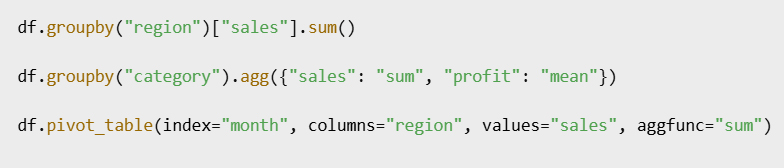
        العقلية التحليلية-

        التركيز على حل المشكلات-

        المعرفة الكافية عن هذا المجال-

        مهارات التواصل-

        Advertisements
        https://