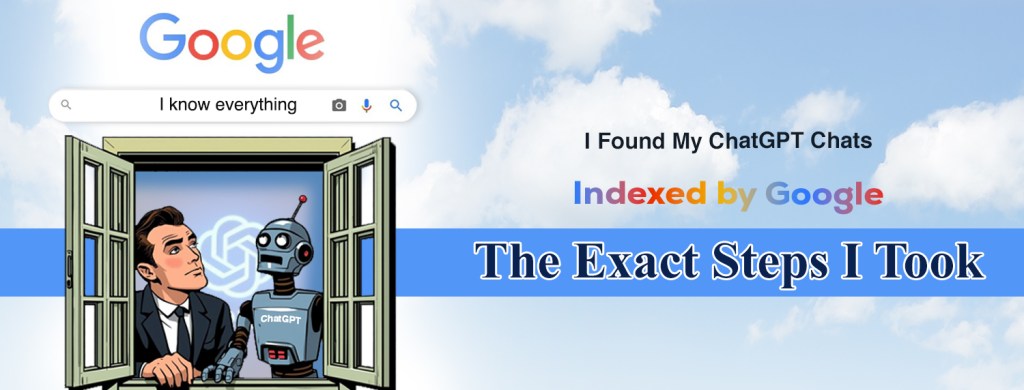

I Found My ChatGPT Chats Indexed by Google- The Exact Steps I Took

Advertisements

I realized something was wrong the moment a private phrasing I only used inside ChatGPT appeared in a Google result preview. It was subtle, almost unbelievable, yet unmistakable. My ChatGPT history was not “leaked” in the dramatic sense, but it had become publicly accessible through a shared link that search engines could index. This is not a hypothetical risk, and it does not require hacking or a data breach. It happens quietly, through default sharing behaviors, cached pages, and a misunderstanding of what “share” actually means in AI tools. What follows is exactly what I did to contain the situation in under ten minutes, explained clearly so you can do the same before it becomes a real problem.

ChatGPT does not randomly publish your conversations, but it allows you to generate shareable links. Those links are designed for collaboration, demos, or support, yet once they exist, they behave like any other public URL. If you post one in a public space, send it to someone who reposts it, or even leave it accessible long enough, search engines can crawl it. The danger is not malice; it is inertia. Google indexes what it can reach. If a shared chat link does not explicitly block indexing, it can surface in search results, sometimes with enough context to identify the author, the topic, or sensitive details embedded in the text.

What makes this especially risky is that many users treat AI chats as semi-private notebooks. We brainstorm business ideas, draft contracts, analyze data, and sometimes paste internal content. When those conversations gain a public URL, the boundary between private thinking and public publishing collapses instantly.

I did not panic; I verified. I copied a unique sentence from the chat and searched it in an incognito browser. The result appeared. Not prominently, but enough to confirm indexing had already begun. This step matters because it tells you whether you are dealing with a theoretical risk or an active exposure. Once confirmed, speed becomes more important than perfection. Search engines move slowly to forget, but they index quickly.

Advertisements

The first thing I did was revoke access at the source. Inside ChatGPT, I navigated to my conversation history and identified any chats that had sharing enabled. I disabled sharing immediately. This alone cuts off future access, but it does not erase what search engines already cached.

Next, I deleted the affected conversations entirely. This is uncomfortable if the content matters to you, but deletion ensures the source URL returns nothing. From a search engine’s perspective, a dead page is the strongest signal to drop an index.

Then I moved to Google’s removal workflow. I submitted a request to remove outdated content by pasting the exact URL of the shared chat. This does not require proof of ownership in this case; it relies on the page no longer existing. Within minutes, the status showed as “Pending,” which is enough to stop further spread while Google processes the request.

To prevent recurrence, I audited my account settings. I turned off chat history where appropriate and made a personal rule never to generate share links for conversations containing drafts, credentials, client data, or internal reasoning. Finally, I ran a quick search for my name and common phrases I use, just to ensure no other artifacts were floating around.

All of this took less than ten minutes because the goal was containment, not perfection.

The core lesson is that AI tools behave like publishing platforms the moment a URL exists. The mental model most users have, that chats are ephemeral and private by default, is outdated. If you are a founder, consultant, analyst, or creator, your prompts are intellectual property. Treat them with the same care you would treat a Google Doc or a Notion page. Convenience features are not privacy features, and silence from a tool does not mean safety.

This is especially relevant for professionals who use ChatGPT to refine positioning, pricing, legal language, or strategy. A single indexed conversation can expose thinking that was never meant to leave the room.

I now assume every shareable surface can become public. I separate exploratory thinking from sensitive work, avoid pasting raw data unless necessary, and periodically review my chat history the same way I review cloud storage permissions. This mindset shift matters more than any single setting, because tools change faster than policies, and habits are your real defense.

If your ChatGPT history ever appears on Google, it is not the end of the world, but it is a clear signal to act immediately. Disable sharing, delete the source, request removal, and tighten your defaults. Ten focused minutes are enough to stop the spread if you move quickly. The real value of this experience is not the fix itself, but the awareness it creates. AI is powerful, but only if you stay in control of where your thinking lives and who can see it.

If you found this useful, share your experience or questions. The more openly we discuss these edge cases, the safer we all become.

Advertisements

مُفهرسة بواسطة جوجل ChatGPT وجدتُ محادثاتي على

الخطوات التي اتخذتها بالتفصيل

Advertisements

أدركتُ وجود خطأ ما لحظة ظهور عبارة خاصة

في معاينة نتائج بحث جوجل ChatGPT استخدمتها فقط داخل

كان الأمر دقيقاً يكاد لا يُصدق ولكنه واضح لا لبس فيه

ChatGPT لم يتم “تسريب” سجل محادثاتي على

بالمعنى الدرامي ولكنه أصبح متاحاً للعامة عبر رابط مُشارك يمكن لمحركات البحث فهرسته، هذا ليس خطراً افتراضياً ولا يتطلب اختراقاً أو تسريباً للبيانات، يحدث ذلك بهدوء من خلال سلوكيات المشاركة الافتراضية والصفحات المخزنة مؤقتاً وسوء فهم لمعنى “المشاركة” في أدوات الذكاء الاصطناعي

فيما يلي شرحٌ مُفصّل لما فعلته لاحتواء الموقف في أقل من عشر دقائق حتى تتمكن من فعل الشيء نفسه قبل أن يُصبح مشكلة حقيقية

محادثاتك عشوائياً ChatGPT لا ينشر

ولكنه يسمح لك بإنشاء روابط قابلة للمشاركة، إذ صُممت هذه الروابط للتعاون أو العروض التوضيحية أو الدعم ولكن بمجرد وجودها تُعامل كأي رابط عام آخر، إذا نشرتَ رابطاً في مكان عام أو أرسلته إلى شخص أعاد نشره أو حتى تركته متاحاً لفترة كافية فبإمكان محركات البحث فهرسته، فالخطر ليس في سوء النية بل في التقاعس، جوجل تُفهرس ما يمكنها الوصول إليه، وإذا لم يمنع رابط الدردشة المُشارك الفهرسة صراحةً فقد يظهر في نتائج البحث وأحياناً مع سياق كافٍ لتحديد المُرسل أو الموضوع أو تفاصيل حساسة مُضمنة في النص

ما يزيد الأمر خطورة هو أن العديد من المستخدمين يتعاملون مع محادثات الذكاء الاصطناعي كدفاتر شبه خاصة، فنتبادل الأفكار التجارية ونُصيغ العقود ونُحلل البيانات وأحياناً نلصق محتوى داخلياً، فعندما تُصبح هذه المحادثات متاحة للعامة ينهار الحاجز بين التفكير الخاص والنشر العام فوراً

لم أُصب بالذعر بل تحققت، نسختُ جملةً فريدة من الدردشة وبحثتُ عنها في متصفح خفي فظهرت النتيجة، لم تكن بارزة لكنها كانت كافية لتأكيد بدء الفهرسة، هذه الخطوة مهمة لأنها تُحدد ما إذا كنت تتعامل مع خطر نظري أم تعرض فعلي، بمجرد التأكد تصبح السرعة أهم من الدقة، فمحركات البحث بطيئة في نسيان المعلومات لكنها تُفهرسها بسرعة

Advertisements

أول ما فعلته هو إلغاء الوصول من المصدر

انتقلت إلى سجل محادثاتي ChatGPT داخل

وحددت أي محادثات مُفعّل فيها خيار المشاركة عطلت المشاركة فوراً، وهذا الإجراء وحده يمنع الوصول مستقبلاً لكنه لا يمحو ما خزنته محركات البحث مسبقاً

بعد ذلك حذفت المحادثات المتأثرة بالكامل، قد يكون هذا غير مريح إذا كان المحتوى مهماً بالنسبة لك، لكن الحذف يضمن عدم ظهور أي نتائج عند البحث عن رابط المصدر، فمن وجهة نظر محرك البحث تُعد الصفحة المعطلة أقوى مؤشر لحذف فهرس

ثم انتقلت إلى آلية إزالة المحتوى القديم من جوجل: أرسلت طلباً لإزالة المحتوى القديم عن طريق لصق رابط المحادثة المشتركة، إذ لا يتطلب هذا إثبات ملكية في هذه الحالة فهو يعتمد على عدم وجود الصفحة أصلاً، وفي غضون دقائق ظهرت الحالة “قيد الانتظار” وهو ما يكفي لوقف انتشارها ريثما تعالج جوجل الطلب

ولمنع تكرار ذلك راجعتُ إعدادات حسابي وعطّلتُ سجل المحادثات حيثما كان ذلك مناسباً ووضعتُ قاعدة شخصية تمنعني من إنشاء روابط مشاركة للمحادثات التي تحتوي على مسودات أو بيانات اعتماد أو بيانات عملاء أو تبريرات داخلية، أخيراً أجريتُ بحثاً سريعاً عن اسمي والعبارات الشائعة التي أستخدمها للتأكد من عدم وجود أي معلومات أخرى متداولة

كل هذا لم يستغرق أكثر من عشر دقائق لأن الهدف كان احتواء المشكلة لا منعها تماماً

الدرس الأساسي هو أن أدوات الذكاء الاصطناعي تتصرف كمنصات نشر

URL بمجرد وجود رابط

فالنموذج الذهني السائد لدى معظم المستخدمين والذي يعتبر المحادثات مؤقتة وخاصة بشكل افتراضي هو نموذج قديم، إذا كنت مؤسساً أو مستشاراً أو محللاً أو مبدعاً فإن أفكارك تُعدّ ملكية فكرية تعامل معها بنفس الحرص

Notion أو صفحة Google الذي تتعامل به مع مستند

ميزات الراحة ليست ميزات خصوصية وصمت الأداة لا يعني الأمان

ChatGPT هذا الأمر بالغ الأهمية للمحترفين الذين يستخدمون

لتحسين التموضع أو التسعير أو الصياغة القانونية أو الاستراتيجية، فمحادثة واحدة مفهرسة قد تكشف أفكاراً لم يكن من المفترض مشاركتها

أفترض الآن أن كل مساحة قابلة للمشاركة يمكن أن تصبح عامة *

أفصل بين التفكير الاستكشافي والعمل الحساس *

أتجنب لصق البيانات الخام إلا عند الضرورة *

أراجع سجل محادثاتي دورياً بنفس الطريقة التي أراجع بها أذونات التخزين السحابي *

هذا التحول في التفكير أهم من أي إعداد منفرد لأن الأدوات تتغير أسرع من السياسات والعادات هي دفاعك الحقيقي

ChatGPT إذا ظهر سجل محادثاتك على

في نتائج بحث جوجل فلا داعي للقلق، فهذه إشارة واضحة لاتخاذ إجراء فوري، عطّل خاصية المشاركة واحذف المصدر واطلب إزالة الملف وحسّن إعداداتك الافتراضية

عشر دقائق من التركيز كافية لوقف انتشار المشكلة إذا تحركت بسرعة، إذ تكمن القيمة الحقيقية لهذه التجربة ليس في الحل بحد ذاته بل في الوعي الذي تُحدثه، وتذكر دائماً أن الذكاء الاصطناعي قوي لكن بشرط أن تتحكم في كيفية مشاركة أفكارك ومن يمكنه الاطلاع عليها

إذا وجدت هذه المعلومات مفيدة شارك تجربتك أو أسئلتك، فكلما ناقشنا هذه الحالات الاستثنائية بصراحة كلما أصبحنا جميعاً أكثر أماناً

Advertisements

Your Customers Feel Your Chaos: Why Managing Data Right Changes Everything

Advertisements

When a customer reaches out with a question — “Where’s my order?” or “Can you update my subscription?” — the speed and accuracy of your response can make or break their loyalty. For small businesses, efficient data management isn’t just an operational nice-to-have; it’s the difference between repeat buyers and one-time visitors.

TL;DR

Effective data management enables your team to locate the right information faster, respond to customers more promptly, and reduce errors. Organize, secure, and unify your customer data to boost satisfaction and loyalty — and protect your reputation.

Every small business eventually hits this wall:

  • Customer details live in five different spreadsheets.
  • Sales records don’t match inventory.
  • Email systems and CRM tools don’t talk to each other.

When data gets messy, response times slow down. Customers notice. And once trust erodes, it’s hard to rebuild.

How to Streamline Your Customer Data

  1. Centralize everything — use one hub to connect sales, support, and inventory data.
  2. Automate updates — sync tools like HubSpot or Zoho CRM for real-time records.
  3. Establish access levels — protect sensitive data with user roles.
  4. Set review routines — audit your data monthly for duplicates or errors.
  5. Document workflows — keep a simple record of where each dataset lives.

Let’s visualize how smart data handling improves customer service outcomes:

StepExampleResult
CollectIntegrate customer purchase historySupport team sees order details instantly
OrganizeTag data by customer stagePersonalized responses at every touchpoint
SecureEncrypt stored infoBuilds customer trust
AnalyzeSpot repeat issuesPrevents future complaints
ShareTeam dashboardsCollaboration without chaos

Behind every efficient service operation lies responsible data governance — the discipline that keeps information accurate, protected, and organized. When businesses embed governance into daily systems and workflows, data becomes a growth engine. Without it, small companies risk security gaps, compliance missteps, and unnecessary inefficiencies that frustrate customers and staff alike.

Advertisements

Q1: Isn’t this just for large enterprises?
No — small businesses benefit even more because they rely on agility. Good data practices let you compete with bigger players.

Q2: What tools are affordable for small teams?
Look at Trello, Airtable, or ClickUp for simple, scalable management.

Q3: How often should I back up my customer data?
Weekly at minimum, daily for businesses with frequent transactions.

Q4: What’s the first step if my data is a mess?
Start by cleaning one dataset — your customer list. Merge duplicates and fill in missing fields.

Pro Tip: Spotlight — Microsoft Power BI

If you’re tracking customer trends, Microsoft Power BI can turn raw sales or feedback data into clear visuals that reveal hidden service patterns. A few hours of setup can pay off in months of insight.

 ☐ Can you find any customer’s info in under a minute?
 ☐ Is your data stored securely and backed up regularly?
 ☐ Do your systems sync automatically across departments?
 ☐ Are you tracking customer feedback trends?
 ☐ Have you trained your staff on privacy best practices?

If you can’t check all five, your data might be slowing you down.

  • CRM (Customer Relationship Management): Software that stores and tracks customer interactions.
  • Data Governance: Policies ensuring data is accurate, secure, and properly used.
  • Centralization: Combining data from different tools into one location.
  • Encryption: A method of protecting data by converting it into unreadable code.
  • Workflow: The series of tasks that complete a process or service cycle.
  • Google Workspace — unified tools for communication and file management.
  • Monday.com — visual project and data tracking.
  • Slack — team collaboration with searchable data threads.
  • Notion — great for internal documentation.
  • Dropbox Business — secure file sharing and backup.
  • Tableau — data visualization for customer insights.

Efficient data management doesn’t just save time — it builds relationships. For small businesses, that means every second counts. Organize your data, protect it, and let your team work faster and smarter. Customers will feel it — and they’ll keep coming back.

Advertisements

عملاؤك يشـــعرون بالفوضى التي تُحدثها

لماذا إدارة البيانات بشكل صحيح تغير كل شيء

Advertisements

عندما يتواصل معك عميل بسؤال : “أين طلبي؟” أو “هل يمكنك تحديث اشتراكي؟”  فإن سرعة ودقة ردك قد تُعزز ولاءه أو تُضعفه، فبالنسبة للشركات الصغيرة لا تُعدّ إدارة البيانات الفعّالة مجرد ميزة تشغيلية بل هي الفرق بين المشترين المتكررين والزوار لمرة واحدة

تُمكّن إدارة البيانات الفعّالة فريقك من تحديد المعلومات الصحيحة بشكل أسرع والرد على العملاء بسرعة أكبر وتقليل الأخطاء، لذا نظّم بيانات عملائك وأمنها ووحّدها لتعزيز رضاهم وولائهم وحماية سمعتك

: تواجه كل شركة صغيرة في نهاية المطاف هذه المشكلة

بيانات العملاء موجودة في خمسة جداول بيانات مختلفة ●

سجلات المبيعات لا تتطابق مع المخزون ●

أنظمة البريد الإلكتروني وأدوات إدارة علاقات العملاء لا تتواصل ●

عندما تتداخل البيانات تتباطأ أوقات الاستجابة، يلاحظ العملاء ذلك وبمجرد تآكل الثقة يصعب إعادة بنائها

مركزية كل شيء – استخدم مركزاً واحداً لربط بيانات المبيعات والدعم والمخزون ●

HubSpot أو Zoho CRM أتمتة التحديثات – مزامنة أدوات مثل ●

للحصول على سجلات فورية

تحديد مستويات الوصول – حماية البيانات الحساسة بأدوار المستخدمين●

ضبط إجراءات المراجعة – تدقيق بياناتك شهرياً بحثاً عن أي تكرارات أو أخطاء●

توثيق سير العمل – احتفظ بسجل بسيط لمكان كل مجموعة بيانات●

:لنتخيل كيف يُحسّن التعامل الذكي مع البيانات نتائج خدمة العملاء

النتيجةمثالالخطوة
يطّلع فريق الدعم على تفاصيل الطلب فورًادمج سجل مشتريات العميلالجمع
ردود مُخصصة في كل نقطة اتصالتصنيف البيانات حسب مرحلة العميلالتنظيم
بناء ثقة العملاءتشفير المعلومات المُخزنةالتأمين
منع الشكاوى المُستقبليةاكتشاف المشاكل المُتكررةالتحليل
التعاون دون فوضىلوحات معلومات الفريقمشاركة

تقع وراء كل عملية خدمة فعّالة حوكمة بيانات مسؤولة – وهي الانضباط الذي يُحافظ على دقة المعلومات وحمايتها وتنظيمها، فعندما تُدمج الشركات الحوكمة في أنظمتها اليومية وسير عملها تُصبح البيانات محركاً للنمو، وبدونها تُواجه الشركات الصغيرة خطر الثغرات الأمنية وأخطاء الامتثال وعدم الكفاءة غير الضرورية التي تُحبط العملاء والموظفين على حدٍ سواء

Advertisements

س1: أليس هذا مُخصصاً للشركات الكبيرة فقط؟

لا .. تستفيد الشركات الصغيرة أكثر لأنها تعتمد على المرونة، ممارسات البيانات الجيدة تُمكّنك من المنافسة مع الشركات الأكبر

س2: ما هي الأدوات المناسبة للفرق الصغيرة؟

Trello أو Airtable أو ClickUp  انظر إلى

لإدارة بسيطة وقابلة للتطوير

س3: كم مرة يجب عليّ نسخ بيانات عملائي احتياطياً؟

أسبوعياً على الأقل، ويومياً للشركات ذات المعاملات المتكررة

س4: ما هي الخطوة الأولى إذا كانت بياناتي غير منظمة؟

ابدأ بتنظيف مجموعة بيانات واحدة – قائمة عملائك، ادمج البيانات المكررة واملأ الحقول الناقصة

إذا كنت تتتبع اتجاهات العملاء

تحويل بيانات المبيعات أو التعليقات الخام Microsoft Power BI يُمكن لـ

إلى صور واضحة تكشف عن أنماط الخدمة الخفية، بضع ساعات من الإعداد تُثمر عن أشهر من المعرفة المُعمّقة

هل يمكنك العثور على أي معلومات عن أي عميل في أقل من دقيقة؟ ☐

هل بياناتك مُخزّنة بشكل آمن ومُنسّقة بانتظام؟ ☐

هل تُزامن أنظمتك تلقائياً بين الأقسام؟ ☐

هل تتابع اتجاهات آراء العملاء؟ ☐

هل درّبت موظفيك على أفضل ممارسات الخصوصية؟ ☐

إذا لم تتمكن من التحقق من جميع الجوانب الخمسة فقد تُبطئ بياناتك من أدائك

: (CRM) إدارة علاقات العملاء

برنامج يُخزّن ويُتتبّع تفاعلات العملاء

حوكمة البيانات : سياسات تضمن دقة البيانات وأمانها واستخدامها بشكل صحيح ●

المركزية : جمع البيانات من أدوات مختلفة في مكان واحد ●

التشفير : طريقة لحماية البيانات بتحويلها إلى شيفرة غير قابلة للقراءة ●

سير العمل : سلسلة المهام التي تُكمل دورة عملية أو خدمة ●

أدوات موحدة للتواصل وإدارة الملفات Google Workspace

تتبع مرئي للمشاريع والبيانات Monday.com

تعاون جماعي مع سلاسل بيانات قابلة للبحث Slack

رائع للتوثيق الداخلي Notion

مشاركة ملفات ونسخ احتياطي آمن Dropbox Business

تمثيل بيانات لفهم رؤى العملاء Tableau

إدارة البيانات الفعّالة لا توفر الوقت فحسب بل تبني العلاقات أيضاً، فبالنسبة للشركات الصغيرة هذا يعني أن كل ثانية مهمة، لذا نظّم بياناتك واحمِها ودع فريقك يعمل بشكل أسرع وأذكى، سيشعر العملاء بذلك وسيستمرون في العودة إليك

Advertisements

Why Your Data Science Career Changes the Moment You Think Like an Economist

Advertisements

In the modern data-driven landscape, the true challenge facing data scientists is no longer how to store, process, or model information—technology already achieves that at scale. The real challenge is understanding the human forces behind the data. Data itself, no matter how large or beautifully structured, is silent until someone interprets the incentives, decisions, and constraints that shape it. This is exactly where the economist’s mindset becomes indispensable. Economists spend their careers studying why people behave the way they do, how choices are shaped under scarcity, how incentives influence actions, and how systems evolve over time. When a data scientist adopts this mode of thinking, analysis becomes more than prediction; it becomes insight. And insight is what drives strategic, meaningful decisions in the real world.

Data science often revolves around identifying patterns—detecting churn, forecasting demand, predicting risk. But patterns alone cannot explain the deeper question: Why do people behave this way in the first place? Economists approach behavior through the lens of preferences, constraints, motivations, and expectations. They understand that every individual acts under a unique combination of incentives and limitations. When a data scientist incorporates this style of thinking, the data stops looking like static snapshots and begins to resemble a living story about human behavior. Instead of treating anomalies as numerical errors, the data scientist begins to explore the psychological and economic factors that might produce such deviations. This transforms the analysis into something more sophisticated, more realistic, and far more useful.

One of the most critical contributions of economics to data science is the relentless pursuit of causality. While machine learning models can uncover powerful correlations, economists dig deeper to identify what actually drives outcomes. This mindset protects data scientists from misinterpreting relationships that appear significant in the data but hold little meaning in reality. When economic reasoning guides an analysis, the data scientist becomes more critical, more skeptical, and more aware of potential confounders. Instead of taking patterns at face value, they explore the mechanisms that produce those patterns. This often leads to solutions that are more stable, more strategic, and more aligned with how people and systems truly operate.

Economists think in trade-offs because every meaningful decision—whether made by a company or a customer—involves sacrificing one benefit to gain another. Data scientists who internalize this idea approach their work with greater strategic clarity. They stop chasing “perfect” accuracy and start understanding the cost of every improvement. A model that is slightly more accurate but significantly more expensive or harder to maintain may not be worth it. A prediction that requires invasive data collection may reduce user trust. A product change that improves engagement may create hidden frictions elsewhere. This trade-off mentality introduces a level of maturity that purely technical thinking often overlooks. It aligns the data scientist’s work with real-world decision-making, where constraints are ever-present and resources are never infinite.

Advertisements

Economics teaches that individuals, markets, and institutions are interconnected systems, not isolated units. Data scientists who adopt this worldview begin analyzing problems within broader contexts. They recognize how a change in one part of a system creates ripple effects in others. This systems-level thinking is invaluable when working on marketplace platforms, recommendation systems, pricing engines, supply chain forecasting, and any domain where multiple agents interact dynamically. Instead of building static models that assume the world remains unchanged, the economist-minded data scientist anticipates how people and systems will adapt. This ability to foresee second-order effects dramatically strengthens the relevance and longevity of analytical solutions.

Machine learning often imposes mathematical convenience on problems that are fundamentally human. Economic reasoning helps restore balance by grounding models in real behavioral principles: people maximize utility, respond to incentives, suffer from biases, act under uncertainty, and adapt to changing environments. By incorporating economic concepts—utility theory, behavioral economics, information asymmetry, game theory—data scientists build models that behave more reliably in real markets and real decisions. The result is not only more accurate predictions but also more interpretable and defensible models. They better capture how customers evaluate options, how employees react to policy changes, and how users respond to pricing or recommendations. In short, models become more realistic because they reflect the complexity of human nature rather than the simplicity of mathematical assumptions.

Economists excel at distilling complex realities into clear, actionable insights. Their communication style emphasizes the “why” behind behaviors, the “because” behind decisions, and the “what if” behind each strategic scenario. When data scientists adopt this communication style, their influence multiplies. Instead of presenting outputs and metrics, they articulate stories about behavior, incentives, and strategic outcomes. Leaders respond not to predictions alone, but to interpretations that reveal risks, opportunities, and trade-offs. The data scientist who communicates with economic clarity becomes a strategist, not just a technician—someone whose insights shape policy, guide product development, and influence high-level decisions.

Economics is built on the reality that uncertainty can never be eliminated, only understood and managed. Markets shift, people change, shocks occur, and expectations evolve. When data scientists adopt an economic approach to uncertainty, they stop fearing it and start analyzing it. They use concepts like expected utility, rational expectations, marginal decision-making, and risk tolerance to frame uncertainty in a structured, understandable way. This leads to more resilient models, more thoughtful forecasts, and a healthier relationship between confidence and doubt. The result is analytical work that does not pretend to be perfect but is intentionally designed to hold up under the unpredictability of real-world environments.

To think like an economist is to elevate data science into a discipline that understands the invisible forces driving human decisions. It adds depth, clarity, and realism to the technical power of models and algorithms. When data scientists learn to interpret incentives, anticipate trade-offs, appreciate systemic interactions, and communicate uncertainty with confidence, they move far beyond the limits of traditional analytics. They become advisors, strategists, and decision-shapers. In a world overflowing with data but starved for meaning, the data scientist who embraces economic thinking becomes uniquely equipped to make sense of complexity. They do more than predict the future—they understand the pressures that create it.

Advertisements

لماذا تتغير مسيرتك المهنية في علم البيانات بمجرد أن تفكر كخبير اقتصادي؟

Advertisements

في ظلّ البيئة الحديثة القائمة على البيانات لم يعد التحدي الحقيقي الذي يواجه علماء البيانات يكمن في كيفية تخزين المعلومات أو معالجتها أو نمذجتها – فالتكنولوجيا تُحقّق ذلك بالفعل على نطاق واسع، بل يكمن التحدي الحقيقي في فهم القوى البشرية الكامنة وراء البيانات، فالبيانات نفسها مهما ضخّمت أو بُنيت بشكل جميل تبقى صامتة حتى يُفسّر أحدٌ الحوافز والقرارات والقيود التي تُشكّلها، وهنا تحديداً تُصبح عقلية الاقتصادي لا غنى عنها

يقضي الاقتصاديون حياتهم المهنية في دراسة أسباب تصرفات الناس على هذا النحو وكيف تتشكّل الخيارات في ظلّ الندرة وكيف تُؤثّر الحوافز على الأفعال وكيف تتطور الأنظمة مع مرور الوقت، فعندما يتبنّى عالم البيانات هذا الأسلوب في التفكير يصبح التحليل أكثر من مجرّد تنبؤ بل يصبح بصيرة، والبصيرة هي ما يُحرّك القرارات الاستراتيجية والهادفة في العالم الحقيقي

غالباً ما يتمحور علم البيانات حول تحديد الأنماط كالكشف عن فقدان العملاء والتنبؤ بالطلب والتنبؤ بالمخاطر، لكن الأنماط وحدها لا تُفسّر السؤال الأعمق: لماذا يتصرف الناس بهذه الطريقة في المقام الأول؟ يتناول الاقتصاديون السلوك من منظور التفضيلات والقيود والدوافع والتوقعات، فهم يدركون أن كل فرد يتصرف في ظل مزيج فريد من الحوافز والقيود، فعندما يدمج عالم البيانات هذا الأسلوب في التفكير تتوقف البيانات عن كونها لقطات ثابتة وتبدأ في أن تكون بمثابة قصة حية عن السلوك البشري، وبدلاً من التعامل مع الشذوذ كأخطاء عددية يبدأ عالم البيانات في استكشاف العوامل النفسية والاقتصادية التي قد تُسبب مثل هذه الانحرافات، وهذا بدوره يُحوّل التحليل إلى شيء أكثر تعقيداً وواقعية وفائدة

من أهم مساهمات الاقتصاد في علم البيانات السعي الدؤوب وراء السببية، فبينما يمكن لنماذج التعلم الآلي الكشف عن ارتباطات قوية يتعمق الاقتصاديون في البحث لتحديد العوامل المؤثرة فعلياً في النتائج، وعليه تحمي هذه العقلية علماء البيانات من سوء تفسير العلاقات التي تبدو مهمة في البيانات ولكنها لا تحمل معنى حقيقياً، فعندما يُوجّه المنطق الاقتصادي التحليل يصبح عالم البيانات أكثر انتقاداً وتشككاً ووعياً بالعوامل المُربكة المحتملة، وبدلاً من أخذ الأنماط على ظاهرها يستكشفون الآليات التي تُنتجها، إذ غالباً ما يؤدي هذا إلى حلول أكثر استقراراً واستراتيجيةً وتوافقاً مع كيفية عمل الأفراد والأنظمة

يفكر الاقتصاديون في المقايضات لأن كل قرار ذي معنى – سواء اتخذته شركة أو عميل – ينطوي على التضحية بفائدة من أجل الحصول على أخرى، فعلماء البيانات الذين يستوعبون هذه الفكرة يتعاملون مع عملهم بوضوح استراتيجي أكبر، ويتوقفون عن السعي وراء الدقة “المثالية” ويبدأون بفهم تكلفة كل تحسين، وقد لا يكون النموذج الأكثر دقة بقليل ولكنه أكثر تكلفة أو صعوبة في الصيانة ذا قيمة، وقد يُقلل التنبؤ الذي يتطلب جمع بيانات مُتطفلة من ثقة المستخدم

قد يُؤدي تغيير المنتج الذي يُحسّن التفاعل إلى احتكاكات خفية في مجالات أخرى تُدخل عقلية المقايضات هذه مستوى من النضج غالباً ما يغفله التفكير التقني البحت، إنها تُوائِم عمل عالم البيانات مع صنع القرار في العالم الواقعي حيث تكون القيود حاضرة دائماً والموارد لا حدود لها

يُعلّمنا علم الاقتصاد أن الأفراد والأسواق والمؤسسات أنظمة مترابطة وليست وحدات معزولة، إذ يبدأ علماء البيانات الذين يتبنون هذه النظرة العالمية بتحليل المشكلات ضمن سياقات أوسع، فهم يدركون كيف يُحدث تغيير في أحد أجزاء النظام تأثيرات متتالية في أجزاء أخرى

يُعدّ هذا التفكير على مستوى النظم بالغ الأهمية عند العمل على منصات السوق وأنظمة التوصية ومحركات التسعير وتنبؤات سلاسل التوريد وأي مجال تتفاعل فيه جهات متعددة بشكل ديناميكي، فبدلاً من بناء نماذج ثابتة تفترض ثبات العالم يتوقع عالم البيانات ذو العقلية الاقتصادية كيفية تكيف الأفراد والأنظمة، وعليه تُعزز هذه القدرة على توقع التأثيرات الثانوية بشكل كبير أهمية الحلول التحليلية وديمومة عملها

Advertisements

غالباً ما يُطبّق التعلم الآلي أساليب رياضية مُيسّرة على المشكلات البشرية في جوهرها، إذ يُساعد التفكير الاقتصادي على استعادة التوازن من خلال ترسيخ النماذج في مبادئ سلوكية واقعية: يُحقق الأفراد أقصى استفادة ويستجيبون للحوافز ويُعانون من التحيزات ويتصرفون في ظل عدم اليقين ويتكيفون مع البيئات المتغيرة

من خلال دمج المفاهيم الاقتصادية – نظرية المنفعة والاقتصاد السلوكي وعدم تماثل المعلومات ونظرية الألعاب – يبني علماء البيانات نماذج تعمل بكفاءة أكبر في الأسواق الحقيقية والقرارات الفعلية، والنتيجة ليست تنبؤات أكثر دقة فحسب بل نماذج أكثر قابلية للتفسير والدفاع، فهي تلتقط بشكل أفضل كيفية تقييم العملاء للخيارات وكيفية تفاعل الموظفين مع تغييرات السياسات وكيفية استجابة المستخدمين للتسعير أو التوصيات، باختصار تصبح النماذج أكثر واقعية لأنها تعكس تعقيد الطبيعة البشرية بدلاً من بساطة الافتراضات الرياضية

يتميز الاقتصاديون في تلخيص الحقائق المعقدة إلى رؤى واضحة وقابلة للتنفيذ، إذ يركز أسلوب تواصلهم على “السبب” وراء السلوكيات و”السبب” وراء القرارات و”ماذا لو” وراء كل سيناريو استراتيجي، فعندما يعتمد علماء البيانات هذا الأسلوب في التواصل يتضاعف تأثيرهم، وبدلاً من عرض النتائج والمقاييس فإنهم يعبّرون ​​عن قصص حول السلوك والحوافز والنتائج الاستراتيجية

لا يستجيب القادة للتنبؤات فحسب بل للتفسيرات التي تكشف عن المخاطر والفرص والتنازلات، إذ أن عالِم البيانات الذي يتواصل بوضوح اقتصادي يصبح استراتيجياً وليس مجرد فني – شخصاً تُشكل رؤيته السياسات وتُوجه تطوير المنتجات وتؤثر على القرارات رفيعة المستوى

يُبنى علم الاقتصاد على حقيقة أن عدم اليقين لا يمكن القضاء عليه، بل يمكن فهمه وإدارته فقط، إذ تتغير الأسواق ويتغير الناس وتحدث الصدمات وتتطور التوقعات، فعندما يتبنى علماء البيانات نهجاً اقتصادياً للتعامل مع عدم اليقين فإنهم يتوقفون عن الخوف منه ويبدأون بتحليله، فيستخدمون مفاهيم مثل المنفعة المتوقعة والتوقعات العقلانية واتخاذ القرارات الهامشية وتحمل المخاطر لتأطير عدم اليقين بطريقة منظمة ومفهومة

يؤدي هذا إلى نماذج أكثر مرونة وتوقعات أكثر تعمقاً وعلاقة أصح بين الثقة والشك، والنتيجة هي عمل تحليلي لا يتظاهر بالكمال ولكنه مصمم عمداً للصمود في وجه عدم القدرة على التنبؤ ببيئات العالم الحقيقي

إن التفكير كخبير اقتصادي يعني الارتقاء بعلم البيانات إلى تخصص يفهم القوى الخفية التي تُحرك القرارات البشرية، إذ يُضيف هذا عمقاً ووضوحاً وواقعيةً إلى القوة التقنية للنماذج والخوارزميات، وعندما يتعلم علماء البيانات تفسير الحوافز وتوقع المفاضلات وتقدير التفاعلات النظامية والتواصل مع حالات عدم اليقين بثقة فإنهم يتجاوزون حدود التحليلات التقليدية بكثير، فيصبحون مستشارين واستراتيجيين وصانعي قرارات

في عالمٍ يفيض بالبيانات ولكنه يفتقر إلى المعنى يُصبح عالم البيانات الذي يتبنى التفكير الاقتصادي مؤهلاً بشكل فريد لفهم التعقيد، إنهم لا يكتفون بالتنبؤ بالمستقبل بل يفهمون الضغوط التي تُولّده

Advertisements