


A powerful shift is taking place inside the world of data science. The transformation is not driven only by larger datasets or stronger algorithms but by a fundamental change in the process that shapes every machine learning model: feature engineering. With the arrival of automated feature engineering powered by artificial intelligence, data teams now craft deep, meaningful features at speeds previously unimaginable. Performance increases, workflows accelerate, and the discovery of hidden patterns becomes vastly more accessible.
The Core Importance of Feature Engineering
Feature engineering has always been the heart of machine learning. The quality of the features determines how deeply a model can understand the patterns inside the data. For years, analysts relied on domain knowledge, logical reasoning, and experimentation to build transformations manually. While effective, manual feature engineering is slow and limited by human intuition. As data grows more complex, the need for a scalable, intelligent solution becomes undeniable.
How AI Transforms Feature Engineering
Artificial intelligence automates the creation, transformation, and selection of features using techniques such as deep feature synthesis, automated encodings, interaction discovery, and optimization algorithms capable of exploring massive feature spaces. Instead of days of manual work, AI generates hundreds or thousands of sophisticated features in minutes. This automation provides creativity beyond human possibility and uncovers deeper relationships hidden in the data.
A Glimpse Into How I Started Generating Deep Features Automatically
My journey with automated deep feature generation began when I was working on a dataset filled with layered relationships that manual engineering simply could not capture efficiently. I found myself repeating the same transformations and exploring combinations that consumed endless hours. That experience pushed me to experiment with automated tools, especially Featuretools and early AutoML platforms. Watching an engine build layered, multi-level deep features in minutes—many of which were more powerful than what I had manually produced—changed everything. From that moment, automation became an essential part of every project I handled, turning the machine into a creative partner that explores the full depth of the data.
Diagram: How Automated Feature Engineering Fits Into the Workflow
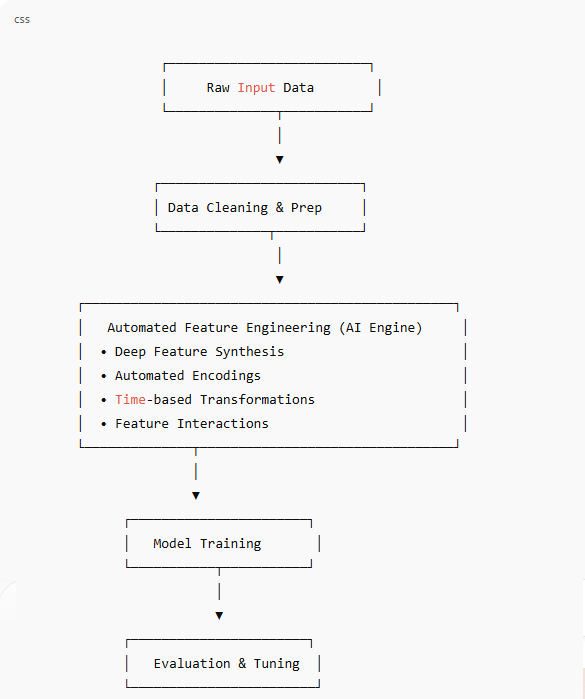
This diagram gives readers a clear mental model of where automation sits in the pipeline.
Code Example: Deep Feature Synthesis in Python
Below is a simple but clear example that demonstrates how automated feature engineering works using the Featuretools library.
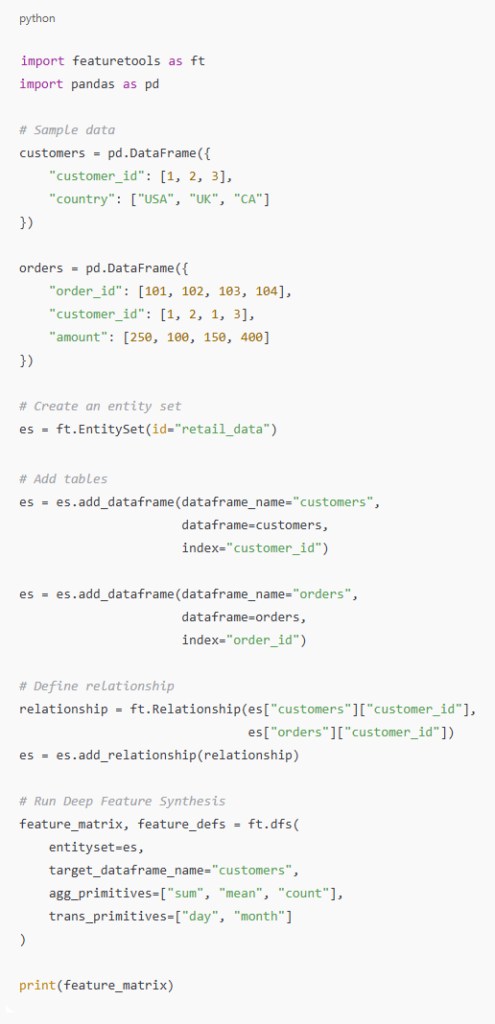
This snippet creates automatic aggregated features such as:
- total purchase amount
- average order value
- number of orders
- time based transformations
All generated in seconds.
The Real Advantages of Automated Feature Engineering
Automated feature engineering accelerates development time, expands analytical creativity, and enhances the quality of machine learning models. It lifts the burden of repetitive transformations, improves interpretability, and empowers smaller teams to achieve expert-level results. The model accuracy improvements can be dramatic because the system explores combinations far beyond human capacity.
Real Life Example From Practice
Consider a retail company preparing a churn prediction model. Manual engineering reveals basic insights such as purchase frequency, product preferences, and loyalty activity. Automated feature engineering uncovers deeper dimensions like seasonal patterns, rolling window behaviors, discount sensitivity, and previously unseen interactions between product groups. These discoveries reshape the model entirely and significantly boost predictive power.
How Automated Feature Engineering Fits Into Modern Workflows
Within modern pipelines, automated feature engineering sits between data preparation and model training. It reduces iteration loops, simplifies experimentation, and stabilizes performance. When integrated with cloud based AutoML systems, the process becomes almost fully end-to-end, allowing teams to move directly from raw data to validated predictions with minimal friction.
The Future of Automated Feature Engineering
Future systems will understand human input more naturally, interpret business context, and generate features aligned with specific industry logic rather than generic transformations. AI will evolve into an intelligent assistant that learns from project preferences and produces domain-aware feature engineering strategies. This shift will further elevate the speed and quality of predictive analytics.
Conclusion
Automated feature engineering marks a major milestone in the evolution of machine learning. It empowers teams to discover patterns hidden deep within their data, boosts the performance of predictive models, and removes the limits of traditional manual processes. By embracing automation, data professionals free themselves to focus on strategic insights, creative exploration, and impactful decision making.
رحلة شخصية في هندسة الميزات المؤتمتة المُعمّقة

يشهد عالم علوم البيانات تحولاً جذرياً، إذ لا يقتصر هذا التحول على مجموعات بيانات أكبر أو خوارزميات أقوى، بل يشمل أيضاً تغييراً جذرياً في العملية التي تُشكل كل نموذج تعلّم آلي: هندسة الميزات
مع ظهور هندسة الميزات المؤتمتة المدعومة بالذكاء الاصطناعي تُنشئ فرق البيانات الآن ميزات عميقة وذات معنى بسرعات لم تكن مُتوقعة من قبل بحيث يزداد الأداء وتتسارع وتيرة العمل ويصبح اكتشاف الأنماط الخفية أسهل بكثير
الأهمية الجوهرية لهندسة الميزات
لطالما كانت هندسة الميزات جوهر تعلّم الآلة، إذ تُحدد جودة الميزات مدى قدرة النموذج على فهم الأنماط داخل البيانات، ولسنوات اعتمد المحللون على المعرفة الميدانية والتفكير المنطقي والتجريب لبناء التحويلات يدوياً، فعلى الرغم من فعالية هندسة الميزات اليدوية إلا أنها بطيئة ومحدودة بالحدس البشري، ومع تزايد تعقيد البيانات تصبح الحاجة إلى حل ذكي وقابل للتطوير أمراً لا يمكن إنكاره
كيف يُحدث الذكاء الاصطناعي نقلة نوعية في هندسة الميزات
يُؤتمت الذكاء الاصطناعي إنشاء الميزات وتحويلها واختيارها باستخدام تقنيات مثل التوليف العميق للميزات والترميز الآلي واكتشاف التفاعلات وخوارزميات التحسين القادرة على استكشاف مساحات ميزات هائلة، فبدلاً من قضاء أيام في العمل اليدوي يُنتج الذكاء الاصطناعي مئات أو آلاف الميزات المتطورة في دقائق، بحيث تُوفر هذه الأتمتة إبداعاً يفوق القدرات البشرية وتكشف عن علاقات أعمق مخفية في البيانات
لمحة عن كيف بدأتُ توليد الميزات العميقة تلقائياً
بدأت رحلتي مع توليد الميزات العميقة تلقائياً عندما كنتُ أعمل على مجموعة بيانات مليئة بالعلاقات الطبقية التي لم تتمكن الهندسة اليدوية من التقاطها بكفاءة، فوجدتُ نفسي أُكرر نفس التحويلات وأستكشف تركيبات استغرقت ساعات طويلة، وهذه التجربة دفعتني إلى تجربة الأدوات الآلية
المبكرة AutoML ومنصات Featuretools وخاصةً
إن مشاهدة محرك يبني ميزات عميقة متعددة الطبقات ومتعددة المستويات في دقائق – كان العديد منها أقوى مما أنتجته يدوياً – غيّر كل شيء، ومنذ تلك اللحظة أصبحت الأتمتة جزءاً أساسياً من كل مشروع أتعامل معه مما حوّل الآلة إلى شريك إبداعي يستكشف عمق البيانات بالكامل
رسم تخطيطي: كيف تتكامل هندسة الميزات المؤتمتة مع سير العمل
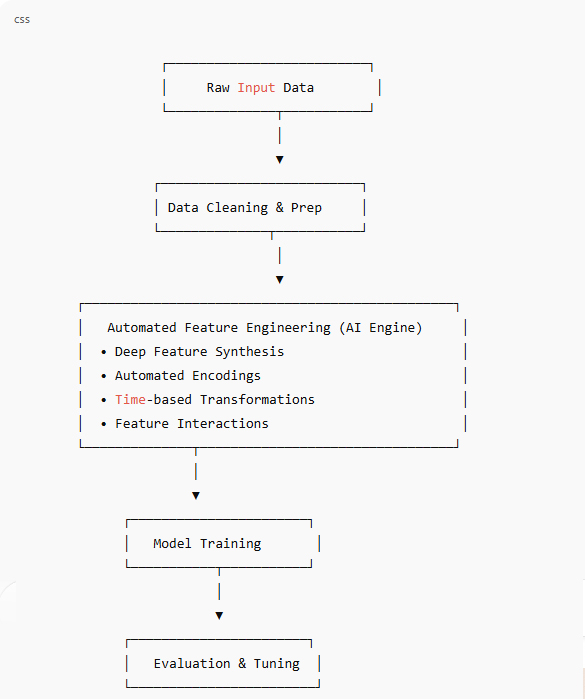
يقدم هذا الرسم البياني للقراء نموذجاً ذهنياً واضحاً لمكان وجود الأتمتة في خط الأنابيب
مثال على الكود : توليف الميزات العميقة في بايثون
فيما يلي مثال بسيط وواضح يوضح كيفية عمل هندسة الميزات المؤتمتة
Featuretools باستخدام مكتبة
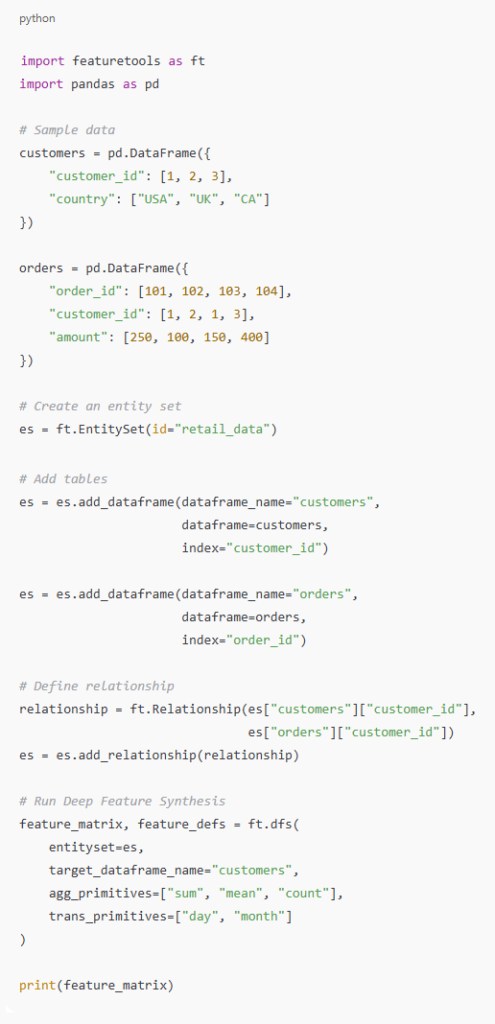
: يُنشئ هذا المقتطف ميزات مُجمّعة تلقائياً، مثل
إجمالي مبلغ الشراء *
متوسط قيمة الطلب *
عدد الطلبات *
تحويلات زمنية *
تُولّد جميعها في ثوانٍ
المزايا الحقيقية لهندسة الميزات المؤتمتة
تُسرّع هندسة الميزات المؤتمتة وقت التطوير وتُوسّع نطاق الإبداع التحليلي وتُحسّن جودة نماذج التعلم الآلي، فهي تُخفّف من عبء التحويلات المتكررة وتُحسّن قابلية التفسير وتُمكّن الفرق الصغيرة من تحقيق نتائج بمستوى الخبراء، بحيث يُمكن أن تكون تحسينات دقة النموذج هائلة لأن النظام يستكشف تركيبات تتجاوز بكثير القدرات البشرية
مثال عملي من واقع الحياة
لنفترض أن شركة تجزئة تُعدّ نموذجاً للتنبؤ بانخفاض عدد العملاء، وهنا تكشف الهندسة اليدوية عن رؤى أساسية مثل تكرار الشراء وتفضيلات المنتجات ونشاط الولاء، بينما تكشف هندسة الميزات الآلية عن أبعاد أعمق مثل الأنماط الموسمية وسلوكيات فترات التخفيض وحساسية الخصم والتفاعلات غير المُلاحظة سابقاً بين مجموعات المنتجات وعليه تُعيد هذه الاكتشافات تشكيل النموذج بالكامل وتُعزز بشكل كبير القدرة التنبؤية
كيف تتلاءم هندسة الميزات المؤتمة مع سير العمل الحديث
في أنظمة العمل الحديثة تقع هندسة الميزات المؤتمتة بين إعداد البيانات وتدريب النماذج، فهي تُقلل من حلقات التكرار وتُبسط عملية التجريب وتُعزز استقرار الأداء
السحابية AutoML وعند دمجها مع أنظمة
تُصبح العملية متكاملة تقريباً مما يسمح للفرق بالانتقال مباشرةً من البيانات الخام إلى التنبؤات المُتحقق منها بأقل قدر من الاحتكاك
مستقبل هندسة الميزات الآلية
ستفهم الأنظمة المستقبلية المدخلات البشرية بشكل أكثر طبيعية وتُفسر سياق العمل وتُنشئ ميزات تتوافق مع منطق قطاع مُحدد بدلاً من التحولات العامة، وبناءً عليه سيتطور الذكاء الاصطناعي إلى مساعد ذكي يتعلم من تفضيلات المشروع ويُنتج استراتيجيات هندسة ميزات مُراعية للمجال، وسيُعزز هذا التحول سرعة وجودة التحليلات التنبؤية
الخلاصة
تُمثل هندسة الميزات المؤتمتة علامة فارقة في تطور التعلم الآلي، فهي تُمكّن الفرق من اكتشاف الأنماط المُخبأة في أعماق بياناتها وتُعزز أداء النماذج التنبؤية وتُزيل قيود العمليات اليدوية التقليدية، فمن خلال تبني الأتمتة يتمكن متخصصو البيانات من التركيز على الرؤى الاستراتيجية والاستكشاف الإبداعي واتخاذ القرارات المؤثرة
 Data World