Growing Faster on YouTube in 2025 Even Under the New AI Policy

Advertisements

YouTube’s 2025 AI policy arrived like a sudden earthquake shaking creators across every niche from education to gaming to faceless channels. Many creators feared demonetization content removal or a complete reset for their channels. Yet the truth is more strategic and far more exciting. The updates are strict but they also open an entirely new era where creativity transparency and storytelling matter more than ever. If you understand how the new rules work and adapt early your channel can grow faster than channels that ignore or resist these changes.

This article walks you through every major YouTube AI rule for 2025 in a narrative practical way and gives you a step by step roadmap to not only survive but grow stronger in this new environment.

1. Mandatory Disclosure for AI Content

YouTube now requires creators to clearly label:

  • AI generated voices
  • AI generated humans or faces
  • AI generated environments
  • Deepfakes
  • Scripted content fully produced with AI
  • Any reconstructed or “synthetic” scenes

This is no longer optional. If you avoid disclosure YouTube may:

  • Reduce reach
  • Remove your video
  • Give channel warnings
  • Disable monetization

However disclosure does not harm your reach if you do it correctly. In fact transparency boosts trust and that leads to more watch time.

2. Stricter Rules on Human Representation

YouTube now protects real individuals from being impersonated. You cannot:

  • Use AI to recreate a celebrity voice without labeling
  • Create fake statements through synthetic actors
  • Make AI avatars that look like real people without permission

Creators using avatars must now clarify whether the character is:

  • AI generated
  • A fictional representation
  • A digital character voiced by the creator

This rule protects viewers but also pushes creators toward stronger storytelling and clearer branding.

3. New Copyright Expectations

AI generated content must still respect copyrights.
For example you cannot:

  • Train a model on copyrighted songs and reuse outputs
  • Recreate a movie soundtrack with AI
  • Generate landscapes or scenes based on protected films

YouTube’s new detector can now spot these patterns even if the video is entirely AI created. The platform will automatically restrict monetization when the risk is high.

The creators who grow fastest in 2025 will be those who do not fight the new guidelines but instead build content strategies around them. Here is how.

1. Use AI for Brainstorming Not Final Output

Creators who rely on fully AI generated videos will struggle with identity viewer loyalty and monetization consistency. Instead use AI tools for:

  • Script ideas
  • Content outlines
  • Video structures
  • Research summaries
  • Visual concepts

But add your own voice camera presence or commentary on top. Even faceless channels can do this by keeping a human layer such as:

  • Personal narration
  • Real world examples
  • Your own storytelling
  • Your own editing style

This hybrid model will dominate in 2025.

2. Build Your Signature Voice or Format

YouTube is now rewarding originality more than production value.
Your competitive advantage is not AI visual quality but your unique:

  • Tone
  • Style
  • Pacing
  • Humor
  • Insight
  • Storytelling pattern

Even faceless creators can have a recognizable personality through writing and voice delivery.

Advertisements

3. Use AI Tools to Speed Up Production Without Triggering the Policy

Here is what is still completely safe:

  • AI editing assistants
  • AI thumbnail enhancement
  • AI noise removal
  • AI translation
  • AI captioning
  • AI B-roll for nonhuman scenes
  • AI color grading

None of these require disclosure because they modify your original work instead of replacing it.

This is where creators will explode in productivity in 2025.

4. Be Very Clear with Disclosure Without Ruining the Viewer Experience

The biggest fear creators have is that disclosure will make their content feel cheap.
Here is a simple formula to avoid that:

Place the AI disclosure at the very end of the description or in a small line at the start of the video.

Examples:

  • “Some visual elements in this video were created using AI tools.”
  • “Voice assistance provided by AI narration software.”
  • “Portions of this scene contain AI generated environments.”

Short clean and professional.

5. Lean Into Formats YouTube Loves in 2025

YouTube’s algorithm in 2025 is pushing:

  • Tutorials
  • Mini documentaries
  • Short storytelling videos
  • Explainer style videos
  • Personal commentary
  • Reaction and analysis
  • Gaming with deep narrative
  • Real world skill-based content

Creators who mix human insight with AI efficiency will dominate these niches.

At the beginning of 2025 I was experimenting with creating dozens of short educational videos every week. Manually scripting each one was painful and slow. So I built a personal workflow that uses AI tools to generate deep structured features for each topic automatically. These features included narrative flow key talking points supporting metaphors contextual examples and alternative phrasings.

Instead of giving me a finished script the model gave me a rich multi layer map. From that map I could quickly build a human sounding professional script with my own style. This approach made my videos more detailed and more coherent while still remaining authentic and fully compliant with YouTube’s policy. AI became my assistant not my replacement.

2025 is not the year AI content dies on YouTube. It is the year lazy AI content dies and meaningful creator led content wins. If you embrace transparency originality and hybrid creation your channel will grow faster than ever before. The creators who succeed in this new era are not the ones who fight the rules. They are the ones who evolve before everyone else does.

Advertisements

2025 في عام YouTube النمو السريع على

بالرغم من سياسة الذكاء الاصطناعي الجديدة

Advertisements

جاءت سياسة الذكاء الاصطناعي لعام 2025 على يوتيوب بمثابة زلزال مفاجئ هزّ صنّاع المحتوى في جميع المجالات من التعليم إلى الألعاب إلى القنوات غير المرئية، خشي العديد من صنّاع المحتوى إزالة المحتوى المُدر للربح أو إعادة ضبط قنواتهم بالكامل، لكن الحقيقة أكثر استراتيجيةً وإثارةً، فصحيحٌ أن التحديثات صارمة لكنها تفتح أيضاً عصراً جديداً كلياً، حيثُ أصبحت الشفافية والإبداع وسرد القصص أكثر أهميةً من أي وقت مضى، فإذا فهمتَ آلية عمل القواعد الجديدة وتكيّفتَ معها مبكراً فستنمو قناتك أسرع من القنوات التي تتجاهل هذه التغييرات أو تقاومها

يُقدّم لك هذا المقال شرحاً عملياً وسردياً لجميع قواعد الذكاء الاصطناعي الرئيسية على يوتيوب لعام 2025 ويمنحك خارطة طريق خطوة بخطوة ليس فقط للبقاء بل للنمو بقوة أكبر في هذه البيئة الجديدة

١. الإفصاح الإلزامي عن محتوى الذكاء الاصطناعي

:يُلزم يوتيوب الآن منشئي المحتوى بوضع علامات واضحة على

الأصوات المُولّدة بالذكاء الاصطناعي •

الأشخاص أو الوجوه المُولّدة بالذكاء الاصطناعي •

البيئات المُولّدة بالذكاء الاصطناعي •

التزييف العميق •

المحتوى المُبرمج والمُنتج بالكامل باستخدام الذكاء الاصطناعي •

أي مشاهد مُعاد بناؤها أو “مُصطنعة” •

:لم يعد هذا الأمر اختيارياً، ففي حال تجنّبك الإفصاح قد يقوم يوتيوب بما يلي

تقليل الوصول •

إزالة الفيديو •

إصدار تحذيرات للقناة •

تعطيل تحقيق الدخل •

ومع ذلك لا يُؤثّر الإفصاح سلباً على وصولك إذا تم ذلك بشكل صحيح، ففي الواقع تُعزّز الشفافية الثقة مما يؤدي إلى زيادة وقت المشاهدة

٢. قواعد أكثر صرامة بشأن تمثيل الأشخاص

: يحمي يوتيوب الآن الأشخاص الحقيقيين من انتحال هوياتهم، إذ يمنعك من القيام بالإجراءت التالية

استخدام الذكاء الاصطناعي لإعادة إنتاج صوت أحد المشاهير دون تصنيف •

إنشاء عبارات مزيفة باستخدام ممثلين اصطناعيين •

إنشاء صور رمزية للذكاء الاصطناعي تشبه أشخاصاً حقيقيين دون إذن •

: يجب على منشئي المحتوى الذين يستخدمون الصور الرمزية توضيح ما إذا كانت الشخصية

مُولّدة من الذكاء الاصطناعي •

تمثيل خيالي •

شخصية رقمية بصوت منشئ المحتوى •

تحمي هذه القاعدة المشاهدين ولكنها تدفع أيضاً منشئي المحتوى نحو سرد قصص أقوى وعلامة تجارية أوضح3

3. توقعات جديدة لحقوق الطبع والنشر

يجب أن يحترم المحتوى المُولّد بالذكاء الاصطناعي حقوق الطبع والنشر

: على سبيل المثال لا يمكنك القيام بالإجراءات التالية

تدريب نموذج على الأغاني المحمية بحقوق الطبع والنشر وإعادة استخدام المخرجات •

إعادة إنتاج موسيقى تصويرية لفيلم باستخدام الذكاء الاصطناعي •

إنشاء مناظر طبيعية أو مشاهد مستوحاة من أفلام محمية •

يمكن لأداة الكشف الجديدة في يوتيوب الآن اكتشاف هذه الأنماط حتى لو كان الفيديو مُولّداً بالكامل بالذكاء الاصطناعي ستُقيّد المنصة تلقائياً تحقيق الدخل عندما يكون الخطر مرتفعاً

سيكون منشئو المحتوى الأسرع نمواً في عام 2025 هم أولئك الذين لا يعارضون الإرشادات الجديدة بل يبنون استراتيجيات محتوى حولها

: إليك الطريقة

١. استخدم الذكاء الاصطناعي للعصف الذهني وليس للإخراج النهائي

سيواجه منشئو المحتوى الذين يعتمدون على مقاطع فيديو مُولّدة بالكامل بالذكاء الاصطناعي صعوبة في تحديد هوية المشاهدين وولاءهم وثبات معدل الربح، استخدم أدوات الذكاء الاصطناعي بدلاً من ذلك لما يلي

أفكار النصوص •

مخططات المحتوى •

هياكل الفيديو •

ملخصات الأبحاث •

المفاهيم البصرية •

ولكن أضف صوتك الخاص سواءً من خلال الكاميرا أو التعليق الصوتي، حتى القنوات التي لا تظهر فيها أي شخصية يمكنها تحقيق ذلك من خلال الحفاظ على طابع إنساني مثل

سرد شخصي •

أمثلة من الواقع •

سرد قصصك الخاص •

أسلوبك الخاص في التحرير •

سيهيمن هذا النموذج الهجين في عام ٢٠٢٥

٢. طوّر أسلوبك أو تنسيقك الخاص

يُقدّر يوتيوب الآن الأصالة أكثر من قيمة الإنتاج

: لا تكمن ميزتك التنافسية في جودة الصورة التي يدعمها الذكاء الاصطناعي، بل في ما تتميز به من

أسلوب •

وتيرة •

حس فكاهة •

رؤية •

نمط سرد القصص •

حتى منشئو المحتوى الذين لا تظهر فيهم شخصيات مميزة، يمكنهم امتلاك شخصية مميزة من خلال الكتابة والأداء الصوتي

Advertisements

٣. استخدم أدوات الذكاء الاصطناعي لتسريع الإنتاج دون التأثير على السياسة

: إليك ما لا يزال آمناً تماماً

مساعدو التحرير بالذكاء الاصطناعي •

تحسين الصور المصغرة بالذكاء الاصطناعي •

إزالة الضوضاء بالذكاء الاصطناعي •

الترجمة بالذكاء الاصطناعي •

التسميات التوضيحية بالذكاء الاصطناعي •

بالذكاء الاصطناعي للمشاهد غير البشرية B-roll لقطات •

تصحيح الألوان بالذكاء الاصطناعي •

لا يتطلب أيٌّ من هذه الأدوات الإفصاح، لأنها تُعدّل عملك الأصلي بدلاً من استبداله

هنا سيشهد منشئو المحتوى زيادةً هائلةً في الإنتاجية في عام ٢٠٢٥

٤. كن واضحاً جداً في الإفصاح دون إفساد تجربة المشاهد

أكبر مخاوف منشئي المحتوى هو أن يُشعرهم الإفصاح برخص محتواهم

: إليك طريقة بسيطة لتجنب ذلك

ضع الإفصاح بالذكاء الاصطناعي في نهاية الوصف أو في سطر صغير في بداية الفيديو

: أمثلة

“تم إنشاء بعض العناصر المرئية في هذا الفيديو باستخدام أدوات الذكاء الاصطناعي” •

“المساعدة الصوتية مُقدمة بواسطة برنامج سرد بالذكاء الاصطناعي” •

“تحتوي أجزاء من هذا المشهد على بيئات مُولّدة بالذكاء الاصطناعي” •

فيديو قصير وواضح واحترافي

٥. اعتمد على الصيغ التي يعشقها يوتيوب في عام ٢٠٢٥

: تشهد خوارزمية يوتيوب في عام ٢٠٢٥ تطوراً ملحوظاً في

البرامج التعليمية •

الأفلام الوثائقية القصيرة •

فيديوهات سرد قصص قصيرة •

فيديوهات توضيحية •

التعليقات الشخصية •

ردود الفعل والتحليل •

الألعاب ذات السرد العميق •

محتوى قائم على مهارات واقعية •

سيسيطر على هذه المجالات المبدعون الذين يمزجون بين البصيرة البشرية وكفاءة الذكاء الاصطناعي

في بداية عام ٢٠٢٥ كنتُ أجرب إنشاء عشرات الفيديوهات التعليمية القصيرة أسبوعياً، وكانت كتابة كل فيديو يدوياً أمراً شاقاً وبطيئاً، لذلك أنشأتُ سير عمل شخصياً يستخدم أدوات الذكاء الاصطناعي لإنشاء ميزات منظمة عميقة لكل موضوع تلقائياً، تضمنت هذه الميزات تدفقاً سردياً ونقاط نقاش رئيسية واستعارات داعمة وأمثلة سياقية وعبارات بديلة

بدلاً من إعطائي نصاً جاهزاً منحني النموذج خريطة غنية متعددة الطبقات، فمن خلال هذه الخريطة استطعتُ بسرعة إنشاء نص احترافي بأسلوبي الخاص ليبدو بشرياً، هذا النهج جعل فيديوهاتي أكثر تفصيلاً وتماسكاً مع الحفاظ على أصالتها وامتثالها التام لسياسة يوتيوب أصبح الذكاء الاصطناعي مساعدي لا بديلاً لي

عام ٢٠٢٥ ليس عام زوال محتوى الذكاء الاصطناعي على يوتيوب بل هو عام زوال محتوى الذكاء الاصطناعي الكسول وسينتصر المحتوى الهادف الذي يقوده المبدعون، فإذا تبنّيتَ الشفافية والأصالة والإبداع الهجين فستنمو قناتك أسرع من أي وقت مضى، وتذكر دائماً أن المبدعون الناجحون في هذا العصر الجديد ليسوا من يتحدون القواعد بل هم من يتطورون قبل غيرهم

Advertisements

A personal journey into deep automated feature engineering

Advertisements

A powerful shift is taking place inside the world of data science. The transformation is not driven only by larger datasets or stronger algorithms but by a fundamental change in the process that shapes every machine learning model: feature engineering. With the arrival of automated feature engineering powered by artificial intelligence, data teams now craft deep, meaningful features at speeds previously unimaginable. Performance increases, workflows accelerate, and the discovery of hidden patterns becomes vastly more accessible.

Feature engineering has always been the heart of machine learning. The quality of the features determines how deeply a model can understand the patterns inside the data. For years, analysts relied on domain knowledge, logical reasoning, and experimentation to build transformations manually. While effective, manual feature engineering is slow and limited by human intuition. As data grows more complex, the need for a scalable, intelligent solution becomes undeniable.

Artificial intelligence automates the creation, transformation, and selection of features using techniques such as deep feature synthesis, automated encodings, interaction discovery, and optimization algorithms capable of exploring massive feature spaces. Instead of days of manual work, AI generates hundreds or thousands of sophisticated features in minutes. This automation provides creativity beyond human possibility and uncovers deeper relationships hidden in the data.

My journey with automated deep feature generation began when I was working on a dataset filled with layered relationships that manual engineering simply could not capture efficiently. I found myself repeating the same transformations and exploring combinations that consumed endless hours. That experience pushed me to experiment with automated tools, especially Featuretools and early AutoML platforms. Watching an engine build layered, multi-level deep features in minutes—many of which were more powerful than what I had manually produced—changed everything. From that moment, automation became an essential part of every project I handled, turning the machine into a creative partner that explores the full depth of the data.

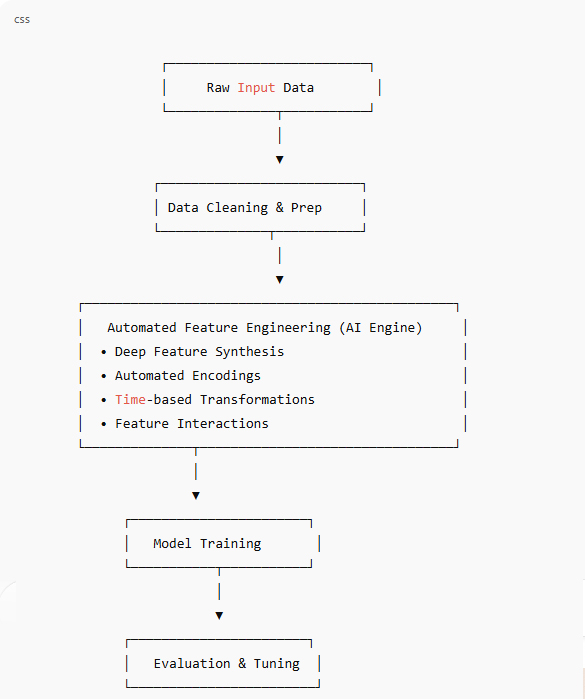
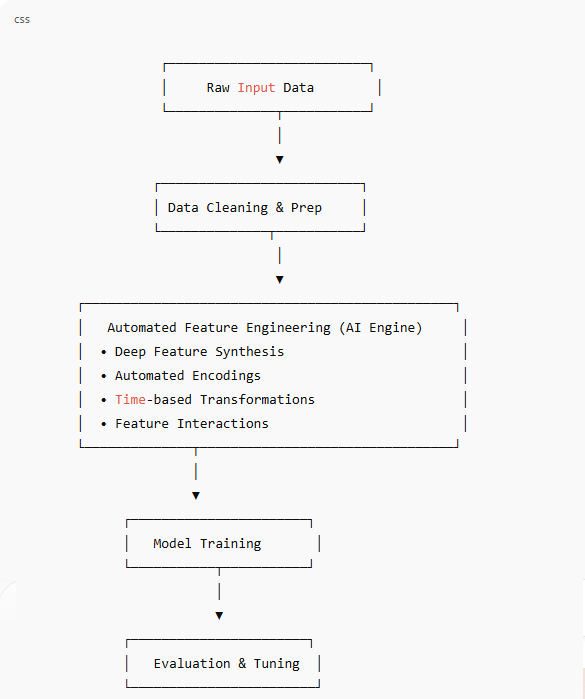
Diagram: How Automated Feature Engineering Fits Into the Workflow

This diagram gives readers a clear mental model of where automation sits in the pipeline.

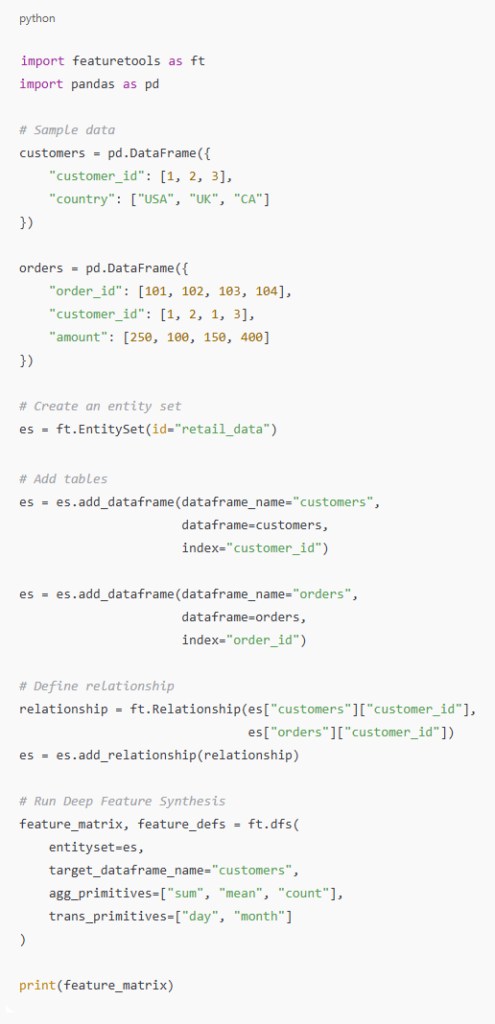
Code Example: Deep Feature Synthesis in Python

Below is a simple but clear example that demonstrates how automated feature engineering works using the Featuretools library.

This snippet creates automatic aggregated features such as:

  • total purchase amount
  • average order value
  • number of orders
  • time based transformations

All generated in seconds.

Advertisements

Automated feature engineering accelerates development time, expands analytical creativity, and enhances the quality of machine learning models. It lifts the burden of repetitive transformations, improves interpretability, and empowers smaller teams to achieve expert-level results. The model accuracy improvements can be dramatic because the system explores combinations far beyond human capacity.

Consider a retail company preparing a churn prediction model. Manual engineering reveals basic insights such as purchase frequency, product preferences, and loyalty activity. Automated feature engineering uncovers deeper dimensions like seasonal patterns, rolling window behaviors, discount sensitivity, and previously unseen interactions between product groups. These discoveries reshape the model entirely and significantly boost predictive power.

Within modern pipelines, automated feature engineering sits between data preparation and model training. It reduces iteration loops, simplifies experimentation, and stabilizes performance. When integrated with cloud based AutoML systems, the process becomes almost fully end-to-end, allowing teams to move directly from raw data to validated predictions with minimal friction.

Future systems will understand human input more naturally, interpret business context, and generate features aligned with specific industry logic rather than generic transformations. AI will evolve into an intelligent assistant that learns from project preferences and produces domain-aware feature engineering strategies. This shift will further elevate the speed and quality of predictive analytics.

Automated feature engineering marks a major milestone in the evolution of machine learning. It empowers teams to discover patterns hidden deep within their data, boosts the performance of predictive models, and removes the limits of traditional manual processes. By embracing automation, data professionals free themselves to focus on strategic insights, creative exploration, and impactful decision making.

Advertisements

رحلة شخصية في هندسة الميزات المؤتمتة المُعمّقة

Advertisements

يشهد عالم علوم البيانات تحولاً جذرياً، إذ لا يقتصر هذا التحول على مجموعات بيانات أكبر أو خوارزميات أقوى، بل يشمل أيضاً تغييراً جذرياً في العملية التي تُشكل كل نموذج تعلّم آلي: هندسة الميزات

مع ظهور هندسة الميزات المؤتمتة المدعومة بالذكاء الاصطناعي تُنشئ فرق البيانات الآن ميزات عميقة وذات معنى بسرعات لم تكن مُتوقعة من قبل بحيث يزداد الأداء وتتسارع وتيرة العمل ويصبح اكتشاف الأنماط الخفية أسهل بكثير

لطالما كانت هندسة الميزات جوهر تعلّم الآلة، إذ تُحدد جودة الميزات مدى قدرة النموذج على فهم الأنماط داخل البيانات، ولسنوات اعتمد المحللون على المعرفة الميدانية والتفكير المنطقي والتجريب لبناء التحويلات يدوياً، فعلى الرغم من فعالية هندسة الميزات اليدوية إلا أنها بطيئة ومحدودة بالحدس البشري، ومع تزايد تعقيد البيانات تصبح الحاجة إلى حل ذكي وقابل للتطوير أمراً لا يمكن إنكاره

يُؤتمت الذكاء الاصطناعي إنشاء الميزات وتحويلها واختيارها باستخدام تقنيات مثل التوليف العميق للميزات والترميز الآلي واكتشاف التفاعلات وخوارزميات التحسين القادرة على استكشاف مساحات ميزات هائلة، فبدلاً من قضاء أيام في العمل اليدوي يُنتج الذكاء الاصطناعي مئات أو آلاف الميزات المتطورة في دقائق، بحيث تُوفر هذه الأتمتة إبداعاً يفوق القدرات البشرية وتكشف عن علاقات أعمق مخفية في البيانات

بدأت رحلتي مع توليد الميزات العميقة تلقائياً عندما كنتُ أعمل على مجموعة بيانات مليئة بالعلاقات الطبقية التي لم تتمكن الهندسة اليدوية من التقاطها بكفاءة، فوجدتُ نفسي أُكرر نفس التحويلات وأستكشف تركيبات استغرقت ساعات طويلة، وهذه التجربة دفعتني إلى تجربة الأدوات الآلية

المبكرة AutoML ومنصات Featuretools وخاصةً

إن مشاهدة محرك يبني ميزات عميقة متعددة الطبقات ومتعددة المستويات في دقائق – كان العديد منها أقوى مما أنتجته يدوياً – غيّر كل شيء، ومنذ تلك اللحظة أصبحت الأتمتة جزءاً أساسياً من كل مشروع أتعامل معه مما حوّل الآلة إلى شريك إبداعي يستكشف عمق البيانات بالكامل

رسم تخطيطي: كيف تتكامل هندسة الميزات المؤتمتة مع سير العمل

يقدم هذا الرسم البياني للقراء نموذجاً ذهنياً واضحاً لمكان وجود الأتمتة في خط الأنابيب

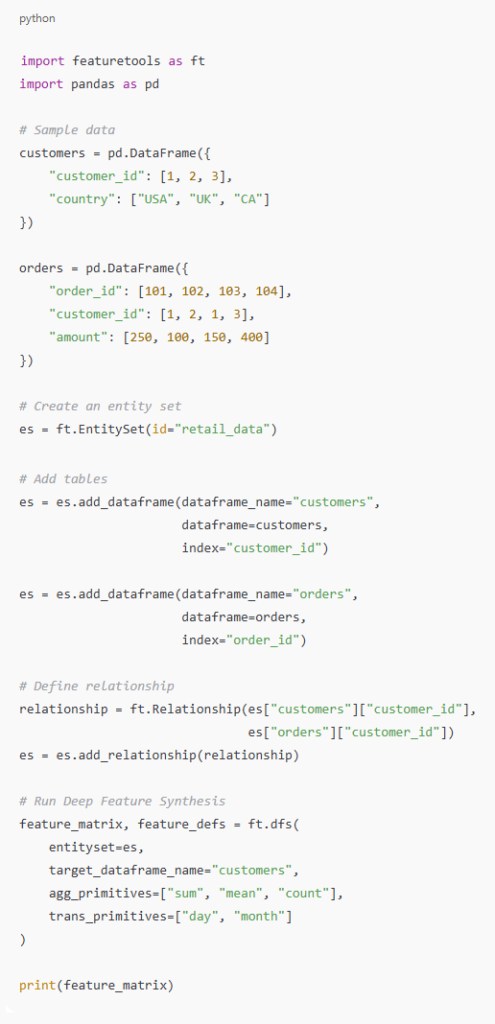
مثال على الكود : توليف الميزات العميقة في بايثون

فيما يلي مثال بسيط وواضح يوضح كيفية عمل هندسة الميزات المؤتمتة

Featuretools باستخدام مكتبة

: يُنشئ هذا المقتطف ميزات مُجمّعة تلقائياً، مثل

 إجمالي مبلغ الشراء *

 متوسط ​​قيمة الطلب *

 عدد الطلبات *

 تحويلات زمنية *

تُولّد جميعها في ثوانٍ

Advertisements

تُسرّع هندسة الميزات المؤتمتة وقت التطوير وتُوسّع نطاق الإبداع التحليلي وتُحسّن جودة نماذج التعلم الآلي، فهي تُخفّف من عبء التحويلات المتكررة وتُحسّن قابلية التفسير وتُمكّن الفرق الصغيرة من تحقيق نتائج بمستوى الخبراء، بحيث يُمكن أن تكون تحسينات دقة النموذج هائلة لأن النظام يستكشف تركيبات تتجاوز بكثير القدرات البشرية

لنفترض أن شركة تجزئة تُعدّ نموذجاً للتنبؤ بانخفاض عدد العملاء، وهنا تكشف الهندسة اليدوية عن رؤى أساسية مثل تكرار الشراء وتفضيلات المنتجات ونشاط الولاء، بينما تكشف هندسة الميزات الآلية عن أبعاد أعمق مثل الأنماط الموسمية وسلوكيات فترات التخفيض وحساسية الخصم والتفاعلات غير المُلاحظة سابقاً بين مجموعات المنتجات  وعليه تُعيد هذه الاكتشافات تشكيل النموذج بالكامل وتُعزز بشكل كبير القدرة التنبؤية

في أنظمة العمل الحديثة تقع هندسة الميزات المؤتمتة بين إعداد البيانات وتدريب النماذج، فهي تُقلل من حلقات التكرار وتُبسط عملية التجريب وتُعزز استقرار الأداء

السحابية AutoML وعند دمجها مع أنظمة

تُصبح العملية متكاملة تقريباً مما يسمح للفرق بالانتقال مباشرةً من البيانات الخام إلى التنبؤات المُتحقق منها بأقل قدر من الاحتكاك

ستفهم الأنظمة المستقبلية المدخلات البشرية بشكل أكثر طبيعية وتُفسر سياق العمل وتُنشئ ميزات تتوافق مع منطق قطاع مُحدد بدلاً من التحولات العامة، وبناءً عليه سيتطور الذكاء الاصطناعي إلى مساعد ذكي يتعلم من تفضيلات المشروع ويُنتج استراتيجيات هندسة ميزات مُراعية للمجال، وسيُعزز هذا التحول سرعة وجودة التحليلات التنبؤية

تُمثل هندسة الميزات المؤتمتة علامة فارقة في تطور التعلم الآلي، فهي تُمكّن الفرق من اكتشاف الأنماط المُخبأة في أعماق بياناتها وتُعزز أداء النماذج التنبؤية وتُزيل قيود العمليات اليدوية التقليدية، فمن خلال تبني الأتمتة يتمكن متخصصو البيانات من التركيز على الرؤى الاستراتيجية والاستكشاف الإبداعي واتخاذ القرارات المؤثرة

Advertisements

Where Businesses Should Invest to Transform Warehouse Operations

Advertisements

Modern warehouses aren’t just storage centers — they’re the heartbeat of efficient, scalable, and resilient supply chains. Yet many organizations still run on outdated systems that rely heavily on manual tracking, reactive maintenance, and fragmented data. The smartest investments today focus on technology, software, and organizational innovation that align teams, automate processes, and increase safety and ROI.

TL;DR

To boost warehouse performance, businesses should invest in:

  • Smart logistics systems that connect assets and workflows in real time
  • Data-driven platforms for forecasting and resource allocation
  • Robotics, automation, and safety-first design
  • Training and workflow standardization that support operational excellence

These upgrades improve speed, safety, and accuracy — and ultimately deliver higher profitability.

The logistics landscape has changed. Warehouses now must handle:

  • Higher SKU diversity
  • Shorter delivery windows
  • Real-time visibility expectations

Old models can’t keep up. The result is costly downtime, wasted space, and avoidable errors. Companies investing in integrated, intelligent warehouse systems are outperforming competitors on both productivity and cost control.

Solutions like Boston Dynamics’ Stretch and Locus Robotics show how automation can improve throughput without expanding headcount.

Data-driven insights are reshaping how warehouses operate — shifting them from reactive problem-solving to proactive, strategic decision-making. When leaders can see patterns in their operations through clear, connected data, they can anticipate demand shifts, prevent stockouts, and allocate resources more efficiently. With real-time analytics, warehouses evolve from chasing yesterday’s issues to planning for tomorrow’s performance.

Data World supports this transformation by providing analytics consulting and business-intelligence services that help teams optimize inventory levels, forecast demand with greater precision, and streamline logistics workflows. The result is a smarter, more agile warehouse network that operates with confidence and clarity at every level of the supply chain.

2. Warehouse Management Software (WMS)

Modern WMS platforms provide:

These systems allow leaders to track KPIs continuously and respond to operational changes immediately.

3. Data-Driven Decision Systems

Turning warehouse data into actionable intelligence is a competitive differentiator. By leveraging analytics tools like Tableau or Power BI, managers can forecast demand, detect inefficiencies, and plan smarter.

Data-driven visibility turns warehouse management from a reactive function into a strategic growth driver.

4. Edge-Enabled Logistics Infrastructure

Investing in smart logistics technologies — such as real-time data systems and edge computing — allows companies to track assets and automate decisions closer to the action. Edge systems reduce latency, increase accuracy, and enable predictive maintenance.

The impact of smart logistics edge computing lies in combining local processing with industrial resilience — delivering exceptional performance in tough environments like high-bay warehouses and multi-node distribution networks.

Advertisements

5. Safety & Ergonomics That Pay Back Fast

Safer work is faster work. Start with ergonomic lifts, better workstation heights, and simple traffic rules for forklifts and AMRs. Add wearable safety tech that nudges better movement and flags risky lifts before they become injuries. A practical option is StrongArm’s FUSE wearables, which help teams reduce strain and coach safer techniques on the floor. Pair that with quick-hit fixes—anti-fatigue mats, lighter totes, and clear pick labeling—and you’ll cut lost-time incidents while keeping throughput steady.

6. Training and Organizational Design

Technology alone isn’t enough. Workforce alignment — through clear SOPs, data literacy, and performance incentives — amplifies every other investment. Platforms like Udemy Business help train teams to operate advanced systems effectively.

StepFocus AreaKey ActionExpected Result
1Assess OperationsConduct a warehouse auditIdentify performance bottlenecks
2Prioritize UpgradesRank investments by ROI and risk reductionMaximize budget impact
3Deploy Smart TechImplement automation, sensors, and WMSImprove efficiency and data flow
4Integrate Data SystemsLink analytics with real-time operationsEnable predictive insights
5Train & MonitorBuild continuous improvement teamsSustain long-term gains

Before investing, confirm that your organization:

  • Has reliable Wi-Fi and edge-capable hardware
  • Uses standardized data across departments
  • Has leadership buy-in for cross-functional integration
  • Tracks warehouse KPIs regularly
  • Maintains an active safety and training program

If you need end-to-end control across inventory, labor, and automation, Blue Yonder Warehouse Management is a strong contender. It unifies slotting, tasking, and real-time execution so managers can orchestrate work across people and machines, spot bottlenecks early, and keep orders flowing. Many teams use it to standardize processes across multiple sites, improve pick accuracy, and shorten cycle times without ripping out existing equipment.

Q: Are robotics solutions viable for small or mid-sized warehouses?
 Yes. Modular automation systems now scale affordably, and many robotics vendors offer subscription-based pricing.

Q: How long does it take to see ROI from warehouse tech upgrades?
 Most businesses report measurable gains in 6–12 months, especially from automation and analytics integration.

Q: How can teams stay ahead of warehouse tech trends?
 Follow logistics research from sources like Gartner Supply Chain Insights and join forums like Warehouse & Logistics News.

Warehouses are no longer static back-end facilities — they’re dynamic intelligence hubs that can make or break customer experience. The most successful operators invest in automation, real-time visibility, and workforce empowerment. By prioritizing these areas, businesses not only increase efficiency and safety but also future-proof their operations for the next era of logistics.

Advertisements

أين ينبغي للشركات الاستثمار لتحويل عمليات المستودعات

Advertisements

المستودعات الحديثة ليست مجرد مراكز تخزين، بل هي القلب النابض لسلاسل توريد فعّالة وقابلة للتوسع ومرنة. ومع ذلك، لا تزال العديد من المؤسسات تعمل على أنظمة قديمة تعتمد بشكل كبير على التتبع اليدوي والصيانة التفاعلية والبيانات المجزأة. تُركز أذكى الاستثمارات اليوم على التكنولوجيا والبرمجيات والابتكار التنظيمي الذي يُنسق عمل الفرق، ويُؤتمت العمليات، ويُعزز السلامة وعائد الاستثمار

:للارتقاء بأداء المستودعات، ينبغي على الشركات الاستثمار في

أنظمة لوجستية ذكية تربط الأصول وسير العمل آنيًا ●

منصات قائمة على البيانات للتنبؤ وتخصيص الموارد ●

الروبوتات والأتمتة وتصميم يُولي السلامة الأولوية ●

التدريب وتوحيد معايير سير العمل لدعم التميز التشغيلي ●

تُحسّن هذه التحديثات السرعة والسلامة والدقة، وتُحقق في النهاية ربحية أعلى

: لقد تغيّر مشهد الخدمات اللوجستية، لذا يجب على المستودعات الآن التعامل مع

تنوع أكبر في وحدات التخزين ●

فترات تسليم أقصر ●

توقعات رؤية آنية ●

لا تستطيع النماذج القديمة مواكبة التطورات والنتيجة هي توقفات مكلفة ومساحات مهدرة وأخطاء يمكن تجنبها. تتفوق الشركات التي تستثمر في أنظمة المستودعات المتكاملة والذكية على منافسيها في كل من الإنتاجية وضبط التكاليف

Locus Robotics و Boston Dynamics’ Stretch تُظهر حلول مثل

كيف يمكن للأتمتة تحسين الإنتاجية دون زيادة عدد الموظفين

تُعيد الرؤى القائمة على البيانات تشكيل آلية عمل المستودعات – فتنتقل من حل المشكلات التفاعلي إلى اتخاذ قرارات استراتيجية استباقية، فعندما يتمكن القادة من رؤية أنماط عملياتهم من خلال بيانات واضحة ومترابطة يمكنهم توقع تحولات الطلب ومنع نفاد المخزون وتخصيص الموارد بكفاءة أكبر، فبفضل التحليلات الآنية تتطور المستودعات من ملاحقة مشاكل الأمس إلى التخطيط لأداء الغد

هذا التحول Data World تدعم

من خلال توفير استشارات تحليلية وخدمات ذكاء أعمال تساعد الفرق على تحسين مستويات المخزون والتنبؤ بالطلب بدقة أكبر وتبسيط سير العمل اللوجستي، والنتيجة هي شبكة مستودعات أكثر ذكاءً ومرونة، تعمل بثقة ووضوح على جميع مستويات سلسلة التوريد

: الحديثة ما يلي WMS توفر منصات

رؤية فورية للمخزون ●

تخطيط العمالة وتحسين الفترات الزمنية ●

(ERP) تكامل سلس مع أنظمة تخطيط موارد المؤسسات ●

تتيح هذه الأنظمة للقادة تتبع مؤشرات الأداء الرئيسية باستمرار والاستجابة الفورية للتغييرات التشغيلية

3. أنظمة اتخاذ القرارات القائمة على البيانات

يُعد تحويل بيانات المستودعات إلى معلومات استخباراتية عملية ميزة تنافسية

Power BI أو Tableau فمن خلال الاستفادة من أدوات التحليل مثل

يمكن للمديرين التنبؤ بالطلب واكتشاف أوجه القصور والتخطيط بشكل أذكى، بحيث تحوّل الرؤية القائمة على البيانات إدارة المستودعات من وظيفة تفاعلية إلى محرك نمو استراتيجي

٤. البنية التحتية اللوجستية المُمكّنة بالحافة

يُتيح الاستثمار في تقنيات اللوجستيات الذكية – مثل أنظمة البيانات الفورية والحوسبة الطرفية – للشركات تتبع الأصول وأتمتة القرارات في وقت أقرب إلى الحدث، وبالتالي تُقلل أنظمة الحافة من زمن الوصول وتزيد من الدقة وتُمكّن الصيانة التنبؤية

يكمن تأثير الحوسبة الطرفية اللوجستية الذكية في الجمع بين المعالجة المحلية والمرونة الصناعية مما يُوفر أداءً استثنائيًا في البيئات الصعبة مثل المستودعات عالية الارتفاع وشبكات التوزيع متعددة العقد

Advertisements

٥. السلامة وبيئة العمل اللذان يُؤتيان ثمارهما سريعًا

العمل الأكثر أمانًا هو العمل الأسرع، لذا ابدأ برافعات مُريحة وارتفاعات أفضل لمحطات العمل وقواعد مرور بسيطة للرافعات الشوكية والمركبات ذاتية الحركة، وأضف تقنية السلامة القابلة للارتداء التي تُحفز الحركة بشكل أفضل وتُنبه المصاعد الخطرة قبل أن تُصبح إصابات

خيارًا عمليًا StrongArm القابل للارتداء من FUSE يُعدّ جهاز

حيث يُساعد الفرق على تقليل الإجهاد وتدريبهم على أساليب أكثر أمانًا على أرض الواقع، أضف إلى ذلك حلولاً سريعة – مثل سجادات مقاومة للتعب وحقائب أخف وزنًا ووضع ملصقات واضحة على مواقع الالتقاط – وستتمكن من تقليل حوادث ضياع الوقت مع الحفاظ على استقرار الإنتاج

6. التدريب والتصميم التنظيمي

التكنولوجيا وحدها لا تكفي، فمواءمة القوى العاملة – من خلال إجراءات تشغيل قياسية واضحة، وفهم البيانات، وحوافز الأداء – تُعزز جميع الاستثمارات الأخرى

Udemy Business تساعد منصات مثل

في تدريب الفرق على تشغيل الأنظمة المتقدمة بفعالية

النتيجة المتوقعةالإجراء الرئيسيمجال التركيزالخطوة
تحديد أولويات الترقياتإجراء تدقيق للمستودعاتتقييم العمليات1
تعظيم أثر الميزانيةتصنيف الاستثمارات حسب عائد الاستثمار وتقليل المخاطرإعطاء الأولوية للتحديثات2
تحسين الكفاءة وتدفق البياناتتنفيذ الأتمتة وأجهزة الاستشعار ونظام إدارة المستودعاتنشر التقنيات الذكية3
تمكين الرؤى التنبؤيةربط التحليلات بالعمليات في الوقت الفعليدمج أنظمة البيانات4
الحفاظ على المكاسب طويلة الأمدبناء فرق التحسين المستمرالتدريب والمراقبة5

: قبل الاستثمار تأكد من أن مؤسستك

تمتلك شبكة واي فاي موثوقة وأجهزة متوافقة مع الأجهزة الطرفية ●

تستخدم بيانات موحدة في جميع الأقسام ●

تحظى بدعم القيادة للتكامل بين الوظائف ●

تتابع مؤشرات الأداء الرئيسية للمستودعات بانتظام ●

تحافظ على برنامج فعال للسلامة والتدريب ●

إذا كنت بحاجة إلى تحكم شامل في المخزون والعمالة والأتمتة

خيار مثالي Blue Yonder Warehouse Management فإن

فهو يوحد عمليات تحديد الفترات الزمنية وتوزيع المهام والتنفيذ الفوري مما يسمح للمديرين بتنظيم العمل بين الأفراد والآلات ورصد الاختناقات مبكرًا والحفاظ على تدفق الطلبات، إذ تستخدمه العديد من الفرق لتوحيد العمليات في مواقع متعددة وتحسين دقة الاستلام وتقصير دورات العمل دون الحاجة إلى إزالة المعدات الحالية

(WMS) ابدأ برؤية البيانات – نفّذ نظام إدارة المستودعات

وادمجه مع منصات التحليلات قبل إضافة الأتمتة

نعم تتوسع أنظمة الأتمتة المعيارية الآن بتكلفة معقولة، ويقدم العديد من موردي الروبوتات أسعارًا قائمة على الاشتراك

تبلغ معظم الشركات عن مكاسب ملموسة خلال 6-12 شهرًا، وخاصةً من خلال دمج الأتمتة والتحليلات

: تابع أبحاث الخدمات اللوجستية من مصادر مثل

Gartner Supply Chain Insights

: وانضم إلى منتديات مثل

Warehouse & Logistics News

لم تعد المستودعات مجرد مرافق خلفية ثابتة بل أصبحت مراكز ذكاء ديناميكية قادرة على تحسين تجربة العملاء أو إفسادها، يستثمر أنجح المشغلين في الأتمتة والرؤية الفورية وتمكين القوى العاملة. فمن خلال إعطاء الأولوية لهذه المجالات لا تزيد الشركات من الكفاءة والسلامة فحسب بل تضمن أيضًا جاهزية عملياتها للمستقبل في عصر الخدمات اللوجستية القادم

Advertisements

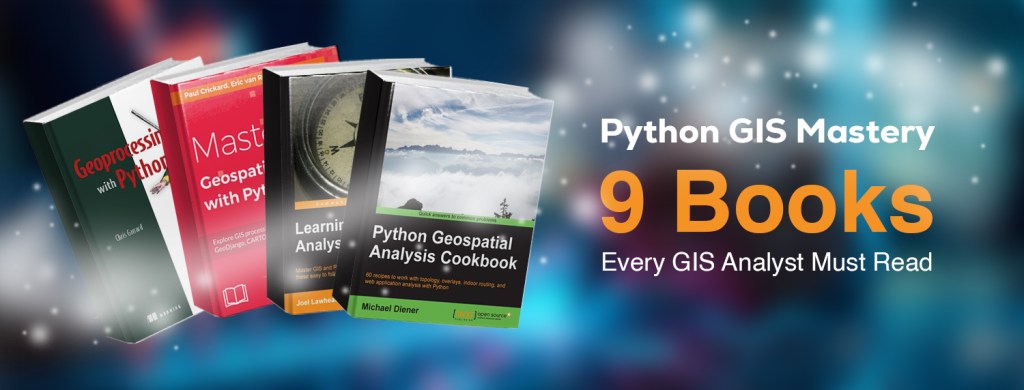
Python GIS Mastery – nine Books Every GIS Analyst Must Read

Advertisements

Geospatial data is no longer limited to maps and traditional GIS systems. Today, Python provides a bridge connecting GIS expertise with the power of data science. Professionals who understand spatial data and can manipulate it programmatically are in high demand. The path from GIS to data science requires not just learning new Python libraries, but also understanding spatial thinking, analytics, and automation.

This article presents nine essential books that will strengthen your Python geospatial skills and guide you in becoming a full-fledged GIS data scientist. Each book is carefully selected to cover theory, practical exercises, automation, and advanced spatial analysis, giving you a clear roadmap to excel in GIS with Python.

This book is perfect for practitioners looking for a hands-on approach. It offers a variety of practical recipes that cover data formats, shapefiles, raster data, coordinate reference systems, and common spatial operations. Each chapter focuses on solving real-world GIS problems while teaching Python techniques. You will learn how to read, process, and analyze spatial datasets, automate repetitive tasks, and visualize results using popular libraries like Geopandas and Matplotlib. The step-by-step approach allows GIS analysts transitioning from desktop software to gain confidence in coding efficiently while seeing immediate results. This makes it an ideal starting point for anyone wanting to build a strong foundation in Python geospatial analysis.

This book is a comprehensive guide for beginners and intermediate GIS professionals. It starts by explaining the basic principles of Geographic Information Systems, including projections, coordinate systems, and spatial data types. Then, it introduces Python programming for spatial analysis. You will explore automation of GIS tasks using libraries like Geopandas, Rasterio, Shapely, and Fiona. The book provides exercises to manipulate vector and raster datasets, perform spatial joins, and create maps programmatically. The clear connection between GIS theory and Python implementation helps build a solid understanding for anyone aiming to automate GIS workflows and prepare for data science applications in spatial contexts.

This advanced book is for those who already understand the basics of Python GIS. It delves into network analysis, spatial databases, and the development of web-based geospatial applications using Flask and Leaflet. You will learn to integrate Python scripts with PostGIS databases, perform advanced spatial queries, and develop interactive spatial dashboards. The book emphasizes combining Python programming skills with GIS knowledge to tackle complex problems in transportation, urban planning, and environmental modeling. It encourages readers to think like spatial data scientists, moving from simple map creation to data-driven decision making using Python as the main tool.

Focused on automation, this book shows how to streamline GIS workflows both inside traditional desktop GIS environments and in open-source Python ecosystems. It explains ARCPY, OGR, Shapely, and Fiona in depth, teaching readers to automate repetitive tasks like geocoding, spatial joins, and map production. You will gain practical skills for cleaning and transforming large spatial datasets, preparing them for analysis or visualization. It is particularly useful for GIS professionals who want to reduce manual work and integrate Python into everyday GIS operations, saving time and increasing accuracy in projects.

This book combines spatial statistics with data science thinking. It moves beyond map creation to predictive modeling and data-driven insights using libraries like Pandas, Scikit Learn, and Geopandas. You will learn to calculate spatial autocorrelation, perform clustering and regression on geospatial datasets, and integrate spatial variables into machine learning models. It is ideal for GIS analysts who want to apply analytical methods to uncover patterns, trends, and relationships in spatial data, making it relevant for urban planning, environmental studies, and business analytics projects where Python provides an edge in processing and analysis.

Advertisements

Developed by university researchers, this open textbook is freely accessible and teaches automated workflows in GIS using Python. It covers reading, writing, and visualizing spatial data, performing basic and advanced analysis, and writing reusable scripts for reproducible research. You will learn best practices for structuring code, managing projects, and documenting workflows, which is essential for GIS professionals entering the data science world.

This newer release expands on her previous work by introducing advanced techniques like geocoding, clustering, and spatial machine learning. It brings together theory and applied projects that resemble real data science pipelines, making it an excellent progression once you have mastered the basics. You will learn to perform spatial clustering to detect hotspots, apply machine learning models to geospatial data, and integrate Python visualization tools to create interactive and informative maps. The book strengthens both analytical thinking and coding skills, giving GIS analysts practical experience to operate at the intersection of GIS and data science.

This book guides you through open-source GIS ecosystems like QGIS and PostGIS while integrating them with Python automation. It is designed for professionals who want to bridge desktop GIS experience with backend database-driven systems. You will learn to connect Python scripts with spatial databases, automate data imports and exports, perform spatial queries, and develop workflows that combine GIS tools with programmatic solutions, enhancing productivity and ensuring reproducibility in GIS projects.

One of the earliest yet still relevant references on building complete geospatial applications. It walks you from handling coordinates and projections to creating interactive maps and integrating them with web frameworks. You will learn how to develop end-to-end geospatial projects, acquire data, process it, visualize results, and deliver interactive mapping solutions. This book is ideal as a final step in your journey, consolidating Python skills and GIS knowledge to produce professional geospatial applications.

Moving from GIS to data science is more than learning new syntax. It is about changing how you think about data. Each of these ten books gives you not just tools, but ways of reasoning spatially, computationally, and statistically. By reading them and applying their lessons, you will transform from a map maker into a spatial data scientist capable of solving complex challenges with Python. The roadmap provided by these books ensures you grow from a GIS analyst to a Python-powered geospatial expert, ready to tackle any real-world spatial problem.

Advertisements

إتقان بايثون لنظم المعلومات الجغرافية: تسعة كتب أساسية يجب على كل محلل نظم معلومات جغرافية قراءتها

Advertisements

لم تعد البيانات الجغرافية المكانية مقتصرة على الخرائط وأنظمة المعلومات الجغرافية التقليدية، فاليوم تُوفر بايثون جسراً يربط بين خبرة نظم المعلومات الجغرافية وقوة علم البيانات، فهناك طلب كبير على المتخصصين الذين يفهمون البيانات المكانية ويستطيعون معالجتها برمجياً، إذ لا يتطلب الانتقال من نظم المعلومات الجغرافية إلى علم البيانات مجرد تعلم مكتبات بايثون جديدة بل يتطلب أيضاً فهم التفكير المكاني والتحليلات والأتمتة

تقدم هذه المقالة تسعة كتب أساسية تُعزز مهاراتك الجغرافية المكانية في بايثون وتُرشدك لتصبح عالم بيانات متخصصاً في نظم المعلومات الجغرافية، فقد تم اختيار كل كتاب بعناية ليغطي الجوانب النظرية والتمارين العملية والأتمتة والتحليل المكاني المتقدم مما يمنحك خارطة طريق واضحة للتفوق في نظم المعلومات الجغرافية باستخدام بايثون

هذا الكتاب مثالي للمتخصصين الذين يبحثون عن نهج عملي، إذ يقدم هذا الكتاب مجموعة متنوعة من الوصفات العملية التي تغطي تنسيقات البيانات وملفات الأشكال والبيانات النقطية وأنظمة الإحداثيات المرجعية والعمليات المكانية الشائعة، بحيث يركز كل فصل على حل مشاكل نظم المعلومات الجغرافية الواقعية مع تعليم تقنيات بايثون، فيه ستتعلم كيفية قراءة ومعالجة وتحليل مجموعات البيانات المكانية وأتمتة المهام المتكررة

Matplotlibو Geopandas وتصور النتائج باستخدام مكتبات شائعة مثل

إذ يتيح هذا النهج التدريجي لمحللي نظم المعلومات الجغرافية الذين ينتقلون من برامج سطح المكتب اكتساب الثقة في البرمجة بكفاءة مع رؤية نتائج فورية وهذا ما يجعله نقطة انطلاق مثالية لأي شخص يرغب في بناء أساس متين في التحليل الجغرافي المكاني باستخدام بايثون

يُعد هذا الكتاب دليلاً شاملاً للمبتدئين ومحترفي نظم المعلومات الجغرافية ذوي الخبرة المتوسطة. يبدأ الكتاب بشرح المبادئ الأساسية لنظم المعلومات الجغرافية، بما في ذلك الإسقاطات، وأنظمة الإحداثيات، وأنواع البيانات المكانية. ثم يُقدم برمجة بايثون للتحليل المكاني

(GIS) ستستكشف أتمتة مهام نظم المعلومات الجغرافية

Fiona و Shapely و Rasterio و Geopandas باستخدام مكتبات مثل

يوفر الكتاب تمارين للتعامل مع مجموعات البيانات المتجهة والنقطية وإجراء عمليات الربط المكاني وإنشاء الخرائط برمجياً، بحيث يساعد الارتباط الواضح بين نظرية نظم المعلومات الجغرافية وتطبيقات بايثون على بناء فهم متين لأي شخص يسعى إلى أتمتة سير عمل نظم المعلومات الجغرافية والتحضير لتطبيقات علوم البيانات في السياقات المكاني

هذا الكتاب المتقدم مُصمم لمن يفهمون أساسيات بايثون لنظم المعلومات الجغرافية، إذ يتعمق الكتاب في تحليل الشبكات وقواعد البيانات المكانية

Flask و Leaflet وتطوير تطبيقات جغرافية مكانية على الويب باستخدام

PostGIS ستتعلم دمج نصوص بايثون مع قواعد بيانات

وإجراء استعلامات مكانية متقدمة وتطوير لوحات معلومات مكانية تفاعلية، بحيث يُركز الكتاب على الجمع بين مهارات برمجة بايثون ومعرفة نظم المعلومات الجغرافية لمعالجة المشكلات المعقدة في مجالات النقل والتخطيط الحضري والنمذجة البيئية، وبناءً على ذلك يُشجع هذا الكتاب القراء على التفكير كعلماء بيانات مكانية والانتقال من إنشاء الخرائط البسيطة إلى اتخاذ قرارات قائمة على البيانات باستخدام بايثون كأداة رئيسية

يُركز هذا الكتاب على الأتمتة

GIS ويُوضح كيفية تبسيط سير عمل نظم المعلومات الجغرافية

داخل بيئات نظم المعلومات الجغرافية المكتبية التقليدية وفي أنظمة بايثون مفتوحة المصدر

بعمق ARCPY و OGR و Shapely و Fiona يشرح الكتاب

ويُعلّم القراء كيفية أتمتة المهام المتكررة مثل الترميز الجغرافي والوصلات المكانية وإنتاج الخرائط، ستكتسب مهارات عملية لتنظيف وتحويل مجموعات البيانات المكانية الكبيرة وإعدادها للتحليل أو التصور، ويُعد هذا الكتاب مفيداً بشكل خاص لمحترفي نظم المعلومات الجغرافية الذين يرغبون في تقليل العمل اليدوي ودمج بايثون في عمليات نظم المعلومات الجغرافية اليومية مما يوفر الوقت ويزيد من دقة المشاريع

Advertisements

يجمع هذا الكتاب بين الإحصاءات المكانية والتفكير في علم البيانات، إذ يتجاوز هذا البرنامج إنشاء الخرائط ليصل إلى النمذجة التنبؤية والرؤى المستندة إلى البيانات

Pandas و Scikit Learn و Geopandas باستخدام مكتبات مثل

ستتعلم كيفية حساب الارتباط التلقائي المكاني وإجراء التجميع والانحدار على مجموعات البيانات الجغرافية المكانية ودمج المتغيرات المكانية في نماذج التعلم الآلي، وهو مثالي لمحللي نظم المعلومات الجغرافية الراغبين في تطبيق أساليب تحليلية لاكتشاف الأنماط والاتجاهات والعلاقات في البيانات المكانية مما يجعله مناسباً لمشاريع التخطيط الحضري والدراسات البيئية وتحليلات الأعمال حيث توفر بايثون ميزة في المعالجة والتحليل

هذا الكتاب المفتوح الذي طُوّر من قِبل باحثين جامعيين متاح مجاناً ويُدرّس سير العمل الآلي في نظم المعلومات الجغرافية باستخدام بايثون، إذ يُغطي الكتاب قراءة البيانات المكانية وكتابتها وتصورها وإجراء تحليلات أساسية ومتقدمة وكتابة نصوص برمجية قابلة لإعادة الاستخدام لأبحاث قابلة للتكرار، ستتعلم أفضل الممارسات لهيكلة الأكواد البرمجية وإدارة المشاريع وتوثيق سير العمل وهو أمر أساسي لمحترفي نظم المعلومات الجغرافية الذين يدخلون عالم علوم البيانات

يُوسّع هذا الإصدار الجديد نطاق أعمالها السابقة من خلال تقديم تقنيات متقدمة مثل الترميز الجغرافي والتجميع والتعلم الآلي المكاني، يجمع الكتاب بين النظرية والمشاريع التطبيقية التي تُحاكي مسارات علم البيانات الحقيقية مما يجعله تقدماً ممتازاً بمجرد إتقان الأساسيات. ستتعلم كيفية إجراء التجميع المكاني لاكتشاف النقاط الساخنة وتطبيق نماذج التعلم الآلي على البيانات الجغرافية المكانية ودمج أدوات تصور بايثون لإنشاء خرائط تفاعلية وغنية بالمعلومات، يُعزز الكتاب مهارات التفكير التحليلي والبرمجة مما يمنح محللي نظم المعلومات الجغرافية خبرة عملية للعمل في تقاطع نظم المعلومات الجغرافية وعلوم البيانات

يرشدك هذا الكتاب عبر أنظمة نظم المعلومات الجغرافية

مع دمجها مع أتمتة بايثون QGIS و PostGIS مفتوحة المصدر مثل

صُمم هذا الكتاب للمحترفين الذين يرغبون في ربط خبرة أنظمة المعلومات الجغرافية المكتبية بأنظمة تعتمد على قواعد البيانات الخلفية، ستتعلم كيفية ربط نصوص بايثون بقواعد البيانات المكانية وأتمتة عمليات استيراد وتصدير البيانات وإجراء الاستعلامات المكانية وتطوير سير عمل تجمع بين أدوات نظم المعلومات الجغرافية والحلول البرمجية مما يعزز الإنتاجية ويضمن إمكانية التكرار في مشاريع نظم المعلومات الجغرافية

يُعد هذا الكتاب من أقدم المراجع وأكثرها أهمية في بناء تطبيقات جغرافية مكانية متكاملة ويرشدك من التعامل مع الإحداثيات والإسقاطات إلى إنشاء خرائط تفاعلية ودمجها مع أطر عمل الويب. ستتعلم كيفية تطوير مشاريع جغرافية مكانية شاملة وجمع البيانات ومعالجتها وتصور النتائج وتقديم حلول خرائط تفاعلية. يُعد هذا الكتاب مثالياً كخطوة أخيرة في رحلتك حيث يجمع بين مهارات بايثون ومعرفتك بنظم المعلومات الجغرافية لإنتاج تطبيقات جغرافية مكانية احترافية

الانتقال من نظم المعلومات الجغرافية إلى علم البيانات يتجاوز مجرد تعلم قواعد لغوية جديدة، بل يتعلق بتغيير طريقة تفكيرك في البيانات، فكل كتاب من هذه الكتب العشرة لا يمنحك أدوات فحسب بل طرقاً للتفكير مكانياً وحسابياً وإحصائياً، وبقراءتها وتطبيق دروسها ستتحول من مصمم خرائط إلى عالم بيانات مكانية قادر على حل التحديات المعقدة باستخدام بايثون، تضمن لك خريطة الطريق التي تقدمها هذه الكتب التطور من محلل نظم معلومات جغرافية إلى خبير جغرافي مكاني معتمد على بايثون جاهزاً لمعالجة أي مشكلة مكانية واقعية.

Advertisements

Data Governance for Small Businesses: Turning Information into an Asset

By Virginia Cooper

Advertisements

In today’s data-driven economy, even small businesses are becoming information ecosystems. Customer lists, sales metrics, and supplier data are no longer just operational details—they’re strategic assets that demand governance. Data governance ensures that data is accurate, secure, accessible, and used responsibly. Without it, businesses risk inefficiencies, compliance issues, and loss of customer trust.

  • Data governance = policies + processes that ensure your data is trustworthy and usable.
  • It protects small businesses from data breaches, regulatory fines, and decision errors.
  • Start simple: define who owns the data, how it’s collected, where it’s stored, and how it’s used.
  • Adopt digital tools and frameworks that automate compliance and security checks.
  • Continuous monitoring and employee training make governance sustainable.

Good governance transforms raw data into actionable intelligence. For small businesses, it’s a survival strategy—not a luxury.

  • Improved decision-making: Reliable data fuels accurate analytics and forecasts.
  • Regulatory compliance: Ensures adherence to privacy laws like GDPR and CCPA.
  • Operational efficiency: Reduces duplication and streamlines workflows.
  • Customer trust: Protects personal information and reinforces brand credibility.
  • Business continuity: Supports risk management and disaster recovery efforts.

Consider this option: small businesses in regulated industries can explore cybersecurity degree programs online to deepen internal knowledge of data protection frameworks.

Data governance isn’t only about compliance—it’s about creating trust frameworks between a business and its stakeholders.
 By implementing robust data controls, even micro-enterprises can operate with the same rigor as large corporations. Consider aligning governance with standards like ISO 27001 or adopting cloud-native tools from providers such as Microsoft Azure Security Center.

Small businesses that master governance early often outperform competitors when scaling, since they can integrate new data sources without chaos or compliance gaps.

PillarDescriptionPractical Example
AccountabilityAssign clear data ownership and responsibilities.The finance manager oversees all transaction data.
IntegrityMaintain accurate and consistent data records.Use validation rules in CRM tools to prevent errors.
SecurityProtect data from unauthorized access.Implement two-factor authentication and encrypted backups.
ComplianceAlign data practices with legal and ethical standards.Ensure opt-in consent for marketing emails.
  1. Assess Current Data Landscape
    • Identify what data exists, where it resides, and how it’s used.
    • Use a simple audit checklist.
  2. Create a Governance Policy
    • Document rules for collection, storage, and sharing.
    • Define roles and escalation paths.
  3. Select the Right Tools
  4. Train Your Team
    • Educate employees about privacy, phishing, and data handling.
    • Encourage reporting of data anomalies.
  5. Monitor, Audit, and Improve
    • Review governance effectiveness quarterly.
    • Automate alerts for anomalies using tools like Splunk Security Cloud.
Advertisements
  • Defined data owners and custodians
  • Regular backup and recovery testing
  • Privacy compliance reviewed annually
  • Multi-factor authentication implemented
  • Employee training conducted quarterly
  • Documented breach response plan
  • Vendor risk assessments completed

Use this checklist quarterly to evaluate your company’s data maturity.

Q1: What is the biggest data governance mistake small businesses make?
A: Treating governance as an IT issue rather than a business-wide responsibility.

Q2: How often should governance policies be reviewed?
A: At least annually, or after major system or regulation changes.

Q3: Do I need expensive software for governance?
A: Not necessarily. Even simple platforms like Google Workspace Admin Console offer access controls and audit logs.

Q4: Who should lead the governance initiative?
A: Ideally, a cross-functional team with representation from management, IT, and operations.

  • Data Governance: Framework for managing data’s availability, usability, integrity, and security.
  • Metadata: Data about data—used to track origin, context, and usage.
  • Compliance: Adherence to regulations governing data privacy and protection.
  • Data Steward: Person responsible for maintaining data quality and policy compliance.
  • Access Control: Mechanism restricting data usage to authorized individuals.

Modern small businesses benefit from automation platforms that monitor compliance in real-time. Tools such as OneTrust, Vanta, and Drata simplify SOC 2 and GDPR readiness, freeing owners to focus on growth. These systems integrate seamlessly with CRMs, HR systems, and accounting tools, creating continuous visibility into your data environment.


Data governance is no longer optional. For small businesses, it’s the foundation of credibility, continuity, and competitive advantage. By starting small—assigning ownership, defining clear policies, and adopting security tools—you build the scaffolding for long-term data integrity.

When your data is well-governed, your business decisions become more confident, your customers more loyal, and your operations more resilient.

Unlock the power of data with Data World Consulting Group and explore our expert solutions and educational resources to elevate your business and learning journey today!

by Virginia Cooper

Advertisements

حوكمة البيانات للشركات الصغيرة: تحويل المعلومات إلى أصول

Advertisements

في اقتصاد اليوم القائم على البيانات أصبحت حتى الشركات الصغيرة تُصبح أنظمةً بيئيةً للمعلومات، لم تعد قوائم العملاء ومقاييس المبيعات وبيانات الموردين مجرد تفاصيل تشغيلية بل أصبحت أصولاً استراتيجية تتطلب حوكمة، تضمن حوكمة البيانات دقة البيانات وأمانها وسهولة الوصول إليها واستخدامها بمسؤولية، وبدونها تُواجه الشركات مخاطر انعدام الكفاءة ومشاكل الامتثال وفقدان ثقة العملاء

حوكمة البيانات = سياسات + عمليات تضمن موثوقية بياناتك وقابليتها للاستخدام *

تحمي الشركات الصغيرة من خروقات البيانات والغرامات التنظيمية وأخطاء اتخاذ القرارات *

ابدأ ببساطة: حدد من يملك البيانات وكيف تُجمع وأين تُخزن وكيف تُستخدم *

اعتمد أدوات وأطر عمل رقمية تُؤتمت عمليات التحقق من الامتثال والأمان *

المراقبة المستمرة وتدريب الموظفين يجعلان الحوكمة مستدامة *

تحوّل الحوكمة الرشيدة البيانات الخام إلى معلومات استخباراتية عملية، فبالنسبة للشركات الصغيرة إنها استراتيجية بقاء وليست رفاهية

تحسين عملية اتخاذ القرارات: تُعزز البيانات الموثوقة دقة التحليلات والتوقعات *

الامتثال للوائح التنظيمية: يضمن الالتزام بقوانين الخصوصية *

GDPR مثل اللائحة العامة لحماية البيانات

CCPA وقانون خصوصية المستهلك في كاليفورنيا

الكفاءة التشغيلية: تُقلل من التكرار وتُبسط سير العمل *

ثقة العملاء: تحمي المعلومات الشخصية وتعزز مصداقية العلامة التجارية *

استمرارية الأعمال: تدعم جهود إدارة المخاطر والتعافي من الكوارث *

فكّر في هذا الخيار: يمكن للشركات الصغيرة في القطاعات الخاضعة للتنظيم استكشاف برامج شهادات الأمن السيبراني عبر الإنترنت لتعميق معرفتها الداخلية بأطر حماية البيانات

لا تقتصر حوكمة البيانات على الامتثال فحسب بل تشمل أيضاً بناء أطر ثقة بين الشركة وأصحاب المصلحة من خلال تطبيق ضوابط بيانات قوية يمكن حتى للشركات الصغيرة جداً العمل بنفس دقة الشركات الكبيرة

ISO 27001 فكّر في مواءمة الحوكمة مع معايير مثل

أو اعتماد أدوات سحابية أصلية من مزودين

Microsoft Azure Security Center مثل

الشركات الصغيرة التي تتقن الحوكمة مبكراً غالباً ما تتفوق على المنافسين عند التوسع، نظراً لقدرتها على دمج مصادر بيانات جديدة دون فوضى أو ثغرات في الامتثال

مثال عمليالوصفالركيزة
يشرف مدير المالية على جميع بيانات المعاملاتتحديد ملكية البيانات ومسؤولياتها بوضوحالمساءلة
استخدم قواعد التحقق في أدوات إدارة علاقات العملاء
لتجنب الأخطاء (CRM)
الاحتفاظ بسجلات بيانات دقيقة ومتسقةالنزاهة
طبّق المصادقة الثنائية والنسخ الاحتياطية المشفرةحماية البيانات من الوصول غير المصرح بهالأمن
تأكد من الموافقة على رسائل البريد الإلكتروني التسويقيةمواءمة ممارسات البيانات مع المعايير القانونية والأخلاقيةالامتثال

تحديد البيانات الموجودة ومكانها وكيفية استخدامها ●

استخدام قائمة تدقيق بسيطة ●

توثيق قواعد التجميع والتخزين والمشاركة ●

تحديد الأدوار ومسارات التصعيد ●

اختيار أنظمة مزودة بمسارات تدقيق وإمكانية وصول قائمة على الأدوار ●

Asana Business أو Trello Enterprise أدوات مثل ●

تساعد في تنظيم سير العمل

تثقيف الموظفين حول الخصوصية والتصيد الاحتيالي ومعالجة البيانات ●

تشجيع الإبلاغ عن أي خلل في البيانات ●

مراجعة فعالية الحوكمة ربع سنوياً ●

أتمتة التنبيهات الخاصة بالخلل ●

Splunk Security Cloud باستخدام أدوات مثل

Advertisements

تحديد مالكي البيانات وأمنائها ●

اختبارات النسخ الاحتياطي والاسترداد الدورية ●

مراجعة الامتثال للخصوصية سنوياً ●

تطبيق المصادقة متعددة العوامل ●

تدريب الموظفين ربع سنوياً ●

خطة موثقة للاستجابة للاختراق ●

إكمال تقييمات مخاطر الموردين ●

استخدم قائمة المراجعة هذه ربع سنوياً لتقييم نضج بيانات شركتك 

س1: ما هو أكبر خطأ ترتكبه الشركات الصغيرة في مجال حوكمة البيانات؟

ج: التعامل مع الحوكمة كمسألة تتعلق بتكنولوجيا المعلومات بدلاً من كونها مسؤولية على مستوى الشركة

س2: ما مدى تكرار مراجعة سياسات الحوكمة؟

ج: سنوياً على الأقل، أو بعد تغييرات كبيرة في النظام أو اللوائح

س3: هل أحتاج إلى برامج باهظة الثمن للحوكمة؟ ج: ليس بالضرورة، حتى المنصات البسيطة

Google Workspace مثل وحدة تحكم مشرف

توفر عناصر تحكم في الوصول وسجلات تدقيق

س4: من ينبغي أن يقود مبادرة الحوكمة؟

ج: من الأفضل أن يكون هناك فريق متعدد الوظائف يضم ممثلين من الإدارة وتكنولوجيا المعلومات والعمليات

البيانات الوصفية: بيانات حول البيانات تُستخدم لتتبع مصدرها وسياقها واستخدامها ●

الامتثال: الالتزام باللوائح التي تحكم خصوصية البيانات وحمايتها ●

مسؤول البيانات: الشخص المسؤول عن الحفاظ على جودة البيانات والامتثال للسياسات ●

التحكم في الوصول: آلية تقصر استخدام البيانات على الأفراد المصرح لهم ●

تستفيد الشركات الصغيرة الحديثة من منصات الأتمتة التي تراقب الامتثال آنياً

OneTrust و Vanta و Drata بحيث تُبسِّط أدوات مثل

SOC 2 عملية الاستعداد لمعايير

GDPR واللائحة العامة لحماية البيانات

مما يُتيح لأصحاب الأعمال التركيز على النمو، بحيث تتكامل هذه الأنظمة بسلاسة

CRM مع أنظمة إدارة علاقات العملاء

وأنظمة الموارد البشرية وأدوات المحاسبة مما يُتيح رؤيةً مُستمرةً لبيئة بياناتك


لم تعد حوكمة البيانات خياراً، فبالنسبة للشركات الصغيرة هي أساس المصداقية والاستمرارية والميزة التنافسية، وعليه فالبدء على نطاق صغير – بتحديد الملكية وتحديد سياسات واضحة واعتماد أدوات أمنية تُرسي دعائم سلامة البيانات على المدى الطويل

عندما تُدار بياناتك جيداً تصبح قرارات عملك أكثر ثقة وعملاؤك أكثر ولاءً وعملياتك أكثر مرونة

Data World Consulting Group اكتشف قوة البيانات مع

! واستكشف حلولنا المتخصصة ومواردنا التعليمية للارتقاء بأعمالك ورحلتك التعليمية اليوم

by Virginia Cooper

Advertisements

What Every Data Scientist Must Know About Statistical Data Types

Advertisements

Every great data science project begins with understanding one simple truth — not all data is created equal. Before diving into algorithms, visualizations, or predictions, you must know what kind of data you are working with. Misunderstanding data types can lead to incorrect models, wrong insights, and hours of confusion. In this article, we will explore the types of data in statistics and how each plays a critical role in the world of data science.

All data in statistics can be classified into two main types — qualitative (categorical) and quantitative (numerical).

This type represents qualities, categories, or labels rather than numbers. It answers what kind rather than how much. Examples include gender, color, type of car, or country of origin.

In data science, categorical data helps in classification tasks like predicting whether an email is spam or not, or identifying the genre of a song based on lyrics.

There are two subtypes:

  • Nominal Data: No order or hierarchy between categories. Example: colors (red, blue, green).
  • Ordinal Data: Has a meaningful order, but the intervals between categories are not equal. Example: satisfaction levels (poor, fair, good, excellent).

This type deals with numbers and measurable quantities. It answers how much or how many. Quantitative data powers regression models, trend analysis, and time series forecasting.

Subtypes include:

  • Discrete Data: Countable values, often whole numbers. Example: number of students in a class.
  • Continuous Data: Infinite possible values within a range. Example: height, weight, or temperature.

Beyond basic classification, data can also be described based on its measurement scale, which defines how we can analyze and interpret it statistically.

Purely categorical with no numerical meaning. Used for grouping or labeling. Example: blood type or eye color.
Data science use: Encoding these variables (like one-hot encoding) for machine learning models.

Ordered categories, but without measurable difference between ranks. Example: star ratings on a product (1–5 stars).
Data science use: Great for survey analysis or ranking models, often converted to integers for algorithms.

Numerical data with equal intervals, but no true zero point. Example: temperature in Celsius or Fahrenheit.
Data science use: Common in time series or sensor data where the zero point is arbitrary.

The highest level of data measurement, with equal intervals and a true zero point. Example: weight, distance, or income.
Data science use: Used in predictive modeling, regression, and deep learning tasks requiring exact numeric relationships.

Advertisements

Understanding data types is more than academic theory — it directly shapes every decision you make as a data scientist:

  • Data Cleaning: Knowing whether to impute missing values with mean (for continuous) or mode (for categorical).
  • Feature Engineering: Deciding how to encode or transform variables for algorithms.
  • Visualization: Choosing appropriate plots — bar charts for categorical, histograms for continuous.
  • Model Selection: Some algorithms handle specific data types better (e.g., decision trees handle categorical data naturally).

Without correctly identifying your data types, even the most advanced model will mislead you.

Imagine you are analyzing a dataset about customer purchases for an e-commerce company. Here’s how different data types appear:

VariableData TypeExampleUse Case
Customer IDNominalC1023Identifier
GenderNominalFemaleSegmentation
Age GroupOrdinal18–25, 26–35Market analysis
Purchase AmountRatio120.50Revenue modeling
Date of PurchaseInterval2025-11-05Trend analysis
Items BoughtDiscrete3Purchase frequency

By correctly classifying these data types, you can efficiently prepare data for machine learning models, visualize insights properly, and make reliable business decisions.

In the age of AI and automation, the human skill of understanding data remains irreplaceable. Knowing whether your variable is nominal or ratio could be the difference between success and misleading outcomes. As a data scientist, always start with data classification before analysis — it’s the quiet foundation behind every powerful insight and accurate prediction.

Advertisements

أنواع البيانات الإحصائية التي يجب على عالِم بيانات أن يعرفها

Advertisements

يبدأ كل مشروع علم بيانات عظيم بفهم حقيقة بسيطة واحدة – ليست كل البيانات متساوية، فقبل الخوض في الخوارزميات أو التصورات أو التنبؤات يجب أن تعرف نوع البيانات التي تعمل عليها، إذ قد يؤدي سوء فهم أنواع البيانات إلى نماذج غير صحيحة ورؤى خاطئة وساعات من الارتباك

وفي هذه المقالة سنستكشف أنواع البيانات في الإحصاء وكيف يلعب كل منها دوراً حاسماً في عالم علم البيانات

: يمكن تصنيف جميع البيانات في الإحصاء إلى نوعين رئيسيين

البيانات النوعية (الفئوية) والكمية (العددية)

يمثل هذا النوع الصفات أو الفئات أو التسميات بدلاً من الأرقام، فهو يُجيب على نوع البيانات بدلاً من كميتها، ومن الأمثلة على ذلك الجنس أو اللون أو نوع السيارة أو بلد المنشأ، ففي علم البيانات تُساعد البيانات التصنيفية في مهام التصنيف مثل التنبؤ بما إذا كان البريد الإلكتروني بريداً عشوائياً أم لا أو تحديد نوع الأغنية بناءً على كلماتها

:هناك نوعان فرعيان

البيانات الاسمية: لا يوجد ترتيب أو تسلسل هرمي بين الفئات، مثال: الألوان (أحمر، أزرق، أخضر)

البيانات الترتيبية: لها ترتيب ذو معنى لكن الفواصل بين الفئات غير متساوية ومثال على ذلك: مستويات الرضا (ضعيف – مقبول – جيد – ممتاز )

يتعامل هذا النوع مع الأرقام والكميات القابلة للقياس

how many أو how much إذ يُجيب على سؤال

تُعزز البيانات الكمية نماذج الانحدار وتحليل الاتجاهات والتنبؤ بالسلاسل الزمنية

:تشمل الأنواع الفرعية

البيانات المنفصلة: قيم قابلة للعد وغالباً ما تكون أعداداً صحيحة، مثال: عدد الطلاب في الفصل •

البيانات المتصلة: قيم محتملة لا نهائية ضمن نطاق، مثال: الطول – الوزن – أو درجة الحرارة • 

Advertisements

بالإضافة إلى التصنيف الأساسي يمكن وصف البيانات أيضاً بناءً على مقياس قياسها والذي يُحدد كيفية تحليلها وتفسيرها إحصائياً

تصنيفي بحت بدون معنى رقمي، إذ يُستخدم للتجميع أو الوسم، مثال: فصيلة الدم أو لون العين

استخدامات علم البيانات: ترميز هذه المتغيرات (مثل الترميز الساخن) لنماذج التعلم الآلي

فئات مرتبة ولكن بدون فرق قابل للقياس بين الرتب، مثال: تقييمات النجوم لمنتج (من 1 إلى 5 نجوم)

استخدامات علم البيانات: رائعة لتحليل الاستبيانات أو نماذج التصنيف وغالباً ما تُحوّل إلى أعداد صحيحة للخوارزميات

بيانات رقمية ذات فترات زمنية متساوية ولكن بدون نقطة صفر حقيقية، مثال: درجة الحرارة بالدرجة المئوية أو الفهرنهايت

استخدامات علم البيانات: شائعة في السلاسل الزمنية أو بيانات الاستشعار حيث تكون نقطة الصفر عشوائية

أعلى مستوى لقياس البيانات بفترات زمنية متساوية ونقطة صفر حقيقية، مثال: الوزن – المسافة – الدخل

استخدامات علم البيانات: تُستخدم في النمذجة التنبؤية والانحدار ومهام التعلم العميق التي تتطلب علاقات رقمية دقيقة

فهم أنواع البيانات يتجاوز مجرد نظرية أكاديمية فهو يُؤثر بشكل مباشر على كل قرار تتخذه كعالم بيانات

تنظيف البيانات: معرفة ما إذا كان يجب إدخال القيم المفقودة باستخدام المتوسط ​​الحسابي (للبيانات المستمرة) أو المنوال (للبيانات الفئوية)

هندسة الميزات: تحديد كيفية ترميز أو تحويل المتغيرات للخوارزميات

التصور: اختيار المخططات البيانية المناسبة – المخططات الشريطية للبيانات الفئوية والمدرجات التكرارية للبيانات المستمرة

اختيار النموذج: تتعامل بعض الخوارزميات مع أنواع بيانات محددة بشكل أفضل (على سبيل المثال: تتعامل أشجار القرار مع البيانات الفئوية بشكل طبيعي) بدون تحديد أنواع بياناتك بشكل صحيح حتى أكثر النماذج تقدماً ستُضللك

تخيل أنك تُحلل مجموعة بيانات حول مشتريات العملاء لشركة تجارة إلكترونية

:إليك كيفية ظهور أنواع البيانات المختلفة

VariableData TypeExampleUse Case
Customer IDNominalC1023Identifier
GenderNominalFemaleSegmentation
Age GroupOrdinal18–25, 26–35Market analysis
Purchase AmountRatio120.50Revenue modeling
Date of PurchaseInterval2025-11-05Trend analysis
Items BoughtDiscrete3Purchase frequency

من خلال التصنيف الصحيح لهذه الأنواع من البيانات يمكنك إعداد البيانات بكفاءة لنماذج التعلم الآلي وتصوّر الرؤى بشكل صحيح واتخاذ قرارات عمل موثوقة

في عصر الذكاء الاصطناعي والأتمتة لا تزال مهارة فهم البيانات البشرية لا غنى عنها، فمعرفة ما إذا كان متغيرك اسمياً أم نسبياً قد يكون الفارق بين النجاح والنتائج المضللة، إذاً بصفتك عالم بيانات ابدأ دائماً بتصنيف البيانات قبل التحليل فهو الأساس الرصين لكل رؤية ثاقبة وتنبؤ دقيق

Advertisements