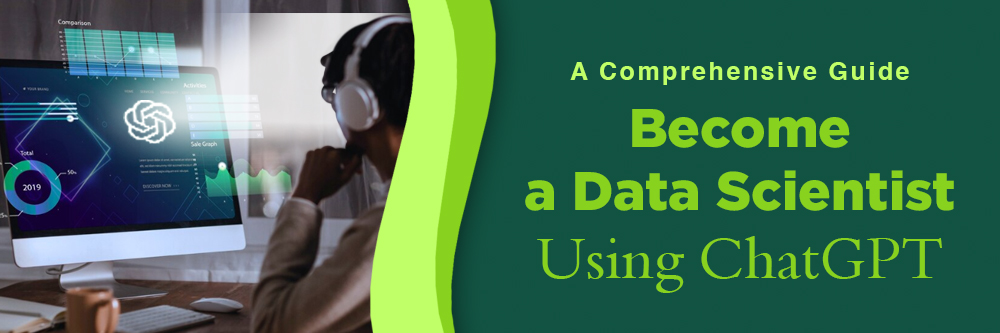
Become a Data Scientist Using ChatGPT: A Comprehensive Guide

Advertisements

In today’s data-driven world, the demand for data scientists has surged. Companies across industries seek professionals who can analyze vast amounts of data to extract meaningful insights, drive decision-making, and foster innovation. With the advent of advanced tools like ChatGPT, aspiring data scientists can harness artificial intelligence to accelerate their learning journey. This comprehensive guide explores how to become a data scientist using ChatGPT, outlining essential skills, resources, and practical steps to achieve success in this field.

Before embarking on the path to becoming a data scientist, it’s crucial to understand the role’s core responsibilities. Data scientists combine statistical analysis, programming, and domain expertise to interpret complex data sets. Their work involves data collection, cleaning, visualization, and applying machine learning algorithms to develop predictive models. Strong communication skills are also essential, as data scientists must convey their findings to non-technical stakeholders.

To thrive as a data scientist, one must develop a blend of technical and soft skills:

  • Programming Languages: Proficiency in programming languages such as Python and R is fundamental for data manipulation and analysis. ChatGPT can assist by providing coding examples, explaining syntax, and troubleshooting common programming issues.
  • Statistical Analysis: Understanding statistical concepts and methodologies is crucial for interpreting data accurately. Using ChatGPT, learners can explore statistical theories, ask for clarifications, and practice problem-solving.
  • Data Visualization: Data scientists must be adept at visualizing data to communicate insights effectively. Tools like Matplotlib, Seaborn, or Tableau are essential. ChatGPT can recommend visualization techniques and help users understand how to implement them.
  • Machine Learning: Familiarity with machine learning algorithms, their applications, and limitations is vital. ChatGPT can explain various algorithms, guide users through the implementation process, and suggest resources for deeper learning.
  • Domain Knowledge: Having domain-specific knowledge allows data scientists to contextualize their findings. ChatGPT can assist users in researching specific industries, trends, and challenges.
Advertisements

To become a proficient data scientist, leveraging online resources is essential. Here’s how ChatGPT can enhance the learning experience:

  • Online Courses: Platforms like Coursera, edX, and Udacity offer specialized courses in data science. ChatGPT can help users choose courses based on their current skill levels and learning goals.
  • Books and Articles: Reading foundational texts such as “An Introduction to Statistical Learning” or “Python for Data Analysis” provides in-depth knowledge. ChatGPT can summarize concepts or discuss key points from these resources.
  • Interactive Learning: Websites like Kaggle offer hands-on data science projects. Users can ask ChatGPT for project ideas, guidance on data sets, and tips for competition participation.
  • Communities and Forums: Engaging with online communities, such as Stack Overflow or Reddit’s data science threads, is invaluable for networking and problem-solving. ChatGPT can help users navigate these platforms and formulate questions for discussions.

Gaining practical experience is crucial in the journey to becoming a data scientist. Here’s how to leverage ChatGPT for this purpose:

  • Personal Projects: Starting personal projects allows users to apply their skills and create a portfolio. ChatGPT can suggest project ideas based on interests and help users outline project plans.
  • Collaborative Work: Collaborating with peers on data science projects fosters teamwork and broadens perspectives. ChatGPT can assist in forming project groups and facilitating communication.
  • Internships and Job Opportunities: Seeking internships or entry-level positions provides real-world experience. ChatGPT can guide users on how to craft impactful resumes, prepare for interviews, and network effectively.

Data science is an ever-evolving field. Continuous learning is vital to stay current with the latest trends and technologies. ChatGPT can support users in various ways:

  • Stay Updated: Following industry news and advancements is essential. ChatGPT can summarize articles, suggest relevant blogs, and recommend thought leaders to follow.
  • Advanced Topics: Exploring advanced topics like deep learning, natural language processing, and big data analytics can set users apart. ChatGPT can recommend advanced courses and resources to dive deeper into these subjects.
  • Feedback and Improvement: Seeking feedback on projects and analyses is crucial for growth. ChatGPT can provide constructive feedback on data visualizations and models based on user inputs.

Becoming a data scientist is a rewarding journey filled with opportunities for growth and innovation. By harnessing the power of ChatGPT, aspiring data scientists can streamline their learning process, gain practical experience, and develop the skills necessary to excel in this dynamic field. With dedication, continuous learning, and the right resources, anyone can embark on a successful career in data science and contribute to the ever-expanding world of data-driven decision-making.

Advertisements

ChatGPT دليلك الشامل لتصبح عالِم بيانات باستخدام

Advertisements

في عالم اليوم الذي تحركه البيانات ارتفع الطلب على علماء البيانات بشكل كبير، إذ تبحث الشركات في مختلف الصناعات عن محترفين يمكنهم تحليل كميات هائلة من البيانات لاستخراج رؤى ذات مغزى ودفع عملية اتخاذ القرار وتعزيز الابتكار

ChatGPT مع ظهور أدوات متقدمة مثل

يمكن لعلماء البيانات الطموحين الاستفادة من الذكاء الاصطناعي لتسريع رحلة التعلم الخاصة بهم

ChatGPT يستكشف هذا الدليل الشامل كيفية أن تصبح عالم بيانات باستخدام

ويحدد المهارات الأساسية والموارد والخطوات العملية لتحقيق النجاح في هذا المجال

قبل الشروع في مسار التحول إلى عالم بيانات من الضروري فهم المسؤوليات الأساسية للدور يجمع علماء البيانات بين التحليل الإحصائي والبرمجة والخبرة في المجال لتفسير مجموعات البيانات المعقدة يتضمن عملهم جمع البيانات وتنظيفها وتصورها وتطبيق خوارزميات التعلم الآلي لتطوير نماذج تنبؤية، وتعد مهارات الاتصال القوية ضرورية أيضاً حيث يجب على علماء البيانات نقل نتائجهم إلى أصحاب المصلحة غير الفنيين

:لكي تنجح كعالم بيانات يجب عليك تطوير مزيج من المهارات التقنية والمرنة

Rلغات البرمجة: إتقان لغات البرمجة مثل بايثون و

أمر أساسي لمعالجة البيانات وتحليلها

من خلال توفير أمثلة الترميز ChatGPT إذ يمكن أن يساعد

وشرح بناء الجملة واستكشاف مشكلات البرمجة الشائعة وإصلاحها

التحليل الإحصائي: يعد فهم المفاهيم والمنهجيات الإحصائية أمراً بالغ الأهمية

ChatGPT لتفسير البيانات بدقة باستخدام

فيمكن للمتعلمين استكشاف النظريات الإحصائية وطلب التوضيحات وممارسة حل المشكلات

تصور البيانات: يجب أن يكون علماء البيانات بارعين في تصور البيانات للتواصل بشكل فعال

ضرورية Matplotlib أو Seaborn أو Tableau :وتعد الأدوات مثل

التوصية بتقنيات التصور ومساعدة المستخدمين على فهم كيفية تنفيذها ChatGPT ويمكن لـ

التعلم الآلي: يعد الإلمام بخوارزميات التعلم الآلي وتطبيقاتها وقيودها أمراً حيوياً

شرح خوارزميات مختلفة وتوجيه المستخدمين ChatGPT يمكن لـ

خلال عملية التنفيذ واقتراح موارد للتعلم العميق

معرفة المجال: إن امتلاك معرفة محددة بالمجال يسمح لعلماء البيانات بوضع نتائجهم في سياقها الصحيح

مساعدة المستخدمين في البحث ChatGPT فيمكن لـ

عن صناعات واتجاهات وتحديات محددة

Advertisements

لكي تصبح عالم بيانات ماهر فإن الاستفادة من الموارد عبر الإنترنت أمر ضروري

:تعزيز تجربة التعلم ChatGPT وإليك كيف يمكن لـ

:الدورات التدريبية عبر الإنترنت

دورات متخصصة في علم البيانات Coursera و edX و Udacity :تقدم منصات مثل

مساعدة المستخدمين في اختيار الدورات التدريبية ChatGPT ويمكن لـ

بناءً على مستويات مهاراتهم الحالية وأهداف التعلم

الكتب والمقالات: توفر قراءة النصوص الأساسية مثل “مقدمة إلى التعلم الإحصائي” أو “بايثون لتحليل البيانات” معرفة متعمقة

تلخيص المفاهيم أو مناقشة النقاط الرئيسية من هذه الموارد ChatGPT فيمكن لـ

مشاريع علمية عملية للبيانات Kaggle التعلم التفاعلي: تقدم مواقع الويب مثل

ChatGPT يمكن للمستخدمين أن يطلبوا من

أفكاراً للمشروعات وإرشادات حول مجموعات البيانات ونصائح للمشاركة في المنافسة

المجتمعات والمنتديات: يعد التفاعل مع المجتمعات عبر الإنترنت

 Stack Overflow أو Reddit’s data science threads مثل

أمراً لا يقدر بثمن للتواصل وحل المشكلات

المستخدمين ChatGPT ويمكن أن يساعد

في التنقل عبر هذه المنصات وصياغة الأسئلة للمناقشات

يعد اكتساب الخبرة العملية أمراً بالغ الأهمية في الرحلة إلى أن تصبح عالم بيانات

لهذا الغرض ChatGPT إليك كيفية الاستفادة من

المشاريع الشخصية: يتيح بدء المشاريع الشخصية للمستخدمين تطبيق مهاراتهم

اقتراح أفكار المشاريع ChatGPT وإنشاء محفظة يمكن لـ

بناءً على الاهتمامات ومساعدة المستخدمين في تحديد خطط المشروع

العمل التعاوني: يعزز التعاون مع الأقران في مشاريع علوم البيانات العمل الجماعي ويوسع آفاق العمل

المساعدة في تشكيل مجموعات المشاريع وتسهيل التواصل ChatGPT ويمكن لـ

التدريب وفرص العمل: يوفر البحث عن التدريب أو الوظائف المبتدئة خبرة في العالم الحقيقي

توجيه المستخدمين حول كيفية صياغة السيرة الذاتية ChatGPT يمكن لـ

المؤثرة والاستعداد للمقابلات والتواصل بشكل فعال

يعد علم البيانات مجالاً متطوراً باستمرار ويعد التعلم المستمر أمراً حيوياً لمواكبة أحدث الاتجاهات والتقنيات

: دعم المستخدمين بطرق مختلفة ChatGPT يمكن لـ

البقاء على اطلاع: يعد متابعة أخبار الصناعة والتطورات أمراً ضرورياً

تلخيص المقالات ChatGPT يمكن لـ

واقتراح المدونات ذات الصلة والتوصية بقادة الفكر لمتابعتهم

الموضوعات المتقدمة: يمكن أن يميز استكشاف الموضوعات المتقدمة مثل التعلم العميق ومعالجة اللغة الطبيعية وتحليلات البيانات الضخمة المستخدمين

التوصية بدورات وموارد متقدمة للتعمق في هذه الموضوعات ChatGPT ويمكن لـ

الملاحظات والتحسينات: يعد البحث عن الملاحظات حول المشاريع والتحليلات أمراً بالغ الأهمية للنمو

توفير ردود الفعل الفعّالة على تصورات البيانات ChatGPT ويمكن لـ

والنماذج القائمة على مدخلات المستخدم

إن التحول إلى عالم بيانات هو رحلة مجزية مليئة بفرص النمو والابتكار

يمكن لعلماء البيانات الطموحين ChatGPT فمن خلال الاستفادة من قوة

تبسيط عملية التعلم الخاصة بهم واكتساب الخبرة العملية وتطوير المهارات اللازمة للتفوق في هذا المجال الديناميكي، فمع التفاني والتعلم المستمر والموارد المناسبة يمكن لأي شخص الشروع في مهنة ناجحة في علم البيانات والمساهمة في عالم اتخاذ القرار القائم على البيانات المتوسع باستمرار


Advertisements

A Spotify Data Scientist’s Full Guide: 5 Steps Must-Do when Start Data Science Journy

Advertisements

Introduction

Spotify is among the world’s top streaming platforms, with data science playing a critical role in personalizing user experiences, optimizing recommendations, and driving business decisions. Spotify’s data scientists must analyze large datasets, recognize patterns, and draw meaningful insights. Here’s a five-step guide to the essential skills and processes involved in the role of a Spotify data scientist, including data gathering, data cleaning, exploratory analysis, model building, and visualization.

The first and most crucial step in any data science process is gathering relevant data. At Spotify, data scientists work with various data types such as user listening history, song metadata, and platform interactions. The data is collected from multiple sources including user interaction logs, music track metadata, and external APIs. Spotify data scientists use platforms like Hadoop and Spark to handle and store data efficiently due to its large volume and need for scalability.

Key Techniques and Tools

  • Hadoop and Spark: To handle massive data streams.
  • SQL: For querying databases and performing data extraction.
  • Python: For managing datasets and preliminary analysis.

Raw data is rarely ready for analysis right off the bat. Data cleaning is a crucial phase that involves filtering out incomplete, incorrect, or irrelevant data to ensure accuracy. For example, Spotify data scientists may remove duplicate songs, clean incomplete user profiles, or format timestamps.

Key Techniques and Tools

  • Python libraries (e.g., Pandas): For cleaning, filtering, and organizing data.
  • Regular Expressions (Regex): For text data cleaning.
  • Handling Missing Values: By techniques like interpolation or mean imputation.
Advertisements

EDA is essential for understanding the data’s structure and identifying any underlying trends. Spotify data scientists might analyze user behavior by examining listening habits, peak streaming times, or song genre preferences. This phase helps generate hypotheses and prepare the dataset for model building.

Key Techniques and Tools

  • Matplotlib and Seaborn: For creating visualizations like histograms and scatter plots.
  • Feature Engineering: Generating new variables that capture significant patterns in data.
  • Statistical Analysis: Using basic statistics to detect outliers and establish relationships.

The core of Spotify’s personalized recommendations lies in machine learning models that predict user preferences. Spotify data scientists utilize collaborative filtering, natural language processing (NLP), and neural networks to build recommendation systems. A/B testing is also often employed to evaluate different model configurations.

Key Techniques and Tools

  • Scikit-Learn and TensorFlow: For building machine learning models.
  • Collaborative Filtering: To find patterns in user preferences based on listening history.
  • NLP: For processing song lyrics and generating playlists that fit user tastes.

After building and fine-tuning models, data scientists at Spotify present their findings to various stakeholders. Visualization tools are crucial in making the results understandable and actionable. Spotify data scientists use dashboards and visual reports to display trends, model accuracy, and recommendations.

Key Techniques and Tools

  • Tableau and PowerBI: For interactive dashboards and reports.
  • Presentation Skills: To communicate findings effectively to non-technical audiences.
  • Visualization Techniques: Like heatmaps, line charts, and bar charts.

A Spotify data scientist’s role is both challenging and rewarding, with each of the five steps being integral to the entire data science workflow. Mastering each step helps data scientists provide Spotify users with personalized recommendations and the best possible experience. By developing skills in data gathering, cleaning, EDA, model building, and visualization, aspiring data scientists can make an impactful contribution to music streaming innovation at Spotify.

Advertisements

Spotify دليل كامل لعلماء البيانات في

خمس خطوات يجب القيام بها عند بدء رحلة علم البيانات

Advertisements

مقدمة

من بين أفضل منصات البث في العالم Spotify تعتبر

حيث يلعب علم البيانات دوراً حاسماً في تخصيص تجارب المستخدم وتحسين التوصيات ودفع قرارات العمل

تحليل مجموعات Spotify يجب على علماء البيانات في

البيانات الكبيرة والتعرف على الأنماط واستخلاص رؤى ذات مغزى

فيما يلي دليل من خمس خطوات للمهارات والعمليات الأساسية المشاركة

بما في ذلك جمع البيانات Spotify في دور عالم بيانات

وتنظيف البيانات والتحليل الاستكشافي وبناء النماذج والتصور

الخطوة الأولى والأكثر أهمية في أي عملية علم بيانات

Spotify هي جمع البيانات ذات الصلة في

إذ يعمل علماء البيانات مع أنواع مختلفة من البيانات مثل سجل استماع المستخدم وبيانات تعريف الأغاني وتفاعلات المنصة، ويتم جمع البيانات من مصادر متعددة بما في ذلك سجلات تفاعل المستخدم وبيانات تعريف المقطوعات الموسيقية وواجهات برمجة التطبيقات الخارجية

Hadoop و Spark منصات مثل Spotify يستخدم علماء البيانات في

للتعامل مع البيانات وتخزينها بكفاءة نظراً لحجمها الكبير والحاجة إلى قابلية التوسع

التقنيات والأدوات الرئيسية

للتعامل مع تدفقات البيانات الضخمة : Hadoop و Spark *

للاستعلام عن قواعد البيانات وإجراء استخراج البيانات : SQL *

لإدارة مجموعات البيانات والتحليل الأولي : Python *

نادراً ما تكون البيانات الخام جاهزة للتحليل فوراً، لذا يعد تنظيف البيانات مرحلة حاسمة تتضمن تصفية البيانات غير المكتملة أو غير الصحيحة أو غير ذات الصلة لضمان الدقة

Spotify فعلى سبيل المثال قد يقوم علماء بيانات

بإزالة الأغاني المكررة أو تنظيف ملفات تعريف المستخدم غير المكتملة أو تنسيق الطوابع الزمنية

التقنيات والأدوات الرئيسية

لتنظيف البيانات وتصفيتها وتنظيمها Pandas :مكتبات بايثون على سبيل المثال *

لتنظيف بيانات النص :(Regex) التعبيرات العادية *

التعامل مع القيم المفقودة: من خلال تقنيات مثل الاستيفاء أو حساب المتوسط *

Advertisements

يعد تحليل البيانات الاستكشافي ضرورياً لفهم بنية البيانات وتحديد أي اتجاهات أساسية

Spotify فقد يقوم علماء بيانات

بتحليل سلوك المستخدم من خلال فحص عادات الاستماع أو أوقات الذروة أو تفضيلات نوع الأغنية تساعد هذه المرحلة في توليد الفرضيات وإعداد مجموعة البيانات لبناء النموذج

التقنيات والأدوات الرئيسية

لإنشاء تصورات مثل الرسوم البيانية والمخططات التشتتية :Matplotlib و Seaborn *

هندسة الميزات: إنشاء متغيرات جديدة تلتقط أنماطاً مهمة في البيانات *

التحليل الإحصائي: استخدام الإحصائيات الأساسية للكشف عن القيم المتطرفة وإقامة العلاقات *

Spotify يقع جوهر التوصيات الشخصية لـ

في نماذج التعلم الآلي التي تتنبأ بتفضيلات المستخدم

(NLP) التصفية التعاونية ومعالجة اللغة الطبيعية Spotify يستخدم علماء بيانات

والشبكات العصبية لبناء أنظمة التوصية

A/B فغالباً ما يتم استخدام اختبار

أيضاً لتقييم تكوينات النموذج المختلفة

التقنيات والأدوات الرئيسية

لبناء نماذج التعلم الآلي :Scikit-Learn و TensorFlow *

التصفية التعاونية: للعثور على أنماط في تفضيلات المستخدم بناءً على تاريخ الاستماع *

معالجة اللغة الطبيعية: لمعالجة كلمات الأغاني وإنشاء قوائم تشغيل تناسب أذواق المستخدم *

Spotify بعد بناء النماذج وضبطها يعرض علماء البيانات في

نتائجهم على أصحاب المصلحة المختلفين، وتعتبر أدوات التصور أمراً بالغ الأهمية في جعل النتائج مفهومة وقابلة للتنفيذ

Spotify ويستخدم علماء البيانات في

لوحات المعلومات والتقارير المرئية لعرض الاتجاهات ودقة النموذج والتوصيات

التقنيات والأدوات الرئيسية

للوحات المعلومات والتقارير التفاعلية : Tableau و PowerBI *

مهارات العرض: لتوصيل النتائج بشكل فعال للجمهور غير الفني *

تقنيات التصور: مثل خرائط الحرارة والمخططات الخطية والمخططات الشريطية *

صعب وفعال في نفس الوقت Spotify دور عالم البيانات في

حيث تعد كل خطوة من الخطوات الخمس جزءاً لا يتجزأ من سير عمل علم البيانات بالكامل، ويساعد إتقان كل خطوة علماء البيانات

Spotify على تزويد مستخدمي

بتوصيات مخصصة وأفضل تجربة ممكنة من خلال تطوير المهارات في جمع البيانات وتنظيفها وتحليلها إلكترونياً وبناء النماذج والتصور، ويمكن لعلماء البيانات الطموحين تقديم مساهمة مؤثرة

Spotify في ابتكار بث الموسيقى على

Advertisements

Everyday ChatGPT Prompts: 8 Iterative Techniques I Rely On

Advertisements

In today’s fast-paced world, AI tools like ChatGPT have become essential for streamlining daily tasks, solving problems, and enhancing creativity. One of the most valuable features of ChatGPT is its ability to iterate — meaning you can refine and adjust prompts to get the most useful response. This essay explores ten iterative ChatGPT prompts that I use every day, highlighting their flexibility and practicality in various contexts, from work productivity to personal growth.

A daily iterative prompt I use is:
“Help me organize my to-do list for today.”

Initially, ChatGPT provides a simple task list. However, by iterating the prompt — for instance, asking it to prioritize based on deadlines, effort, or urgency — I can refine the list and have the most pressing tasks at the top. This iterative process ensures I’m focusing on what matters most throughout the day.

When brainstorming for new ideas, I might begin with:
“Give me 10 ideas for my next blog post on web design.”

After reviewing the suggestions, I iterate by adding constraints like:
“Focus on trending web design techniques for 2024.”
This refinement narrows the focus to relevant, timely topics, improving the quality of the suggestions as they evolve with each iteration.

One of the prompts I regularly use is:
“How can I fix this Python error?”

When ChatGPT provides a general solution, I iterate by refining my request:
“What if I’m using a different library, like pandas?”
This iterative approach helps me get to a more precise solution tailored to my coding environment, saving me time on troubleshooting.

For writing improvement, I start with:
“Help me improve this paragraph.”

ChatGPT’s initial suggestions might be broad, so I iterate by asking:
“Can you make it sound more formal or academic?”
The step-by-step refinements ensure the text meets the tone, clarity, and style I need, especially for professional or creative writing.

Advertisements

To learn new topics, I often begin with a general prompt:
“Explain the basics of machine learning.”

Afterward, I refine it by asking:
“Can you explain it in simpler terms, like I’m a beginner?”
This iterative prompting adjusts the complexity of the explanation based on my understanding, making it easier to grasp difficult concepts.

When dealing with international clients, I might prompt:
“Translate this sentence into French.”

If I need to localize it for a specific region, I’ll iterate:
“Can you make it sound natural for a French audience from Paris?”
This helps ensure the translation feels authentic and contextually appropriate.

A common daily prompt is:
“What are three things I can do to improve my productivity?”

After seeing general suggestions, I iterate by adding context:
“What can I do to improve productivity while working from home?”
The personalization makes the advice more actionable and relevant to my current situation.

For digital marketing, I often use:
“Suggest content ideas for my Instagram business page.”

As I iterate by specifying target audience or industry:
“Focus on content for a web design company targeting startups,”
the responses become more tailored, helping me craft an effective content strategy.

Using iterative prompts with ChatGPT allows me to tap into its vast capabilities more effectively, making everyday tasks smoother and more efficient. From personal productivity to complex decision-making, these prompts become more refined with each iteration, ensuring the AI’s responses are not only relevant but also actionable. The key to maximizing ChatGPT’s potential lies in constant refinement — an iterative dialogue that leads to better outcomes over time.

Advertisements

: اليومية ChatGPT مطالبات

ثماني تقنيات أعتمد عليها بشكل متكرر

Advertisements

: مقدمة

في عالم اليوم سريع الخطى أصبحت أدوات الذكاء الاصطناعي

ضرورية لتبسيط المهام اليومية ChatGPT مثل

وحل المشكلات وتعزيز الإبداع

قيمة ChatGPT إحدى أكثر ميزات

هي قدرته على التكرار مما يعني أنه يمكنك تحسين وتعديل المطالبات للحصول على الاستجابة الأكثر فائدة

ChatGPT يستكشف هذا المقال عشرة مطالبات تكرارية لبرنامج

أستخدمها كل يوم مع تسليط الضوء على مرونتها وعمليتها في سياقات مختلفة من إنتاجية العمل إلى النمو الشخصي

:المطالبة التكرارية اليومية التي أستخدمها هي

“ساعدني في تنظيم قائمة المهام الخاصة بي لهذا اليوم”

قائمة مهام بسيطة ChatGPT في البداية يوفر

ومع ذلك من خلال تكرار المطالبة على سبيل المثال مطالبتها بتحديد الأولويات بناءً على المواعيد النهائية أو الجهد أو الإلحاح يمكنني تحسين القائمة ووضع المهام الأكثر إلحاحاً في الأعلى، تضمن هذه العملية التكرارية أنني أركز على ما هو أكثر أهمية طوال اليوم

:عند العصف الذهني للأفكار الجديدة، قد أبدأ بـ

“أعطني عشرة أفكار لمنشور المدونة التالي الخاص بي حول تصميم الويب”

: بعد مراجعة الاقتراحات أكرر بإضافة قيود مثل

“التركيز على تقنيات تصميم الويب الرائجة لعام 2024”

يضيق هذا التحسين التركيز على الموضوعات ذات الصلة والمناسبة مما يحسن جودة الاقتراحات مع تطورها مع كل تكرار

: أحد المطالبات التي أستخدمها بانتظام هو

“كيف يمكنني إصلاح خطأ بايثون هذا؟”

حلاً عاماً، أكرر من خلال تحسين طلبي: ChatGPT عندما يوفر

؟ pandas ماذا لو كنت أستخدم مكتبة مختلفة، مثل

يساعدني هذا النهج التكراري في الوصول إلى حل أكثر دقة ومصمم خصيصاً لبيئة الترميز الخاصة بي مما يوفر لي الوقت في استكشاف الأخطاء وإصلاحها

:لتحسين الكتابة أبدأ بـ

“ساعدني في تحسين هذه الفقرة”

الأولية واسعة النطاق ChatGPT قد تكون اقتراحات

: لذا أكرر السؤال

“هل يمكنك جعلها تبدو أكثر رسمية أو أكاديمية؟”

تضمن التحسينات التدريجية أن يلبي النص النبرة والوضوح والأسلوب الذي أحتاجه وخاصة للكتابة المهنية أو الإبداعية

Advertisements

:لتعلم مواضيع جديدة غالباً ما أبدأ بسؤال عام

“اشرح أساسيات التعلم الآلي”

:بعد ذلك أقوم بتحسينه بالسؤال

“هل يمكنك شرحه بعبارات أبسط مثل أنا مبتدئ؟”

يضبط هذا الطرح التكراري تعقيد الشرح بناءً على فهمي مما يجعل من السهل فهم المفاهيم الصعبة

:عند التعامل مع العملاء الدوليين قد أطلب

“ترجم هذه الجملة إلى الفرنسية”

:إذا كنت بحاجة إلى توطينها لمنطقة معينة فسأكرر

“هل يمكنك جعلها تبدو طبيعية لجمهور فرنسي من باريس؟”

يساعد هذا في ضمان أن الترجمة تبدو أصلية وملائمة للسياق

:من بين الأسئلة الشائعة التي يتم طرحها يومياً

“ما هي الأشياء الثلاثة التي يمكنني القيام بها لتحسين إنتاجيتي؟”

:بعد رؤية الاقتراحات العامة أكرر السؤال بإضافة السياق

“ما الذي يمكنني القيام به لتحسين الإنتاجية أثناء العمل من المنزل؟”

تجعل التخصيصات النصيحة أكثر قابلية للتنفيذ وذات صلة بوضعي الحالي

:بالنسبة للتسويق الرقمي غالباً ما أستخدم

“اقتراح أفكار محتوى لصفحة أعمالي على انستغرام”

:مع تكرار السؤال بتحديد الجمهور المستهدف أو الصناعة

“التركيز على المحتوى لشركة تصميم ويب تستهدف الشركات الناشئة”

تصبح الاستجابات أكثر تخصيصاً مما يساعدني في صياغة إستراتيجية محتوى فعالة

الاستفادة من قدراته الهائلة ChatGPT يتيح لي استخدام الأسئلة المتكررة مع

بشكل أكثر فعالية مما يجعل المهام اليومية أكثر سلاسة وكفاءة. من الإنتاجية الشخصية إلى اتخاذ القرارات المعقدة تصبح هذه الأسئلة أكثر دقة مع كل تكرار مما يضمن أن تكون استجابات الذكاء الاصطناعي ليست ذات صلة فحسب بل وقابلة للتنفيذ أيضاً،

يكمن في التطوير المستمر ChatGPT إن مفتاح تعظيم إمكانات

وهو حوار تكراري يؤدي إلى نتائج أفضل بمرور الوقت

Advertisements

What the Functions That Data Scientists Must Mastering to Can Excel in Python?

Advertisements

Data science has emerged as one of the most sought-after fields in recent years, and Python has become its most popular programming language. Python’s versatility, simplicity, and a vast library ecosystem have made it the go-to language for data analysis, machine learning, and automation. However, mastering Python is not just about knowing syntax or using basic libraries. To truly excel, data scientists must be adept in certain key Python functions. These functions enable efficient data handling, manipulation, and analysis, helping professionals extract meaningful insights from vast datasets. Without mastering these core functions, data scientists risk falling behind in a fast-paced, data-driven world.

A strong understanding of Python’s functional programming functions—map(), filter(), and reduce()—is essential for any data scientist. These functions allow efficient manipulation of data in a clear and concise manner.

  • map() applies a function to every element in a sequence, making it extremely useful when transforming datasets. Instead of using loops, map() streamlines the code, improving readability and performance.
  • filter() selects elements from a dataset based on a specified condition, making it a powerful tool for cleaning data by removing unwanted entries without needing verbose loop structures.
  • reduce() applies a rolling computation to sequential pairs in a dataset, which is vital in scenarios like calculating cumulative statistics or combining results from multiple sources.

While some may think of these functions as “advanced,” mastering them is a mark of efficiency and proficiency in data manipulation—an everyday task for a data scientist.

Data manipulation is one of the most critical aspects of a data scientist’s role, and Python’s pandas library is at the heart of this task. Among the various functions in pandas, three stand out as indispensable: apply(), groupby(), and merge().

  • apply() allows for custom function applications across DataFrame rows or columns, granting tremendous flexibility. It is an essential tool when data scientists need to implement more complex transformations that go beyond simple arithmetic operations.
  • groupby() enables data aggregation and summarization by grouping datasets based on certain criteria. This function is invaluable for statistical analysis, giving data scientists the power to uncover trends and patterns in datasets, such as sales grouped by region or average purchase value segmented by customer demographics.
  • merge() is vital for combining datasets, which is common when working with multiple data sources. It allows for seamless data integration, enabling large datasets to be merged, concatenated, or joined based on matching keys. Mastery of this function is crucial for building complex datasets necessary for thorough analysis.

The numpy library, central to scientific computing in Python, provides data scientists with powerful tools for numerical operations. Three functions—reshape(), arange(), and linspace()—are particularly crucial when dealing with arrays and matrices.

  • reshape() allows data scientists to change the shape of arrays without altering their data, a common requirement when working with multidimensional data structures. This function is essential for preparing data for machine learning models, where input formats must often conform to specific dimensions.
  • arange() generates arrays of evenly spaced values, providing a flexible way to create sequences of numbers without loops. It simplifies the process of generating datasets for testing algorithms, such as creating a series of timestamps or equally spaced intervals.
  • linspace() also generates evenly spaced numbers but allows for greater control over the number of intervals within a specified range. This function is frequently used in mathematical simulations and modeling, enabling data scientists to fine-tune their analyses or visualize results with precision.
Advertisements

Data visualization is an integral part of a data scientist’s job, and matplotlib is one of the most commonly used libraries for this task. Three core functions that data scientists must master are plot(), scatter(), and hist().

  • plot() is the foundation for creating line graphs, which are often used to show trends or compare data over time. It’s a must-have tool for any data scientist looking to communicate insights effectively.
  • scatter() is essential for plotting relationships between two variables. Understanding how to use this function is vital for visualizing correlations, which can be the first step in building predictive models.
  • hist() generates histograms, which are key to understanding the distribution of a dataset. This function is particularly important in exploratory data analysis (EDA), where understanding the underlying structure of data can inform subsequent modeling approaches.

The itertools library in Python is a lesser-known but highly powerful toolset for data scientists, especially in scenarios that require combinatorial calculations.

  • product() computes the Cartesian product of input iterables, making it useful for generating combinations of features, configurations, or hyperparameters in machine learning workflows.
  • combinations() and permutations() are fundamental for solving problems where the arrangement or selection of elements is important, such as in optimization tasks or feature selection during model development.

Mastering these functions significantly reduces the complexity of code needed to explore multiple possible configurations or selections of data, providing data scientists with deeper flexibility in problem-solving.

The field of data science requires not only an understanding of statistical principles and machine learning techniques but also mastery over the programming tools that make this analysis possible. Python’s built-in functions and libraries are essential for any data scientist’s toolbox, and learning to use them effectively is non-negotiable for success. From the efficiency of map() and filter() to the powerful data manipulation capabilities of pandas, these functions allow data scientists to perform their job faster and more effectively. By mastering these functions, data scientists can ensure they remain competitive and excel in their careers, ready to tackle increasingly complex data challenges.

Advertisements

ما هي الوظائف التي يجب على علماء البيانات إتقانها لكي يتمكنوا من التفوق في بايثون؟

Advertisements

لقد برز علم البيانات كواحد من أكثر المجالات المرغوبة في السنوات الأخيرة وأصبحت بايثون لغة البرمجة الأكثر شعبية، جعلت تنوع بايثون وبساطتها ونظامها البيئي الواسع للمكتبات منها اللغة المفضلة لتحليل البيانات والتعلم الآلي والأتمتة ومع ذلك فإن إتقان بايثون لا يقتصر فقط على معرفة قواعد اللغة أو استخدام المكتبات الأساسية وللتفوق الأمثل يجب أن يكون علماء البيانات بارعين في وظائف بايثون الرئيسية معينة بحيث تمكنهم هذه الوظائف من التعامل مع البيانات والتلاعب بها وتحليلها بكفاءة مما يساعد المحترفين على استخراج رؤى ذات مغزى من مجموعات البيانات الضخمة، فبدون إتقان هذه الوظائف الأساسية يخاطر علماء البيانات بالتخلف في عالم متسارع الخطى مدفوع وذاخر بالبيانات

إن الفهم القوي لوظائف البرمجة الوظيفية في بايثون

map() و filter() و reduce()

أمر ضروري لأي عالم بيانات إذ تسمح هذه الوظائف بالتلاعب الفعال بالبيانات بطريقة واضحة وموجزة

تطبق هذه دالة على كل عنصر في تسلسل : map()

مما يجعلها مفيدة للغاية عند تحويل مجموعات البيانات فبدلاً من استخدام الحلقات تعمل هذه الدالة على تبسيط التعليمات البرمجية وتحسين قابلية القراءة والأداء

تحدد هذه الدالة عناصر من مجموعة بيانات : filter()

بناءً على شرط محدد مما يجعلها أداة قوية لتنظيف البيانات عن طريق إزالة الإدخالات غير المرغوب فيها دون الحاجة إلى هياكل حلقة مطولة

تطبق هذه الدالة حساباً متدحرجاً : Reduce()

على أزواج متسلسلة في مجموعة بيانات وهو أمر حيوي في سيناريوهات مثل حساب الإحصائيات التراكمية أو الجمع بين النتائج من مصادر متعددة

في حين قد يعتقد البعض أن هذه الوظائف “متقدمة” فإن إتقانها هو علامة على الكفاءة والإتقان في معالجة البيانات وهي مهمة يومية لعالم البيانات

يعد معالجة البيانات أحد أهم جوانب دور عالم البيانات

في بايثون هي جوهر هذه المهمة pandas ومكتبة

pandas فمن بين الوظائف المختلفة في

:تبرز ثلاث وظائف باعتبارها لا غنى عنها

apply() و groupby() و merge()

تتيح تطبيقات الوظائف المخصصة : apply()

DataFrame عبر صفوف أو أعمدة

مما يمنح مرونة هائلة، إنها أداة أساسية عندما يحتاج علماء البيانات إلى تنفيذ تحويلات أكثر تعقيداً تتجاوز العمليات الحسابية البسيطة

تمكّن تجميع البيانات وتلخيصها : groupby()

من خلال تجميع مجموعات البيانات بناءً على معايير معينة، هذه الوظيفة لا تقدر بثمن للتحليل الإحصائي مما يمنح علماء البيانات القدرة على اكتشاف الاتجاهات والأنماط في مجموعات البيانات مثل المبيعات المجمعة حسب المنطقة أو متوسط ​​قيمة الشراء المجزأة حسب التركيبة السكانية للعملاء

تعتبر حيوية لدمج مجموعات البيانات : merge()

وهو أمر شائع عند العمل مع مصادر بيانات متعددة فهي تسمح بالتكامل السلس للبيانات مما يتيح دمج مجموعات البيانات الكبيرة أو ربطها أو ضمها بناءً على مفاتيح مطابقة، يعد إتقان هذه الوظيفة أمراً بالغ الأهمية لبناء مجموعات بيانات معقدة ضرورية للتحليل الشامل

التي تعد أساسية للحوسبة العلمية NumPy توفر مكتبة

في بايثون لعلماء البيانات أدوات قوية للعمليات العددية

reshape() و arange() و linspace() هناك ثلاث وظائف

بالغة الأهمية بشكل خاص عند التعامل مع المصفوفات

تتيح لعلماء البيانات تغيير شكل المصفوفات دون تغيير بياناتها : reshape()

وهو متطلب شائع عند العمل مع هياكل البيانات متعددة الأبعاد، تعد هذه الوظيفة ضرورية لإعداد البيانات لنماذج التعلم الآلي حيث يجب أن تتوافق تنسيقات الإدخال غالباً مع أبعاد معينة

تولد مصفوفات من القيم المتباعدة بالتساوي : arange()

مما يوفر طريقة مرنة لإنشاء تسلسلات من الأرقام بدون حلقات، إنها تبسط عملية إنشاء مجموعات البيانات لاختبار الخوارزميات مثل إنشاء سلسلة من الطوابع الزمنية أو الفواصل المتباعدة بالتساوي

تولد أيضاً أرقاماً متباعدة بالتساوي : linspace()

ولكنها تسمح بقدر أكبر من التحكم في عدد الفواصل ضمن نطاق محدد، تُستخدم هذه الوظيفة بشكل متكرر في عمليات المحاكاة والنمذجة الرياضية مما يتيح لعلماء البيانات ضبط تحليلاتهم أو تصور النتائج بدقة

Advertisements

يُعد تصور البيانات جزءاً لا يتجزأ من عمل عالم البيانات

هي واحدة من المكتبات الأكثر استخداماً لهذه المهمة matplotlibو

هي الأساس لإنشاء الرسوم البيانية الخطية : plot()

والتي تُستخدم غالباً لإظهار الاتجاهات أو مقارنة البيانات بمرور الوقت، إنها أداة لا غنى عنها لأي عالم بيانات يتطلع إلى توصيل الأفكار بشكل فعال

ضرورية لرسم العلاقات بين متغيرين : scatter()

بحيث يعد فهم كيفية استخدام هذه الوظيفة أمراً حيوياً لتصور الارتباطات والتي يمكن أن تكون الخطوة الأولى في بناء النماذج التنبؤية

تولد هذه دالة مخططات بيانية : hist()

وهي مفتاح لفهم توزيع مجموعة البيانات

(EDA) هذه الدالة مهمة بشكل خاص في تحليل البيانات الاستكشافي

حيث يمكن لفهم البنية الأساسية للبيانات أن يفيد في مناهج النمذجة اللاحقة

في بايثون مجموعة أدوات أقل شهرة itertools تعتبر مكتبة

ولكنها قوية للغاية لعلماء البيانات وخاصة في السيناريوهات التي تتطلب حسابات تركيبية

تحسب حاصل الضرب الديكارتي للعناصر القابلة للتكرار في الإدخال : product()

مما يجعلها مفيدة لتوليد مجموعات من الميزات أو التكوينات أو المعلمات الفائقة في سير عمل التعلم الآلي

أساسية لحل المشكلات : combinations() و permutations()

حيث يكون ترتيب العناصر أو اختيارها مهماً كما هو الحال في مهام التحسين أو اختيار الميزات أثناء تطوير النموذج

يؤدي إتقان هذه الوظائف إلى تقليل تعقيد التعليمات البرمجية المطلوبة لاستكشاف تكوينات أو اختيارات متعددة محتملة للبيانات بشكل كبير مما يوفر لعلماء البيانات مرونة أعمق في حل المشكلات

لا يتطلب مجال علم البيانات فهم المبادئ الإحصائية وتقنيات التعلم الآلي فحسب بل يتطلب أيضاً إتقان أدوات البرمجة التي تجعل هذا التحليل ممكناً، تعد الوظائف والمكتبات المضمنة في بايثون ضرورية لمجموعة أدوات أي عالم بيانات وتعلم كيفية استخدامها بشكل فعال أمر لا يمكن المساومة عليه لتحقيق النجاح

 map() و filter() من كفاءة

pandas إلى قدرات معالجة البيانات القوية في

بحيث تسمح هذه الوظائف لعلماء البيانات بأداء وظائفهم بشكل أسرع وأكثر فعالية، من خلال إتقان هذه الوظائف يمكن لعلماء البيانات ضمان بقائهم قادرين على المنافسة والتفوق في حياتهم المهنية وجاهزين لمواجهة تحديات البيانات المعقدة بشكل متزايد

Advertisements

Unveiling Netflix’s Key-Value Data Abstraction Framework

Advertisements

Introduction

In the world of large-scale data infrastructure, Netflix has consistently pioneered innovations to meet its vast global audience’s demands. One of its most recent undertakings involves the introduction of a key-value data abstraction layer, a significant milestone in how the company handles the staggering amount of data its platform processes daily. This layer is not merely an optimization—it represents a fundamental rethinking of how Netflix organizes, accesses, and scales its data.

At its core, Netflix’s key-value data abstraction layer is designed to address the complexities of storing and retrieving data across a distributed environment. The idea behind this abstraction is simple but powerful: it allows various applications and services within Netflix to interact with data in a uniform way, without worrying about the underlying infrastructure. Developers don’t need to concern themselves with which specific database or storage system their data is being written to or read from. Instead, they interact with a high-level API that abstracts these details away, allowing for greater flexibility and scalability.

To understand why Netflix needed to build this abstraction layer, it’s essential to grasp the challenges they face in managing data at scale. Netflix operates in over 190 countries and streams billions of hours of content to millions of users every day. This means that their databases must handle an extraordinary volume of requests and data updates in real time. Moreover, the company uses multiple storage technologies—everything from relational databases to NoSQL systems to object storage solutions—each suited to specific tasks. Coordinating data across these disparate systems, ensuring consistency, and scaling seamlessly as the number of users grows are formidable challenges.

Traditionally, different teams at Netflix would pick the database technology that best fit their use case. While this approach works well for ensuring performance for specific tasks, it leads to a fragmented system where each service or application must be tightly coupled with its data store. This fragmentation complicates the work of developers, who must become experts in the intricacies of multiple database systems, and of operations teams, who must maintain and optimize a diverse and sprawling infrastructure.

Advertisements

The key-value data abstraction layer was conceived as a solution to this fragmentation. By abstracting away the specifics of the underlying data stores, Netflix can centralize control over how data is stored and retrieved while still offering the flexibility that individual services require. Developers can request or store data by using simple key-value pairs, and the abstraction layer ensures that these requests are directed to the appropriate storage system. Whether the data resides in a high-speed in-memory cache, a traditional relational database, or a distributed NoSQL system, the abstraction layer seamlessly bridges the gap.

The abstraction layer also plays a critical role in enhancing the resilience of Netflix’s systems. By decoupling services from specific data stores, Netflix can shift data around in the background without affecting the user experience. For example, if a particular database is experiencing high traffic or failures, the abstraction layer can reroute requests to another storage system or a backup replica. This flexibility is vital in a service that demands near-perfect uptime—users expect to stream their favorite shows or movies without delay, regardless of what’s happening behind the scenes.

In addition to improving reliability and scalability, Netflix’s key-value data abstraction layer also optimizes data locality. With a global user base, Netflix needs to ensure that users can access data as quickly as possible, no matter where they are in the world. The abstraction layer supports dynamic routing of data requests, ensuring that data is served from geographically appropriate storage locations. This minimizes latency and improves the overall quality of the streaming experience.

A crucial part of the development process for this system involved extensive collaboration across teams. Engineers needed to ensure that the abstraction layer could work across Netflix’s vast array of services without introducing performance bottlenecks. Achieving this required close coordination between Netflix’s data infrastructure teams, who maintain the backend systems, and the developers working on consumer-facing features. Moreover, Netflix’s culture of innovation meant that the system had to be designed with flexibility in mind—it needed to accommodate future changes in technology and infrastructure without requiring a complete overhaul.

As Netflix continues to grow and innovate, the key-value data abstraction layer stands as a testament to the company’s forward-thinking approach to data management. It allows Netflix to keep pace with increasing demand while maintaining a seamless, high-performance experience for users. It simplifies the work of developers, who can now build applications without worrying about the complexities of database management. And it enhances the overall reliability of Netflix’s service by providing the flexibility to adapt to any challenges that arise in the future.

Conclusion

This key-value data abstraction layer may not be visible to the average Netflix user, but it is a critical piece of the platform’s ability to scale and innovate. By decoupling services from specific databases and abstracting the complexity of data storage, Netflix has built a robust, flexible system that will serve it well as it continues to push the boundaries of online streaming technology.

Advertisements

الكشف عن إطار عمل تجريد البيانات ذات القيمة الأساسية من نتفليكس

Advertisements

في عالم البنية الأساسية للبيانات واسعة النطاق كانت نتفليكس رائدة باستمرار في الابتكارات لتلبية متطلبات جمهورها العالمي الواسع، ويتضمن أحد أحدث مشاريعها تقديم طبقة تجريد البيانات ذات القيمة الأساسية وهو إنجاز مهم في كيفية تعامل الشركة مع الكمية المذهلة من البيانات التي تعالجها منصتها يومياً، هذه الطبقة ليست مجرد تحسين إنها تمثل إعادة تفكير أساسية في كيفية تنظيم نتفليكس والوصول إلى بياناتها وتوسيع نطاقها

في جوهرها تم تصميم طبقة تجريد البيانات ذات القيمة الأساسية لنتفليكس لمعالجة تعقيدات تخزين واسترجاع البيانات عبر بيئة موزعة، الفكرة وراء هذا التجريد بسيطة ولكنها قوية فهي تسمح للتطبيقات والخدمات المختلفة داخل نتفليكس بالتفاعل مع البيانات بطريقة موحدة دون القلق بشأن البنية الأساسية فلا يحتاج المطورون إلى الاهتمام بقاعدة البيانات أو نظام التخزين المحدد الذي تتم كتابة بياناتهم إليه أو قراءتها منه بدلاً من ذلك يتفاعلون مع واجهة برمجة تطبيقات عالية المستوى تجرد هذه التفاصيل مما يسمح بمرونة وقابلية للتطوير بشكل أكبر

ولكي نفهم لماذا احتاجت نتفليكس إلى بناء طبقة التجريد هذه فمن الضروري أن ندرك التحديات التي تواجهها في إدارة البيانات على نطاق واسع، تعمل نتفليكس في أكثر من 190 دولة وتبث مليارات الساعات من المحتوى إلى ملايين المستخدمين كل يوم وهذا يعني أن قواعد بياناتها يجب أن تتعامل مع حجم غير عادي من الطلبات وتحديثات البيانات في الوقت الفعلي وعلاوة على ذلك تستخدم الشركة تقنيات تخزين متعددة – كل شيء

NoSQL من قواعد البيانات العلائقية إلى أنظمة

إلى حلول تخزين الكائنات – كل منها مناسب لمهام محددة، إن تنسيق البيانات عبر هذه الأنظمة المتباينة وضمان الاتساق والتوسع بسلاسة مع نمو عدد المستخدمين هي تحديات هائلة

تقليدياً تختار الفرق المختلفة في نتفليكس تقنية قاعدة البيانات التي تناسب حالة الاستخدام الخاصة بها على أفضل وجه وفي حين يعمل هذا النهج بشكل جيد لضمان الأداء لمهام محددة فإنه يؤدي إلى نظام مجزأ حيث يجب ربط كل خدمة أو تطبيق بإحكام بمخزن البيانات الخاص به ويؤدي هذا التفتت إلى تعقيد عمل المطورين الذين يجب أن يصبحوا خبراء في تعقيدات أنظمة قواعد البيانات المتعددة وفرق العمليات التي يجب أن تحافظ على البنية التحتية المتنوعة والمترامية الأطراف وتحسنها

تم تصميم طبقة تجريد البيانات ذات القيمة الأساسية كحل لهذه التجزئة من خلال تجريد تفاصيل مخازن البيانات الأساسية، يمكن لـ نتفليكس أن تركز السيطرة على كيفية تخزين البيانات واسترجاعها مع الاستمرار في تقديم المرونة التي تتطلبها الخدمات الفردية، يمكن للمطورين طلب البيانات أو تخزينها باستخدام أزواج بسيطة من القيمة الأساسية وتضمن طبقة التجريد توجيه هذه الطلبات إلى نظام التخزين المناسب سواء كانت البيانات موجودة في ذاكرة تخزين مؤقتة عالية السرعة في الذاكرة

NoSQL أو قاعدة بيانات علائقية تقليدية أو نظام

موزع فإن طبقة التجريد تسد الفجوة بسلاسة

Advertisements

تلعب طبقة التجريد أيضاً دوراً حاسماً في تعزيز مرونة أنظمة نتفليكس من خلال فصل الخدمات عن مخازن بيانات محددة، يمكن لنتفليكس تحويل البيانات في الخلفية دون التأثير على تجربة المستخدم على سبيل المثال إذا كانت قاعدة بيانات معينة تعاني من حركة مرور عالية أو أعطال يمكن لطبقة التجريد إعادة توجيه الطلبات إلى نظام تخزين آخر أو نسخة احتياطية، إن هذه المرونة ضرورية في الخدمة التي تتطلب وقت تشغيل شبه مثالي – يتوقع المستخدمون بث برامجهم أو أفلامهم المفضلة دون تأخير بغض النظر عما يحدث خلف الكواليس

بالإضافة إلى تحسين الموثوقية وقابلية التوسع تعمل طبقة تجريد البيانات ذات القيمة الرئيسية في نتفليكس أيضاً على تحسين موقع البيانات مع وجود قاعدة مستخدمين عالمية، تحتاج نتفليكس إلى ضمان قدرة المستخدمين على الوصول إلى البيانات بأسرع ما يمكن بغض النظر عن مكان وجودهم في العالم تدعم طبقة التجريد التوجيه الديناميكي لطلبات البيانات مما يضمن تقديم البيانات من مواقع تخزين مناسبة جغرافياً يقلل هذا من زمن الوصول ويحسن الجودة الإجمالية لتجربة البث

كان جزء مهم من عملية تطوير هذا النظام يتضمن تعاوناً مكثفاً بين الفرق كان المهندسون بحاجة إلى التأكد من أن طبقة التجريد يمكن أن تعمل عبر مجموعة واسعة من خدمات نتفليكس دون إدخال اختناقات في الأداء ويتطلب تحقيق ذلك تنسيقاً وثيقاً بين فرق البنية التحتية للبيانات في نتفليكس الذين يقومون بصيانة أنظمة الواجهة الخلفية والمطورين الذين يعملون على الميزات التي تواجه المستهلك وعلاوة على ذلك فإن ثقافة الابتكار لدى نتفليكس تعني أن النظام يجب أن يكون مصمماً مع مراعاة المرونة فهو بحاجة إلى استيعاب التغييرات المستقبلية في التكنولوجيا والبنية الأساسية دون الحاجة إلى إصلاح شامل

ومع استمرار نمو نتفليكس وابتكارها فإن طبقة تجريد البيانات ذات القيمة الأساسية تقف كشهادة على نهج الشركة التقدمي في إدارة البيانات فهي تسمح لنتفليكس بمواكبة الطلب المتزايد مع الحفاظ على تجربة سلسة وعالية الأداء بالنسبة للمستخدمين فهو يبسط عمل المطورين الذين يمكنهم الآن إنشاء التطبيقات دون القلق بشأن تعقيدات إدارة قواعد البيانات كما أنه يعزز الموثوقية الشاملة لخدمة نتفليكس من خلال توفير المرونة للتكيف مع أي تحديات قد تنشأ في المستقبل

قد لا تكون طبقة تجريد البيانات ذات القيمة الأساسية مرئية لمستخدم نتفليكس العادي لكنها جزء أساسي من قدرة المنصة على التوسع والابتكار من خلال فصل الخدمات عن قواعد البيانات المحددة وتجريد تعقيد تخزين البيانات قامت نتفليكس ببناء نظام قوي ومرن من شأنه أن يخدمها جيداً مع استمرارها في دفع حدود تقنية البث عبر الإنترنت

Advertisements

Perfecting Dashboard Design: Transforming Data Visualizations from Adequate to Unmissable

Advertisements

Data dashboards are indispensable tools in today’s data-driven world. They allow users to visualize, interact with, and make sense of large volumes of information quickly. However, creating a great dashboard is more than just compiling graphs and charts. A well-crafted dashboard tells a compelling story through clear, concise, and insightful data representations.

In this article, we will explore how to elevate your dashboard design from good to unmissable, with practical tips and essential principles.

1. Understanding the Purpose

Before designing a dashboard, it’s crucial to ask yourself two important questions:

  • Who is the audience?
  • What is the primary purpose of the dashboard?

A dashboard meant for executives, for instance, should focus on high-level KPIs (Key Performance Indicators) that provide a quick overview of business performance, while a dashboard for data analysts might need more granular and interactive data.

2. Data Prioritization and Structure

To avoid overwhelming users with too much information, the data should be organized into a hierarchy of importance. Start with the most crucial insights at the top of the dashboard and include more detailed data further down or as interactive elements. This structure not only keeps the dashboard clean but also ensures users can quickly find what they need.

Best practices:

  • Top-left positioning: Place critical data in the top-left area, as it’s typically the first place the eye goes.
  • Progressive disclosure: Show high-level data first, and allow users to drill down into the details if necessary.

3. Choose the Right Visualizations

Choosing the right type of chart or graph is essential to conveying your data accurately and efficiently. Each type of visualization has its strengths and weaknesses, and selecting the wrong one can lead to confusion or misinterpretation of the data.

Visualization Options:

  • Line charts: Ideal for showing trends over time.
  • Bar charts: Great for comparing quantities.
  • Pie charts: Best used for showing proportions (but avoid overuse).
  • Heat maps: Excellent for showing intensity and variations in large datasets.
  • Gauges and KPIs: Suitable for tracking performance against targets.
Advertisements

4. Keep It Simple and Minimalist

Simplicity is the key to great design. A cluttered dashboard can overwhelm the user and obscure key insights. Stick to minimalist principles and ensure every element on the dashboard serves a purpose. Use whitespace effectively to create balance and focus attention on the most important data.

Design tips:

  • Limit the number of colors: Stick to a consistent color palette, using colors only to highlight important data or categories.
  • Avoid excessive text: Use concise labels and tooltips for added clarity without overwhelming the visual space.
  • Interactive elements: Allow users to interact with the dashboard to reveal more details rather than showing everything at once.

5. Interactivity Enhances User Engagement

Interactivity allows users to explore data dynamically rather than passively consuming static visuals. Adding filters, drill-downs, and hover-over effects helps users engage with the data at a deeper level, enabling them to find the insights most relevant to their specific needs.

Interactive elements to consider:

  • Drill-downs: Clicking on a metric or graph should reveal more detailed data.
  • Filters: Allow users to filter data by date, category, or other variables.
  • Hover-over tooltips: Provide additional information without cluttering the dashboard.

6. Maintain Consistency and Brand Identity

A dashboard that aligns with the company’s branding and design language not only looks professional but also enhances the user experience. Use consistent fonts, colors, and style elements across all charts, graphs, and labels. This reduces cognitive load, making it easier for users to navigate and understand the data.

Branding tips:

  • Use company colors for graphs and visual elements.
  • Custom fonts: Use fonts that are in line with the brand guidelines.
  • Logos and Icons: Incorporate company logos or icons subtly in the header or footer of the dashboard.

7. Test and Iterate

Even the best-designed dashboards may require tweaking once they are in the hands of users. Collect feedback, observe how users interact with your dashboard, and iterate based on their experiences. Usability testing is essential to identify any pain points or areas where the design can be improved for clarity and efficiency.

Testing methods:

  • User feedback: Conduct interviews or surveys with your users.
  • Usage analytics: Track how users interact with the dashboard, identifying popular sections and drop-off points.
  • A/B testing: Compare different versions of a dashboard to see which performs better in terms of user engagement.

Conclusion

Mastering dashboard design requires a blend of understanding user needs, prioritizing key data, choosing appropriate visualizations, and adhering to design principles like simplicity, consistency, and interactivity. By following these best practices, you can elevate your dashboards from functional to unmissable, delivering not only data but actionable insights that drive decision-making.

Advertisements

إتقان تصميم لوحة المعلومات: من تصاميم جيدة إلى تصورات بيانية لا يمكن الاستغناء عنها

Advertisements

تُعد لوحات معلومات البيانات أدوات لا غنى عنها في عالم اليوم الذي تحركه البيانات فهي تسمح للمستخدمين بتصور كميات كبيرة من المعلومات والتفاعل معها وفهمها بسرعة ومع ذلك فإن إنشاء لوحة معلومات رائعة لا يقتصر على تجميع الرسوم البيانية والمخططات، فتروي لوحة المعلومات المصممة جيداً قصة مقنعة من خلال تمثيلات بيانات واضحة وموجزة وعميقة

في هذه المقالة سنستكشف كيفية الارتقاء بتصميم لوحة المعلومات من الجيد إلى التصور المرئي الذي لا يمكن تفويته مع نصائح عملية ومبادئ أساسية

قبل تصميم لوحة معلومات من الضروري أن تسأل نفسك سؤالين مهمين

من هو الجمهور المستهدف؟

ما هو الغرض الأساسي من لوحة المعلومات؟

على سبيل المثال يجب أن تركز لوحة المعلومات المخصصة للمديرين التنفيذيين على مؤشرات الأداء الرئيسية عالية المستوى التي توفر نظرة عامة سريعة على أداء الأعمال في حين قد تحتاج لوحة المعلومات المخصصة لمحللي البيانات إلى بيانات أكثر تفصيلاً وتفاعلية

لتجنب إرهاق المستخدمين بالكثير من المعلومات، يجب تنظيم البيانات في تسلسل هرمي من الأهمية ابدأ بالمعلومات الأكثر أهمية في الجزء العلوي من لوحة المعلومات وقم بتضمين بيانات أكثر تفصيلاً في الأسفل أو كعناصر تفاعلية، لا تحافظ هذه البنية على لوحة المعلومات نظيفة فحسب بل تضمن أيضاً أن يتمكن المستخدمون من العثور بسرعة على ما يحتاجون إليه

:أفضل الممارسات

وضع أعلى اليسار: ضع البيانات المهمة في المنطقة العلوية اليسرى حيث إنها عادةً أول مكان تذهب إليه العين

الإفصاح التدريجي: اعرض البيانات عالية المستوى أولاً واسمح للمستخدمين بالتعمق في التفاصيل إذا لزم الأمر

يعد اختيار النوع المناسب من المخططات أو الرسوم البيانية أمراً ضرورياً لنقل بياناتك بدقة وكفاءة كل نوع من أنواع التصور له نقاط قوته وضعفه واختيار النوع الخاطئ يمكن أن يؤدي إلى ارتباك أو سوء تفسير البيانات

:خيارات التصور

المخططات الخطية: مثالية لإظهار الاتجاهات بمرور الوقت

المخططات الشريطية: رائعة لمقارنة الكميات

المخططات الدائرية: من الأفضل استخدامها لإظهار النسب (ولكن تجنب الإفراط في الاستخدام)

خرائط الحرارة: ممتازة لإظهار الكثافة والاختلافات في مجموعات البيانات الكبيرة

المقاييس ومؤشرات الأداء الرئيسية: مناسبة لتتبع الأداء مقابل الأهداف

Advertisements

البساطة هي المفتاح إلى تصميم رائع يمكن للوحة المعلومات المزدحمة أن تطغى على المستخدم وتحجب الأفكار الرئيسية التزم بمبادئ الحد الأدنى وتأكد من أن كل عنصر على لوحة المعلومات يخدم غرضاً استخدم المسافات البيضاء بشكل فعال لخلق التوازن وتركيز الانتباه على البيانات الأكثر أهمية

:نصائح التصميم

حدد عدد الألوان: التزم بلوحة ألوان متسقة، واستخدم الألوان فقط لتسليط الضوء على البيانات أو الفئات المهمة

تجنب النص المفرط: استخدم تسميات موجزة وإرشادات الأدوات لمزيد من الوضوح دون إغراق المساحة المرئية

العناصر التفاعلية: اسمح للمستخدمين بالتفاعل مع لوحة المعلومات للكشف عن مزيد من التفاصيل بدلاً من عرض كل شيء مرة واحدة

يتيح التفاعل للمستخدمين استكشاف البيانات بشكل ديناميكي بدلاً من استهلاك الصور الثابتة بشكل سلبي تساعد إضافة المرشحات والتفاصيل والتأثيرات التي يتم تمرير الماوس فوقها المستخدمين على التفاعل مع البيانات على مستوى أعمق مما يمكنهم من العثور على الأفكار الأكثر صلة باحتياجاتهم المحددة

:العناصر التفاعلية التي يجب مراعاتها

التفاصيل: يجب أن يؤدي النقر فوق مقياس أو رسم بياني إلى الكشف عن بيانات أكثر تفصيلاً

المرشحات: تسمح للمستخدمين بتصفية البيانات حسب التاريخ أو الفئة أو المتغيرات الأخرى

نصائح الأدوات التي يتم تمرير الماوس فوقها: توفر معلومات إضافية دون إرباك لوحة المعلومات

لوحة المعلومات التي تتوافق مع لغة العلامة التجارية والتصميم الخاصة بالشركة لا تبدو احترافية فحسب بل إنها تعزز أيضاً تجربة المستخدم استخدم خطوطاً وألواناً وعناصر نمطية متسقة في جميع المخططات والرسوم البيانية والعلامات، يقلل هذا من الحمل المعرفي مما يسهل على المستخدمين التنقل وفهم البيانات

:نصائح حول العلامة التجارية

استخدم ألوان الشركة للرسوم البيانية والعناصر المرئية

الخطوط المخصصة: استخدم الخطوط التي تتوافق مع إرشادات العلامة التجارية

الشعارات والأيقونات: أدرج شعارات الشركة أو الأيقونات بشكل خفي في رأس أو تذييل لوحة المعلومات

حتى أفضل لوحات المعلومات المصممة قد تتطلب تعديلاً بمجرد وصولها إلى أيدي المستخدمين اجمع الملاحظات ولاحظ كيفية تفاعل المستخدمين مع لوحة المعلومات الخاصة بك وكرر ذلك بناءً على تجاربهم يعد اختبار قابلية الاستخدام أمراً ضرورياً لتحديد أي نقاط ضعف أو مجالات يمكن تحسين التصميم فيها من أجل الوضوح والكفاءة

:طرق الاختبار

ملاحظات المستخدم: قم بإجراء مقابلات أو استطلاعات مع المستخدمين

تحليلات الاستخدام: تتبع كيفية تفاعل المستخدمين مع لوحة المعلومات وتحديد الأقسام الشائعة ونقاط التوقف

:A/B اختبار

قارن بين الإصدارات المختلفة للوحة المعلومات لمعرفة أيها يعمل بشكل أفضل من حيث تفاعل المستخدم

الخلاصة

يتطلب إتقان تصميم لوحة المعلومات مزيجاً من فهم احتياجات المستخدم وإعطاء الأولوية للبيانات الرئيسية واختيار التصورات المناسبة والالتزام بمبادئ التصميم مثل البساطة والاتساق والتفاعلية باتباع أفضل الممارسات هذه، يمكنك رفع لوحات المعلومات الخاصة بك من وظيفية إلى لا يمكن تفويتها، وتقديم ليس فقط البيانات ولكن أيضاً رؤى قابلة للتنفيذ تدفع عملية اتخاذ القرار

Advertisements

Comprehensive Guide to Building an Effective Competency Framework for Your Data Science Teams

Advertisements

As data science continues to be a critical driver of innovation and decision-making in organizations, the need for structured, scalable, and effective management of data science talent is more important than ever. One tool that organizations can use to ensure that data science teams are aligned with business goals and equipped with the right skills is a competency framework.

A competency framework outlines the knowledge, skills, behaviors, and proficiencies required for individuals to succeed in their roles within an organization. In the context of a data science team, it serves as a roadmap for talent development, performance evaluation, and hiring practices. Here’s a step-by-step guide to building an effective competency framework for your data science teams.

Before diving into the technical competencies, it’s essential to start with a clear understanding of the business objectives that your data science team supports. Consider the following questions:

What are the strategic priorities of your organization?

How does the data science team contribute to these priorities?

What future projects or initiatives will the team be expected to tackle?

Understanding these elements will help you align the competencies with organizational goals and ensure that your data science team is capable of driving meaningful outcomes.

Data science is a multidisciplinary field, so your competency framework must capture various skill sets. The competencies can be divided into technical skills, business acumen, and soft skills.

Technical Skills

These are the foundational skills that every data scientist must have.

Common technical competencies include:

Programming Languages: Proficiency in languages like Python, R, and SQL is essential.

Statistical Analysis: Understanding of probability, distributions, and hypothesis testing.

Machine Learning: Knowledge of algorithms such as regression, clustering, classification, and deep learning.

Data Wrangling: Skills in cleaning, transforming, and organizing data for analysis.

Data Visualization: Ability to create impactful visualizations using tools like Tableau, Power BI, or Matplotlib.

Business Acumen

The ability to understand how data insights align with business goals is crucial.

Key competencies include:

Domain Knowledge: Understanding the industry and specific business processes the organization operates within.

Problem-Solving: Framing data problems in a way that is relevant to business objectives.

Communication: Translating technical insights into clear and actionable business recommendations.

Soft Skills

While technical and business skills are key, soft skills ensure team collaboration and leadership. Key areas include:

Collaboration: Working effectively with cross-functional teams.

Leadership: Leading projects, mentoring junior data scientists, and setting the technical direction.

Adaptability: Ability to work in a fast-paced, constantly evolving data landscape.

Once the core competencies are defined, the next step is to establish proficiency levels for each competency. Proficiency levels help assess team members’ growth and provide a framework for career progression. Typical levels may include:

Beginner: Has a basic understanding of the skill but requires supervision and mentorship.

Intermediate: Can apply the skill independently in a variety of contexts.

Advanced: Demonstrates expertise in the skill and can mentor others.

Expert: Recognized authority in the field; can drive innovation and create best practices.

These levels should be clearly defined so that each team member knows what is expected at each stage of their career.

Advertisements

After defining competencies and proficiency levels, it’s important to assess your team’s current capabilities. This can be done through self-assessments, manager evaluations, or more formal performance assessments.

The key is to identify skill gaps both at the individual and team level. This will provide valuable insights into the areas where further development is required, helping to tailor professional development plans and optimize hiring strategies.

A competency framework should serve as more than just a tool for performance evaluation; it should also be a basis for career development. Based on the skills assessment, create individualized development plans that:

Identify key areas for improvement.

Offer relevant training or learning opportunities (e.g., online courses, certifications, mentorship).

Establish clear career paths that align individual ambitions with team goals.

In addition to focusing on the technical side, development plans should also encourage the cultivation of leadership, communication, and other critical soft skills.

Once the competency framework is developed, it can be integrated into hiring and performance management processes. Use the defined competencies and proficiency levels to:

Guide Hiring: Develop interview questions and assessments that are aligned with your competency framework. This ensures that new hires possess the necessary skills to be successful in their roles.

Set Performance Metrics: Define clear performance metrics that are based on the competencies and proficiency levels. This will help ensure that performance reviews are objective and aligned with both individual and team goals.

Career Advancement: Use the framework to outline clear career paths and promotions based on proficiency levels in key competencies.

Finally, a competency framework is not a static tool. The field of data science evolves rapidly, and so too should your framework. Regularly review and update the competencies, incorporating new technologies, methodologies, and business needs.

Annual Reviews: Conduct an annual review of the framework to ensure it still aligns with organizational goals.

Stakeholder Feedback: Gather feedback from team members, managers, and business leaders to continually refine the framework.

Stay Current: Keep pace with industry trends, such as advancements in AI, machine learning, and data engineering, to ensure your team remains competitive.

Conclusion

Building a competency framework for data science teams provides clarity around expectations, drives professional development, and ensures alignment with business goals. By identifying the right mix of technical skills, business knowledge, and soft skills, and continuously updating the framework, you can cultivate a high-performing data science team that is equipped to meet the challenges of today’s data-driven world.

Advertisements

دليل شامل لبناء إطار عمل فعال للكفاءات ضمن فرق علم البيانات الخاصة بك

Advertisements

مع استمرار علم البيانات في كونه محركاً أساسياً للابتكار واتخاذ القرار في المؤسسات أصبحت الحاجة إلى إدارة منظمة وقابلة للتطوير وفعالة لمواهب علم البيانات أكثر أهمية من أي وقت مضى إحدى الأدوات التي يمكن للمؤسسات استخدامها لضمان توافق فرق علم البيانات مع أهداف العمل وتزويدها بالمهارات المناسبة هي إطار العمل للكفاءات

يحدد إطار العمل للكفاءات المعرفة والمهارات والسلوكيات والكفاءات المطلوبة للأفراد للنجاح في أدوارهم داخل المؤسسة في سياق فريق علم البيانات، يعمل كخريطة طريق لتطوير المواهب وتقييم الأداء وممارسات التوظيف فيما يلي دليل خطوة بخطوة لبناء إطار عمل فعال للكفاءات لفرق علم البيانات الخاصة بك

قبل الخوض في الكفاءات الفنية من الضروري أن تبدأ بفهم واضح للأهداف التجارية التي يدعمها فريق علم البيانات الخاص بك ضع في اعتبارك الأسئلة التالية:

ما هي الأولويات الاستراتيجية لمنظمتك؟

كيف يساهم فريق علم البيانات في هذه الأولويات؟

ما هي المشاريع أو المبادرات المستقبلية التي من المتوقع أن يتعامل معها الفريق؟

إن فهم هذه العناصر سيساعدك على مواءمة الكفاءات مع الأهداف التنظيمية وضمان قدرة فريق علم البيانات الخاص بك على تحقيق نتائج ذات مغزى

علم البيانات هو مجال متعدد التخصصات لذلك يجب أن يلتقط إطار الكفاءات الخاص بك مجموعات مهارات مختلفة يمكن تقسيم الكفاءات إلى مهارات تقنية وذكاء تجاري ومهارات مرنة

المهارات التقنية

:هذه هي المهارات الأساسية التي يجب أن يتمتع بها كل عالم بيانات تشمل الكفاءات التقنية الشائعة

أمر ضروري SQL و R و Python لغات البرمجة: إتقان لغات مثل

التحليل الإحصائي: فهم الاحتمالات والتوزيعات واختبار الفرضيات

التعلم الآلي: معرفة الخوارزميات مثل الانحدار والتجميع والتصنيف والتعلم العميق

تنظيم البيانات: مهارات في تنظيف البيانات وتحويلها وتنظيمها للتحليل

التصور المرئي للبيانات: القدرة على إنشاء تصورات مرئية مؤثرة

Matplotlib أو Power BI أو Tableau باستخدام أدوات مثل

الفطنة التجارية

:إن القدرة على فهم كيفية توافق رؤى البيانات مع أهداف العمل أمر بالغ الأهمية وتشمل الكفاءات الرئيسية

المعرفة بالمجال: فهم الصناعة وعمليات الأعمال المحددة التي تعمل المنظمة ضمنها

حل المشكلات: صياغة مشاكل البيانات بطريقة ذات صلة بأهداف العمل

التواصل: ترجمة الرؤى الفنية إلى توصيات عمل واضحة وقابلة للتنفيذ

المهارات الشخصية

في حين أن المهارات الفنية والتجارية هي المفتاح، فإن المهارات الشخصية تضمن التعاون والقيادة بين الفريق وتشمل المجالات الرئيسية

التعاون: العمل بشكل فعال مع فرق متعددة الوظائف

القيادة: قيادة المشاريع، وتوجيه علماء البيانات المبتدئين، وتحديد الاتجاه الفني

القدرة على التكيف: القدرة على العمل في بيئة بيانات سريعة الخطى ومتطورة باستمرار

بمجرد تحديد الكفاءات الأساسية، فإن الخطوة التالية هي تحديد مستويات الكفاءة لكل كفاءة تساعد مستويات الكفاءة في تقييم نمو أعضاء الفريق وتوفير إطار للتقدم الوظيفي قد تتضمن المستويات النموذجية ما يلي

المبتدئ: لديه فهم أساسي للمهارة ولكنه يتطلب الإشراف والتوجيه

المتوسط: يمكنه تطبيق المهارة بشكل مستقل في مجموعة متنوعة من السياقات

المتقدم: يُظهر خبرة في المهارة ويمكنه توجيه الآخرين

الخبير: سلطة معترف بها في هذا المجال ويمكنه قيادة الابتكار وخلق أفضل الممارسات

يجب تحديد هذه المستويات بوضوح حتى يعرف كل عضو في الفريق ما هو متوقع في كل مرحلة من مراحل حياته المهنية

بعد تحديد الكفاءات ومستويات الكفاءة من المهم تقييم قدرات فريقك الحالية يمكن القيام بذلك من خلال التقييمات الذاتية أو تقييمات المدير أو تقييمات الأداء الأكثر رسمية

المفتاح هو تحديد فجوات المهارات على مستوى الفرد والفريق سيوفر هذا رؤى قيمة في المجالات التي تتطلب المزيد من التطوير مما يساعد في تصميم خطط التطوير المهني وتحسين استراتيجيات التوظيف

Advertisements

يجب أن يعمل إطار الكفاءة كأكثر من مجرد أداة لتقييم الأداء يجب أن يكون أيضاً أساساً للتطوير الوظيفي بناءً على تقييم المهارات، قم بإنشاء خطط تطوير فردية:

تحديد المجالات الرئيسية للتحسين

تقديم التدريب أو فرص التعلم ذات الصلة (على سبيل المثال، الدورات التدريبية عبر الإنترنت، والشهادات، والإرشاد)

إنشاء مسارات وظيفية واضحة تتماشى مع طموحات الأفراد وأهداف الفريق

بالإضافة إلى التركيز على الجانب الفني، يجب أن تشجع خطط التطوير أيضاً على تنمية مهارات القيادة والتواصل وغيرها من المهارات الشخصية الحاسمة

بمجرد تطوير إطار الكفاءة يمكن دمجه في عمليات التوظيف وإدارة الأداء استخدم الكفاءات ومستويات الكفاءة المحددة من أجل

توجيه التوظيف: تطوير أسئلة المقابلة والتقييمات التي تتوافق مع إطار الكفاءة الخاص بك وهذا يضمن أن الموظفين الجدد يمتلكون المهارات اللازمة للنجاح في أدوارهم

تحديد مقاييس الأداء: تحديد مقاييس أداء واضحة تستند إلى الكفاءات ومستويات الكفاءة وهذا سيساعد في ضمان أن تكون مراجعات الأداء موضوعية ومتوافقة مع أهداف الفرد والفريق

التقدم الوظيفي: استخدم الإطار لتحديد مسارات وظيفية واضحة وترقيات بناءً على مستويات الكفاءة في الكفاءات الرئيسية

أخيراً، إطار الكفاءة ليس أداة ثابتة يتطور مجال علم البيانات بسرعة، وينبغي أن يتطور إطارك أيضاً قم بمراجعة الكفاءات وتحديثها بانتظام، مع دمج التقنيات والمنهجيات واحتياجات العمل الجديدة

المراجعة السنوية: إجراء مراجعة سنوية للإطار للتأكد من أنه لا يزال يتماشى مع الأهداف التنظيمية

ملاحظات أصحاب المصلحة: جمع الملاحظات من أعضاء الفريق والمديرين وقادة الأعمال لتحسين الإطار بشكل مستمر

مواكبة الاتجاهات الحالية: مواكبة اتجاهات الصناعة، مثل التطورات في الذكاء الاصطناعي والتعلم الآلي وهندسة البيانات، لضمان بقاء فريقك قادراً على المنافسة

الخلاصة

يوفر بناء إطار عمل للكفاءات لفرق علوم البيانات الوضوح حول التوقعات، ويدفع التطوير المهني، ويضمن التوافق مع أهداف العمل من خلال تحديد المزيج الصحيح من المهارات الفنية والمعرفة التجارية والمهارات الشخصية، وتحديث الإطار باستمرار، يمكنك تنمية فريق علوم البيانات عالي الأداء والمجهز لمواجهة تحديات عالم اليوم القائم على البيانات

Advertisements

What Data Structures Should Data Scientists and Machine Learning Engineers Know?

Advertisements

In the fields of data science and machine learning, understanding and working with data is crucial. Data structures are the foundation of how we store, organize, and manipulate data. Whether you’re working on a simple machine learning model or a large-scale data pipeline, choosing the right data structure can impact the performance, efficiency, and scalability of your solution. Below are the key data structures that every data scientist and machine learning engineer should know.

Arrays are one of the most basic and commonly used data structures. They store elements of the same data type in contiguous memory locations. In machine learning, arrays are often used to store data points, feature vectors, or image pixel values. NumPy arrays (ndarrays) are particularly important for scientific computing in Python due to their efficiency and ease of use.

Key features:

  • Fixed size
  • Direct access via index
  • Efficient memory usage
  • Support for mathematical operations with libraries like NumPy

Use cases in ML/DS:

  • Storing input data for machine learning models
  • Efficient numerical computations
  • Operations on multi-dimensional data like images and matrices

Python’s built-in list data structure is dynamic and can store elements of different types. Lists are versatile and support various operations like insertion, deletion, and concatenation.

Key features:

  • Dynamic size (can grow or shrink)
  • Can store elements of different types
  • Efficient for sequential access

Use cases in ML/DS:

  • Storing sequences of variable-length data (e.g., sentences in NLP)
  • Maintaining collections of data points during exploratory data analysis
  • Buffering batches of data for training

Stacks and queues are linear data structures that organize elements based on specific order principles. Stacks follow the LIFO (Last In, First Out) principle, while queues follow FIFO (First In, First Out).

Stacks are used in algorithms like depth-first search (DFS) and backtracking. Queues are important for tasks requiring first-come-first-serve processing, like breadth-first search (BFS) or implementing pipelines for data streaming.

Key features:

  • Stack: LIFO, useful for recursion and undo functionality
  • Queue: FIFO, useful for sequential task execution

Use cases in ML/DS:

  • DFS/BFS in graph traversal algorithms
  • Managing tasks in processing pipelines (e.g., loading data in batches)
  • Backtracking algorithms used in optimization problems

Hash tables store key-value pairs and offer constant-time average complexity for lookups, insertions, and deletions. In Python, dictionaries are the most common implementation of hash tables.

Key features:

  • Fast access via keys
  • No fixed size, grows dynamically
  • Allows for quick lookups, making it ideal for caching

Use cases in ML/DS:

  • Storing feature-to-index mappings in NLP tasks (word embeddings, one-hot encoding)
  • Caching intermediate results in dynamic programming solutions
  • Counting occurrences of data points (e.g., word frequencies in text analysis)

A set is an unordered collection of unique elements, which allows for fast membership checking, insertions, and deletions. Sets are useful when you need to enforce uniqueness or compare different groups of data.

Key features:

  • Only stores unique elements
  • Fast membership checking
  • Unordered, with no duplicate entries

Use cases in ML/DS:

  • Removing duplicates from datasets
  • Identifying unique values in a column
  • Performing set operations like unions and intersections (useful in recommender systems)
Advertisements

Graphs represent relationships between entities (nodes/vertices) and are especially useful in scenarios where data points are interconnected, like social networks, web pages, or transportation systems. Graphs can be directed or undirected and weighted or unweighted, depending on the relationships they model.

Key features:

  • Consists of nodes (vertices) and edges (connections)
  • Can represent complex relationships
  • Efficient traversal using algorithms like DFS and BFS

Use cases in ML/DS:

  • Modeling relationships in social network analysis
  • Representing decision-making processes in algorithms
  • Graph neural networks (GNNs) for deep learning on graph-structured data
  • Route optimization and recommendation systems

Heaps are specialized tree-based data structures that efficiently support priority-based element retrieval. A heap maintains the smallest (min-heap) or largest (max-heap) element at the top of the tree, making it easy to extract the highest or lowest priority item.

Key features:

  • Allows quick retrieval of the maximum or minimum element
  • Efficient insertions and deletions while maintaining order

Use cases in ML/DS:

  • Implementing priority-based algorithms (e.g., Dijkstra’s algorithm for shortest paths)
  • Managing queues in real-time systems and simulations
  • Extracting the top-k elements from a dataset

Trees are hierarchical data structures made up of nodes connected by edges. Binary trees, binary search trees (BSTs), and decision trees are some of the commonly used variations in machine learning.

Key features:

  • Nodes with parent-child relationships
  • Supports efficient searching, insertion, and deletion
  • Binary search trees allow for ordered data access

Use cases in ML/DS:

  • Decision trees and random forests for classification and regression
  • Storing hierarchical data (e.g., folder structures, taxonomies)
  • Optimizing search tasks using BSTs

Matrices are a specific type of 2D array that is crucial for handling mathematical operations in machine learning and data science. Matrix operations, such as multiplication, addition, and inversion, are central to many algorithms, including linear regression, neural networks, and PCA.

Key features:

  • Efficient for representing and manipulating multi-dimensional data
  • Supports algebraic operations like matrix multiplication and inversion

Use cases in ML/DS:

  • Storing and manipulating input data for machine learning models
  • Representing and transforming data in linear algebra-based algorithms
  • Performing operations like dot products and vector transformations

Tensors are multi-dimensional arrays, and they are generalizations of matrices to higher dimensions. In deep learning, tensors are essential as they represent inputs, weights, and intermediate calculations in neural networks.

Key features:

  • Generalization of matrices to n-dimensions
  • Highly efficient in storing and manipulating multi-dimensional data
  • Supported by libraries like TensorFlow and PyTorch

Use cases in ML/DS:

  • Representing data in deep learning models
  • Storing and updating neural network weights
  • Performing backpropagation in gradient-based optimization methods

Conclusion

Understanding these data structures and their use cases can greatly enhance a data scientist’s or machine learning engineer’s ability to develop efficient, scalable solutions. Selecting the appropriate data structure for a given task ensures that algorithms perform optimally, both in terms of time complexity and memory usage. For anyone serious about working in data science and machine learning, building a strong foundation in these data structures is essential.

Advertisements

ما هي هياكل البيانات التي يجب أن يعرفها علماء البيانات ومهندسو التعلم الآلي؟

Advertisements

في مجالات علم البيانات والتعلم الآلي يعد فهم البيانات والعمل بها أمراً بالغ الأهمية تشكل هياكل البيانات الأساس لكيفية تخزين البيانات وتنظيمها ومعالجتها سواء كنت تعمل على نموذج تعلم آلي بسيط أو خط أنابيب بيانات واسع النطاق فإن اختيار هيكل البيانات الصحيح يمكن أن يؤثر على أداء وكفاءة وقابلية توسيع الحل الخاص بك

:فيما يلي هياكل البيانات الرئيسية التي يجب أن يعرفها كل عالم بيانات ومهندس تعلم آلي

تعتبر المصفوفات واحدة من أكثر هياكل البيانات الأساسية شيوعاً فهي تخزن عناصر من نفس نوع البيانات في مواقع ذاكرة متجاورة في التعلم الآلي، فغالباً ما تُستخدم المصفوفات لتخزين نقاط البيانات أو متجهات الميزات أو قيم بكسل الصورة

NumPy (ndarrays) تعد مصفوفات

مهمة بشكل خاص للحوسبة العلمية في بايثون نظراً لكفاءتها وسهولة استخدامها

:الميزات الرئيسية

حجم ثابت *

الوصول المباشر عبر الفهرس *

استخدام فعال للذاكرة *

NumPy دعم العمليات الحسابية باستخدام مكتبات مثل *

: ML/DS حالات الاستخدام في

تخزين بيانات الإدخال لنماذج التعلم الآلي *

الحسابات الرقمية الفعّالة *

العمليات على البيانات متعددة الأبعاد مثل الصور والمصفوفات *

بنية بيانات القائمة المضمنة في بايثون ديناميكية ويمكنها تخزين عناصر من أنواع مختلفة القوائم متعددة الاستخدامات وتدعم عمليات مختلفة مثل الإدراج والحذف والتسلسل

:الميزات الرئيسية

الحجم الديناميكي (يمكن أن ينمو أو يتقلص) *

يمكن تخزين عناصر من أنواع مختلفة *

فعال للوصول المتسلسل *

: ML/DS حالات الاستخدام في

تخزين تسلسلات من البيانات ذات الطول المتغير (على سبيل المثال، الجمل في معالجة اللغة الطبيعية) *

الحفاظ على مجموعات من نقاط البيانات أثناء تحليل البيانات الاستكشافي *

تخزين دفعات البيانات مؤقتاً للتدريب *

هي هياكل بيانات خطية تنظم العناصر بناءً على مبادئ ترتيب محددة

(آخر ما دخل، أول ما خرج) LIFO مبدأ Stacks تتبع

(أول ما دخل، أول ما خرج) FIFO مبدأ Queues بينما تتبع

(DFS) في خوارزميات مثل البحث بالعمق أولاً Stacks  تُستخدم

Queues والتتبع العكسي بينما تعد

مهمة للمهام التي تتطلب معالجة على أساس أسبقية الحضور

أو تنفيذ خطوط الأنابيب لبث البيانات (BFS) مثل البحث بالعرض أولاً

:الميزات الرئيسية

مفيد لوظائف التكرار والتراجع LIFO :Stack 

مفيد لتنفيذ المهام المتسلسلة FIFO :Queue

: ML/DS حالات الاستخدام في

في خوارزميات عبور الرسم البياني DFS/BFS

إدارة المهام في خطوط الأنابيب المعالجة (على سبيل المثال، تحميل البيانات في دفعات)

خوارزميات التتبع العكسي المستخدمة في مشاكل التحسين

تخزن جداول التجزئة أزواج القيمة الرئيسية وتوفر تعقيداً متوسطاً ثابت الوقت لعمليات البحث والإدراج والحذف في بايثون، تعد القواميس التنفيذ الأكثر شيوعاً لجداول التجزئة

:الميزات الرئيسية

الوصول السريع عبر المفاتيح *

لا يوجد حجم ثابت ينمو بشكل ديناميكي *

يسمح بالبحث السريع مما يجعله مثالياً للتخزين المؤقت *

: ML/DS حالات الاستخدام في

تخزين تعيينات الميزة إلى الفهرس في مهام معالجة اللغة الطبيعية (تضمين الكلمات والترميز الساخن) *

تخزين النتائج الوسيطة في حلول البرمجة الديناميكية *

حساب تكرارات نقاط البيانات (على سبيل المثال: ترددات الكلمات في تحليل النص) *

المجموعة عبارة عن مجموعة غير مرتبة من العناصر الفريدة مما يسمح بالتحقق السريع من العضوية والإدراجات والحذف، المجموعات مفيدة عندما تحتاج إلى فرض التفرد أو مقارنة مجموعات مختلفة من البيانات

:الميزات الرئيسية

تخزين العناصر الفريدة فقط *

فحص سريع للعضوية *

غير مرتب، بدون إدخالات مكررة *

: ML/DS حالات الاستخدام في

إزالة العناصر المكررة من مجموعات البيانات *

تحديد القيم الفريدة في عمود *

إجراء عمليات المجموعة مثل الاتحادات والتقاطعات (مفيدة في أنظمة التوصية) *

Advertisements

تمثل الرسوم البيانية العلاقات بين الكيانات (العقد/الرؤوس) وهي مفيدة بشكل خاص في السيناريوهات حيث تكون نقاط البيانات مترابطة مثل الشبكات الاجتماعية أو صفحات الويب أو أنظمة النقل، يمكن توجيه الرسوم البيانية أو عدم توجيهها وترجيحها أو عدم ترجيحها اعتماداً على العلاقات التي تحاكيها

:الميزات الرئيسية

تتكون من عقد (رؤوس) وحواف (اتصالات) *

يمكن أن تمثل علاقات معقدة *

DFS و BFS عبور فعال باستخدام خوارزميات مثل *

: ML/DS حالات الاستخدام في

نمذجة العلاقات في تحليل الشبكات الاجتماعية *

تمثيل عمليات اتخاذ القرار في الخوارزميات *

للتعلم العميق على البيانات المهيكلة بيانياً (GNNs) شبكات عصبية بيانية *

أنظمة تحسين المسار والتوصية *

هي هياكل بيانات متخصصة قائمة على الشجرة تدعم بكفاءة استرداد العناصر القائمة على الأولوية

(max-heap) أو أكبر عنصر (min-heap) على أصغر عنصر Heap تحافظ

في أعلى الشجرة، مما يسهل استخراج العنصر ذي الأولوية الأعلى أو الأدنى

:الميزات الرئيسية

يتيح الاسترجاع السريع للعنصر الأقصى أو الأدنى *

الإدراج والحذف بكفاءة مع الحفاظ على الترتيب *

: ML/DS حالات الاستخدام في

تنفيذ خوارزميات تعتمد على الأولوية (على سبيل المثال، خوارزمية ديكسترا لأقصر المسارات) *

إدارة قوائم الانتظار في أنظمة المحاكاة في الوقت الفعلي *

استخراج العناصر الأعلى من مجموعة البيانات *

الأشجار هي هياكل البيانات الهرمية المكونة من عقد متصلة بواسطة حواف الأشجار الثنائية

(BSTs) وأشجار البحث الثنائية

وأشجار القرار هي بعض الاختلافات المستخدمة بشكل شائع في التعلم الآلي

:الميزات الرئيسية

العقد ذات علاقات الوالد والطفل *

تدعم البحث والإدراج والحذف بكفاءة *

تسمح أشجار البحث الثنائية بالوصول المنظم للبيانات *

: ML/DS حالات الاستخدام في

أشجار القرار والغابات العشوائية للتصنيف والانحدار *

تخزين البيانات الهرمية (على سبيل المثال، هياكل المجلدات، التصنيفات) *

تحسين مهام البحث باستخدام أشجار البحث الثنائية *

هي نوع معين من المصفوفات ثنائية الأبعاد التي تعد بالغة الأهمية للتعامل مع العمليات الرياضية في التعلم الآلي وعلوم البيانات، عمليات المصفوفات مثل الضرب والجمع والعكس هي مركزية للعديد من الخوارزميات بما في ذلك الانحدار الخطي والشبكات العصبية وتحليل المكونات الرئيسية

:الميزات الرئيسية

فعال لتمثيل ومعالجة البيانات متعددة الأبعاد *

يدعم العمليات الجبرية مثل ضرب المصفوفات وعكسها *

: ML/DS حالات الاستخدام في

تخزين ومعالجة بيانات الإدخال لنماذج التعلم الآلي *

تمثيل البيانات وتحويلها في الخوارزميات القائمة على الجبر الخطي *

إجراء عمليات مثل حاصل ضرب النقاط وتحويلات المتجهات *

هي عبارة عن مصفوفات متعددة الأبعاد، وهي تعميمات للمصفوفات إلى أبعاد أعلى في التعلم العميق

ضرورية Tensors تعد

لأنها تمثل المدخلات والأوزان والحسابات الوسيطة في الشبكات العصبية

:الميزات الرئيسية

n تعميم المصفوفات إلى أبعاد *

كفاءة عالية في تخزين ومعالجة البيانات متعددة الأبعاد *

TensorFlow و PyTorch مدعومة من مكتبات مثل *

: ML/DS حالات الاستخدام في

تمثيل البيانات في نماذج التعلم العميق *

تخزين وتحديث أوزان الشبكة العصبية *

إجراء الانتشار العكسي في طرق التحسين القائمة على التدرج *

الخلاصة

إن فهم هياكل البيانات هذه وحالات استخدامها يمكن أن يعزز بشكل كبير قدرة عالم البيانات أو مهندس التعلم الآلي على تطوير حلول فعالة وقابلة للتطوير، يضمن اختيار هيكل البيانات المناسب لمهمة معينة أن تعمل الخوارزميات بشكل مثالي سواء من حيث تعقيد الوقت أو استخدام الذاكرة بالنسبة لأي شخص جاد في العمل في علم البيانات والتعلم الآلي فإن بناء أساس قوي في هياكل البيانات هذه أمر ضروري

Advertisements

Get Insights from Disorderly Data by Using Generative AI

Advertisements

In today’s data-driven world, businesses are constantly generating vast amounts of data. However, much of this data is disorderly—unstructured, noisy, and difficult to analyze. Traditional data analysis techniques often struggle with such messy data. Enter Generative AI, an innovative approach capable of transforming disorderly data into actionable insights. This article delves into how generative AI is revolutionizing the field of data analytics, making sense of complex datasets that were previously challenging to work with.

Disorderly data, also known as unstructured data, includes information that doesn’t fit neatly into databases. Examples include text documents, images, social media posts, and even audio or video files. Unlike structured data (such as spreadsheets), disorderly data lacks a predefined format, making it harder to process using traditional algorithms.

Disorderly data poses several challenges:

Volume and Variety: The sheer volume and variety of disorderly data make it overwhelming for traditional analysis tools.

Ambiguity and Redundancy: Disorderly data often includes irrelevant or redundant information that complicates analysis.

Contextual Understanding: Extracting meaningful insights from disorderly data requires understanding context, a task that can be challenging for conventional algorithms.

This is where Generative AI comes into play, offering an efficient way to process and make sense of such data.

Generative AI, powered by advanced algorithms like transformers and neural networks, excels in processing and understanding unstructured data. Here’s how it works:

Pattern Recognition: Generative AI models identify patterns in noisy data that might not be immediately apparent to human analysts.

Data Synthesis: It can generate new data based on learned patterns, filling in gaps, and offering deeper insights into hidden relationships.

Contextual Understanding: With natural language processing (NLP) and other capabilities, Generative AI can understand context in a more human-like manner.

Example Use Case: A retail company wants to analyze customer reviews (text data) to improve its product. Traditional analytics may struggle with the unstructured nature of reviews, but Generative AI can extract common sentiments, identify trends, and even predict future customer preferences.

Advertisements

Natural Language Processing (NLP): Used for extracting meaning from text-based disorderly data, NLP enables AI to process human language and extract key themes.

Image and Video Analysis: Generative models can analyze disorderly visual data, such as images and videos, to find hidden patterns and insights.

Reinforcement Learning: This technique allows generative AI to learn and adapt, refining its analysis of disorderly data over time.

Faster Insights: Generative AI can process vast amounts of data quickly, turning disorderly datasets into usable insights within minutes or hours.

Scalability: Whether the dataset is small or massive, generative AI scales effortlessly, handling complex data scenarios that would overwhelm traditional systems.

Reduced Human Effort: By automating data analysis, businesses can reduce the need for extensive human intervention, freeing up resources for other critical tasks.

As generative AI continues to evolve, its application in data analytics will become even more transformative. We can expect advances in the following areas:

Improved Data Augmentation: AI models will be able to generate synthetic data that complements existing disorderly datasets, enriching analysis.

Real-Time Insights: Generative AI will enable real-time insights from streaming data, such as live social media feeds or sensor data.

Greater Predictive Capabilities: By learning from disorderly data, generative AI will enhance its ability to predict trends and behaviors across industries.

Conclusion

Disorderly data, once seen as a challenge, is now a rich resource for actionable insights thanks to Generative AI. By leveraging advanced techniques such as NLP, pattern recognition, and data synthesis, businesses can now harness the power of unstructured data to gain a competitive edge. The future of data analytics lies in generative models that continue to evolve and adapt to the complexities of real-world data.

Generative AI not only makes sense of disorderly data but also unlocks its full potential, offering unprecedented opportunities for innovation and growth.

Advertisements

استخراج رؤى من البيانات غير المنظمة باستخدام الذكاء الاصطناعي التوليدي

Advertisements

في عالم اليوم الذي تحركه البيانات تولد الشركات باستمرار كميات هائلة من البيانات ومع ذلك فإن الكثير من هذه البيانات غير المنظمة تعتبر عشوائية ومشتتة يصعب تحليلها، فغالباً ما تكافح تقنيات تحليل البيانات التقليدية مع مثل هذه البيانات الفوضوية أدخل الذكاء الاصطناعي التوليدي وهو نهج مبتكر قادر على تحويل البيانات غير المنظمة إلى رؤى قابلة للتنفيذ تتعمق هذه المقالة في كيفية إحداث الذكاء الاصطناعي التوليدي ثورة في مجال تحليلات البيانات وإضفاء معنى على مجموعات البيانات المعقدة التي كانت صعبة في السابق للعمل معها

1. فهم البيانات غير المنظمة

تتضمن البيانات غير المنظمة معلومات لا تتناسب بشكل أنيق مع قواعد البيانات تشمل الأمثلة المستندات النصية والصور ومنشورات وسائل التواصل الاجتماعي وحتى ملفات الصوت أو الفيديو على عكس البيانات المنظمة (مثل جداول البيانات)، تفتقر البيانات غير المنظمة إلى تنسيق محدد مسبقاً مما يجعل معالجتها باستخدام الخوارزميات التقليدية أكثر صعوبة

2. التحديات في استخراج الأفكار من البيانات غير المنظمة

:تفرض البيانات غير المنظمة العديد من التحديات

الحجم والتنوع: إن الحجم والتنوع الهائل للبيانات غير المنظمة يجعلانها مرهقة لأدوات التحليل التقليدية

الغموض والتكرار: غالباً ما تتضمن البيانات غير المنظمة معلومات غير ذات صلة أو مكررة مما يعقد التحليل

الفهم السياقي: يتطلب استخراج الأفكار ذات المغزى من البيانات غير المنظمة فهم السياق وهي مهمة قد تكون صعبة بالنسبة للخوارزميات التقليدية

وهنا يأتي دور الذكاء الاصطناعي التوليدي الذي يوفر طريقة فعالة لمعالجة مثل هذه البيانات وفهمها

3. كيف يتعامل الذكاء الاصطناعي التوليدي مع البيانات غير المنظمة

يتفوق الذكاء الاصطناعي التوليدي المدعوم بخوارزميات متقدمة مثل المحولات والشبكات العصبية في معالجة وفهم البيانات غير المنظمة، إليك كيفية عملها

التعرف على الأنماط: تحدد نماذج الذكاء الاصطناعي التوليدي الأنماط في البيانات المشوشة التي قد لا تكون واضحة على الفور للمحللين البشريين

تركيب البيانات: يمكنها توليد بيانات جديدة بناءً على الأنماط المكتسبة وملء الفجوات وتقديم رؤى أعمق للعلاقات المخفية

(NLP) الفهم السياقي: باستخدام معالجة اللغة الطبيعية

والقدرات الأخرى يمكن للذكاء الاصطناعي التوليدي فهم السياق بطريقة أكثر شبهاً بالإنسان

مثال على حالة الاستخدام: تريد شركة بيع بالتجزئة تحليل مراجعات العملاء (بيانات نصية) لتحسين منتجها قد تواجه التحليلات التقليدية صعوبة في التعامل مع الطبيعة غير المنظمة للمراجعات ولكن الذكاء الاصطناعي التوليدي يمكنه استخراج المشاعر المشتركة وتحديد الاتجاهات وحتى التنبؤ بتفضيلات العملاء في المستقبل

Advertisements

4. التقنيات الرئيسية في الذكاء الاصطناعي التوليدي للبيانات غير المنظمة

:(NLP) معالجة اللغة الطبيعية

تُستخدم لاستخراج المعنى من البيانات غير المنظمة المستندة إلى النص وتمكّن معالجة اللغة الطبيعية الذكاء الاصطناعي من معالجة اللغة البشرية واستخراج الموضوعات الرئيسية

تحليل الصور والفيديو: يمكن للنماذج التوليدية تحليل البيانات المرئية غير المنظمة مثل الصور ومقاطع الفيديو للعثور على الأنماط والرؤى المخفية

التعلم التعزيزي: تسمح هذه التقنية للذكاء الاصطناعي التوليدي بالتعلم والتكيف وتحسين تحليله للبيانات غير المنظمة بمرور الوقت

5. فوائد استخدام الذكاء الاصطناعي التوليدي للبيانات غير المنظمة

رؤى أسرع: يمكن للذكاء الاصطناعي التوليدي معالجة كميات هائلة من البيانات بسرعة وتحويل مجموعات البيانات غير المنظمة إلى رؤى قابلة للاستخدام في غضون دقائق أو ساعات

قابلية التوسع: سواء كانت مجموعة البيانات صغيرة أو ضخمة فإن الذكاء الاصطناعي التوليدي يتوسع بسهولة ويتعامل مع سيناريوهات البيانات المعقدة التي من شأنها أن تطغى على الأنظمة التقليدية

الجهد البشري المنخفض: من خلال أتمتة تحليل البيانات يمكن للشركات تقليل الحاجة إلى التدخل البشري المكثف وتحرير الموارد لمهام حاسمة أخرى

6. التأثيرات المستقبلية للذكاء الاصطناعي التوليدي في تحليلات البيانات

مع استمرار تطور الذكاء الاصطناعي التوليدي سيصبح تطبيقه في تحليلات البيانات أكثر تحولاً يمكننا أن نتوقع تقدماً في المجالات التالية

تحسين زيادة البيانات: ستكون نماذج الذكاء الاصطناعي قادرة على توليد بيانات اصطناعية تكمل مجموعات البيانات غير المنظمة الموجودة مما يثري التحليل

رؤى في الوقت الفعلي: سيمكن الذكاء الاصطناعي التوليدي من الحصول على رؤى في الوقت الفعلي من البيانات المتدفقة مثل موجزات الوسائط الاجتماعية المباشرة أو بيانات المستشعر

قدرات تنبؤية أكبر: من خلال التعلم من البيانات غير المنظمة سيعزز الذكاء الاصطناعي التوليدي قدرته على التنبؤ بالاتجاهات والسلوكيات عبر الصناعات

الخلاصة

البيانات غير المنظمة التي كانت تُعتبر تحدياً في السابق أصبحت الآن مصدراً غنياً للرؤى القابلة للتنفيذ بفضل الذكاء الاصطناعي التوليدي، فمن خلال الاستفادة من التقنيات المتقدمة مثل معالجة اللغة الطبيعية والتعرف على الأنماط وتوليف البيانات يمكن للشركات الآن الاستفادة من قوة البيانات غير المنظمة للحصول على ميزة تنافسية، يكمن مستقبل تحليلات البيانات في النماذج التوليدية التي تستمر في التطور والتكيف مع تعقيدات البيانات في العالم الحقيقي

لا يعمل الذكاء الاصطناعي التوليدي على فهم البيانات غير المنظمة فحسب بل إنه يفتح أيضاً إمكاناتها الكاملة مما يوفر فرصاً غير مسبوقة للإبداع والنمو

Advertisements