
We offer you the 5 basic models you should know to start your learning journey Data Science.
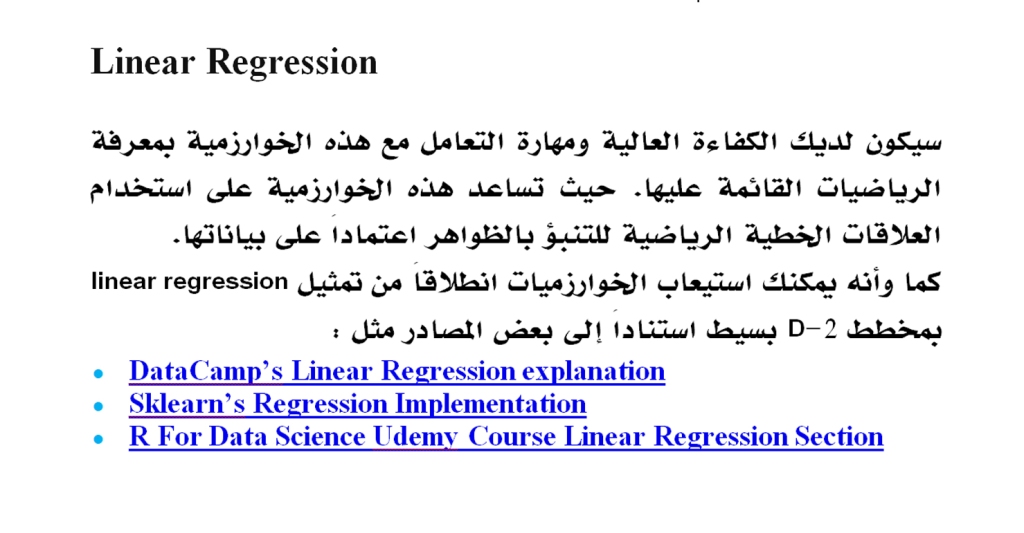
Linear Regression
You will have high efficiency and skill to deal with regression by understanding the mathematics behind it. Linear regression allows predicting phenomenas by establishing linear relationships among the data.
Also, you can understand the algorithms from the linear regression representation in a simple 2-D diagram based on some sources such as:
- DataCamp’s Linear Regression Explanation
- Sklearn’s Regression Implementation
- R For Data Science Udemy Course Linear Regression Section
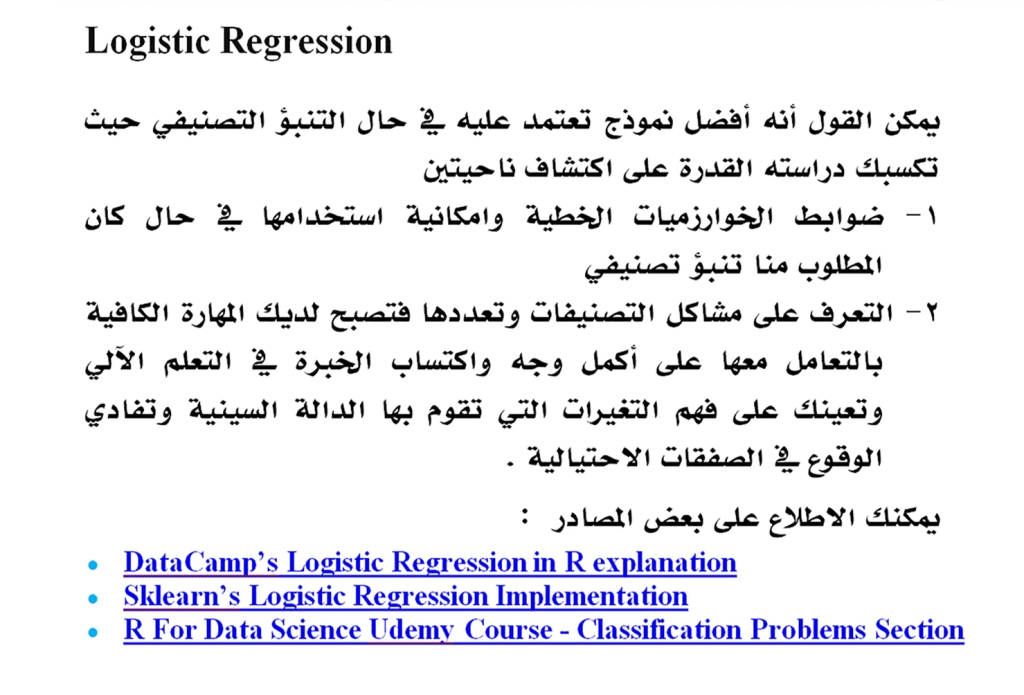
Logistic Regression
It is the best model that you can rely on to obtain full efficiency in classification. Studying it gives you the ability to discover the controls of linear algorithms and to take note of the problems of classifications and their multiplicity.
You can check out some resources:
- DataCamp’s Logistic Regression in R explanation
- Sklearn’s Logistic Regression Implementation
- R For Data Science Udemy Course — Classification Problems Section
Decision Trees
It is a simple model that prepares you for a comprehensive understanding of non-linear algorithms as it is the first algorithm that you should learn. It is the entry key to study different techniques that lead to optimal handling of Regression and classifications to get the best results.
Sources :
- LucidChart Decision Tree Explanation
- Sklearn’s Decision Tree Explanation
- My blog post about Classification Decision Trees
- R For Data Science Udemy Course —Tree Based Models Section
Random Forest
This type of algorithm is based on the idea of a multiplicity of decision trees which gives your algorithm accuracy by averaging the results of previous models.
To learn more about the concept of Random Forest, here are some resources:
- Tony Yiu’s Medium post about Random Forests
- Sklearn’s Random Forest Classifier implementation
- R For Data Science Udemy Course — Tree Based Models Section
Artificial Neural Networks
Here you will discover the concepts of neural network layers, as it is one of the most accurate and most effective models in discovering non-linear patterns in data.
In addition, studying it leads you to different forms of models, such as:
Recurrent Neural Networks (Natural Language Processing).
Convolutional Neural Networks (used in computer technologies).
Here are some sources for more information:
- IBM “What are Neural Networks” article
- Keras (Neural Network implementation and abstraction) documentation
- Sanchit Tanwar’s article about Building your First Neural Network
By learning these models, you are on the right track of the Data Science learning journey, as you will have the experience that allows you to study higher levels of these algorithms. This basic learning helps you crystallising your information that is related to the mathematics on which these models are built smoothly and simply.




 Data World
You must be logged in to post a comment.